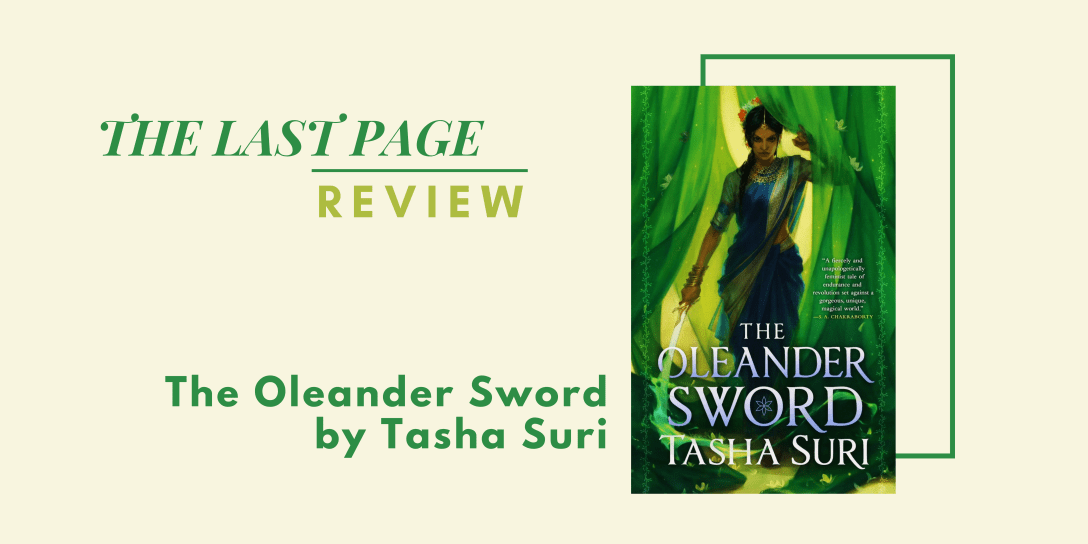
Review: The Oleander Sword by Tasha Suri

Rating: 5 out of 5.

Declared the rightful empress of Parijatdvipa by the prophecy of the nameless god, Malini embarks on a vengeful path to usurp her brother and lay claim to her throne. Meanwhile, Priya, now an elder of Ahiranya and thrice-born priestess, gambles the extent of her power to eradicate the rot taking hold in her country. Set apart by their respective roles, Priya and Malini’s destinies remain forever entwined, but as Malini’s campaign to depose her brother takes a brutal turn, coming together may be the only option to truly achieve what they both desire. War wages and the deeper Priya reaches into her power to turn the tide, and Malini turns to pent-up rage, the cost of their advance blooms into something truly deadly.

The Oleander Sword is a sequel of such brutal reckoning that I was completely unprepared to venture into. After the astonishing start to the series that was The Jasmine Throne, its sequel quickly lept to the forefront of my anticipated upcoming reads for 2022. An expansive and otherwise ambitious addition to the series, The Oleander Sword stole my heart and destroyed my soul with a slow and delicate grace. Tasha Suri elevates everything previously contended in the first installment, focusing more heavily on battle strategy, and examining the temple of Ahiranya and the Yaska. Everything about this sequel is awe-inspiring, from the intensely romantic and tender moments between Priya and Malini to the gradual undertaking of a stolen empire. Once again, Suri provides a staggering amount of character perspectives to wade through, woven together in an intricate tapestry that renders itself to the overarching themes of power, loyalty, and love. One character that really stood out to me this time around was Bhumika, who carries the weight of what is happening with Ahiranya towards a sacrifice that was absolutely heart-wrenching. Alongside the ongoing war, and the unsettling shift back at Ahiranya’s temple, there was not a moment in this book where I was not caught in its unforgiving clutches. The political tension underpinning the actions of every character, and the divided loyalties threatening to fracture the established alliances only made this sequel all the more disconcerting. Like its former, The Oleander Sword elicits a slow pace, that culminates in an ending that left me thoroughly anguished. Intensely ruthless and brutal at its core, The Oleander Sword is an astonishing sequel that blooms with betrayal, romance, and unintended sacrifice. Tasha Suri’s Burning Kingdoms is an exemplary fantasy series, and I’ll be waiting patiently for its finale in the coming year.

Thank you to NetGalley and the publisher for providing this arc in exchange for an honest review.

Trigger warnings: death, violence, war, suicide
Buy a Copy:

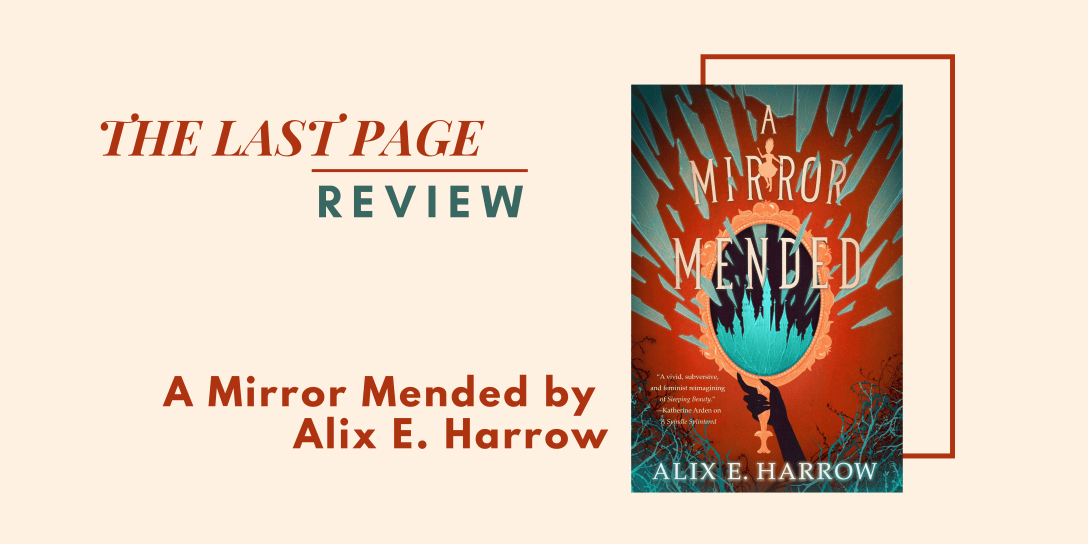
Review: A Mirror Mended by Alix E. Harrow

Rating: 5 out of 5.

Professional rescuer and part-time substitute Zinnia Gray has spent the last five years traversing the multiverse, saving every damsel in distress that she possibly can. After a dozen or so rescues, weddings, and burned spindles, Zinnia has begun to grow tired of her role in rewriting the narrative, yet duty awaits her hand on the spindle. At an afterparty one rescue later, when Zinnia glances into a mirror, she sees another woman staring back at her, and falls into the last fairytale she ever expected, Snow White. Coming face to face with the fabled Evil Queen, desperate to escape her own fate, Zinnia is tasked once again with saving someone trapped by their story. Eva is convinced that Zinnia is the way out of her predestined ending, and is willing to do anything to change her future, that is if Zinnia can be convinced to save the last person in this world she would want to.

The Fractured Fables novellas draw to a close with A Mirror Mended, a sequel that ups the ante that A Spindle Splintered had previously left to be amended. Alix E. Harrow is back at it, drawing together an adventurous narrative crammed full of meaningful prose, and tied in with an expanded critique on storytelling and their villains. Where A Spindle Splintered previously intersected a conversation surrounding damsels in distress in folklore and their saviors, Harrow turns her attention to the villainization of women in her continuation of the series. More closely, The Evil Queen, a figure that has consistently captivated audiences with her jealousy and enacted rage against her stepdaughter for her supposed beauty. As a huge fan of evil women in the fantasy genre, the examined motivations, and background of a classic fairytale villain intrigued me, to say the least. Eva is a layered character, well-written and trapped by her own situation and predetermined role. Narrative agency is an issue that Zinnia has constantly battled, even from book one, and it was nice to see that transferred over to an iconic villain like the Evil Queen. Eva’s situation is very closely mirrored in Zinnia’s, as they both are trapped by their role in the narrative of their story. The bond that grew between the two characters, as a result, made a lot of sense and was really satisfying to witness (falling for the hot villain was absolutely on-brand for Zinnia). I delighted in Eva and Zinnia’s back and forth snark alongside the deeper moments of multiverse chaos. The added tension from the multiverse fracturing and blending into one another propelled this installment to an entirely new level from the previous one in my mind. Once again I am left awed by Harrow’s storytelling ability and the complex twist in traditional fairytales. A Mirror Mended is a razor-sharp exploration of feminist agency and the weight of the roles we carry.

Thank you to NetGalley and the publisher for providing this arc to review.

Trigger warnings: terminal illness, violence

Buy a Copy:

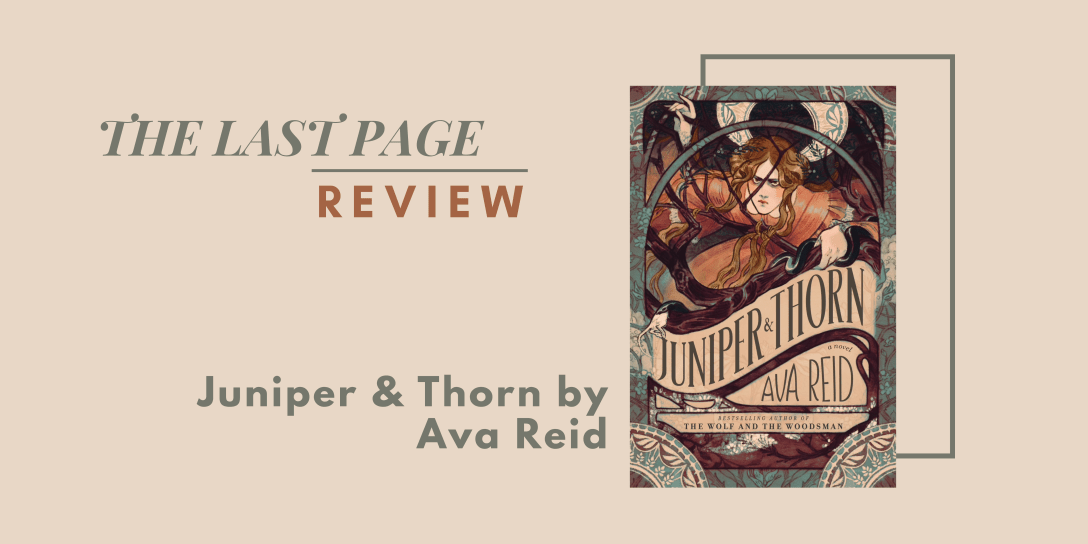
Review: Juniper & Thorn by Ava Reid

Rating: 5 out of 5.

Marlinchen is a witch, youngest of three daughters to a cursed wizard, living out her days in a city transforming from magic to industry. Last of the true witches in all of Oblya, she and her sisters cling to their gifts, which are little more than entertainment to the general populace and an asset to their father. Sequestered within the walls of their home, Marlinchen spends much of her free time placating the unending appetites of their authoritative father and utilizing her gifts to discern the truth from her clientele. The evening brings escape, as Marlinchen and her sisters creep into the city to partake in its revels and observe the captivating ballet theatre. These nighttime escapades offer salvation, but when Marlinchen captures the attention of a ballet dancer just as lost and isolated, her visits to the outside world become less uncommon. Entangled between the rage and hunger of her father, and her own desires, Marlinchen is caught in a snare, and the cost of freedom may be far more monstrous than she ever imagined.

When I heard that Ava Reid had written a gothic horror retelling of The Juniper Tree, there was nothing I wouldn’t do to read it at the soonest possible chance. Having absolutely worshiped her adult debut, The Wolf and the Woodsman, this novel promised to ruin me without remorse as much as its precursor. True to the fact, Juniper & Thorn is utterly gruesome, vividly capturing a darkness and horror that lingers down dark halls and underneath floorboards waiting for the prime moment to sink in its teeth. Reid is masterful at their craft, seamlessly blending horror and fantasy together in a story completely grotesque and illustrative of a blooming rose clouded among thorny brambles. Every sentence in this novel is striking, with imagery and prose that threatened to devour me whole. In time with the story, lore and fairytales play an important part in the main narrative, intersecting the vein of Marlinchen’s character development and the understanding of her own situation. These sporadic fairytales were definitely some of my favorite parts of the whole book, getting after the core themes and relationships between the main characters. At this point, Reid’s capability for writing complex relationships is unquestionable, particularly ones that are nuanced and not simply good or bad, yet those you cannot help but love all the more. Three characters that come to mind are Marlinchen and her sisters Undine and Rose, as they endured years of abuse at the hands of their father, and impacted one another in continuously damaging ways. In turn, Marlinchen’s love interest Sevas was entirely endearing and latched on to my heart as the two attempted to escape their situations. A captivating gothic horror with a brutal design, Juniper & Thorn is imbued with memory, an examination of abuse, and survivorhood in all forms.

Thank you to NetGalley and the publisher for providing this arc to review.

Trigger warnings: violence, emotional abuse, gore, blood, death, murder, body horror, cannibalism, eating disorder (bulimia), vomiting (graphic), sexual assault, antisemitism, xenophobia, drug use 

Buy a Copy:

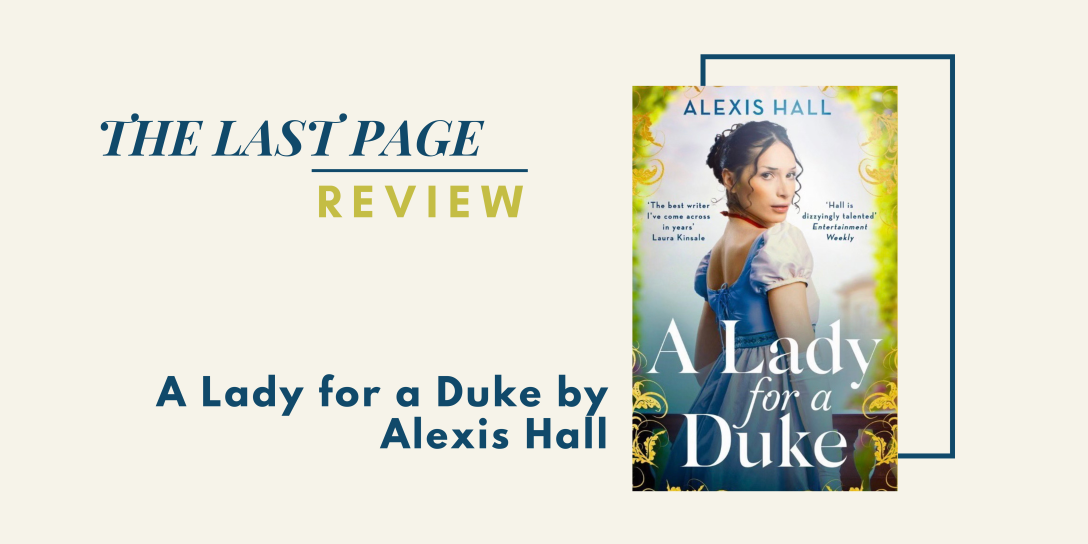
Review: A Lady for a Duke by Alexis Hall

Rating: 4 out of 5.

After being presumed dead at Waterloo, Lady Viola Caroll decided to let the world go on thinking that and begin to live for herself. Sundering the past, Viola does not regret much. The loss of her wealth and title are trivial against the greater loss of her friend and closest companion, Justin de Vere, the Duke of Gracewood. For several years, Viola has kept her distance, believing that grief has given way to peace of some kind, yet when their families reconnect again she finds that it is actually the opposite. Gracewood is a shadow of the man she once knew, withdrawn so far into his grief that he is completely unrecognizable. Striving to somehow bring him back to his former self, Viola is drawn closer to her former friend, and desires she could never name before are brought to the surface. Denial is useless, and as Viola and Gracewood grow closer these feelings become harder to ignore, prompting a necessary reconciliation against loss and the impossibility of the future. 

A Lady for a Duke could not have come at a more perfect time for me, fresh off the historical romance binge and having just watched the latest season of Bridgerton. Looking for a romance teeming with emotion, this novel gave me everything I needed and then some. In his altogether masterful historical romance, Alexis Hall draws together a complex past between his main leads, with an evocative center of loss, memory, and intimacy driving the story forward. Our main heroine Viola is one of the more well-written queer characters in historical romance that I have read recently, giving voice to dysphoria and the trans experience in a way unforeseen previously by me in the genre. As for the other main lead, Justin De Vere, he provided quite the emotional conversation surrounding grief and the lingering trauma arising from war. Even with all of this tense subject matter, the entire story overflows with longing and an underlying comfort that disperses throughout every aspect of the novel. This is definitely not a tragic story, yes we have a trans heroine and a disabled hero living in this time period, but it doesn’t bear the narrative down into tragedy like I’ve seen other period pieces do. Instead, what emerges is a tender second chance romance about two people defined by their circumstances finding love against the odds. I would also be remiss not to mention the wonderful side characters in this novel, who radiate just as much as the two main leads. With a mix of queer and playful characters, Hall really creates a wholesome cast of supporting characters for the novel. The side plots intervening in the central storyline had the most fabulous banter and made me fall even more in love with the story overall. A Lady for a Duke is honestly one of the most beautiful and exemplary historical romances I have read in quite a long time. The epilogue especially, really brought the emotion to the surface, exemplifying love found and a future once deemed unlikely.

Thank you to NetGalley and the publisher for providing this arc to review.

Trigger warnings: death, violence, guns, PTSD, child abuse (mentioned), abduction, suicidal ideation (side character), deadnaming 

Buy a copy:

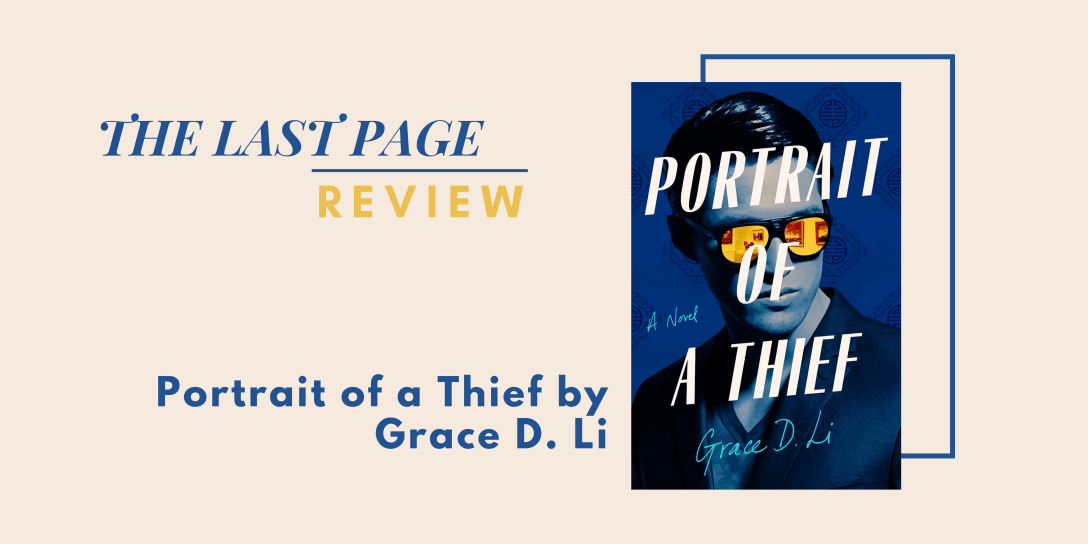
Review: Portrait of a Thief by Grace D. Li

Rating: 4 out of 5.

A mysterious art theft strikes a match when the thieves leave behind their card for Harvard Senior Will Chen, an art history student working part-time at the Sackler Museum. The perfect student, artist, and son, Will has always strived to curate every aspect of his life, yet the mask begins to slip when he finds himself entangled in an impossible plot. At the behest of his mysterious benefactor, Will becomes the leader of a grand heist to steal back five Chinese artifacts stolen from Bejing centuries ago, scattered around the world. With fifty million dollars on the line, Will assembles a crew of his closest friends, all with something to gain if they should succeed and lose should they fail. As each of the crew members wrestle with their own complicated relationship with China, the chance to take back a piece of what was stolen long ago is too great to pass up. Willing to risk it all, they may just find a missing part of themselves in the process.

Portrait of a Thief is a book that really stole the show with what it was trying to impart to its readers. Debut author Grace D. Li writes effortlessly, baring the deepest parts of her soul to all those experiencing the long-term effects of colonialism and the diaspora. Through an impossible heist with stakes beyond imagine, Li illuminates the complexity of Chinese identity against a profound yearning that lives inside those that have had to surrender a part of themselves in growing up elsewhere. With a catching comparison to Ocean’s Eleven, Portrait of a Thief brings the action up close and center, alongside an unlikely group of friends deciding to take something back for themselves. Out of all the aspects of this debut, one of the most poignant parts is the multitude of identities that are explored within. Although all of the heist members are Chinese American, their views on the mission were incredibly divided as they had all found their identity in different ways. Each of the characters had their own complex relationship with China, which was drawn out with each heist and created an interesting conflict between the group. These relationships were a stark contrast to the conversation happening around the heist and colonization, which I really appreciated as a reader. The diaspora affects all people differently, and that was really evident through the individual relationships and unique connections with China. Rather than have the crew get along, I liked that there was some conflict, both on an identity level and the heist itself. Also the little rivals to lovers storyline we were given made my heart soar. With her debut, Grace D. Li has created a novel equal parts thrilling, and critical. Portrait of a Thief examines the diverse parts of Chinese identity, diaspora, and the ways in which an identity can be in conflict, through a group of people determined to leave their mark on a flawed world.

Thank you to NetGalley and the publisher for providing this arc to review.

Trigger warnings: death, alcoholism, grief, racism

Buy a Copy:

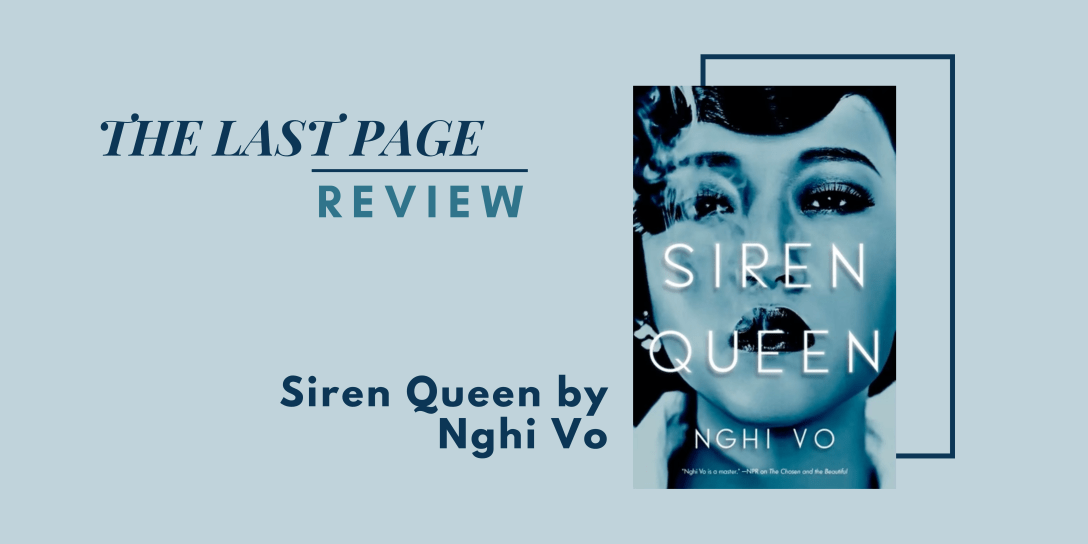
Review: Siren Queen by Nghi Vo

Rating: 5 out of 5.

Enter the glittering world of Old Hollywood, where the very fabric of stardom is rife with dark bargains and sacrifice. To those that dare attempt fame, they must navigate a complicated system, competing for the limelight, and inevitably paying the ultimate price. For Luli Wei, a young Chinese American coming of age in this tumultuous time and desperately seeking stardom, the dark truth to the movie industry is inconsequential. She is more than willing to offer up her soul for the chance to shine and burn, even if it means becoming someone else entirely. In a system where the studio heads have all the power, and blood and ancient ritual is second nature, to yield is to begin. The silver screen beckons her forth, and to succeed in an industry determined to push her to the sidelines she may have to take on the role of the monster itself.

Siren Queen is an alluring novel, laced with a ferocity that reverberates throughout every page. In typical fashion Nghi Vo creates a vivid picture, ingeniously depicting the glamorous world of Old Hollywood and its frightening underbelly. Through the eyes of a young woman looking back upon her journey to the limelight, this golden age of Hollywood is given new voice – one that dwells in the bottomless deep, luring you from the shore before dragging you down into its murky undertow. It’s been awhile since I read a book that left me as epically stranded and desperate as this one and I’m sure I won’t find anything like it again. Throughout the narrative, there is a luminosity that shines through even the darkest moments. Existing as a queer, Chinese American woman during the time of pre-code Hollywood is a poignant center for the entirety of Luli’s story. This landscape breeds a unique sort of desperation and a drive to break free from the predetermined roles set by these studios and the world at large. Luli Wei is such an incredible representation of that and a person willing to be flawed to get where she wanted. Knowing that Siren Queen was also giving a slice of Evelyn Hugo energy only led me further into the deep end of this novel. While I would have liked more with Luli and her future partner, there is a staggering beauty in this narrative being a kind of open letter penned to her past self and future relationships. For those looking for something in the vein of Evelyn Hugo, this is right up there thematically, but don’t expect an exact comparison between the two. In her sophomore novel, Nghi Vo explores the realities of fame, what it means to pursue it on your own terms, and who you have to become in order to succeed. With razor-sharp teeth, Siren Queen shines like a beacon in the storm, bringing to light a truth far deadlier when realized.

Thank you to NetGalley and the publisher for providing this arc in exchange for an honest review.

Trigger warnings: racism, sexism, homophobia, death, domestic abuse

Buy a copy:

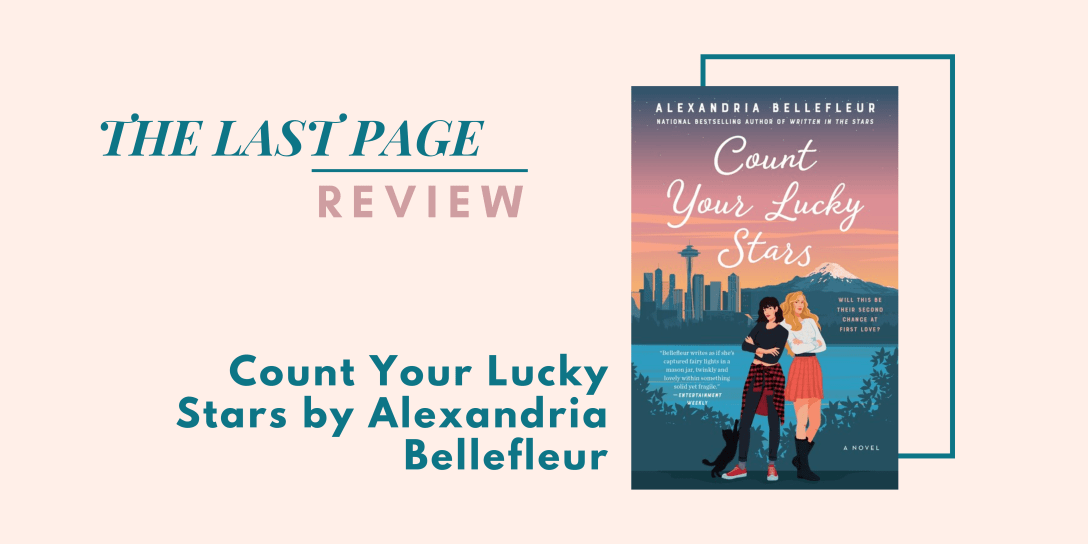
Review: Count Your Lucky Stars by Alexandria Bellefleur

Rating: 5 out of 5.

It’s been ten years since Margot put her heart on the line with her best friend Olivia one fateful spring break – a week that transformed their relationship and forever shaped her outlook on love. In the fallout from their teenage romance, Margot has adopted a strict “no relationship” policy, convinced that they aren’t her style. Life doesn’t wait around, however, and now that all of her friends are in long-term committed relationships, Margot is second-guessing her stance. Fate offers up a chance when she runs into Olivia while touring a potential wedding venue with her engaged friends. Since they fell out with one another a decade ago, Olivia hasn’t exactly led the life she planned, but her new job as a wedding planner in Seattle offers a promising start. When an unexpected event leads her without a place to stay, Margot offers up the spare room in her apartment. Even though they haven’t talked in years, history bears repeating, and their chance encounter may lead them to rediscover the love that they’ve been looking for.

Count Your Lucky Stars is the book that has solidified Alexandria Bellefleur as a romance god in my mind. Truly no one else could have me laughing out loud and screaming in sheer frustration all at the same time. Having read the other two previous books in the series, I was thrilled to hear that its conclusion would center around Margot, a character who always gravitated attention from the sidelines. Given that this third installment features tropes that I would sell my soul for: mutual pining, forced proximity, and childhood friends to lovers, it was high up on my list of anticipated releases. Bellefleur has always had a knack for creating compelling characters and I have to say that Margot and Olivia are her best to date. The banter between them was so amusing and refreshing to read and I loved witnessing the complicated history between them unravel. Second-chance romances have always been an underrated trope in my opinion, and this one had me by the throat like no other. The chemistry with Olivia and Margot was already there to explore, along with years of miscommunication and unresolved feelings. This led to so much angst and pining on both sides that was incredibly entertaining to read. As this incorporates characters from the previous books there were so many little moments between the friend group and past couples. It was so touching to see where everyone ended up, even more, to see Olivia as a new character fall entirely into place with that. The backdrop of Seattle continues to dazzle here, with new locations and meaningful moments interspersed throughout the city. Count Your Lucky Stars may be a conclusion, but it is no less impactful or delightful than the first two books in the series. For as long as Alexandria Bellefleur keeps writing the queer romances of my dreams, I will be there championing them forward. 

Thank you to NetGalley and the publisher for providing this arc in exchange for an honest review

Trigger Warnings: infidelity, death of a parent, alcohol consumption

Buy a Copy:

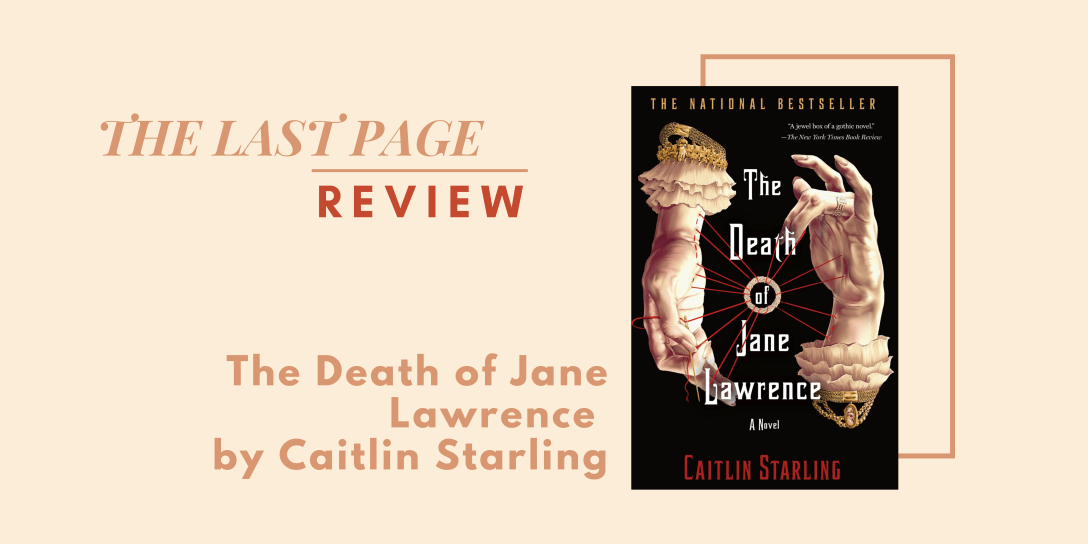
Review: The Death of Jane Lawrence by Caitlin Starling

Rating: 4.5 out of 5.

The crumbling manor at Lindridge Hall hides a deadly secret, one that will be unearthed when its new mistress steps over the threshold. Jane Shoringfield is nothing short of practical, and having reached the end of her living period with her guardians, decides that the most logical way forward will be to secure herself a husband. The chosen candidate for this transaction is the reclusive, yet handsome, doctor Augustine, whose profession may provide her with the very independence that she requires. Augustine agrees to this marriage of convenience, on the agreement that Jane never set foot in Lindridge Hall, his family estate just outside of town. Nonetheless, on the night of their wedding, a chance storm leaves her stranded and Jane is forced to return to the manor. When she arrives, she finds the demeanor of her husband gone, and in its place a frightened and paranoid man unable to discern reality from fiction. Morning comes, and Augustine is himself again, but Jane knows deep within her bones that something is horribly wrong with her husband and the house she now occupies. A profound fear only magnified by her continued stay within the manor’s walls.

Placed within the realm of Crimson Peak, Rebecca, and Shirley Jackson, The Death of Jane Lawrence is an impressive gothic horror novel that fucked with my mind in the best way possible. Set in a dark version of Post-War England, packed full of supernatural and spooky vibes, this is one of the most brilliant and unnerving books that I have read all year. Part of the journey with this novel is in just how much it upends what is understood at any given moment. I started this off scared of the Crimson Peak comparison, and that feeling really never went away because of how often the book turned all of my expectations on their head. The first section is ominous, hung over with impending dread that is drawn out like poison from a wound upon the first occurrence with Jane and Augustine at the manor. This was reminiscent of so many Gothic novels of the past, that sudden shift in tone from an incident, that traverses through to the end of the narrative. There was an unsteady ground between Jane and Augustine present in the first half, as both characters were hiding secrets from the other. Altogether, I loved not really knowing who to put trust in, as I fell into the book’s rhythm to be entirely unpredictable. Past the first half of the novel is where the atmosphere twists into something slightly enigmatic. This is where I puzzled with the text a bit more and was left completely shattered by the end results. A tangled web that I endeavored to take apart in order to make sense of it all. While I will say this section could have been pared down, at that point, it was like the top of a rollercoaster and I was just along for the rest of the ride. In every respect, Caitlin Starling has created a haunting tale, charged with callbacks to iconic gothic fiction of days past. The Death of Jane Lawrence is an eerily brilliant novel that bends reality and twists the mind towards its breaking point.

Thank you to NetGalley and the publisher for providing this arc in exchange for an honest review.

Trigger Warnings: blood, gore, violence, death, animal death, medical procedures

Buy a Copy:

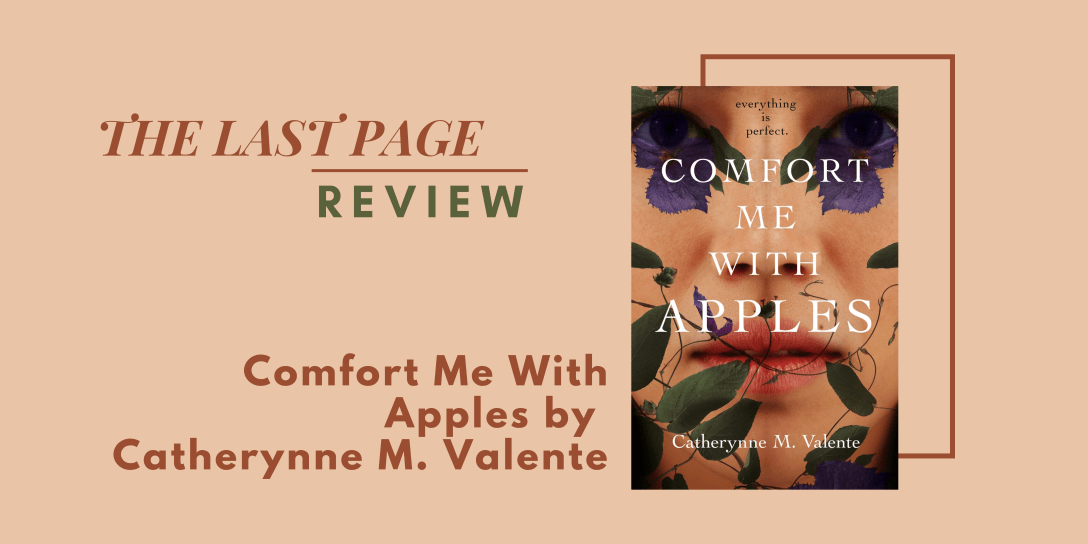
Review: Comfort Me With Apples by Catherynne M. Valente

Rating: 4 out of 5.

The gated community of Arcadia Gardens may seem perfect, but within the confines of the neighborhood, a poisonous truth begins to fester, threatening the very serenity promised to its inhabitants. At surface level, adoring housewife Sophia couldn’t ask for a more perfect circumstance. Her life in Arcadia Gardens, her house, and her increasingly absent husband provide her with everything she could possibly imagine. Still, there are things that beg to be questioned, like the strange lock of hair decidedly not hers, or the sliver of bone expertly placed in her knife block. It seems that things might not be as splendid as they seem, and when Sophia goes digging she unearths something that could destroy her seemingly perfect life in seconds.

Comfort Me With Apples is a fantastically dark thriller that delighted and surprised me in unexpected ways. With a bit of The Yellow Wallpaper vibe interspersed throughout this strange mystery, Valente crafts a story made to be questioned at its core. A slowly decaying fruit of a novel that becomes harder and harder to ignore. While not everyone will love the twist of the knife designed, nor the lack of an accurate Gone Girl comparison, those that enjoy being unsettled will love where this novel takes them. Catherynne Valente has always excelled in her prose and Comfort Me With Apples demonstrates that clearly, with gloriously strange, and utterly imaginative language. The rules of the gated community, partnered against the actual storyline cultivates a sense of unease that preys upon the mind until right up at the end. An atmosphere that becomes increasingly more and more ominous. Where the story takes an unanticipated turn, is in the biblical elements included. These surprised me more than I thought they would, but thought they ultimately flushed out the commentary and made the reveal at the end all the more horrific. It really makes me want to go back and read the story all over again to see where the paving was laid. A lot of people have already commented on the incorrect marketing surrounding this book, and while I don’t think this was anything like Naomi Novik’s Spinning Silver, or Gillian Flynn’s Gone Girl, the domestic thriller and fantasy vibe is definitely present here. The only thing that really irked me with Comfort Me With Apples was the length. There was a lot of build-up in the first two-thirds of the novel, and then the confrontation at the end left me with so many questions that could have been avoided had time been taken to draw out the reveal. Key opinion with this one: I just wanted more. Catherynne Valente certainly knows how to write an idyllic story with otherwise sinister undertones, however, something that will be perfect for the upcoming Halloween season.

Thank you to NetGalley and the publisher for providing this arc to review.

Trigger Warnings: death, murder, gaslighting

Buy a Copy:

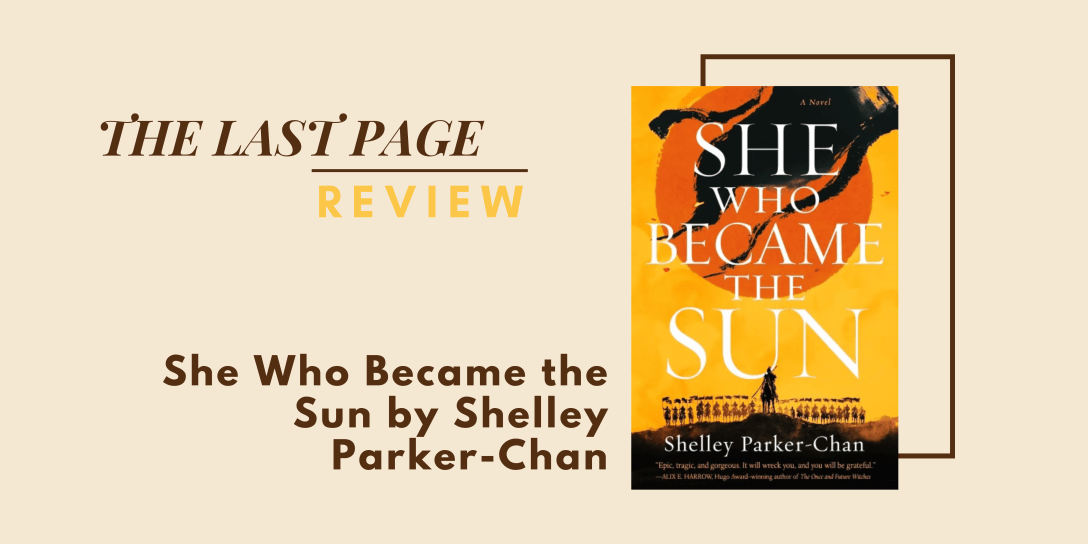
Review: She Who Became the Sun by Shelley Parker-Chan

Rating: 4.5 out of 5.

This was pitched as Mulan meets The Song of Achilles, and it was that and so much more. A glorious epic in every sense of the word. Fate is a tricky thing, and after hearing a fortune teller give reference to her brother’s destiny for greatness, the girl expects to hear very much the same. However, her own destiny is revealed to be just that: nothing. While her brother is fated to rise up and leave his mark upon the world, she is expected to fade from view, unremembered. Starving and desperate, an unexpected event changes the trajectory of her entire future. She takes her chance, seizing her brother’s identity and assuming his fate in the process. Under this new circumstance, she may just find freedom, glory, and a way to change her destiny forever.

She Who Became the Sun is, simply put, a masterpiece of a debut. It’s a powerful, evocative, and brutal high fantasy that will leave you utterly wrecked and begging for more. Parker-Chan blends history with fiction in this sweeping story that chronicles Zhu Yuanzhang’s ascent to power and the rise of the Ming Dynasty in 14th century China. It’s the perfect novel for anyone looking for complex characters set amid a backdrop where loyalties are tested and the stakes are high. The lyrical prose paints a vibrant picture of a war-torn period, reimagined, but ultimately true to its roots. Right from the get-go, I was pulled into the ambitious nature of the narrative amidst its definitive passion and decisive action. I straight up devoured this in under a few hours and then realized I would have to suffer in silence since none of my friends had finished reading. What it means to be an arc reviewer am I right? The exploration of gender and gender identity, tied up in a story that is so brilliantly queer, is the true hero of all of this though. There was a very nuanced conversation taking place within the novel, that I appreciate and can tell will be carried over into the next installment. To see a character that was not only flawed and determined but honest with themselves about their own identity and who they are was incredibly powerful to read. Looking forward to seeing just how that evolves in the next book. And my God, that ending. So devastatingly beautiful it may just keep me up for the next few nights. If we’re lucky, otherwise I may not ever get to experience sleep again.

Thank you to NetGalley and the publisher for providing this arc in exchange for an honest review

Trigger warnings: starvation, death, abuse, public execution, mass death, misgendering, ableist language, dysphoria, life-altering injury, offscreen murder of a child

Buy a Copy: