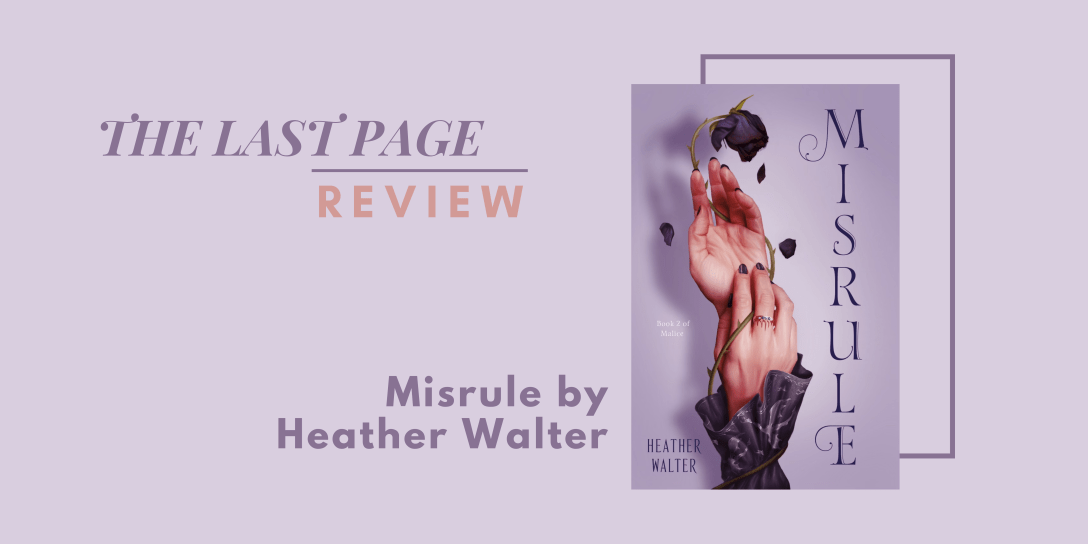
Review: Misrule by Heather Walter

Rating: 4 out of 5.

Out of the ashes of the Briar realm arises a new dominion for its destroyer. Alyce, now called Nimara, rules over her newly established Dark Court and a manor of beasts once kept in the shadows. In the century since the decimation of the Briar realm, Aurora still lies under her sleeping curse, and Alyce has become the very thing she once feared to be. Though Alyce has tried, she cannot break the curse holding her love captive, and Aurora lies hidden away from the prying eyes of the court. When a young man washes up on shore everything changes, waking the princess and descending the realm into chaos. With war looming closer, and her lost love returned, Alyce must decide how far she is willing to go to enact her revenge and discover if love can even thrive in a world so entangled with it.

Where its predecessor Malice led me softly through its thorny brambles, Misrule pushes back the thickets to reveal a reality far more malevolent. In the hundred years since the destruction of the Briar realm, Heather Walter explores the intricacies of revenge, and the lengths one will go to make it endure. Expanding on the scope of the world, and the plethora of beings within, a new side to the story emerges – one teetering on the edge of change and the balance between good and evil. As the curse upon Aurora flourishes, a war against the fae looms nearer, and a simmering tension between the dreams of a century past and the present day draws breath. By the time Aurora awakens from her slumber these moving pieces are amplified, paired against the fallout from the ashes of a fallen kingdom. The strain on Alyce and Aurora’s relationship ensuing from these transformations is central to the closing of the series. While the two grapple with this new reality and who they have both become, they search for forgiveness and a way to still build a future together. These components of the story were not what I expected for the characters going into the finale, but the complexity of forgiveness ensuing out of them was splendid. Albeit a little emotionally damaging. Alyce’s ties to the Vila were expanded upon even further here, something I’d been looking forward to since the end of Malice. Tested loyalty is my bread and butter and Misrule served it well, especially with Alyce, Aurora, and the Dark Court. Misrule is truly a book where morally gray characters thrive, constantly shifting the narrative and making moves that are never anticipated by the audience. The introduction of new beings and characters brought that even further into the foreground. Coming around to the inevitable conclusion had me very much wrecked, yet drawn into its essence of hope and repairing what is lost. Full of violence, the brutality of vengeance, and the unraveling of prejudice, Misrule makes for an enthralling ending to the Malice Duology. One that will remain with me for the considerable future.

Thank you to NetGalley and the publisher for providing this arc to review.

Trigger Warnings: blood, gore, violence, death, murder, grief, trauma
Buy a copy:

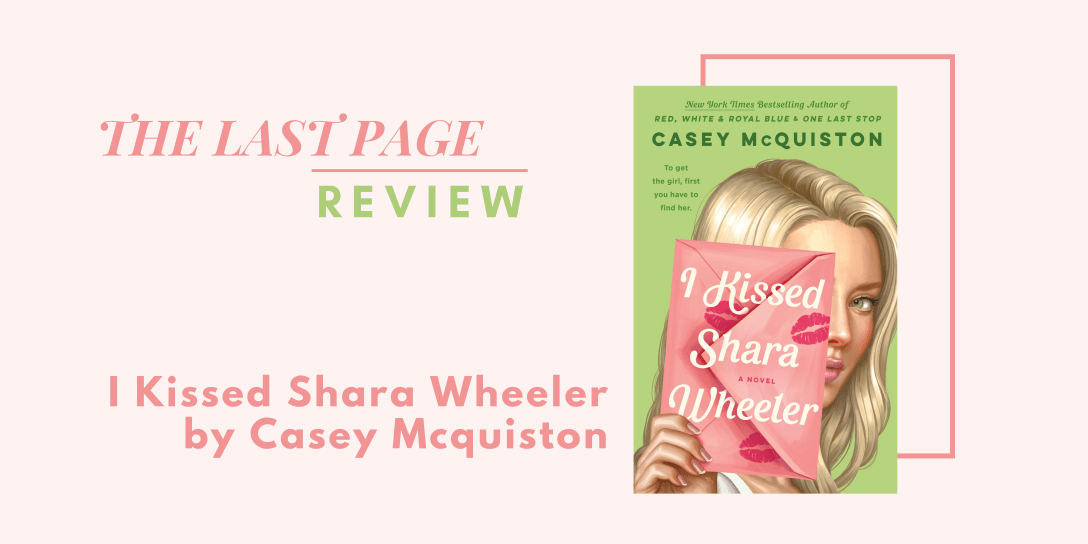
Review: I Kissed Shara Wheeler by Casey McQuiston

Rating: 5 out of 5.

Four years after her moms uprooted her from their life in Southern California to attend school in Alabama, high school senior Chloe Green is closer to victory than ever before. Attending a conservative high school hasn’t been easy, but competition with Willowgrove Academy’s it-girl, and her fiercest rival Shara Wheeler, has propelled her to success and all but tied them out for high school valedictorian. Chloe is so close to beating Shara, but on the weekend of the senior prom, Shara kisses Chloe and then vanishes. All that’s left behind are a series of letters left for Chloe and the two other people she kissed, Rory, the boy next door, and Smith, her quarterback boyfriend. Drawn together by their ties to Shara, an unlikely alliance forms that will have them crashing parties, breaking and entering, and uncovering clues to Shara’s whereabouts in the most unexpected places. Holding out for the next pink envelope and Shara’s elusive clues, Chloe begins to realize that there’s more to Shara than she initially thought and that maybe, just maybe, she can carve out a place for herself in this town after all.

In a self-fulfilling prophecy kind of way, I Kissed Shara Wheeler sat in my inbox for four months before I even dared to pick it up, simply because I knew it would consume my every waking thought for weeks after reading. If only I knew just how right I would be. A contemporary equally saccharine and explorative, Casey McQuiston’s debut into young adult has again proved their ability to craft compelling and heartwarming queer narratives, regardless of the genre. I Kissed Shara Wheeler is a renewing coming-of-age story surrounding the growth of queer communities in adversity and the friendships that develop during the critical points of our lives. Characteristic to its author, this novel had a cast of characters that made my heart swoon, and the witty repartee that has embodied all of Casey McQuiston’s past writing that I so adore. What stood out to me this time around, were the friendships that evolved between the three main characters Rory, Chloe, and Smith as they become entangled in the search for Shara Wheeler. Every character felt distinct, with their own determinations, flaws, and biases that were completely out in the open by the time the story concluded. There were so many sweet moments with our main trio, and it was such a joy to see each of them creating a space for themselves, in and outside of their queer identities. Chloe’s journey, in particular, was fierce and messy in all the right ways. I loved seeing where everyone ended up by graduation, with happy endings, bittersweet ones, and everything in between. Casey McQuitson’s strength certainly lies in their ability to commit to the unexpected, while continuing to create the uplifting queer stories I have been longing for. The high school story I didn’t know I needed, I Kissed Shara Wheeler is the unapologetic queer coming of age story we’ve been waiting for – elevating the complexity of youth and what it means to find yourself in unexpected places.

Thank you to NetGalley and the publisher for providing this arc to honest review.

Trigger warnings: racism, homophobia, bullying, outing of a past character (mentioned)

Buy a copy:

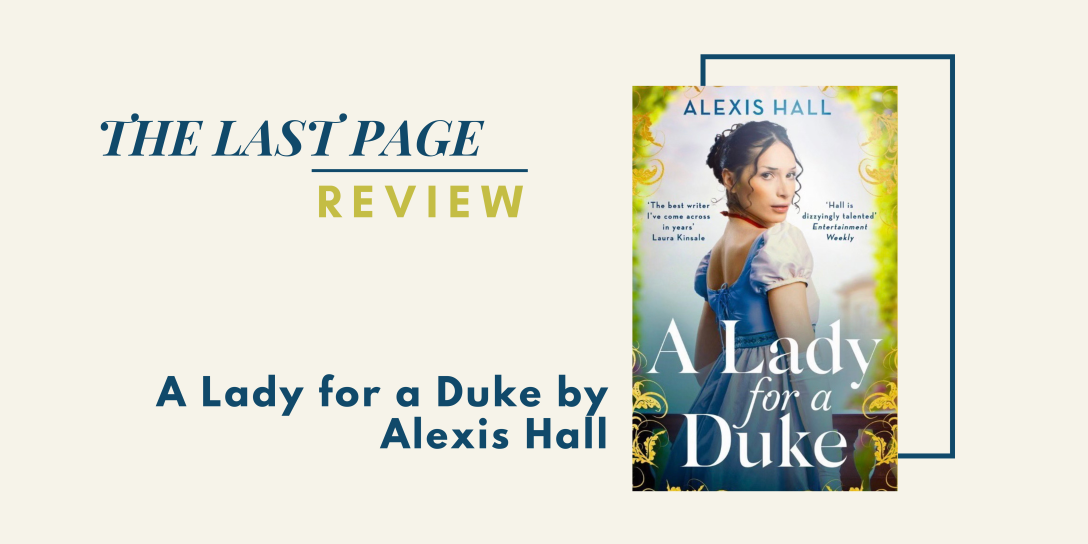
Review: A Lady for a Duke by Alexis Hall

Rating: 4 out of 5.

After being presumed dead at Waterloo, Lady Viola Caroll decided to let the world go on thinking that and begin to live for herself. Sundering the past, Viola does not regret much. The loss of her wealth and title are trivial against the greater loss of her friend and closest companion, Justin de Vere, the Duke of Gracewood. For several years, Viola has kept her distance, believing that grief has given way to peace of some kind, yet when their families reconnect again she finds that it is actually the opposite. Gracewood is a shadow of the man she once knew, withdrawn so far into his grief that he is completely unrecognizable. Striving to somehow bring him back to his former self, Viola is drawn closer to her former friend, and desires she could never name before are brought to the surface. Denial is useless, and as Viola and Gracewood grow closer these feelings become harder to ignore, prompting a necessary reconciliation against loss and the impossibility of the future. 

A Lady for a Duke could not have come at a more perfect time for me, fresh off the historical romance binge and having just watched the latest season of Bridgerton. Looking for a romance teeming with emotion, this novel gave me everything I needed and then some. In his altogether masterful historical romance, Alexis Hall draws together a complex past between his main leads, with an evocative center of loss, memory, and intimacy driving the story forward. Our main heroine Viola is one of the more well-written queer characters in historical romance that I have read recently, giving voice to dysphoria and the trans experience in a way unforeseen previously by me in the genre. As for the other main lead, Justin De Vere, he provided quite the emotional conversation surrounding grief and the lingering trauma arising from war. Even with all of this tense subject matter, the entire story overflows with longing and an underlying comfort that disperses throughout every aspect of the novel. This is definitely not a tragic story, yes we have a trans heroine and a disabled hero living in this time period, but it doesn’t bear the narrative down into tragedy like I’ve seen other period pieces do. Instead, what emerges is a tender second chance romance about two people defined by their circumstances finding love against the odds. I would also be remiss not to mention the wonderful side characters in this novel, who radiate just as much as the two main leads. With a mix of queer and playful characters, Hall really creates a wholesome cast of supporting characters for the novel. The side plots intervening in the central storyline had the most fabulous banter and made me fall even more in love with the story overall. A Lady for a Duke is honestly one of the most beautiful and exemplary historical romances I have read in quite a long time. The epilogue especially, really brought the emotion to the surface, exemplifying love found and a future once deemed unlikely.

Thank you to NetGalley and the publisher for providing this arc to review.

Trigger warnings: death, violence, guns, PTSD, child abuse (mentioned), abduction, suicidal ideation (side character), deadnaming 

Buy a copy:

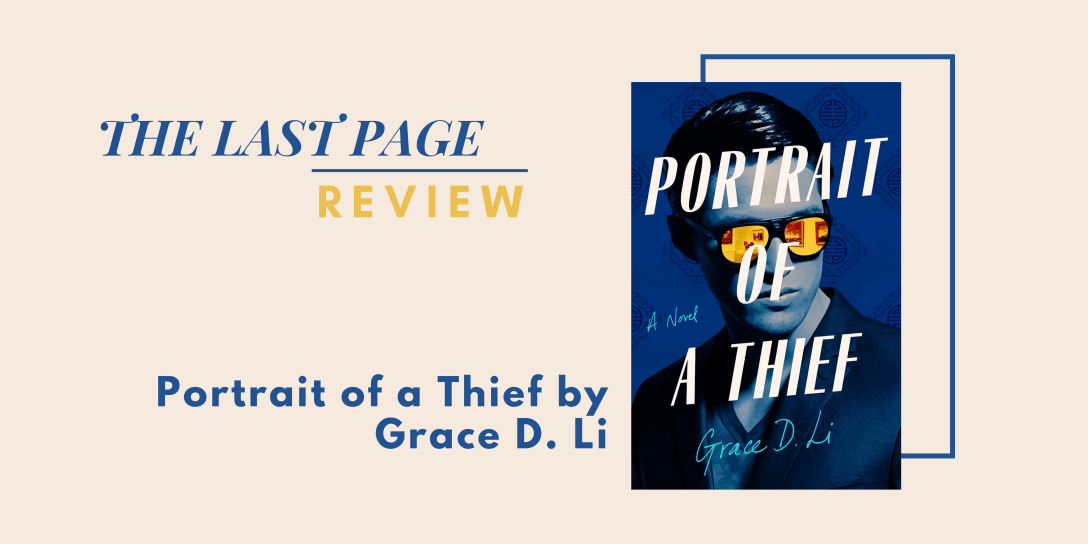
Review: Portrait of a Thief by Grace D. Li

Rating: 4 out of 5.

A mysterious art theft strikes a match when the thieves leave behind their card for Harvard Senior Will Chen, an art history student working part-time at the Sackler Museum. The perfect student, artist, and son, Will has always strived to curate every aspect of his life, yet the mask begins to slip when he finds himself entangled in an impossible plot. At the behest of his mysterious benefactor, Will becomes the leader of a grand heist to steal back five Chinese artifacts stolen from Bejing centuries ago, scattered around the world. With fifty million dollars on the line, Will assembles a crew of his closest friends, all with something to gain if they should succeed and lose should they fail. As each of the crew members wrestle with their own complicated relationship with China, the chance to take back a piece of what was stolen long ago is too great to pass up. Willing to risk it all, they may just find a missing part of themselves in the process.

Portrait of a Thief is a book that really stole the show with what it was trying to impart to its readers. Debut author Grace D. Li writes effortlessly, baring the deepest parts of her soul to all those experiencing the long-term effects of colonialism and the diaspora. Through an impossible heist with stakes beyond imagine, Li illuminates the complexity of Chinese identity against a profound yearning that lives inside those that have had to surrender a part of themselves in growing up elsewhere. With a catching comparison to Ocean’s Eleven, Portrait of a Thief brings the action up close and center, alongside an unlikely group of friends deciding to take something back for themselves. Out of all the aspects of this debut, one of the most poignant parts is the multitude of identities that are explored within. Although all of the heist members are Chinese American, their views on the mission were incredibly divided as they had all found their identity in different ways. Each of the characters had their own complex relationship with China, which was drawn out with each heist and created an interesting conflict between the group. These relationships were a stark contrast to the conversation happening around the heist and colonization, which I really appreciated as a reader. The diaspora affects all people differently, and that was really evident through the individual relationships and unique connections with China. Rather than have the crew get along, I liked that there was some conflict, both on an identity level and the heist itself. Also the little rivals to lovers storyline we were given made my heart soar. With her debut, Grace D. Li has created a novel equal parts thrilling, and critical. Portrait of a Thief examines the diverse parts of Chinese identity, diaspora, and the ways in which an identity can be in conflict, through a group of people determined to leave their mark on a flawed world.

Thank you to NetGalley and the publisher for providing this arc to review.

Trigger warnings: death, alcoholism, grief, racism

Buy a Copy:

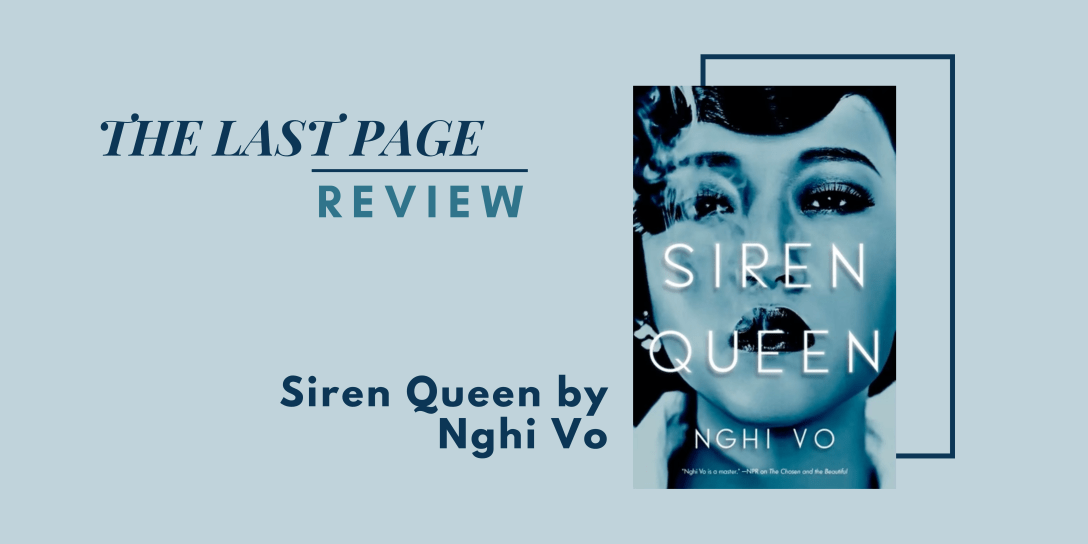
Review: Siren Queen by Nghi Vo

Rating: 5 out of 5.

Enter the glittering world of Old Hollywood, where the very fabric of stardom is rife with dark bargains and sacrifice. To those that dare attempt fame, they must navigate a complicated system, competing for the limelight, and inevitably paying the ultimate price. For Luli Wei, a young Chinese American coming of age in this tumultuous time and desperately seeking stardom, the dark truth to the movie industry is inconsequential. She is more than willing to offer up her soul for the chance to shine and burn, even if it means becoming someone else entirely. In a system where the studio heads have all the power, and blood and ancient ritual is second nature, to yield is to begin. The silver screen beckons her forth, and to succeed in an industry determined to push her to the sidelines she may have to take on the role of the monster itself.

Siren Queen is an alluring novel, laced with a ferocity that reverberates throughout every page. In typical fashion Nghi Vo creates a vivid picture, ingeniously depicting the glamorous world of Old Hollywood and its frightening underbelly. Through the eyes of a young woman looking back upon her journey to the limelight, this golden age of Hollywood is given new voice – one that dwells in the bottomless deep, luring you from the shore before dragging you down into its murky undertow. It’s been awhile since I read a book that left me as epically stranded and desperate as this one and I’m sure I won’t find anything like it again. Throughout the narrative, there is a luminosity that shines through even the darkest moments. Existing as a queer, Chinese American woman during the time of pre-code Hollywood is a poignant center for the entirety of Luli’s story. This landscape breeds a unique sort of desperation and a drive to break free from the predetermined roles set by these studios and the world at large. Luli Wei is such an incredible representation of that and a person willing to be flawed to get where she wanted. Knowing that Siren Queen was also giving a slice of Evelyn Hugo energy only led me further into the deep end of this novel. While I would have liked more with Luli and her future partner, there is a staggering beauty in this narrative being a kind of open letter penned to her past self and future relationships. For those looking for something in the vein of Evelyn Hugo, this is right up there thematically, but don’t expect an exact comparison between the two. In her sophomore novel, Nghi Vo explores the realities of fame, what it means to pursue it on your own terms, and who you have to become in order to succeed. With razor-sharp teeth, Siren Queen shines like a beacon in the storm, bringing to light a truth far deadlier when realized.

Thank you to NetGalley and the publisher for providing this arc in exchange for an honest review.

Trigger warnings: racism, sexism, homophobia, death, domestic abuse

Buy a copy:

Review: Count Your Lucky Stars by Alexandria Bellefleur

Rating: 5 out of 5.

It’s been ten years since Margot put her heart on the line with her best friend Olivia one fateful spring break – a week that transformed their relationship and forever shaped her outlook on love. In the fallout from their teenage romance, Margot has adopted a strict “no relationship” policy, convinced that they aren’t her style. Life doesn’t wait around, however, and now that all of her friends are in long-term committed relationships, Margot is second-guessing her stance. Fate offers up a chance when she runs into Olivia while touring a potential wedding venue with her engaged friends. Since they fell out with one another a decade ago, Olivia hasn’t exactly led the life she planned, but her new job as a wedding planner in Seattle offers a promising start. When an unexpected event leads her without a place to stay, Margot offers up the spare room in her apartment. Even though they haven’t talked in years, history bears repeating, and their chance encounter may lead them to rediscover the love that they’ve been looking for.

Count Your Lucky Stars is the book that has solidified Alexandria Bellefleur as a romance god in my mind. Truly no one else could have me laughing out loud and screaming in sheer frustration all at the same time. Having read the other two previous books in the series, I was thrilled to hear that its conclusion would center around Margot, a character who always gravitated attention from the sidelines. Given that this third installment features tropes that I would sell my soul for: mutual pining, forced proximity, and childhood friends to lovers, it was high up on my list of anticipated releases. Bellefleur has always had a knack for creating compelling characters and I have to say that Margot and Olivia are her best to date. The banter between them was so amusing and refreshing to read and I loved witnessing the complicated history between them unravel. Second-chance romances have always been an underrated trope in my opinion, and this one had me by the throat like no other. The chemistry with Olivia and Margot was already there to explore, along with years of miscommunication and unresolved feelings. This led to so much angst and pining on both sides that was incredibly entertaining to read. As this incorporates characters from the previous books there were so many little moments between the friend group and past couples. It was so touching to see where everyone ended up, even more, to see Olivia as a new character fall entirely into place with that. The backdrop of Seattle continues to dazzle here, with new locations and meaningful moments interspersed throughout the city. Count Your Lucky Stars may be a conclusion, but it is no less impactful or delightful than the first two books in the series. For as long as Alexandria Bellefleur keeps writing the queer romances of my dreams, I will be there championing them forward. 

Thank you to NetGalley and the publisher for providing this arc in exchange for an honest review

Trigger Warnings: infidelity, death of a parent, alcohol consumption

Buy a Copy:

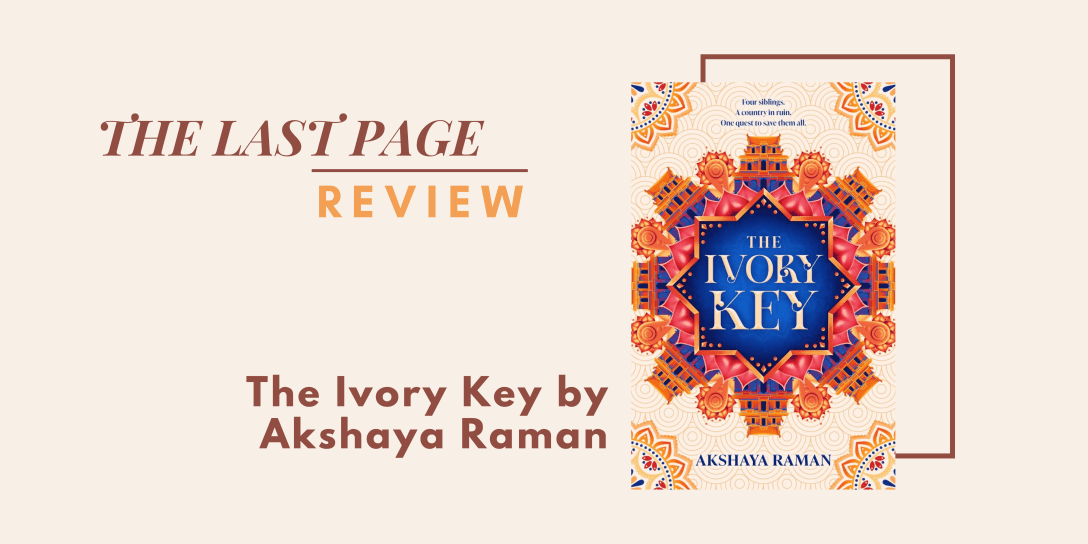
Review: The Ivory Key by Akshaya Raman

Rating: 4 out of 5.

In a world where magic is all but a coveted resource, four estranged siblings will reunite to search for a fabled object said to unlock a new source of magic, before their enemies surpass them entirely. Vira is the Maharani of Ashoka, tasked with maintaining a country on the brink of war and upholding her predecessor’s legacy. Behind the walls, magic is the only thing keeping Ashoka’s enemies from completely overtaking them, but its source is nearly spent. The only solution is the legendary Ivory Key, an ancient relic said to be capable of unlocking the magic that was previously sealed away by a once-revered secret society. In order to pursue and retrieve the key, Vira and her siblings must reunite to piece together lost clues that will have them journeying deep into enemy territory. Amidst shifting agendas and continued harbored secrets, this treacherous quest is no easy undertaking and may be the thing that finally tears apart their family and the world that they love for good.

With complicated family dynamics and intricate puzzles to solve, The Ivory Key is an artful love letter that pays homage to Indiana Jones and National Treasure with its central quest. As a longtime fan of elaborate sibling dynamics, what first caught my eye here was the core focus on four estranged royal siblings that are forced to reunite and work together to save their country. In turn with my love for quests, hidden clues, and lost relics, The Ivory Key peered deep into my heart and promised it all. Beyond these various layers to the plot, the world that Akshaya Raman has created within is so vivid and vibrant it fully came alive inside my mind. Grounded in a myriad of distinct cultural elements from India and South Indian architecture, it’s clear that Raman poured a part of herself into this world and its foundations. Hearing about all the different foods that were described at length specifically, only served to make me hungrier than I was when I began. The Ivory Key promised angst between siblings and boy did it deliver. No doubt my favorite part of the entire book was the differing agendas and fractured relationships that came into play with the quest for the key. Each of the characters had been on separate paths that had to be reconciled with who they had become and what they were trying to save. My only real setback with this was the timeline for everything. The first half of the book was devoted entirely to set-up and drawing the siblings back together, and while that was interesting, it left less time to execute the search for the treasure. Once the quest was underway, I was completely swept up in the clues and mysteries being unlocked. There were some clever twists here and there that reminded me of past treasure movies and made me all the more excited to reach the end. In combining secret societies, hidden temples, and ancient treasure, Raman has drawn together an immersive world that I am not so quick to leave. At its heart, The Ivory Key examines the bond between siblings and the identity that can be found with family and on one’s own and how those can be reconciled. 

Trigger Warnings: blood, violence, death, murder, death of a parent, grief, alcohol consumption

Buy a Copy:

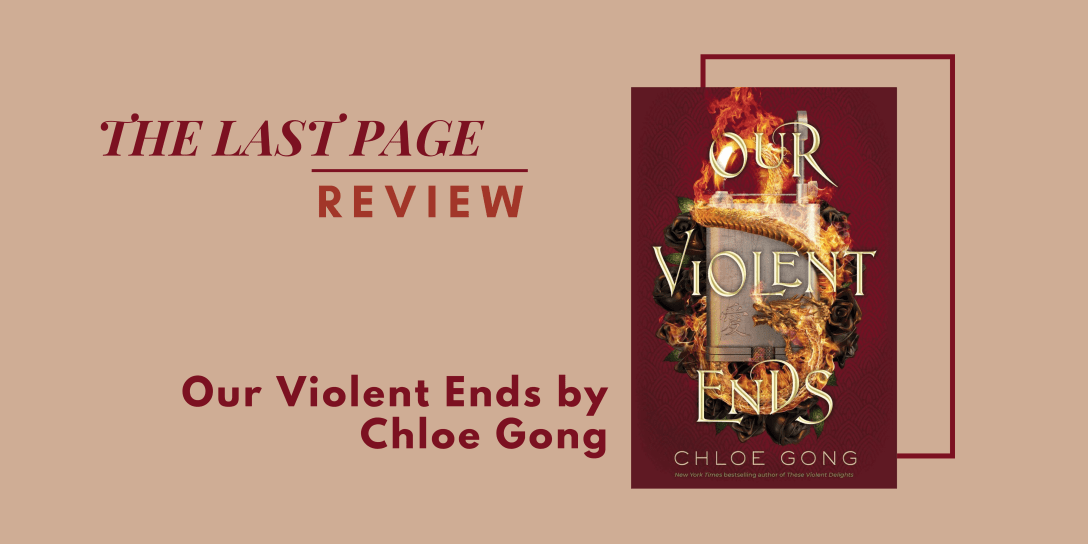
Review: Our Violent Ends by Chloe Gong

Rating: 5 out of 5.

It’s 1927, and Shanghai stands divided by blood. Allied to the Scarlet Gang through family ties, Juliette Cai gambles the safety of those around her to protect those she loves from the inevitable fallout. Having chosen a necessary betrayal over her own heart, Juliette is completely undone, possessed by an impossible need to prevail against the White Flowers and her own family. Roma Montagov believes her cruelty for the supposed murder of his comrade, but Juliette must keep up the game if she ever hopes to keep her cousin from ousting her as the Scarlet Gang’s heir. Deep within the city, something far more dangerous lurks primed to strike. It brings with it great evil, a final chip in the marble that could bring Shanghai to its knees. A betrayal may have torn their reunion asunder, but Juliette and Roma will have to shed the hatred binding them together to become something far greater to each other and to the city that they hold dear.

The thing about Our Violent Ends is that I didn’t want the ends to be violent. I spent most of my time reading this denying that the duology was in fact a Romeo and Juliette retelling and instead choosing to focus solely on vibes. Right from the start, Chloe Gong does not hold back, amping up the action and drawing an exquisite picture of betrayal and intrigue. The complexities arising from the conclusion of the previous book stay strong, give or take some added angst that set my soul ablaze. There’s just something about the betrayal trope that drives forth this finale into something dark and tragic. A foreboding atmosphere that seeps into every crevice of the story, threatening to fracture apart growing relationships and the fate of the characters. Much like the previous book in the series, the politics, and complicated alliances play against the emergence of an outside threat, but one far greater than before. Roma and Juliette really excelled here, as they ultimately reach the tipping point for compromise and a search for power amidst the blood feud that has fueled the city for decades. Seeing all of these complex feelings play out, especially after the events that concluded the last book, was simply delightful. Gong has a talent for keeping the emotions of her characters in check until the last second, which drove me completely insane. By the time that the inevitable reconciliation came around, I was utterly ruined by it. Roma and Juliette have this passion mixed with a tenderness that is so rare to read about. I certainly won’t be getting over their journey anytime soon. With so many allusions to the original text, I was afraid of how this was going to end, but Chloe Gong crafts a compelling and bittersweet ending that simultaneously tore my heart to pieces and restored my faith in love. In this explosive finale set in the chaos of a city divided, two people find their way back to one another and must fight against the bonds determined to destroy them both.

Thank you to NetGalley and the publisher for providing this arc to review

Trigger Warnings: blood, violence, gun violence, death, murder

Buy a Copy:

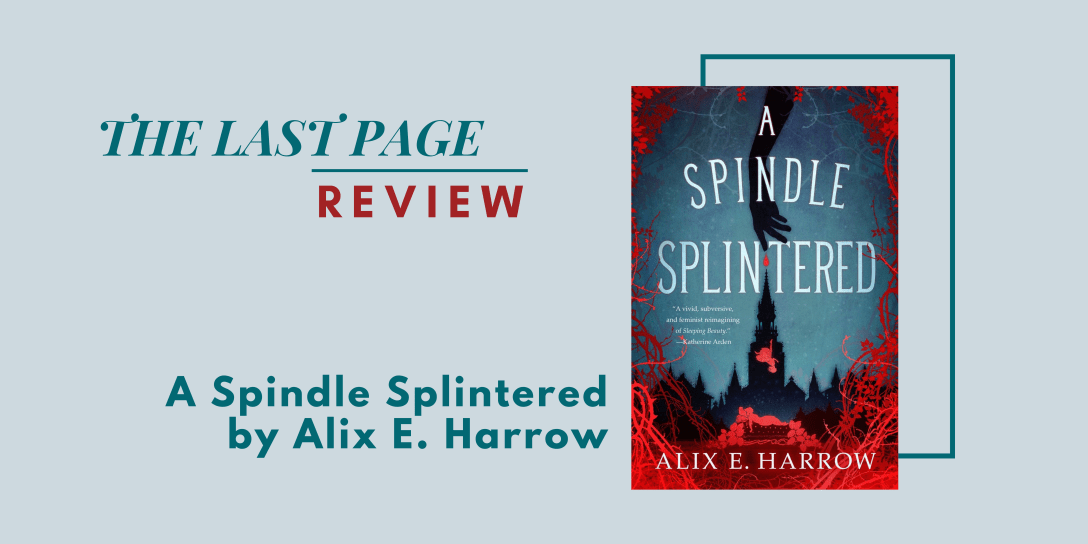
Review: A Spindle Splintered by Alix E. Harrow

Rating: 5 out of 5.

Sleeping Beauty comes crashing into the multiverse by way of Alix E. Harrow, author of The Once and Future Witches and The Ten Thousand Doors of January. Destined to not survive her twenty-first birthday due to a rare genetic disorder, Zinnia Gray has always felt a strong affinity to sleeping beauty, someone who shares in her fate. Then miraculously her birthday arrives and nothing of note occurs, that is until her best friend decides to throw a birthday party worthy of sleeping beauty herself. All Zinnia does is prick her finger on the spindle of the spinning wheel and she’s transported far from her hometown to a strange world, one not so different from her own. Though the world may be lacking in some respects there in it also lies a girl desperate enough to escape her fate. Together Zinnia and Beauty rally other sleeping beauties from across the worlds to try to change their circumstances, taking their destinies into their own hands.

Well Alix E. Harrow certainly never misses the mark when it comes to crafting a fascinating story I would sell my soul to read immediately. This time it’s a short sleeping beauty retelling that spans a little over a hundred pages but crosses multiple worlds. I would say this is in the vein of Into the Spider-Verse since it deals with multiple dimensions and characters of similar titles joining hands. Just as her first two novels completely mesmerized me, this one was no different. Turns out even when Harrow writes a shorter novel I am still bound to enjoy it as much as the others, to the point where my only complaint is that I wish it was longer. Sleeping beauty was never one of my favorite fairy tales for the reasons Zinnia so aptly points out at the beginning of the novel. However, I am happy to say I have changed my tune now that Harrow has sunk her teeth into a reimagining of the story. This crossed a search for agency with the original tale so brilliantly I cannot stop thinking about it. There is just something about finding unity among those to which you share similar situations with that Harrow has exemplified in her writing time and time again. Though Zinnia and Beauty are from different worlds and backgrounds, there is a sense of solidarity that binds them and the other sleeping beauties together as they go forward on their quest. It really was one of the more compelling parts of the text. Not that the entire novel did not sway my emotions and make me have deep feelings at any other point than that. A Spindle Splintered is Alix. E Harrow’s love letter to the transcendence of sisterhood and the common struggles that bind all women. Ties that can bring us together oftentimes in strange ways, but are by no means any less powerful.

Thank you to NetGalley and the publisher for providing this arc to review

Trigger warnings: blood, genetic disorder, terminal illness, rape (mentioned)

Buy a Copy:

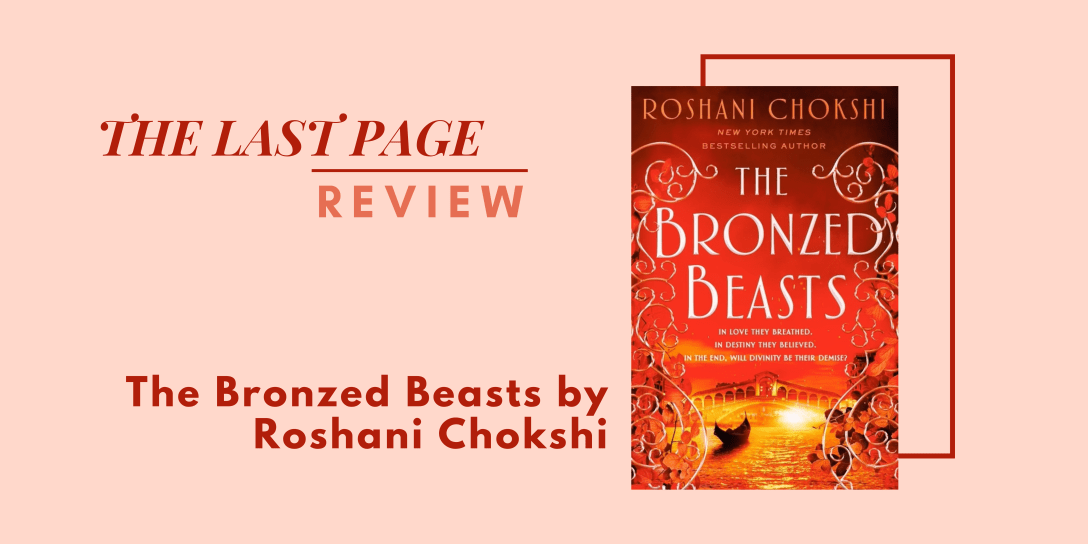
Review: The Bronzed Beasts by Roshani Chokshi

Rating: 5 out of 5.

What began in the streets of Paris concludes in a blazing glory over the winding canals of Venice. Still reeling after the betrayal of Séverin, the crew is irrevocably severed. Following a mere handful of clues, they manage to make their way to Venice, Italy, in an effort to track down Séverin and the Divine Lyre. Allied with Ruslan, the patriarch of the fallen house, Séverin plays a balancing act. He must manage unstable tempers while searching for the entrance to the temple beneath Plague Island, the one place where the Divine Lyre can be played and he can achieve godhood. With less than ten days until Laila succumbs, the gang will do whatever it takes, undergo any ordeal, in order to save her from her fate. Divinity may divide them, but in this glorious finale to The Gilded Wolves Trilogy, the crew will have to set aside their convictions in order to reach the steps of the golden temple and tempt the gates of godhood. Even if the powers within may enact a price that they are not at all prepared to pay.

The Bronzed Beasts is honestly one of the most satisfying heart-wrenchingly beautiful endings to a trilogy I have read in my entire life. It made me laugh, cry, rage, seethe, and agonize, only to redeem itself and do it all over again. Trademark to Roshani Chokshi’s writing style, the opulent atmosphere and lush language flourishes in this third installment. Made even stronger by the setting of Venice, Italy, with lively masquerades and gondola rides. Tensions are undoubtedly high after the events that concluded The Silvered Serpents, and I adored reading about the fallout from Séverin’s betrayal and how it affected everyone. It made for an intense emotional conflict between all of the characters, with trust needing to be re-established, but with little time to do so. Laila and Séverin have always been utter perfection and the added angst because of this only heightened that. Besides our main couple, there were so many little relational developments happening on top of the central conflict. Certain ones that I’m sure will make many readers very happy (vis a vis who ended up with who). Characteristic to the entire series, the plot dealt heavily on intricate puzzles, building upon those from the previous two books and tying in mind forging in an entirely new way. The added mystery shrouding the Divine Lyre and Laila’s fate assembled with this to form quite the intense conclusion. One that I’m not sure I’ll ever recover from. How Roshani Chokshi was able to embody National Treasure energy, with found family and an ending that ripped my heart out in this, is beyond me. Regardless, this series will always hold a special place in my heart and I look forward to returning to it time and time again. For the time being you can find me in the corner crying over that epilogue. Add this to the list of books whose authors I’ll be billing for emotional distress.

Trigger Warnings: blood, death, murder

Buy a Copy: