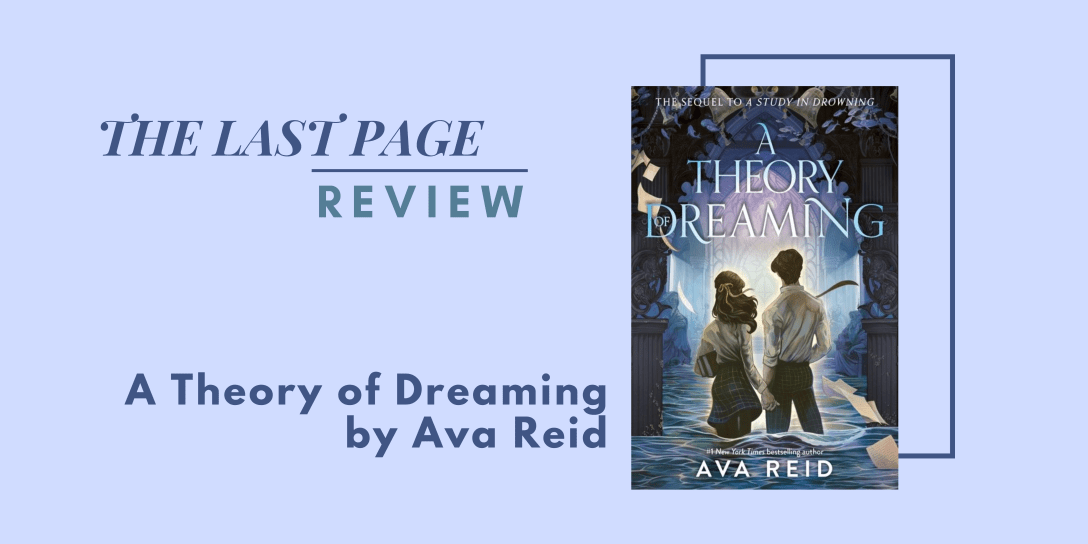
Please note this is a sequel and includes references to former events and partial spoilers for A Study in Drowning.
Effy and Preston survived Hiraeth, defeating the once powerful fairy king to return to Caer-Isel where neither occupy any power in the halls of its prestigious literature college. Since publishing their thesis contesting the authorship of the Llyrian writer Emrys Meridian’s, Angharad, further doors have darkened. Unmoored by the loss of the Angharad, both the book and its true author, Effy is left unguarded in a world without magic that wants nothing more than her ruination. As Effy navigates her first semester as a literature student, Preston confronts the magic he never believed that calls out in the night in pealing bells only he seems able to hear. These bells real or imagined take him to the Sleeper Museum where Llyr’s prominent scholars rest, said to protect the nation in the war effort against Argant. In dreams, he finds power in a world free from others and completely under his control. Time is running out for Preston and Effy and as the war effort between Argant and Llyr intensifies their connection may be the only thing saving them from a world that would see them lost—to stories and to dreams.
From the moment Ava Reid first drew me into the swirling tempest of her young adult debut, A Study in Drowning, it became a lifeline entirely of its own and one I have returned to whenever I’ve felt remotely adrift. Something akin to its protagonist, Effy Sayre, a tenacious young woman navigating her first year as the only woman in her architecture college who finds comfort in the Llyrian story the Angharad, a tale of the fabled fairy king more real to her than any waking thing. With this first novel, Ava Reid penned a tale of two lost souls finding familiar ground and navigating a way towards the truth. After becoming fully enmeshed in this evocative fantasy novel, it’s no surprise that I wanted more from this world and its fabulous main pairing. With the authorship of the Angharad contested through Preston and Effy’s thesis and its connections to an unstable time between two warring countries there was undoubtedly more to unpack. A Theory of Dreaming brings readers back to Llyr as tensions rise and Preston and Effy are caught in the current of war and their respective dreams which draw them further apart.
A Theory of Dreaming is a sequel that throws our wandering academics back into the turbulent world of their literature college and a nation rife with hatred for difference and dissent. Questing further meaning beyond her extraordinary first novel, Reid plumbs ever deeper into the depths of the workings of Llyr and the connections between academic institutions, story, and growing nationalism. Far from the front Effy and Preston fight their own battles in the classroom and the streets of Caer-Isel. In spite of their love and the teamwork they found back at Hiraeth Manor, Preston and Effy retreat into their former roles and the struggles they feel they must bear alone. Trusting in the facts, magic has never had any place in Preston’s life yet it is in this sequel that he contends with magic and the power it can wield for him. Effy, who came to represent all of magic’s possibilities in book one has lost her direct access to it—the Angharad unveiled and the fairy king forever eradicated. Without her lifeline, Effy is drowning against a roaring current and scared to show the full extent of her struggles.
A Theory of Dreaming slots perfectly into the conversations that began back at Hiraeth in a manor encroaching into the sea. First and foremost is the power of story in weaving a sense of national identity, and how that is exploited. The authors of these stories are Llyr’s greatest figures—who rest forever immortalized in the sleeper museum where it is said they hold power to aid Llyr in its decades-long war against Argant. Is this a truth or fiction? Reid brings this into focus through her characters Effy and Preston fighting for their place in a system that does not want to acknowledge their humanity. Opening up to his point of view, this sequel sees Preston confronting a dream world entirely under his control and Effy losing herself to her bitter reality. Preston and Effy come to represent the conflict between two opposing worlds, the magical and the real, and Argant and Llyr. But how does one find their footing in a world that exists to marginalize them and profit off of that oppression? Preston finds this immensely difficult as the war effort amps up and he confronts further violence for his Argantian identity, and Effy receives further harassment from her peers for daring to take up space as a woman in the college of literature.
I love when follow-up novels exemplify the work still needed, and how an established love story doesn’t mean the struggles have come to an end. That is exactly the case with Preston and Effy whose journeys diverge upon their return from Hiraeth. Preston gives into his frustration in the waking world and the peace of the past in dreams—conversations with his father and the literal pedestal he has put Effy upon. His fear of losing her causes him to be blind to her struggles while closing her off completely to his. On the opposite side, Effy’s fear of burdening her partner leads her to hide her pain. Reid continues Effy’s journey most naturally in this sequel in her search for further connection. Effy finds solace in the truth of abused and cornered women who managed to write their stories within the margins, much like her own. The power of story in mythologizing these figures and erasing them for the agendas of men and a nation is an important component of this second novel. As Llyrian writings are unveiled to be merely a prop that served to further a needless war, Reid flawlessly exposes the truth and the tragedy behind Llyr’s agenda.
A Theory of Dreaming is a sequel that throws you back into the onslaught of the storm but does not lose hope in its eventual passing. No amount of this sequel feels overwrought, its dialogue and thematically rich commentary on a nation stand strong in today’s political landscape. Connecting the power of story in building the ideology of a nation utilized as fuel for propaganda and war, Reid highlights its scars and its lasting legacy. Ava Reid balances this with the continued love story between Preston and Effy as they chafe against the constraints of their world and their place within it. A Theory of Dreaming proves that there is still more to surmount but that love is the reason we can continue to navigate this waking world—and that sometimes we must be the ones to save ourselves. For Preston and Effy that is acknowledging just how much they need each other all over again. The undertow to this duology being Effy and Preston finding love and livelihood even as they confront fascism and violence is life-affirming as it is a form of resistance. It’s been a long time since I’ve been surprised by Ava Reid’s brilliance (it is their natural state after all) and this sequel is not only brilliant it is vitally necessary. Consider me in awe of Ava Reid from now until the end of time.
Thank you to Edelweiss and the publisher for providing the advance review copy.
Trigger warnings: misogyny, xenophobia, violence, drug abuse, suicidal ideation, suicide attempt, sexual harassment

 Literaryrobin