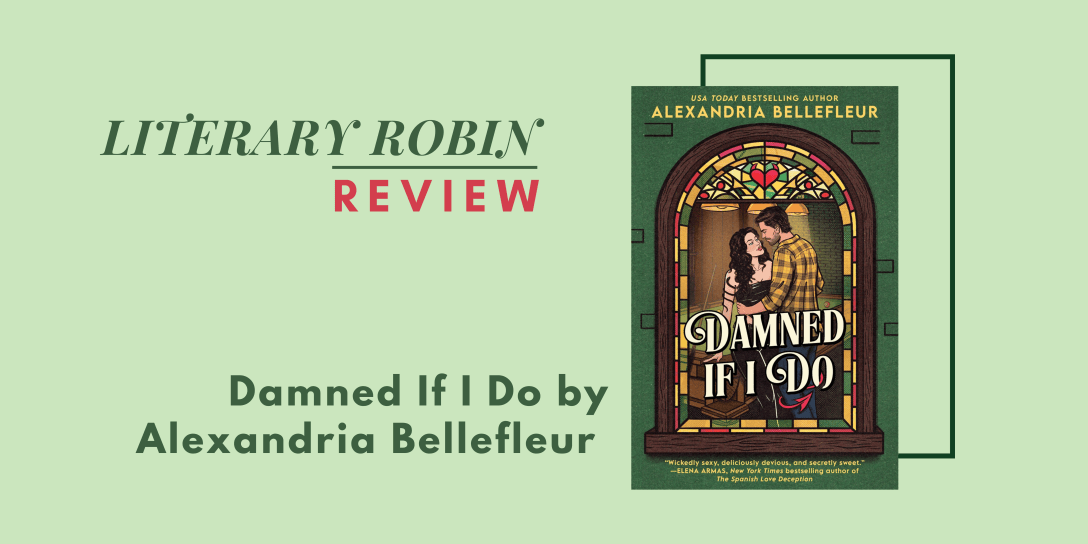
Effie Macleod is a demon, and a damned good one at that. For an eternity Effie has made her name convincing humans to bargain away their souls to Lucifer. They earn their hearts desire, and she gets to keep doing her job. So what if it doesn’t feel like she’s truly lived in centuries. After putting it all on the line to help Lucifer’s favorite demon win back her soul and her life, Effie is demoted. Now her days are spent rage baiting the humans of the internet with improper recipe substitutions and Reddit defenses of terrible TV characters. When her boyfriend Belphegor, a prince of hell, proposes, she decides to finally leave the past behind. Unfortunately, she is informed that her impending nuptials are not valid, as Effie is already married. In sixteenth century Scotland, she bound herself to her husband Finn Macdonald in her current life and the next. This soul pact was literal and while she has spent centuries helping Lucifer collect souls, Finn has been reincarnated over and over again. With no choice but to convince Finn to dissolve their marriage, Effie travels to Georgia. There, in a local bar, she comes face to face with her husband who has no memories of their life together, nor his reincarnations, yet still refuses a divorce. Effie can’t leave without obtaining her divorce, but the longer she stays the deeper she falls into their past, the present, and the future she and Finn could claim. But hell may have other plans.
There is something so Bellefleurian about a demon showing up in a small town to convince her current husband to divorce—except her husband has reincarnated and has no memory of her. Bellefleur completely outdoes herself once more with this interconnected follow up to the delightful paranormal escapade that was The Devil She Knows. Damned If I Do is paranormal romance perfection, a reincarnation second chance romance involving one demon’s quest to convince her reincarnated, mortal husband for a divorce, and the stubborn man who loves her despite their missing lives and memories. Damned If I Do is an angst fest, as only a reincarnation story can be. The Bellefleur promise is one of angst yes, but also one of bisexuality (of course), determined women, and hilarious hijinks in the name of love. This novel sees love as not the absence of grief, but one that honors it as an essential part of loving. Threaded through with a homesickness that takes hold from that first meeting all the way to the happy ever after, Bellefleur roots us in the notion of home as a perpetual pursuit—which can be secured in finding our person, in choosing the love we’ve yearned for. Home as something chosen, again and again. In Damned If I Do, the romance is something devilish and the plot a mix of historical romance, paranormal, and rom com. The devil may work hard, yes, but Alexandria Bellefleur certainly works harder.
You could not find a book more geared toward my tastes than Damned If I Do, nor should you attempt to. It’s demonic, it’s bisexual, it’s angsty. My three favorite flavors, together in one romance novel. Two people—the demon and the bartender—chart the path toward reconnection after centuries of separation, with one small town and a child in tow. Along the way, they’ll confront pesky gnomes, determined townspeople, and the ghosts of their past lives encroaching on their present. Damned If I Do is like if Life As We Know It, Outlander, and Sweet Home Alabama combined into one paranormal romance novel, and all of it is perfection. As with all things, Bellefleur is doing some incredible character work here—maybe some of her best. We’ve got Effie, an immortal demon who has lived centuries, and Finn, a bartender, formerly her Scottish husband in a past life. Effie’s hard exterior finds a home with Finn’s bone-deep certainty, give or take a few arguments. This man takes all of a few seconds to decide he will not be divorcing this beautiful woman and that his past self made the right decision in swearing away his soul. Certainty is sexy, people!! Utilizing the reincarnation trope, Bellefleur looks back to the past as she builds out the present, tethering one to each of her two leads. Whether past or present, this narrative is one of home: where we find it and how we choose it. Watching these two build one side by side will have you WEEPING before the book is done, I guarantee it.
When it comes to romance, there are some authors one can always expect the gut-punching, yearning, heart-wrenching narratives from, and Damned If I Do is proof that Bellefleur is adept at all three. Damned If I Do is where old flames find new beginnings with the paranormal proudly front and center. For Bellefleur, the paranormal isn’t just the demons, troublesome garden gnomes, or soul bargains to Lucifer himself; it’s the past love, now foreign, which granted a certainty to swear away lifetimes, and the loss which has swayed every decision since. Finn and Effie’s reunion in a Georgia bar kicks off a deep dive into their past and who they have been in the centuries since. Finn, homesick for another life—and for her, and Effie, determined to leave the past where it stands. Through dreams, flashbacks, interludes of rage-baiting, and the present-day setting comes a profound narrative of second chances and choosing our home. This novel is a perfect example of what romance can accomplish: narratives that honor our pasts and embrace our present. For what is love without both? Damned If I Do is an ambitious, hot, second chance romance with a devilishly dark side. Its disentangling of the grief, love, and heartache of lifetimes is an emotional journey you won’t want to walk away from. There are few things Alexandria Bellefleur cannot do, and after this, there is nothing I want more than for more paranormal romance from her—for which I would easily bargain away my soul and then some.
Thank you to Netgalley and the publisher for providing me with an advance review copy.
Please note this review contains spoilers for the former book in this series, Voidwalker, and contains references to some of the events in this sequel. Read with caution.
⭐⭐⭐⭐⭐
Rating: 5 out of 5.
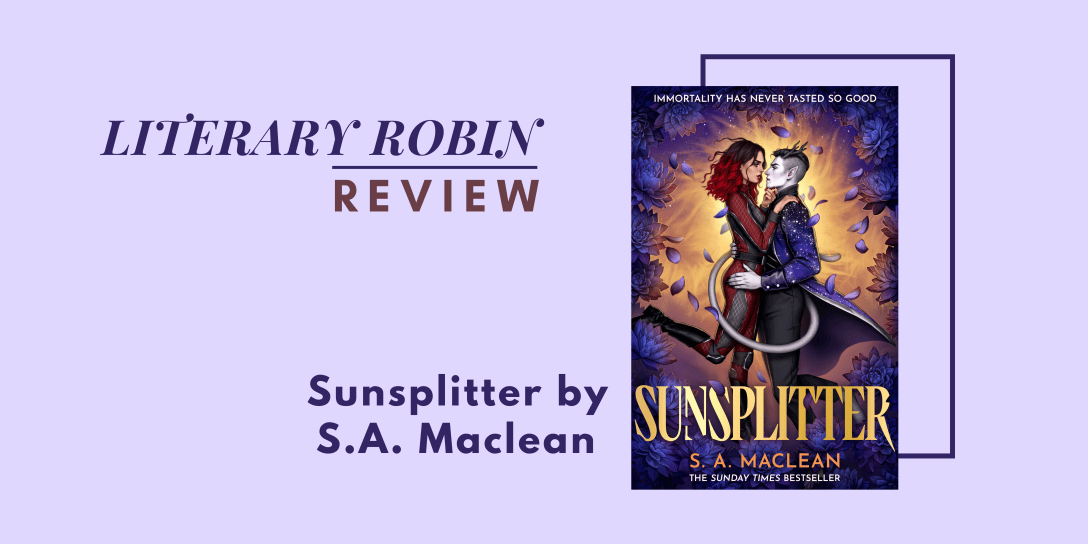
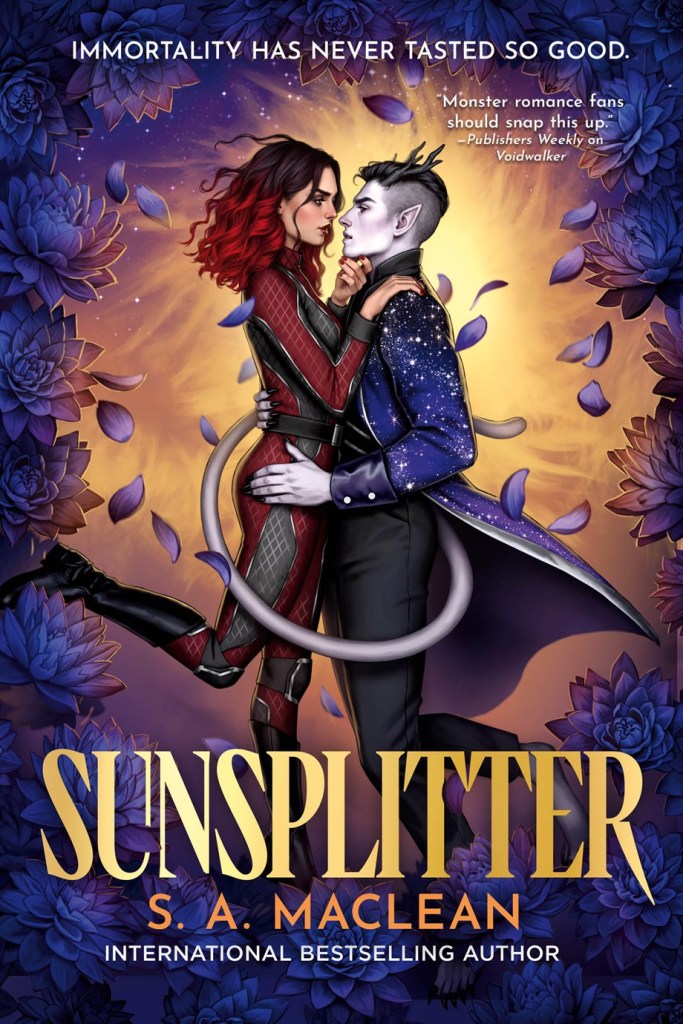
A year after revolution, Fionamara, part time smuggler and Voidwalker, has settled down in the winter city of Tomaskweld. Alongside her Daiyari partner, Antal, and their allies, they have built the city into one free of the sacrifices to the creatures of the void. This year of peace draws to a close when Antal receives an invitation from his family requesting his return. After several decades away, they want him to come home. Determined not to let her partner wander off into danger alone, Fi is more than ready to travel to a plane filled with cannibal beasts—some of whom definitely want her dead. Even knowing the tormented past of Antal’s former partner, she is not willing to leave him to face his family’s demons alone. Thus, Fionamara and Antal pursue this homecoming as they do all things: dramatically and with style. Arriving on the Twilit Plane, the couple soon find Antal’s people are more than willing to eat Fionamara alive. The toughest adversary is none other than Antal’s father, a man who bears no understanding for humans nor patience for what Antal and Fionamara have built. If he learns the truth about their new governance, he will not hesitate to undo all they have fought for. When a dangerous threat emerges from beyond the darkness—one that could doom even the daeyari—Fionamara and Antal join the hunt. The beasts of the void care not for family rivalry, but it is Fionamara who may not emerge unscathed in a clash of deadly immortals; at least, not without being forever transformed.
Sunsplitter asks what else there is to confront after successfully toppling the government and falling in love with a cannibal? Daddy issues. It wasn’t enough for Fionamara to successfully pull off a revolution and unite humans and Daiyari alike. Now she has to fight the realest villain of them all: her partner’s father (and source of his trauma). The dark fantasy duology that first took shape in the yawning void and the cusp of revolution returns to ask the eternal question: what happens after the happily-ever-after? For author S.A. Maclean, this gets a bit complicated, as happy-ever-afters are so rarely without the real work of partnership itself. In Voidwalker, Fionamara and Antal forged ahead with revolution, one that required fostering trust to reclaim their world. Now a year into rebuilding, old ghosts threaten newfound security and their flourishing relationship. Sunsplitter ushers in a new era for our disaster bisexual duo. We have a wardrobe change and a new dye job for Fionamara (emphasis on the red), numerous personal injuries, confronting the trauma within—and surviving—and the unification of two separate worlds. Sunsplitter proves who exactly can match a cannibalistic immortal race from the void, particularly in the monster-hunting arena. And the answer is whatever Fionamara has going on. It’s pure chaos condensed into one novel. A finale that had me more than willing to traverse the impossible void and back for one last adventure.
Sunsplitter is a book for the dark fantasy lovers who endlessly crave more after the initial closing of the pages. As someone who often wonders how her favorite couples would fare after facing down revolution, grief, and death, Sunsplitter was the perfect kind of sequel. S.A. Maclean knows what she plans to uncover in this second and final chapter. In Sunsplitter, the details of her characters we missed uncovering amidst the saving of the world are brought out into the light of day, or more specifically, the Twilit Plane. Here, Maclean examines the families who shaped our two leads so profoundly, and the traumas endured. Sunsplitter brings readers into the mysterious world of the Daeyari, their culture, and the customs which have dictated centuries of tithes and sacrifice. Antal and Fi are there to shake things up and bring it all crashing down (as only they know how to do). Sunsplitter increases the angst in a wonderful storm of humor and heartache. This book is a reckoning, a homecoming, and a comedy all at once. In one moment I was crashing out at Fionamara and Antal having to reference their meeting as: “So I blew up his capitol building” and “So there I was just chilling in her rafters, and also the snow bank, and also I was in my bathrobe” (paraphrasing). And in the next, I’d be moved to tears over Antal facing down his father and Fionamara just constantly throwing hands on his behalf. Fionamara and Antal face numerous adversaries in this finale to the Beasts of the Void duology, but most essential are the demons they face from within. While these demons are truly their own, they don’t have to overcome them alone.
This sequel is basically monster hunting, monster fucking, and several near-death experiences condensed into one installment, and I could not ask for more. Additionally, facing down your father, who is essentially Thranduil if he were an immortal cannibal on the Twilit Plane. Sunsplitter is a cathartic reading experience for anyone who has experienced similar parental dynamics to the cannibal creatures from the void, but it’s also a reminder for us to never diminish ourselves. Nowhere is that more evident than in our own fierce and slightly unhinged heroine, Fi. Despite being out of place in the Daeyari world, Fionamara never allows anyone to treat her as less. Her self-worth is such a bright spot in this novel, the way she demands it from her partner and holds him to task when he falters. These two aren’t just in it for the short term, they are consistently asking the other to be better in the here and now. If you love odd expressions of devotion, like crafting your eye in the image of your beloved or a character worried about the other while an arrow protrudes from their skull, you may love this novel. These two have me so goofy; I just love them so much. Sunsplitter is certainly different in tone to its predecessor, but as with all things, it’s the ripening of a plant long seeded—a fruit which is all the sweeter for having taken its time. S.A. MacLean wraps you in the embrace of the void, one that is merciless and comforting in conflicting measure. Sunsplitter closes the chapter on our havoc demons in an emotional send-off I’ll be thinking about for a lifetime. Or until the void claims me.
Thank you to Orbit Books for providing me with an advance review copy.
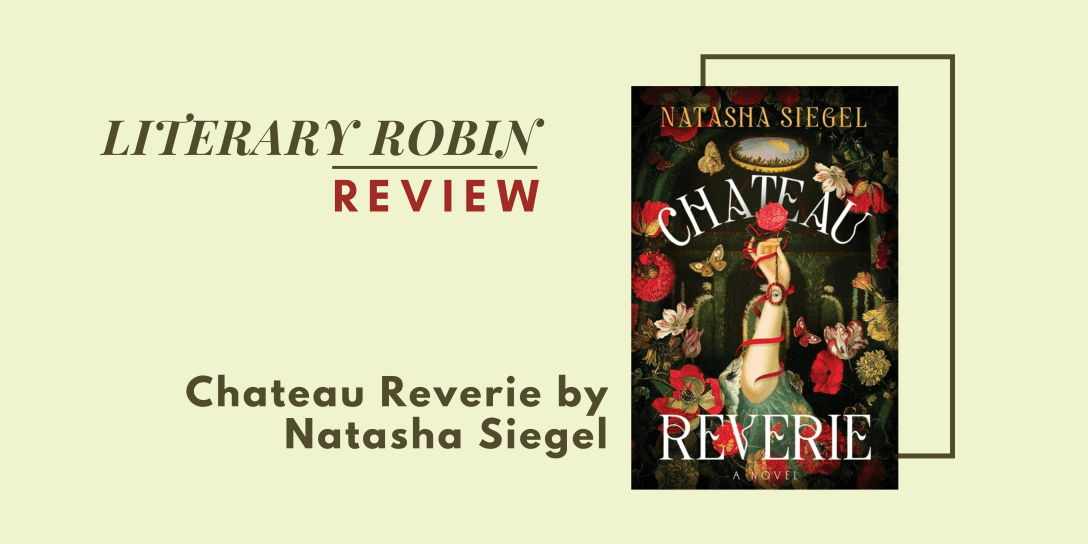
When the invitation arrives, Genevieve de Vienne does not know what compels her to accept. The invitation only asks for her to write upon it her heart’s desire before setting it alight. For Genevieve, there is nothing she desires more than to forget Claire Marchard, her former companion and lover lost to violence. For Leander Sterne, there is nothing he desires more than his liberty. To have a chance at their wishes being granted, both must attend the mysterious Reverie and Son’s Auction of Secrets—a choice made in setting fire to their desires, answering the alluring call of the Chateau Reverie. Arriving at the Chateau, Genevieve remembers nothing that came before the burning of the letter. Surrounded by others who have journeyed to the chateau for its powers, Genevieve is soon drawn close to one guest in particular, Leander Sterne. Hardened by a past that remains a mystery, Leander will do anything to win the game and secure his freedom. Yet his continued rise in the competition will require his deception over the woman who threatens his heart. The chateau cannot allow Genevieve and Leander to triumph together, for their desires for freedom and forgetting are in direct conflict, and neither of them wished for love in this exchange. To win will mean achieving a hollow goal, condemning the other to a far worse fate.
Natasha Siegel returns with another magical journey of star crossed love, fate, and the desperation which drives humans to bargain for their desires. Enter the Chateau Reverie, a place and a power that casts its nets upon the lost souls yearning to leave something behind, or gain anew. Where secrets are the currency and love has no place. Genevieve de Vienne desires to forget, Leander Sterne desires to remember, but neither party accounted for a love that would have them risk even their own freedom. Natasha Siegel has fully embraced the kind of historical speculative novels that make me go feral. It’s not enough to deliver a well rounded interrogation on humanity, on a period of history, she has to throw in a romance that had me clawing up the walls. Chateau Reverie is Siegel’s take on a star-crossed love story, set in the remaining years of the French Revolution on a Chateau out of time. Behind the walls of the Chateau Reverie, memory and power call out to the helpless to participate in an auction of secrets, where secrets are exchanged for their greatest desires. Grief and liberty are the lure to our lovers Genevieve and Leander, fated to intersect and be torn between want and sacrifice. Natasha Siegel’s compelling voice lends meaning to memory—the choices that define our past, and determine our future. Chateau Reverie is a twisted standalone of epic romance and tragic acts, lending weight to our shared humanity and love’s hand in surmounting even our darkest moments.
There is a complexity to Chateau Reverie that yearns to be uncovered from the novel’s first breaths. Siegel understands the power in the prologue, those glimpses to that which drives our characters to set an invitation aflame and travel the long journey to the Chateau. Once there, a chance meeting on the estate’s sprawling grounds introduces protagonists Genevieve to Leader, opposites in desires they may be, but inextricably drawn to one another. Between uncovering the mysteries of the auction and their fellow attendants, these two are yearning with a capital Y—a feat considering this novel’s condensed timeline, but another testament to Siegel’s powers; she’s going to bring on the yearn and you will feel it. The dynamic between these two is one that sinks in its claws (much akin to the chateau itself). Though both haunted by the past, Genevieve and Leander could not be more different in temperament, and their misperception to one another drives forward most of the tension in the first half of the novel. I fell in love with Leander when he woke up in a shallow grave and said no but it’s my fault for attempting to get some sleep. And Genevieve, who in many ways cloaks herself in pretense, is one you cannot help but love and root for—for her to live life in the light and for her to forgive herself for what she had to do to survive. Anyone who loves a good character driven tale will hunger little within the confines of Siegel’s Chateau. As this is me, oh did I feast.
File this novel under: this house is alive. And it’s preying on us. Chateau Reverie is like a doll house where every room uncovers some small trinket of humanity, the inner psyche of our characters, and the conundrum of our existence. This chateau holds memories of days long past and its glittering atmosphere and ornament is a facade to darker truths. These things torment the reader as we are led deeper into its cavernous underbelly and grapple with reality: is it a dream or little more than a facade. The tragedy of the lovers Genevieve and Leander feels pertinent here. Though love can strengthen us to surmount our pasts, is it something that is enough for us to cast off that which restrains us. Can we have freedom if we have to cast love aside and condemn another to torment?? Wandering the maze through Chateau Reverie’s heart, Siegel pushes Leander and Genevieve to expose the truths which hold them back from stepping forward and leaving behind the past. There’s a catharsis and a grief here, and in Lady Reverie, we see how humanity is a feeding ground for higher powers to feast upon. Dreams, regrets, thoughtless desires, it all finds a home within the boundaries of the chateau. It is up to our duo to reach for a future beyond their myth, the ending for a story long planned.
Chateau Reverie stretches out its hands and calls upon an age-old longing, one that takes hold of the reader as we are led further and further through its deceptive halls. One thing about Natasha Siegel: atmosphere is everything and this novel practically glimmers in it. The rococo design, chateau setting, and elegant attire for this period are an immersive surrounding for Siegel to enmesh the reader within. This excess haunts the narrative, a reminder of the pain hiding beneath this period and to our characters, who fight to move beyond pain and suffering. One of my favorite parts of this story is how easy it is to fall prey to a single narrative, allowing us to believe we have no choice. That single narrative can be confining ourselves in the past and the things that have been done to us. Though our characters are cornered by the deceptive nature of the chateau, there is always a way out, one they must uncover and fight for. Chateau Reverie is another historical fantasy legend from one of my favorite emerging fantasy voices. Look no future for standalones that pack a kick and provide that feral style of yearning. Natasha Siegel is never not making me lose my mind over a romance, and with two leads determined to sacrifice themselves for the other, this was never not going to land with me. Siegel’s Chateau Reverie stands as a testament of humanity’s desire to gain—certainly—but moreover, to follow our inner lantern and leave behind the fear that we could drown. To follow the lantern anyway.
Thank you to Edelweiss and the publisher for providing an early review copy.
Trigger warnings: violence, death, war, drowning, dead animals, suicide, suicidal ideation
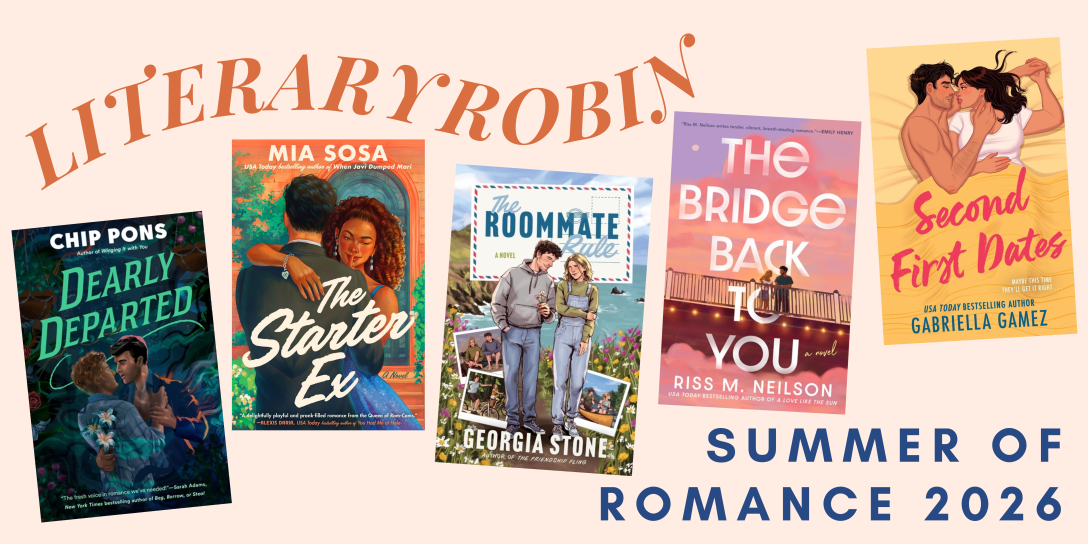
After the longest winter in existence the light at the end of the tunnel is definitely all of the incredible romances being served up this summer. With work taking up a lot of my time I didn’t get to my second quarter recommendation list during the spring so as an apology I’m here serving up a behemoth of a romance recommendation list for you all today. Here are eighteen of my latest romance favorites and the ones I think should be in your hands this summer. From the “yes, chef” to romancing a modern day Hades in a small New Jersey town, the romances are wide ranging and all encompassing. These are the kind of stories you can take to the beach, read on public transit, or enjoy on your porch (if you are so lucky to have one). My philosophy: romance is for every occasion. So whether you are a seasoned reader or new to the genre, there is something here for anyone and anything.
Disclosure: I will be linking my Bookshop affiliate link below my reviews. I earn a small commission if you purchase books through this link and it is one way to support my reviewing! My affiliate link will simply be labeled “Bookshop.”
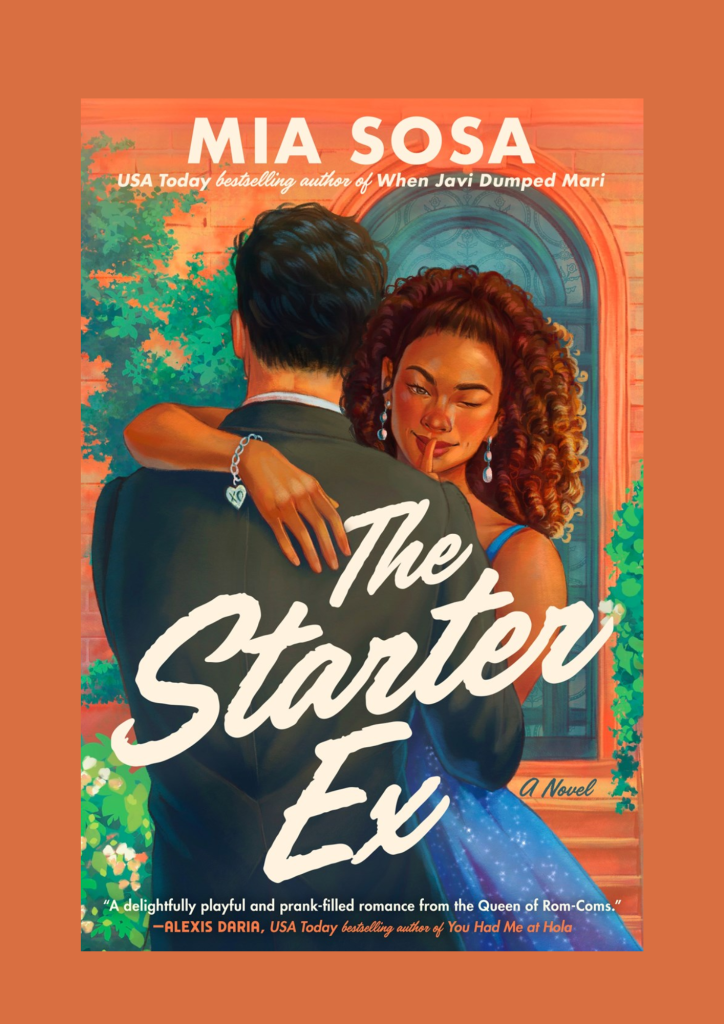
The Starter Ex by Mia Sosa
Vanessa’s lucrative college business got her far in that time of life. Dubbed the “Starter Ex” by her clients the gig was simple: be the girlfriend that convinces him to take a chance on the other girl, by being everything he hates. An inopportune sisterly brunch sparks a rekindled flame when Vanessa’s sister Lisa enlists her services. Lured out of retirement by the opportunity of getting back in her good graces, Vanessa commences operation starter ex redux. The man in question? Jason Torres, brother to Lisa’s best friend, and Vanessa’s complete polar opposite. With all that the gig should be easy, but Vanessa’s chaos meets Jason’s quiet heart and sparks a flame, one she isn’t sure she can resist, not even for the Starter Ex payoff. The Starter Ex continues Mia Sosa’s trend of hilarious and deeply emotional romances, retelling iconic rom coms within the contemporary romance space. It’s How to Lose a Guy in Ten Days, but something undeniably Mia Sosa, all chaos and heart contained in one romantic package. We’ve got weddings, baseball games, mud wrestling, and of course the big family antics that wrap you up in warmth and levity. The Starter Ex is a romance that cannot be contained, attributed to main character Vanessa Cordero who is chaos incarnate. A romance heroine to live by, she doesn’t diminish her light for anyone and the compatibility she eventually finds with Jason is forged in the heat of the pranks and mayhem. The Starter Ex is another sensational novel from Sosa. Endlessly grateful that her calling is romance and that we get to experience all of the tenderness, the raw vulnerability, the aching passion in every line.
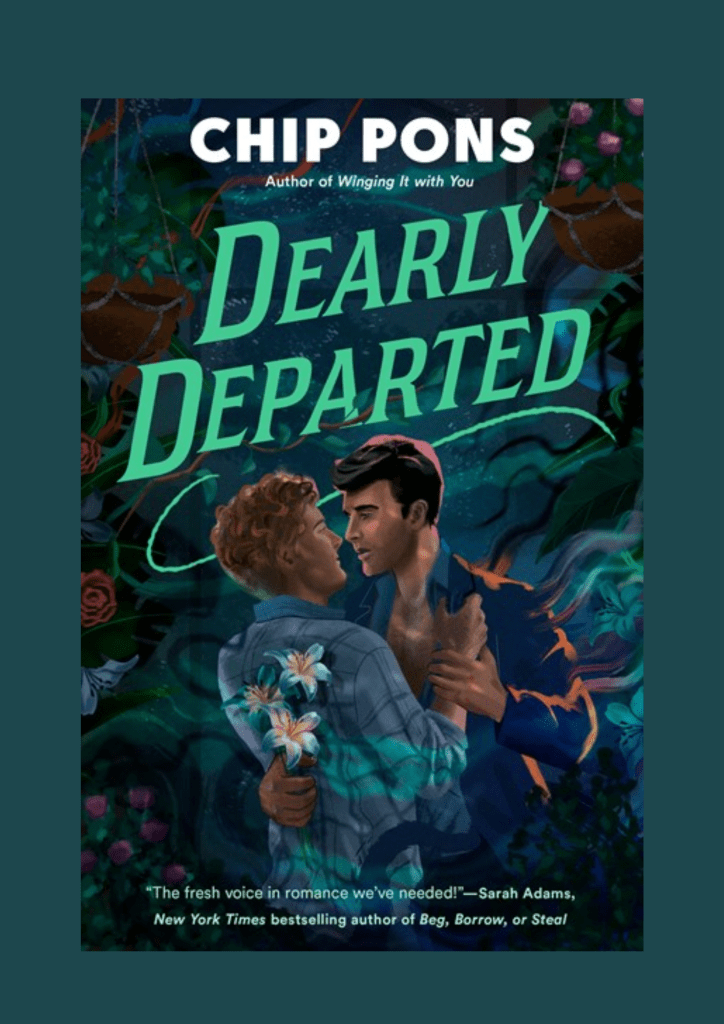
A retired Hades runs a funeral home in a small New Jersey town where he falls in love with a florist who makes the sunflowers bloom? Chip Pons how dare you. His godhood long since past, Hayden Harlow—formerly of Hades fame—now operates a funeral home, Harlow and Sons, dreaming of a day he can cast off his mortal purgatory. All the days appear the same until he meets Levi Wilder, a local florist who could change his perspective on his fall from godhood and his dreams to return. Worse, he could make him feel things again, if he can dare to let those feelings bloom where they’re planted. Listen if your man cleans house at death related trivia all while nonchalantly eating a burger you lock him DOWN and then force him to participate in more group activities. And if that man is also Hades you do it expeditiously. Oh Dearly Departed how I love you. My first foray into Chip Pons and unequivocally not the last because this made me feel a true torrent of emotions as all the best romance novels should. The moody former god of the dead meeting a sunshine incarnate florist could not be a more perfect pairing for a story about the weight of our lives, the light and the darkness that meet in balance. Chip Pons forges into a paranormal small town, Stonevale, whose heart and soul is found in Hayden and Levi both. Dearly Departed is not just a gripping queer paranormal romance, but an emotional uncovering of the weight of our charges and the fear we must surmount to choose something for ourselves. Chip Pons asks what are we beyond our mantles and the answer is found in a riotous bloom of sunflowers and finally doing the selfish thing.
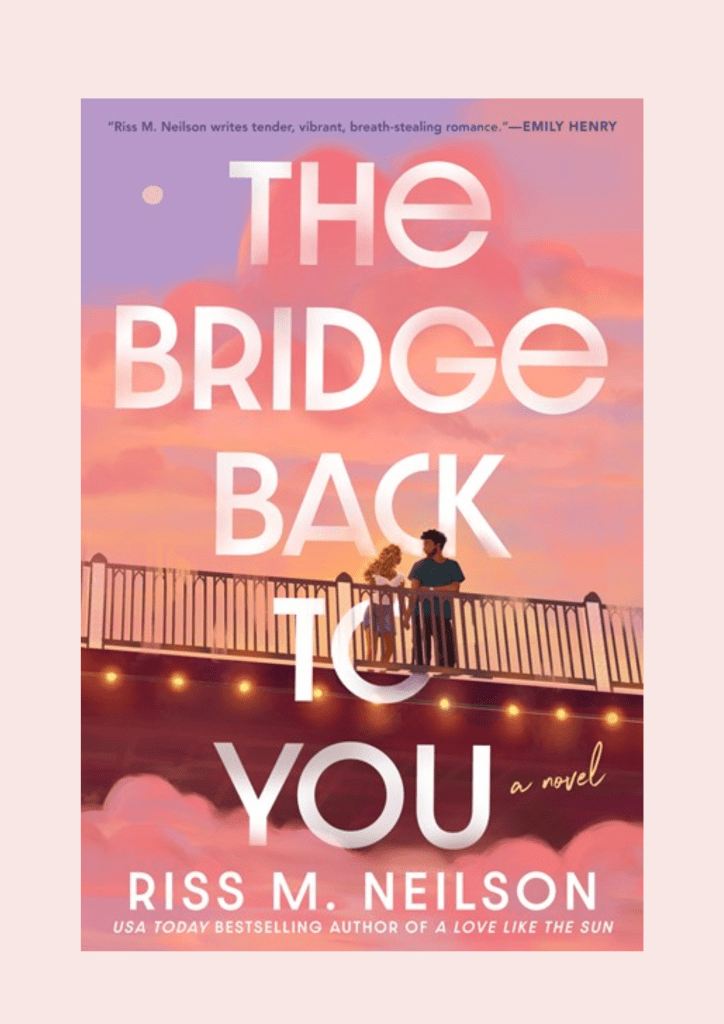
Two exes, one restaurant, and the still beating heart of the history between them. For Olivia and Carmello, first love was directly tied to a place: Celia’s Place, a restaurant and a home that was very much the epicenter for their great love story. Ten years after their breakup drove them to lead separate lives they are drawn back to one another when from beyond the grave, Celia bequeaths them stake in her business. Now co-owners they navigate having to run a business neither wants to give up, and they will have to acknowledge that maybe they don’t want to give up on each other either. The Bridge Back to You serves up an electric second chance love story and a glimpse into the ups and downs of restauranteering in splendid Providence Rhode Island. Writer Riss M. Neilson crafts tension and angst at their most poignant, bringing weight to a romance all about the reality of forgiveness and the taking of second chances. Through the second chance her characters face the past and the hidden desires they have long denied themselves. For one, a home they never had—or allowed themselves— and another that they might not want to go it alone anymore. In The Bridge Back to You, setting is just as much a part of the second chance as its two main characters. Navigating Providence alongside Olivia and Carmello was a step into true community and a home coming all at once. The sights, the people, and the food (emphasis on the food) each a striking surrounding for the central romance. The Bridge Back to You dials the emotions on high through its focus on grief and reconciliation, uncovering just how sometimes you have to run away to learn your true home.
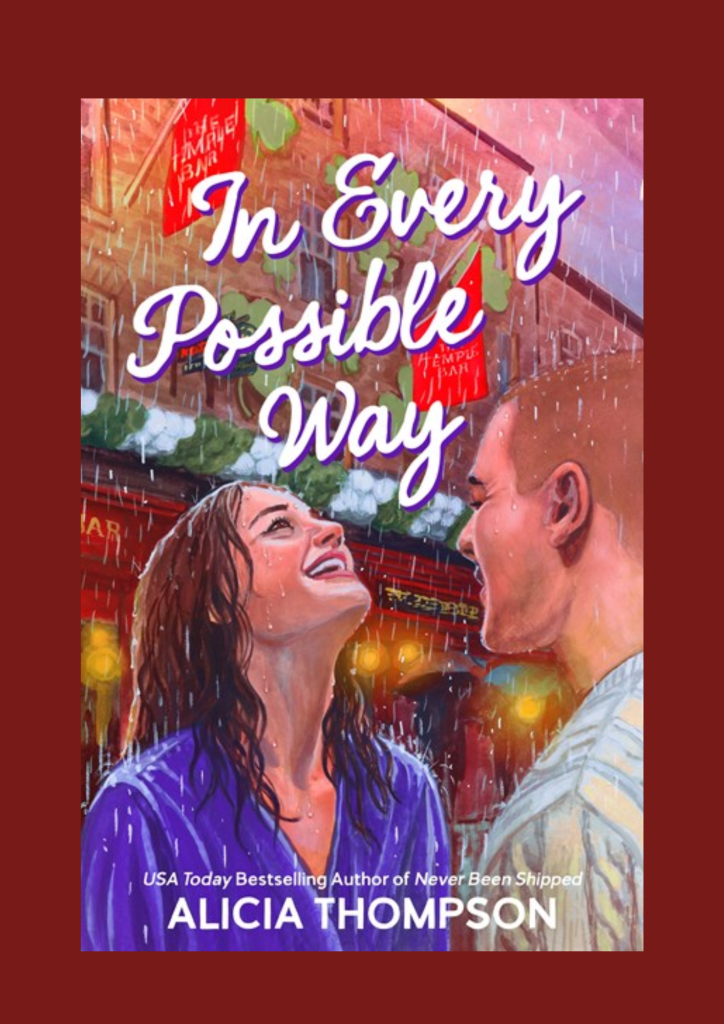
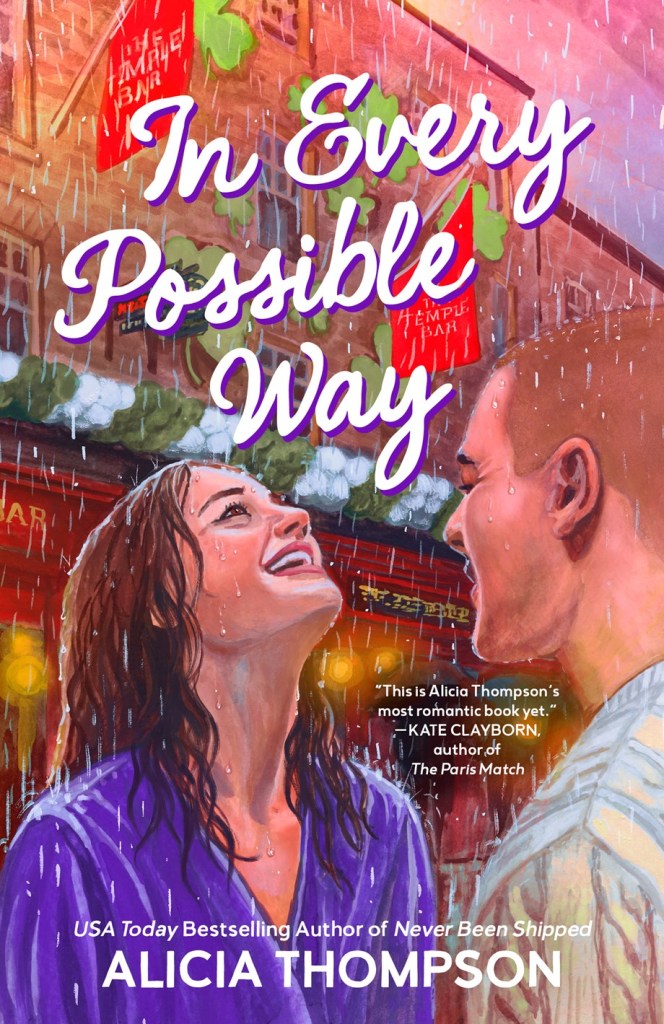
Ending a horrendously bad date by waking up in Ireland where you meet a mechanic who adores you, lets you borrow his sweaters, fixes broken things, and has an extensive Silvia Moreno-Garcia book collection. A fantasy only Alicia Thompson could construct, and thank god it isn’t just. In Every Possible Way marks a notable shift for an established voice within the romance genre, giving contemporary romance a slightly fantastical twist. In Every Possible Way is Alicia Thompson’s masterpiece, a serendipitous romp through Ireland—its history and culture, and a startling look at the pursuit of human connection. A run down secretary and a stoic mechanic meet unexpectedly and spend an entire weekend exploring Ireland, facing connection and possibility amid their wanderings. In Every Possible Way has got intense scenes in the rain, romantically charged dances at the club, pub crawls, numerous car rides, and of course the love confession of love confessions. Trust Alicia Thompson to give us a man willing to risk it all for love. Even better a heroine willing to chance a home away from where she is rooted. That’s peak romance. Alicia Thompson ventures a new narrative for the modern romance, one for the lovers of early 2000s rom coms sparkling with magic and settings that sweep you away. In Every Possible Way is for the romance lovers, at its core a resounding call to love no matter the distance. Fall in love with Jess and Eamonn, with Ireland, and the possibility that threads throughout our daily lives. With luck and a bit of serendipity on its side, few romances are as marvelous as this one.
The Miseducation of Caroline Bingley by Lindz McLeod
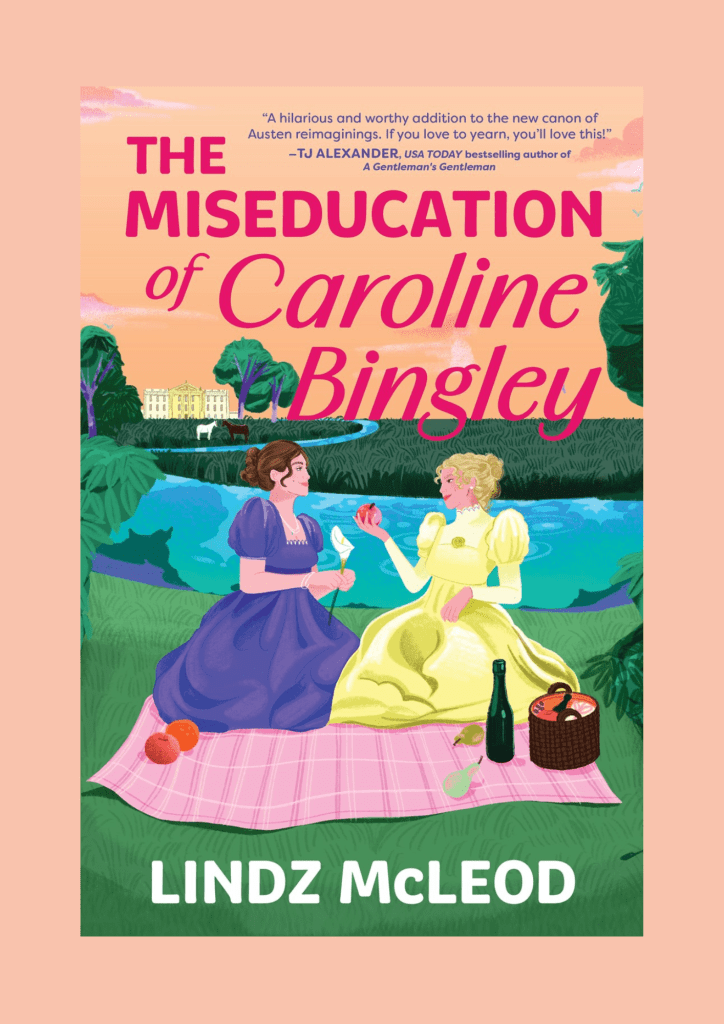
Caroline Bingley learning her charge in life is to be the mean lesbian and to love Georgiana is everything Jane Austen wished for her (it’s true). Falling in love with a Darcy is no rare thing, but for Caroline Bingley it may as well be. All it takes is one conversation with Fitzwilliam to send her spiraling to Georgiana Darcy where she enlists the spirited sibling to help her mend her ways. A great transformation to undertake, Caroline and Georgiana’s real endeavour is just beginning— choosing each other over and over again. Lindz McLeod’s The Miseducation of Caroline Bingley continues her Austentatious series, posing an essential question: what if every woman in Pride and Prejudice was queer and yearning their way to a happily ever after. This time a misunderstood icon, Caroline Bingley, and the character most deserving of being a heroine in a romance novel, Georgiana Darcy. Lindz McLeod has previously proven what a firm hold she had on Austen’s world and her characters. The romances she brings to life are an extension of a story far from over, something only a person writing in Austen’s echo could accomplish with such veracity. The Miseducation of Caroline Bingley is a treat for lovers of Jane Austen and complex women far and wide. Paying homage to the Pride and Prejudice (1995) lake scene, excellent boiled potatoes, and a love confession Wentworth would be proud of. This novel is romantic in all things, the stolen glances and sapphic longing, and the fight it takes to build an authentic life with the one you love. Georgiana finding someone who would stay, and Caroline a person who would appreciate her is a long awaited ending for two of Austen’s finest. Just as these characters find a home together, being seen and loved for who they are, there is belonging to be found in every single page.
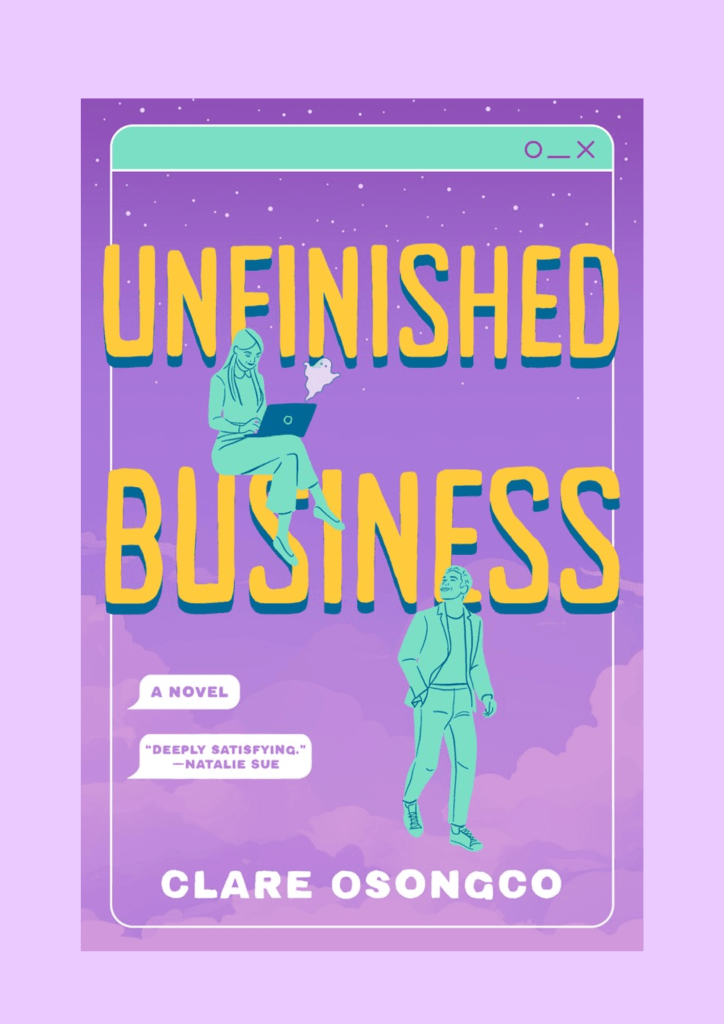
What is “mom’s ghost trapped in slack server” if not love persevering??? Grief and the things we leave unfinished perseveres most literally in Clare Osongco’s adult romance debut, Unfinished Business, a story involving mothers and daughters and the weight of carrying around our ghosts (of the literal and metaphorical variety). Not everyone wants to be haunted by the ghost of their recently departed mother on the company Slack server and Ruby Ocampo will do anything to resolve her mother’s unfinished business. Even going so far as to put her life into upheaval to satisfy the desires of the newly not-so departed. Life and legacy are complex things and Clare Osongco’s, Unfinished Business grapples with both while serving up an office romance triangle and corporate chaos. As her protagonist sifts through a complicated parental relationship, Osongco builds out an inventive love triangle. Will it be the new junior exec with a passing resemblance to Jacob Elordi or a second chance romance with a friend from childhood? Osongco lets the romance emerge where you’d never expect: Slack check-ins, trivia confessions, and food cooked in secret. Unfinished Business’s romance is perfection but so is its essential framing. Slack haunting as the vehicle for examining how parental expectations and control manifest how we view ourselves and what we are allowed to reach for is not only ingenious, but makes for a deeply moving character study. Unfinished Business is witty, romantic, and emotional and Osongco’s humor cuts through intense moments of grief and hardship with startling complexity. Osongco balances it all with such skill, crafting a multifaceted romance that mirrors life in all its minutiae. Ghosts included.
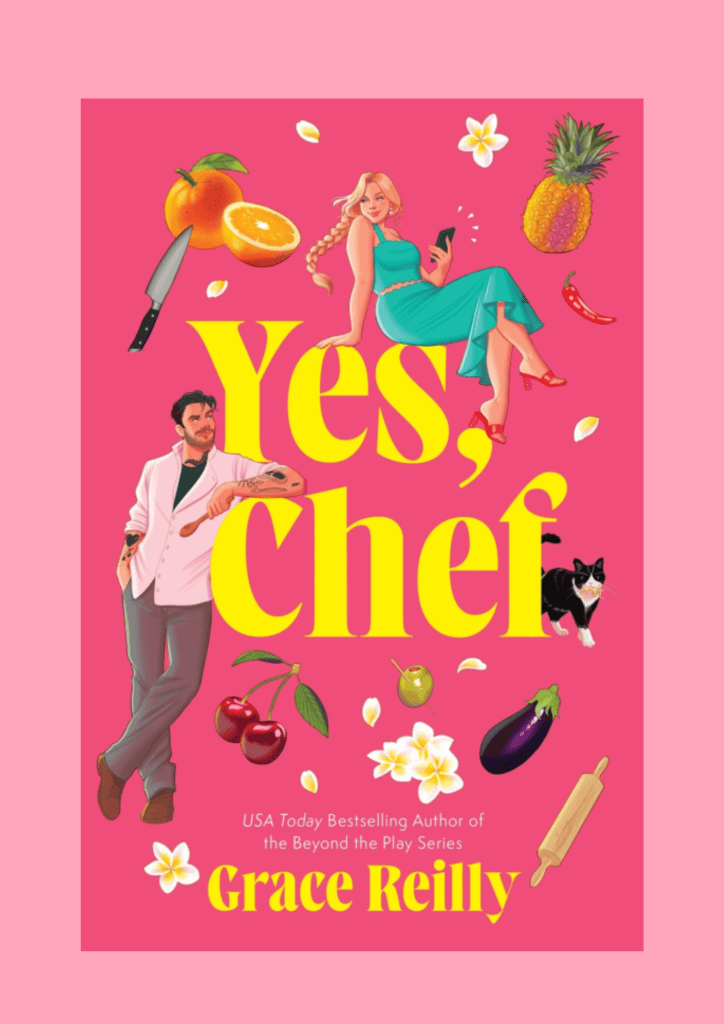
Sometimes “yes chef” is the most romantic thing someone could say (inside and outside of the kitchen). When they have a public outburst at the same restaurant, social media icon Poppy Winfield and chef Jack Hartman run off to commiserate. Neither of them expects to chance partnering over a restaurant in South Florida together. With her keen eye for design and his attention to all the right flavors, Jack and Poppy—opposites they may be, still have a chance of serving up something extraordinary. They just have to be brave enough to reach for the right ingredients. In Yes, Chef, author Grace Reilly turns up the heat and makes it a romance flambe. It’s hot, and not just because of the Florida heat. Yes, Chef delivers an intriguing premise: accomplished chef meets influencer savant mixed together with a restaurant renovation plot. For Poppy and Jack the romance is all in the learning as they attempt to bring a rundown restaurant back to life. Fighting over color schemes, revising the menu, and learning how to properly dice an onion—without crying no less? This romance surmounts the impossible and builds out from two people trying to better themselves. Grace Reilly knows how far a “yes chef” will take her, and the inherent sexual tension in such a statement. Yes, Chef is sexy as hell, and that’s largely because of how much these two are working to create something side by side, finding understanding between the failed recipe attempts and daring rescues from cockroach infestations. Yes, Chef defines home as a restaurant, one feral cat, two polar opposites, and a love that fans the flames. Coupled with decadent descriptions of food which leap off of the page (and sadly not onto my plate), this is one romance I wanted to sink my teeth into. And sink I did. Get ready to step into the kitchen and have every craving fulfilled all thanks to romance chef Grace Reilly.
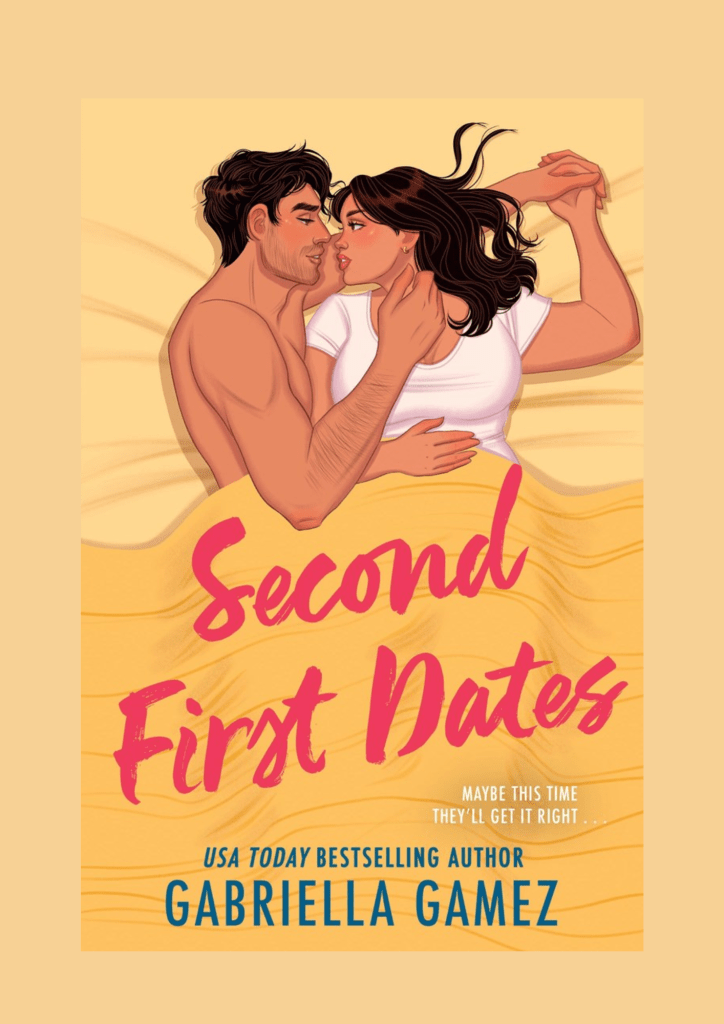
A date so bad you wiped the offending party out of your memory….until you wound up on another first date with them four years later. That is the crux of Gabriela Gamez’s latest, Second First Dates. Leti and Julian went on a terrible date in college, so terrible it put one of them off dating for years and the other chasing the spark they could never get over. Four years later, a second first date gives both of them a do over, if they can just move past their animosity to uncover the connection simmering beneath. Gabriela Gamez is an underrated talent in modern romance and I am so thrilled with the continuation of her Librarians in Love series. Fellow lovers of chaotic romance duos rejoice in characters Leti, and Julian. Leti is an unapologetic and opinionated librarian who knows her mind (my favorite) and Julian, a sunshiny school teacher just trying his best while also being down bad™. One thing I love is a fictional man with a passion, who endears himself through a project. I mean how could you not adore this man when he showed up out of the blue having printed out Leti’s dating profile matches for them to go over. Gamez’s pursuit of queerness, especially in writing characters on the Ace spectrum exploring their identities and boundaries, is unmatched in this genre. Both Leti and Julian are on the ace spectrum and it kept the romance so fresh. Starting out, they’re navigating if they even really like each other as people and that deepens into the kind of feelings that make them go: oh so I’m YEARNING. Each move in this romance is deliberate, as they test moves and comfort with each other. The forehead touch moment alone had me hyperventilating and that entire scene on the couch is a masterclass in tension and vulnerability. Gabriela Gamez is a writer that knows the possibility at the center of queerness, in representing voices that have remained on the margins. Second First Dates is for the queer bibliophiles who all deserve a love story that honors identity and the core parts of themselves. That and so much more.
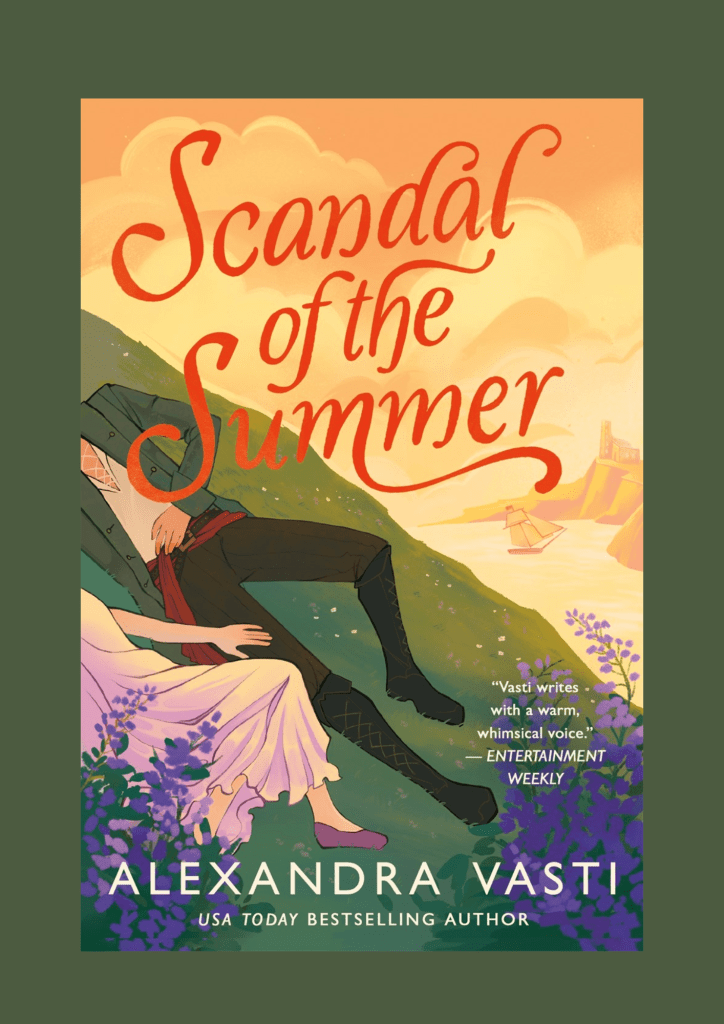
This summer it’s all about the smuggling and mutual scheming and I’ve never been more grateful for it. Alexandra Vasti takes a step into her new Flirty Rotten Scoundrels series with a descent into the long con. Tired of failing her father and London society, heiress Ruby Ballimore decides to simply give up (#mood) and flee to the estate of a soon to be visiting princess. As the princess is notably absent this shouldn’t be a problem, if not for the smugglers who have taken up residence and are masquerading as her staff. Her next challenge: outconning the conman while ignoring the growing passion between them. Scandal for the Summer is quintessential Alexandra Vasti down to the minutia. There are bearded rakish scoundrels, academically minded debutantes, and an infestation of adorable puppies only growing in number. Also an estate that comes to life alongside the developing romance. When I think of Vasti’s historicals, they just exude sparkling, witty romp energy. Scandal for the Summer illustrates this to the extreme with an academic going head to head with a smuggler on an estate in Cornwall neither of them have claim to. Scandal for the Summer is a promising start to a brand new series from Vasti—a whole new trio of delightfully fierce heroines breaking free from what confines them to find affirming love and build well rounded lives. Now we all love a rake, but make it a rakish pirate/smuggler/con artist and I am so there. Ruby and Malcolm have a lot going on personally, but put it together and the resulting synthesis is pure magic. These two are magnificently chaotic, and I expected nothing less from them after a truly smashing start. Dastardly schemes and plots are nothing for two people determined to create a new path outside what life has afforded them. Plot they must and together they shall!
Mutual discord this, mutual discord that, how about they’re sexy and can do what they want. I am no longer surprised when it comes to the brilliance that is Liana De la Rosa. From her historical romances, to this—her contemporary romance debut, she has long proven her capabilities in writing grounded, heated romance set right in the thick of the action. After being fired for speaking out about her work being stolen by a colleague, Sofia Mendoza takes to social media to express her rage. Her impulsive video on women across history who have had their work stolen and influence erased goes viral, prompting a longer series on the subject and an online friendship with a mysterious “A”. When her out of town best friend introduces her to their partner Alex, none other than “A” himself, Sofia knows she’s in for a world of trouble. For her chemistry with Alex is electric both online and off, and could threaten her steadfast commitment to being a girl’s girl. Mutual Discord is a romance heavy on the mess, family bonds, delectable food, and forbidden love, and in typical Liana De la Rosa fashion it is a multifaceted and fierce narrative. Her heroines have always taken a life of their own far beyond their pages and that is so clear with Mutual Discord’s Sofia Mendoza, a down on her luck former corporate employee, conflicted in her life path. De la Rosa connects her romance to a journey of discovery through Sofia and Alex’s shared Puerto Rican culture, uncredited women across history, and a way forward through the mutual discord that plagues them. Liana’s focus on women throughout history who were erased from the narrative could not be more timely, and taking things for ourselves in a world that tries to take credit and erase is certainly a cathartic choice. No need to worry about the discord, it is mutual after all.
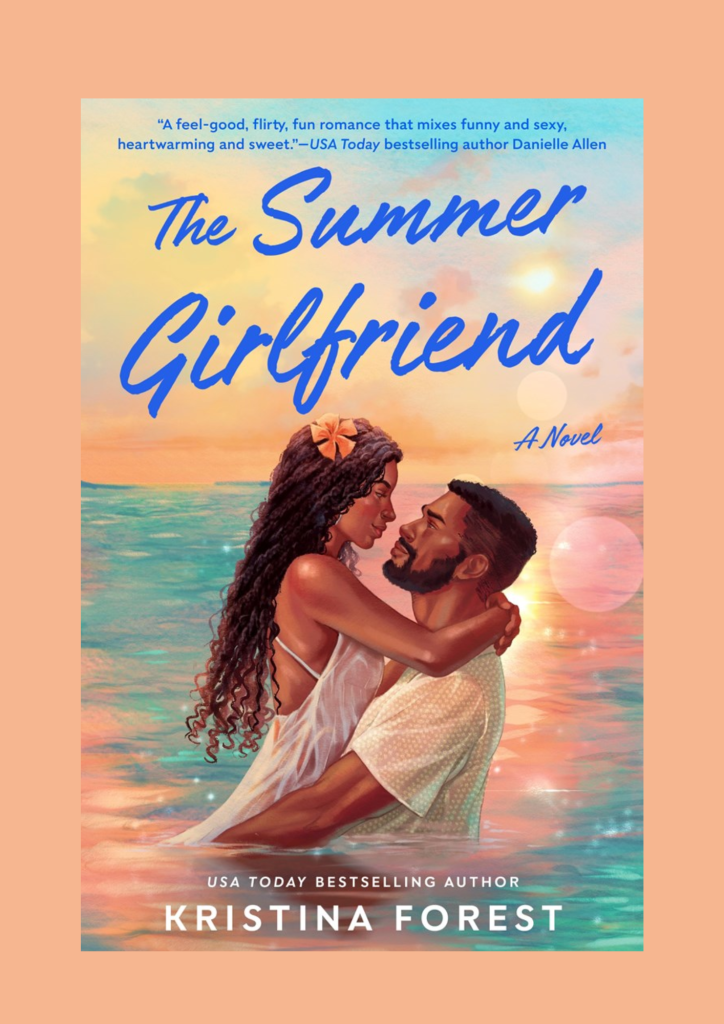
So he buys her books, listens to her yap about them, provides an endless supply of sweet treats, makes her tea, AND parallel parks the car so she doesn’t have to? That’s a forever boyfriend. Kristina Forest is here to well and deliver your next beach read and the romance of the summer with her latest novel, The Summer Girlfriend. Noelle, a bookseller wishing to pursue her career as a librarian, is granted an unexpected avenue to the tuition fees she needs to return to college: summer girlfriend for hire. Jeremiah Smith is tired of keeping his family at length. His mother wants him to bring his girlfriend to their beach house for the weekend, unfortunately no such person exists. When Noelle and Jeremiah agree to a mutually beneficial arrangement, neither expects the sparks to fly, or that the lie will spiral into a summer long venture. Taking the summer romance out of summer will require revealing the truth, to the lie and the feelings growing between them. There is something about Kristina Forest’s writing that lives in a realm of its own. Her romances contain that heart and tenacity I so often long for, coupled with settings one cannot help but get lost in. The Summer Girlfriend brings us to Heart Beach: a Black founded beach community on the New Jersey Shore where characters Noelle and Jeremiah find connection and wonder over a period of weekend visits. From parasailing, to boat rides, and galas, their friendship transitions into an undeniable summer romance. Alongside her fake-dating plot, Kristina Forest paints an emotional backdrop of the Smith family, whose dynamics feel real, boisterous, and complex. Navigating grief and legacy alongside this couple and family was a special honor to experience. Kristina Forest delivers another unforgettable Black romance with The Summer Girlfriend. You’ll want cookies and a beach vacation to go with this one.
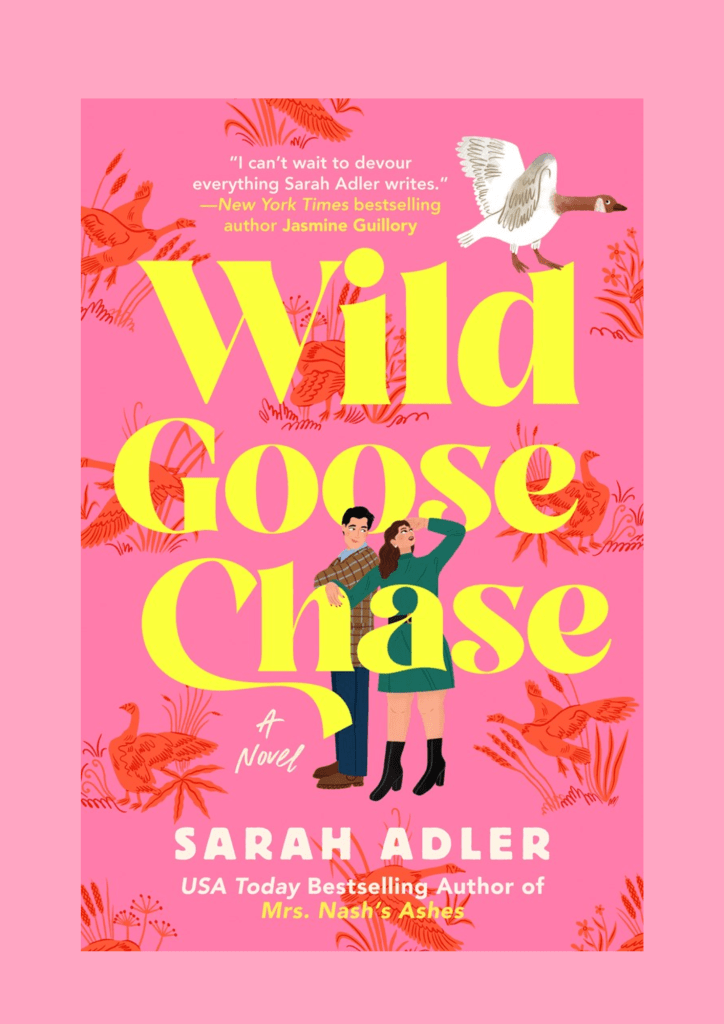
Honk honk (affectionate) (with the intention of chasing after a stolen taxidermied goose with you). When I long to be taken on a journey of profound peculiarity, of bizarre escapades framed within the modern romance, Sarah Adler is unquestionably the writer for the job. Few can interweave the unusual, the strange, the wonderfully chaotic into a romance narrative with such sincerity and keen intellect. Wild Goose Chase chronicles a formerly lost, now purloined taxidermied goose that if discovered by other parties could risk one antique dealer their trade. A chase to uncover its whereabouts is on, and it will take two reluctant colleagues to track it down and uncover its history. Adler’s fourth novel once again displays her appreciation for obscure history and facts. This time it’s The Migratory Bird Treaty Act of 1918 (which for the uneducated forbids the killing, capturing, possession, sale, and trade of certain bird species). In Wild Goose Chase, Adler doesn’t just weave a romance between an antique dealer and his blackmailer slash new colleague but she tracks the wild journey of how one taxidermied goose ended up lost in an attic for decades. A romance within the romance sparks between an ornithologist and a journalist, and like all of her former novels it’s a narrative that underpins our present and deepens the love story taking place at its center. Wild Goose Chase asks what if the real goose discovered was not taxidermied at all and was in fact the silly gooses we were along the way? Whether that be eating meatball subs on a counter while singing show tunes, or poorly timed games of truth or dare, Sarah Adler is here to say: we deserve to be appreciated for all of it. Sarah Adler writes with an originality and matter of factness that always leads to a wild good time. Wild Goose Chase is a hell of a ride. For all the silly gooses out there who just want to be loved.
And they were roommates (traveling in Wales edition). A last minute holiday becomes a full time expedition in Georgia Stone’s expansive summer romance, The Roommate Rule. Handed an extra spot on a trip with her coworker’s brother who travel influences, former barista and upcoming accountant Dylan takes the trip of a lifetime. Six weeks exploring the beauty of Wales with a man she definitely cannot get caught up with, Dylan will face a summer romance and the possibilities she has cut off in living a life so confined. After the absolute smash hit that was The Friendship Fling (which went triple platinum in my house thank you), Georgia Stone is back with a sophomore romance involving change of pace and how one setting can inspire you to take the leap into the unknown. Daring adventures, windswept locales, this romance takes step with a six week holiday in Wales. Alongside travel moments and wanderings, Georgia Stone had me falling in love with Wales and all of its magnificent scenery. It felt as if I too took a leap off of a cliff, explored old ruins, and took a bracing canoe ride. This romance was a breath of fresh air—literally. Georgia Stone doesn’t just build out her main couple and their travels, but an extended group of (mostly influencers) partaking in the holiday. You’ll fall in love not just with Dylan and Max, but brilliant, snarky Jude and the buttoned up naturalist Toby. Georgia’s skill for character dynamics are once again on full display with Dylan and Max, who were peak annoyance to lovers trope. Dylan holds her own against Max’s flirtations and frankness, but soon even they become an inevitability. What starts off giving summer fling deepens into forever around discussions of illness, caretaking, and choosing the unwalked path. As always, no happy ending is worth anything without characters faltering and Max and Dylan have to pick themselves up before they can turn toward a new chapter. But is anything more human, more romantic than that? I think not.
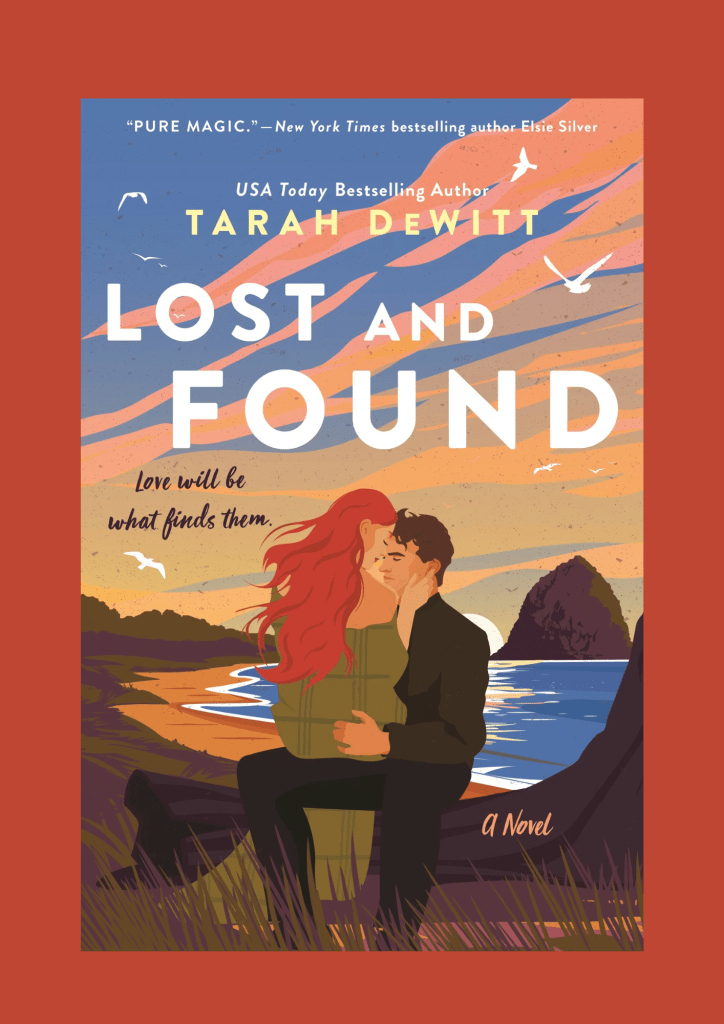
So you want to cry endlessly while having your belief in love restored? In the passing of her best friend, Bea never expected her to hand over a life changing gift and a lifeline that could grant her the ability to be a parent, something she’s always wanted. Returning to her hometown of Spunes, Oregon, Bea rushes headfirst into the past as she navigates her grief and plans her future. Enter firefighter Silas Byrd, a friend from childhood recovering from an accident facing his own battles. Both are uncertain of the future, but know neither of them can run from the past any longer. Tarah DeWitt concludes her Spunes Oregon trilogy with Lost and Found, half romance half emotional torment (said with deepest affection). Lost and Found is a magnificent second chance romance, a meeting and retreat between two people who weren’t ready in the past and now face the feelings they ran from years prior. Silas and Bea: oh do they yearn, but they are also stuck trying to disentangle the complexity of the present which makes for that nail biting tension and intense emotion Tarah is best at. Lost and Found is about the things we leave behind but hope against all hope to recover—a return to something you walked away from believing it would some day return to you. There is no one more capable than Tarah Dewitt when it comes to bringing a storm of emotions washing over you. I felt caught up in the wreckage of her storm and restored in its midst. Love, grief, and heartbreak all coalesce in a moving portrait of the lives we build after loss and the bravery needed to keep moving forward. This romance will lead you into that beautiful, overwhelming tomorrow and you’ll emerge hopeful and ready to tackle all romances Tarah Dewitt.
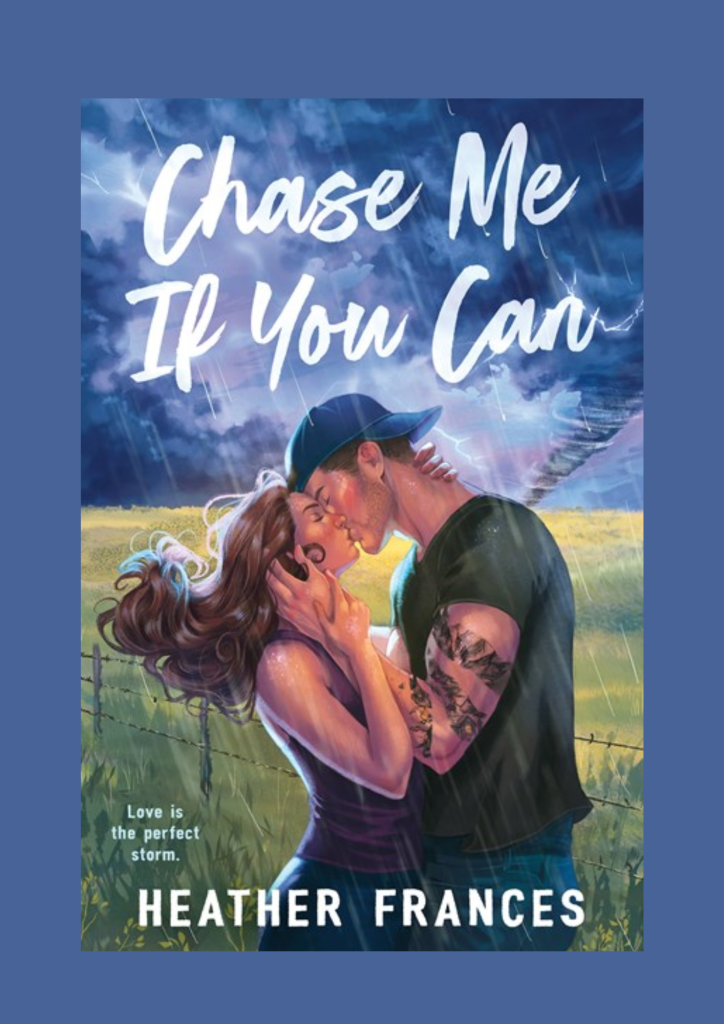
Not enough men know that you can yearn…while you (storm) chase. Storm centered romances are a niche of the summer and boy am I seated ready behind the wheel. For anyone who watched the latest Twisters movie and found themselves asking: “but why didn’t they kiss?” Heather Frances’s debut is here to heal that wound. Chase Me If You Can sees two rival storm chasers team up to cover the upcoming storm season, fighting feelings and chaotic weather all at once. With an entire season ahead and a photography contest to win, those feelings could get damn near confusing—twisted even. Chase Me If You Can covers the often controversial hobby of storm chasing, a passion which drives numerous people onto the road on the hunt for freak weather events. Heather Frances lays bare the reality of this hobby, the dedication of those who partake in it safely and the women breaking barriers in storm chasing and meteorology. Reading this is an education and a romance all at once. Because nothing is hotter than competency in a niche area of study, in putting hypotheses into action. Sharing time on the road, breaking for food and gas, and basking in the overwhelming majesty of the storms they chase, characters Sloane and Wes uncover the romance lingering beneath. Frances really gives a feel of these two and their dynamic. You know they like each other not just because of shared passion, but because they probably spent a collective 70 hours trapped in the car together (what would be a horror movie to most). Sloane and Wes don’t just connect over their shared love of storm chasing, but the art of photography, and their adverse upbringings. Chase Me If You Can is a tumultuous journey into the world of storm chasing, but oddly fitting for all of humanity’s pursuits to understand the unknown. Dare I say the heart of romance itself?
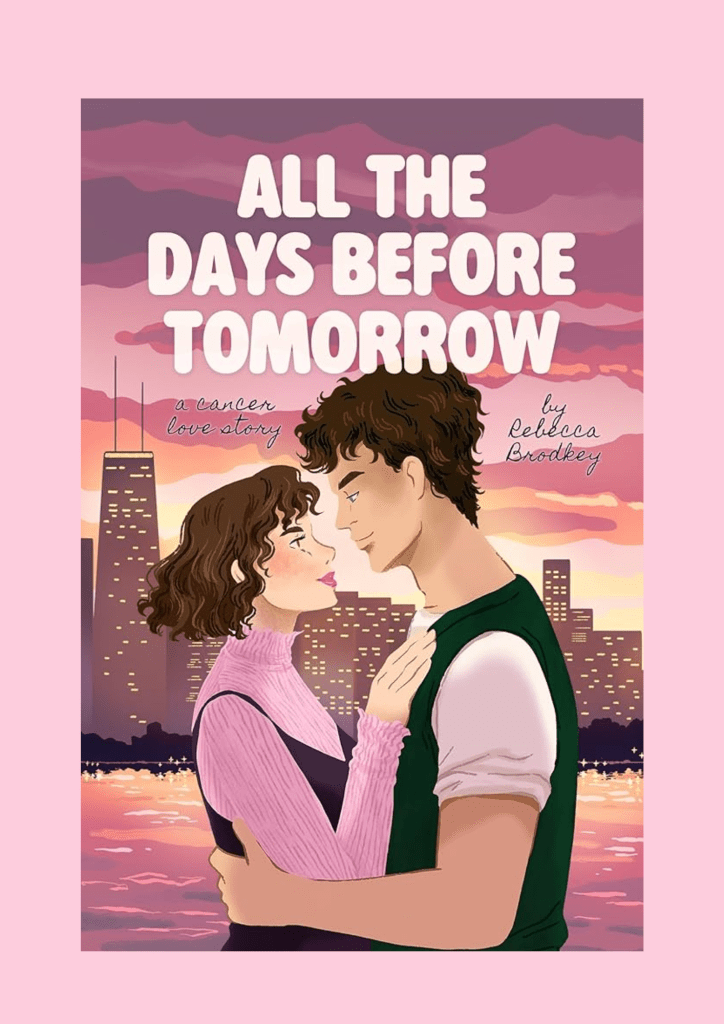
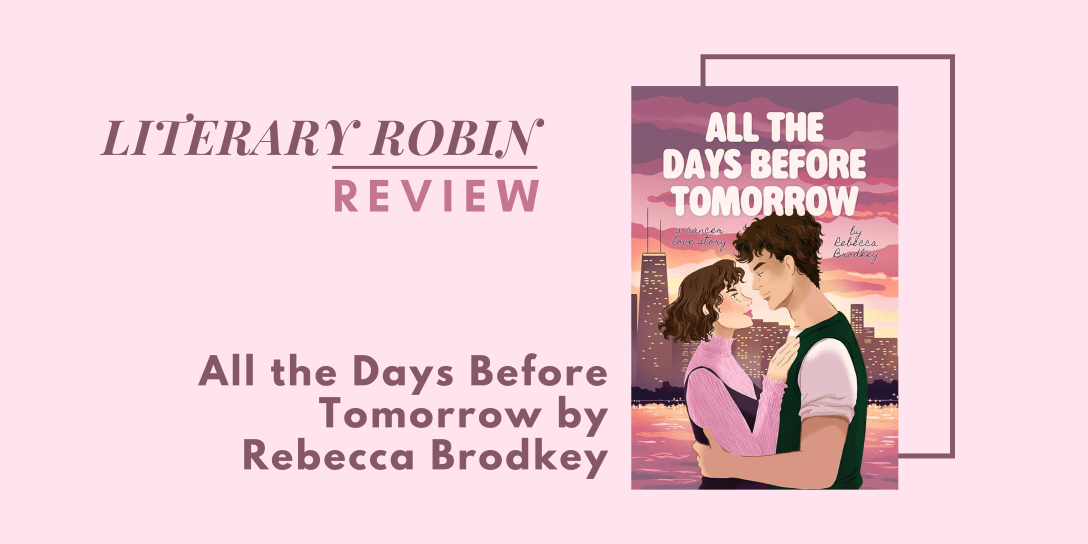
There is an indescribable magic in finding a romance that was meant for you, in the exact moment you need it. Rebecca Brodkey has written that book with her tour de force of a romance, All the Days Before Tomorrow. When Ruby, a young Chicagoan, faces the life after her life altering experience with breast cancer, she takes over wedding planning duties for a friend. Floral arrangements and cakes are nothing compared to the sunshine nuisance that is the best man determined to aid her. What ensues are camping trips, mix tapes, and one get back to life plan begging to go wrong. Brodkey turns her pen toward incandescent, modern romance with All the Days Before Tomorrow. Part wedding romance, part stark look at breast cancer and the way illness rewrites our lives, this is a love story without comparison, one grounded in a realism that felt as fresh as it was invigorating. Everything life can be is encapsulated within these pages, the frustration, isolation, the hope, and the joy. Just as Ruby experiences a myriad of emotions, so too does this novel honor all the glimmering facets that make up the fabric of our contemporary existence, giving them all voice and a necessary weight. This is a novel about community and the power in finding it, reveling in it. Rebecca is here to show us that even if the future remains uncertain the one certainty we have is in how, and with whom, we face it. Your future includes buying this incredible romance (and thanking me later).
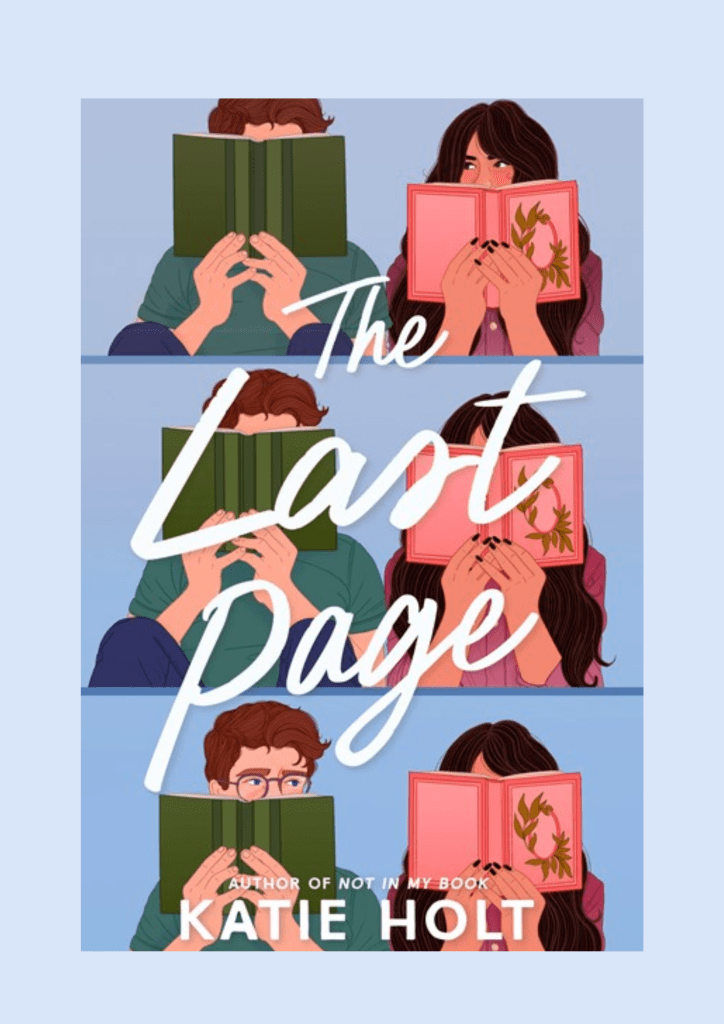
Katie Holt’s latest romance novel sets itself within the bounds of a failing New York City bookstore, as a dedicated bookseller and the new owner come to blows and attempt to stave off inevitable ruin. An all around smashing hate to lovers romance, The Last Page is a triumphant nod to independent bookstores and the booksellers who have dedicated their lives to serving books and readers alike. Complete with shelf talker epigraphs and an extensive band of booksellers to get acquainted with, this novel looms larger than its pages. It’s for the booksellers plain and simple. Never have I experienced a romance so endearing as I have with this one. The Last Page is like if a bookstore was a sitcom but also a hate to lovers romance that is so riveting it pulled my heart out. That blend of humor and tension is all Katie Holt for how else can one have me agonizing one moment and dying with laughter the next. In a novel all about the detailed aspects of this industry, the romance is unsurprisingly in the little things. Because nothing is sexier than discussing bookstore finances and arguing over who should be in charge (and if the break room should continue to have free coffee). Not to mention the Magnolia Bakery cupcakes. The Last Page is one of those romances that envelops you within the setting, the comfort of a bookstore and the day in day out running of things. I challenge any bookseller to read this and not be seen on one level or another, and for any reader to not come out having a deeper appreciation for the daily work that goes into bookselling. The Last Page is quite literally, one for the books. If Katie Holt is holding the pen, I’m already there (and so should you be).
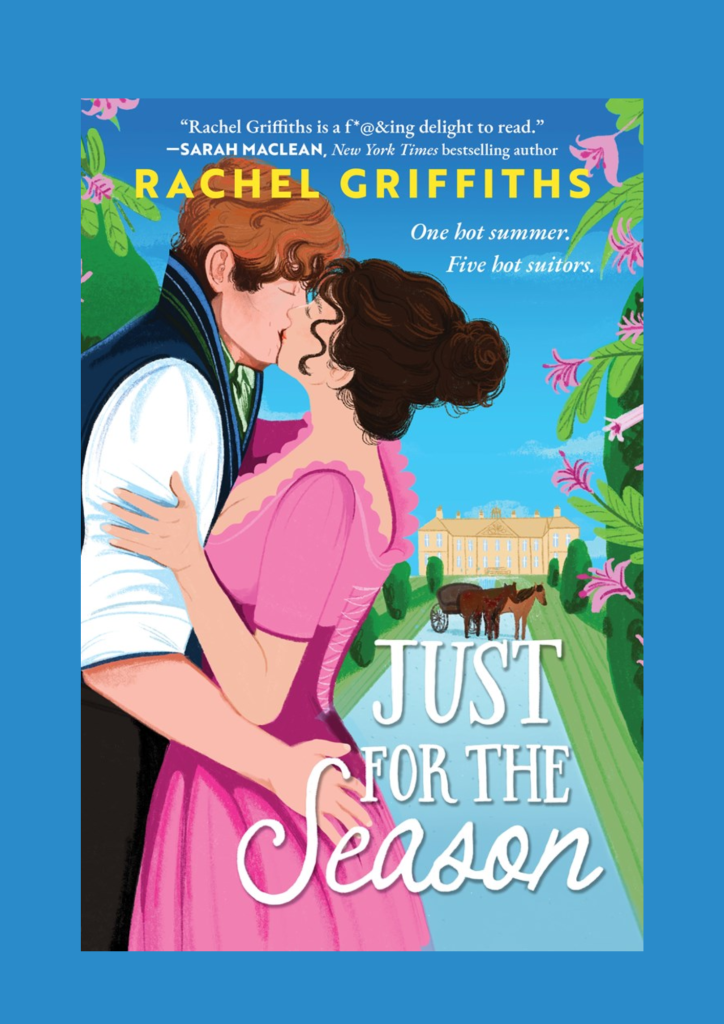
A summer countryside romp for a scandal mired Lady and the rake dragged headlong into her marriage hunt mark the start of this unmissable historical romance. Rachel Griffiths’s Just for the Season is out to prove that all the best historical romances are second chance and include plenty of tension filled carriage rides and incessant quarrels. Two former correspondents, now mostly strangers, avoid the past at a house retreat where one of them is the coveted potential bride, and the other a reluctant grumbling duke refusing to admit he still cares. Returning with grace, wit, headstrong women, and a constantly frustrated man, Just for the Season sees Griffiths cement a signature style, one that impresses the importance of angst and the tried and true only one carriage trope. Charlotte and Wolfgang are perfectly suited, both in temperament and their tendency to avoid the proverbial elephant in the room: feelings (derogatory). But meddlesome family, highwaymen, and of all things embroidery soon make them impossible to ignore. Just for the Season had me earnestly hanging onto every interaction and failed suitor hoping these two would dig up their shared past and confess to wanting every season after. Griffiths’s second novel is a real triumph, not just a love letter to the best trope around, but to creative pursuits and the driven, passionate women willing to succeed by any means necessary.
Please note this review contains spoilers for the former book in this series, Servant of Earth and Princess of Blood, and contains references to some of the events in this sequel. Read with caution.
⭐⭐⭐⭐⭐
Rating: 5 out of 5.
Kenna, fae ruler of Blood House, has spilt blood and broken peace. Tricked into breaking the accords ahead of the crowning of Mistei’s next ruler, Kenna now faces the cost of her bloodshed. Many are now dead and in the wake of the chaos, Illusion House has secured control of the throne and Kenna and her allies of Void and Fire have been captured. As she fights to survive her torture at the hands of their enemies, Kenna does not know what remains of their allies not imprisoned, nor even if what she saw was truth or little more than an illusion. Separated from Kallen, Caedo, and the rest of Blood House—tormented in body and mind—Kenna knows the only way they can secure Mistei’s future is by escaping their imprisonment. Escape is tricky with their tormentors intent on their humiliation in front of all of Mistei. Allies old and new converge, and in order to achieve victory, Kenna will have to secure her own transformation. But as she walks down a path to change, Kenna must question if she is in control or if she is playing into the designs of powers far greater than her understanding. Mistei hangs in the balance and it is Kenna’s ties to her humanity that could save the realm, or leave it forever to darkness.
In Sarah Hawley’s Warrior of the Shards, the final fight over Mistei looms and the balance of the shards weighs heavily on securing the future of the fae realm. Returning to the fae world in the midst of upheaval and the brink of war, this third Shards of Magic novel could not be more precarious. Following the human turned fae Kenna Heron as she fights first for her survival deep within the cavernous fae kingdom of Mistei, then the survival of her recently resurrected Blood House, this dark fantasy trilogy takes a final bow with Warrior of the Shards. Blood spilt and broken peace mark the fractured footing of this turbulent finale. Warrior of the Shards brings us back to Kenna, our beloved feral heroine, facing fate and consequences after falling prey to the oldest rule in the fae book: trickery itself. Separated from her shapeshifting talking dagger with an unhealthy appetite for blood, and a void faerie who trades in secrets whose greatest secret is how much he adores her, this third novel returns to Kenna facing things much as she began: alone. Journeying through the long forgotten secrets of Mistei and the history of fae magic, Hawley unearths the truth of the past with Kenna at the forefront. Full of endless revelations, moral quandaries, and aching romance, Warrior of the Shards is a calculating and visceral finale. Not complete without a strong kernel of hope, in the fight to bring a better world into being.
Warrior of the Shards, alternatively titled: the gang gets together to destroy the monarchy (unhinged edition). Entering into this third novel with the knowledge of how the previous installment concluded, my only emotion was: fear. Hawley played all her cards close in Princess of Blood and the resulting bloody altercation in its ending meant this third novel could only really begin one way. Bloody and ravenous—just like our favorite talking dagger—Warrior of the Shards leads back into a moment of hopelessness for our heroine, Kenna. Her bloody outburst and the resulting capture at the hands of their enemies means we return to this series with our main character perhaps at her lowest point. I have to hand it to Hawley, there is a poetry in the ruler of Blood House falling prey to trickery and blood. The fae in this series are what they always should have been: mischievous and held captive to their whims. You never know what side of them you will get, and it makes for a cautious playing field across the entire trilogy. If there is one thing we can trust Sarah Hawley in, it’s that she has a story to tell, and she won’t leave her characters long in their torment. Alone she may be, Kenna is still armed with her wit and ferality. For Sarah Hawley, this is a power all of its own and Kenna’s greatest strength in escape, uniting the fae houses, and solving that illusive mystery that is the shards themselves. Warrior of the Shards is above all else: unhinged, clever goodness, and I could ask nothing less from a finale with such a heroine.
As for romance, we last left off with Kallen and Kenna at the most exquisite moment of torment: neither of them knowing if the other is alive. Journeying from Servant of Earth, to the previous installment Princess of Blood, Kallen and Kenna had surmounted revolution, rebirth, and betrayal. We had iconic dance scenes with tremendous yearning, sparring scenes where Kenna broke Kallen’s nose and he liked it (romantic I know), and the ongoing torment of these two characters caring for each other in a world that wants to exploit their weaknesses. That last one in particular made for such sweet, exquisite torment across the second novel. Sarah Hawley does a fantastic job balancing these different tones, rounding out a romantic arc that never lets up on the tension until right when it needs to. Warrior of the Shards is where at long last these two really put the love on the line. Separated after the breaking of the peace, both Kenna and Kallen are tested in their resolve to each other and the charge of fighting to transform Mistei. Hawley doesnt leave this transition mired in dispair. We have great moments like “I wanted him more than soup” which is the most romantic line and should constitute as a love confession. Adding in some truly comedic scenes where Kenna is just one upping Kallen and he is just: no longer shocked. Warrior of the Shards brings the series home in a lot of ways, and part of that is Kenna and Kallen being home for each other. They’ve been through a lot so reading that made me a bit misty eyed.
The Shards of Magic is a series that took me by surprise, but has solidified its own home in the caverns of my heart. All it took was one feral woman going up against an entire kingdom of fae in Servant of Earth and I was sold. Add in morally grey characters, talking weaponry, and a unique history and magic system and it was entirely over for me. One thing that has set this series that much higher in my regard is how committed Sarah Hawley has been to her character journey and portraying the conflicting nature of our humanity across all three installments. If book two was about what happens after an end to tyrannical rule—the resulting power vacuum and sustained rhetoric within the populace—book three brings together the fight to create the foundation for new leadership and the costs of enacting it. This overarching journey resonates so deeply, especially in characters that embody the transformation happening from within Mistei. Fierce, feral, and imperfect (my favorite combo), Kenna is a character who journeys from adversity to triumph across the series. It is such a privilege to witness her falter, succeed, regress, and ultimately pick herself up again and again. In many ways she is the best romantasy heroine of recent years and I do not say that lightly. Bloody, unrelenting, and so damn hopeful, Warrior of the Shards nails the ending and makes it immortal. Sarah Hawley has crafted one of my favorite romantasy trilogies and main characters of all time with The Shards of Magic. This ending is as much a coming home as it is a closing of the door—though hopefully not for good.
Thank you to Netgalley and the publisher for providing the advance review copy.
Ruby Hirsch had a bit of a life setback—if you can call breast cancer that. Not wishing to define herself by the often singular narrative given to survivors, Ruby wishes to step into the future she had to set down in her treatment. As luck would have it, the wedding of a former friend presents her the chance to initiate the get back to life plan. There she finds herself at the mercy of her former friend Penelope who is desperate for her to take over as the wedding planner for her own forthcoming nuptials. Knowing Ruby is rebuilding her writing career, Penelope promises an introduction to her literary agent in exchange for taking on the job. Wedding planning shouldn’t be a hardship, especially not in exchange for a publishing contact, but with Penelope’s immense extravagance in mind it is very much that. If that weren’t enough the best friend of the groom is a petulant presence that threatens her grand get back to life plan. Eitan is everything Ruby is not, sunshine incarnate, charismatic, and romantic, and he promises to help her in exchange for her helping him in his best man duties. Across camping trips, mix tapes, and car rides Ruby and Eitan are drawn together. There’s just one wedding to get right and one get back to life plan begging to go wrong—to get rewritten entirely.
There is an indescribable magic in finding a romance that was meant for you, in the exact moment you need it. Rebecca Brodkey has written that book with her tour de force of a romance, All the Days Before Tomorrow. Part wedding rom com, part stark look at breast cancer and the way illness rewrites our lives, this is a love story without comparison, one grounded in a realism that is refreshing as it is invigorating. Facing life after her life-altering experience with breast cancer, Ruby, a young Chicagoan, takes on the wedding planning duties for a former friend. Floral arrangements and cakes are one battle, the other she must endure: the sunshine nuisance of a best man determined to help her in her plan. Weddings, book deals, and get-back-to-yourself plans, there’s certainly a lot on the line for this romance and Brodkey displays it all with an unparalleled frankness. All the Days Before Tomorrow flowers from Brodkey’s own experiences as a breast cancer survivor and it echoes in her approach to this romance, both in genre conventions and its heart. This is a romance narrative, one that really grasps what it means to stand by another person through thick and thin. For Brodkey, life is truly grasped when we realize we aren’t, nor do we have to go through it alone.
Brodkey turns her pen toward incandescent, modern romance with her second novel, All the Days Before Tomorrow. Paying homage to the rom coms of the early 2000’s, All the Days Before Tomorrow puts a spin on the classic wedding story with a cancer survivor finding her place after treatment as wedding chaos ensues. Like all the best rom coms, this novel is one that captures a snapshot of life, and expertly balances competing emotions. All the Days Before Tomorrow casts innumerable shades, a true representation of the lives we lead. Everything life can be is encapsulated within these pages, the frustration, isolation, the hope, and the joy. Just as Ruby experiences a myriad of emotions, so too does this novel honor all the glimmering facets that make up the fabric of our contemporary existence, giving them all voice and a necessary weight. There are several moments across this book where I had to set it down and just bask in feeling. The Northern lights scene in particular made me weep, and Ruby finding connection with other cancer survivors was certainly another. My favorite moments are the ones that hint at community and the power in finding it, reveling in it. We’re not in this alone, and that is certainly one thing I came away from this romance reminding myself.
Now I love a meddlesome bisexual man and Eitan takes the cake. It was over when he started ecstatically singing Dancing Through Life but the hand flex at the river and him burning her a CD (in 2026) had me folding. Brodkey’s talent continues to be the character dynamics and Eitan and Ruby were these opposite sides of the same coin type pairings I just adore—Ruby, as someone who has been the epicenter of loss, and Eitan, unexpectedly shaped by it. There are these moments of kinship before they even know each other as they face social norms they are on the outside of. It makes for great connection as they work to build understanding and trust with one another. Of course there’s an initial misunderstanding, a meeting scene that sets the tone for most of their future interactions (it wouldn’t be a rom com without it). I couldn’t help but adore these two and their grumpy x sunshine dynamic as Eitan charms Ruby into letting him help her get back to herself. Brodkey really sets a hopeful energy with these two. Her attention to the vulnerability in letting someone see you after breast cancer treatment is so raw, the tenderness that emerged threatened to buckle me. Across this romance, Eitan and Ruby are able to see each other entirely, flaws and all, so much that we know they’re going to outlast anything life throws their way.
One thing is for certain about Rebecca Brodkey, her talent is only growing. That and her talents are certainly not only applied to writing fantasy and I need another rom com from her immediately. This story is one that is so many things, a cancer survivor narrative, a story of finding your place and community, and a nuisance to lovers romance. Brodkey reflects so much of what I love about this genre: the possibility. Yes we can have the angst, humor, and romance together in one narrative, and All the Days Before Tomorrow is proof of that. When it comes to possibility, this novel has a tight hold, and that is perfectly evidenced by Brodkey’s usage of key genre conventions. The way this novel ends utilizes one of my favorite narrative choices that still adheres to the pivotal rule of romance. Love me a book that ends in a way true to the characters, that serves the overarching narrative presented by the author. Eitan and Ruby face down a lot over the course of this novel, but the greatest test is choosing to face a future of uncertainty together. Rebecca Brodkey’s, All the Days Before Tomorrow is the kind of romance that comes around to remind us to pause, to take collection of our lives and what we need. This is one of the best romance debuts around and I am thrilled for more romance or fantasy from Brodkey—whichever comes next.
Thank you to the author for providing me with an advance review copy.
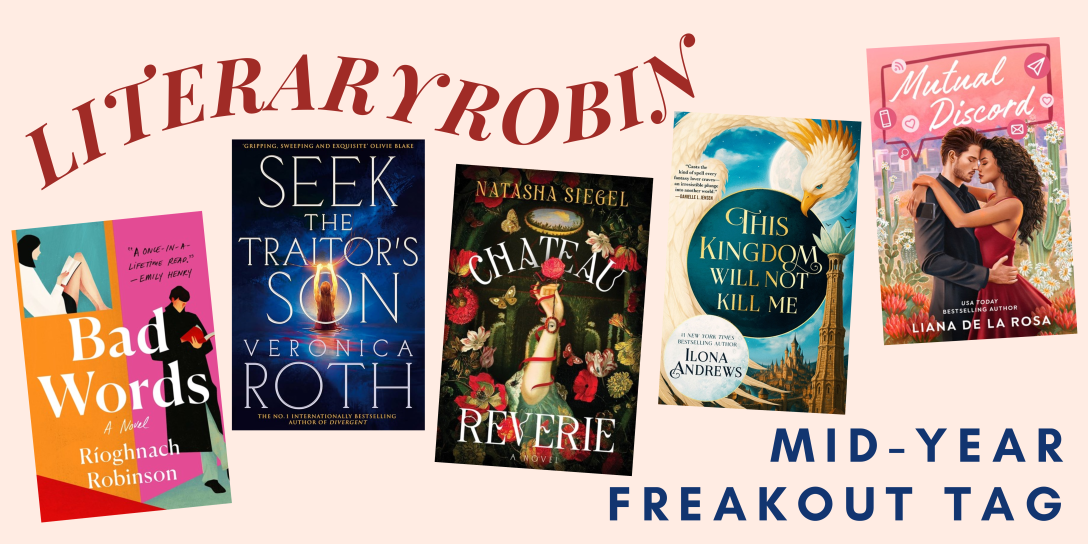
It feels like just yesterday that I was unveiling my mid-year freakout for 2025 and in all that time an entire year has passed. I am certainly not who I was before reading the two hundred or so books I have since then, so here we are back again to address my new picks for 2026. For the newbies around here, the Mid-Year Freakout Tag is like my Oscars, but for books. I get overly invested in nailing down the choices that I may go *slightly* insane, but well worth it for the chance to sort things into categories and lists. It feels like every year is getting more and more difficult—as my favorite author’s appear determined to outdo themselves. This year has been chock full of some truly phenomenal debuts as well that the choosing was not at all easy. I suppose I can thank my job for keeping me from reading as much as I read last year. Read on for my predictions for my top book of the year, the best sequel, books that made me cry, and more!
BEST BOOK OF 2026
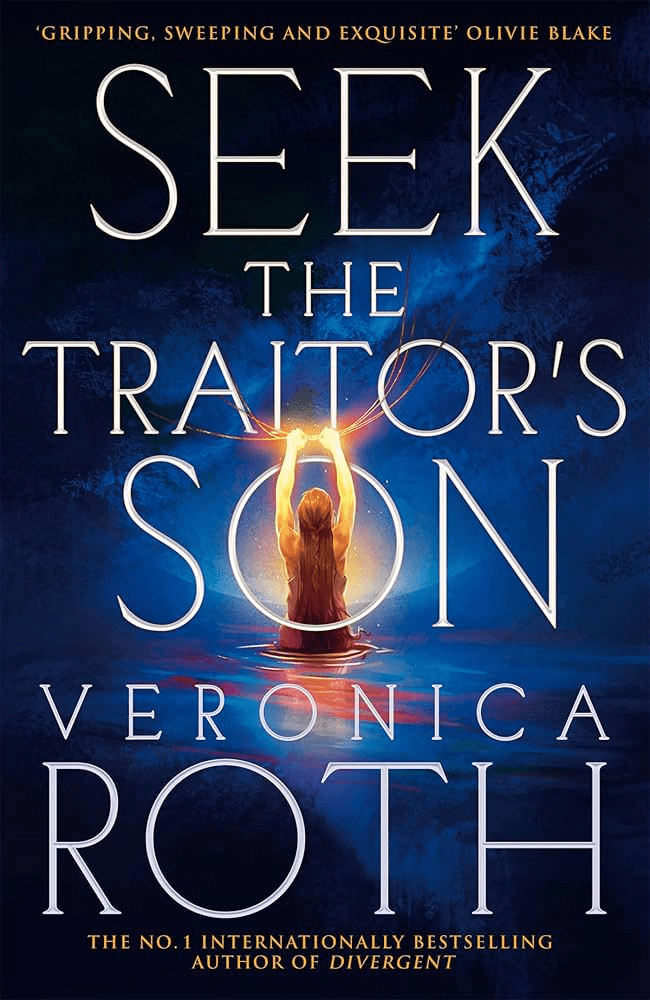
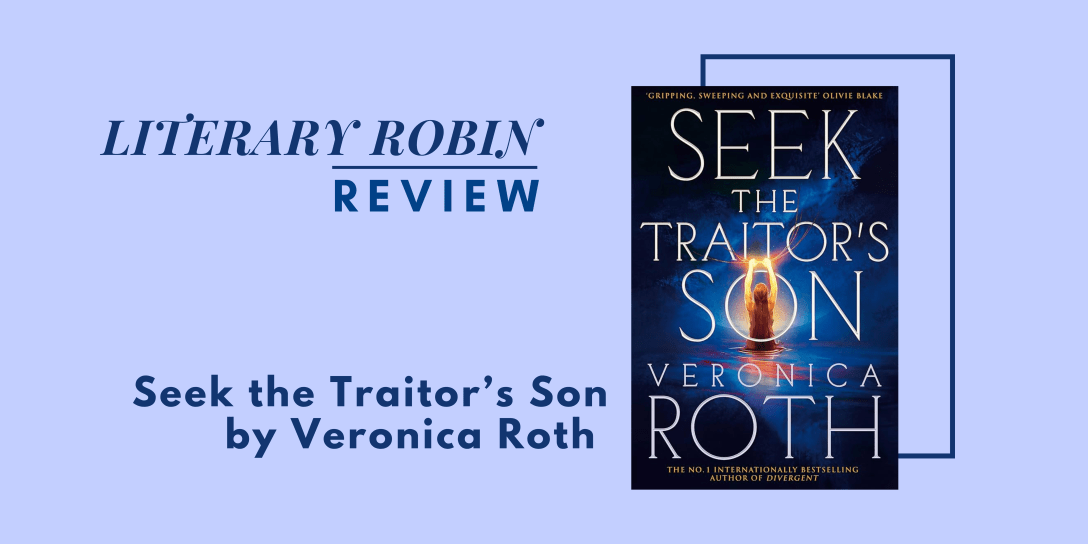
Everyone in my life is either begging for me to shut up about this book or saying exasperatedly “Robin, we know” whenever I come their way. But I am getting back on my soap box in case you are one of the few people who have yet to be held captive by my recommendation for Veronica Roth’s latest masterpiece, Seek the Traitor’s Son. Prophecy, fever, and fated love combine in a series debut that sees Roth once again taking the crown for dystopian fantasy. Tethering three characters across a futuristic earth where fever reigns, Roth brings us to an incident that changes everything: the day a prophecy is given to two individuals who will fight to take it. Seek the Traitor’s Son is a masterclass in the balancing act of the speculative genre. Roth brings together a unique blend of science fiction fantasy elements, dystopian, and romance, and the result is an unforgettable speculative epic the like of which I have not seen in years. Throw in my absolute favorite: a deeply tormented man and a reluctant heroine and this could not have been more for me. Don’t let the fact that Roth is releasing another book this year fool you, this is the one to watch, the one that reflects her continued rise within the fantasy genre. You can read my full review here.
BEST SEQUEL OF 2026
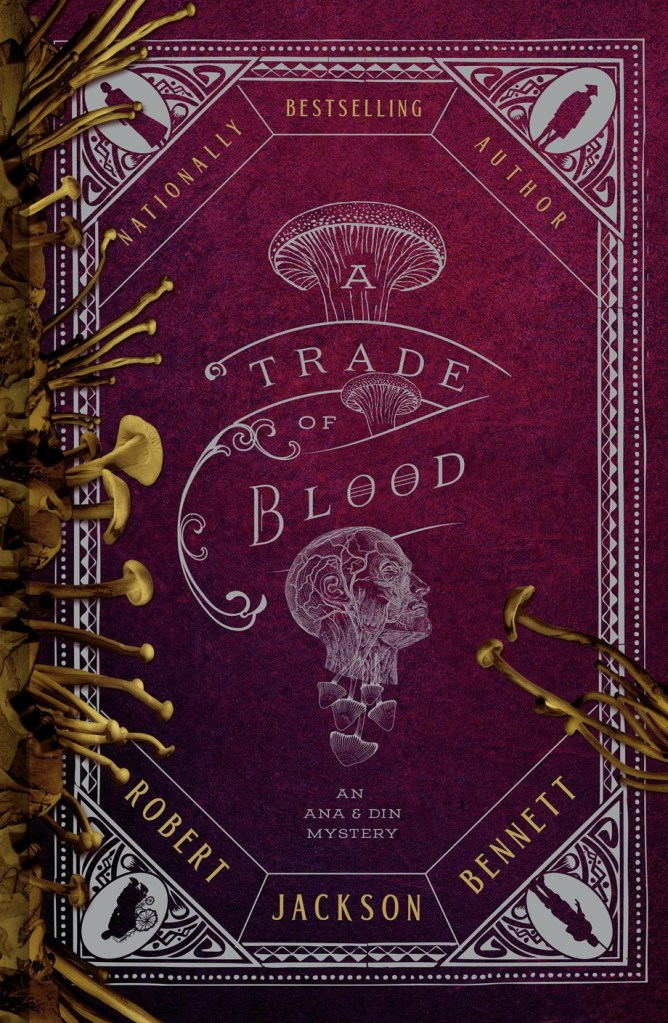
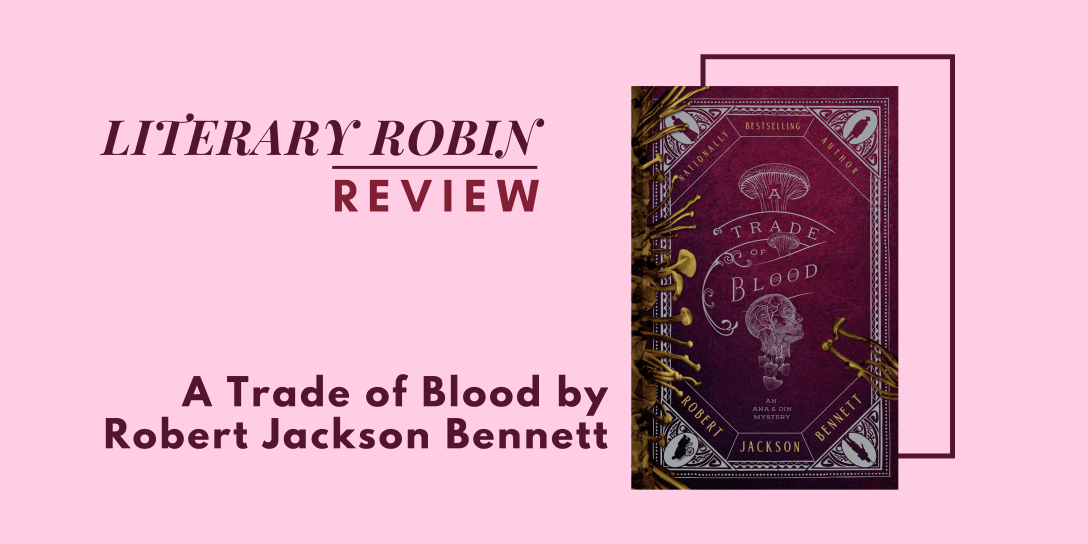
The best sequel in the house for 2026 is also the book that had me the most squeamish, Robert Jackson Bennett’s, A Trade of Blood. Third in the series that began with The Tainted Cup, this installment sees our favorite investigative duo called out to a far away canton to stop the bloodshed between two rival families. What they discover is a gruesome scene and a murderer who is willing to set the canton alight in blood to settle the score. Now everyone knows the love I have for Dinios Kol, disaster bisexual and general chaotic presence, and Ana Dolabra, a peculiar investigator and confounding personality. Robert Jackson Bennett has created two of the most endearing, frustrating, delightful (all of the above) characters who are only getting better with every passing mystery. Bennett always has a handle on his themes and what he is exploring within the confines of the mystery and this time it is the cattle industry. Why we hunger and what for are two of the lodestones for this mystery and the path Bennettt carves to answer them will leave you shaken. Rest assured A Trade of Blood is only further proof that Bennett is at the helm of the best in fantasy right now. That and Din and Ana continue to delight and the mysteries are only getting better—and bloodier—from here. Read my full review.
NEW RELEASE I HAVE YET TO READ
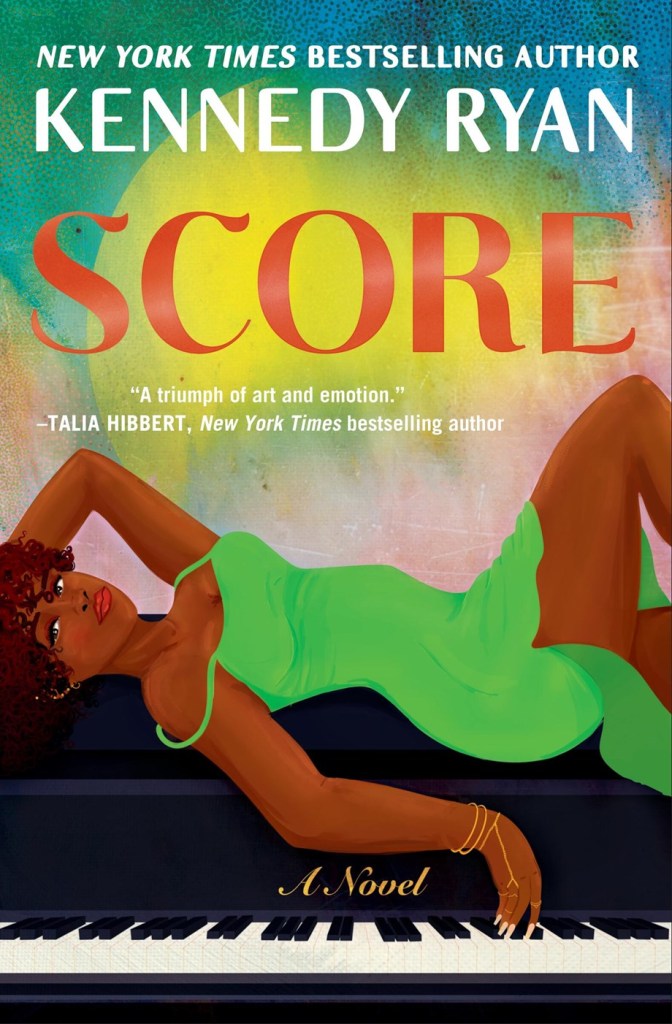
So funny thing about this one is I started it a few months ago and put it down one day and just completely forgot to pick it back up. I’m not unique in thinking Kennedy Ryan is one of the most talented writers in the romance genre right now. I and hundreds of others were frothing at the mouth for her next contemporary romance, Score. Score plots the second chance love story between a screenwriter and musician whose decade ago romance failed epically and left them both scarred. Brought back together to work on a Harlem Renaissance Biopic, Monk and Verity are drawn into close quarters where they fight the feelings that never left and test whether time indeed heals all wounds. From what I have read so far this book is delicious, a gorgeous second chance romance that is unafraid in depicting the realities of life and love and where the two are in conflict. I love the queer representation from Kennedy in Verity, whose bisexuality is a large part of the opening section of the novel as she experiments with her sexuality and desires. It’s frank and just really refreshing to see laid bare so honestly. Maybe it’s cheating since I already started this, but this is one recently released book I am planning on getting back to as soon as possible.
MOST EXCITED FOR IN SECOND HALF OF 2026
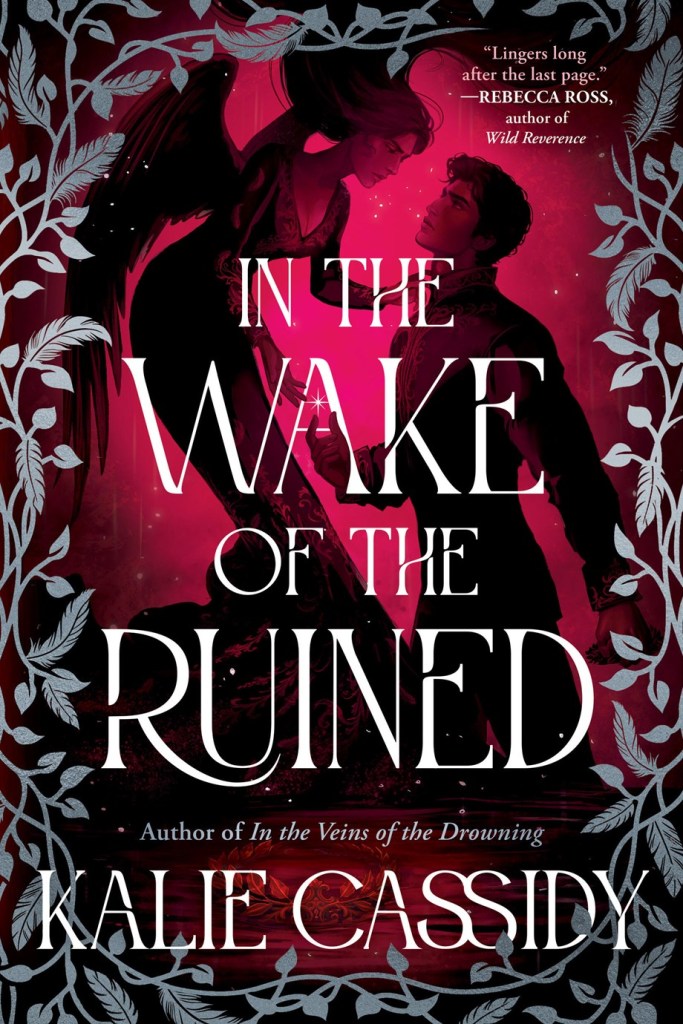
When it came to yearning books of the last year, Kalie Cassidy’s, In The Veins of the Drowning was at the top of my list. A romantasy debut that follows a siren on a mission to claim her freedom by binding herself to a king, this book introduced me to a new favorite couple and author all in the same breath. Look no further for a series that expertly balances the plot, romance, and character work. As a fan of both plot and characters this book kept me endlessly fed (just like Eusia *wink* *wink*). Between duty bound Theo of Varya and the impassioned siren Imogen Nel the character work in this duology is astounding. Cassidy’s background in theatre and her continued enjoyment of historical romances is evident in the contrast between her characters and the yearning that develops. The tension is in the unsaid, in the conversations that are rife with misunderstanding. These two clash, they retreat, and come back ready to do the whole thing all over again while realizing that they are in fact more to each other. I really appreciate Cassidy’s commitment to drawing out the conflict, to continue testing the resolve of Theo and Imogen both. While I have had the immense privilege to read an early version of the second book, I am still most looking forward to In the Wake of the Ruined releasing July 7th. The entire book had me on edge and the ending had me sinking to the floor (in a good way). Review coming soon but in the meantime preorder here.
BOOK THAT SURPRISED ME
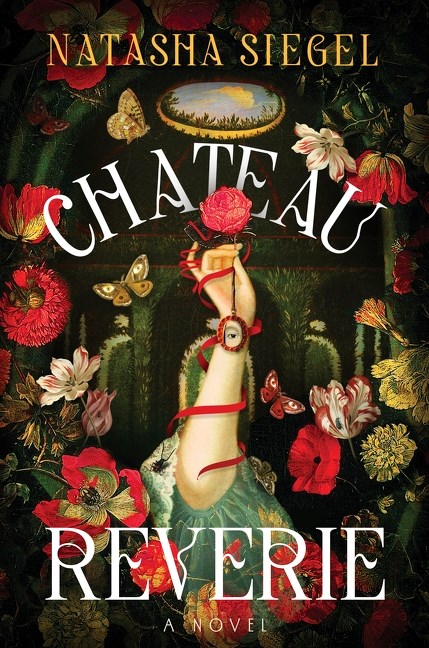
Natasha Siegel wrote one of my favorite books of 2025, As Many Souls as Stars and then she turned right around and wrote my next favorite with her upcoming novel. How far would we go to achieve our hearts desire? That’s what Siegel’s latest, Chateau Reverie asks in earnest. A young woman wishing to forget the death of her companion, and a young man desiring his liberation are extended invitations to the mysterious Chateau Reverie where as the invitation details, they could achieve their greatest desires. Once at the Auction of Secrets they are held captive by a larger power that will not rest until all but one stands the winner. As Leander and Genevieve fight to secure their futures, they face a love that could spell both of them their doom, or bring one of them to happiness and the other forever to ruin. With a premise like that it’s hard not to immediately drop everything to read Chateau Reverie and when I did, it came as no complete shock that I loved it. Even so, this one still managed to surprise me—as much of Siegel’s novels often do. One reason why Siegel’s works have resonated so much is that she always seems to be standing on the beat of humanity, what makes us tick and why we are driven to do certain things. This was certainly true to her last novel and it echoes in this one. This is essential to Chateau Reverie, especially to the romance that evolves between its two main characters. Now I’m not often one for a romance condensed into such a short period of time, but Genevieve and Leander completely had me swayed. It’s got to be Siegel’s extreme powers for yearning because I am apprehensive and still she manages to get me by the second or third page. I’ll be summarizing my thoughts in a review soon, but the twist in this one is completely magnificent and still has me in shock. Surprising indeed!
NEW FAVORITE AUTHOR
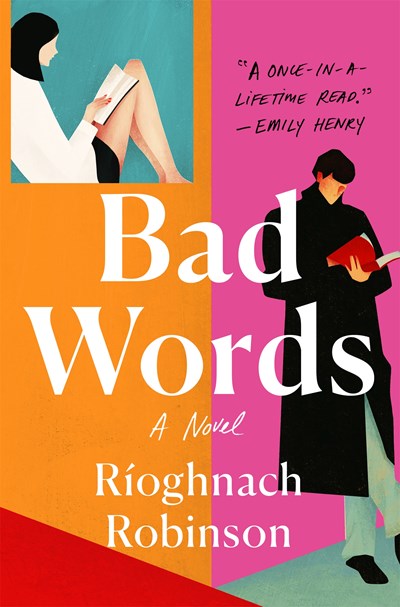
If I were to point to the romance novel of the year it would be Ríoghnach Robinson’s forthcoming romance Bad Words. Everyone who ever heard me say I don’t believe in enemies to lovers in a contemporary romance setting has seen me proven wrong since reading this novel. When a renowned book critic and a novelist come to blows after a bad review, the interaction is filmed without their knowledge, leading to a viral feud that spirals out of control. As the two spark a larger conflict online, the necessity of literary criticism and journalistic integrity are called into question—the bad words underpinning the good in the wider literary ecosystem. Drawn into conversation again and again, Parker and Selina slowly realize: sometime’s the person that knows you best is the person that has known you at your worst. And the person that saw you at your worst up and wrote a bad review about it. What’s so fun about a novel so deeply entrenched in the publishing industry and the foundations of literary criticism is that I read this truly disbelieving how Robinson could pull off the romance between author and critic. And how I love being wrong. The viral feud between author Parker Navarro and critic Selina Chan has widespread implications for the entirety of the novel, the elephant in the room as they slowly start to fall in love with each other. One can almost feel the tension radiating off of the page as Parker and Selina frantically rage back and forth on twitter, to even the quieter moments across their email correspondence. Being proven wrong has never felt so right and this book is evidence of that entirely. My full review
NEWEST FICTIONAL CRUSH
Am I talking about Emma M. Lion, Young Hawkes, Islington, or Niall Pierce? The answer is clearly all four. Now I know everyone and their mother is reading The Unselected Journals of Emma M. Lion right now. For those of you uneducated, this epistolary historical fiction series follows the elusive return of one Emma M. Lion to London after many years away to secure her inheritance and residence at Lapis Lazuli House. Foiled by her eccentric cousin who has spent the bulk of her inheritance, Emma will have to resort to unconventional means to remain in London. Including but not limited to: lying about having a chaperone to one’s demanding aunt, establishing a new tenant (a photographer no less) in residence, rejecting numerous proposals from one Charles Goddard, participating in the neighborhood scavenger hunt, exchanging favors with a nuisance, and so much more. One thing about these volumes, they suck you in until you come to having read all eight of them. I already had this series on recommendation from my dear friends Tara and Jeanne so I knew they were going to be a hit from the get go. Yet still I was not prepared for how charming these ended up being. I even went so far as to purchase each volume in hardback so you know it’s serious. Beth Brower is responsible for four new fictional crushes (and don’t make me choose between them please).
FAVORITE FICTIONAL COUPLE
Voidwalker by S.A Maclean was a dark fantasy gem I uncovered in the depths of the London spring. After a voidwalking smuggler named Fionamara accidentally gets roped into a coup, she ousts the ruling member of their winter territory, Antal. Antal is one of the Daeyari: creatures that originated in the void who consume human flesh to survive. Without a true plan, all that’s left is to team up with the cannibal monster to set the government to rights, or fail together (and isn’t that romantic). Now there is a lot going on in this premise but just trust me in that it is one of the best fantasy romances of the last year. If you like your relationships freak for freak or where they are both pathetic (affectionate) then the Beasts of the Void duology is most assuredly for you. The sequel was high up on my list of most anticipated reads for this year and I was thrilled to be back with my beloveds Fi and Antal. Sunsplitter asks what else there is to confront after successfully toppling the government and falling in love with a cannibal??? Daddy issues. This sequel sees Maclean deepen her themes, her character work, to test the bond between human and Daeyari. Lots of angst and tension ahead babyyyyyyy (and you know that is my favorite flavor of romance). Fi and Antal continue to take the crown for favorite fictional couple. They are just too good and no one else should even try.
NEWEST FAVORITE CHARACTER
My first Ilona Andrews? As a longtime fantasy reader this feels like a sin to admit but I am so happy to have found a new favorite author, character, and series in just one read. For the portal fantasy fans out there, This Kingdom Will Not Kill Me is all about waking up in your favorite fantasy novel and fighting like hell to survive. Who amongst us wouldn’t leap at the chance to try this? And who among us would actually succeed. Well if you don’t know the currency conversion of your favorite series you might just not. Fortunately our protagonist Maggie has a memory like a steel trap and remembers almost everything from her favorite dark fantasy series. After waking up in Kair Toren, a city she has yearned to venture into, Maggie soon knows she will not survive if she doesn’t quickly get scrappy. She robs a character she knows carries wealth and uses information about the plot™ to ally herself with a tortured byronic hero to acquire security. Maggie is everything I love about complex, layered heroines. She knows her worth, stands by her principles, and is unafraid to tell it like it is. Also clever to the extreme (I’m serious). Of course she’s not perfect or it would make for a most boring narrative, but her sharp wit and quick thinking make for a vastly entertaining read. I’ve got to hand it to the writing duo that is Ilona Andrews: this is how you write fantasy and female characters.
PRETTIEST BOOK BOUGHT
If you are reading this and you are a coworker of mine you know this is in fact on the holds shelf (but it’s the thought that counts). I am always singing endless praise to the historical fantasy powerhouse that is Katherine Arden. Her work invigorated my love of both genres and the possibilities in melding the two. The Winternight Trilogy is one of my favorite all time works of fiction and her latest, The Unicorn Hunters, is another stunning meld of fiction and fantasy. Not without a kernel of romance either! How to paint a picture for this hardback other than it has tapestry endpapers and a silver foiling on the naked cover. Truly a gorgeous edition that is representative of the contents of the book within. Want more reason to pick this one up? Read my review.
BOOK THAT MADE ME CRY
I am not the kind of reader who cries often, so when a book guts me to my core or has me close to tears I know it is flawless. Elizabeth Lim’s upcoming historical fantasy adult debut, Fishbone Cinderella did that for me. A generational saga and cinderella story following a family of women with strange abilities who are torn apart by war and circumstance, Fishbone Cinderella tests familial bonds and the cost of generational wounds. Across 1940’s Hong Kong and San Fransisco in the 1960’s, we follow mother and daughter both as they face the consequences of trauma, their choices, and their respective gifts. Lim is the master at the fantasy narrative and while this one is firmly placed within our world, it still has that speculative gleam to it. Magic here is viewed as a curse, yet one perfectly aligned with situation: to disappear in the face of those who wish you harm and to know by touch the memories of those around you. Lim understands how to utilize the speculative to inform her characters and get after themes and situation. Fishbone Cinderella is a heartrending portrait of mother’s and daughters, the pain we bury, and the lengths one must go to reconcile the past. If you’ve read this you’ll understand how moving the final scenes were. Sheer perfection.
BOOK THAT MADE ME HAPPY
How to explain Alicia Thompson’s latest other than its for the Leap Year and While You Were Sleeping lovers. As that is me two and two this was the perfect romance. Waking up on the lawn of the brother to your horrible date of the previous evening (after telling him you’d rather be on a date with his brother) is one hell of a coincidence. That lawn also happens to be in Ireland thousand of miles from where you were last night. No Money, no passport, no anything, protagonist Jess must figure out how to get home and unfortunately Eamonn is her only shot. He begrudgingly agrees to help her and the rest is romance history. In Every Possible Way is a contemporary romance that pushes the line of the possible and I am endlessly grateful for it. Because everyone yearns to be squired around Ireland by a hot mechanic while basking in all of life’s possibilities. Who even cares how you got there? I was simply along for the ride. In Every Possible Way is a romance that made me feel all the things, but the emotion I felt most of all was happiness. Alicia Thompson’s latest is there to remind us that we’re allowed to have it all even if we have to risk it.
BOOK TO READ BEFORE END OF 2026
Liana De la Rosa what cant you do? Taking a detour from the historical romance for which she is best known, Liana De la Rosa is serving up a forbidden friends to lovers romance this summer with Mutual Discord, out this August. As I am altogether familiar with Liana’s game I know this is going to be EPIC and it is the romance I will be getting to before the end of this year. Following an influencer whose virtual friendship with a mysterious “A” is revealed to be the partner of an old friend, Mutual Discord promises the mess, the romance, and the heat together in one novel. If there is one thing I trust implicitly, it’s historical romance writers breaking into the contemporary space. I know Liana is going to nail the tension, the yearning, and the conflict right on the head. She did after all completely sweep me away with her Luna Sisters trilogy (which comprised all three). I definitely want to extend support to my favorite writers who are taking different avenues as publishing shifts and Mutual Discord is up next for me.
Please note this review contains references to some of the events in thisnovel. No overt spoilers, but please read with caution.
⭐⭐⭐⭐⭐
Rating: 5 out of 5.
When Elegy Ahn, spare to the Sword of Cedre, is brought to neutral territory to consult with the great augurs, she does not expect to be handed a prophecy that could determine the fate of her nation. A soldier of Cedre, Elegy has spent her life holding back her country’s sworn enemy: the Talusar—an empire that embraces a fever that has brought nothing but death and strange abilities for those who are reborn. Set to receive this prophecy, Elegy is surprised to learn that the augurs are divided and the prophecy could instead belong to Rava Vidar, the Butcher of Calgara, and grand-niece to the emperor of Talusar—one who has also been brought to hear this foretelling. Elegy learns this outcome hinges on three: one who bears the Vidari name, someone who has tasted Cenobium salt, and a person she is doomed to love, one who will bring about her death. Sworn in as the Hope of Cedre, Elegy is now in need of protection and is granted a Knight. That man is Theren Forint and all he has ever known is his charge, to protect the Sword or die. To determine the outcome of the prophecy, one must control the three points of the pyramid, but when fate is placed into the hands of the prophecy bearers the only thing ensured is that there can be one victor. Elegy is determined to embrace her destiny and secure Cedre’s triumph, even if that victory spells her death.
I would say “Veronica Roth I didnt know your game” but that would be a lie because I expected nothing less than this. For anyone who has kept a close following on Veronica Roth’s career, Seek the Traitor’s Son marks both a return and a prophecy fulfilled. A return to her superb meld of science fiction fantasy set within a world that is most certainly our own—be it in the far distant future, and a dystopian fantasy epic that takes incredible risks to craft and accomplish something earth shattering. Seek the Traitor’s Son is the kind of novel that defies definition. It feels a bit Dune, a bit TheExpanse, but where it takes form is something original and utterly Veronica Roth. In Seek the Traitor’s Son a prophecy emerges in an earth ruled by fever, and two competing nations fight to control the fulcrum: the trio through which the outcome of the prophecy relies. A soldier bound to her lineage, an oath sworn knight forced to serve, and an inquisitive scout are tethered against the prophecy that could doom their world or reveal its triumph. This could not be more Veronica Roth: complete with a deeply tormented man and a romance that made me want to be sent to the seaside to recover my health. A planet transformed, fantasy and science fiction leanings, fatal fevers, and fated romance each find place in this dystopian marvel. Seek the Traitor’s Son is the kind of life altering dystopian-fantasy that quietly takes hold, building its roots to a fierce power that cannot be rivaled. To read this is to emerge reborn, a resurrection of its own.
Seek the Traitor’s Son is without a doubt Veronica Roth’s best work to date. She honed her craft in the crucible of Divergent, her characters and dynamics in the Curse Bearer verse, and now we get to bask in the overwhelming light that is this work of fiction. No matter where you are in your Veronica Roth journey, she’s always been there sharpening the blade and here is where you must fall. Seek the Traitor’s Son offers something unique to every fantasy lover, but as a reader who loves deep character work that utilizes plot as the vehicle for change and challenge, this book is a beacon. Seek the Traitor’s Son unites three perspectives: Elegy, the Hope of Cedre, Theren Forint, an exile forced into knighthood, and Hela, a transplanted Talusar scout. Roth instills a foreboding air, an understanding that these three will be shaped by the events of prophecy and reaction. This is first realized twofold as Elegy faces a prophecy that brings nothing but death, and Theren is transformed in the wake of betrayal and suffering. Seek the Traitor’s Son is not overburdened in any regard, finding balance in moments of stark feeling and levity. When Elegy and Theren are not building up angst city brick by brick, Hela is out there Fox Mulder-ing with a side of plant hallucination. Roth is sure to ground her novel in every facet of humanity. Be that bloody, humorous, or hopeful, Roth embraces it all.
Now I know I have a specific type of character when I see one and go: onto the collection you go. See here: man burdened by guilt and torment (Theren), and woman burdened by prophecy and a tremendous desire to bring about change (Elegy). What to say about Theren Forint other than wowwww you survived all that? Because this man is so tormented. His byline: The knight who forsook his oath to you just had the worst four years of his LIFE. Slash: If he’s your oath sworn knight then why is he in MY gladiator arena. But seriously, I am here for characters profoundly impacted by a single event which altered the course of their life, who come out the other side a shadow of their former self. They’re not doomed by the narrative, they’re haunting the narrative they were doomed by (and just maybe clawing it back). If Theren is the stoic character on a quest for redemption, then Elegy, our reluctant hero of prophecy, is that dose of heady spirit. She’s not about to let Cedre fall even after a self exile, and she needs little determination to mount a rescue of a man who forsook her four years ago. Despite their differing motivations, Theren and Elegy are evenly matched in their call to action, harmonic in how they embrace their destinies and hold to each other. It’s not a joint recklessness, it’s an inherent belief that they can rely on the other. And as that has already been tested there is nothing more magnetic than such mutual trust.
Romance between Elegy and Theren is inevitable. It is after all fated by the Augurs, by prophecy itself. But what does fate compare to the past Elegy and Theren surmount to choose each other again and again. Love is an essential cornerstone for Roth—the love that perseveres even after death, the love that limits because it is flawed, and the love that restores you even when you thought yourself broken. Like all things in this novel, the romance creeps in like a fever. Ironic since it was written down from the start, but Roth plants a seed of doubt: whether Elegy and Theren are going to be able to move past the events which first separated them. United in their respective grief, tragedy is almost a union of its own. The moments of grief and betrayal become these cornerstones for Roth to build to her larger character studies and core themes. It’s some of the most delicious character writing I’ve read and it sets up the romance to be that invigorating blend of angst and softness. Elegy and Theren are being tested by a prophecy that could destroy the world—a classic—but they still manage to have grace for each other. The tenderness through which one character cleans the others wounds and the other shows up ready to rescue them having committed horrific acts of bloodshed? PEAK. Elegy and Theren are my favorite niche blend of curiosity at first glance and knight x the shielded. I don’t need to know what it’s like to be infected with the fever when they exist.
On a craft level, it’s undeniable how every part of Seek the Traitor’s Son was carefully chosen and poured over. Narrative structure is where this novel tethers itself to a specific path to character interiority. It’s as simple as how information is conveyed and when. Roth offers glimpses into the past not to just inform our understanding of certain characters but to provide insight into the part of their story to which we already know the end. Like a stone skipped over water Veronica Roth momentarily strikes down on the past, offering glimpses into events we have never seen in the shadow of their end. These events hold a greater weight not only because we know how they have concluded, but the tragedy in witnessing them come to pass, in knowing and still bearing witness. These shifts backward strike like a knife, there’s a helplessness in their telling. It’s masterful how Roth wields narrative like a blade, a two sided assault from the plot and her use of past and present. Memory is power, not just for those that can view the past in retrospect. Memories are needed for our trio to reveal the three points of prophecy, a fulcrum constantly reshaping.
It’s fitting how the most iconic voice in the dystopian genre has returned with the best dystopia and book of the year….*whispers* or is it prophecy? When the world needed her most she vanished, wrote an amazing urban fantasy novella series set in Chicago that said be gay do crimes (amidst many other novels), and then wrote this masterpiece. Seek the Traitor’s Son has a gravity that pulls one down into fever, betrayal, and exile. Veronica Roth sharpens her blade and cunning in her science-fantasy epic across a fever ravaged earth that presents a stark look at autonomy and sacrifice. Characters Elegy, Theren, and Hela face the perilous nature of prophecy and the politics in untangling its meaning and the strange communications with forces beyond the known universe. We are never in better hands than we are with Veronica Roth, someone who deep down understands the power in embracing destiny, in choosing resistance even if it means walking down a path you never wanted. Experience the particular agony in not knowing if everything is predetermined for these characters. Seek the Traitor’s Son knows there is always time for angst, even at the end of the world (and pre destiny is certainly part of that). Seek the Traitor’s Son blends fantasy with science fiction and the resulting magnitude is certainly akin to a fever. There are few places I would not venture for Veronica Roth so loving this is just all the more vindicating. In Veronica Roth I have never wavered and in her—and in The Burning Empire duology— I will forever trust.
Thank you to Edelweiss and the publisher for providing me an advance review copy.
Trigger warnings: death, war, torture, murder, emotional abuse, physical abuse, sexual assault
Please note this review contains spoilers for the former book in this series, The Tainted Cup and A Drop of Corruption, and contains references to some of the events in this sequel. Read with caution.
⭐⭐⭐⭐⭐
Rating: 5 out of 5.
Far beyond the boundaries of the sea and the ever constant threat of Leviathans lies the canton of Sapirdad. Responsible for feeding the wealth of the empire, it has become the setting for a brutal slaying. An heir to one of its leading families has just been murdered, gruesomely slain by the son of their family’s greatest rival. As the presumed killer insists upon his innocence in committing the crime, all out bloodshed between two rival families appears inevitable. Hoping cooler heads prevail but wishing to prevent further violence, a group is dispatched to investigate the scene: Detective Ana Dolabra and her assistant Dinios Kol. Arriving at the Canton in the midst of upheaval, they soon discover that the suspect is indeed innocent of the crime, guilty of nothing but being handed the butcher’s weapon. Someone hides behind the scenes playing the puppet master, controlling the actions of others through means unheard of in the human populace. Discovering how this web was expanded into the canton is up to Din and Ana who must grasp at all the facts as more murders bloom. The answers lie in the fraught past of the canton—one all too familiar with unexplainable deaths and bloodshed. In a canton built upon blood and suffering it is these unexplained killings that could spell its end, and upheaval for the entire empire.
A canton of blood grapples with buckets of it in Robert Jackson Bennett’s latest fantasy mystery medley, A Trade of Blood. Inspector duo Ana Dolabra and her chronically exhausted and disastrous assistant Dinios Kol are back for a third installment in the genre spanning, far too addictive Shadow of the Leviathan series. Another case with far reaching implications to plague main character Dinios Kol and rewrite our existing understanding of the Khanum empire. It all starts with an impossible murder (and doesn’t it always): a locked room where two lovers meet, one of whom murders the other with no true memory of having committed the act. This is where Bennett thrives, in the boundaries of the improbable which he utilizes to build out his greater exploration into the cattle industry and the systems put in place to uphold an empire’s insatiable hungers. Aforementioned disaster character Din stands at the forefront of this investigation, facing new challenges. Din’s greatest torments in A Trade of Blood include: family trauma, having to cart heavy musical instruments around for his boss, another biological phenomenon wreaking havoc, and most notably himself. For Bennett’s A Trade of Blood it all comes down to hunger and the lengths one will go to see them realized. Din and Ana will have to face the web winding beneath the canton of Sapirdad and the past violences which bleed eternally into its present.
A Trade of Blood brings a new side to the empire of Khanum, one where the blood spilled is immeasurable and more than one family has succumbed to the overwhelming allure of power. It’s up to our favorite investigators to view the gruesome scene and turn the tide in a canton of blood and intense rivalry. Across the Shadow of the Leviathan series, Robert Jackson Bennett has interrogated the unique facets of the Khanum empire and the people living within its bounds. In A Trade of Blood he turns his attentions to the livestock industry and its foundations set deep within the land. This installment is all about hunger, the appetites whetted and never satiated, and those fed eternally all for the sake of desire. The cattle industry is one of wealth and of slaughter, a carrion feed for two rival families—the vultures—to scrap over. Yet Bennett understands it is human nature upholding this industry, a specific craving that birthed its existence—one that forever sustains it. As always there is the undercurrent of magic to this world, the augmented and the biological transformations in the wake of leviathans still very much in play. Bennett brings us into the fold of the Orbiis, those enhanced to maintain the empire’s agriculture, as he builds out his central mystery. Between the family rivals, forgotten history, puppetry, and blood this third novel shapes a monumental look upon hunger and the price of wielding the blade in service of vicious appetites.
A Trade of Blood furthers an ongoing inquiry into personhood and the systems of power which strain all that we are. Din bears the brunt of this and it is through him that Bennett’s greater plot is realized. If A Drop of Corruption centered upon Din’s exhaustion with the work of uprooting a seemingly never ending corruption, then this book was about Din finding a work life balance that he desperately needed. Thrilled for him actually. This third installment sees Din and Ana at their strongest. Don’t get me wrong, Dinios is still confronting the demons of this empire with a strong “why me” energy, but albeit with a smidgeon of less cynicism. In A Trade of Blood Bennett does a tremendous job in disentangling the human cost of industry and of empire. Just as the victims of the guiding web are lulled into a dream where they commit horrific acts, Din hears voices of his own—the beginnings of the true cost of his gift: his life. A Trade of Blood is certainly concerned with the blood spilled within this canton, but on a far greater level how we trade our lives to industry and what we give up to gain a foothold, a semblance of power within it. For the livestock industry is not one of necessity, but of craving, and calls for a human offering. In the canton which upholds the foundations of this industry, one is merely a good to be swallowed up within the yawn of the empire, furthering its own ends.
Robert Jackson Bennett drives the nail ever deeper in A Trade of Blood, a third installment rife with blood—yes, but hunger, rivalry, and above all, power. In his third Shadow of the Leviathan novel, Bennett further demonstrates that he has grounded this world in the fabric of our present, an ever haunting cloak cast upon the empire of Khanum. The canton of Sapirdad is an apt resting place for Khanum’s past, one it will do anything to keep from the light, but it is the cattle industry that becomes a larger testament to its history and the bloodshed seeping through its pores. Bennett cleverly sharpens his knife from the start, setting his stage with two families at odds and Dinios Kol and Ana Dolabra on the case of a bloody crime. The case is no mere revenge killing however, and unveils a pain that lies much deeper—literally—as the tool used against the laborers of the past festers deep within the land, never slumbering. What I love so much about these mysteries is Bennett’s hold on his themes and the nuance in displaying the various facets unreservedly. Mark this as another appreciation for authors’ notes because Bennett’s afterword offers a wealth of insight into his findings and the basis for much of this novel. Unparalleled and certainly without rival (of the unbloody kind), A Trade of Blood belongs within its own realm of fantasy excellence. I will always be craving more from Bennett. Wit, improbable murders, and humorous repartee between a disaster bisexual and his employer who spends most of her time willingly confined in a closet. In that exact order.
Thank you to Edelweiss and the publisher for providing me with am advance review copy.
Trigger warnings: death, blood, murder, suicide, body horror
Anne of Brittany has long dreaded her marriage. Since the invasion of France spelled the death of her father, she has accepted the life of a duchess with grace, knowing full well her lands and her body will not remain hers for long. France means to marry her to their king to secure Brittany, but in secret Anne plots an alliance to Maximilien of Austria, the king’s greatest rival. Secrets are not long harbored, not when every court has diviners to glean information from the opposition. Anne’s only saving grace is the forest of Brocéliande, a wood long thought to be enchanted which could offer protection from prying eyes. Desperate and willing to lie to secure her future, Anne presents a ploy: they will tell France they hope to hunt a unicorn. Something which requires Anne to be unmarried. While on the hunt she will wed Maximilien by proxy and none will be the wiser. When the hunt reveals a real unicorn and a stranger returned out of time, Anne soon comes to know magic is real, but as her ploy has been successful it is of little consequence. Lies begin to have a cost and as Anne grapples to control the narrative against a power hungry France, hiding the truth to magic becomes impossible. For magic is real, and it wants her.
In The Unicorn Hunters, historical meets the fantastical with France on the edge of obtaining Brittany and the magical forest of Brocéliande bringing magic and memory to the verge. Katherine Arden goes beyond the expected in her latest novel to show how the best parts of fantasy include history retold. Through her focus on Anne of Brittany, a woman placed into a singular narrative, Arden recontextualizes the life of the duchess, one where her cleverness finds resonance in the magic of a lost city and a forest of secrets. Most importantly, unicorns. There are unicorns. An elaborate lie built to retain control of Brittany leads to magic taking root within its borders, where portents, diviners, and courtly intrigue are at their height and vying for dominance. Swept away in a hunt for a unicorn and a lost world impressing itself upon a duchess, The Unicorn Hunters appeals to a magic just out of reach, but one that can be shaken out of sheer tenacity. Cunning women, delightful animal companions, and a strange otherworld all find a place within the confines of this audacious historical legend. The Unicorn Hunters is proof that Katherine Arden can do no wrong with her penchant for sweeping historical fantasy. That we need to have her spin on every kind of fairytale—and history for that matter.
Katherine Arden’s hold on history and memory crafts an extraordinary saga of a duchess’s quest to obtain freedom, for herself and for her kingdom. A saga that intersects an age old magic within a forest and forces beyond her greatest imaginings. The Unicorn Hunters threads an enlightening tapestry on fifteenth century Brittany down to the minutiae, even as Arden takes readers on a fantastical journey complete with sea-drakes and the iconic mythical figure of the unicorn. The Unicorn Hunters features some of my favorite writing from Arden. Think the atmospheric feel of the Winternight trilogy transplanted into the forests of Brocéliande during a period of turmoil. Katherine Arden frames an essential query here, a driving force for her to build out her tale. The Unicorn Hunters asks, if we aren’t first granted power can we access it by other means and thus change our fate? All that is central to the life of Anne of Brittany—duchess yes—but one relegated to a single fate: marriage and children in service of France. Breaking free spirals into a classic fairytale: the girl who catches the attention of the forces of magic. Not so typical, a quest to find the drowned city of Keris. A Katherine Arden novel would not be complete without persnickety family members, adopted children, and a delightful animal companion (named Butter no less). This story is wholly her own and yet something I’ve never seen from her before.
The Unicorn Hunters is another fabulous historical fantasy novel from one of my favorite writers within this space. Something quintessentially Katherine Arden in tone and humor, but new for its breadth of history. The Unicorn Hunters had me thrumming on the sheer possibility wound up within this distinct era. The fantastical feel of this novel does not just hinge on the unicorns and magic of it all, but on the time period itself. Beliefs and customs long past through which people dictated their entire lives are brought to life once more and they carry a weight that Arden uses to further her narrative. The place for women, land, and power are all grounding cornerstones within The Unicorn Hunters that provide an additional context and conflict. Yet for all of this it is really the characters who shape this story into pure magic. For Arden each perspective is rich and laden with details one cannot help but gorge themselves upon. Where history comes to life and the magic takes root. Here for Anne of Brittany’s elaborate web of lies. She should have more of them actually (as a treat). The Unicorn Hunters is history respun into legend. Where myths are made real and clever women take their rightful place at the forefront of such tales. Unicorns and devoted men kneeling at their feet.
Thank you to Edelweiss and the publisher for providing the advance review copy.