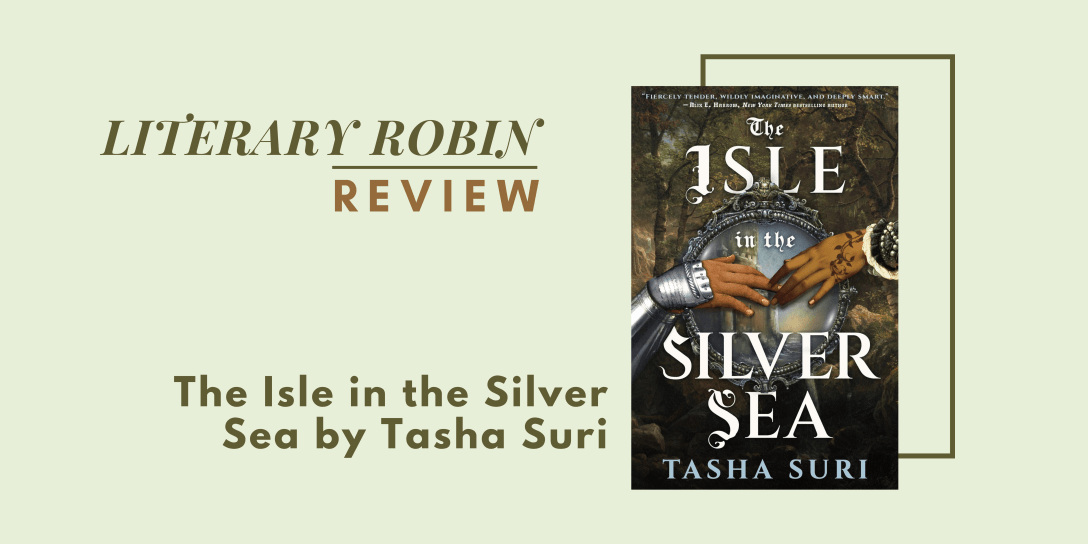
There is an island in the sea that subsists itself entirely on stories retold. Lifetime after lifetime the characters from these tales are reborn to play out the narrative in an endless cycle, else the isle shall fall. For some this means fame or fortune, but for others its life in an enchanted wood as the evil sorceress, or a knight doomed to first kill his great love before killing himself. When she first arrived on the shores of this great Isle, Simran knew she was destined to play out the tale of The Knight and the Witch as the powerful sorceress incarnate. In this tale, a knight and a witch are doomed to love and to die at the other’s hand. Simran will do anything to escape this fate, but a story is a powerful thing and not even a determined witch can outrun it forever. One fateful evening, Simran encounters Vina, a dutiful knight to the Eternal Queen and undeniably the knight set to win her heart and end her life. Escaping Vina’s clutches, Simran travels home where she immediately confronts a murderous assassin intent on ridding the island of the stories that fuel its survival—and her story is next. Stealing away her close friend from childhood, Hari, the assassin gives her a task: find out his name, and discover why he cannot die. Too insurmountable of a task to accomplish alone, Simran must ally with Vina, her knight and intended killer, to discover the true beginnings of the isle and if they can rid themselves of its deadly fate.
Ensnared by a story takes a literal sense in The Isle in the Silver Sea, in which an island endlessly rebirthed through stories is doomed to fall unless a reincarnated supply of characters follow a tale eternal—down to the very letter. Tasha Suri’s newest fantasy standalone brings queerness, sapphic lady knights, witches, and sprawling libraries into the center focus and goddamn if it didn’t leave me wanting to fall into a never ending cycle of story (wherein I fall for a hot butch knight). That and exploring old books in a library hidden away in an ancient forest. Romance and violence are a double edged blade in this novel, as a witch and knight face down a fate that can only lead to one thing: their death. But knowing your fate is to die does not mean you cannot yearn at unprecedented levels, and Tasha Suri takes that challenge at its utmost. A pale assassin stalks the stories that have let the island prosper, but it is a set of archivists serving as the very architects of history that feel the most sinister. Tasha Suri examines the preservation of history, from those determining the fate of certain narratives to the construction of a nation. In a fictitious Britain intrinsically tied to story, Suri swings her sword at myths, monarchy, and a vicious nationalism intent on controlling the narrative by any means necessary. Even riding a nation of its “otherness” and anything antithetical to its agenda.
The Isle in the Silver Sea poses an essential question: who decides what stories are told, how they are designed, and how they are disseminated—and what happens when there are those that threaten this goal. Britain stands as the bedrock for Suri’s inquiry where stories are a fuel, both in the literal sense to ensure the island’s survival, and for the rhetoric that is kindle for an ever burning flame of a nation. Archivists pour over a plethora of the island’s written information, preparing a narrative where nation is everything and the crown triumphs because incarnates do their duty. There is no room for heresy, or outsiders questioning the way forward, and they are dealt with in a quiet violence as they are cut from the narrative. Certainly what unites the lady knight books of this year is the examination of storytelling as a deliberate act of mythmaking, and how stories can serve as a stepping stone for higher powers forcing their sinister agendas. It’s not that stories aren’t beautiful— when they have the space to flourish unrestrained—but that those that are carved out for some higher purpose will in turn be wielded as a weapon. Epigraphs at the start of each chapter mark a process where archivists determine the acceptable tales for mass consumption, and those that are a threat to the narrative they’ve constructed. It’s deliberate, it’s violent, and it leaves no room for new stories to take hold. After all, what is a nation if not a collection of narratives molded together to suit its own image.
Ruled by a queen everlasting, this island constructed by story sees otherness as the true threat. No stories emerge from the outside, and no outsider is able to take up a prominent role within the narrative. Simran Kaur Arora, a witch from elsewhere, is thus a contradiction. A blip in the cycle that should have ensured a blonde and blue eyed witch play out the tale of The Knight and the Witch. But otherness is strength, as we well know. Against her deadly fate, Simran meets Vina, a valiant knight raised in service to the queen everlasting. If you’ve read a Tasha Suri book before you’ll be prepared for the friction between reluctant allies who maybe also want to kiss a little. That’s Vina and Simran in a nutshell, yearning for what cannot be while avoiding their feelings. When one’s fate is tied to their lover, to kill or be killed, you’d think there’d be no room for yearning. Tasha Suri is here to show us just how wrong that is—in fact it makes the yearning that much stronger. Between trekking through a disappearing forest, cutting down trees while exasperatedly saying your lover’s name, being captured by a group of rogue witches, and trying to save the isle, these two imbue romance. Some of my favorite passages with Vina and Simran are where the romance is unexpected and relates back to a crucial part of memory: the act or desire to document. This is essential to all that the Isle in the Silver Sea is trying to impart and just makes these interactions all the more romantic.
Tasha Suri’s legend crafting prowess is a vital part of The Isle in the Silver Sea: a story all about stories themselves. I’m not sure anyone else could have constructed such a glorious tale of reincarnated lovers breaking free from the narratives designed to control them and an island built upon stories. Ink stains, tattoos, old libraries, forests, and legends broken apart and remade are the scattered pieces brought together and unified within this novel. At the heart of this are the stories themselves, and Suri makes it clear: diversity of perspective and experience are what truly keep the island alive. In all parts of my reading experience, I viewed The Isle in the Silver Sea as a love letter to those who not only painstakingly preserve history but make it widely available. Not just the archivists, but the librarians who toil endlessly to help make information accessible (and are very much under fire right now). The Isle in the Silver Sea is another essential reading for the times we are in. Where inaccurate information is widespread and individuals are handed a narrative to suit someone else. In this regard, to question is necessary, and to seek the truth is a key part of resisting. The Isle in the Silver Sea shows just how affirming a story can be when entrusted to the right hands, and how dangerous when in the wrong ones. That otherness does not mean you cannot build a community or a story of your own, if you can at first pick up the pen.
Thank you to Netgalley and the publisher for providing the advance review copy.
Trigger warnings: death, violence, murder, xenophobia, racism

 Literaryrobin