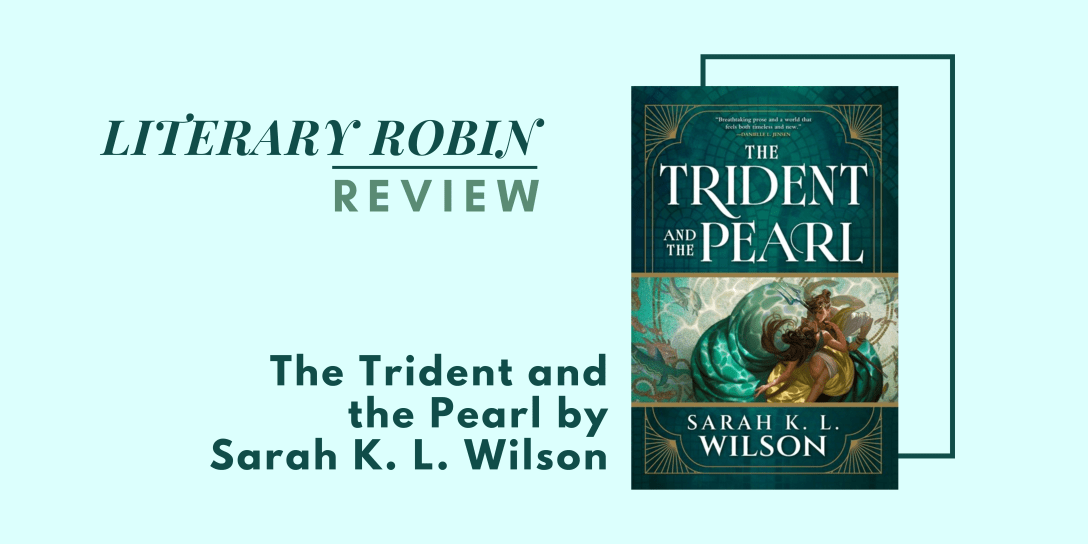
On the day her world drowned, Queen Coralys made a bargain. Desperate to save her kingdom of isles from their watery fate—one to which her husband had already succumbed, Coralys made a plea with their gods who at the last moment saved the islands for a price. In trade for her world restored, the gods strip Coralys of her queendom and order her to marry the first man who returns to the shore. Hoping for a prince or a duke, Coralys is instead given a fisherman who appears on the dock horrifically wounded and burnt from days spent in the sun. Given no choice but to wed this stranger, Coralys has no idea the man to whom she is betrothed is actually the god of the sea, the very god who was supposed to protect her islands and to her belief shirked in his duty. Mistrusting his motives, Coralys decides to control her own fate and chase revenge: kill the god who allowed her world to drown and take his power for herself. When it is revealed exactly to whom she is wed, Coralys soon grows to understand the world of scheming gods, of which she is unfortunately a pawn. As her husband reveals hidden depths Coralys is caught within a deadly tide: to pursue revenge or follow a new path to become a weapon all of her own making.
Drown under the weight of the waves in Sarah K.L. Wilson’s turbulent debut The Trident and the Pearl, where few bargains are as desperate as the ones we make before our end. Recounting a marriage of convenience between a queen stripped of her station and a god struck low, Wilson’s romantic fantasy novel puts new meaning on revenge and the path towards fulfilling that desire. Mainly it is okay to stab your husband through the chest, encouraged even. The Trident and the Pearl does not hesitate to drive that spear in deeper with a slow burn romance between our wedded pair: Okeanos, god of the sea, and Coralys, mortal once-queen hell bent on revenge against her godly husband. A recipe for tension if there ever was one, The Trident and the Pearl pulled me deep into the undertow to entangle in the deadly machinations of gods and reflect on not just godhood but the weight of holding such a power. Wilson’s attention to romantic yearning elevates this novel even further, a romance caught between hatred, vengeance, and what we owe to those whom we lead. Atmospheric and rimmed in sea foam, Wilson’s series debut manages to strike the perfect course, an ebb and flow between romantic yearning and the stratagems of fickle fickle gods. Rough seas turn rougher with bargains, quests for revenge, and gods in the mix, making this sea positively treacherous.
Reading The Trident and the Pearl has reminded me how much I miss a classic tale of godly scheming. Those stories which involve gods not as beings of pure intellect and rationality, but idiots and sometimes…simply just a guy trying his best and failing horribly? My taste down to the exact detail. Where the machinations are overly ambitious and humans are mere players on a chess board, The Trident and the Pearl feels like a return to the myths of my childhood and it is certainly a long-awaited homecoming. This has all the ornamentation of a classic godly tale: a heroine desperate to save her people, a double sided bargain, and a marriage between god and mortal. Set in a land of interconnected islands, The Trident and the Pearl feels both expansive and close knit much like the ocean itself, a comforting balm and a dangerous swell. The romance follows a similar pattern. Unhinged yearning is one thing: but yearning for the wife who wants to kill you and the man directly responsible for your rumination is entirely another. Before I read this book I had no true idea of the intimacy in killing—both in the person driving the weapon in deep and the person looking on helplessly, pulling the weapon in deeper. All to say Coralys and Oke don’t exactly fit any romance dynamic I’ve ever read, instead opting for chaos and disorder, which only further aligns this myth-like quality Wilson constructs with her debut.
The Trident and the Pearl takes a meandering path to the center of the storm in an engrossing final act that left me half drowned and bedraggled in its wake. In such a character focused tale I can only be happy this one took its time to lay the footwork because it makes those final chapters all the more merciless. Coralys’s struggle with her quest for revenge and the aftermath of that choice makes the mid section of this novel more internal—pensive. The Trident and the Pearl is concerned with choices, the crossroads we reach and the paths we take forward. What happens when the goal we’ve been chasing is achieved, and how are we transformed in the aftermath? One thing I appreciated about the mythos we’re introduced to is how godhood is a constant battle to retain one’s immortality and control the power you do have. The relationships between gods are more volatile, the moves and counter moves a result of a desire to amass more. Coralys is a unique character in that regard, not unfamiliar with power and responsibility to the people she leads, but grounded by her humanity. Being responsible for the well being of others is a connection she shares with Oke but against their opposing ties that connection may not outlast a secondary crossroads. Sarah K.L. Wilson’s The Trident and the Pearl is as uncommon as the pearl that makes its name, a fantasy novel worth plumbing the depths to learn all of its innermost facets. At this point I’m lost in it. Count me as on board the second (minus any drowning to the depths).
Thank you to Orbit and Netgalley for providing this advance review copy.
Trigger warnings: death, violence, blood

 Literaryrobin