Please note this review contains spoilers for the former book in this series, The God and the Gumiho, and contains references to some of the events in this sequel. Read with caution.
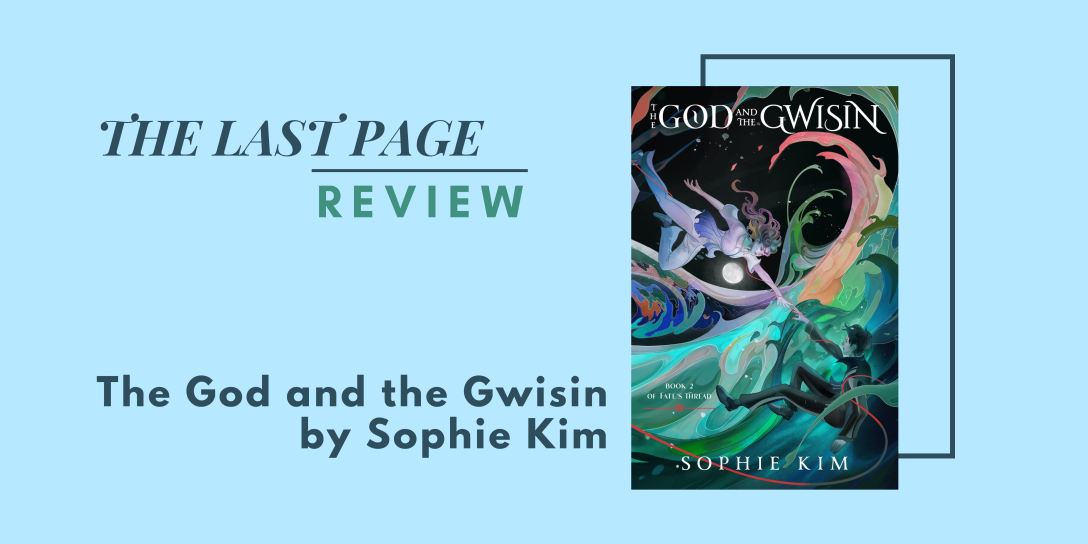
Seokga, the trickster god sent to earth to atone for his uprising, defeated a demon of darkness and was reinstated to godhood, but lost Hani, the love of his life in the process. Reborn into her next life, Seokga had a chance to find Hani again, but fate intervened before they could reunite. Ever since the red string of fate connecting him to Hani appeared, Seokga has searched in vain for his soulmate and his fellow godly beings are tired. They vote to send him on vacation—to a cruise that traverses the river in the underworld. But as soon as he steps on board, Seokga is pulled by the red string towards Yoo Kisa, a Gwisin working on the ship and Hani reincarnated. Kisa has no memory of her past life, except the karmic debt her past lives amounted that her current self is indebted to pay off on board the SRC Flatliner. The red string has always fascinated her, but Kisa has no desire to be compared to the woman she once was nor romance the grumpy trickster god. When Seokga’s brother is found murdered on board, Kisa and Seokga reluctantly team up to solve the murder. Yet as Kisa and Seokga fall back into their investigative ways, it’s evident that they were brought together in this life for a reason, and not even fate can dictate how they end their story.
What does a fallen mischief god reinstated to godhood, his reincarnated soulmate, his emperor brother turned into a baby, a murderous gumiho, and a deceased K-pop star have in common? A murder none of them ever expected to be involved in solving all while on board a cruise ship in the afterlife. The God and the Gwisin initiates a sequel to The God and the Gumiho, where the murders are unsolved and a grumpy trickster god is once again struck down with unwanted emotions. Second in Fates Thread, this series embeds Korean Mythology with reincarnated lovers, godly threats, and an overly abundant amount of yearning. This sequel reorients our characters in the 21st century with new, modern problems, and some that time cannot constrain—like the inescapable longing for a love lost. Two soulmates battle feelings while on a cruise ship in the underworld, romancing in between a murder investigation and a looming journey’s end, where one faces down imminent reincarnation. Sophie Kim certainly understands how to situate a unique set of circumstances, which could just as easily be disharmonious if not for her deft balance of humor, romance, and angst. The God and the Gwisin extends the Fates Thread series in an epic star-crossed love story not to be constrained by reincarnation nor hell itself.
The God and the Gwisin is all around a delight but it is this sequel that sees Sophie Kim’s elaborate threads truly take shape. I jumped into this sequel blind and I am so glad I did because in no way would I have expected the setup Kim delivers here. The God and the Gumiho ended on a hopeful note, as Seokga follows the red string of fate twenty odd years after the passing of Hani, to whom we assume is Hani reincarnated in the present day. Sophie Kim introduces us to Yoo Kisa, a young doctor working at a hospital in Seoul who unexpectedly falls to her death and winds up in the afterlife working out her karmic debt on a cruise ship in the underworld. The setting for this sequel is a far departure from the 90’s New Sinsi of The God and the Gumiho, but it is the perfect stage for Kim to conduct her mystery and initiate an interrogation into reincarnation and fate. Cruise ships are lawless places after all and there’s truly no better place for a murder, nor falling in love with your soulmate reincarnated.
The grumpy sunshine dynamic has never hit quite as hard as this series and I fell in love with our protagonists all the more the second time around. Seokga is the perfect grumpy protagonist —a god disinclined to like anything but coffee and begrudgingly, the gumiho he fell in love with decades ago. This sequel sees Seokga working through his (self-described) daddy issues with a psychologist, his relationship with his brother, and branching out into new, coffee adjacent snack products. Seokga is down bad in this sequel, as any man who has chased his soulmate all the way to Antarctica and back while yearning to find her for three decades could be. Sophie Kim integrates this longing with some truly detailed insight into the notions of reincarnation. Using the Ship of Theseus as an extended analogy, Kim questions if two souls can be united even as the outer self, or person, has changed. The thread connecting Seokga and Kisa, which has—hilariously—its own sentience, only appeared in Hani’s reincarnation as Kisa. So the question becomes were Seokga and Kisa always destined to find each other in this lifetime? I love a good extended interrogation and the themes of soulmates and reincarnation are expertly addressed in this sequel.
The God and the Gwisin is a story all about reconciliation, not just within the central romance between Kisa and Seokga, but relationships both familial and platonic. Certain characters from the previous novel make a reappearance and Sophie Kim gives them the chance to rectify the past. It is here that Kisa comes face to face with Somi, her best friend who betrayed her in her former life as Hani. While Seokga, working through his relationship with his brother, long strained, has to babysit him as he is reverted to the form of a child. There’s enough tension between Kisa and Seokga, but these relationships on the periphery help orient the central conflict for this novel. I for one really loved that Kim gave space for Somi and Kisa to reconcile in this life and how she developed a new friendship between Kisa and the former K-pop idol, Kim Hajun. Sophie Kim bridges this further with a romance between Somi and Hajun. The murderous character being charmed by the kind one is exactly my kind of pairing and their romance is exactly that—sweet with a side of: she could murder you (but he likes it). Who would have thought romance over boba tea would be a part of this novel, but Kim has always highlighted the cafe setting as a peak spot for romance and shenanigans and I was happy to see that represented again here.
Sophie Kim is an author synonymous with exceptional romance and she takes this to new heights in The God and the Gwisin. This sequel follows Seokga and Kisa as they solve a murder while battling the problems of reincarnation, fate, and what they mean to each other. Because of the reincarnation of it all, Kim focuses heavily on enforcing Seokga and Kisa’s new dynamic and their overall compatibility alongside the murder plot. There is a disconnect between these characters, for Seokga is the same as he was before, albeit the impact of a few decades, whereas Kisa is a wholly new individual for Kim to introduce and flesh out across this novel. And what an introduction. Kisa was over here throwing a heavy paperweight at Seokga’s head upon their meeting and he was still struck dumb for her (blunt object not to blame). Kisa is an exceptional character who was dealt a difficult hand in life, and in death, and still carried it with such grace. Her refusal to be someone else just to appease Seokga chasing the ghost of his former love was commendable, as was her standing firmly in who she was. Even with all of this, Seokga and Kisa find love and choose to look to the future instead of the past. Kisa deciding for herself the answer to the Ship of Theseus question and taking the reins of her story was a deeply satisfying end to her arc in this second novel. That Seokga and Kisa’s higher calling is to love each other is solely responsible for my tears and I will be billing Sophie Kim expeditiously.
The God and the Gwisin is at its heart a story about belonging and forgiveness. With such humor and skill, Sophie Kim integrates her Fates Thread series into a new decade and a fresh hell— literally, a luxury cruise in the afterlife. Bonds are tested, and Kim shows the true power in choosing our destiny as Seokga and Kisa choose each other despite what fate and the higher powers have determined to be their end. Seokga and Kisa find an unconventional happy ending, which is all I could really hope for when I first began reading this novel, but it nevertheless brought on all the emotions by the end. Fates Thread is contemporary fantasy at its best, with distinct characters that manage to find their footing no matter the setting or the decade, and ones that charm no matter their place within the narrative. The God and the Gwisin tests the transcendent nature of love in an adventurous fantasy sequel all about being seen and loved for who we are. It will be long before I forget this phenomenal sequel from Sophie Kim but I find I am more than content with that.
Thank you to Netgalley and the publisher for providing me the advance review copy.
Trigger warnings: murder, blood, death, suicide (off page, but mentioned)
 Literaryrobin