Please note this review contains spoilers for the former book in this series, The Jasad Heir and contains references to some of the events in this sequel. Read with caution.
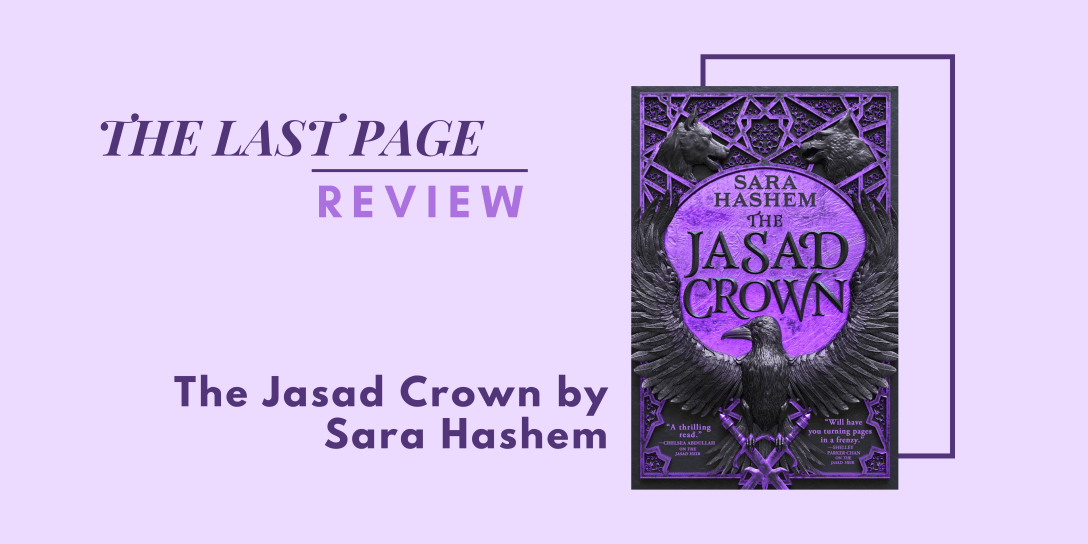
Sylvia, the rightful Queen of Jasad, has taken back her crown. After years in hiding following the assassination of her family and the destruction of her kingdom, Sylvia gives up her anonymity to save her friends from a horrific fate. Before Supreme Rawain and Arin, his heir—a man who should have remained her enemy but became her greatest weakness, Sylvia revealed herself. Sylvia flees in the melee, but not before being struck down and captured by a fringe Jasadi rebel group known as the Urabi. Now, the Urabi have secreted Sylvia away to a mountain fortress where they hope to convince her to take a larger stand against their oppressors and return Jasad to its former glory. Between her alliance to her people and her connection to Arin, Sylvia plays a dangerous game. Her magic no longer suppressed by the silver cuffs flows free and if she’s not careful, threatens to drag her into the legendary Jasadi magic madness. If it’s not her magic destroying her sense of self, it’s the cost that reconstructing Jasad’s fortress will enact: her death. All Sylvia has ever known is her duty to a throne abandoned to fire, and as her duty is torn between her head and her heart, Sylvia could lose herself in being wielded as Jasad’s queen and weapon.
Sara Hashem’s Scorched Throne duology takes its final bow with The Jasad Crown, a finale that prompts a long awaited homecoming and deepens the distinct political landscape of four entangled kingdoms vying for power and one fighting to reemerge from the ashes. This Egyptian inspired high fantasy duology involving decimated kingdoms, ill-placed bargains, trials, and an enemies to lovers romance quickly solidified itself as an unrivaled fantasy series from a true talent. Stories of lost heirs reclaiming their thrones are a niche I have always adored and god if this isn’t one of the best I’ve read in recent years. The byronic heroes who lose themselves in exile before finally coming in from the cold have met their match in Sylvia, a guarded young woman and heir to a broken throne—with a proclivity towards sesame candies, daggers, and telling the Nizahlan heir what is. Sara Hashem picks up her sequel on the outset of Sylvia having revealed her identity, initiating a journey of renewal and fate. The political machinations of Nizahl and the corruption at the heart of these kingdoms are unleashed, fueling the tragedy of Jasad’s past and its uncertain future. The Jasad Crown stomped all over my heart without remorse, yet I would gladly give Sara Hashem the ability to do it all over again.
The Jasad Crown picks up on the wings of betrayal (in the literal sense), with Sylvia now captured and Arin abandoned, left reeling in her departure. This finale orients our characters to their new normal and Hashem gives new perspective to her ensemble cast after the destructive final moments that concluded The Jasad Heir. This world steadily becomes richer as it expands outward to new locales through the narrative pulled against our four characters, Sylvia, Arin, Sefa, and Marek, now on separate paths. Few protagonists are drawn by their loyalty to the extent that Sylvia is and The Jasad Crown frames this entirely in a new context. Hashem expertly contrasts the pain of a people desperately seeking a place, and the ties her characters hold to each other. For Sylvia, her loyalties fray more and more against her duty to the Jasad people and knowing that her loyalty will lead to her death. I loved how entrenched this was in Sylvia’s sense of identity and Hashem’s exploration into allegiance to one’s community. Seeing this push and pull as Sylvia oscillates between her conflicting notions of duty was an intriguing center for this finale, and one that played out in ways I never expected.
When I finished The Jasad Heir two years ago I hoped its sequel would rely on Arin confronting his part in the story and revealing his family’s involvement in orchestrating the fall of the Jasad Kingdom. Hashem gives the necessary space for this in her finale. If book one involved Sylvia uncovering the truth to her family’s crimes—the magic mining that siphoned magic from Jasad’s lower class, The Jasad Crown provides the other half to this puzzle. Even knowing part of the story previously, I was in no way prepared to see the planned attack play out, leaving vulnerable Jasadi citizens to the same fate they had been subjected to by their former rulers. Where Arin connects to this was another purposeful choice by Hashem. The glimpses beneath his seemingly inscrutable exterior in The Jasad Heir had effectively charmed me by its end. A cunning heir seeking to oust a group of rebels and play a political game against kingdoms, Arin is undeniably a fascinating individual, but someone Hashem had yet to interrogate fully. This sequel brings on the background I had been craving for his character, in his parental relationships, the cause of his inverted magic, and his heritage. Arin discovering his connection to Jasad is a painful revelation, but Hashem has built to this from this series’ first breath, giving it a necessary weight to the tragedies revealed within these pages.
There’s something about the way Hashem writes yearning that feels completely unprecedented. Her particular flavor of daggers at throats, intense gazes, and a desire to know someone takes shape through her main pairing and gave me new standards for romantic arcs in fantasy. Maybe it’s that these two characters are true enemies, their places have set them apart from the start and their world views appear impossible to reconcile. Despite the betrayal that put a wrench in Sylvia and Arin’s budding romance, this sequel deepens the romantic tension and determines if that is the case. Arin and Sylvia did not hold back in The Jasad Crown, at the cost of my fragile, fragile heart. If they’re not unexpectedly drawn back together by their magic or their competing abilities, they are yearning for a life together that is impossible to have. The contrast of Arin’s disillusion with his place, and Sylvia resigning herself to her fate is the bedrock for bountiful tension in the Jasad Crown. Arin really threw himself in the path of Sylvia and I expected nothing less from the man that gets to love this incredible woman. This man needed to grovel, and Sara Hashem gave us that in the most extreme way.
The Jasad Crown shredded me emotionally and that is the highest compliment I can bestow upon any book, this series included. Hashem holds most of her weapons until the final section of The Jasad Crown but the blade was sharpened and I was little more than a casualty in the path of her arc. This sequel intensifies Hashem’s inquiry to identity and community—determining if rebuilding a kingdom in its exact image is enough to change the wounds of the past, or will it just begin the cycle anew. Connecting this to the incarnations of Rovial and the magic leaking out of the world was another startling revelation I found only deepened the emotional impact of The Scorched Throne’s final chapters. As a lover of bittersweet endings, or endings that lean into the ambiguity, I was comforted by how Hashem chose to end her duology. After its final chapter I was but a puddle on the floor, but Hashem dragged me back to life with an epilogue that I can say confidently, forever changed me as a person. The Jasad Crown unmakes the fate of entire kingdoms and restores what was lost, but through unforeseen means. This series is for the readers who yearn to see two former enemies hold fast to love despite a world determined to see them at odds, and the headstrong woman shouldering a kingdom of responsibility finding love and liberation. If you need me, I will be on the floor for the foreseeable future, as Sara Hashem intended.
Thank you to Netgalley and the publisher for providing the advance review copy.
Trigger Warnings: blood, violence, death, execution, war, genocide, child sexual assault (off-page, but mentioned),
 Literaryrobin