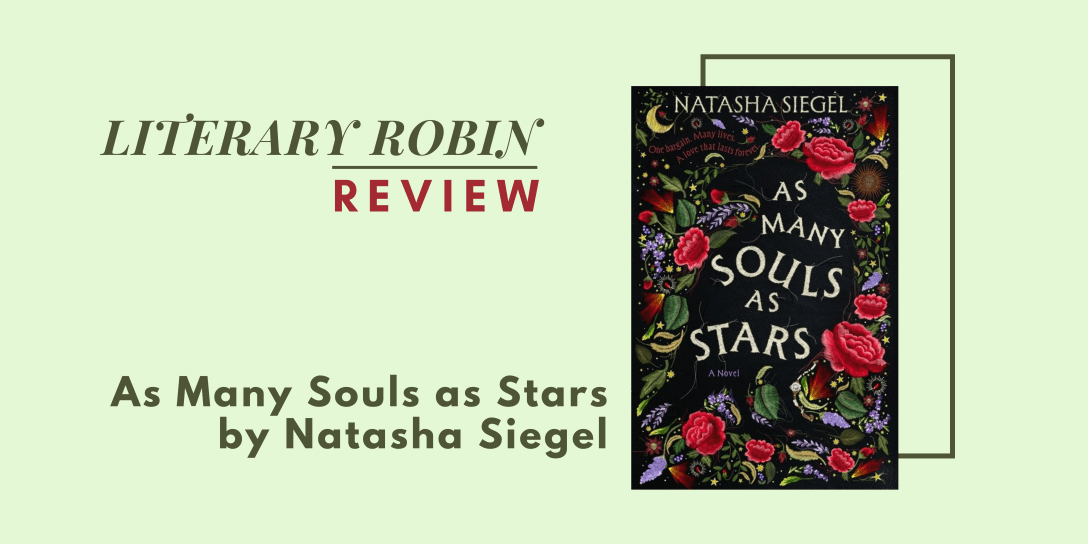
Cybil Harding is cursed. The latest in a string of firstborn daughters fated to bring an end to the Harding family line, Cybil was not meant to live beyond infancy. Against all odds, Cybil survived. Raised in the isolated Harding Hall estate, Cybil is all aware of her strangeness, the various deaths in childhood she feels she orchestrated, the flames and shadows leaning towards her as if in prayer, and the whisperings of the servants within its halls. Miriam Richter is a creature of hunger. A mere shadow in human cloaking created long ago for dark purposes, Miriam must subsist off of human souls, and never has she seen a soul as alluring as Cybil’s. Souls have to be freely given however, and Cybil is not inclined to relinquish her soul—not even for the chance at removing her curse. But when an accusation of witchcraft leaves Cybil dead and Harding Hall in flames, all she wants is another chance at the life cruelly stolen from her. Thus the two bargain. Cybil will get as many years back as she lived and in that time must seek a cure for her curse, or her soul now magnified by her reincarnation will be Miriam’s to collect. Across the lifetimes, Miriam hunts Cybil intent on taking what’s hers, but the centuries have only emboldened Cybil to retain her soul, even if it means she must at first offer up her heart and what little remains of her humanity.
Drawing together Faustian bargains, gothic splendor, and reincarnation across three distinct periods of English history, As Many Souls as Stars is a historical novel for the ages and Natasha Siegel’s masterpiece. A witch desperate for survival bargains away her soul, a demon endlessly hungering for souls discovers the brightest, and both will be ruined in their association by journeys end. The Faustian bargain is not a new concept, not in the slightest, so to stake claim on such a tale is to promise something inventive and unique in the telling. In As Many Souls as Stars, Natasha Siegel ingeniously twists the Faustian bargain into a lesbian game of cat and mouse spanning multiple centuries and incarnations as an immortal and a witch engage in a toxic romance tinged with obsession. Cybil Harding and Miriam Richter, witch and demoness, hunger both—for love, for souls, and for the continuance of their survival. Drawn into a demonic bargain to suit their purposes, neither intends to lose the parts of themselves they believed intrinsic, nor ill-fated love taking flight. Questioning fate and personhood, Natasha Siegel’s As Many Souls as Stars is a tangled dance of violence, hunger, and destructive romance, in everlasting opposition as misguided bargains can ever be.
As Many Souls as Stars is a dark, resplendent jewel immersed in the gothic tradition and draped in midnight hungers. Demonic bargains gone awry, witchcraft, and obsession mark the beginnings of this expansive saga in which Natasha Siegel mercilessly binds a demon to a young witch clawing herself back from the dead at the cost of her soul. Where some novels take time to settle with you, As Many Souls as Stars is decidedly not one of them. A prologue illuminating the origins of our demon, and the opening lines “Cybil Harding was born on Christmas Eve, 1576, under inauspicious stars” immediately signaled to me Natasha Siegel’s storytelling caliber and exactly what was in store with this extraordinary tale. Siegel does not hold off a whit in building up her gothic romance that leans heavy on the enemies to lovers side of things. It’s been ages since I read a true enemies to lovers’ romance, something that threads the needle in between love and hate with a capable hand. As Many Souls as Stars takes that challenge and gives a lesbian relationship overflowing with want and drawn towards destruction, where the star-crossed love of a witch and demon comes second to their other desires.
I love a story traversing multiple genres, and As Many Souls as Stars takes up a bold space between historical fiction, fantasy, and gothic romance. Natasha Siegel has a firm hold on her narrative, depicting the three reincarnations of her character Cybil Harding and glimpsing Miriam’s interludes at key moments of history. Traveling the centuries, Siegel orchestrates the dance between these two fickle beings and their decline. So slow it could even be unnoticeable Natasha Siegel begins to track Harding’s descent into the loss of her humanity—in consequence to what was done to her and the bargain she made, and Miriam’s inexorable transformation towards it, drawing to her unmaking. The love brimming with hatred, the devotion that leads to violence, these are all things that appear entirely contrary, but Siegel proves in essence belongs to Cybil and Miriam’s volatile love. Cybil and Miriam clash and retreat across the years, a battle of wills neither will concede and made all the more precarious by their developing romance. I was immediately struck by their conviction, Cybil’s desire to survive and take back her life and Miriam’s commitment to her demonic ways. Misguided perhaps, but essential for their conflict and the incredible transformation brought about by its end.
In all of Cybil’s reincarnations as she is hunted by Miriam, Siegel explores the dichotomy between love and hate and its natural end—with only one of them holding the knife and the other destroyed. There’s always been hatred seething beneath Cybil and Miriam’s interactions but that is essential to the love they find together. Destructive love can be freeing in a way, and for Cybil it tethers her to a life of her own design, one she will fight for at any cost. Covering three lifetimes of Cybil reincarnating, Siegel questions not just if the cycle can be broken but if it can be accomplished without Cybil and Miriam as each other’s undoing. The natural end to any cat and mouse game is when one is caught, and Natasha Siegel gives us that with her fervent final act upon a ship headed towards New York. The setting of a ship with the salt spray and the incessant rocking was fitting, with Miriam and Cybil completely cut off from their resources and nowhere to escape. Miriam and Cybil were always going to destroy each other, we’re told that from the start, yet witnessing that destruction play out firsthand is something else entirely. I found my screams well matched with that penultimate scene on the crows nest, but just as shocking was Siegel’s life-altering final twist that cleverly flipped the script and sent me reeling.
As dangerous as a bargain and as haunting as any loss, As Many Souls as Stars is about hunger in all shapes and forms, and the risk in losing ourselves as we chase it. Sometimes you read a novel that feels torn from the very fabric of your soul, and how could this not be that. We’ve got sentient shadows, a lesbian demon who can turn into a raven (caw caw), gothic locales, and an enemies to lovers tale with a wonderfully unhinged ending. Basically Robin catnip. Natasha Siegel’s gothic historical fantasy echoes with female rage and a wild and unrestrained magic in the hands of an isolated witch and sardonic demon caught up in a battle of wits. Fashioning such a saga is an immense challenge, and it’s felt in every overwhelming detail of this novel. Immortals being humanized! Hungering for the very thing that can destroy you! Things coming full circle! This novel has all that and more. The singular pieces that come together to form this story are striking all on their own but together they have ruined me for all other books. As Many Souls as Stars is so many things, but it’s largely a story about what we’re willing to give up for our autonomy and where we find the power to take it. All other gothic fiction aspires to be like this and I will continue to be haunted in its absence.
Thank you for Netgalley and the publisher for providing me with an advance review copy.
Trigger warnings: blood, death, death of a child, gore, murder, suicidal ideation, misogyny, homophobia,

 Literaryrobin