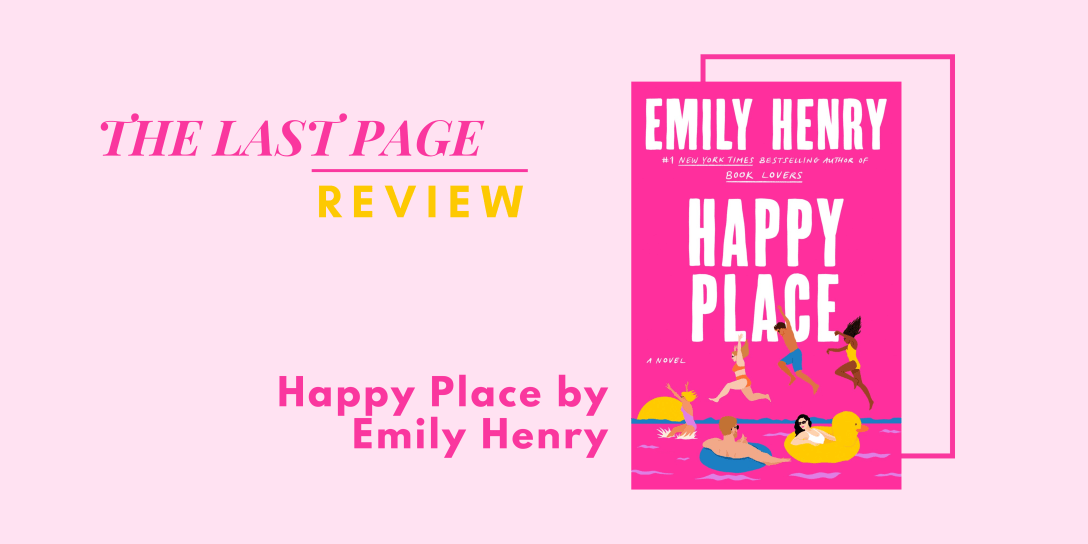
Review: Happy Place by Emily Henry

Rating: 5 out of 5.

College sweethearts Harriet and Wyn were the perfect couple for decades until one day they weren’t. Six months to the day since the breakup, the two still have yet to break the news to their best friends. The group’s yearly getaway to a cottage in Maine approaches and inevitably the two hatch an unwanted scheme: to pretend to be together for the length of the week, avoiding any inquisition from their friends and confrontation with one another. But the cottage is for sale, meaning this is the penultimate trip for the group, and may very well be the last time they are all together. Moreover, distance has not dulled the ache between Wyn and Harriet, and they walk a fragile line between everything they are pretending and everything they could be. Keeping up appearances will mean continuing to lie, not only to their friends and each other but to themselves.

Happy Place is absolute magic, bottled up and delivered in the form of saccharine summer days, happiness, teary moments, and newfound longing, and I loved every single second of it. With her fourth novel, Emily Henry extends upon the brilliance of her previous three works, both narratively and in scope of character. Its wonderfully unique friendships and signature blend of past and present merge to deliver a truly unforgettable romance. Through her first attempt at the second chance storyline, Emily Henry delivers a romance that completely altered my brain chemistry. An established history grounds the story and instills lingering tension that builds and builds as Henry swings us back and forth between the past and present day. It’s a romance that slowly crept up on me, as Henry takes a fragmented retrospect narratively, but nevertheless makes you feel every cutting moment and longing glance. Where this novel really sunk into my bones is the simultaneous developing and rekindling romance between Wyn and Harriet. There’s magic wrapped up in this love story and these friendships, centered around the changes in life that they have all weathered together. For that matter, Happy Place stands apart from Henry’s first three novels, specifically because of its friend group. Unresolved feelings run deep with our main couple, but close friends also harbor secrets. Couples deal with their own issues and losses, as Wyn and Harriet navigate their own. It feels very found family, particularly with Harriet shouldering a difficult upbringing with friends that have very much become her family. Various griefs and unresolved trauma intersect this renewed love story imbuing such depth into the second-chance romance. Wholeheartedly intimate, sensual, and vulnerable, Happy Place is an open window into the burdens we shoulder and the connections that give us strength. No doubt Emily Henry’s best romance novel yet and proof that she is only going to get better from here.

Thank you to Edelweiss and the publisher for providing this arc to review.

Trigger warnings: grief, infidelity

My Blurb for Happy Place is an Indie Next #1 Pick
Buy a Copy:

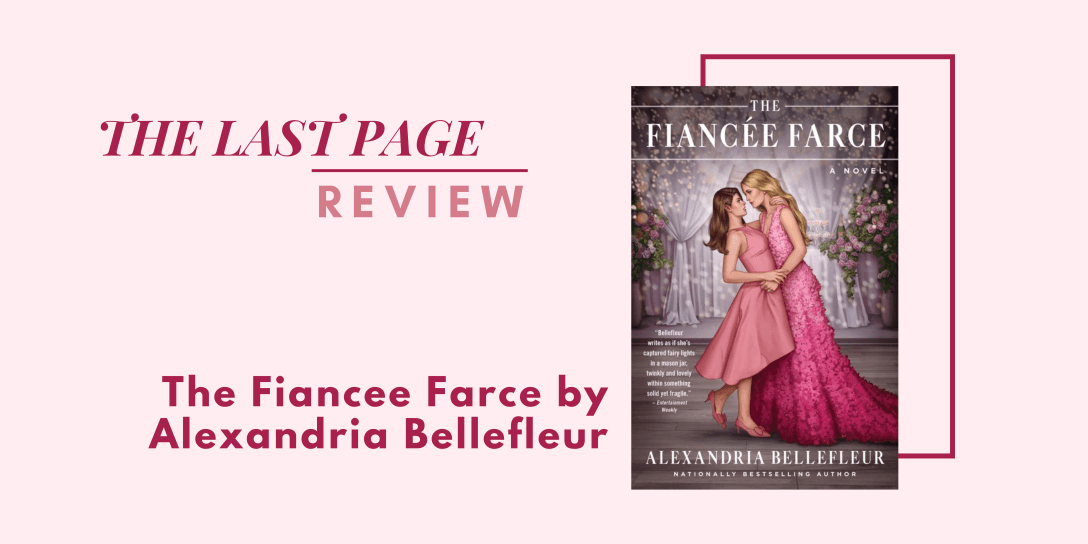
Review: The Fiancee Farce by Alexandria Bellefleur

Rating: 5 out of 5.

Bookish Tansy Adams has always found comfort in managing her family bookstore handed down after the passing of her late father, rather than the real-world romantic encounters she can’t seem to parse. When her family refuses to let up on the romance front, Tansy invents a girlfriend, Gemma, inspired by a gorgeous cover model featured on dozens of romance novels. Tansy’s lie is put to the test at a wedding, when in walks Gemma van Dalen, cousin of the groom, and the very person around whom she created her lie. Heir to the family’s newspaper empire, Gemma is on the brink of obtaining everything, except for the clause that says she must marry before the year is out or the inheritance defaults to her cousin. When confronted with Tansy’s lie, Gemma plays along, and a modern marriage of convenience is born. Tansy and Gemma make quite the unconventional couple, yet they have an undeniable connection that could lead to something real, provided they survive the family determined to oust their engagement as a farce.

Alexandria Bellefleur pens another effortlessly charming contemporary romance, harkening back to god-tier romantic comedies, and a multitude of Taylor Swift references. After falling head over heels for Count Your Lucky Stars this past winter and the entire Written in the Stars series, there wasn’t a force on earth that could stop me from sinking my teeth into Bellefleurs newest as soon as possible. I mean, an indie bookseller who agrees to a fake marriage with a newspaper heiress turned romance cover model?? I was sold. Bellefleur writes the romances I’ve dreamed of reading my entire life, and there’s a magic captured in her original trilogy that perfectly translates over to her newest novel. Reading The Fiancee Farce feels perfectly familiar, through its black sheep heroine taking desperate measures, and a bookstore on the verge of being sold, much to the chagrin of its owner. These are the tropes and storylines formulaic for countless romances, yet the proposed solution to the novel’s central problem is where Bellefleur makes her twist– through a queer modern-day marriage of convenience. Everything about this shines, through the open vulnerability between leads Gemma and Tansy, and the overbearing family intent on driving them apart. These two have such an honest chemistry that is only intensified against all of the meddling and disorderly plans that ensue. The little dates and domestic moments contained in the midst of it all only made me all the more smitten. From its impeccable setup, right up to its emotional conclusion, The Fiancee Farce is pure chaos combined with all the romantic tropes and twists I could ever yearn for in a romance novel. Bellefleur continues to outdo herself with every passing year and I’ll be anxiously awaiting anything that she does next. 

Thank you to Netgalley and the publisher for providing this arc in exchange for an honest review.

Trigger warnings: sexual harassment, slut shaming, death of a parent

Buy a Copy:

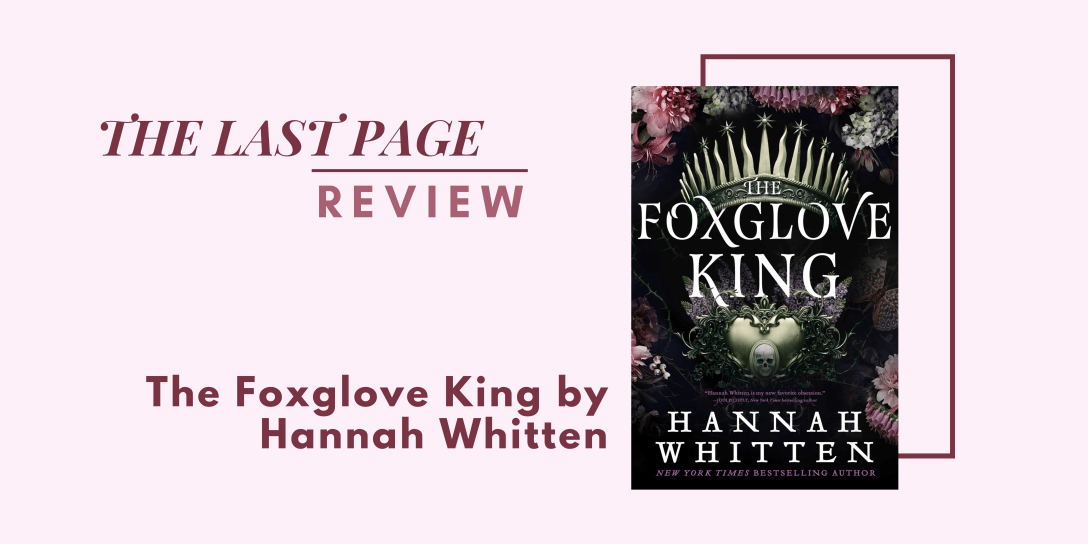
Review: The Foxglove King by Hannah Whitten

Rating: 5 out of 5.

Deep within the catacombs of the city of Dellaire, a young girl with power over death is raised by the Night Sisters, guardians of the tomb of the buried goddess. When she is thirteen, Lore flees from the world she knows to the city above, where death magic is considered heretical, and everyday people flirt with it through the power of Mortem, magic born from death. Many years pass, and as Lore grows older she takes on the role of a poison runner, taking part in an illegal trade that allows her basic survival. After a standard run ends with Lore revealing her power, she is taken captive by the Presque Mort, a group of warrior monks that give her an impossible task: find out why hundreds of villagers in the outskirts of the city are turning up dead. Someone in the court is responsible for this atrocity, and as Lore is led deeper into the intrigue of the King’s Court, she stumbles upon something that could reveal a misguided plot or a truth about her own divinity.

The Foxglove King is a knife-sharp amalgamation of court intrigue, high fantasy, and forbidden romance that captured my heart and held it captive until its glorious finish. Hannah Whitten first seized my attention back with her debut series, The Wilderwood Duology, and from that moment on I knew that I would be hanging on to anything else she wrote next. Now that I’ve made my way through her latest novel, I can unequivocally say that it has surpassed her previous work on so many levels. For the longest time, I have been craving a fantasy series set around court politics, romance, and magic, and The Foxglove King delivers that down to the last mark. Whitten plays to her strengths, detailing the misguided loyalties and strained influences of the Sainted King’s court and the unstable balance between politics and religion. Its central heroine Lore is admittedly very fitting. As someone who has been living in hiding for the death magic she possesses, Lore comes to embody the ongoing power struggle occurring within the court more than she realizes. She’s selfish and fearless to the extreme, two traits I both admire and crave more of with women in fantasy. Misfits make great company, and Whitten takes that into account with the chaotic trio she establishes in the novel. Gotta love a debauched prince, a duke turned warrior monk, and a powerful outsider trying to uncover a conspiracy while denying their feelings for one another. Now I know some people love a good love triangle but I think that this is going in a different direction. The overall plot and romantic development were well-balanced, leaving room for a stunning conclusion that threw me for a loop and left me to pick up the pieces. With the Foxglove King, Whitten establishes a world split apart by magic and godhood, and showcases the very nature of humanity to seek to control a dangerous power. It’s got messy bisexuals, court intrigue, morally grey characters, and an established romantic tension that is only going to get better from here.

Thank you to Edelweiss and the publisher for providing this arc to review.

Trigger warnings: blood, violence, gore, death, animal death, parental abuse

Buy a Copy:

Review: Exes and O’s by Amy Lea

Rating: 5 out of 5.

Romance novel obsessed Tara Chen has had more than her fair share of heartbreak. Ever since her most recent breakup, adding to a long line of men that dumped her because of her supposed clingy tendencies, her love life has grown sour. Tara wants to find love more than anything, but with the growing popularity of dating apps, a modern meet-cute is out of the question. Luckily, an insightful interview gives her an idea: revisit her past exes and reevaluate the relationship in an attempt to earn one of the most time-honored tropes, the second-chance romance. In her quest to reconnect with her past relationships, Tara enlists the help of her standoffish roommate Trevor, who couldn’t be any more against commitment. As the two venture deeper into Tara’s past, the closer they become, and though the disappointments grow even higher, finding the love she’s been looking for may not lie in the past at all, but in the everyday details.

Amy Lea did not hold back with this wholly magnetic and exquisitely tender slow-burn love story. I mean I heard the words “and they were roommates” and immediately dropped whatever I was doing to go and read this. Exes and O’s has a lot going for it, what with its central protagonists, an emotionally unavailable fireman, and a nurse with a tendency to romanticize, falling for one another under the guise of a search for a second-chance romance. Lea quietly constructs a simmering slow burn, with close-the-book level tension and enough going on that I never wanted to stop reading. Plot aside, the strongest part of this novel is its leading characters, Trevor and Tara. Not only was there enough set up to establish an emotional conflict that never became overbearing, but both character arcs intersected and complemented one another in increasingly fascinating ways. Out of the two main leads, Tara has to be my favorite. She’s the romance novel aficionado and book-lover heroine we deserve, and her inner struggle really resonated with me. I know many people appreciate dual POV in romance, but with a slow burn in mind and the characters in question, I loved the fact that we only got Tara’s. It helped make the pining almost unbearable and the undercurrent of the whole will they won’t they vibe. Throughout Tara’s entire emotional arc, Lea illustrates the importance of learning to be yourself wholeheartedly when it comes to love while continuing to hold onto your dreams and ideals. It’s obvious that friends to lovers is one of my all-time favorite tropes and I think this one might be at the top of that list. Exes and O’s is a novel dedicated to all the romance-obsessed daydreamers out there, entirely charming, swoon-worthy, and vulnerable.

Thank you to Edelweiss and the publisher for providing the arc.

Trigger warnings: sexism, gaslighting

Buy a Copy:

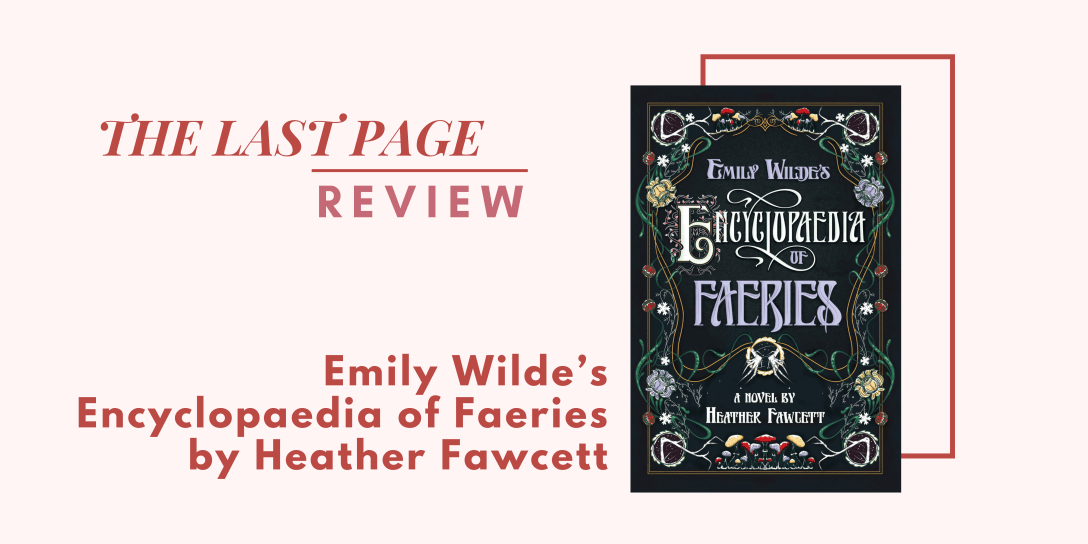
Review: Emily Wilde’s Encyclopaedia of Faeries by Heather Fawcett

Rating: 5 out of 5.

Emily Wilde is a Cambridge professor of Dryadology who surrounds herself with her books, her work, and the faeries she has built a life around studying. Deep in research for her first encyclopedia of faeries, Emily journeys to the remote village of Hrafnsvik, Scandinavia to learn about the local faerie lore and endeavor to uncover an age-old mystery. The last thing she expects when she arrives is having to win over the numerous townsfolk and appease unfriendly attitudes. Incidentally, her arrogant and charming colleague Wendell Bambleby has taken it upon himself to hijack her research and charm the very townsfolk who have given her the cold shoulder. Someone is abducting villagers in the night, and despite everything, Emily wants to find out why. Bambleby undoubtedly knows more than is letting on, and as they journey into the wilderness for answers, their combined knowledge may be what saves them both, and could possibly be what opens her heart for good.

Emily Wilde’s Encyclopaedia of Faeries surprised me with its cozy atmosphere and scholarly inquiry into the world of the fae. Combining fantasy, mystery, history, and romance elements, this is a one-of-a-kind story, unlike anything I’ve read concerning faerie so far. Written retrospectively through the form of an open diary, we journey into the strange corners of the Hrafnsvik wilderness as Emily conducts her research and befriends the fae folk both friend and foe. Settling into the story, the narrative structure takes some getting used to at the onset, but it’s ultimately an inventive way to visualize the world and portray character point of view. It’s unique to be able to read character reflection on a situation and see that situation being dictated all at the same time, and Fawcett delivers this flawlessly, interspersed with fae lore and the occasional Wendell journal entry. In town, Emily battles a much closer adversary, the wary townsfolk that deeply fear the fae on their borders. This core struggle joins with the slow build of the narrative, weaving in layers of whimsy and adventure as Emily’s reluctance to open up and make connections begins to thaw. Shifting between her fieldwork and time in the town seizes the humanity at the heart of academic research and the relationships we can close ourselves off to when we try to protect our hearts and peace above all else. The slow-burn romance between Emily and Wendell was on the lighter side, but much like the novel, it’s a quieter romance that takes hold like some kind of faerie spell. I really loved their romantic arc, which was obviously complete and utter chaos with a side of banter that was the epitome of sassy. Witty and delightful, I can only pray for more Emily Wilde, Wendell, and the fae world in the upcoming sequel. Fawcett debuts a delightful academic fantasy that bridges boundaries and leaves behind a yearning for love and an appreciation for the ostensibly insignificant details of the everyday.

Thank you to Edelweiss and the publisher for providing this review copy

Trigger warnings: blood, injury, self-inflicted amputation, murder, death, violence

Buy a Copy:

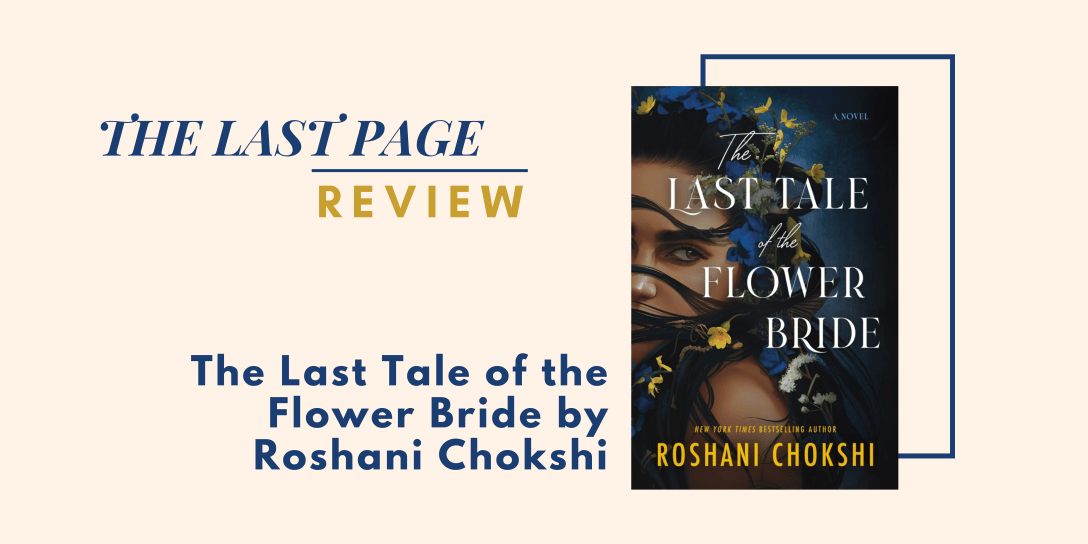
Review: The Last Tale of the Flower Bride by Roshani Chokshi

Rating: 5 out of 5.

They had a seemingly happy marriage: he, a scholar of fantastical stories, and she, Indigo Maxwell-Casteñada, a wealthy heiress with a mysterious past. Despite their differences, the couple found solace with one another, and soon a bargain was struck in exchange for love – that the scholar could have her heart, provided he never inquire into her past. For a time, there was harmony, but when Indigo learns that her estranged aunt is on her deathbed, the couple return to the place where her story began, the House of Dreams. Within the manors walls, winding staircases, and dusty rooms, lie plenty of secrets far too seductive for the bridegroom to resist. As the house reveals the past of another girl, Azure, Indigo’s childhood friend long gone, he is willing to search between both reality and fantasy to learn the truth about his bride’s past, even at the expense of their binding promise.

The Last Tale of the Flower Bride is a luscious gothic feast, interlaced with fairytales, myth, and the treacherous secrets of a marriage. Wandering the halls of the crumbling House of Dreams, Chokshi spins her tale, interweaving fairy tales into the central narrative amidst broken promises and childhood dreams. Testament to everything I love about the gothic, this novel delivers a startling atmosphere, set around a crumbling manor and its ability to suspend the past. Chokshi absolutely dazzles, with poetic prose and the kind of fairytale spinning only she could bring to fruition. Everything inside me yearned to read this exquisite gothic debut from the moment it was announced, to step inside the House of Dreams and deconstruct the secrets hidden within its winding halls. The experience reading this was all the more mesmerizing, as I fell into Chokshi’s labyrinth of mystery, led deeper between the past of the house by Azure’s perspective, and the present day, with the bridegroom’s suspicions. There was quite the unsettling back and forth with these two, aided by the different tones employed – the shift from Azure’s childhood wonder, to the unfortunate realization that happened on both sides. I still can’t wrap my head around how beautifully written this novel is. Lush, dreamy writing is undoubtedly in Roshani’s wheelhouse, and this is my favorite of hers thus far. This book twisted my expectations up in knots until right at the very end, and each betrayal and exposed truth scored a little deeper. Infused with a kernel of romance, Roshani Chokshi breathes life into this resplendent and tragic gothic story. The Last Tale of the Flower Bride is everything I could possibly wish for in a gothic novel, and the way it slowly approaches the final act will leave you breathless in its downfall.

Thank you to NetGalley and the publisher for providing this arc in exchange for an honest review.

Trigger warnings: blood, death, violence, murder

Buy a Copy:

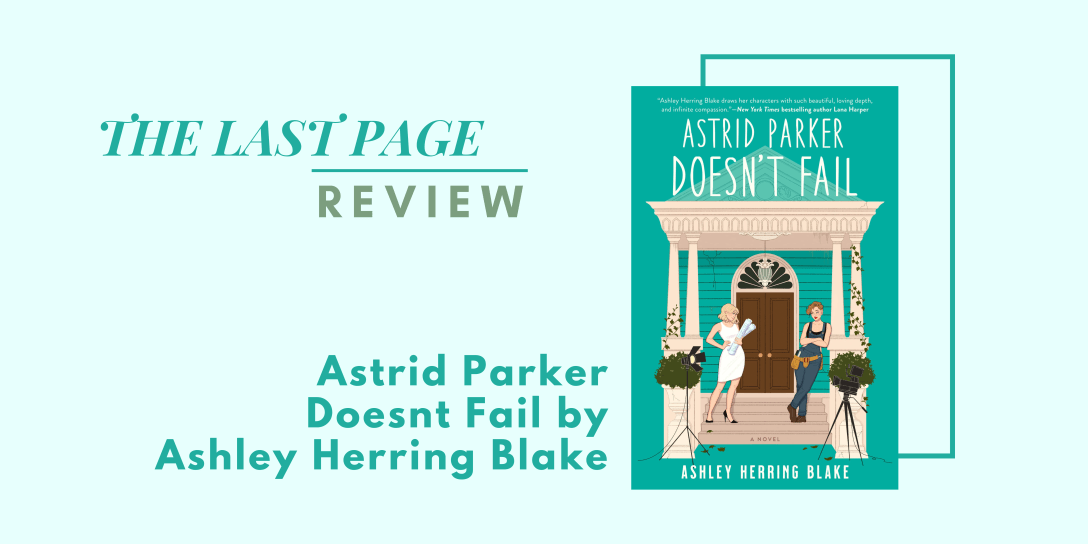
Review: Astrid Parker Doesn’t Fail by Ashley Herring Blake

Rating: 5 out of 5.

For interior designer and impeccably put-together Astrid Parker, failure is out of the question. After her botched engagement over a year ago, Astrid has held tight to the reins of her life lest her world crash and burn around her. When the opportunity to design the renovation of Bright Falls Everwood Inn appears in front of her, Astrid soars. Since the renovation will be televised on a popular home improvement show, it may just be what she needs to put herself back on the map. What Astrid doesn’t intend is to butt heads with lead carpenter Jordan Everwood, who despises the plans that Astrid has for renovating her family home. Tension sells better than anything, and when the producers of Innside America ask them to up the ante, Jordan and Astrid clash until their deep dislike for one another is threatened. All Astrid has ever done is what is expected of her, yet there is a chance for her to live the life she truly desires if only she can let go of the rigid control that she has clung to for so long.

Ashley Herring Blake pens another queer romance reminiscent of Schitt’s Creek and the romantic comedy, with lovable characters, emotional depth, and classic small-town charm. Astrid Parker delighted in the first installment of the Bright Falls series and I was elated when I heard the sequel would center around her own love story. Astrid Parker Doesn’t Fail completely outsells, elevating her character and developing an enthralling rivals-to-lovers romance at its center. If there is one thing I have come to expect from Herring Blake, it’s the unique situations that she crafts for her characters. This secondary romance is no different, concentrating on a home-improvement show and the antics between interior designer Astrid and lead carpenter Jordan Everwood. Oftentimes I find it difficult to engage with the rivalry trope, especially if the set-up isn’t there or the rivalry isn’t founded on anything concrete, but that was not an issue here. The first chapter establishes an exquisite antagonism with a coffee spill gone wrong and a vengeful Astrid caught in the crossfire. This led to some of the most glorious romantic tension and palpable on-page chemistry as the story unfolded. There is nothing more telling I can say about this other than it completely ruined me. Astrid Parker’s story is about the trials surrounding creating the life you truly want for yourself, against a world pulling you in an entirely different direction – how the people in our lives can sometimes show up right when they’re needed, even if it doesn’t make sense at first. By way of this, Ashley Herring Blake has given voice to a pervasive fear of failure, and just what it means to figure out your sexuality later in life. Astrid Parker Doesn’t Fail is a sensational follow-up romance to Delilah Green Doesn’t Care, and is shaping up an incredible continuation for the Bright Falls series.

Thank you to Edelweiss and the publisher for providing the arc.

Trigger warnings: death, depression

Buy a Copy:

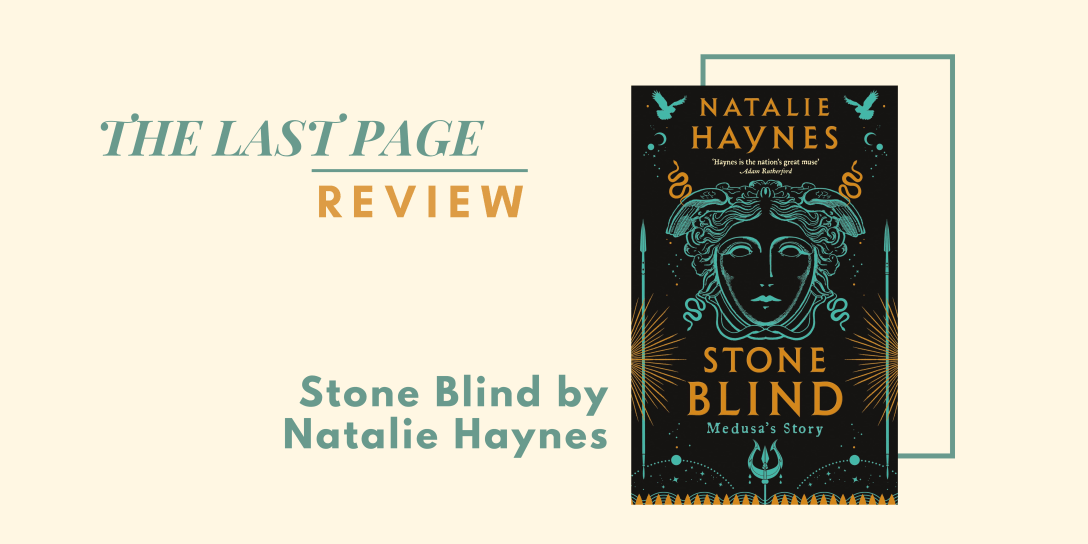
Review: Stone Blind by Natalie Haynes

Rating: 5 out of 5.

As the only mortal of the Gorgons, Medusa knows true weakness. Residing with her sisters in their windswept cave by the sea, she and the Gorgons are fully at the mercy of the whims and desires of the gods. When the sea god Poseidon enacts a violence against her in the Temple of Athene, Athene takes her revenge, transforming Medusa from a young woman into a monster. Armed with a head full of snakes and a piercing gaze that can turn any viewer to stone, Medusa becomes a proper Gorgon. Resigned to never harm a living thing, she retreats to a life of solitude, until a quest blinded by arrogance places the hero Perseus on her shores. With quests and complicated deals at play, limiting the scope of her power may be impossible when divine intervention reigns supreme and women are mere tools for the beings above.

Natalie Haynes transforms the Medusa story we’ve been fed into a layered history of the women at its center and the monster we’ve all been taught to fear. Stone Blind delivers exactly the kind of retelling I have been craving, inexplicably rich, lyrical, and wound up in tragedy. Distinctive with this one is the emphasis on the intersection of time and place, with all characters that coalesce in the Medusa myth. There is not a singular focus on the figure of Medusa, as Haynes grasps at the threads binding the story together, fashioning an elaborate tapestry that rivals that of Athene. I was pulled into the story almost immediately with Medusa’s golden childhood by the sea, completely torn asunder by the acts of violence against her by Poseidon and Athene. Like the tide returns to the sea and back again, there is a constant give and take in Haynes’s narrative, with seemingly insignificant events that take shape, strike, and then fade into the background. Every action leaves behind an echo that lingers, leaving an imprint on every event that takes place further on. There are a broad range of voices present, from godly beings to nymphs, and even animals lending their eyes to the narrative voice. With every delicate line and merciless moment, Haynes dismantles the complex relationships and powerful forces at play within the Medusa myth, creating a wholly authentic view of the monster and existing as a woman within the sphere of the gods. As the focus shifts back to Perseus, it’s clear that existing in spite of these overtly monstrous qualities can equate to a loss of agency in the wrong hands. Stone Blind is the kind of story that will forever be imprinted upon me, long after I have managed to look away from its pages. Natalie Haynes crafts a Medusa retelling that will withstand the test of time, bringing new meaning to the Medusa figure and every woman held within the confines of her myth.

Thank you to NetGalley and the publisher for providing this arc to review.

Trigger Warnings: rape, death, sexual assault, violence

Buy a Copy:

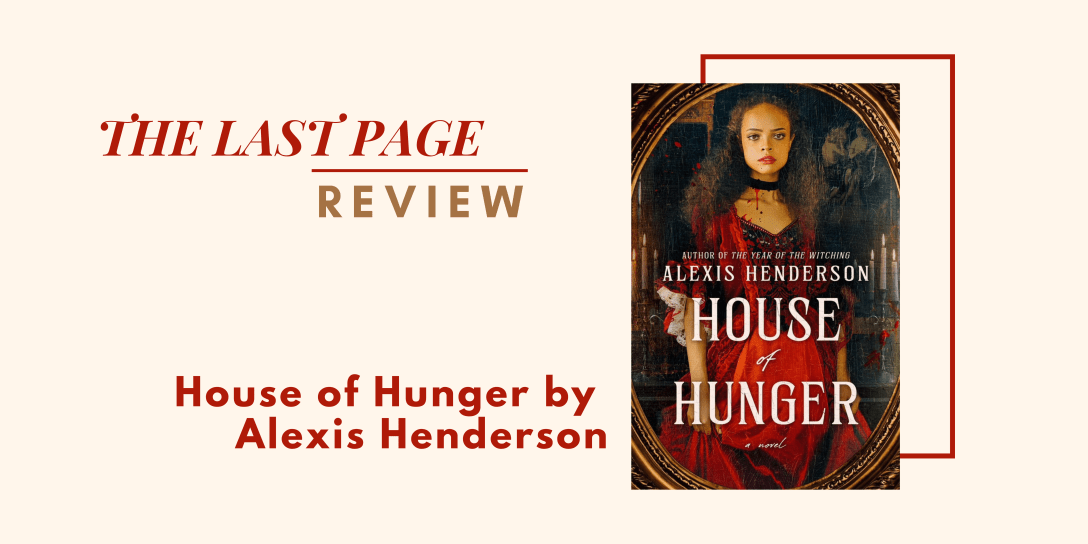
Review: House of Hunger by Alexis Henderson

Rating: 4.5 out of 5.

The advertisement in the paper seems almost written in blood. It comes on behalf of the illustrious houses of the far north, where wealthy nobles live for the finer pleasures of human blood, relying on young women known as bloodmaids to supply it. Happening upon this strange advert is Marion Shaw, a young woman desperate to leave her current circumstances, yet with no hopes of doing so – until now. When a taster deems her blood an exquisite and rare taste, Marion is taken north to be presented as a potential new bloodmaid, where she finds herself the newest member of the notorious House of Hunger. Drawn into the dark world of which Countess Lisavet rules, Marion is quickly swept up in her allure and a hopeless desire to please her. The walls of the house cannot hide everything, and when an expulsion of the head bloodmaid reveals a pattern of past bloodmaids gone missing, Marion learns that deep within the house, lies something truly wretched.

House of Hunger is the unforgiving gothic horror of my dreams, soaked in blood and depravity. One look at its premise, and I could feel in my soul that this was going to be an instant favorite. With vivid descriptions and luscious prose, Alexis Henderson paints an alluring picture of a desolate house set on a sprawling estate and the noble families for whom the taste of blood still holds sway. Where desperate young women plucked from poverty are traded comfort in exchange for the endless supply of blood they can provide. Right from the get-go, this novel scorched a direct path to my heart, assisted by a devastating gothic atmosphere that slowly captured an essence of disquiet, building like a horrific symphony I could not look away from. Of course, no gothic horror is complete without its resilient leading lady, and Marion Shaw is certainly that, a sensational protagonist to follow as the truth behind the house of hunger is unveiled. Entangled in a hypnotic seduction with Countess Lisavet and set off by an unsettling discovery, Marion’s journey was everything I could have possibly asked for, fraught with disillusion and a descent from unwavering devotion into violence. Henderson did an amazing job balancing why someone in Marion’s position would be willing to enter into a bloodmaid contract, and how the wealthy took advantage of these women, that in their eyes, were easily expendable. Coupled with intensifying house politics, the claustrophobic feel of the narrative, and the revelation to the inner workings of the houses, this story takes a depraved and horrifying final bow. House of Hunger is everything I could possibly want in a horror novel, a fearsomely dark tale with a corrupted center.

Thank you to Edelweiss and the publisher for providing this arc.

Trigger warnings: blood, death, violence, gore, murder

Buy a Copy:

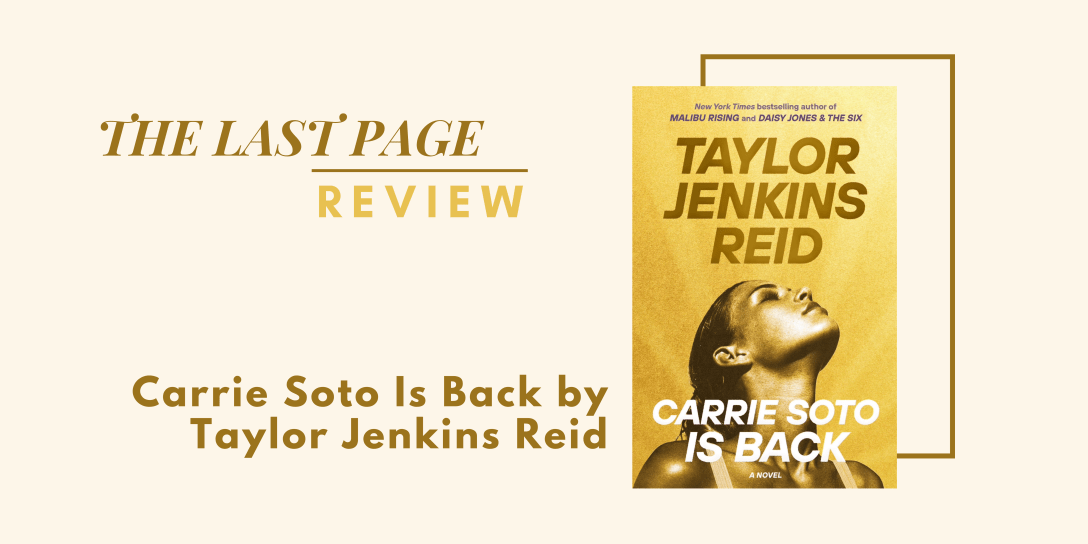
Review: Carrie Soto is Back by Taylor Jenkins Reid

Rating: 4 out of 5.

Renowned athlete Carrie Soto quickly surpassed the masses to become one of the world’s most legendary tennis players. Aided by her cutthroat attitude, her passionate coach of a father, and her willingness to win no matter the cost, she broke nearly every record and managed to collect twenty Grand Slam titles in her time. Six years after her retirement from tennis, an upfront spot in the stands at the 1994 U.S open to her record’s demise compels Carrie to come out of retirement and reclaim what was taken. This tremendous decision will have Carrie relying on her father to coach her again and pair her up with the very person to whom she almost gave her heart. One final season to win or lose, and make her mark on the world for a final time.

Author Taylor Jenkins Reid returns with Carrie Soto is Back, a relentless and immersive portrayal of a female athlete’s legendary tennis career. First introduced to Carrie Soto back in Malibu Rising, I could not imagine Reid’s next book would center around her, yet I was all the more excited having learned so. Carrie Soto is the high-stakes entertaining read I needed for the summer, full of all the twists and intricate relationships I’ve come to expect from its author. Not only is this novel comprised of all things tennis, but a touching father-daughter relationship over the years, and an assessment of the media’s treatment of women in sports. Carrie herself is an easy character to fall in love with, wonderfully vicious, and determined to claim every victory. Her journey took hold of me right at the beginning, with the decisive introductory chapter of a retired Carrie witnessing the downfall of her legacy and deciding to take action. From that moment on, I was here for every upswing and countermove on her path to reclaiming her title. In standard fashion, Reid has created a heroine that is uncompromising, but in different ways from those of her previous novels. I really appreciated reading about Carrie’s dedication to succeed and the sacrifices required in order to make it to the top as a world champion. Reid does an incredible job with the setup and payoff here, especially regarding the initial and final chapters of the story. The mirroring of those two moments was equally gratifying as it was vindicating on my part of having called it from the very start. Tennis may not be my forte, but this novel certainly makes you feel a part of the game. Taylor Jenkins Reid has become a staple author for many, and Carrie Soto is Back is her next unapologetically fierce read to devour.

Thank you to NetGalley and the publisher for providing this arc to review.

Trigger warnings: death, grief, injury

Buy a Copy: