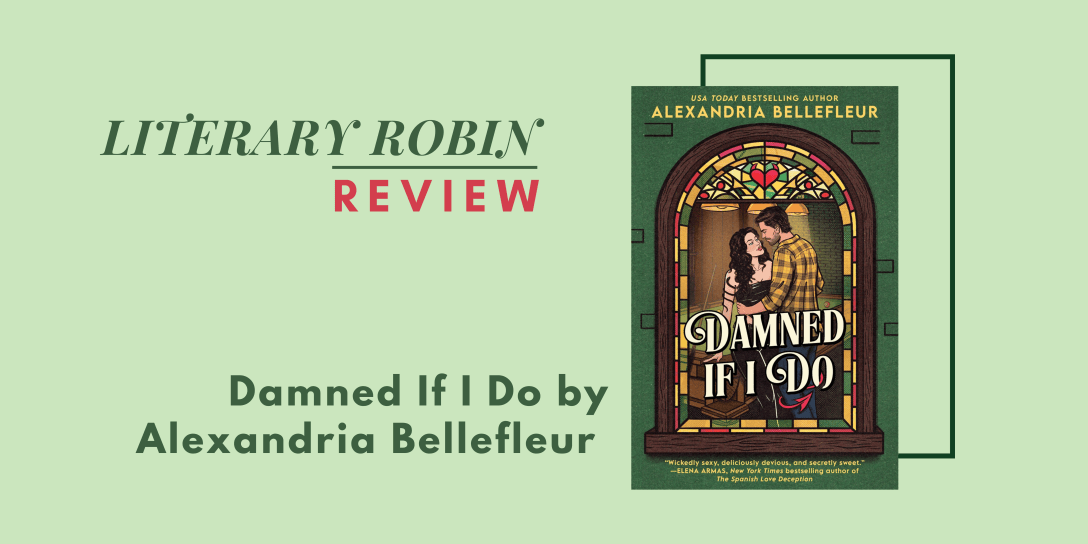
Effie Macleod is a demon, and a damned good one at that. For an eternity Effie has made her name convincing humans to bargain away their souls to Lucifer. They earn their hearts desire, and she gets to keep doing her job. So what if it doesn’t feel like she’s truly lived in centuries. After putting it all on the line to help Lucifer’s favorite demon win back her soul and her life, Effie is demoted. Now her days are spent rage baiting the humans of the internet with improper recipe substitutions and Reddit defenses of terrible TV characters. When her boyfriend Belphegor, a prince of hell, proposes, she decides to finally leave the past behind. Unfortunately, she is informed that her impending nuptials are not valid, as Effie is already married. In sixteenth century Scotland, she bound herself to her husband Finn Macdonald in her current life and the next. This soul pact was literal and while she has spent centuries helping Lucifer collect souls, Finn has been reincarnated over and over again. With no choice but to convince Finn to dissolve their marriage, Effie travels to Georgia. There, in a local bar, she comes face to face with her husband who has no memories of their life together, nor his reincarnations, yet still refuses a divorce. Effie can’t leave without obtaining her divorce, but the longer she stays the deeper she falls into their past, the present, and the future she and Finn could claim. But hell may have other plans.
There is something so Bellefleurian about a demon showing up in a small town to convince her current husband to divorce—except her husband has reincarnated and has no memory of her. Bellefleur completely outdoes herself once more with this interconnected follow up to the delightful paranormal escapade that was The Devil She Knows. Damned If I Do is paranormal romance perfection, a reincarnation second chance romance involving one demon’s quest to convince her reincarnated, mortal husband for a divorce, and the stubborn man who loves her despite their missing lives and memories. Damned If I Do is an angst fest, as only a reincarnation story can be. The Bellefleur promise is one of angst yes, but also one of bisexuality (of course), determined women, and hilarious hijinks in the name of love. This novel sees love as not the absence of grief, but one that honors it as an essential part of loving. Threaded through with a homesickness that takes hold from that first meeting all the way to the happy ever after, Bellefleur roots us in the notion of home as a perpetual pursuit—which can be secured in finding our person, in choosing the love we’ve yearned for. Home as something chosen, again and again. In Damned If I Do, the romance is something devilish and the plot a mix of historical romance, paranormal, and rom com. The devil may work hard, yes, but Alexandria Bellefleur certainly works harder.
You could not find a book more geared toward my tastes than Damned If I Do, nor should you attempt to. It’s demonic, it’s bisexual, it’s angsty. My three favorite flavors, together in one romance novel. Two people—the demon and the bartender—chart the path toward reconnection after centuries of separation, with one small town and a child in tow. Along the way, they’ll confront pesky gnomes, determined townspeople, and the ghosts of their past lives encroaching on their present. Damned If I Do is like if Life As We Know It, Outlander, and Sweet Home Alabama combined into one paranormal romance novel, and all of it is perfection. As with all things, Bellefleur is doing some incredible character work here—maybe some of her best. We’ve got Effie, an immortal demon who has lived centuries, and Finn, a bartender, formerly her Scottish husband in a past life. Effie’s hard exterior finds a home with Finn’s bone-deep certainty, give or take a few arguments. This man takes all of a few seconds to decide he will not be divorcing this beautiful woman and that his past self made the right decision in swearing away his soul. Certainty is sexy, people!! Utilizing the reincarnation trope, Bellefleur looks back to the past as she builds out the present, tethering one to each of her two leads. Whether past or present, this narrative is one of home: where we find it and how we choose it. Watching these two build one side by side will have you WEEPING before the book is done, I guarantee it.
When it comes to romance, there are some authors one can always expect the gut-punching, yearning, heart-wrenching narratives from, and Damned If I Do is proof that Bellefleur is adept at all three. Damned If I Do is where old flames find new beginnings with the paranormal proudly front and center. For Bellefleur, the paranormal isn’t just the demons, troublesome garden gnomes, or soul bargains to Lucifer himself; it’s the past love, now foreign, which granted a certainty to swear away lifetimes, and the loss which has swayed every decision since. Finn and Effie’s reunion in a Georgia bar kicks off a deep dive into their past and who they have been in the centuries since. Finn, homesick for another life—and for her, and Effie, determined to leave the past where it stands. Through dreams, flashbacks, interludes of rage-baiting, and the present-day setting comes a profound narrative of second chances and choosing our home. This novel is a perfect example of what romance can accomplish: narratives that honor our pasts and embrace our present. For what is love without both? Damned If I Do is an ambitious, hot, second chance romance with a devilishly dark side. Its disentangling of the grief, love, and heartache of lifetimes is an emotional journey you won’t want to walk away from. There are few things Alexandria Bellefleur cannot do, and after this, there is nothing I want more than for more paranormal romance from her—for which I would easily bargain away my soul and then some.
Thank you to Netgalley and the publisher for providing me with an advance review copy.
Please note this review contains spoilers for the former book in this series, Voidwalker, and contains references to some of the events in this sequel. Read with caution.
⭐⭐⭐⭐⭐
Rating: 5 out of 5.
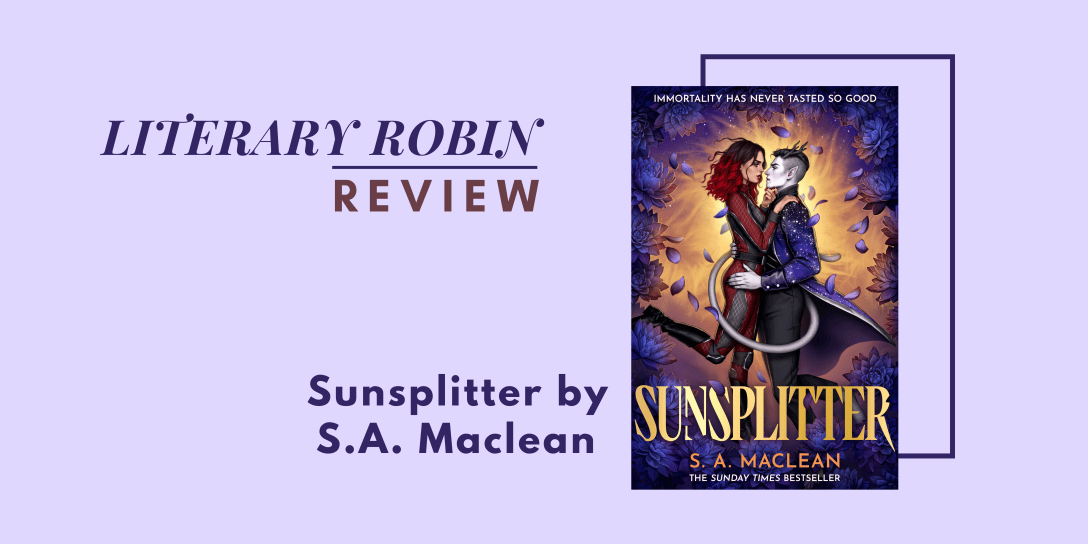
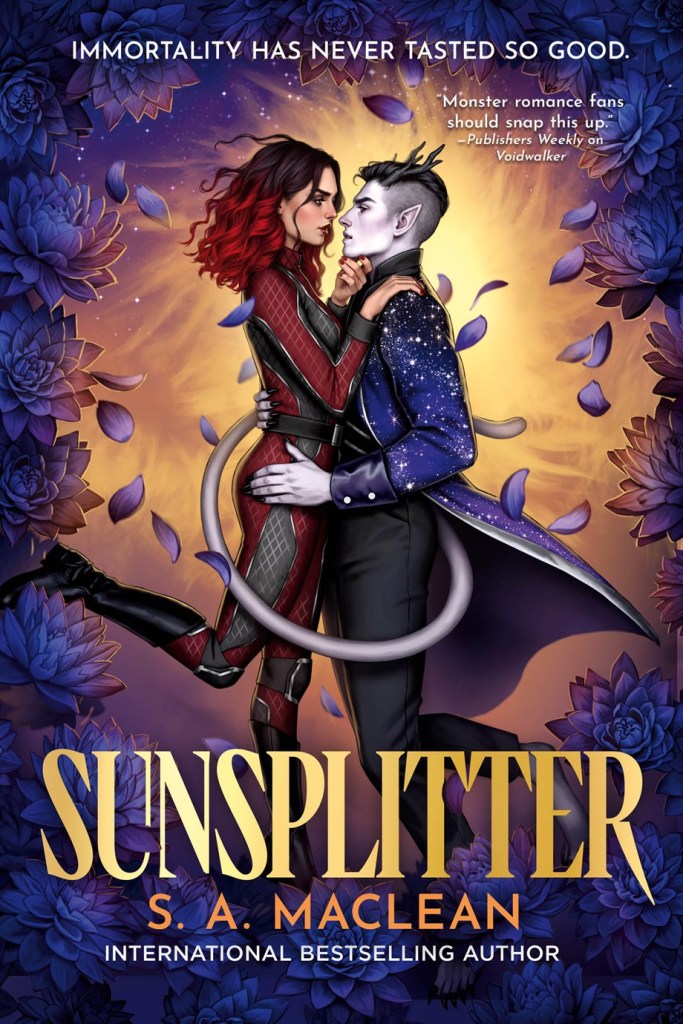
A year after revolution, Fionamara, part time smuggler and Voidwalker, has settled down in the winter city of Tomaskweld. Alongside her Daiyari partner, Antal, and their allies, they have built the city into one free of the sacrifices to the creatures of the void. This year of peace draws to a close when Antal receives an invitation from his family requesting his return. After several decades away, they want him to come home. Determined not to let her partner wander off into danger alone, Fi is more than ready to travel to a plane filled with cannibal beasts—some of whom definitely want her dead. Even knowing the tormented past of Antal’s former partner, she is not willing to leave him to face his family’s demons alone. Thus, Fionamara and Antal pursue this homecoming as they do all things: dramatically and with style. Arriving on the Twilit Plane, the couple soon find Antal’s people are more than willing to eat Fionamara alive. The toughest adversary is none other than Antal’s father, a man who bears no understanding for humans nor patience for what Antal and Fionamara have built. If he learns the truth about their new governance, he will not hesitate to undo all they have fought for. When a dangerous threat emerges from beyond the darkness—one that could doom even the daeyari—Fionamara and Antal join the hunt. The beasts of the void care not for family rivalry, but it is Fionamara who may not emerge unscathed in a clash of deadly immortals; at least, not without being forever transformed.
Sunsplitter asks what else there is to confront after successfully toppling the government and falling in love with a cannibal? Daddy issues. It wasn’t enough for Fionamara to successfully pull off a revolution and unite humans and Daiyari alike. Now she has to fight the realest villain of them all: her partner’s father (and source of his trauma). The dark fantasy duology that first took shape in the yawning void and the cusp of revolution returns to ask the eternal question: what happens after the happily-ever-after? For author S.A. Maclean, this gets a bit complicated, as happy-ever-afters are so rarely without the real work of partnership itself. In Voidwalker, Fionamara and Antal forged ahead with revolution, one that required fostering trust to reclaim their world. Now a year into rebuilding, old ghosts threaten newfound security and their flourishing relationship. Sunsplitter ushers in a new era for our disaster bisexual duo. We have a wardrobe change and a new dye job for Fionamara (emphasis on the red), numerous personal injuries, confronting the trauma within—and surviving—and the unification of two separate worlds. Sunsplitter proves who exactly can match a cannibalistic immortal race from the void, particularly in the monster-hunting arena. And the answer is whatever Fionamara has going on. It’s pure chaos condensed into one novel. A finale that had me more than willing to traverse the impossible void and back for one last adventure.
Sunsplitter is a book for the dark fantasy lovers who endlessly crave more after the initial closing of the pages. As someone who often wonders how her favorite couples would fare after facing down revolution, grief, and death, Sunsplitter was the perfect kind of sequel. S.A. Maclean knows what she plans to uncover in this second and final chapter. In Sunsplitter, the details of her characters we missed uncovering amidst the saving of the world are brought out into the light of day, or more specifically, the Twilit Plane. Here, Maclean examines the families who shaped our two leads so profoundly, and the traumas endured. Sunsplitter brings readers into the mysterious world of the Daeyari, their culture, and the customs which have dictated centuries of tithes and sacrifice. Antal and Fi are there to shake things up and bring it all crashing down (as only they know how to do). Sunsplitter increases the angst in a wonderful storm of humor and heartache. This book is a reckoning, a homecoming, and a comedy all at once. In one moment I was crashing out at Fionamara and Antal having to reference their meeting as: “So I blew up his capitol building” and “So there I was just chilling in her rafters, and also the snow bank, and also I was in my bathrobe” (paraphrasing). And in the next, I’d be moved to tears over Antal facing down his father and Fionamara just constantly throwing hands on his behalf. Fionamara and Antal face numerous adversaries in this finale to the Beasts of the Void duology, but most essential are the demons they face from within. While these demons are truly their own, they don’t have to overcome them alone.
This sequel is basically monster hunting, monster fucking, and several near-death experiences condensed into one installment, and I could not ask for more. Additionally, facing down your father, who is essentially Thranduil if he were an immortal cannibal on the Twilit Plane. Sunsplitter is a cathartic reading experience for anyone who has experienced similar parental dynamics to the cannibal creatures from the void, but it’s also a reminder for us to never diminish ourselves. Nowhere is that more evident than in our own fierce and slightly unhinged heroine, Fi. Despite being out of place in the Daeyari world, Fionamara never allows anyone to treat her as less. Her self-worth is such a bright spot in this novel, the way she demands it from her partner and holds him to task when he falters. These two aren’t just in it for the short term, they are consistently asking the other to be better in the here and now. If you love odd expressions of devotion, like crafting your eye in the image of your beloved or a character worried about the other while an arrow protrudes from their skull, you may love this novel. These two have me so goofy; I just love them so much. Sunsplitter is certainly different in tone to its predecessor, but as with all things, it’s the ripening of a plant long seeded—a fruit which is all the sweeter for having taken its time. S.A. MacLean wraps you in the embrace of the void, one that is merciless and comforting in conflicting measure. Sunsplitter closes the chapter on our havoc demons in an emotional send-off I’ll be thinking about for a lifetime. Or until the void claims me.
Thank you to Orbit Books for providing me with an advance review copy.
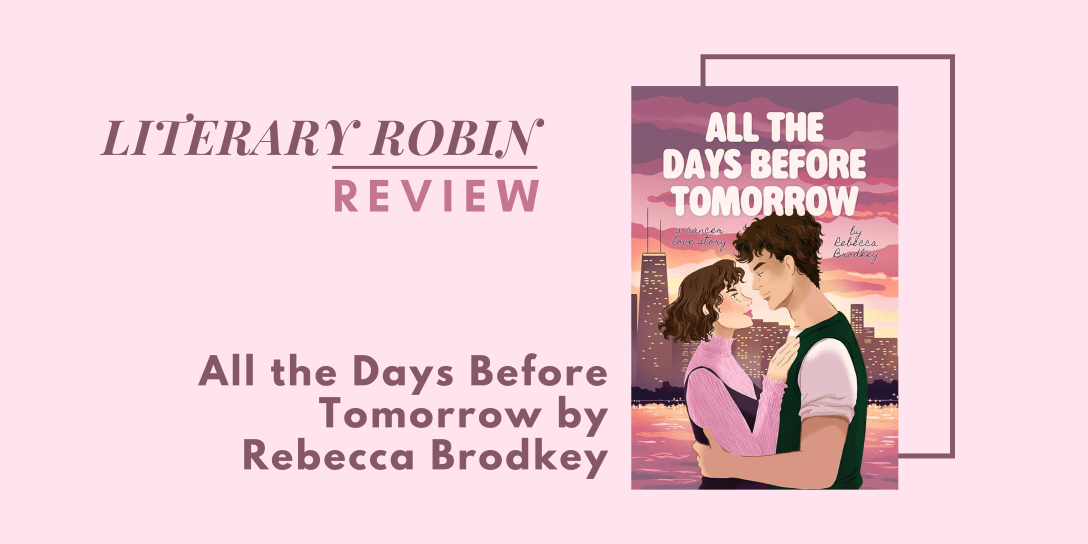
Ruby Hirsch had a bit of a life setback—if you can call breast cancer that. Not wishing to define herself by the often singular narrative given to survivors, Ruby wishes to step into the future she had to set down in her treatment. As luck would have it, the wedding of a former friend presents her the chance to initiate the get back to life plan. There she finds herself at the mercy of her former friend Penelope who is desperate for her to take over as the wedding planner for her own forthcoming nuptials. Knowing Ruby is rebuilding her writing career, Penelope promises an introduction to her literary agent in exchange for taking on the job. Wedding planning shouldn’t be a hardship, especially not in exchange for a publishing contact, but with Penelope’s immense extravagance in mind it is very much that. If that weren’t enough the best friend of the groom is a petulant presence that threatens her grand get back to life plan. Eitan is everything Ruby is not, sunshine incarnate, charismatic, and romantic, and he promises to help her in exchange for her helping him in his best man duties. Across camping trips, mix tapes, and car rides Ruby and Eitan are drawn together. There’s just one wedding to get right and one get back to life plan begging to go wrong—to get rewritten entirely.
There is an indescribable magic in finding a romance that was meant for you, in the exact moment you need it. Rebecca Brodkey has written that book with her tour de force of a romance, All the Days Before Tomorrow. Part wedding rom com, part stark look at breast cancer and the way illness rewrites our lives, this is a love story without comparison, one grounded in a realism that is refreshing as it is invigorating. Facing life after her life-altering experience with breast cancer, Ruby, a young Chicagoan, takes on the wedding planning duties for a former friend. Floral arrangements and cakes are one battle, the other she must endure: the sunshine nuisance of a best man determined to help her in her plan. Weddings, book deals, and get-back-to-yourself plans, there’s certainly a lot on the line for this romance and Brodkey displays it all with an unparalleled frankness. All the Days Before Tomorrow flowers from Brodkey’s own experiences as a breast cancer survivor and it echoes in her approach to this romance, both in genre conventions and its heart. This is a romance narrative, one that really grasps what it means to stand by another person through thick and thin. For Brodkey, life is truly grasped when we realize we aren’t, nor do we have to go through it alone.
Brodkey turns her pen toward incandescent, modern romance with her second novel, All the Days Before Tomorrow. Paying homage to the rom coms of the early 2000’s, All the Days Before Tomorrow puts a spin on the classic wedding story with a cancer survivor finding her place after treatment as wedding chaos ensues. Like all the best rom coms, this novel is one that captures a snapshot of life, and expertly balances competing emotions. All the Days Before Tomorrow casts innumerable shades, a true representation of the lives we lead. Everything life can be is encapsulated within these pages, the frustration, isolation, the hope, and the joy. Just as Ruby experiences a myriad of emotions, so too does this novel honor all the glimmering facets that make up the fabric of our contemporary existence, giving them all voice and a necessary weight. There are several moments across this book where I had to set it down and just bask in feeling. The Northern lights scene in particular made me weep, and Ruby finding connection with other cancer survivors was certainly another. My favorite moments are the ones that hint at community and the power in finding it, reveling in it. We’re not in this alone, and that is certainly one thing I came away from this romance reminding myself.
Now I love a meddlesome bisexual man and Eitan takes the cake. It was over when he started ecstatically singing Dancing Through Life but the hand flex at the river and him burning her a CD (in 2026) had me folding. Brodkey’s talent continues to be the character dynamics and Eitan and Ruby were these opposite sides of the same coin type pairings I just adore—Ruby, as someone who has been the epicenter of loss, and Eitan, unexpectedly shaped by it. There are these moments of kinship before they even know each other as they face social norms they are on the outside of. It makes for great connection as they work to build understanding and trust with one another. Of course there’s an initial misunderstanding, a meeting scene that sets the tone for most of their future interactions (it wouldn’t be a rom com without it). I couldn’t help but adore these two and their grumpy x sunshine dynamic as Eitan charms Ruby into letting him help her get back to herself. Brodkey really sets a hopeful energy with these two. Her attention to the vulnerability in letting someone see you after breast cancer treatment is so raw, the tenderness that emerged threatened to buckle me. Across this romance, Eitan and Ruby are able to see each other entirely, flaws and all, so much that we know they’re going to outlast anything life throws their way.
One thing is for certain about Rebecca Brodkey, her talent is only growing. That and her talents are certainly not only applied to writing fantasy and I need another rom com from her immediately. This story is one that is so many things, a cancer survivor narrative, a story of finding your place and community, and a nuisance to lovers romance. Brodkey reflects so much of what I love about this genre: the possibility. Yes we can have the angst, humor, and romance together in one narrative, and All the Days Before Tomorrow is proof of that. When it comes to possibility, this novel has a tight hold, and that is perfectly evidenced by Brodkey’s usage of key genre conventions. The way this novel ends utilizes one of my favorite narrative choices that still adheres to the pivotal rule of romance. Love me a book that ends in a way true to the characters, that serves the overarching narrative presented by the author. Eitan and Ruby face down a lot over the course of this novel, but the greatest test is choosing to face a future of uncertainty together. Rebecca Brodkey’s, All the Days Before Tomorrow is the kind of romance that comes around to remind us to pause, to take collection of our lives and what we need. This is one of the best romance debuts around and I am thrilled for more romance or fantasy from Brodkey—whichever comes next.
Thank you to the author for providing me with an advance review copy.
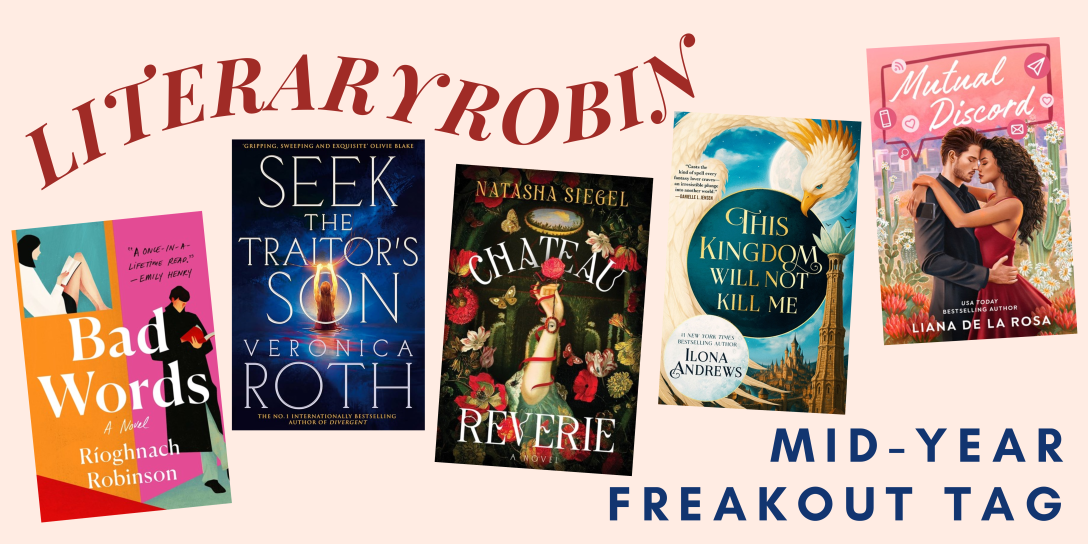
It feels like just yesterday that I was unveiling my mid-year freakout for 2025 and in all that time an entire year has passed. I am certainly not who I was before reading the two hundred or so books I have since then, so here we are back again to address my new picks for 2026. For the newbies around here, the Mid-Year Freakout Tag is like my Oscars, but for books. I get overly invested in nailing down the choices that I may go *slightly* insane, but well worth it for the chance to sort things into categories and lists. It feels like every year is getting more and more difficult—as my favorite author’s appear determined to outdo themselves. This year has been chock full of some truly phenomenal debuts as well that the choosing was not at all easy. I suppose I can thank my job for keeping me from reading as much as I read last year. Read on for my predictions for my top book of the year, the best sequel, books that made me cry, and more!
BEST BOOK OF 2026
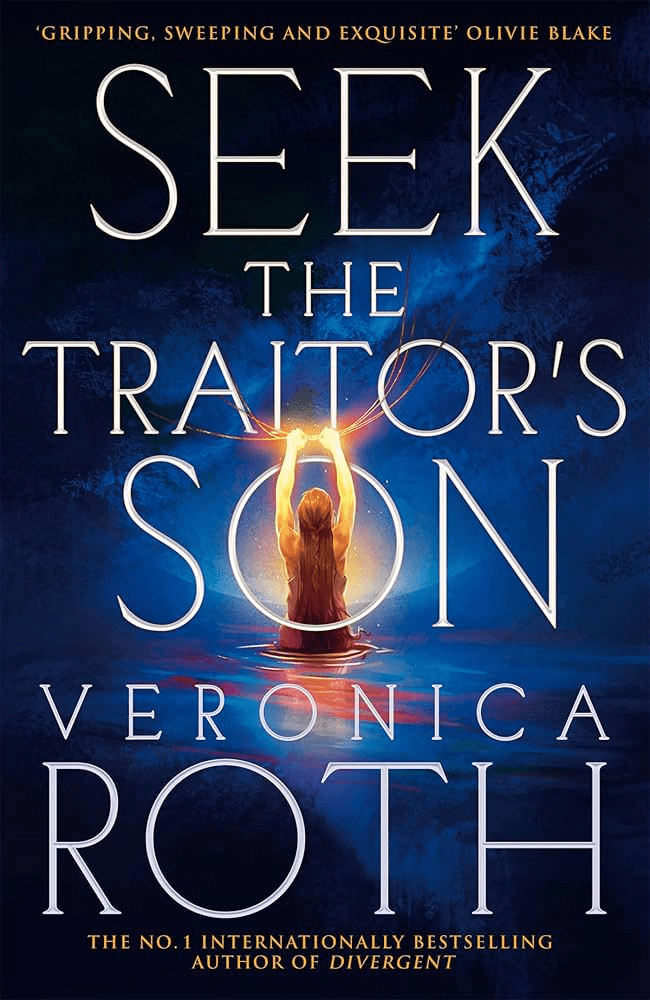
Everyone in my life is either begging for me to shut up about this book or saying exasperatedly “Robin, we know” whenever I come their way. But I am getting back on my soap box in case you are one of the few people who have yet to be held captive by my recommendation for Veronica Roth’s latest masterpiece, Seek the Traitor’s Son. Prophecy, fever, and fated love combine in a series debut that sees Roth once again taking the crown for dystopian fantasy. Tethering three characters across a futuristic earth where fever reigns, Roth brings us to an incident that changes everything: the day a prophecy is given to two individuals who will fight to take it. Seek the Traitor’s Son is a masterclass in the balancing act of the speculative genre. Roth brings together a unique blend of science fiction fantasy elements, dystopian, and romance, and the result is an unforgettable speculative epic the like of which I have not seen in years. Throw in my absolute favorite: a deeply tormented man and a reluctant heroine and this could not have been more for me. Don’t let the fact that Roth is releasing another book this year fool you, this is the one to watch, the one that reflects her continued rise within the fantasy genre. You can read my full review here.
BEST SEQUEL OF 2026
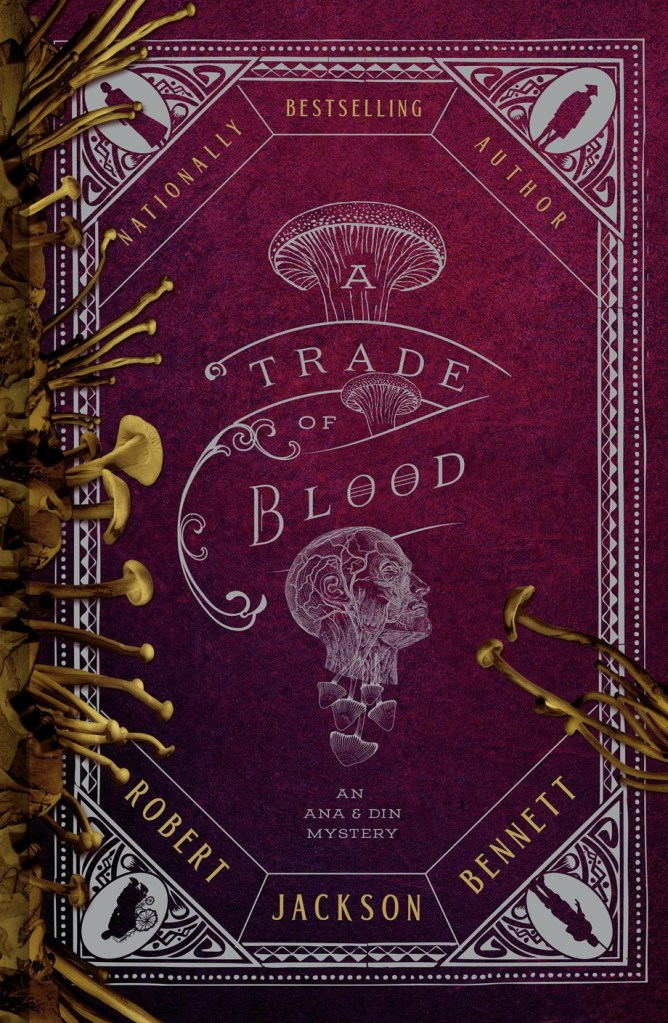
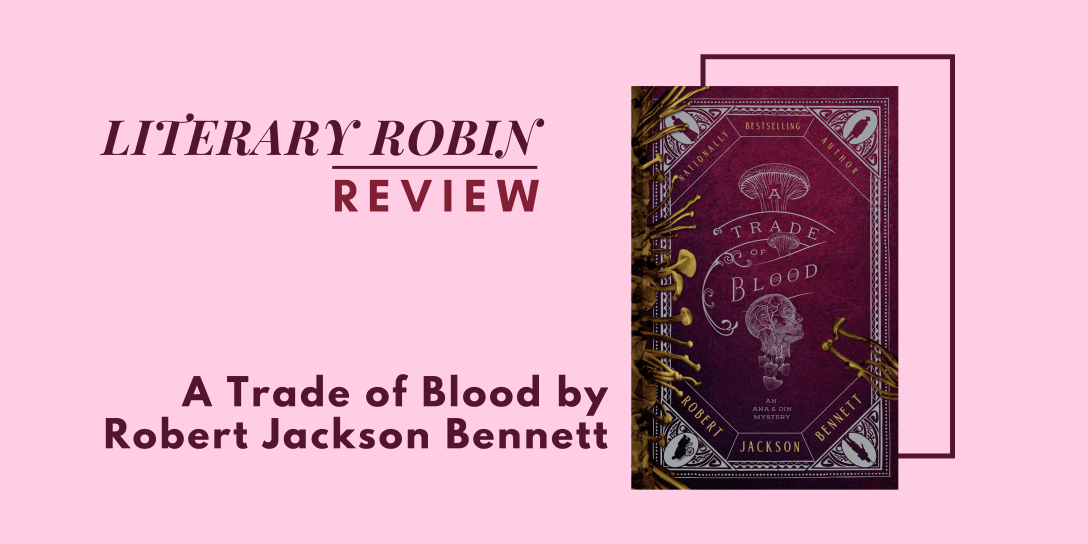
The best sequel in the house for 2026 is also the book that had me the most squeamish, Robert Jackson Bennett’s, A Trade of Blood. Third in the series that began with The Tainted Cup, this installment sees our favorite investigative duo called out to a far away canton to stop the bloodshed between two rival families. What they discover is a gruesome scene and a murderer who is willing to set the canton alight in blood to settle the score. Now everyone knows the love I have for Dinios Kol, disaster bisexual and general chaotic presence, and Ana Dolabra, a peculiar investigator and confounding personality. Robert Jackson Bennett has created two of the most endearing, frustrating, delightful (all of the above) characters who are only getting better with every passing mystery. Bennett always has a handle on his themes and what he is exploring within the confines of the mystery and this time it is the cattle industry. Why we hunger and what for are two of the lodestones for this mystery and the path Bennettt carves to answer them will leave you shaken. Rest assured A Trade of Blood is only further proof that Bennett is at the helm of the best in fantasy right now. That and Din and Ana continue to delight and the mysteries are only getting better—and bloodier—from here. Read my full review.
NEW RELEASE I HAVE YET TO READ
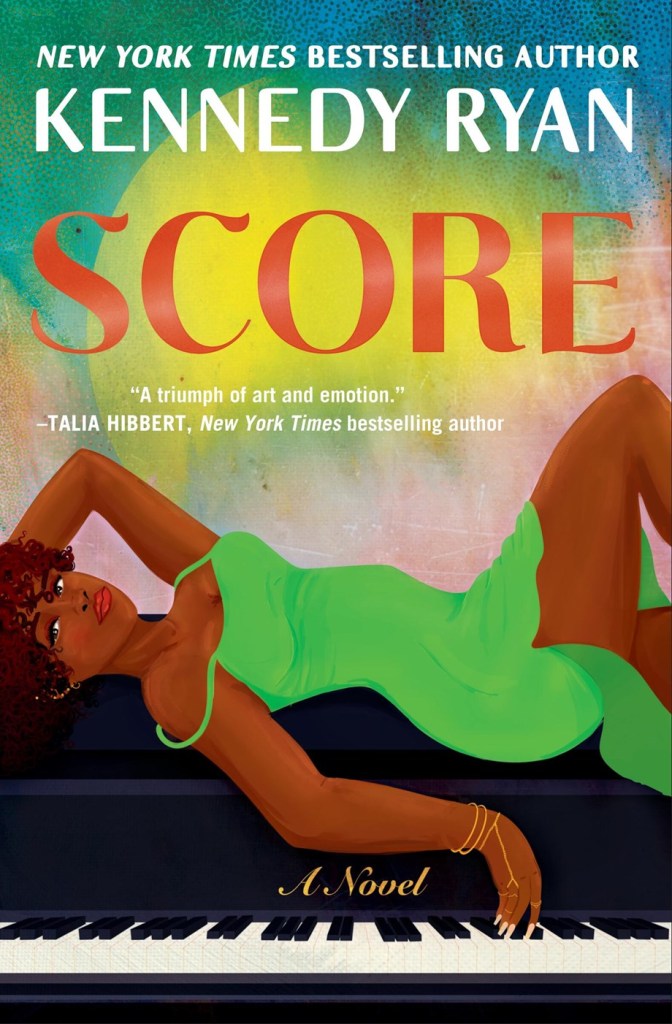
So funny thing about this one is I started it a few months ago and put it down one day and just completely forgot to pick it back up. I’m not unique in thinking Kennedy Ryan is one of the most talented writers in the romance genre right now. I and hundreds of others were frothing at the mouth for her next contemporary romance, Score. Score plots the second chance love story between a screenwriter and musician whose decade ago romance failed epically and left them both scarred. Brought back together to work on a Harlem Renaissance Biopic, Monk and Verity are drawn into close quarters where they fight the feelings that never left and test whether time indeed heals all wounds. From what I have read so far this book is delicious, a gorgeous second chance romance that is unafraid in depicting the realities of life and love and where the two are in conflict. I love the queer representation from Kennedy in Verity, whose bisexuality is a large part of the opening section of the novel as she experiments with her sexuality and desires. It’s frank and just really refreshing to see laid bare so honestly. Maybe it’s cheating since I already started this, but this is one recently released book I am planning on getting back to as soon as possible.
MOST EXCITED FOR IN SECOND HALF OF 2026
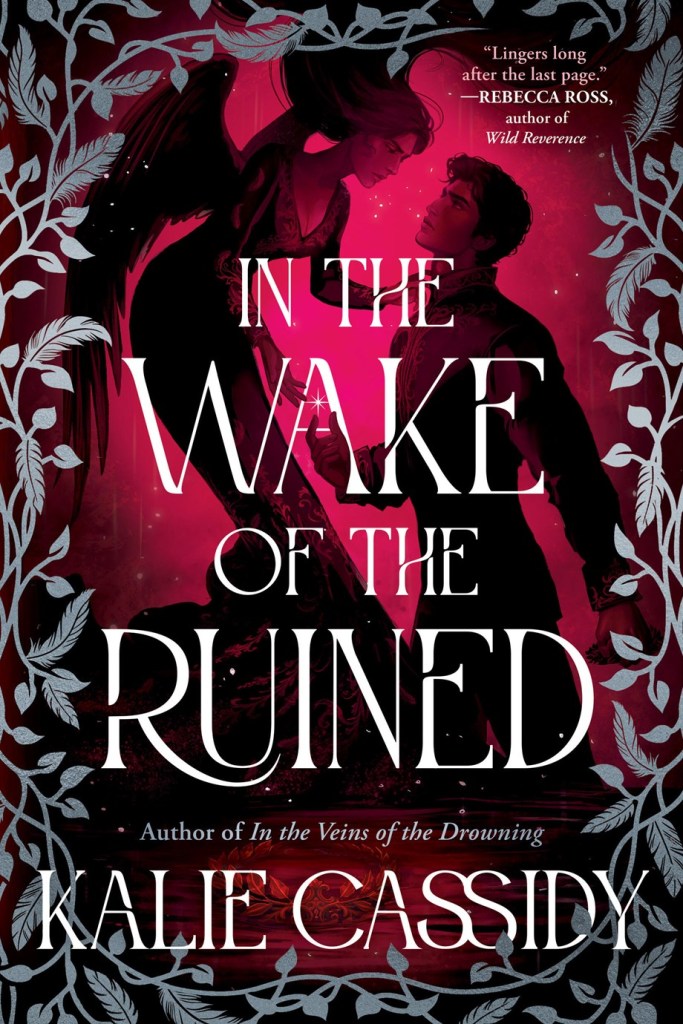
When it came to yearning books of the last year, Kalie Cassidy’s, In The Veins of the Drowning was at the top of my list. A romantasy debut that follows a siren on a mission to claim her freedom by binding herself to a king, this book introduced me to a new favorite couple and author all in the same breath. Look no further for a series that expertly balances the plot, romance, and character work. As a fan of both plot and characters this book kept me endlessly fed (just like Eusia *wink* *wink*). Between duty bound Theo of Varya and the impassioned siren Imogen Nel the character work in this duology is astounding. Cassidy’s background in theatre and her continued enjoyment of historical romances is evident in the contrast between her characters and the yearning that develops. The tension is in the unsaid, in the conversations that are rife with misunderstanding. These two clash, they retreat, and come back ready to do the whole thing all over again while realizing that they are in fact more to each other. I really appreciate Cassidy’s commitment to drawing out the conflict, to continue testing the resolve of Theo and Imogen both. While I have had the immense privilege to read an early version of the second book, I am still most looking forward to In the Wake of the Ruined releasing July 7th. The entire book had me on edge and the ending had me sinking to the floor (in a good way). Review coming soon but in the meantime preorder here.
BOOK THAT SURPRISED ME
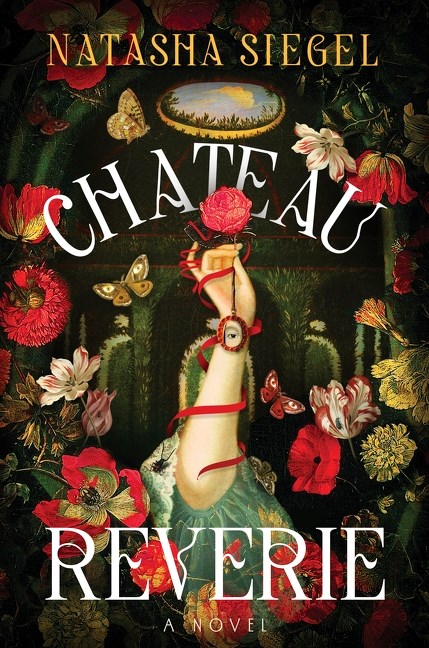
Natasha Siegel wrote one of my favorite books of 2025, As Many Souls as Stars and then she turned right around and wrote my next favorite with her upcoming novel. How far would we go to achieve our hearts desire? That’s what Siegel’s latest, Chateau Reverie asks in earnest. A young woman wishing to forget the death of her companion, and a young man desiring his liberation are extended invitations to the mysterious Chateau Reverie where as the invitation details, they could achieve their greatest desires. Once at the Auction of Secrets they are held captive by a larger power that will not rest until all but one stands the winner. As Leander and Genevieve fight to secure their futures, they face a love that could spell both of them their doom, or bring one of them to happiness and the other forever to ruin. With a premise like that it’s hard not to immediately drop everything to read Chateau Reverie and when I did, it came as no complete shock that I loved it. Even so, this one still managed to surprise me—as much of Siegel’s novels often do. One reason why Siegel’s works have resonated so much is that she always seems to be standing on the beat of humanity, what makes us tick and why we are driven to do certain things. This was certainly true to her last novel and it echoes in this one. This is essential to Chateau Reverie, especially to the romance that evolves between its two main characters. Now I’m not often one for a romance condensed into such a short period of time, but Genevieve and Leander completely had me swayed. It’s got to be Siegel’s extreme powers for yearning because I am apprehensive and still she manages to get me by the second or third page. I’ll be summarizing my thoughts in a review soon, but the twist in this one is completely magnificent and still has me in shock. Surprising indeed!
NEW FAVORITE AUTHOR
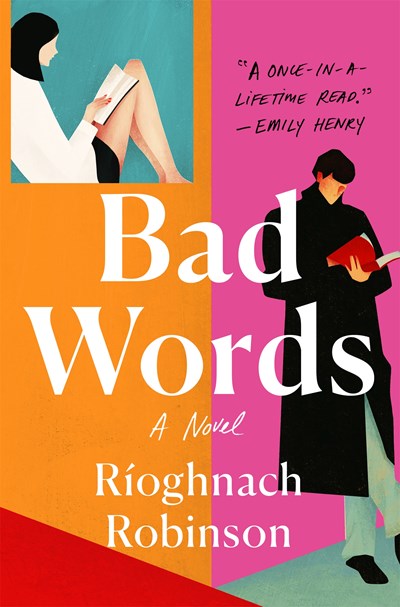
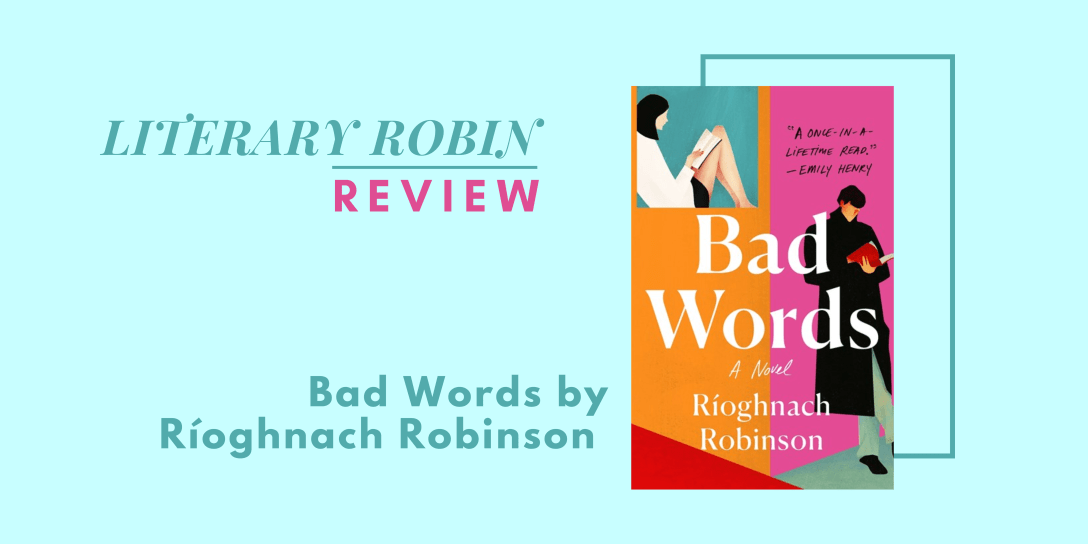
If I were to point to the romance novel of the year it would be Ríoghnach Robinson’s forthcoming romance Bad Words. Everyone who ever heard me say I don’t believe in enemies to lovers in a contemporary romance setting has seen me proven wrong since reading this novel. When a renowned book critic and a novelist come to blows after a bad review, the interaction is filmed without their knowledge, leading to a viral feud that spirals out of control. As the two spark a larger conflict online, the necessity of literary criticism and journalistic integrity are called into question—the bad words underpinning the good in the wider literary ecosystem. Drawn into conversation again and again, Parker and Selina slowly realize: sometime’s the person that knows you best is the person that has known you at your worst. And the person that saw you at your worst up and wrote a bad review about it. What’s so fun about a novel so deeply entrenched in the publishing industry and the foundations of literary criticism is that I read this truly disbelieving how Robinson could pull off the romance between author and critic. And how I love being wrong. The viral feud between author Parker Navarro and critic Selina Chan has widespread implications for the entirety of the novel, the elephant in the room as they slowly start to fall in love with each other. One can almost feel the tension radiating off of the page as Parker and Selina frantically rage back and forth on twitter, to even the quieter moments across their email correspondence. Being proven wrong has never felt so right and this book is evidence of that entirely. My full review
NEWEST FICTIONAL CRUSH
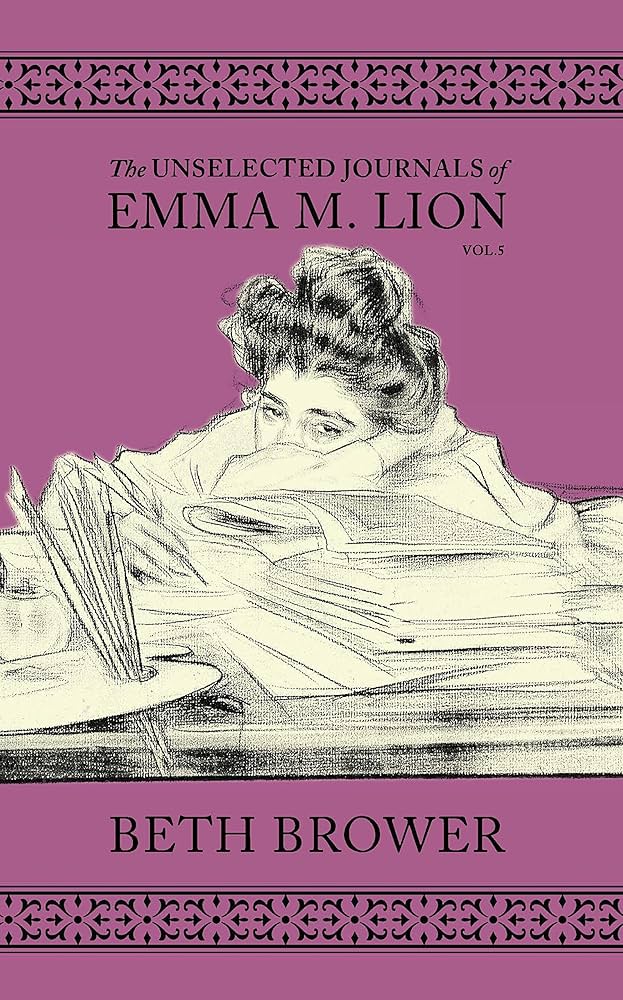
Am I talking about Emma M. Lion, Young Hawkes, Islington, or Niall Pierce? The answer is clearly all four. Now I know everyone and their mother is reading The Unselected Journals of Emma M. Lion right now. For those of you uneducated, this epistolary historical fiction series follows the elusive return of one Emma M. Lion to London after many years away to secure her inheritance and residence at Lapis Lazuli House. Foiled by her eccentric cousin who has spent the bulk of her inheritance, Emma will have to resort to unconventional means to remain in London. Including but not limited to: lying about having a chaperone to one’s demanding aunt, establishing a new tenant (a photographer no less) in residence, rejecting numerous proposals from one Charles Goddard, participating in the neighborhood scavenger hunt, exchanging favors with a nuisance, and so much more. One thing about these volumes, they suck you in until you come to having read all eight of them. I already had this series on recommendation from my dear friends Tara and Jeanne so I knew they were going to be a hit from the get go. Yet still I was not prepared for how charming these ended up being. I even went so far as to purchase each volume in hardback so you know it’s serious. Beth Brower is responsible for four new fictional crushes (and don’t make me choose between them please).
FAVORITE FICTIONAL COUPLE
Voidwalker by S.A Maclean was a dark fantasy gem I uncovered in the depths of the London spring. After a voidwalking smuggler named Fionamara accidentally gets roped into a coup, she ousts the ruling member of their winter territory, Antal. Antal is one of the Daeyari: creatures that originated in the void who consume human flesh to survive. Without a true plan, all that’s left is to team up with the cannibal monster to set the government to rights, or fail together (and isn’t that romantic). Now there is a lot going on in this premise but just trust me in that it is one of the best fantasy romances of the last year. If you like your relationships freak for freak or where they are both pathetic (affectionate) then the Beasts of the Void duology is most assuredly for you. The sequel was high up on my list of most anticipated reads for this year and I was thrilled to be back with my beloveds Fi and Antal. Sunsplitter asks what else there is to confront after successfully toppling the government and falling in love with a cannibal??? Daddy issues. This sequel sees Maclean deepen her themes, her character work, to test the bond between human and Daeyari. Lots of angst and tension ahead babyyyyyyy (and you know that is my favorite flavor of romance). Fi and Antal continue to take the crown for favorite fictional couple. They are just too good and no one else should even try.
NEWEST FAVORITE CHARACTER
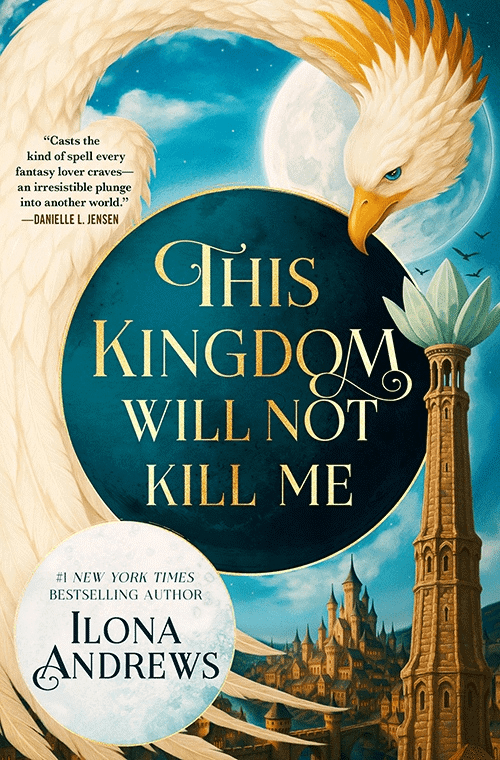
My first Ilona Andrews? As a longtime fantasy reader this feels like a sin to admit but I am so happy to have found a new favorite author, character, and series in just one read. For the portal fantasy fans out there, This Kingdom Will Not Kill Me is all about waking up in your favorite fantasy novel and fighting like hell to survive. Who amongst us wouldn’t leap at the chance to try this? And who among us would actually succeed. Well if you don’t know the currency conversion of your favorite series you might just not. Fortunately our protagonist Maggie has a memory like a steel trap and remembers almost everything from her favorite dark fantasy series. After waking up in Kair Toren, a city she has yearned to venture into, Maggie soon knows she will not survive if she doesn’t quickly get scrappy. She robs a character she knows carries wealth and uses information about the plot™ to ally herself with a tortured byronic hero to acquire security. Maggie is everything I love about complex, layered heroines. She knows her worth, stands by her principles, and is unafraid to tell it like it is. Also clever to the extreme (I’m serious). Of course she’s not perfect or it would make for a most boring narrative, but her sharp wit and quick thinking make for a vastly entertaining read. I’ve got to hand it to the writing duo that is Ilona Andrews: this is how you write fantasy and female characters.
PRETTIEST BOOK BOUGHT
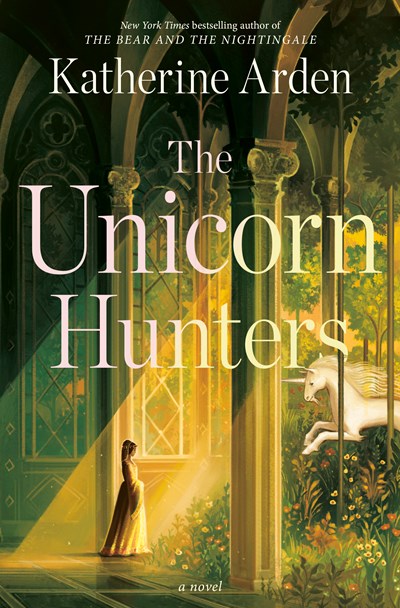
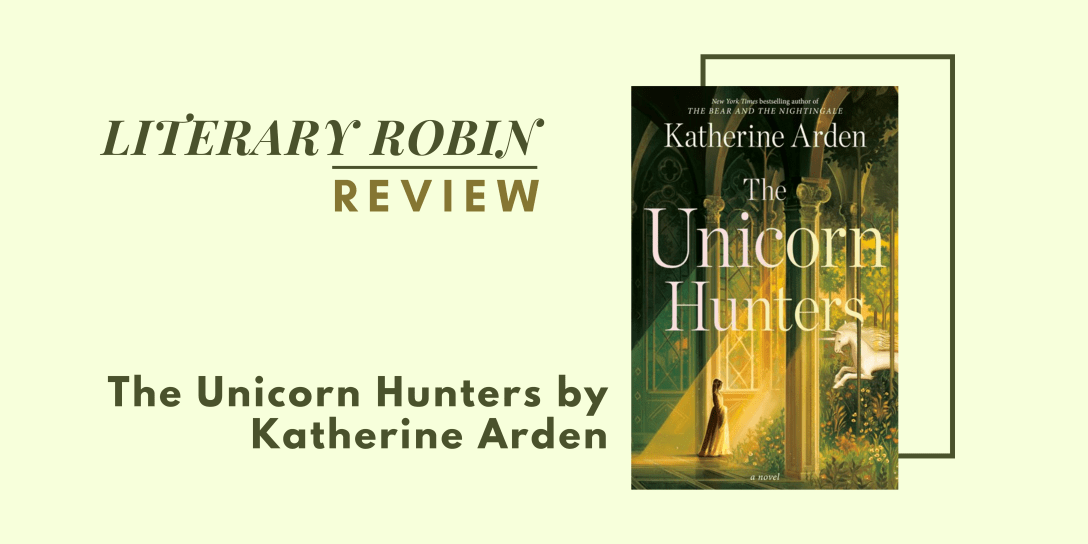
If you are reading this and you are a coworker of mine you know this is in fact on the holds shelf (but it’s the thought that counts). I am always singing endless praise to the historical fantasy powerhouse that is Katherine Arden. Her work invigorated my love of both genres and the possibilities in melding the two. The Winternight Trilogy is one of my favorite all time works of fiction and her latest, The Unicorn Hunters, is another stunning meld of fiction and fantasy. Not without a kernel of romance either! How to paint a picture for this hardback other than it has tapestry endpapers and a silver foiling on the naked cover. Truly a gorgeous edition that is representative of the contents of the book within. Want more reason to pick this one up? Read my review.
BOOK THAT MADE ME CRY
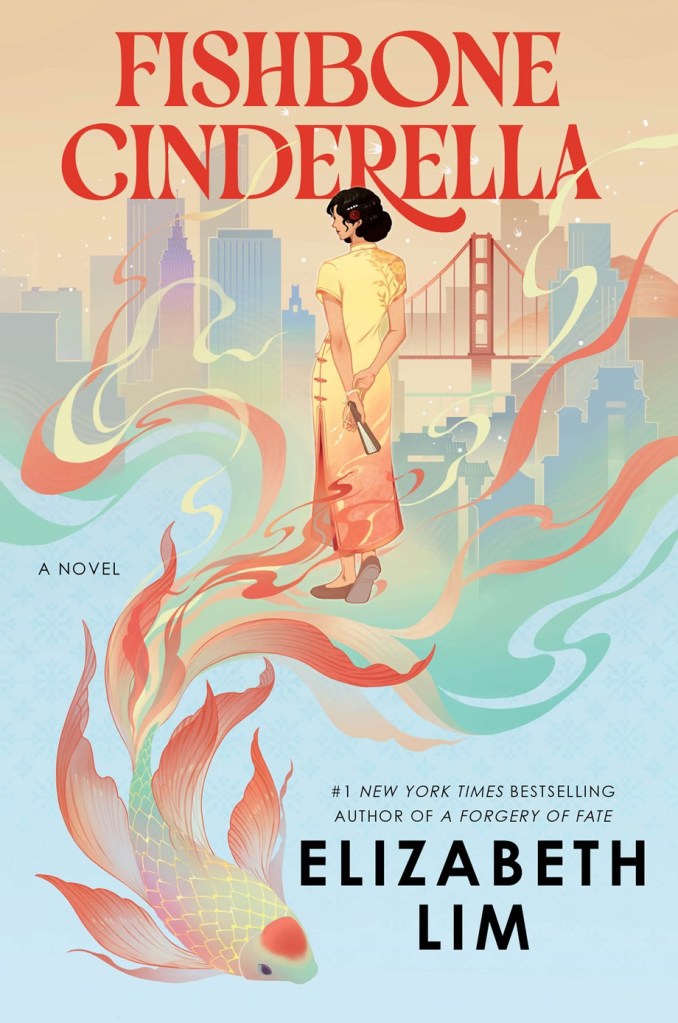
I am not the kind of reader who cries often, so when a book guts me to my core or has me close to tears I know it is flawless. Elizabeth Lim’s upcoming historical fantasy adult debut, Fishbone Cinderella did that for me. A generational saga and cinderella story following a family of women with strange abilities who are torn apart by war and circumstance, Fishbone Cinderella tests familial bonds and the cost of generational wounds. Across 1940’s Hong Kong and San Fransisco in the 1960’s, we follow mother and daughter both as they face the consequences of trauma, their choices, and their respective gifts. Lim is the master at the fantasy narrative and while this one is firmly placed within our world, it still has that speculative gleam to it. Magic here is viewed as a curse, yet one perfectly aligned with situation: to disappear in the face of those who wish you harm and to know by touch the memories of those around you. Lim understands how to utilize the speculative to inform her characters and get after themes and situation. Fishbone Cinderella is a heartrending portrait of mother’s and daughters, the pain we bury, and the lengths one must go to reconcile the past. If you’ve read this you’ll understand how moving the final scenes were. Sheer perfection.
BOOK THAT MADE ME HAPPY
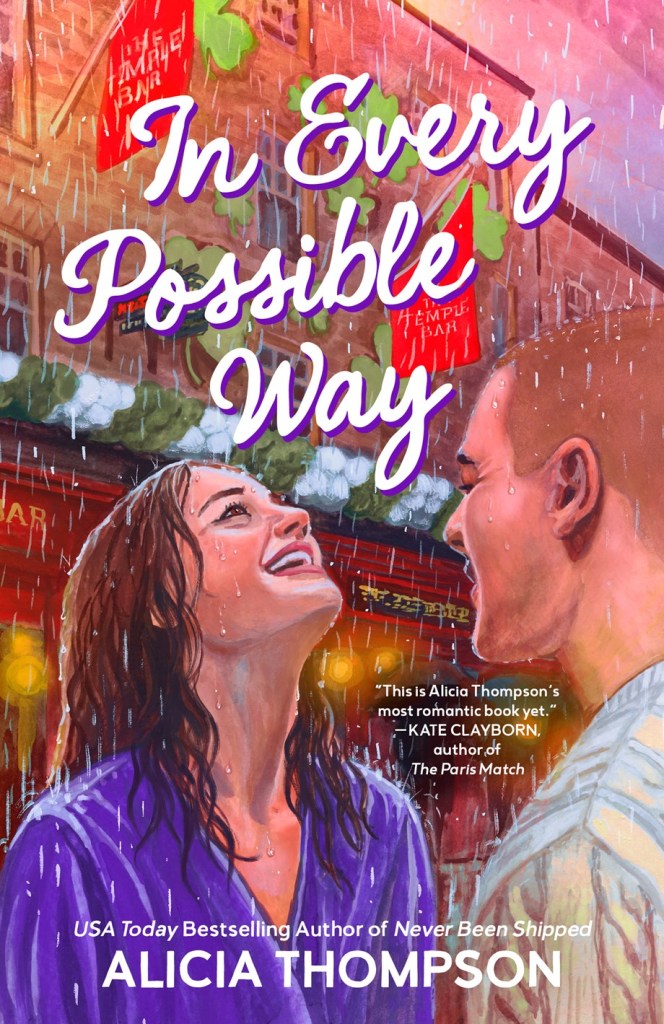
How to explain Alicia Thompson’s latest other than its for the Leap Year and While You Were Sleeping lovers. As that is me two and two this was the perfect romance. Waking up on the lawn of the brother to your horrible date of the previous evening (after telling him you’d rather be on a date with his brother) is one hell of a coincidence. That lawn also happens to be in Ireland thousand of miles from where you were last night. No Money, no passport, no anything, protagonist Jess must figure out how to get home and unfortunately Eamonn is her only shot. He begrudgingly agrees to help her and the rest is romance history. In Every Possible Way is a contemporary romance that pushes the line of the possible and I am endlessly grateful for it. Because everyone yearns to be squired around Ireland by a hot mechanic while basking in all of life’s possibilities. Who even cares how you got there? I was simply along for the ride. In Every Possible Way is a romance that made me feel all the things, but the emotion I felt most of all was happiness. Alicia Thompson’s latest is there to remind us that we’re allowed to have it all even if we have to risk it.
BOOK TO READ BEFORE END OF 2026
Liana De la Rosa what cant you do? Taking a detour from the historical romance for which she is best known, Liana De la Rosa is serving up a forbidden friends to lovers romance this summer with Mutual Discord, out this August. As I am altogether familiar with Liana’s game I know this is going to be EPIC and it is the romance I will be getting to before the end of this year. Following an influencer whose virtual friendship with a mysterious “A” is revealed to be the partner of an old friend, Mutual Discord promises the mess, the romance, and the heat together in one novel. If there is one thing I trust implicitly, it’s historical romance writers breaking into the contemporary space. I know Liana is going to nail the tension, the yearning, and the conflict right on the head. She did after all completely sweep me away with her Luna Sisters trilogy (which comprised all three). I definitely want to extend support to my favorite writers who are taking different avenues as publishing shifts and Mutual Discord is up next for me.
Please note this review contains spoilers for the former book in this series, The Tainted Cup and A Drop of Corruption, and contains references to some of the events in this sequel. Read with caution.
⭐⭐⭐⭐⭐
Rating: 5 out of 5.
Far beyond the boundaries of the sea and the ever constant threat of Leviathans lies the canton of Sapirdad. Responsible for feeding the wealth of the empire, it has become the setting for a brutal slaying. An heir to one of its leading families has just been murdered, gruesomely slain by the son of their family’s greatest rival. As the presumed killer insists upon his innocence in committing the crime, all out bloodshed between two rival families appears inevitable. Hoping cooler heads prevail but wishing to prevent further violence, a group is dispatched to investigate the scene: Detective Ana Dolabra and her assistant Dinios Kol. Arriving at the Canton in the midst of upheaval, they soon discover that the suspect is indeed innocent of the crime, guilty of nothing but being handed the butcher’s weapon. Someone hides behind the scenes playing the puppet master, controlling the actions of others through means unheard of in the human populace. Discovering how this web was expanded into the canton is up to Din and Ana who must grasp at all the facts as more murders bloom. The answers lie in the fraught past of the canton—one all too familiar with unexplainable deaths and bloodshed. In a canton built upon blood and suffering it is these unexplained killings that could spell its end, and upheaval for the entire empire.
A canton of blood grapples with buckets of it in Robert Jackson Bennett’s latest fantasy mystery medley, A Trade of Blood. Inspector duo Ana Dolabra and her chronically exhausted and disastrous assistant Dinios Kol are back for a third installment in the genre spanning, far too addictive Shadow of the Leviathan series. Another case with far reaching implications to plague main character Dinios Kol and rewrite our existing understanding of the Khanum empire. It all starts with an impossible murder (and doesn’t it always): a locked room where two lovers meet, one of whom murders the other with no true memory of having committed the act. This is where Bennett thrives, in the boundaries of the improbable which he utilizes to build out his greater exploration into the cattle industry and the systems put in place to uphold an empire’s insatiable hungers. Aforementioned disaster character Din stands at the forefront of this investigation, facing new challenges. Din’s greatest torments in A Trade of Blood include: family trauma, having to cart heavy musical instruments around for his boss, another biological phenomenon wreaking havoc, and most notably himself. For Bennett’s A Trade of Blood it all comes down to hunger and the lengths one will go to see them realized. Din and Ana will have to face the web winding beneath the canton of Sapirdad and the past violences which bleed eternally into its present.
A Trade of Blood brings a new side to the empire of Khanum, one where the blood spilled is immeasurable and more than one family has succumbed to the overwhelming allure of power. It’s up to our favorite investigators to view the gruesome scene and turn the tide in a canton of blood and intense rivalry. Across the Shadow of the Leviathan series, Robert Jackson Bennett has interrogated the unique facets of the Khanum empire and the people living within its bounds. In A Trade of Blood he turns his attentions to the livestock industry and its foundations set deep within the land. This installment is all about hunger, the appetites whetted and never satiated, and those fed eternally all for the sake of desire. The cattle industry is one of wealth and of slaughter, a carrion feed for two rival families—the vultures—to scrap over. Yet Bennett understands it is human nature upholding this industry, a specific craving that birthed its existence—one that forever sustains it. As always there is the undercurrent of magic to this world, the augmented and the biological transformations in the wake of leviathans still very much in play. Bennett brings us into the fold of the Orbiis, those enhanced to maintain the empire’s agriculture, as he builds out his central mystery. Between the family rivals, forgotten history, puppetry, and blood this third novel shapes a monumental look upon hunger and the price of wielding the blade in service of vicious appetites.
A Trade of Blood furthers an ongoing inquiry into personhood and the systems of power which strain all that we are. Din bears the brunt of this and it is through him that Bennett’s greater plot is realized. If A Drop of Corruption centered upon Din’s exhaustion with the work of uprooting a seemingly never ending corruption, then this book was about Din finding a work life balance that he desperately needed. Thrilled for him actually. This third installment sees Din and Ana at their strongest. Don’t get me wrong, Dinios is still confronting the demons of this empire with a strong “why me” energy, but albeit with a smidgeon of less cynicism. In A Trade of Blood Bennett does a tremendous job in disentangling the human cost of industry and of empire. Just as the victims of the guiding web are lulled into a dream where they commit horrific acts, Din hears voices of his own—the beginnings of the true cost of his gift: his life. A Trade of Blood is certainly concerned with the blood spilled within this canton, but on a far greater level how we trade our lives to industry and what we give up to gain a foothold, a semblance of power within it. For the livestock industry is not one of necessity, but of craving, and calls for a human offering. In the canton which upholds the foundations of this industry, one is merely a good to be swallowed up within the yawn of the empire, furthering its own ends.
Robert Jackson Bennett drives the nail ever deeper in A Trade of Blood, a third installment rife with blood—yes, but hunger, rivalry, and above all, power. In his third Shadow of the Leviathan novel, Bennett further demonstrates that he has grounded this world in the fabric of our present, an ever haunting cloak cast upon the empire of Khanum. The canton of Sapirdad is an apt resting place for Khanum’s past, one it will do anything to keep from the light, but it is the cattle industry that becomes a larger testament to its history and the bloodshed seeping through its pores. Bennett cleverly sharpens his knife from the start, setting his stage with two families at odds and Dinios Kol and Ana Dolabra on the case of a bloody crime. The case is no mere revenge killing however, and unveils a pain that lies much deeper—literally—as the tool used against the laborers of the past festers deep within the land, never slumbering. What I love so much about these mysteries is Bennett’s hold on his themes and the nuance in displaying the various facets unreservedly. Mark this as another appreciation for authors’ notes because Bennett’s afterword offers a wealth of insight into his findings and the basis for much of this novel. Unparalleled and certainly without rival (of the unbloody kind), A Trade of Blood belongs within its own realm of fantasy excellence. I will always be craving more from Bennett. Wit, improbable murders, and humorous repartee between a disaster bisexual and his employer who spends most of her time willingly confined in a closet. In that exact order.
Thank you to Edelweiss and the publisher for providing me with am advance review copy.
Trigger warnings: death, blood, murder, suicide, body horror
Anne of Brittany has long dreaded her marriage. Since the invasion of France spelled the death of her father, she has accepted the life of a duchess with grace, knowing full well her lands and her body will not remain hers for long. France means to marry her to their king to secure Brittany, but in secret Anne plots an alliance to Maximilien of Austria, the king’s greatest rival. Secrets are not long harbored, not when every court has diviners to glean information from the opposition. Anne’s only saving grace is the forest of Brocéliande, a wood long thought to be enchanted which could offer protection from prying eyes. Desperate and willing to lie to secure her future, Anne presents a ploy: they will tell France they hope to hunt a unicorn. Something which requires Anne to be unmarried. While on the hunt she will wed Maximilien by proxy and none will be the wiser. When the hunt reveals a real unicorn and a stranger returned out of time, Anne soon comes to know magic is real, but as her ploy has been successful it is of little consequence. Lies begin to have a cost and as Anne grapples to control the narrative against a power hungry France, hiding the truth to magic becomes impossible. For magic is real, and it wants her.
In The Unicorn Hunters, historical meets the fantastical with France on the edge of obtaining Brittany and the magical forest of Brocéliande bringing magic and memory to the verge. Katherine Arden goes beyond the expected in her latest novel to show how the best parts of fantasy include history retold. Through her focus on Anne of Brittany, a woman placed into a singular narrative, Arden recontextualizes the life of the duchess, one where her cleverness finds resonance in the magic of a lost city and a forest of secrets. Most importantly, unicorns. There are unicorns. An elaborate lie built to retain control of Brittany leads to magic taking root within its borders, where portents, diviners, and courtly intrigue are at their height and vying for dominance. Swept away in a hunt for a unicorn and a lost world impressing itself upon a duchess, The Unicorn Hunters appeals to a magic just out of reach, but one that can be shaken out of sheer tenacity. Cunning women, delightful animal companions, and a strange otherworld all find a place within the confines of this audacious historical legend. The Unicorn Hunters is proof that Katherine Arden can do no wrong with her penchant for sweeping historical fantasy. That we need to have her spin on every kind of fairytale—and history for that matter.
Katherine Arden’s hold on history and memory crafts an extraordinary saga of a duchess’s quest to obtain freedom, for herself and for her kingdom. A saga that intersects an age old magic within a forest and forces beyond her greatest imaginings. The Unicorn Hunters threads an enlightening tapestry on fifteenth century Brittany down to the minutiae, even as Arden takes readers on a fantastical journey complete with sea-drakes and the iconic mythical figure of the unicorn. The Unicorn Hunters features some of my favorite writing from Arden. Think the atmospheric feel of the Winternight trilogy transplanted into the forests of Brocéliande during a period of turmoil. Katherine Arden frames an essential query here, a driving force for her to build out her tale. The Unicorn Hunters asks, if we aren’t first granted power can we access it by other means and thus change our fate? All that is central to the life of Anne of Brittany—duchess yes—but one relegated to a single fate: marriage and children in service of France. Breaking free spirals into a classic fairytale: the girl who catches the attention of the forces of magic. Not so typical, a quest to find the drowned city of Keris. A Katherine Arden novel would not be complete without persnickety family members, adopted children, and a delightful animal companion (named Butter no less). This story is wholly her own and yet something I’ve never seen from her before.
The Unicorn Hunters is another fabulous historical fantasy novel from one of my favorite writers within this space. Something quintessentially Katherine Arden in tone and humor, but new for its breadth of history. The Unicorn Hunters had me thrumming on the sheer possibility wound up within this distinct era. The fantastical feel of this novel does not just hinge on the unicorns and magic of it all, but on the time period itself. Beliefs and customs long past through which people dictated their entire lives are brought to life once more and they carry a weight that Arden uses to further her narrative. The place for women, land, and power are all grounding cornerstones within The Unicorn Hunters that provide an additional context and conflict. Yet for all of this it is really the characters who shape this story into pure magic. For Arden each perspective is rich and laden with details one cannot help but gorge themselves upon. Where history comes to life and the magic takes root. Here for Anne of Brittany’s elaborate web of lies. She should have more of them actually (as a treat). The Unicorn Hunters is history respun into legend. Where myths are made real and clever women take their rightful place at the forefront of such tales. Unicorns and devoted men kneeling at their feet.
Thank you to Edelweiss and the publisher for providing the advance review copy.
Author Parker Navarro’s debut novel was supposed to be a success. The advance: more than staggering, with early reviews slating it as the book of the year. All castles must crumble and Parker’s fell at the hands ofnotorious book critic, Selina Chan, who panned his book, dubbing it a “stupefying misfire”. Superseded by more negative reviews and online vitriol, his debut was in its own category of failure. Four years after the flop that was his first novel, Parker hopes to claw himself out of the pit when who should publish a review but the woman who buried him in the first place. Selina Chan would rather have not been tasked with reviewing Parker’s sophomore novel, but declining funds and readership at City Magazine necessitate she do her job by any and all avenues. So it’s just her luck that the author in question approaches her at an industry party and they get into a scathing argument—one that is filmed without their knowledge. Their feud gone viral, Selina and Parker navigate new scrutiny in a landscape that seems to benefit them: Parker with increased preorders of his upcoming novel and Selina with magazine viewership. Neither wants to back down, not with their entire futures on the line. Yet as Parker and Selina clash, they soon realize no one understands you quite like an enemy, and that animosity is masking the mirror they hold to one another. Moving forward means stepping back from who they are to everyone else, but letting go is harder when you have to admit you were wrong.
Bad Words is the romance novel of all time. A startling look at why we create, critique, and the tenuous publishing landscape, all through the perspectives of a feuding author and book critic. It’s a book that knows the power on the page, the page itself a series of deliberate choices and writing a tremendously public act. All of that is a testament to author Ríoghnach Robinson who unfolds her public feud between novelist Parker and critic Selina, one that prompts a path towards change and unforeseen connection. With their impassioned back and forth—each convinced they are right—a romance first appears out of the question, if not for a kernel of familiarity uncovered after every heated argument. Like the love they share for an obscure novel from their teen years or a favorite, slightly pretentious drink they both order. Bad Words had me waiting on bated breath for Selina and Parker’s next exchange, to fight or to give in to the intense connection at the heart of all of their interactions. But like any true enemies to lovers, these two have to wade through the issues that led up to their quarrel. Bad Words finds its place in the literary landscape, challenging our views on criticism in the book space and interrogating the essential question: why do we create and how do we connect? Bad Words is as bracing as opening ourselves up to criticism can be, where to be known is to be seen for the totality of who we are.
When I first settled in to read Bad Words, there was a moment when I knew I was in the presence of greatness—that I was reading the kind of book that is both rare as it is vital. Ríoghnach Robinson’s debut is an eye opening work of fiction that presents the kind of questions and conversations this industry has long been grappling with, inside and out. Robinson sharpens up a commentary on the necessity of criticism within the book space, authenticity at the heart of writing, and the myriad of ways we reach out to connect with others, with writing as the spark. Not complete without a romance, Bad Words feels both a homage to the rom-coms of the early 2000’s and a subtle nod to our lord and savior Jane Austen. Robinson writes for the readers who want a modern romance with all the heart, complexity, and intense character work comprised in an Austen novel. That and a contemporary enemies to lovers story (which I have long thought impossible but revoke in the wake of this novel). Bad Words has the feel of a true enemies to lovers tale, but make it literary, with real stakes to uphold the enemies of it all. For who is not your enemy if not the woman responsible for ruining the success of your debut novel? This story is all Ríoghnach Robinson, who grounds it ever deeper with attention paid to authorial intent, mental health, familial relationships, and online spaces, all while rounding out a seemingly impossible romantic arc between writer and critic.
The star of the show in this romance is of course our writers, Selina and Parker: two not so different people yearning to connect with writing and each other. Criticism is the tinder that sparks the flame in Bad Words prompting a feud and a deeper look at authorial intent, journalistic integrity, and literary criticism entirely. There is an intimacy that comes with knowing someone’s writing down to their core and to be bold enough to tell them exactly how it comes across. Which is exactly what Selina asks of Parker as she enters into public conversation around his sophomore novel, High and Dry. Selina and Parker’s improbable romance emerges amidst in person fighting matches, cross conversations on social media, and a self insert short story about the critic you currently hate (yikes I know). The intimate tether between love and hatred is actually a thin line, which they fight every time they interact in public while falling ever deeper in private. Both Selina and Parker are hiding through their writing. Parker writing for everyone else and not himself, and Selina using writing as a tool to construct a fortress around herself. Love for these two characters is tied up in the criticism: in letting each other acknowledge their flaws. An essential component to living and loving with authenticity.
Part of what makes the romance between Selina and Parker so addictive is how opposed they are. Robinson spends the length of Bad Words slowly breaking down these barriers and drawing them closer together as they realize: you are me and I am you. Despite the separation in their roles in publishing, writer and critic respectively, both feel the tremendous weight of expectations and the public facing nature that comes alongside pursuing their careers. Intersecting online publications, snippets from social media, and Parker and Selina’s own writing, Robinson begins to contextualize the fraught modern publishing landscape. One that is all too quick to latch on to a feud and stretch it for miles, and take controversy and spin it for personal gain. Everything from publishers, journalists, former friends, and industry names, all want a bite out of the Parker x Selina feud. There is truly so much to dissect even on this front, but the added familial relationships bring more to Parker and Selina’s interiority. For Parker his failures weigh against his desire to support his family. All the while Selina protects her castle, defending a life that went against her parents wishes. Bad Words could not be any better with this rich subject matter, but it rounds out a third act with a discussion over depiction versus endorsement in fiction—this topic a catalyst for conflict and eventually reconciliation between these literary enemies.
Ríoghnach Robinson’s romance between an author and his least favorite critic manages to deliver the romance of the year and it’s not even out until fall. Bad Words is pure brilliance in book form, an emotionally rich love story that’s challenging, perceptive, and best of all clever. Framed within the publishing industry and the modern literary landscape, Robinson crafts an insightful romance concerned with all things writing to get to the heart of why we create. Parker and Selina are the epicenter of this, bearing the weight of the industry on their careers and identities. Separated by the boundaries of criticism and a viral feud, their romance is almost too far-fetched which is why it feels earned by the time these obstacles are circumvented. Parker was never more right than he was in falling for the woman who read him down to the marrow and challenged him to write authentically. I support women’s wrongs (in fact there are none here), but Selina Chan I would wage battles on your behalf (and win). Bad Words perfectly lands its quest for connection, something we cannot gain without first being honest about who we are. Thus we come back to critique, which shapes literature and is an essential part of the literary ecosystem. As a lover of themes and interrogating topics at length, Bad Words left me pensive, reflecting far beyond the end of its pages. Bad Words is a book for book people. Whether familiar with the industry or not, prepare to be lost in its marvelous depths and come back yearning for more from Ríoghnach Robinson and a literary nemesis to call your own.
Thank you to Edelweiss and the publisher for providing me with an advance review copy.
Trigger warnings: past suicidal ideation (discussed), racism
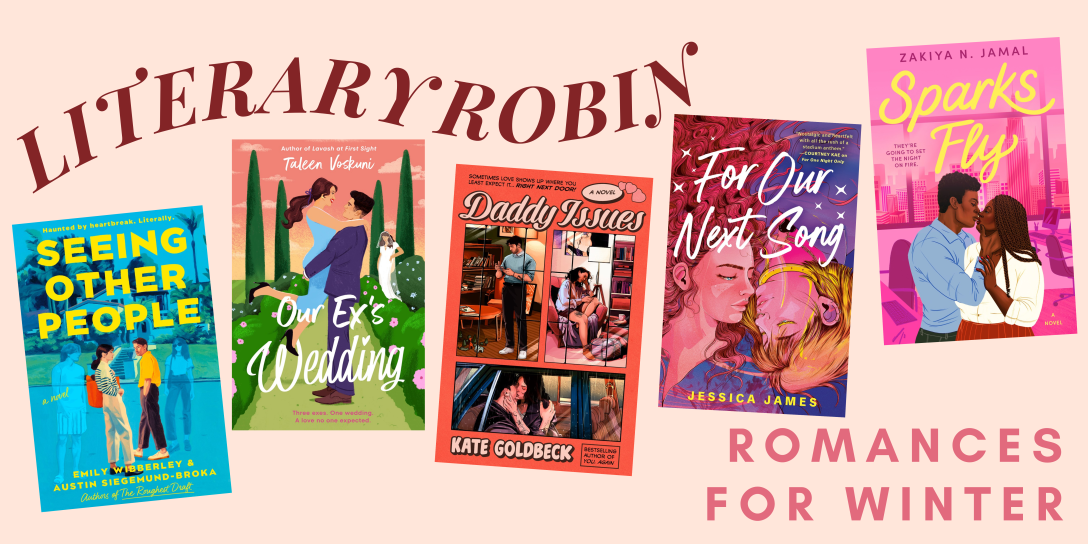
Yippee Ki-yay romance lovers. It’s the best time of year for romance with that winter chill keeping us all cozy inside (storms included). Cozying up with romance is the way to survive the winter and I wouldn’t have it be any different. This next crop of romance recommendations was absolutely meant to be shared around the holidays but with work getting busy my writing slowed down a ton. Fitting since now I can count this as my first quarter romance picks ahead of the Valentine’s Day holiday.! This was an excellent quarter of romance reads as I read everything from ghosts to sports romance. Tis the season as it were. Yet I stayed true to my roots with second chance romance and yearning—which I will never abandon. Lot’s of sophomore novels and debuts leading out the beginning of the year. Sink in and enjoy!
Disclosure: I will be linking my Bookshop affiliate link below my reviews. I earn a small commission if you purchase books through this link and it is one way to support my reviewing! My affiliate link will simply be labeled “Bookshop.”
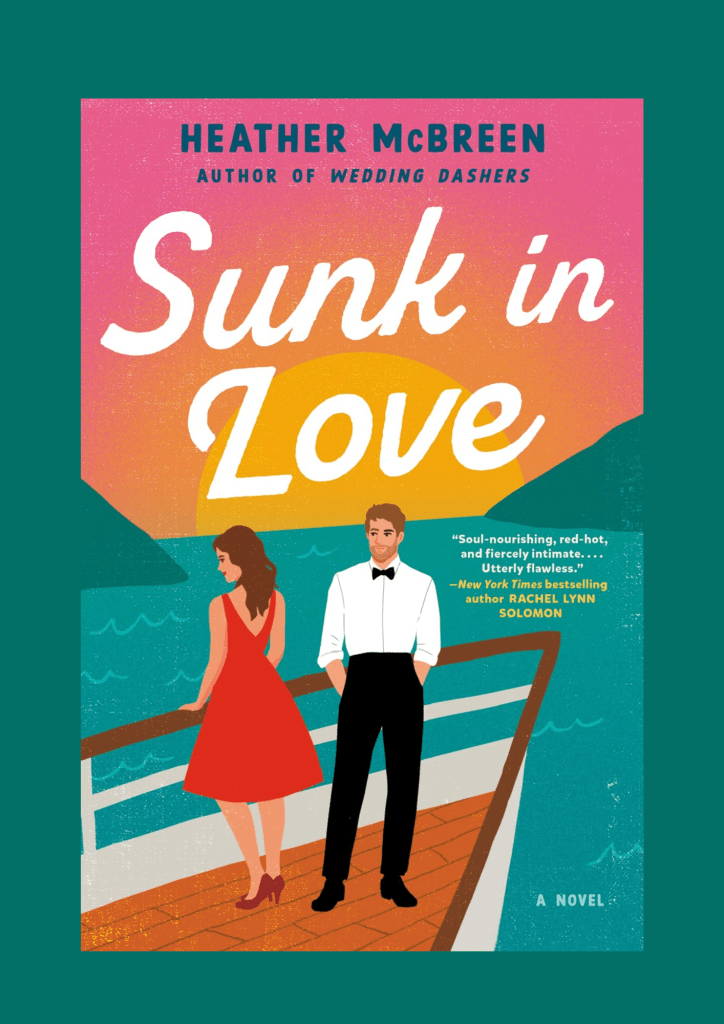
Sunk in Love by Heather McBreen
Second chance romance while on vacation in Hawaii: hot. Being stuck on a cruise ship with your entire family: not. Two spouses veering towards divorce must pretend they’re still in love on a final family vacation—rather than let their family in on the truth and ruin their last trip together. Roslyn and Liam are a sworn pair. Together so long one could not think of one without the other. When a tragedy occurs, they face a reality where they aren’t or rather cannot be what each other needs. After months of avoidance and silence lead to a three month separation and encroaching divorce, they face telling Roslyn’s family. Both would rather push through the upcoming vacation than reveal the truth. But vacationing away from their lives is more difficult than they thought as Roslyn and Liam must question not is the love still there, but is it ever really over. Sunk in Love, Heather McBreen’s sophomore novel is an achingly heartfelt second chance romance set alongside a scenic Hawaiian cruise. I make it no secret that second chance romance is my favorite romance trope. The possibilities are limitless and the angst even more so. Sunk in Love is another one to add to a growing list of flawless second chance stories. Tracking a present and past narrative between Liam and Roslyn as love is discovered, lost, and regained, McBreen charts the ups and downs of a family vacation and a love story all in one. McBreen understands the inherent hotness of the British accent, someone making you lasagna from scratch (on a first date no less), and a man who reads romance novels (I know). This is a gorgeous gorgeous second chance love story for the cautious hopeless romantics, yearners, and lovers of stoic men. Sunk in Love is proof you can have it all.
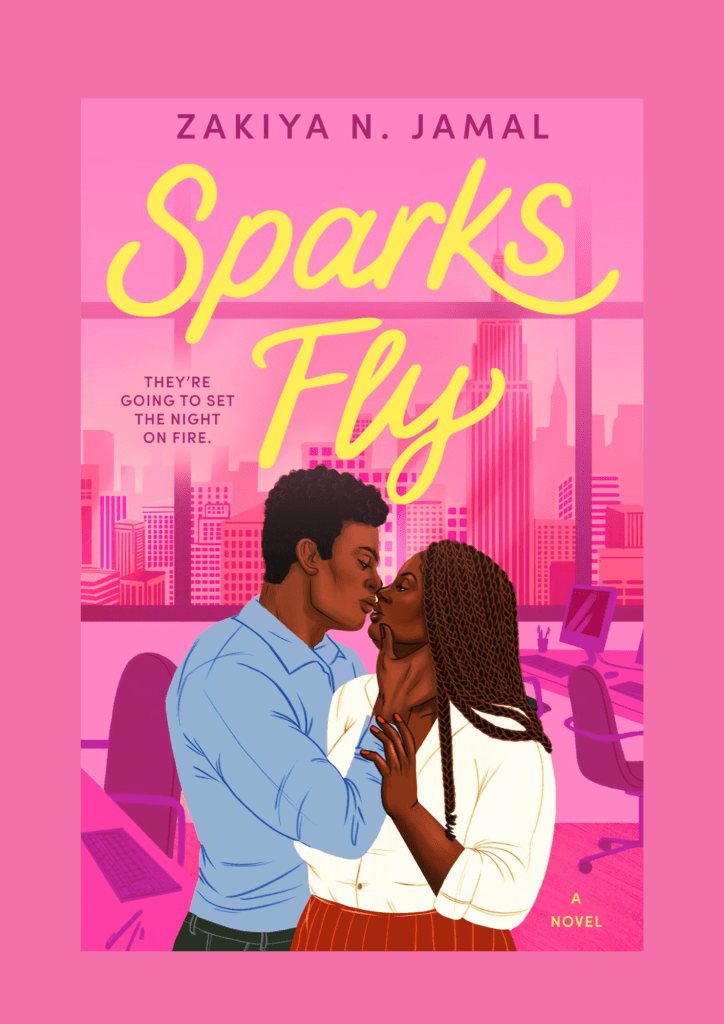
Tired of waiting around for life to find her, twenty-seven year old journalist Stella Renee Johnson decides to seize it with two hands—literally. An invite to NYC’s hottest club and an unshakable determination, Stella quickly comes face to face with a handsome stranger and just as quickly flees their steamy assignation. At work the next day the last person she expects to see is the stranger from the party. That handsome stranger is Max Williams, the brother to their CEO—a CEO who is currently ramping up a partnership integrating AI into their writing. With the chemistry already sparked, Stella and Max can’t seem to pull themselves away from each other even as professional ties suggest they should. Even more, they may not want to. A romance for the late bloomers and the bisexuals. That’s what Zakiya N. Jamal brings to the scene with her perfectly modern love story, Sparks Fly. Sizzling chemistry initiates a romance between unlikely duo, Stella and Max as they navigate workplace and personal conflict alongside their blossoming relationship. This is a romance that starts out with the heat on high and dials it back as our leads face whether or not their chemistry can outlast the everyday. Like your boss forcing you to use Generative AI in your writing process putting your career on the line. Despite the various ups and downs, Stella and Max never make you doubt their incredible connection. It’s there, they just have to fight for it. Jamal builds up a flawless romance while interrogating artificial intelligence in the workplace, fraught friendships, and complicated familial dynamics. Sparks Fly is a whip smart contemporary romance that not only made me feel the sparks but the power in building your future step by step.
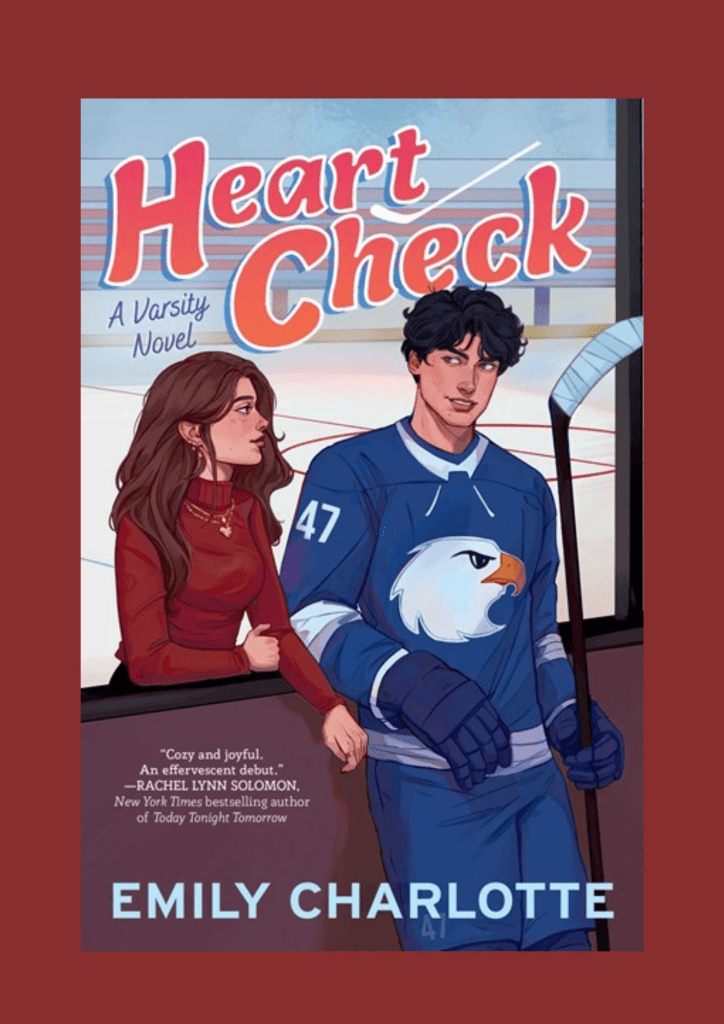
Luke Dawson and Harper Braedon have always been at odds. He’s the town’s hockey darling and she is decidedly not, making a name for herself in handcrafted jewelry and hating on the beloved sport. But the two are stuck working together in the local diner after school, sharing classes, and navigating the ins and outs of their small town. Ahead of an opportunity for a young entrepreneurs grant, their school’s hockey coach is fired for embezzlement and Dawson is partially responsible for starting a rumor that Harper spilled the beans. Now the grant is a no go, and Harper and Dawson are forced into the close proximity they have spent years avoiding—to build something better or be stuck forever on opposing sides. Venture into Hamilton Lakes in Emily Charlotte’s delightful young adult romance Heart Check, a small town coming of age story involving the misperceptions of the heart and all of the quirks in leaving animosity behind for uncertain ground. It has been awhile since I have been so utterly charmed by a story such as this one and lord was I charmed!! Heart Check reeled me in with the hate to love premise and left me feeling empowered and entirely heart-warmed by its end. This novel hits the perfect shot with hilarity (see Dawson having Troy Bolton level anxiety crashouts and Harper losing it over a crush because he signaled before turning (a green flag)) and deep emotion. Exactly what you’d expect of the turbulent high school years. Heart Check is absolutely a romance, but it’s also about two opposites breaking down social barriers to reach mutual understanding—challenging predisposed beliefs and building to something better. Readers won’t just find comfort in the small town wintery-scape of Hamilton Lakes or the romance Charlotte has crafted, but the strength embedded in this community.
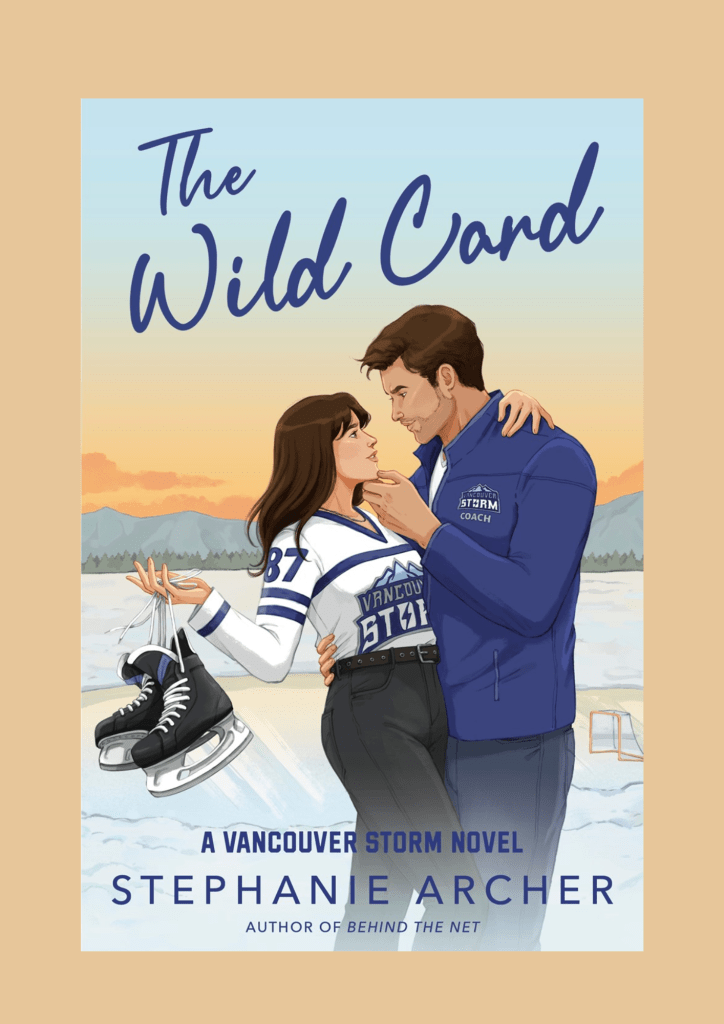
The entire Vancouver Storm team and one feral alley cat: Jordan you need to be with Tate. Jordan Hathaway’s safe space is the Filthy Flamingo, the bar she manages in Vancouver and home away from home for the local hockey team. Behind the bar she can avoid her past failures and the fraught relationship with her father, the owner of the Vancouver Storms team. Breaking that peace is Tate Ward, Vancouver Storm’s coach stuck checking in on Jordan every now and again despite the fact that they cannot stand one another. When her father announces his plans to sell the team Jordan is thrust into the orbit of hockey, her second love and the thing her father chose over family time and time again. A defining choice: to take over the team or let it extinguish right as it is on the brink of making history—something Tate is not willing to let Jordan decide alone. The Wild Card is a hockey romance to end all hockey romances. Seamlessly a hard hitting look at the lives we lead for others and the power that comes from opening ourselves up to authentic connection, it’s a romance fueled by misunderstanding, coffee runs, clothing mishaps, and forgiveness. I’m always going to crave a true hate to love story where we get to crack open the interiority of our characters and pour over the details. Wild Card doesn’t rush headlong into the romance, instead opting to establish our two leads and the issues they have to surmount—earning every single one of its almost five hundred pages. Tate and Jordan are two feral cats at a standoff (which is why it’s even funnier they get roped into coparenting a stray cat together). The Wild Card expertly contrasts the bitterness and grief packaged into a chaotic five foot tall bartender, and a stoic controlled hockey coach trying to hold it all together. Sharp, steamy, and brimming with delicious tension, The Wild Card is not just the best Vancouver Storm novel, it belongs in the hockey romance hall of fame.
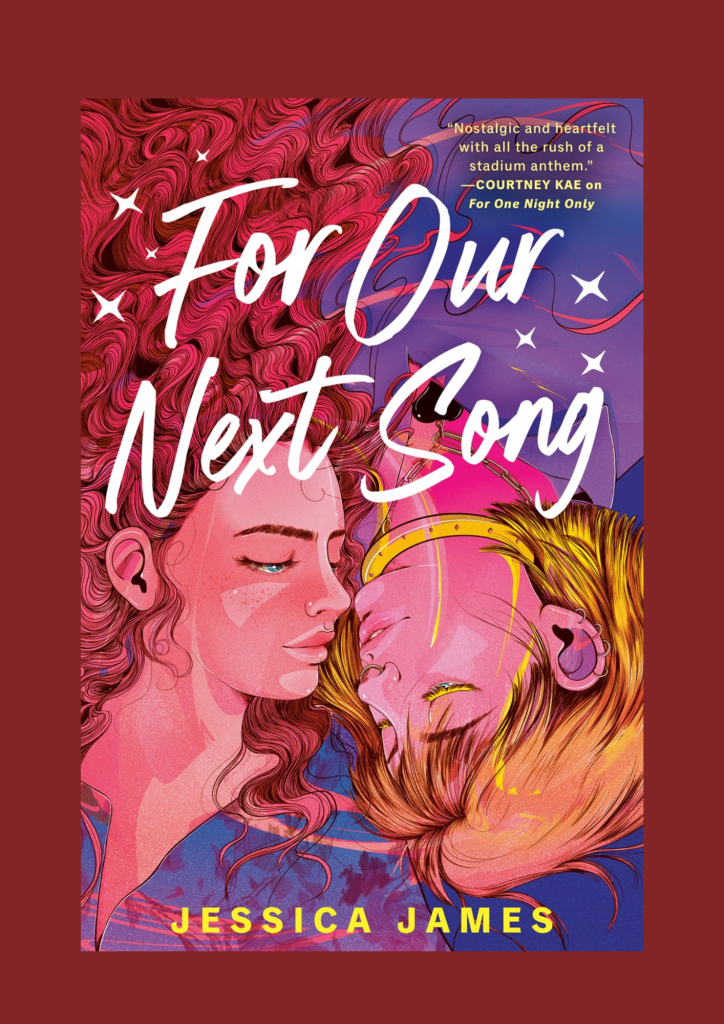
What’s next for your rock band is nothing compared to unresolved feelings for your bandmate. Keyboardist Jane and drummer Keeley have always had a perfect harmony on stage. Off it they are desperate to hide their feelings by a tried and true staple: avoidance. When a chance for collaboration forces both women into close proximity, decades of feeling and attraction come pouring out in the music and the space between them. A forever kind of connection may be in the cards, that is if they can navigate a much larger test through the media and their respective families. Jessica James returns to her acclaimed recently reunited punk pop group the Glitter Bats in For Our Next Song, a sapphic friends to lovers romance all about composing music and the importance in living our authentic truth. A reunited rock group on the brink of a major resurgence is merely the beginning of this romance and much like their comeback it’s only better from there. For Our Next Song is the rock filled sapphic romance we deserve, striking the perfect chord between angsty and romantic like all the best sort of love songs. This her second in the Glitter Bats series, Jessica James strives to connect the history of a band both past and present, a slow burn sapphic romance, breaking away from religious trauma, and the fragility of the media, all of which are executed to perfection. James doesn’t just make you feel for her main characters; she makes you fall in love with the landscape surrounding them—be they writers, fans, industry names, or fellow bandmates. It made me wish I could really kick back to the Glitter Bats and throw support behind these two women (or force them to confront feelings from within the band). Jane and Keeley need that push and the result is electric and heartfelt, a love story well worth cheering on from the crowd or behind the stage.
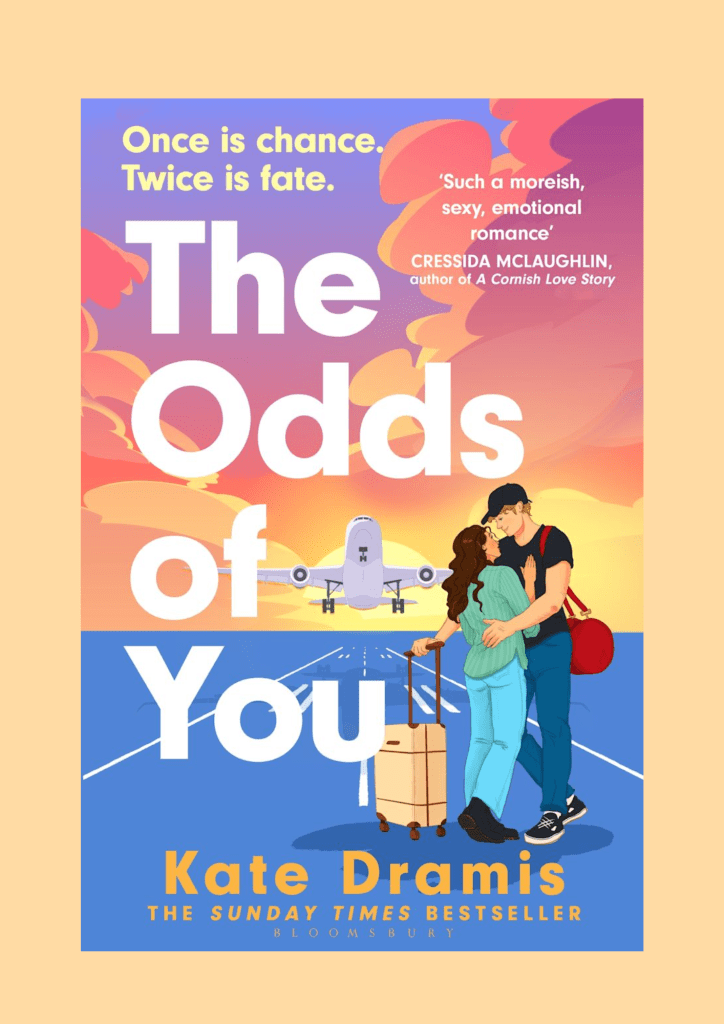
Writer Sage Collins already did the hard thing and bet on herself, quitting her day job after the success of her dystopian series debut. But the hard thing is actually writing its direct sequel, of which Sage has written practically nothing. On a flight to Comic Con Sage is tested further with an overly curious passenger, Theo, who could have been created in a lab just to irritate her. Theo is also a rising star, but instead of books he has made a name for himself in film. After their strange encounter is captured on camera at the airport, rumors spark of a romance between them and squashing them leaves Sage even more on edge—especially considering she and Theo do have a connection. Sparks are one thing but Sage can’t afford to give into her heart, not when she’s still trying to prove that she is worth it, to herself and to everyone else. Kate Dramis’ contemporary romance debut is a stunner, no other way of looking at it. Seamlessly welding the magic of the love story with an unflinching view on perfectionism, familial expectations, and a homage to Nancy Meyers’ The Holiday, The Odds of You is romance novel perfection (entirely the good kind). This novel was written with the perfectionists in mind, or anyone working through the often Sisyphean nature of personal standards. Dramis is here to affirm just how we still deserve epic and loud love stories—not in spite, but because of who we are. The Odds of You has a great kernel of conflict: can we even reach for the love we know is there if we can’t see ourselves as worth anything? The journey out of that is a poignant one. Grounded in expansive locales, sweeping romance, and a breadth of emotion that left me floored, you won’t find a book more representative of the beauty of the romance genre and the power in the modern love story than this one.
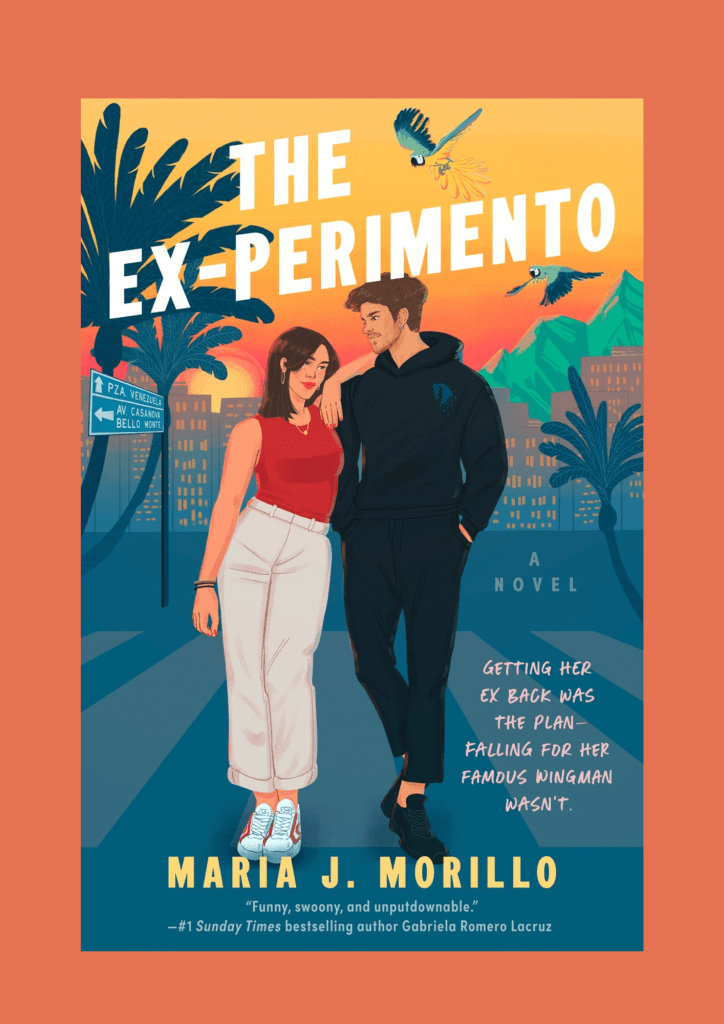
How to Lose a Guy in Ten Days, but it’s trying to win back the man who left you after four years together, all with the help of your favorite indie singer. A breakup gone viral, a firing, and a list to fix it all begins this gorgeous contemporary romance debut from author Maria J. Morillo. Bringing readers to Caracas, Venezuela—the people, cityscapes and serene nature— all while exploring the downfall of living our lives solely for other people, The Ex-Perimento is a romance meant to be lived in. Just like our protagonist Marianto, stuck for so long living life for others, this novel forces the reader to experience the journey of finding oneself when we aren’t trying to be what others expect of us. The Ex-Perimento is a story for the people pleasers who twist themselves into whatever everyone else wants them to be, and the reality of untangling ourselves to uncover exactly who we are. Wrapped up in a quest for discovering how to win back an ex while falling for your wingman, The Ex-Perimento feels classic rom com with a deeper pulse of community and want. Morillo understands the atmosphere of the romance, where the city is almost its own character and the characters struggle against suffocating expectations, finding freedom in the attempt to live their lives differently and the romance which evolves parallel to that. Marianto casting off the desires of others to forge a new path of her own making is an altogether freeing journey, as is her romance with Simón who provides her the space to grow and decide what it is she wants. Tied with a sparkling romance that leans into the slow burn and strong Venezuelan roots, The Ex-Perimento is one debut to live vicariously in and savor endlessly.
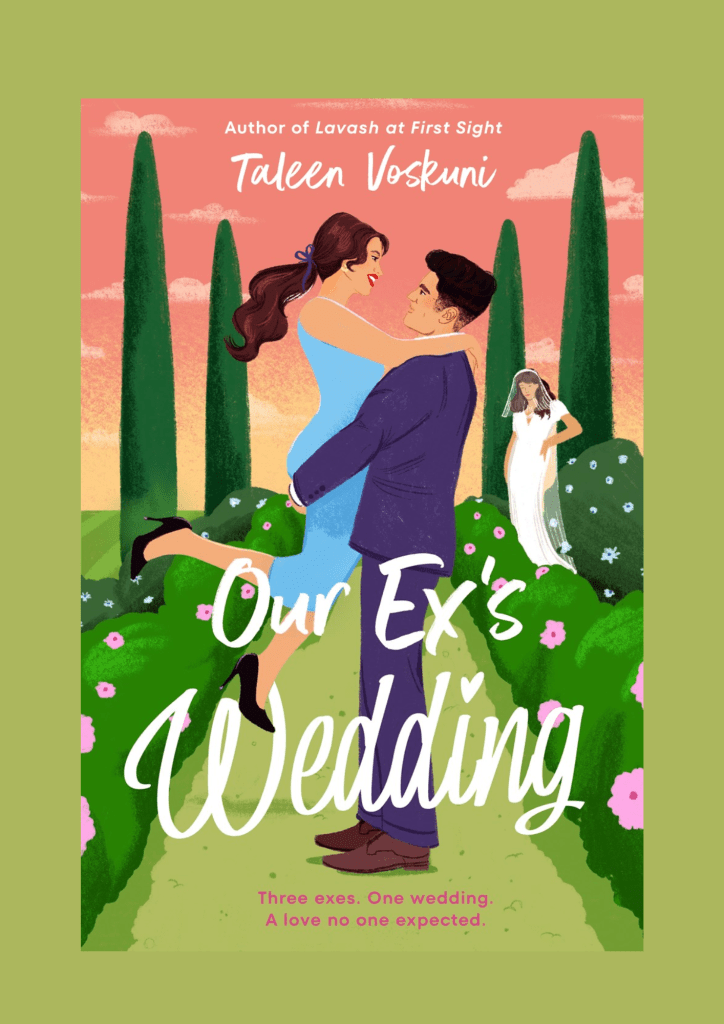
What if we found out not only that we share the same ex but were stuck planning her wedding together. Ani Avakian has two problems: credit card debt from a failed wedding and unresolved feelings for the woman who broke her heart. When she gets the chance to plan the wedding of a lifetime for an indie movie star, Ani joins forces with Raffi Garabedian, notorious playboy and owner of the Armenian winery where the wedding is to be hosted. Her initial annoyance with Raffi is greatly surpassed by the revelation that the indie star’s wife to be is Kami, her ex girlfriend. Pulling off the career making wedding is now more important than ever, but it means putting faith in a man she does not like—someone whose heart was also broken by Kami. Taleen Voskuni unveils her third romance, Our Exes Wedding, rich in backstory, Armenian culture, and wedding planning antics. Two perspectives, Ani: the wedding planner and Raffi: the winery owner face past heartbreak as they attempt to pull off the wedding of the year all while fighting for their respective futures. Taleen Voskuni has a knack for intriguing protagonists and this novel is abundant with the character quirks while evolving a truly fabulous romance. Like the feminist book club Raffi stumbled into entirely by accident that helped him better himself, the whisper network, and the queer entanglements. Our Exes Wedding has the kind of setup that makes for not only an incredible romance but deep character study. Characters Raffi and Ani are simply delightful with a magnetic push and pull that kept my heart racing every time they interacted on page. Ani and Raffi love big and fall hard and with all the internal work their love story feels so earned by the time they get their clients to the altar. Our Exes Wedding is big on the details and unconventional in its setup but it all shapes up a wonderful Armenian romance with a queer twist!
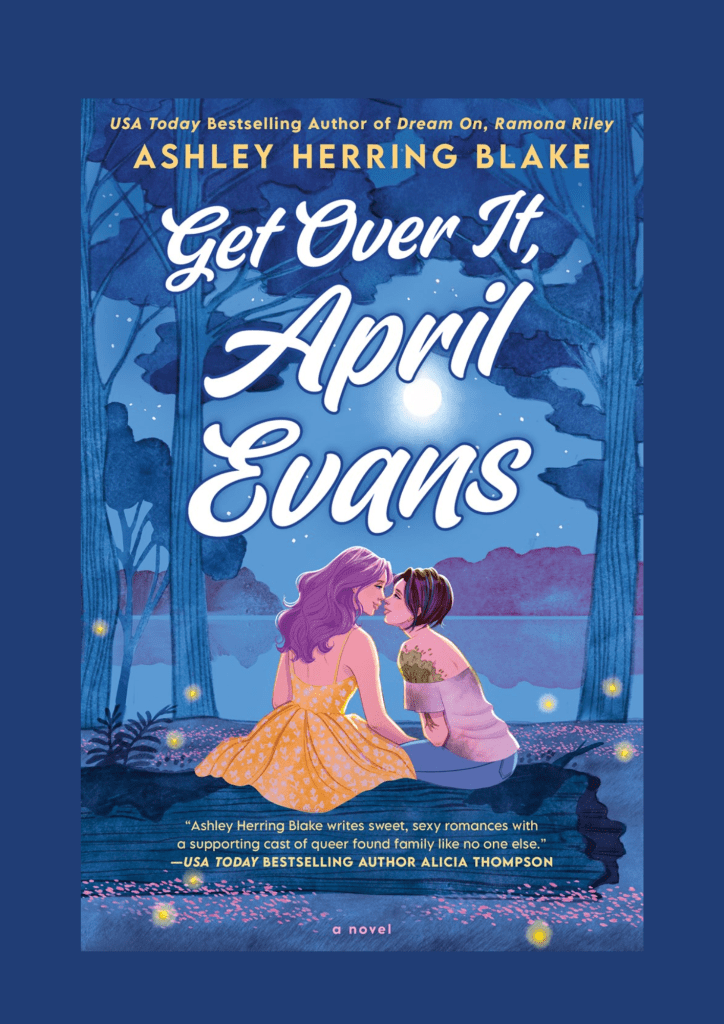
Falling for your exes’ ex while rooming together and teaching a summer art course?? The kind of mess I live for. April Evan’s world is falling apart. Her tattoo business has failed and to make ends meet she’s subletting her house while she’s away for the summer teaching an art course at a nearby resort. But all of these woes are nothing compared to her fiance’s infidelity three years past, when she unceremoniously dumped April for a younger woman. When April arrives at Cloverfield, she’s surprised to learn she’ll be rooming with another member of staff for the duration of the summer—and who should that person be but Daphne Love, the woman her fiance left her for. But Daphne has no idea who April is. Her relationship with Elena is over and done, and the rocky relationship she faces with April in its wake only reveals a forbidden attraction and a chance for them to reach for all the things they’ve been yearning for. Ashley Herring Blake loves mess in her romances and I am just along for the ride. Her latest romance series, Clover Lake, is shaping up to be messy, queer goodness and this latest addition is the imperfect romance we all deserve. Two artists reaching for something bigger, connected by romantic entanglements of the past, serving a bit of “and they were roommates” on a summer art intensive is just the surface of this scintillating romance novel. Since book one I’ve been half starved for April’s story. Our resident tattoo artist lingering upon the past needed her moment and that moment is finally here. Get Over It, April Evans is in large part about the events that shape our lives, and the moment we set them down to rediscover our desires and who we are outside of them. April and Daphne are each on their own distinct journeys, but somehow Ashley Herring Blake is able to draw them together in an incandescent portrait of forgiveness, queer discovery, and an unforgettable New England summer.
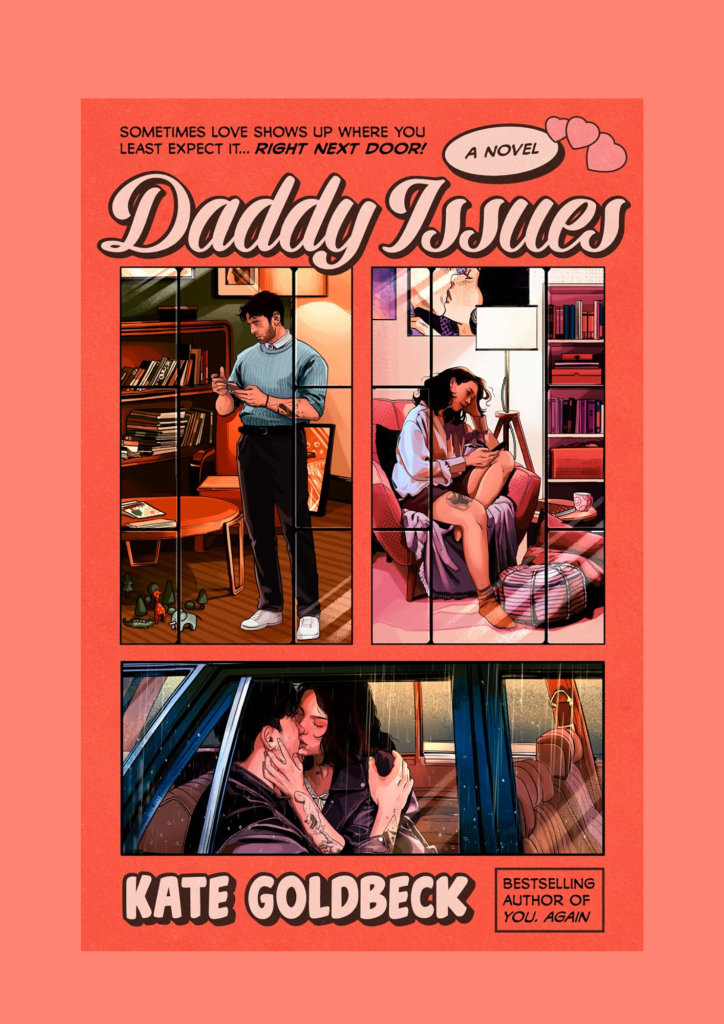
Twenty-six and going nowhere, art history graduate Sam Pulaski has been living at home with her mother since the pandemic. Stuck in a relentless cycle of job hunt purgatory, cynicism, and shame, Sam has accepted her lot in life—at least until she can get accepted into a PhD program and open doors to a job relevant to her field of study. But change cares little for her future plans as her moms upcoming wedding threatens to throw her living situation up in flames. Through all this, Sam makes a connection with her new next door neighbor, Nick, a divorced father, Trekkie, and manager of the local Chilli’s. Their relationship is impossible, a future even more so, but it’s the very thing that has Sam finally reaching for an imperfect future despite her reservations. Kate Goldbeck’s return to the contemporary romance scene is nothing short of iconic. Daddy Issues is an earnest portrait of the mid twenties, perfectionism, and what happens when those who fear failure fail hard. It’s also the perfect novel for anyone feeling lost and aimless in the years following a life altering global pandemic. Mark me down as I’m in this picture and I don’t like it. Daddy Issues portrays this struggle to move forward with such nuance and no loss of humor from Goldbeck, suffusing a comedic core to her sophomore romance. Our heroine Sam is a romance protagonist for modern times, navigating a post pandemic world and the reality that the future she was raised to believe was hers is no longer possible. This loss is a huge part of the narrative, a chasm Sam attempts to cross to a future that feels so far out of reach. Though struggle-ridden and watching a trainwreck-esque, Daddy Issues is fiercely romantic, capital H hot, and endlessly heartfelt. Through all of it Goldbeck has two calls to action: it’s never too late to reach for what you want and moving forward is far better than remaining listless in place.
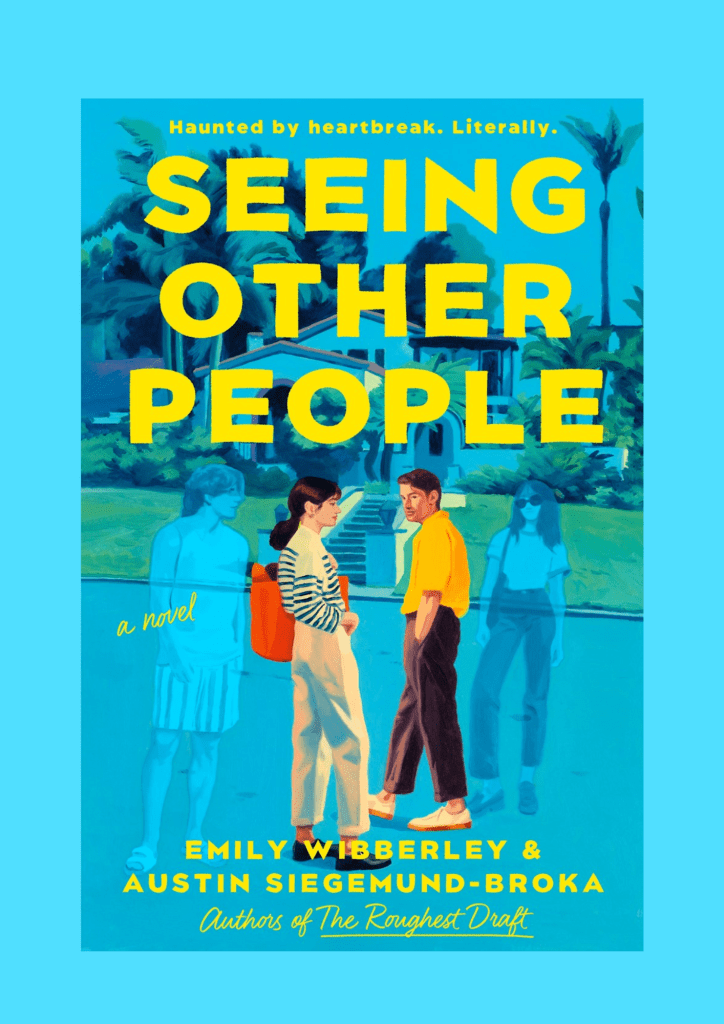
Seeing Other People by Emily Wibberley &Austin Siegemund-Broka
Morgan has a ghostly annoyance in the form of the man she went out with once and he is ruining her life. She would do anything to get rid of him, even venture to a mysterious support group for the haunted. Sawyer has a much different problem: he will do anything to keep his ghost around, even live in a half finished house that has slowly morphed into a haunted one. A chance encounter at the aforementioned support group leaves the two with a plan: Morgan will help Sawyer keep his ghost provided he helps her ditch hers. Excising their respective ghosts is one thing, but uprooting the past will require them admitting the real unfinished business: a chance to love again. Ghosts aren’t the only thing haunting this house in the latest from romance duo Emily Wibberley and Austin Siegemund-Broka. A story about the ghosts we bring with us into our relationships, both the literal and the baggage in tow, Seeing Other People is the kind of love story that both haunts and touches upon the uniquely human aspect of loving: the capacity to grieve. It’s a double edged sword here in this romance where the ghosts are not even haunting the narrative, they’ve got both hands on the wheel. Haunted by a ghost with an appreciation for Carly Rae Jepsen is a blessing not a curse (many would say), but for Morgan Lane her ghost is connected intricately to everything she’s been running from. Sawyer’s is the heartbreaking wave of letting go to move forward after taking the back seat in his own life story. Seeing Other People isn’t just concerned with the possibility of actual ghosts, but in the beautiful moments that spiral out from the connections we make with others—ever expanding in an overwhelming tapestry of compassion and second love.
What happens when you work in a public facing government role and your after hours spent moonlighting as a secret romance novelist comes to light? Lie your way into fake dating the prime minister’s personal bodyguard to turn off the heat (this will have the exact opposite effect actually). The Bodyguard Affair is another sensational romance from author Amy Lea that acts as a window into the complexities surrounding forgiveness, family caregiving, and the vulnerability in sharing yourself with the world through story. And that’s all while serving up a truly fabulous workplace fauxmance. Big on the emotions with that slice of Ontario living and tropetastic feel, this book is a love story entirely of its own caliber. Shelve it all the way up to: a book too good to be real. This is the kind of love story that belongs to both its characters—splitting perspectives between personal assistant/secret romance writer Andi Zeigler and bodyguard Nolan Crosby. Where Nolan is wrestling with his childhood parental abandonment as he cares for his aging mother diagnosed with Alzheimer’s, Andi is stuck behind the wheel of her current career and life path as she chases her true passion: writing romance. Both have their own problems and the solution comes out of the most unconventional means—fake dating your colleague to help them out of a jam (said jam being rumors of an affair with your boss because you wrote a spicy workplace romance in your current field). Amy Lea knows how to bridge immense turmoil to the forefront of her narratives without losing the core of the romance novel. That is The Bodyguard Affair in a nutshell, intimately connected to the work involved in building a partnership out of everyday chaos and the exacting art of loving someone else. It’s wild, it’s messy, but the work of loving will always be worth it—one of the most deliberate acts we can ever undertake.
Ghostwriting was never Katie Caruso’s calling. It’s something she stumbled into after college, but it allowed her to pay the bills and so eight years swiftly rolled past. Writing for Meredith Bradford, a household name in the romance genre was once a huge opportunity but now it has become demanding—especially since Meredith keeps pushing up the timeline for each subsequent manuscript. So much so that her agent wants her to work with a writing partner to get the novel done in a matter of weeks. When her initial writing partner cancels at the last minute, who should be asked to fill the space but Tyler McNally, Katie’s childhood crush and the boy who turned his back on her eight years ago. A trope so classic even she is eyerolling (brother’s best friend), their relationship shattered in the aftermath of her brother’s overdose years after an injury that ended his baseball career. Reluctantly Katie and Tyler agree to work together, if only they agree to focus solely on the task at hand. Funnily enough, that isn’t even the biggest problem: Tyler has never even read or written a romance novel. Months out from deadline, Katie and Tyler attempt to construct a story around a series of tropes selected and spat out by Meredith’s cat (no really). But what is even more jarring is that those tropes are playing out in real time and they are making it impossible for them to ignore the past, insisting Tyler and Katie put down the pen and instead turn the next chapter.
Sometimes love means ghost writing a book for a bestselling romance writer with your former childhood friend while it feels like the tropes are screaming for you to be together—because actually they are. Lauren Okie’s sophomore novel Tropesick is a story for the trope obsessed, those who are anything but sick of their miraculous power in the romance genre. Nailing the grit, hurt, and wondrous feeling of reconnection and second chances, Tropesick is the self aware romance novel needed to navigate modern times and modern loves. Tracing the story down the line from one trope to the next, characters Katie and Tyler expose the past, so broken by it that their only way to reach for each other is through fiction, the tropes and the characters a stepping stone to reconciliation. Between arguing over the absurdity of tropes (which keep playing out in real life), discussing which bathroom cabinetry characters could construct by hand—and rail their love interests against, and using their respective characters to speak through the hurt, Okie’s humor and raw emotion is embodied in her two leads and every trope laden chapter. Tropesick is tropetastic, a novel you will want to live in and forever embody. Where the tension is in the backstory and the tropes are as large as life itself this is the romance novel for every romance reader. Of that I am sure.
Three cheers for slutty little glasses, characters who will do anything but communicate, and messy messy love stories. All of this is the Lauren Okie promise. Her sophomore novel Tropesick is definitively her greatest work to date—something that feels akin to cheating seeing as The Best Worst Thing was a life altering romance of the last year. Aligning a romance within a romance where the tropes are as lifelike as they can be, Tropesick is meta, nuanced fun wrapped up in one romance novel. This is an immaculately constructed romance that understands how tropes go hand in hand with narrative (and the way we can define our own lives through them, writing our own ending before it is lived). Through characters Katie and Tyler, Okie explores the classic second chance, the tropes themselves a roadmap on the journey towards these two not just reconciling but doing the proper work of letting go. Tropesick is the kind of love story deeply connected with the act of creating and the personal nature of writing about our own struggles. Modeling the three act structure of the manuscript our two main characters draft side by side, Tropesick develops its own story within the story even as the narrative pulls focus on the writers themselves. Using their characters to challenge the status quo of their relationship and force the past to present, Katie and Tyler may not even be aware of it, but it is not just the tropes forcing the issue but very much themselves.
Not even going to lie, this may be the romance novel to end all romance novels. I mean there are lines from Tropesick that have played on a loop in my head for days after reading (I’m looking at you line from the third act involving the word “humiliating”). I love how many feelings I oscillated through on my Tropesick reading journey: pain, elation, shock, hope, and happiness—oftentimes a mix of all five. This is truly an example of how much romance can tap into our humanity and nail differing tones and themes across a single novel. That’s partly why Lauren Okie deserves all the flowers, but even more so her innate pulse on the genre and how to play with its conventions using tropes as the foundation. Tropesick achieves a level of self awareness unrivaled in the modern love story, so on the nose it can be considered nothing short of genius. Including a green flag of a man (heavily tattooed, regretful, reads the books you assign him) Lauren Okie truly understands what romance readers want even if it is something they don’t expect. Beginning with a truly horrifying ordeal—an imminent deadline, Tropesick details a second chance, a love worth reaching for if its two leads can just lay waste to their ghosts and finally accept the hardest thing ever: the possibility of happiness. Count me in as not tired of tropes in romance novels, especially when they are as cleverly applied as this one.
Thank you to Michelle and Avon books for sending me an advance review copy.
Trigger warnings: Drug overdose, addiction, drug abuse, drug use, death of a family member, grief, emotional neglect, parental abandonment
Kowloon is a city of ghosts. For a girl with no memories washed up upon the shore, it presents an opportunity for a rebirth. Mercy Chan has a unique ability: not only can she see ghosts, she can commune with the dead and allow them to move towards the afterlife—a rare talent coveted by those who make Kowloon Walled City their home. For decades Mercy has worked as a ghost talker of sorts in connection with the Kowloon triad. She spends her days communicating with the ghosts who linger, usually the angry and wronged, bringing justice to their afterlife and to the city itself. But something darker lurks in the shadowed spaces, luring citizens to their watery deaths and speaking to Mercy through the bodies of the departed. With a proposal to demolish Kowloon up next on the docket, a serial killing spree could be what allows the legislation to pass. Even more sinister, this killer appears to have a personal connection to Mercy and is intent on drawing her close to their crimes almost as if in retaliation for something. The answer lies deep in the past in memories Mercy is unable to access. As Mercy follows closer and closer to this ghost, the less she can deny that the vicious spirit is on a quest for revenge and the object of its ire: Mercy herself.
A ghost-talker confronts her missing past and the ghosts that linger in Sunyi Dean’s historical gothic feat, The Girl with a Thousand Faces. It feels like eons since I first discovered Sunyi Dean and drifting back into her work feels as languorous as a cat taking a long stretch in the sun—entirely out of sorts with the actual tone of Dean’s sophomore novel: a historical gothic fantasy all about ghosts and the cycles we perpetuate. The Girl with a Thousand Faces is as cutthroat as the ghosts left to steep in sadness, anger, and regret. At the helm, Mercy Chan, a fifty something ghost talker with a mysterious past facing down a ghostly killer intent on forcing her to confront her own forgotten ghosts. The Girl with a Thousand Faces makes the reader into a kind of specter, wandering Kowloon Walled City alongside Mercy as she unravels the past. Dragged down deep into waters ancient and strange, Sunyi Dean weaves a startling narrative that will have you questioning the true villains, be they paranormal or man made. Vindictive ghosts are one thing, but Dean’s true talent lies in her glimpse into the real horror beneath, the devastations of war, grief, and generational traumas—with everything a cost of ignoring that pain. Brave this strange ghostly saga and whatever you do don’t look down.
The Girl with a Thousand Faces is a bit of a genre-bend, equal parts historical, fantasy, and gothic that begins to take shape through the unique setting of Kowloon Walled City. Setting is everything within a gothic novel and Kowloon, a city of ghosts (both human and paranormal), could not be more perfect for the story Dean constructs. Right away you can feel the claustrophobic nature of this densely packed city, a community of humans and ghosts that is home despite efforts to demolish it post-war. Kowloon is very much a city that reflects the pain that cannot be buried, of real people attempting to make a living after enduring the horror of the second World War. It makes sense then that ghosts have congregated within its boundaries and have continued to flourish even in the decades following. In a city rife with ghosts, Sunyi Dean questions what are the real ghosts—are they the literal phantoms and wraiths clinging to life, or do they represent a darker part of our humanity that we refuse to examine and excise. The Girl with a Thousand Faces presents an interesting duality in its perspectives, both ghost and human, to interrogate not just this essential question but how ghosts themselves come to be.
Much of what makes this book so hard hitting is the humanity underlying the horror. That we create our own ghosts which follow us and our descendents is far more horrific than the literal ghosts appearing within the narrative at times. There is a grief that comes alongside knowing this, in understanding that Mercy’s story is the result of pain endured by her family and a suffering that was never addressed generations prior. Relationships between sisters, mothers, aunts, and nieces, are all part of this delicate tapestry and a pain that went unanswered. These relationships are the beating heart of The Girl with a Thousand Faces and the nuance in depicting motherhood, specifically the relationship between mother and daughter were some of my favorite parts of the novel. Siu Yin and her mother, dancing and swimming with ghosts rather than reaching for each other in hard times, cogs in a relentless cycle that initially appears impenetrable. Throughout this complex web, Dean underpins the staggering traumas of war and colonialism which shape us and those who come after. In the aftermath, sometimes the pain caused is too great and by trying to hide it we cause more, leading to further tragedy. The Girl with a Thousand Faces knows the work of grieving and moving forward is a heavy burden, but it is essential work and part of freeing our own inner ghosts.
The Girl with a Thousand faces is the best thing a book can be: clever and horrifying as hell. While it has been some time between Sunyi Dean’s debut, The Book Eaters, and her sophomore novel, I would wait twice as long if it means she can keep delivering books such as this one. The Girl with a Thousand Faces is certainly one of the most interesting historical novels I have ever read. A ghostly jaunt through a post World War Two Hong Kong—specifically Kowloon Walled City—as Dean examines what makes a ghost and what it takes to truly reconcile them. The Girl with a Thousand Faces nails all the bittersweet facets of forgiveness and how essential it is to breaking the cycle of grief and trauma. Not without its heartbreaking moments through others who did not have the language to do the work of grieving, instead languishing in that pain and trauma and never fully surfacing. Though horrific, grief ridden, and painful at times, there is a tremendous joy found in breaking the cycle, in doing the hard work of reconciliation. Certainly not an easy path but one that is worth the work. Sunyi Dean doesn’t deny that we don’t always get the answers we’ve been longing for, craving an understanding from our family members who are long gone, never there to give us greater context. Those can be ghosts too, following us ever long even as the cycle is rented in two. Haunting yes, but fiercely hopeful, The Girl with a Thousand Faces asks us to trust in the haunted and dare to sink knowing we will eventually surface—if we can just make that leap.
Thank you to Edelweiss and the publisher for providing the advance review copy.
Trigger warnings: violence, murder, depression, death of a parent, grief, war, mass death