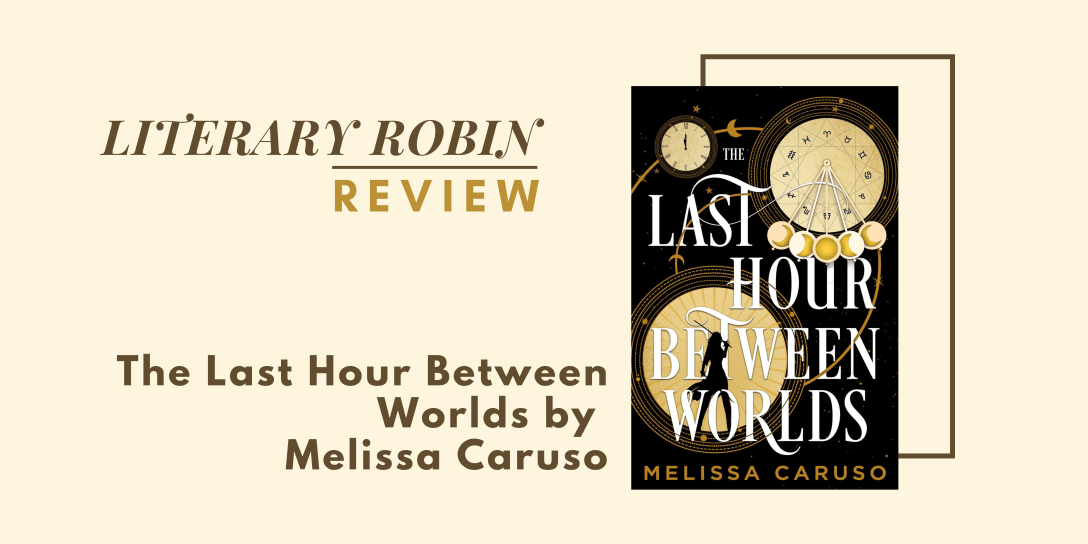
Review: The Last Hour Between Worlds by Melissa Caruso

Rating: 5 out of 5.

Kembral Thorne never imagined that a turn of the new year party, her first outing since childbirth, would throw her back into the action she had been desperately trying to avoid. A member of the Guild of Hounds, Kembral’s job is to leave the prime reality and enter echoes, layers of reality beneath our own, to rescue those unluckily enough to fall through. Just as the clock strikes nine Kembral bears witness to a poisoning that leaves most of the party guests dead, but before she has time to comprehend the murders she and everyone at the manor enter an echo, one plane of reality beneath their own. Everyone is alive and well, but unable to tell they are in an echo, all except Kembral. The only other privy to this sinister shift is Rika Nonesuch, notorious thief, and master illusionist, Kembral’s rival and greatest mistake. Rika’s skills are undeniable, and together they piece that an echo relic is to blame for sending them down from the prime reality, the grandfather clock ringing out the hour. The first echo is only the beginning. At the end of each hour, a horrific murder takes place by strange figures just before they are sent down into the next plane of reality, and time resets. Growing ever enlightened to their strange circumstances, Kembral and Rika will risk everything, even their uncertain future together, to unmask the real players and reset their world before their violent reality turns permanent.

A turn of the New Year party brings on the intrigue and mystery in The Last Hour Between Worlds – a startlingly layered series debut that disentangles a campy, sinister locked room murder mystery spanning twelve different layers of reality. Featuring a postpartum agent on leave trying to stop the murders and a sapphic cat-and-mouse game between two rivals who team up to solve the case, Caruso’s latest is an ambitious cocktail with ever-changing flavors, all of which remained entrenched in my memory long after I finished reading. Caruso plunges her characters into alternate realities that grow more and more bizarre, as she untangles her complicated web of humans, echoes, and empyreans playing a dangerous game to decide the fate of the upcoming year. With twelve new realities to wade through before the game is up, The Last Hours Between Worlds introduces a new kind of fantasy mystery that completely rewrites the possibilities of its genres and the types of protagonists featured at their center. 

Wading into Melissa Caruso’s fantasy murder mystery set over twelve warped realities folding into alignment was as mind-bending as these phantasmagorical realities themselves. Set on the eve of The Crux Year, the party brought into focus could not be more unusual, apparent by the bloodshed commencing on the prime reality and dragging down beneath the echoes. As different planes of reality converge whoever makes a kill on that reality binds it to the one preceding, and the person with the most blood spilled at the twelfth and final layer of reality can dictate the outcome of the new year. Kembral Thorne, mother and fierce member of the Guild of Hounds steps into the role of unmasking the true players of the game, from the iridescent beetles swarming the house, to the mysterious masked attendants, and a horned being of pure chaos who shows up to doll out violence according to birth moon. Not all players are inhuman, from the corrupt politician directly responsible for kidnapping Echoborne children, to his spirited adversary, or the host of the evening who willingly brought the echo relic into her home – the clock driving them ever deeper into the echo planes. Superimposing a series of ever-bending realities, Caruso manages to unveil her true purpose as her characters encounter increasing violence and investigate the corruption at the heart of their evening and the motivations of all.

The Last Hour Between Worlds is a revelation in so many different ways, but largely in its central protagonist Kembral – a new mom encountering the challenge of balancing her role in motherhood and her career within the Guild of Hounds. Both are fulfilling in their own unique way but marrying the two seems impossible. Her current situation seems to prove that all the more. As she struggles to balance her diverging worlds Kembral is quite literally thrust down into ever bizarre imitations of her world where she steps back into her former shoes and learns just how she can find harmony. Like layers of a cake all with astonishingly different flavors, the echoes shift – one entangling the house in jungle vines, another an insipid rot, to a lake of blood running throughout the house lapping at our characters’ heels. Caruso attaches these layers to her mystery and everything revealed within the repeat of a single hour. Staving off reaching the twelfth and final layer, Kembral uses her talents as a Hound to untangle the truth connected to the heart of the Crux Year and the relationship with her rival Rika. The reveals to the motivations of our cast and to the true players of the game were completely illuminating, as humanity becomes a playing field and our characters puppets for the machinations of empyreans and the echo beings beneath the prime reality.

Melissa Caruso has left me completely stupefied by this inventive series debut. Playing on the traditions of Agatha Christie and the investigative duo, but integrating concepts of the multiverse and centering queer characters, Caruso puts her own stamp on the classic whodunit and the fantasy mystery crossover. Impressive in its magnitude, The Last Hour Between Worlds is a groundbreaking beginning emboldened by what is sure to be a boundary-spanning series. I’m so impressed by the twists that didn’t lose their punch and how deeply layered this managed to be. I was put through all the emotions from start to finish and though I can’t easily encapsulate the full experience of reading The Last Hour Between Worlds, it is truly brilliant and deserves to be read by everyone this November and beyond.

Thank you to Netgalley and the publisher for providing this advance copy in exchange for an honest review.

Trigger warnings: blood, murder, death

Buy a Copy:

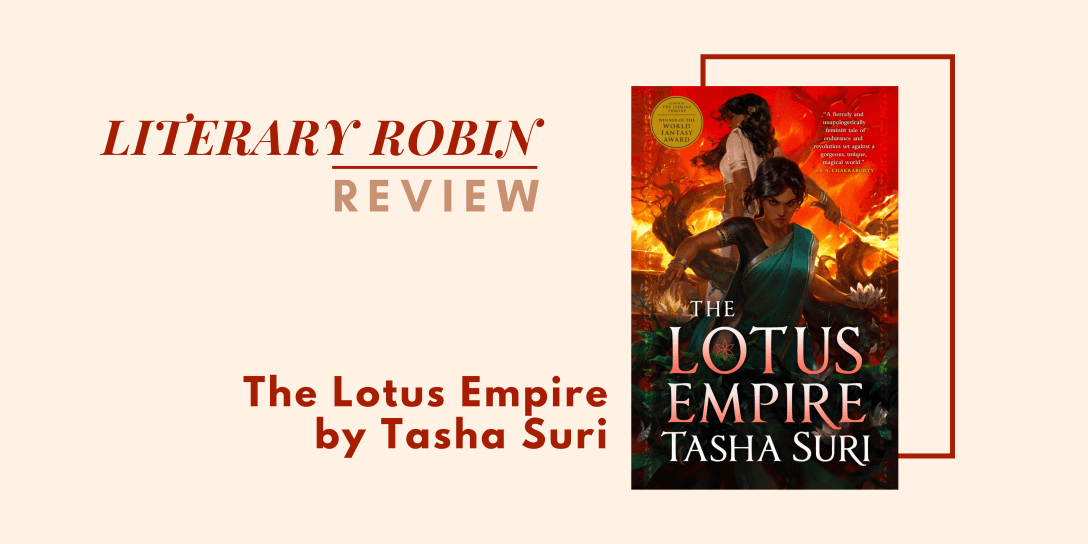
Review: The Lotus Empire by Tasha Suri

Rating: 5 out of 5.

Malini has fulfilled the prophecy of the nameless gods, crowning herself empress of Parijatdvipa. Yet she will not take it further from the throne to the pyre, decrying the unnecessary sacrifice of the women who burned before her. Back in Ahiranya, war looms. After thrice surviving the deathless waters, Priya thought there would be no consequences for the power simmering beneath her skin. Driven to betray her love, Priya walks a dangerous path against the Yaksa who unveil a plot that will further transform her world. Beneath the deathless waters lies the powerful Yaksa, Mani Ara, who instills faith in Priya, but whose support comes with an irreversible consequence, Priya herself. Led far away from her sister and home, Bhumika is without her memories, her connection to her powers and the Yaksa irrevocably severed. On a path to learn how to destroy their subjugators, Bhumika and Jeevan evade their pursuers by hiding out in small towns desperate to learn information that could turn the tide in this war. Set against an enemy ancient and powerful, three women torn apart by fate and their respective roles must reconcile or see the destruction of their kingdoms and the entire world.

The Lotus Empire is the third and final installment in the Burning Kingdoms trilogy, tethering three women across kingdoms against a grave threat that will further transform their already unstable world. Tasha Suri sets Parijatdvipa alight with further consequences as Malini, now empress, stands against the priesthood and taking to the pyre – the ultimate sacrifice, and Priya and Bhumika rage against the control of the Yaksa who have now taken over Ahiranya with sights set beyond its borders. Though old enemies have been ousted, a new fight is on the rise. Drawn outward like a flower in bloom, The Lotus Empire unfolds a deadly approach to the war with the Yaksa and the true cost of defining the future of an empire. Tasha Suri leaves no hold barred in this astounding series finale that tests the depth of our characters’ loyalty and the paths they will walk to reverse the hold of an unknowable enemy on their world. Its breadth of perspective and world scope increasing steadily outward as the stakes only intensify, The Lotus Empire challenges not just its former two books but how one rounds out an epic fantasy trilogy. 

Before I sank into the treacherous waters of The Lotus Empire I decided to double back and read through the Burning Kingdoms trilogy in its entirety – quite possibly the best decision I could have made considering just how much I had forgotten from my initial read-through of this series. Witnessing the seeds of the plot unfurling over books one to three was so rewarding and made this finale all the better. The Lotus Empire brings more to the world stage with our three characters scattered to the winds, but slowly unifying against the fight to come. The character arcs given to Priya, Malini, and Bhumika across this final act are my favorite in the trilogy – Malini, desperate to hold fast to her position as empress and facing an alien enemy, Priya at a crossroads with a power that could save her people that comes at the expense of her autonomy, and Bhumika without her core memories on a path to destroy the Yaksa. The way these three narratives intersect and twine throughout the book is sheer perfection and it’s some of Suri’s best plotting so far. Tasha Suri uncovers the depth of the deception of the Yaksa, promising a better world that can only be accomplished through bloodshed and subjugation. Through Priya’s experiences and those working to find a weapon to use against them, The Lotus Empire elevates the history of the Yaksa and the Age of Flowers. Some of my favorite parts of this series have been the intricate histories and cultures, the past hidden from view, and that being unveiled after two books was just nothing short of spectacular. The revelation that the Yaksa fled their homeworld because of violence, making their way to Parijatdvipa where they place that burden of war and violence upon its peoples was a necessary tie-through for this novel’s exploration into empire and its roots. 

After attempting to excise Malini from her heart in exchange for her safety and the aid of the Yaksa, Priya confronts her decisions and the truth of what the Yaksa truly desire. Going into this finale I had no idea how Suri was going to reconcile Priya and Malini after the events that concluded The Oleander Sword, only that it was going to be extraordinarily painful, and I had the right idea. Within her decision to turn away from the pyre, Malini grasps all the power she can and wields a weapon that could save her former lover and kingdom, and hold back the threat of the Yaksa. But all power comes at a price, one that Malini must weigh against crown politics and her intricate alliances. Though she went to such painful lengths to walk away from Malini at the end of The Oleander Sword, there’s a shift in equilibrium, with Priya walking into Malini’s orbit to save herself, ultimately casting off the protection the Yaksa granted those in Ahiranya. The callbacks to the wedding garlands with the gold necklace Malini uses to tether Priya away from the Yaksa’s influence was exactly the kind of pain I expected from Suri. But Priya accepts this willingly and reconciles how she went about saving Malini from the wrath promised by Mani Ara before her betrayal. That Priya views her betrayal as an extraordinary act of love because she was saving Malini and she would walk that painful path again even knowing where they are now completely shatters my heart. From dream sequences to confrontations, Tasha Suri ramps up the tension between these two, culminating in a send-off that feels fitting to their characters but no less devastating.

The Lotus Empire is a brilliant blossom of wrath and enduring love set ablaze in a final fight over Parijatdvipa’s future. Full of rage and unbridled determination, The Lotus Empire is a testament to Suri’s craft and everything her characters have fought so hard for, clawing their way toward a future of their own design. With her signature chapters jumping between our core three characters and other side perspectives providing necessary contexts, Suri brings an ending to fruition that honors the entire journey across this trilogy. There’s plenty of sapphic yearning, epic fight scenes, and emotional endings to cling to and leave you completely bereft by the end of this final chapter. This finale was everything I was hoping for and The Burning Kingdoms trilogy as a whole is some of the best in fantasy and deserves all of its flowers. Tasha Suri is an absolute legend and I need everyone to bear witness to her talent with this life-changing conclusion.

Thank you to Edelweiss and Orbit Books for providing the advance copy in exchange for an honest review.

Trigger warnings: blood, death, violence

Buy a Copy:

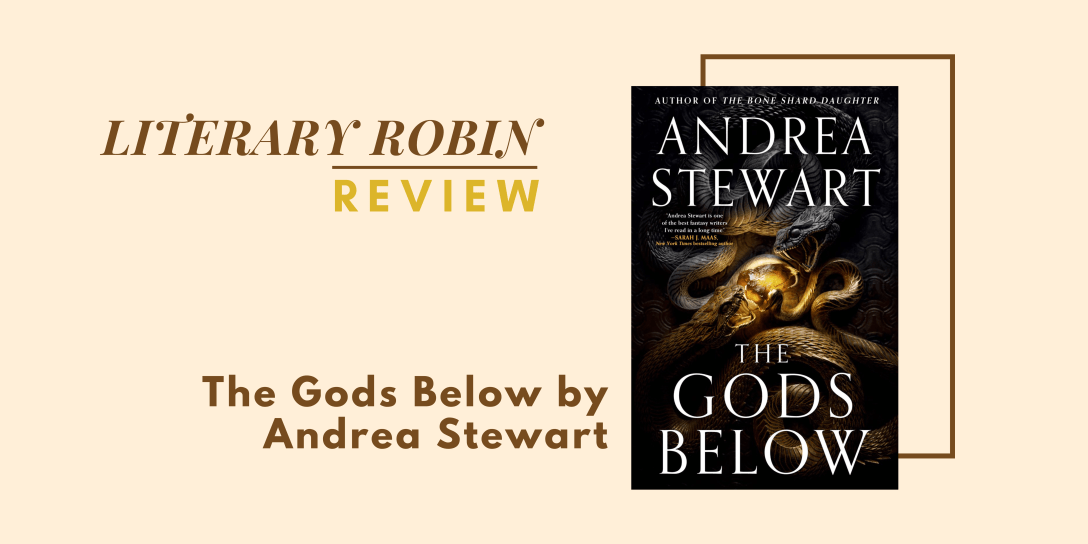
Review: The Gods Below by Andrea Stewart

Rating: 4 out of 5.

Before the Shattering the world was magic. Then humanity leeched the nutrients out of the world to harness the magical properties of the Numinar trees and in the wake of the smoke and death, one man bargained with a god. There were once many gods, those who emerged into the world from the depths below to thrive under the trees. That all changed in the aftermath of destruction when Tolemne braved the dangerous aether below to take an audience with the god, Kluehnn, to restore a broken world. Kluehnn agreed to restore the world to what it once was, but the price would be as steep as the act itself and would enact an indefinite debt upon countless lives. As Kluehnn restored the world piece by piece half of the citizens would be wiped out and the other half would be transformed into new forms. Years after escaping restoration, Hakara, a miner, is sent down into the depths of the earth to harvest god’s gems, tithes for the god Kluehnn. During a dangerous rappel, Hakara accidentally swallows a gem and realizes she can harness its magic and the power of the gods themselves. In the wake of this news, four individuals are set on a path to break free a world built in service to a dark god.

The Gods Below is a fierce and ambitious series starter from fantasy author Andrea Stewart with alluring depths you could wander aimlessly into if not for her skillful story weaving. Stewart is a fearless guide, switching between a young woman who will do everything to right the past, her sister who must fight to survive in a restored world, the daughter of an outcasted clan seeking to restore her family in the Sovereign’s good graces, and her cousin who braves the depths of aether below to follow in the great Tolemne’s footsteps. In a world that bears the consequences of humanity’s greed, Stewart highlights the power of the exploited to harness the abilities of gods. 

There’s a lot packed into The Gods Below, four competing perspectives and intricate worldbuilding vie for attention across this first installment. Andrea Stewart is one author I trust to bring it all together. With her signature knack for delivering steadfast but flawed characters, Stewart introduces a climate ravaged by greed and the power struggle that emerged in the aftermath of a decimated world. From refugees desperately fleeing their restored homelands, to those left behind to either die or become something other, Stewart shows how these power systems do not discriminate. Firming up this view is Hakara, a young woman who fled her country with her sister Rasha before restoration could take them, and a painful separation that happened after a failed border crossing. Two sisters separated by borders who diverge further and further in their experiences, and two cousins fighting for a different world take the center stage in this inventive new trilogy. In deep caves lie many secrets, like the god’s gems that are the key to harnessing a power to destroy their godly oppressor. Hakara is the bridge into this strange new power and the hidden rebellion movement fighting back against Kluehnn and the next wave of restorations. The rebellion focus was by far my favorite portion of the story, fully realized with layered plotting and relationships. The relationship between Thassir and Hakara was an interesting mirror reflecting two individuals drawn into a conflict they didn’t intend to be a part of initially to suit their own ends. I love a good reluctant allies to lovers storyline and Thassir and Hakara were serving that so hard. Thassir’s backstory and that twist at the end is what propels this story toward what is sure to be hard hitting sequel. In a world riddled with ash and smoke, Andrea Stewart brings together characters with competing worldviews and motivations to rebel against an ancient power. The Gods Below features strange magic, cute cats, and a group of determined characters who bear the brunt of the mistakes of generations past and the ability to fight for a better world.

Thank you to Netgalley and the publisher for providing this arc in exchange for an honest review.

Trigger warnings: death, murder, violence

Buy a Copy:

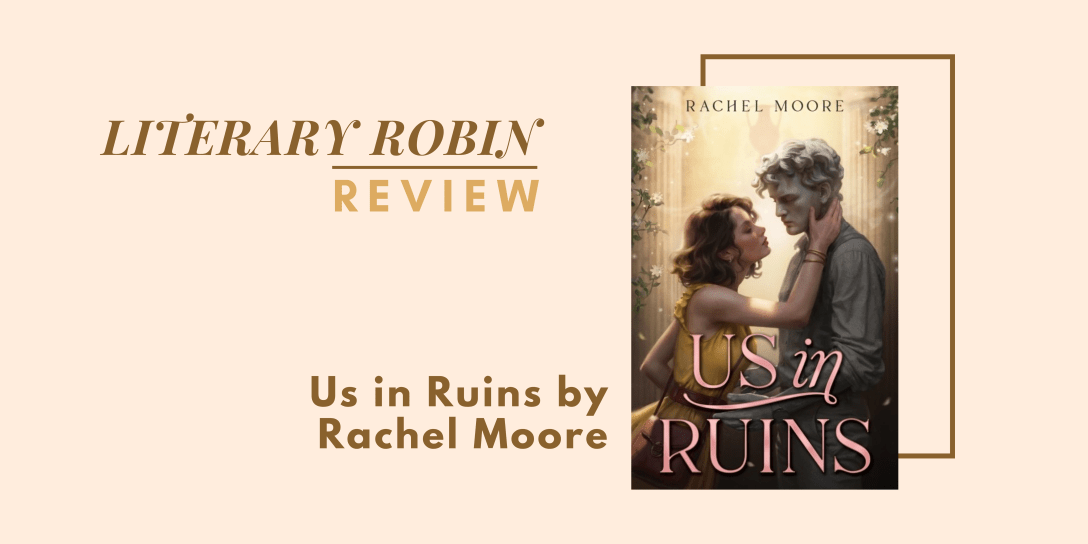
Review: Us in Ruins by Rachel Moore

Rating: 5 out of 5.

Margot Rhodes, current high schooler and jack of all trades has never found a skill that she couldn’t hack, and then inevitably discard. But her latest foray into archeology may have taken it a smidge too far. After scheming her way onto a school archaeological trip to Italy while lacking all the necessary skills, Margot plans on following in the footsteps of Van Keane a teenage explorer from 1932 who mysteriously disappeared on the hunt for a mythical artifact. The Vase of Venus Aurelia has long been believed to hold tremendous power, but it hasn’t been seen in almost a century. Luckily, explorer Van Kean left behind a journal, and examining the last tie to this missing boy could help unite the vase. Walking in his footsteps one evening Margot finds herself in a room with an incredibly lifelike statue of Van Keane which then comes to life. The real-life Van Keane is the opposite of the romanticized version Margot had manifested in her head, prickly and driven by a sharp determination to right the wrong of a century ago. Margot and Van begrudgingly agree to team up to find the missing shards and restore the past to right. Spread out across Italy and guarded by intense challenges, the quest for the shards and the treasure won’t be easy and may come at the cost of their own hearts.

Falling in love with the statue you brought back to life while searching for the shards of a missing artifact that may grant you your heart’s greatest desire? It’s more likely than you think. Rachel Moore’s sophomore novel is for anyone who loves The Mummy, high-stakes adventures, and romance novels, all wrapped in an incandescent Italian summer. Margot Rhodes, A high schooler known to try everything and commit to nothing, schemes her way onto her school’s archaeological trip to Pompeii but gets more than she bargained for when she accidentally ignites an age-old search for the mythical Vase of Venus Aurelia. As a lover of romantic adventures, Moore is the author I’ve been waiting for. Us in Ruins brings together some of my favorite things across history, romance, and myth in one young adult standalone.

Us in Ruins follows the formulaic narrative for an adventure romance while carving out new paths for its two main characters. Framed in the architecture of Italy and its history, Us in Ruins centers on an unlikely partnership between soft-hearted Margot and stubborn former statue and explorer Van Keane, overshadowed by moments of yearning and keen understanding. I needed a fun romantic adventure in my life and this absolutely nailed that, while serving an unexpected amount of angst. Margot Rhodes, our protagonist, is searching for meaning in any way that she can after her mom left in search of bigger and better things. Pouring over Relics of the Heart, an adventure romance her mother left behind gives Margot inflated ideas of adventure and a love story of her own. The search for the shards of the Vase of Venus Aurelia and her grumpy companion in this endeavor ironically shatters those notions. Moore suffuses that classic grumpy sunshine pairing but in an adventure setting where their competing personalities could stand in the way of the treasure. I love how Moore developed trust between these two. Van may be the first person to see the real Margot lingering under the surface and he ultimately realizes that he judged her unfairly. Margot is a kind person who aches for love and affection from those she most cares for. She twists herself inside out time and time again to be something different, to be someone worthy of love – as if the person she was before her mom left wasn’t good enough. Moore highlights how misguided this is while an entirely different love story blossoms all on its own. Us In Ruins is for the people who want too much but don’t know how to reach for it, who are so scared of disappointment that they never settle for just one thing — who ultimately find solace in the love that they never expected to be granted. In her latest, Rachel Moore expertly balances adventure, cleverness, and heart, as two complete opposites realize the real quest might be winning over the other completely.

Thank you to Edelweiss and the publisher for providing this arc in exchange for an honest review.

Trigger warnings: parental abandonment, violence

Buy a Copy:

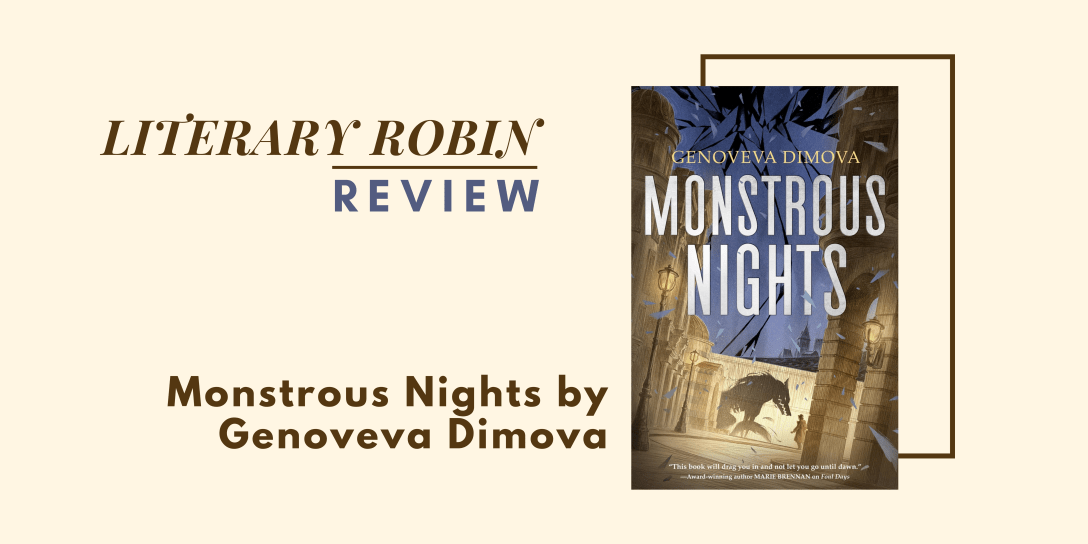
Review: Monstrous Nights by Genoveva Dimova

Rating: 5 out of 5.

Kosara has reclaimed her shadow and her magic, returning peace to Chernograd. Her Ex, The Zsar of Monsters, has been successfully entrapped within the magical barrier separating Chernograd from Belograd and citizens can now freely travel between the two cities. All is as it should be, but Kosara cannot shake the feeling that something isn’t as it seems. She hears the Zmey reaching for her in her dreams and monsters that should have been banished have found their way back into Chernograd. She has not seen Detective Asen since they parted ways after their quest, but now powerful witches are turning up dead and the barrier between the living world and the one of monsters is fracturing and it might be their fault. Asen follows his own leads with the murders despite his superiors directing otherwise and finds himself back in Chernograd where he and Kosara join forces to uproot the truth. Kosara and Asen follow the clues and the bodies and uncover just how complicit they are in the state of current affairs.

If you’ve ever finished a book and wondered what happened to the central characters after they defeated evil, Genoveva Dimova reveals that it’s not so glamorous. Asen and Kosara successfully managed to trap the Zmey in the wall, but after a series of murders primarily targeting witches begin to surface they are soon dragged back into their last job and the ghosts that refused to stay buried. There are no confessed feelings or happily ever afters in store for these two and avoiding one another is impossible what with a bloodthirsty witch killer on the loose. Dimova brings on the slow-burn romance, monster pets, and delightful schemes to round out her Witch’s Compendium of Monsters duology.

If Foul Days is an adventurous mystery set alight with Slavik monsters, Monstrous Nights is its dark and violent sister that underpins the events of the first novel to bring further evil crashing down onto Chernograd. Everything rests on Kosara’s shoulders since she defeated the Zsar of Monsters and established herself as a source of strength in her community. Kosara harnesses tremendous power not only after her bout with the Zmey but with the twelve witch shadows now in her possession. Their presence threatens to change her completely as every passing spell alters her appearance at great personal cost. Meanwhile, Asen denies his connection to Kosara as he ruthlessly tracks the smuggler Konstantin Karaivanov, the man responsible for killing his wife several years ago. Monstrous Nights is my favorite kind of sequel, maintaining the humor but pulling apart the issues initially framed within Foul Days. Kosara and Asen are two people who just want to rest, read some romance novels, and continue to deny their feelings for each other, but they keep getting interrupted by the most absurd things imaginable. One thing I thoroughly enjoyed was the development with Asen and his Varkolak transformation. Dimova has previously featured monsters as characters but there had yet to be any kind of monstrous transformation among the main cast. As Asen adapts to his Varkolak side, he meets others like him in Chernograd, now his home as monsters cannot pass through the wall into Belograd. The Varkolak romance book club had me laughing and Asen getting way too into A Night of Passion With the Upir Lord was so adorable and unfortunately very on brand for him. The niche communities and personal moments are given much more time to evolve in Monstrous Nights as Kosara and Asen work to build peace on their terms. This sequel is just so good all around. Its protagonists weighed down by the past and guilt when all they want is to rest, Monstrous Nights is a thoroughly rewarding conclusion to a duology formed by magic and empowered by community.

Thank you to Edelweiss and the publisher for providing this advance copy.

Trigger warnings: blood, violence, murder

Buy a Copy:

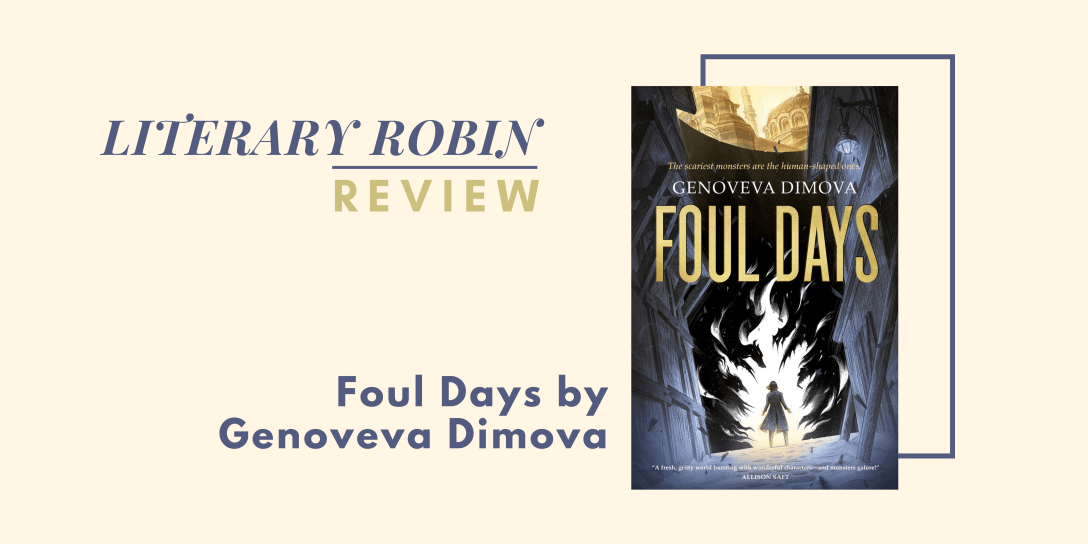
Review: Foul Days by Genoveva Dimova

Rating: 5 out of 5.

At the dawn of every new year for twelve days the veil between worlds thins, and the city of Chernograd is beset by monsters. As a witch residing within the walled city, Kosara uses her talents and magical abilities against the monsters that plague the town. After she fled from her ex, the Zmey, or the Tsar of Monsters, Kosara knew she would spend the rest of her life outsmarting him. When she is betrayed on the eve of the foul days, Kosara is provided a way out by a mysterious card player who can get her over the wall for a price: her shadow. A witch’s shadow is a powerful thing, without it witches slowly succumb to the shadow sickness and become little more than shadows themselves. Kosara agrees and finds herself on the other side of the wall, free of monsters and bereft of her shadow. Kosara grows ill and when rumors of an individual collecting witch’s shadows reach her ears she plans to steal hers back. But she’ll need the help of Asen, a Belogradean detective to uncover a plot that runs deeper than a simple bargain between card players. The past and the history of the wall converge, and Kosara discovers a link to an enemy who could be brought down for good.

Witchery and card tricks go awry in Genoveva Dimova’s, Foul Days, a book that brings Slavik folklore and monsters crashing together with one witch’s search for agency. Foul Days is like a giant melting pot of all my favorite kinds of characters, tropes, and types of fantasy stories, wonderfully interspersed over one novel. We have monster hunts, dead bodies cropping up, Baba Yagas’s hut wandering around, and even an ongoing heist. Genoveva Dimova supplants readers into the walled town of Chernograd one night before monsters descend on the city.

Dimova contrasts two cities, one free of monsters, the other trapped by a magical barrier. I was immediately caught by the vibrancy of Chernograd, the snow-banked streets, and derelict spires rising out of the magic-infused plumes of smoke. And the characters, worn in from their surroundings but tenacious all the same. Even the monsters in Foul Days become characters of their own. Readers that enjoy their books heavy on the characters and dynamics will rejoice in this debut. Kosara is a flawed and stubborn protagonist who comes face to face with the consequences of her past and her personal limitations. Cheating at cards spells her doom and sets off a chain of events that lead to the loss of her shadow, a physical manifestation of her power. Kosara’s loss details the further impacts of abuse and one victim’s search for a reclamation of herself. Mystery and murder flourish as Kosara seeks to cement her identity after an abusive relationship and ultimately decide who, or what, she wants to be. Foul Days is not without a wry, self-depreciating humor that emerges out of the dark moments and rounds out this immersive story. With snarky dialogue between Kosara and Asen and bureaucratic nonsense like the Witch and Warlock Association pamphlet, Foul Days has an underlying humor that I wholeheartedly enjoyed. Romance slivers in between a hunt for clues as two reluctant allies find commonalities despite their stations and livelihoods. Asen is seriously the cutest and Kosara eventually sets aside her untrusting nature with him. The Witch’s Compendium of Monsters Duology delivers on so many fronts and it’s one of my new favorite duologies. Abound with Slavik folklore and magic, Foul Days bridges a dark fairy tale with an intriguing mystery as an unconventional duo, a witch and a determined detective join forces to uncover a conspiracy that runs deep into the history of their respective cities and the monsters that run rampant. Foul Days promises messy protagonists fighting to find their place, entrenched with magic, mayhem, and monsters galore. 

Thank you to Edelweiss and the publisher for providing this arc in exchange for an honest review.

Trigger warnings: partner abuse, murder

Buy a Copy:

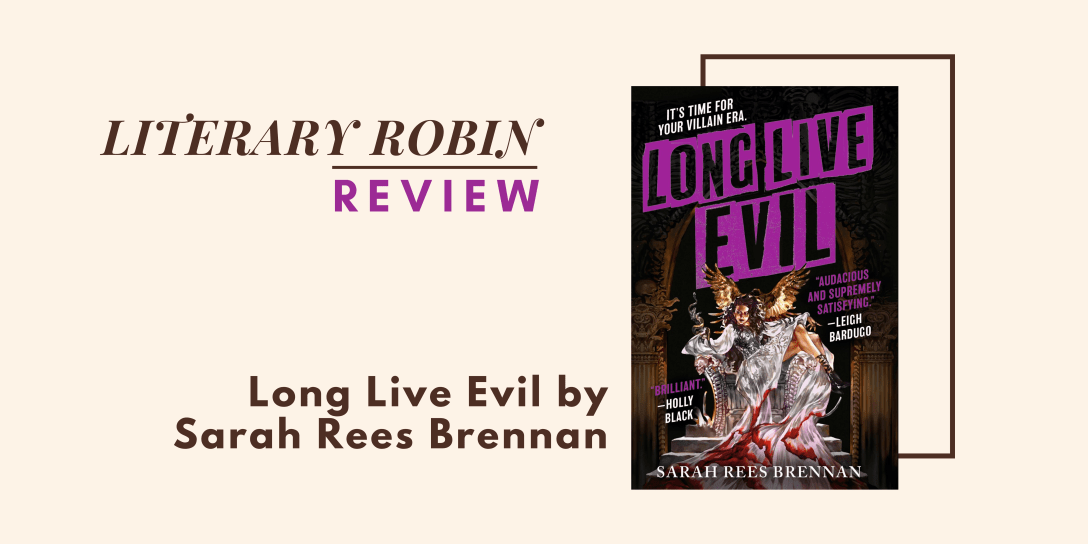
Review: Long Live Evil by Sarah Rees Brennan

Rating: 5 out of 5.

Books have always been a solace for Rae, lying sick in the hospital with cancer. One night a mysterious stranger appears in her room and tells her she is about to die, and Rae is given a choice between death and a second chance at life. Rae accepts this magical bargain and awakens in her favorite book series, Time of Iron, a bloody and romantic fantasy saga of heroes, villains, and gruesome revenge. Unfortunately, Rae has no memory of the first book in the series which is exactly where she is supplanted. Worse, she inhabits the body of the villainess, the Beauty Dipped in Blood, days before her intended execution. Desperate to save herself, Rae turns to scheming, enlisting the help of some unexpected allies: a violent prone guard and a lady’s maid with a talent for axe-wielding. Being a character in a book should be fun, but as the clock counts down, Rae realizes the story itself is an ever-changing narrative and her limited knowledge may only get her so far. Luckily evil is in and there are few limits to Rae’s plans…

Long Live Evil is my first Sarah Rees Brennan novel and legitimately one of my favorite books of this year. Playing off of classic fantasy tropes, but subverting genre traditions, Sarah Rees Brennan delivers a fresh fantasy debut that asks the question: what would you do if set loose in your favorite fantasy series? Long Live Evil packs in the adventure but takes a nuanced approach to narrative and character archetypes. With villains running amok and heroes testing the boundaries of their morality, Long Live Evil isn’t your standard fantasy novel. It’s a campy, meta, absolute ball of a time and a reading experience I will not forget soon.

Long Live Evil is certainly a story for anyone who’s ever fallen for the villain, but it’s also a tale for anyone who has ever wanted to be the villain and make unexpected choices for the sheer thrill of it. Following Rae, a terminally ill twenty-something who has had to live her life in a hospital bed not knowing if she will survive, Brennan voices a character devoid of choice given access to a world brimming with opportunity. A layered story within a story with an unexpected third layer (the original narrative that is seemingly changing), Long Live Evil embraces all the nuance, pop culture references, and hilarity. Brennan pushes the boundaries of storytelling through this portal fantasy with layered narratives within narratives and a scintillating blend of humor undercut by moments of intense poignancy. This book is incredibly funny, and I think you’ll have to have a mind impacted by the various phases of the internet to truly appreciate it. I cackled at Rae convincing the king that “AF” stands for “as foretold” and Key’s murderous tendencies. Also a thousand points for The Mummy reference thrown in. Sarah Rees Brennan has shared in the author’s note how her own cancer diagnosis split her life into two parts, a before and an after. I admire how she gave voice to that through Rae, a testament to those forgotten after a cancer diagnosis and the tumultuous journey to recovery. Choosing the mantle of a villain is a personal transformation for Rae, who despite everything cannot return to the person she once was. Where her journey concludes is tremendously gratifying and I loved seeing the connection between the first and last chapters (IYKYK). We love morally grey characters who toe that line between good and evil and Long Live Evil has that in spades. Sarah Rees Brennan pens a unique fantasy series starter—an uproarious delight of inverted tropes, rage, and all the freedom in being a villain. Bring on more chaos, morally grey characters, and schemes!

Thank you to Orbit Books for providing a review copy in exchange for an honest review.

Trigger warnings: cancer, murder, blood

Buy a Copy:

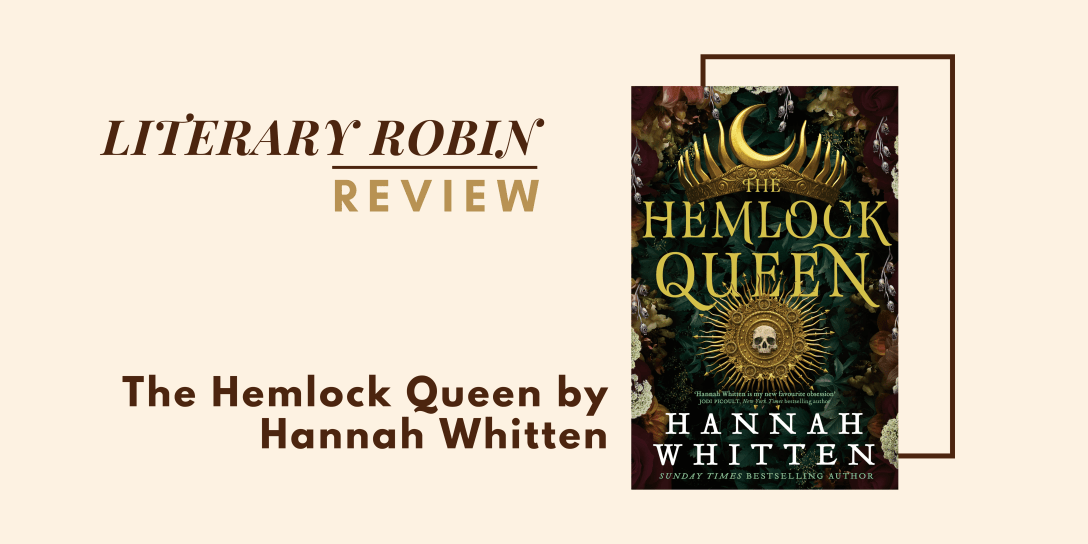
Review: The Hemlock Queen by Hannah Whitten

Rating: 5 out of 5.

In the aftermath of the death of King August, Dellaire now stands on a precipice. Emerging from the rubble of a fractured kingdom, Lore must guard her power over death magic further as the now King Bastian elevates her to his right hand. Beset by enemies from outside and within, with the Kirythean Empire growing in presence and their closest allies having all but abandoned them, Lore and Bastian fight to stay the course. But the disquiet Lore feels is only exacerbated by the strange behavior from Bastian and a voice in the dark that commands her attention. Things are not as concluded from the events preceding the fall of the former king and Lore is certain something darker is working to overtake them. Bastian has his own plans, of which Lore plays the part, but as the impending coronation looms and Bastian’s unsettling behavior grows, she’ll have to rely on secrets of her own to outsmart her enemies. Because the voice in the dark has a name, and it belongs to someone Lore had hoped would stay buried.

Betrayal, lies, and deadly secrets invigorate this poisonous sequel to the Foxglove King, as Lore battles a war within her own heart and a divine force intent on overtaking the entire kingdom. In this sequel, Hannah Whitten brings readers into a world on the verge of ruin, and the three people that could save it from its deadly fate. The Nightshade Crown trilogy is Whitten in her element, and that is clear from this astonishing sequel that hits just as hard regardless of whether you’d read it yesterday or several months ago. After the cataclysmic conclusion of the Foxglove King, I was firmly awaiting the return to this world and where this story would go. Suffice it to say, I was unprepared for the devastation to my heart, and to Whitten’s own characters. 

The Hemlock Queen elevates the stakes of The Foxglove King, barbed with court politics and fraught dynamics between its core trio, now at odds. Still reeling from the events preceding King August’s death, Lore comes to terms with her new role and fights the cost of her own survival. Where the Foxglove King reaches out its claws, The Hemlock Queen develops a slow-building poison that gradually takes its deadly effect. Jumping into this sequel feels a little out of sorts at first, but I have a feeling that was because I had forgotten so much of what happened in the first book in the eight months since I had read it. That feeling passes as Whitten leans into the chaos and orchestrates her discordant symphony like a train wreck you cannot look away from. Though I was a huge fan of book one, it is the Hemlock Queen where the series really gains a foothold and all of the pieces laid in the Foxglove King begin to slot into place. With a slower pace, The Hemlock Queen takes its time to elevate the disquiet, the moves and counter moves its characters make in reaction to certain developments. The unsettling nature of the narrative feels prickly, like thorns barbed in skin – a feeling only heightened by the cold behavior from Bastian and the venomous court. Lore remains my favorite character in this series, her selfishness and her determination are the driving force behind everything and I love that so much. With all of the foreshadowing and angst layered in, I’m all the more scared for her in the forthcoming finale. The Hemlock Queen was nothing as I expected, but that alone is what makes it so devastating. Whitten bridges the world of gods and humans until they meet on a knife edge, where they remain until its heartwrenching conclusion. It’s safe to say Hannah Whitten knows how to write epic sequels. This twisted high fantasy trilogy continues to astonish and The Hemlock Queen shifts it from sensational to absolutely legendary. 

Thank you to Edelweiss and Orbit Books for providing the advance copy in exchange for an honest review.

Trigger warnings: gore, violence, parental abuse, alcohol consumption

Buy a Copy:

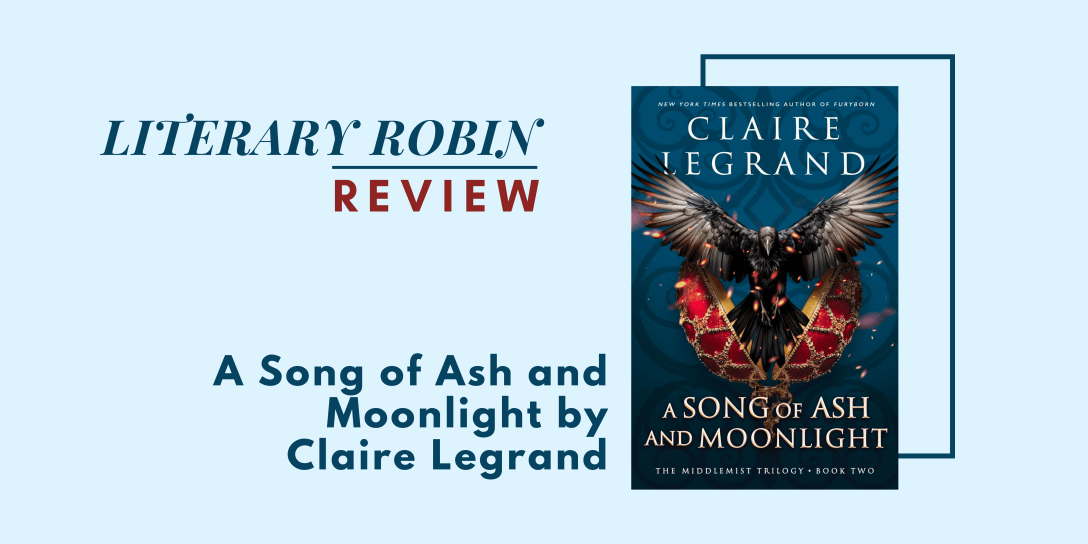
Review: A Song of Ash and Moonlight by Claire Legrand

Rating: 5 out of 5.

Ever since the fire that almost claimed her life, Farrin Ashbourne has guarded her heart and her power over others. The fire that inevitably consumed the Ashbourne estate was set alight by none other than the Bask family, the great enemies of the Ashbourne’s. Long after her mother’s flight and the departure of her younger sister, Farrin has placed herself unflinchingly in the role as head of the family, and even with the curse dividing the Basks and the Ashbournes now broken, she finds no end to her restlessness. Now the Kingdom is on the brink of war with unseen forces and the barrier of the Middlemist is weakening. United, the Ashbourne and Bask families may be the only hope of fighting back. Unfortunately, this means Farrin will come face to face with Ryder Bask, the eldest son and handsome thorn in her side. With new magic blooming and many now missing, their list of allies grows thin. Worse, whispers of a city hidden in moonlight unable to be reached by prying eyes. As they join forces, Farrin finds an ally and friend in Ryder Bask, who carries a burden of his own. Finding the truth may mean finally taking off her well-worn armor and forging something different– for their adversaries bleed the old gods, and the new.

Claire Legrand has long been a legend in the fantasy genre and A Song of Ash and Moonlight is her stretching her skill in a wonderful blend of romance, action, and expansive fantasy. In this brilliant sequel, Claire Legrand elevates her foundations to create a beautiful slow burn enemies to lovers romance between steadfast sister Farrin Ashbourne, and the eldest son of the Bask family, Ryder. Ever since I read A Crown of Ivy and Glass last year and Claire gave us the most delicious crumbs between these two I have been aching to read their story. (The scene where her music causes him to approach her on stage while speaking an old forgotten language sustained me for a whole year if you could believe it). Farrin was easily one of my favorite characters coming out of the first book, and I’m such a fan of the guarded older sister archetype that this couldn’t be anything but the best book ever.

Claire Legrand returns to her Middlemist Trilogy and a world on the brink of change as the Ashbourne siblings set aside old grudges and work to rebuild a relationship with their family’s sworn enemies, the Basks. A Song of Ash and Moonlight weaves a cunning mythos and romantic arc in a sequel that showcases its characters at their height and brings old gods and new smashing together in cataclysmic ways. The stakes are the highest they can be with old barriers breaking down, and new horrors descending on the Ashbourne family and the world entire. Calculating and precise, Farrin Ashbourne is the essential perspective for this secondary chapter. Fighting old wounds and attempting to stave off the dangers while closely guarding her heart, she’s a heroine one can struggle with and heal through. Farrin stands at the front of everything Legrand has built in the series thus far and has earned her status as chief of the Ashbourne sisters. As always, I love the balance of plot and romance Claire has captured in her writing. It’s enough to have you chasing the next interaction with Farrin and Ryder while aching to break through that outer shell to unveil the truth. There are so many clever moments woven in that allow Farrin to confront her traumas and work to build something new for herself. Ryder Bask intersects this journey at exactly the right time, fighting wounds of his own and the perfect outlet for somebody like Farrin. There are fight scenes, quiet conversations, and a deep understanding they find with one another against the chaos. Amidst their developing romantic relationship, the continued focus on consent and sexual compatibility was excellent. It’s not something I see often intertwined in romantic fantasy and I loved how much of that was a core focus. This sequel is undoubtedly taking the crown for best in the series. Legrand expertly layers her character development, plot, and twists, and the final confrontation is one of the finest I have read from a fantasy novel in some time. A Song of Ash and Moonlight is exactly what I wanted from a sequel, revealing hidden ancestry and an unexpected connection to the gods while flawlessly merging high-stakes fantasy and devastating romance. The Middlemist Trilogy is an incomparable fantasy series and this sequel only has me more excited for its conclusion next year.

Thank you to Edelweiss and the publisher for providing the review copy.

Trigger warnings: fire, blood, violence, death

Buy a Copy:

Review: Truly, Madly, Deeply by Alexandria Bellefleur

Rating: 5 out of 5.

Truly Livingston has always believed in happily ever afters, owed to her parents’ successful marriage of 33 years, and her career as a historical romance novelist. When she catches her fiance cheating and her parents soon after announce their separation, her world is shaken and she finds herself in a writing rut for the first time. In the middle of all this is a podcast Truly agreed to record in which she and a self-described realist give dating advice live to viewers. The self-described realist is family lawyer Colin McCory, whose views on love and dating are polar opposite to Truly’s, made clear when he calls her out during the recording of their first episode. Though she fully expects to not continue with the podcast, Truly returns after Colin makes an unexpected apology, and from there the show takes off running. In between recording and writing, Truly and Colin strike up an unlikely friendship lingering on the border of something more, and it could be, if Truly can convince herself she is worthy of writing her own love story.

Alexandria Bellefleur reaches soul-deep to deliver the romance novel of the year, filled with scorching levels of heat, podcast arguments, social media mishaps, and all the awkwardness in taking charge of your own love story. Truly, Madly, Deeply is hands down one of the best romance novels from Bellefleur since she departed from her Written in the Stars series. I initially had my doubts since that trilogy holds such a special place in my heart, but I’ve since learned never to doubt Bellefleur and this is further proof. I reread this almost immediately after reading through it for the first time, and I really can’t wait to do so again. Truly, Madly, Deeply is everything I’ve come to love from Bellefleur, open, honest, and so bisexual. 

Truly, Madly, Deeply features two characters, a realist and a romantic, falling in love and reexamining their set ideals and agency in their own lives. It’s a beautiful story that burrows down deep and takes time to settle before consuming every waking thought thereafter. Bellefleur has written an up close and personal love story for the hopeless romantics out there, the people who have found themselves adrift for the first time and are seeking a solid landing place. The setup for this one was everything I was hoping for, a snarky back and forth between two opposites on a podcast, that introduces a raw honesty that is just what each character needs. Now Truly Livingston is a total icon and not even her embarrassing social media mistakes could have me not backing her up (because yeah, Colin is the hottest man to ever exist. next question). Her struggle with feeling like she’s not a good enough version of herself to jump back into dating was certainly relatable and it was a kind of reward to see her go after what she wanted and be proactive in creating her own happiness. I’m a big fan of right person, right time, even when our characters can’t see that at first, and this book absolutely delivered on that. All the little moments between Colin and Truly fueled me, from the impromptu coffee hangs, to late-night drinks, and impassioned conversations about biphobia. I just love them dearly. Truly and Colin were the epitome of bisexual chaos and their bickering turned full arguments turned back around to understanding was all-consuming and seriously entertaining. Truly, Madly, Deeply has reminded me of the power of connection and the strength that comes from our close relationships – of the happiness we can’t wait around for and must create for ourselves. It left me with a truly debilitating crush on a fictional character and a massive book hangover and I wish I could do it all over again.

Thank you to Edelweiss and the publisher for providing the advance copy.

Trigger warnings: infidelity, biphobia

Buy a Copy: