Review: The Girl with a Thousand Faces by Sunyi Dean

Rating: 5 out of 5.

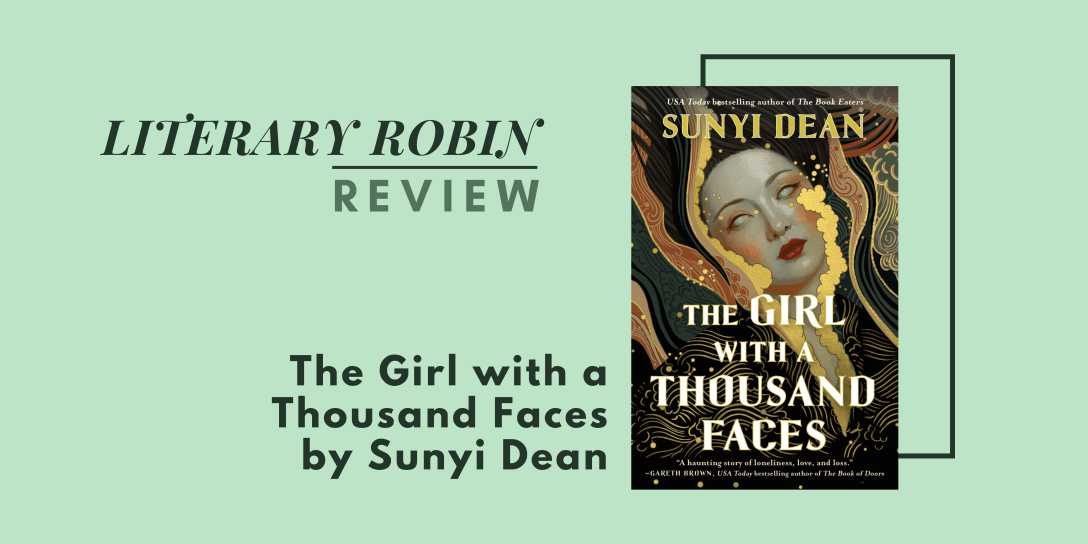
Kowloon is a city of ghosts. For a girl with no memories washed up upon the shore, it presents an opportunity for a rebirth. Mercy Chan has a unique ability: not only can she see ghosts, she can commune with the dead and allow them to move towards the afterlife—a rare talent coveted by those who make Kowloon Walled City their home. For decades Mercy has worked as a ghost talker of sorts in connection with the Kowloon triad. She spends her days communicating with the ghosts who linger, usually the angry and wronged, bringing justice to their afterlife and to the city itself. But something darker lurks in the shadowed spaces, luring citizens to their watery deaths and speaking to Mercy through the bodies of the departed. With a proposal to demolish Kowloon up next on the docket, a serial killing spree could be what allows the legislation to pass. Even more sinister, this killer appears to have a personal connection to Mercy and is intent on drawing her close to their crimes almost as if in retaliation for something. The answer lies deep in the past in memories Mercy is unable to access. As Mercy follows closer and closer to this ghost, the less she can deny that the vicious spirit is on a quest for revenge and the object of its ire: Mercy herself.

A ghost-talker confronts her missing past and the ghosts that linger in Sunyi Dean’s historical gothic feat, The Girl with a Thousand Faces. It feels like eons since I first discovered Sunyi Dean and drifting back into her work feels as languorous as a cat taking a long stretch in the sun—entirely out of sorts with the actual tone of Dean’s sophomore novel: a historical gothic fantasy all about ghosts and the cycles we perpetuate. The Girl with a Thousand Faces is as cutthroat as the ghosts left to steep in sadness, anger, and regret. At the helm, Mercy Chan, a fifty something ghost talker with a mysterious past facing down a ghostly killer intent on forcing her to confront her own forgotten ghosts. The Girl with a Thousand Faces makes the reader into a kind of specter, wandering Kowloon Walled City alongside Mercy as she unravels the past. Dragged down deep into waters ancient and strange, Sunyi Dean weaves a startling narrative that will have you questioning the true villains, be they paranormal or man made. Vindictive ghosts are one thing, but Dean’s true talent lies in her glimpse into the real horror beneath, the devastations of war, grief, and generational traumas—with everything a cost of ignoring that pain. Brave this strange ghostly saga and whatever you do don’t look down.

The Girl with a Thousand Faces is a bit of a genre-bend, equal parts historical, fantasy, and gothic that begins to take shape through the unique setting of Kowloon Walled City. Setting is everything within a gothic novel and Kowloon, a city of ghosts (both human and paranormal), could not be more perfect for the story Dean constructs. Right away you can feel the claustrophobic nature of this densely packed city, a community of humans and ghosts that is home despite efforts to demolish it post-war. Kowloon is very much a city that reflects the pain that cannot be buried, of real people attempting to make a living after enduring the horror of the second World War. It makes sense then that ghosts have congregated within its boundaries and have continued to flourish even in the decades following. In a city rife with ghosts, Sunyi Dean questions what are the real ghosts—are they the literal phantoms and wraiths clinging to life, or do they represent a darker part of our humanity that we refuse to examine and excise. The Girl with a Thousand Faces presents an interesting duality in its perspectives, both ghost and human, to interrogate not just this essential question but how ghosts themselves come to be.

Much of what makes this book so hard hitting is the humanity underlying the horror. That we create our own ghosts which follow us and our descendents is far more horrific than the literal ghosts appearing within the narrative at times. There is a grief that comes alongside knowing this, in understanding that Mercy’s story is the result of pain endured by her family and a suffering that was never addressed generations prior. Relationships between sisters, mothers, aunts, and nieces, are all part of this delicate tapestry and a pain that went unanswered. These relationships are the beating heart of The Girl with a Thousand Faces and the nuance in depicting motherhood, specifically the relationship between mother and daughter were some of my favorite parts of the novel. Siu Yin and her mother, dancing and swimming with ghosts rather than reaching for each other in hard times, cogs in a relentless cycle that initially appears impenetrable. Throughout this complex web, Dean underpins the staggering traumas of war and colonialism which shape us and those who come after. In the aftermath, sometimes the pain caused is too great and by trying to hide it we cause more, leading to further tragedy. The Girl with a Thousand Faces knows the work of grieving and moving forward is a heavy burden, but it is essential work and part of freeing our own inner ghosts.

The Girl with a Thousand faces is the best thing a book can be: clever and horrifying as hell. While it has been some time between Sunyi Dean’s debut, The Book Eaters, and her sophomore novel, I would wait twice as long if it means she can keep delivering books such as this one. The Girl with a Thousand Faces is certainly one of the most interesting historical novels I have ever read. A ghostly jaunt through a post World War Two Hong Kong—specifically Kowloon Walled City—as Dean examines what makes a ghost and what it takes to truly reconcile them. The Girl with a Thousand Faces nails all the bittersweet facets of forgiveness and how essential it is to breaking the cycle of grief and trauma. Not without its heartbreaking moments through others who did not have the language to do the work of grieving, instead languishing in that pain and trauma and never fully surfacing. Though horrific, grief ridden, and painful at times, there is a tremendous joy found in breaking the cycle, in doing the hard work of reconciliation. Certainly not an easy path but one that is worth the work. Sunyi Dean doesn’t deny that we don’t always get the answers we’ve been longing for, craving an understanding from our family members who are long gone, never there to give us greater context. Those can be ghosts too, following us ever long even as the cycle is rented in two. Haunting yes, but fiercely hopeful, The Girl with a Thousand Faces asks us to trust in the haunted and dare to sink knowing we will eventually surface—if we can just make that leap.

Thank you to Edelweiss and the publisher for providing the advance review copy.

Trigger warnings: violence, murder, depression, death of a parent, grief, war, mass death
Preorder a Copy — Out 5th May

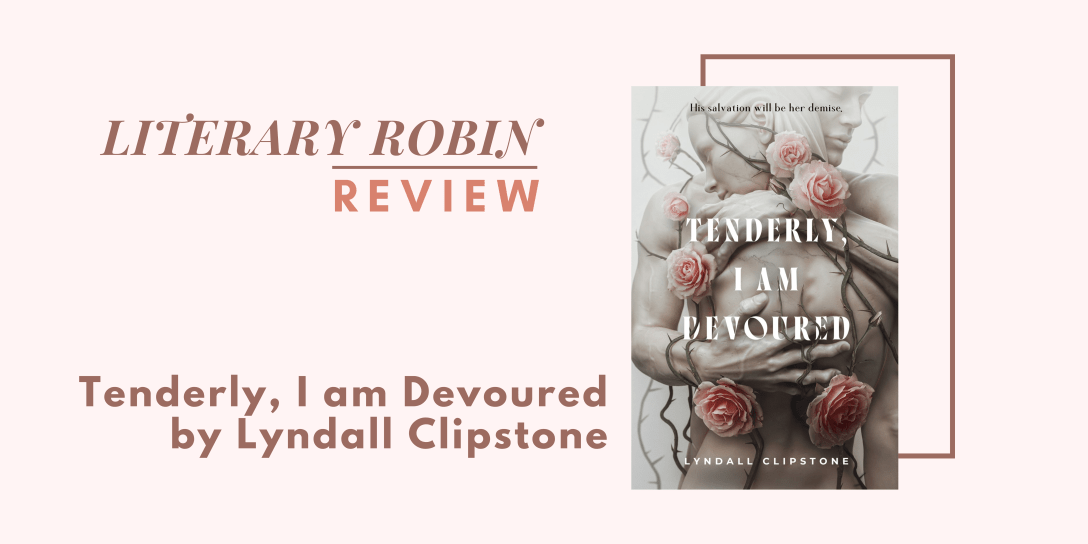
Review: Tenderly, I Am Devoured by Lyndall Clipstone

Please note this review contains reference to some of the events in this novel. Read with caution.

Rating: 4.5 out of 5.

When she left behind her coastal village to attend the illustrious Marchmain Academy, Lacrimosa “Lark” Arriscane never planned to return home. Certainly not before securing the heavily coveted postgraduate curatorship at the city museum. On the cusp of achieving all she’s worked for, Lark is expelled from her boarding school for a violent incident and sent home. In a windswept cottage by the sea, Lark and her family have prayed for generations to Therion, the chthonic god who lords over the tides, the salt, and the woods bordering their lands. Upon her return, Lark learns that the salt mines that have afforded them wealth and security have run dry and her family is on the brink of financial ruin. The only way out is a bargain with Therion, their god, who promises to restore the mines in exchange for Lark’s hand in marriage. Against her family’s wishes, Lark agrees, but when the ritual goes wrong, Lark is left bound to a god and dragged in between the mortal and chthonic realm. Lark can no longer deny she needs help, but her only allies lie in Alastair and Camille Felimath, her former childhood friends and the family to whom the Arriscane’s owe a tremendous debt. Bound to a demon and drawn to her demise, Lark seeks to sever her bindings, but she may not survive the fate she was promised, nor the loves rending her heart in two.

Pulled in and weighted by a heavy tide, Lyndall Clipstone’s Tenderly, I Am Devoured is a reassuring ballad to the broken-hearted and anyone on the cusp of something strange and unknown. Rigged with brambles, salt, and sea foam, this perilous novel embodies a keen and overwhelming longing for that period when everything seems possible and yet somehow still entirely impossible to grasp. Tenderly, I Am Devoured has all the trappings of a story on the edge, what with its main character, Lacrimosa Arriscane, stuck between the mortal and chthonic realms, an old life and a new, and two loves competing for her heart. Ruinous as the very sea that borders the lands of Verse, Tenderly, I Am Devoured is a gothic horror romance that aches to reach a resting place forever out of reach. One I could not help but feel swept up in myself as Clipstone tethers her heroine to demonic gods and the unwise bargains they make with mortals. Tenderly, I Am Devoured is the gothic-horror-academia sibling to Ava Reid’s, A Study in Drowning, but given Clipstone’s unique authorial voice and intent. Transient as the middle place between adolescence and adulthood, the past and present both, Lyndall Clipstone traverses the places between—where myths are made real and where love is our strongest act of defiance.

Lyndall Clipstone’s, Tenderly, I Am Devoured is an evocative work of art. There’s no other way to describe a novel so carefully designed. It’s as if every detail was poured over and sculpted into this sharp gothic and dream fugued lighthouse to those lost and in need of sanctuary. Clipstone plants herself firmly in what she calls “Flower-threaded” horror and I think that is an apt comparison for a novel that so exquisitely bridges the amalgam of beauty and horror. Significant details play the boundary between beauty and grotesque—the chthonic liqueur staining the teeth in some kind of irrevocable marking of the divine, the power of the sea to buoy or to suffocate, and the dark salt mines made for prayer and for dark bargains. Every portion further imparts Clipstone’s unique blend of horror-romance and the contradictions she explores at the center of her work. Tied up in all of this is Lark herself, an Aphrodite-esque figure crafted through the power of the sea, clinging to a life of her own if she can free herself from a chthonic god. Very much here for the soft hearted heroines who don’t have to be perfect to be worthy, the ones who make mistakes and take charge without compromising the core of who they are. There’s power in softness and I know how personal it was for Clipstone to represent this through her main character. Lark wears her heart on her sleeve, and her depth of feeling appears boundless, a trait that echoes in the very fabric of this story and its decisive end.

Bordered by an intriguing mythology, a dash of academia, and disastrous bargains with the divine, Tenderly, I Am Devoured binds together a great deal in just one gothic fantasy novel. Yet, there’s considerable intent behind every single facet of this story and they are as tangible as if one could reach into the page and experience them firsthand. In concluding Tenderly, I am Devoured, bleeding hearts are laid bare as the past is exposed and the future safeguarded for our core trio. Lyndall Clipstone somehow manages to tie everything together in a way that is hopeful without veering too far into the realm of implausibility. There are costs for our characters which is true as life itself where going after anything you value is worth some kind of personal sacrifice. Among the weather-worn cottages and the luring waves, Clipstone reinforces this notion that part of human nature is to be adrift, but certainly we’re not meant to be alone. Chthonic gods, polyamorous romance, cults, and myth make up this gothic romantic fantasy that called to me like some kind of dark offering. From its intense academic setting to the haunting coast of Verse, Clipstone tests what we can weather if only we hold fast to each other against the storms ahead—even if one must at first give in to a god.

Thank you to Book Forward and the author for providing me with a physical advance review copy.

Trigger warnings: death, blood, murder, drowning, physical abuse, child abuse, death of a child, cults

Preorder a Copy – Out 1st July

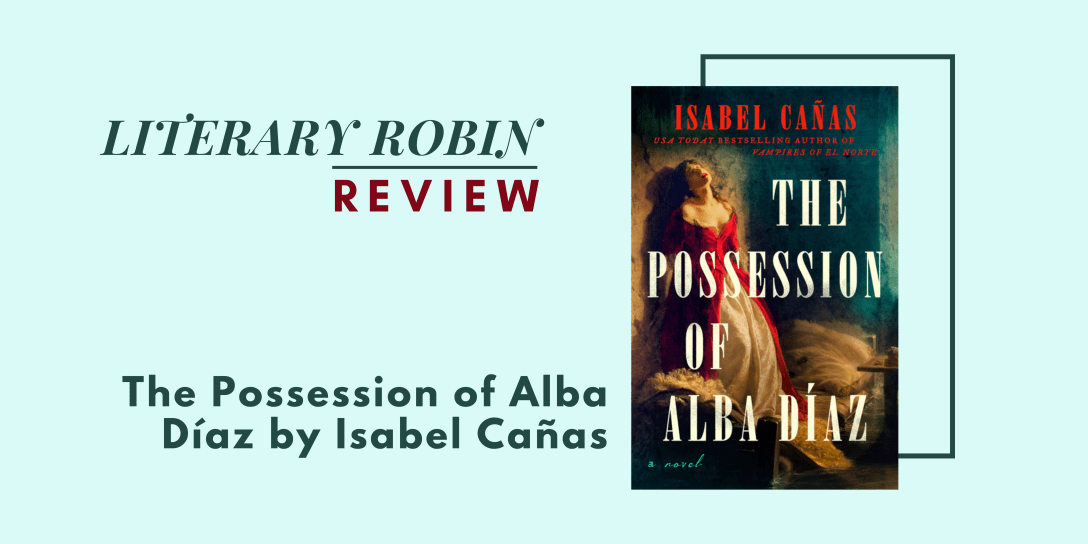
Review: The Possession of Alba Díaz by Isabel Cañas

Rating: 5 out of 5.

When a devastating plague strikes Zacatecas, Alba Díaz flees with her overbearing parents to her fiancé’s isolated home in the mountains, never expecting that there are far greater horrors in store than an unforgiving plague. Alba has had enough time to come to terms with her future as little more than property to her husband. The only choice she has is in the match—resigning herself in marriage to Carlos Monterrubio, an uninspiring young man who can afford her a comfortable life. Elías Monterrubio is running as far away from his past as he can, but his choices continue to haunt him. Cousin to Alba’s fiancé, Elías has no intention to ever interact with Alba, until a chance interaction in a courtyard changes everything and weakens his resolve. Attached to the Monterrubio hacienda is a silver mine, one that calls to Alba’s unknown past. Wandering in the night as if under a spell, Alba is victim to strange trances, hallucinations, and bouts of violence. Knowing she cannot rely on her family, nor the priest who joined the flight to the mine, Elías is her only ally in uncovering the truth. Fighting for her life against a malevolent entity, Alba soon finds her real demons are more man-made than she initially believed, and she could lose herself in excising them.

With the state of things, now more than ever I want to read about blood soaked women, the women who fight tooth and claw (wink wink) for their futures in a world set to dually possess and demonize them. With that resounding desire in mind, The Possession of Alba Díaz found its way into my hands. Isabel Cañas’ latest novel is an atmospheric gothic bloodbath involving the Inquisition, patriarchy, and autonomy, furthering plots far more violent than a mere possession. Alba Díaz, a young woman facing down a loveless marriage, flees various monsters real and mythic in a desperate attempt to seize control of a future that was never hers to own. From the moment I read the lines, “Alba plotted to sin again,” I knew I was in the hands of a master and Cañas spends this entire novel proving that to be true. Where the greatest fear is standing strong in the face of those who seek to demean and control, The Possession of Alba Díaz leads its protagonist down a path where she aligns with the demon within. It’s a haunting tale retold that begs the question if we can ever achieve control of our own narratives or if autonomy can only be gained through giving into our own demonization.

With Isabel Cañas’ novels, the characters are everything and the devil can be found within her unnerving backdrops. Plagues, confessions, and engagements begin this novel of demonic possession, with two perspectives that open up this novel to its tantalizing blend of horror and romance. Like both of her previous works, The Possession of Alba Díaz combines historical fiction, horror, and the gothic—proving these genres can and should contrast. Casa Calavera, a silver mine with a dark past, is a perfectly eerie setting for Cañas to conduct her expose into possession and patriarchy. The inner workings to the mine and the process of silver extraction are revealed, underpinning to the horror and illuminating the more intentional choices of these wealthy landowners. Cañas’ focus on worker exploitation at the heart of the horror, amidst Alba’s possession, and Elías connection to silver and dark magic is the beating center for everything that follows. Amongst these horrific moments of possession, The Possession of Alba Díaz develops familial and romantic relationships that outlast even the most gruesome of confrontations.

As a dark force sinks into Alba’s consciousness, Isabel Cañas brings together an unexpected partnership between Alba and Elías Monterrubio. I’m a sucker for any kind of romance subplot, especially in horror, so this really worked for me. Both Alba and Elías are trapped in their own ways and their appearance at hacienda de minas is a representation of that made real. Elías is the perfect romance hero, a bit tortured at times but resolute in aiding Alba in excising the demon possessing her. His attention to her problem was like a man possessed, which of course is romance representation I can only commend. Elías’ is being driven by the sins of his past, and his skill in amalgamating silver and his stockpile of mercury have led him to Casa Calavera. Cañas uncovers his past in connection to Alba’s and both were an expert source of tension for their developing romance and this novel’s unsettling aura. Cañas serves up her tried and true horror romance and gives Alba and Elías a chance to reach for a future that is theirs, one unencumbered by familial machinations and the intrusion of outside forces.

The Possession of Alba Díaz reaches a blood soaked conclusion with the confrontation promised in its first chapter. That penultimate chapter at a Zacatecan cathedral is the culmination of everything Isabel Cañas has been building to from the beginning of this novel and god was it worth it. The claws come out and it is a violent and bloody mess, but it’s all Alba’s. Cañas’ take that sometimes giving into the demon is okay is exactly what I wanted from this story—a cathartic and visceral choice but as we soon learn, a necessary one. That it is future Alba providing the outer narration bridging us into and out of the story is not entirely surprising, but it’s a missing piece that makes the conversation surrounding autonomy and cautionary tales that much more intense. Alba takes part in her own mythologization, the telling of the tale evident of her part in not just the story itself, but its ending. The Possession of Alba Díaz is my new favorite romantic horror story from Cañas. This unsettling novel creeps in like a demon taking hold, but every part is a tension filled dream of claws, silver, and sorcery.

Thank you to Netgalley and the publisher for providing the advance review copy.

Trigger warnings: death, blood, violence, murder, gore

Preorder a Copy – Out 19th August

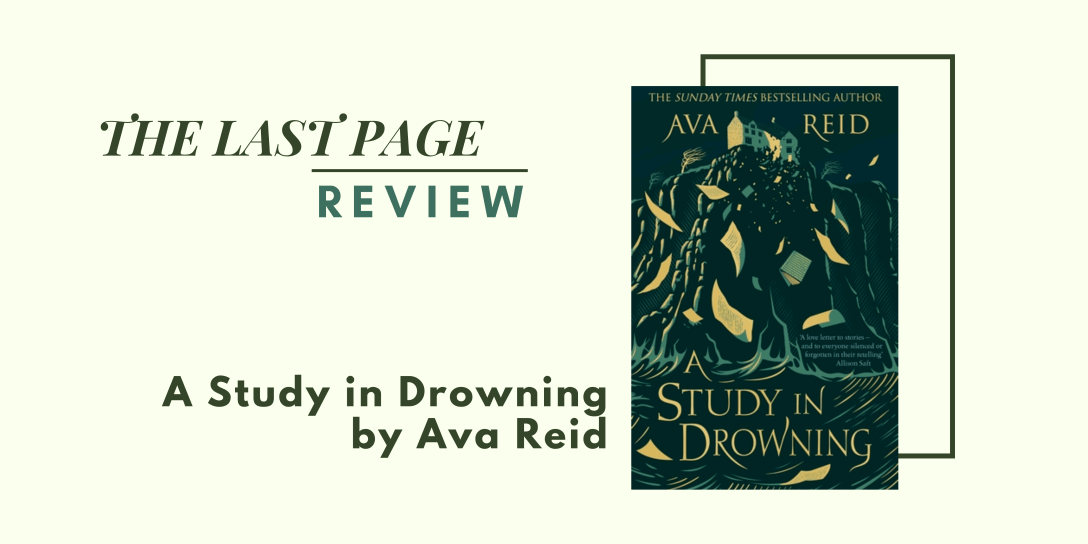
Review: A Study in Drowning by Ava Reid

Rating: 5 out of 5.

Effy Sayre is Llyre’s newest architecture student, but she’d much rather be studying English. Heading into her first term, Effy clutches onto her battered copy of the Angharad, an epic fable detailing the triumphs of a mortal girl over the Fairy King. Plagued by visions of her own in which the Fairy King takes center stage, Effy is desperate for an outlet and enters a contest to redesign Hiraeth Manor, the house of the Angharad’s author, Emrys Myrddin. Redesigning Hiraeth Manor is a chore beyond measure, as portions of the estate have fallen into disrepair and ruin, and the house is seconds from losing itself to the sea. When Effy arrives, she finds another point of contention in Preston Héloury, her academic rival who has taken up residence, intent on proving Emrys Myrddin a fraud. Although he is everything she stands against, Effy can’t help but be drawn to Preston’s quest. Because there’s something dangerous lurking on the estate, something that echoes her past, and Hiraeth Manor hides secrets that could very well drag them both down for good.

A Study in Drowning is a swirling tempest of hope, love, and finding a way forward against all odds. This their third novel, It’s clear that Ava Reid cannot write a bad one. Enveloped in folklore and set in a Welsh-inspired fantasy world, this book is a balm for every person who has been an outsider in their lives and for those still fighting to have their voice be heard. All of this is characterized in our protagonist Effy Sayre; a young woman in academia struggling to keep her head above water. As the only woman in her architecture college, unable to pursue the field of education she desires, and consistently mocked and preyed upon, Effy is adrift in every sense. The only thing holding her together is the novel The Angharad.

Across her works, Reid has emphasized the power of storytelling and it is A Study in Drowning that focuses on the readers that find themselves within stories. This fraught relationship between author and reader is investigated within the novel as the Angharad’s authorship is contested. We get glimpses of the Angharad, both the story itself and scholarly critique, and the ways in which the story mirrors the real world, one in which a Fairy King may rule still. As Effy seeks the truth at Hiraeth Manor she develops a connection with Preston, her academic rival and, similarly, an outsider. If there’s one thing I trust with Ava Reid, it’s delivering a phenomenal romance. Preston and Effy’s relationship is a deeply gratifying slow burn between two kindred spirits forging a way forward in a world that has consistently denied them. There is so much genre work going on here as well. It’s a romance, a gothic, a mystery, and a dark academia all at once. All of these are interwoven with startling prose and imagery. Hiraeth Manor – with its peeling water-stained wallpaper, portraits of days past, and floorboards glistening with seawater is a beautiful and haunting example. Reading A Study in Drowning is like slowly sinking into an unruly sea and welcoming it with the knowledge that someone will be there to pull you out. It’s about owning your story in a world determined to control the narrative and finding healing despite past abuses. A book I’ll be keeping in my back pocket to weather any future storms.

Thank you to Edelweiss and the publisher for providing this arc in exchange for an honest review.

Trigger warnings: parental abuse, sexual assault, sexual harassment, misogyny, bullying, sexism

Buy a Copy:

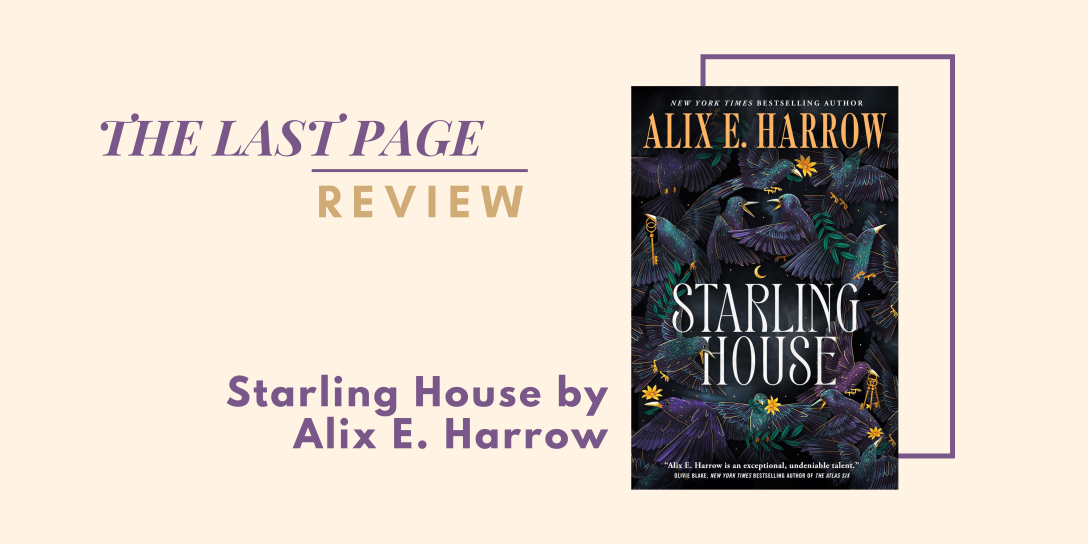
Review: Starling House by Alix E. Harrow

Rating: 5 out of 5.

On the edge of a small southern town, a house stands alone. Left to fester by the townspeople determined to move on from the town’s less-than-savory history, Starling House and its heir haven’t been seen for years. In a motel across town, Opal and her brother are just trying to survive Eden enough to one day leave it behind, but an innate curiosity keeps dragging Opal back to Starling House and its wrought iron gates. Opal can’t pull herself away, and one evening she finds herself at the gates of Starling House, only she’s not alone. The next day, she is given an opportunity that could get her brother out of Eden, but she will have to go back to the house. Opal returns to Starling House, where she explores its maze of rooms and discovers that all of the stories may have a kernel of truth to them. Outside parties are seeking entrance to Starling House as well, and they realize Opal is the way through. To stake her claim and build herself the home she has been longing for, Opal must return to Eden’s complicated history to discover what exactly lies buried underneath.

With Starling House, Alix E. Harrow captures a festering darkness in a small Southern town, and the strange house caught up in the center of it that refuses to let the past stay buried. It’s a gritty contemporary Southern Gothic that dragged me under from its very first pages. Now it should surprise no one that I’m an Alix E. Harrow enthusiast. I’ll read anything she writes at a drop of a hat and you’ll find me hunched over one of her books in my room for hours at a time until I reach the end of its pages. Her previous works drove me absolutely wild, so I shouldn’t have been surprised that her newest would inspire much of the same feeling. Starling House is a punishing gothic novel innately entangled with fairy tales and the undercurrent of truth that inevitably runs through them. Harrow ensnares readers in The Underland, a children’s fable depicting the monsters below the earth and one girl’s journey into the foul places below that ring more true than initially believed. Starling House is alive, a labyrinthian estate filled with twisting secrets and locked rooms that beg to be exposed. The house takes on a life of its own, much like the two focal points for this novel, Opal and Arthur. Harrow delivers a clever heroine and tortured heir, completely buried under the weight of their pasts, and unable to figure out how to drag themselves out of the surrounding dark. The romance is very much “we should rot in this old house together” and I was more than here for it. Starling House gives voice to two individuals who have just been trying to survive for so long that they no longer know how to do anything else but exist. The entire journey out of that is joyous, painful, and every emotion in between. Alix E. Harrow is a brilliant storyteller, reaching into those dark places that must be uncovered and exposing them to the light of day, all in her own time. Starling House feels like a reckoning as much as a journey toward healing and love, with a signature Harrow flair. This twisted story will drag you down into the depths of the earth where the truth lies, and leave you clawing for more. 

Thank you to Edelweiss and the publisher for providing this arc to review.

Trigger warnings: blood, death, fire, grief

Buy a Copy:

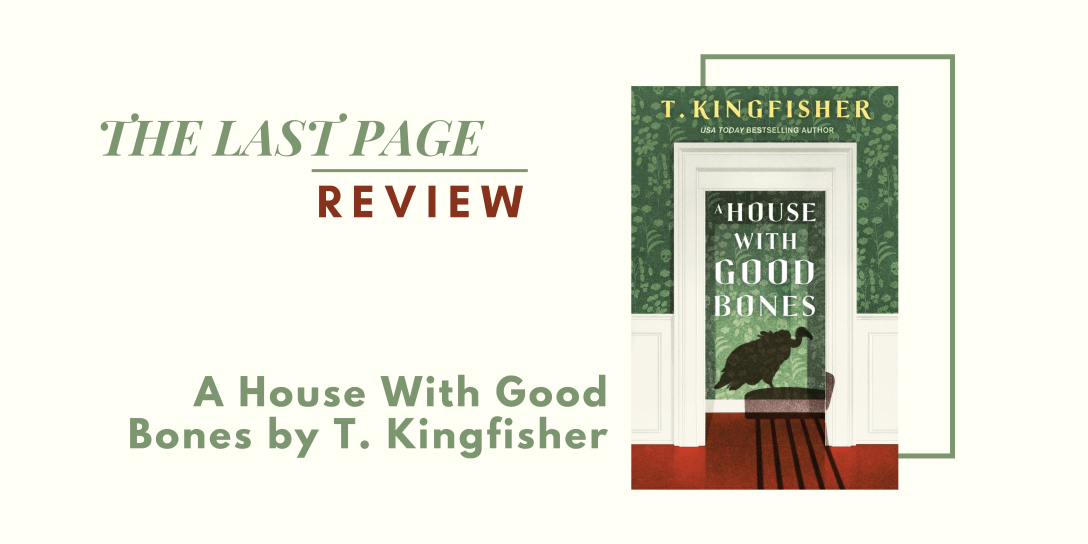
Review: A House With Good Bones by T. Kingfisher

Rating: 5 out of 5.

Sam Montgomery pulls into her mother’s North Carolina Suburb with the knowledge that something is wrong, her brother’s forewarning that “mom seems off” lingering in her mind. When she enters the house her greatest fears are realized. The walls have been repainted, her mother’s signature flair abandoned, and deep in the recesses of the backyard buried in the dirt is a jar full of teeth. Worse, vultures fly overhead circling the property in ever-growing numbers. Her mother is fidgety, worried about something that couldn’t possibly be there, so Sam takes the couch in between her murder mystery binges and cataloging of various insects for her job. But something is entering the house in the night and whispering in Sam’s ear, shattering glasses and pulling down artwork during the daytime. The more strange occurrences she can’t explain, the more frightened her mom gets, until Sam is willing to believe the impossible and dig where she shouldn’t to set things right.

I’ve come to expect the weirdly bizarre and extraordinarily creepy from T. Kingfisher since diving deep into her backlist this previous fall. I read Nettle & Bone, The Hollow Places, and What Moves the Dead all in the span of a week and was left craving more weird stories. With that in mind, A House with Good Bones is the pinnacle of all the bizarre writing T. Kingfisher has achieved so far in her writing career. A chaotic combination of vultures, entomology, enchanted gardens, and one family’s hidden legacy with magic. Through the perspective of Sam Montgomery, an entomologist on leave, Kingfisher entangles the reader in a sinister struggle between the hidden powers below, and an unlikely pairing of people determined to stand their ground. Kingfisher establishes the plot superbly, with a sinister aura that becomes more fully grounded as we learn more about what’s going on in the house and its roots in the family history. It feels very similar to The Hollow Places, with a disquiet shrouded over the minds of all the characters each with their own fragmented understanding of the playing field, none of whom realize what’s truly at stake. Kingfisher does an excellent job untangling her strange web and placing readers directly in the path of her peculiar reality – pulling forth this world that lies above with what has been lying in wait below. It’s oddly fitting that this bizarre underbelly is uncovered by Sam, a scientist with a rational approach to every aspect of her life. Her first thought isn’t that ghosts or magic are responsible for the strange stuff occurring, but that there’s a logical explanation. Sam’s own transformation is surreal in its own way and adds so much to the developing storyline. Honestly, there’s not a thing I didn’t love about this one. T. Kingfisher crafts a suspenseful Southern Gothic horror novel draped in dread, with an underbelly that pricks sharper than any thorn. Whenever I’m yearning for the strange and otherworldly, there’s no doubt that Kingfisher will continue to deliver.

Thank you to Edelweiss and the publisher for providing this arc in exchange for an honest review

Trigger warning: blood, fatphobia, racism, child abuse

Buy a Copy:

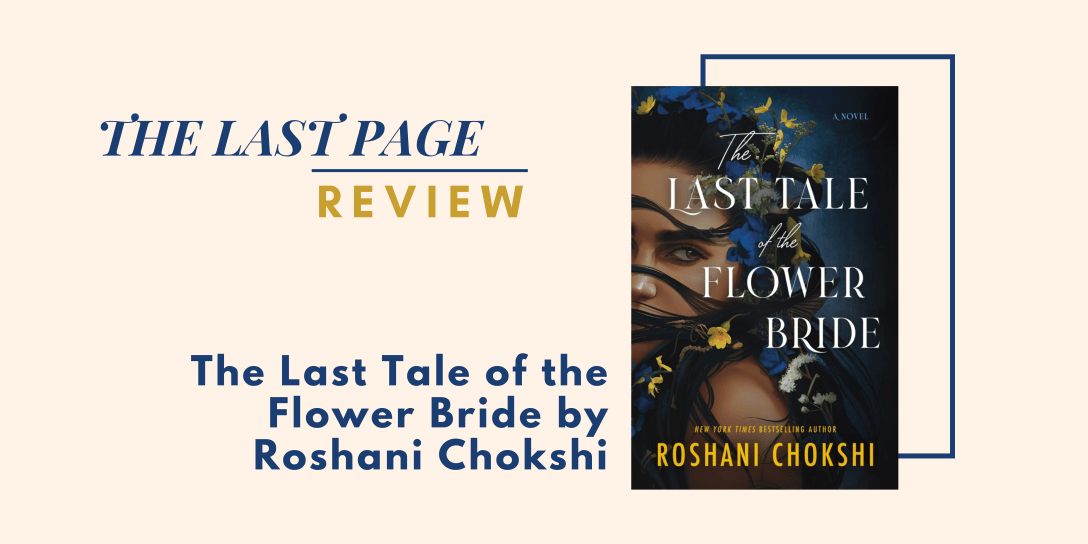
Review: The Last Tale of the Flower Bride by Roshani Chokshi

Rating: 5 out of 5.

They had a seemingly happy marriage: he, a scholar of fantastical stories, and she, Indigo Maxwell-Casteñada, a wealthy heiress with a mysterious past. Despite their differences, the couple found solace with one another, and soon a bargain was struck in exchange for love – that the scholar could have her heart, provided he never inquire into her past. For a time, there was harmony, but when Indigo learns that her estranged aunt is on her deathbed, the couple return to the place where her story began, the House of Dreams. Within the manors walls, winding staircases, and dusty rooms, lie plenty of secrets far too seductive for the bridegroom to resist. As the house reveals the past of another girl, Azure, Indigo’s childhood friend long gone, he is willing to search between both reality and fantasy to learn the truth about his bride’s past, even at the expense of their binding promise.

The Last Tale of the Flower Bride is a luscious gothic feast, interlaced with fairytales, myth, and the treacherous secrets of a marriage. Wandering the halls of the crumbling House of Dreams, Chokshi spins her tale, interweaving fairy tales into the central narrative amidst broken promises and childhood dreams. Testament to everything I love about the gothic, this novel delivers a startling atmosphere, set around a crumbling manor and its ability to suspend the past. Chokshi absolutely dazzles, with poetic prose and the kind of fairytale spinning only she could bring to fruition. Everything inside me yearned to read this exquisite gothic debut from the moment it was announced, to step inside the House of Dreams and deconstruct the secrets hidden within its winding halls. The experience reading this was all the more mesmerizing, as I fell into Chokshi’s labyrinth of mystery, led deeper between the past of the house by Azure’s perspective, and the present day, with the bridegroom’s suspicions. There was quite the unsettling back and forth with these two, aided by the different tones employed – the shift from Azure’s childhood wonder, to the unfortunate realization that happened on both sides. I still can’t wrap my head around how beautifully written this novel is. Lush, dreamy writing is undoubtedly in Roshani’s wheelhouse, and this is my favorite of hers thus far. This book twisted my expectations up in knots until right at the very end, and each betrayal and exposed truth scored a little deeper. Infused with a kernel of romance, Roshani Chokshi breathes life into this resplendent and tragic gothic story. The Last Tale of the Flower Bride is everything I could possibly wish for in a gothic novel, and the way it slowly approaches the final act will leave you breathless in its downfall.

Thank you to NetGalley and the publisher for providing this arc in exchange for an honest review.

Trigger warnings: blood, death, violence, murder

Buy a Copy:

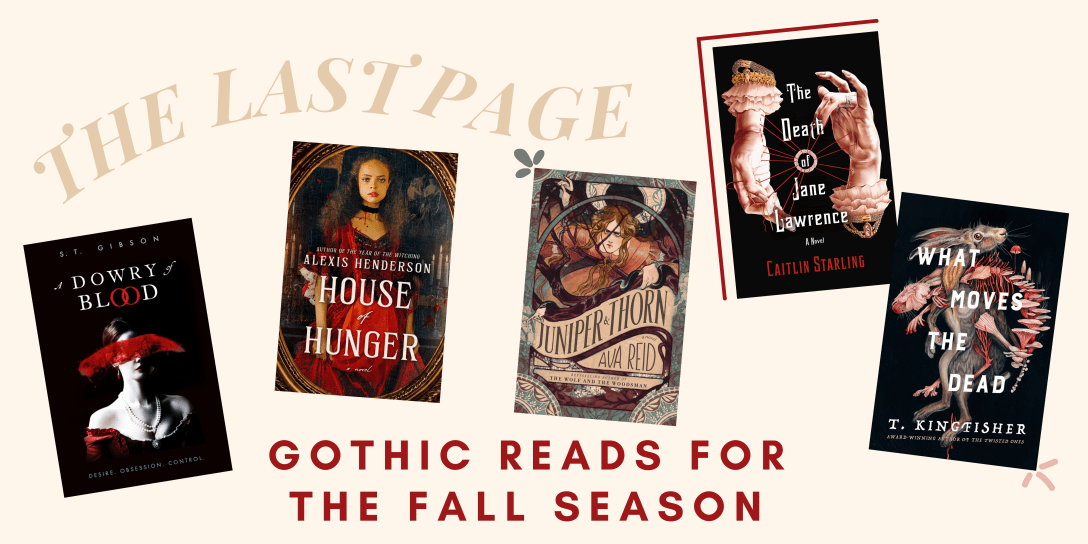
Lets Talk: Gothic Reads for the Fall Season

Everything gothic, from retellings, to gothic horror

Fall is one of my favorite seasons of the year, and what better way to celebrate its arrival than by sharing some of my favorite gothic novels from the last two years. If you’re like me, then fall is the time that you reach for gothic novels and horror more than anything. Something about the leaves falling and the temperature dropping puts me in the mood to read about desolate castles, blood, and murder. Even if you aren’t the biggest gothic fan, fall is undoubtedly the perfect time of year to give it a try or another shot. This post will reach everything from vampires to haunted castles, and retellings. Of course, these are just a select few of my favorite gothic reads. Regardless of the time of year, I am always looking for more, so please drop a recommendation if you feel like it. Spooky reading!

Gothic Recommendations

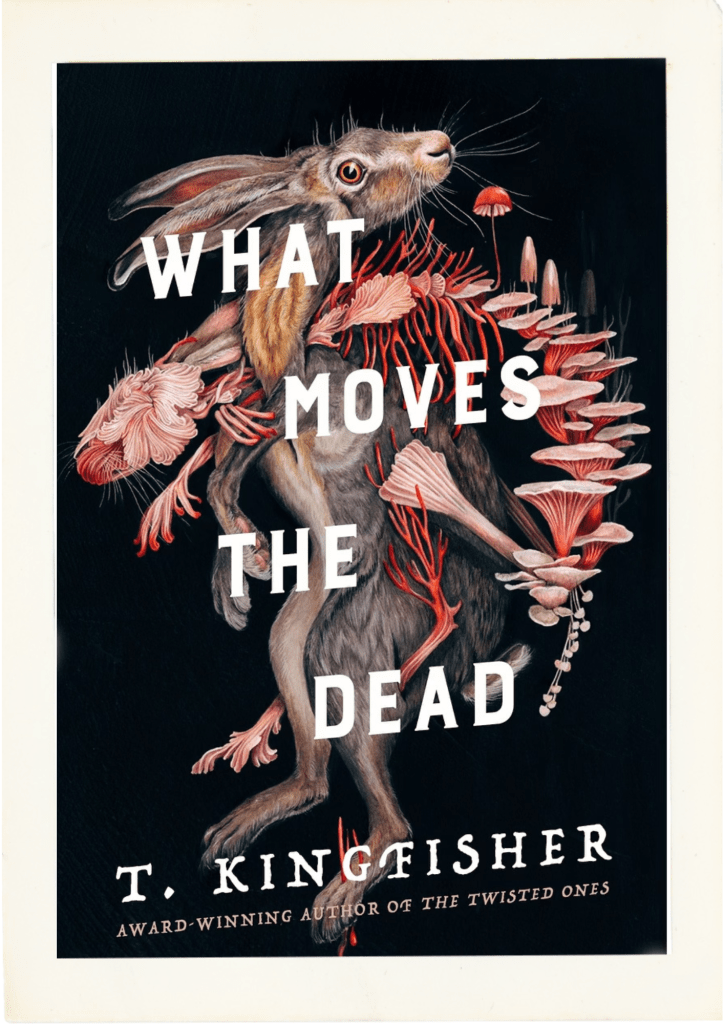
What Moves the Dead by T. Kingfisher

T. Kingfisher is a new author I have discovered this year, with an extensive backlist in both fantasy and horror. Their new novel, What Moves the Dead is an unsettling gothic retelling of The Fall of the House of Usher. Following the retired soldier Alex Easton, coming to the aid of a dying childhood friend, we explore the house of Usher run amok with mushrooms and unpredictable wildlife, and set around the malevolent murky depths of a lake. What Moves the Dead has a suspenseful build to it, leaning more towards the classic horror I have come to love. Perfect for the everyday Poe fan, or someone looking to read more of the genre.

Trigger warnings: Body horror, animal death, death, war, suicide, gore

Buy a Copy:

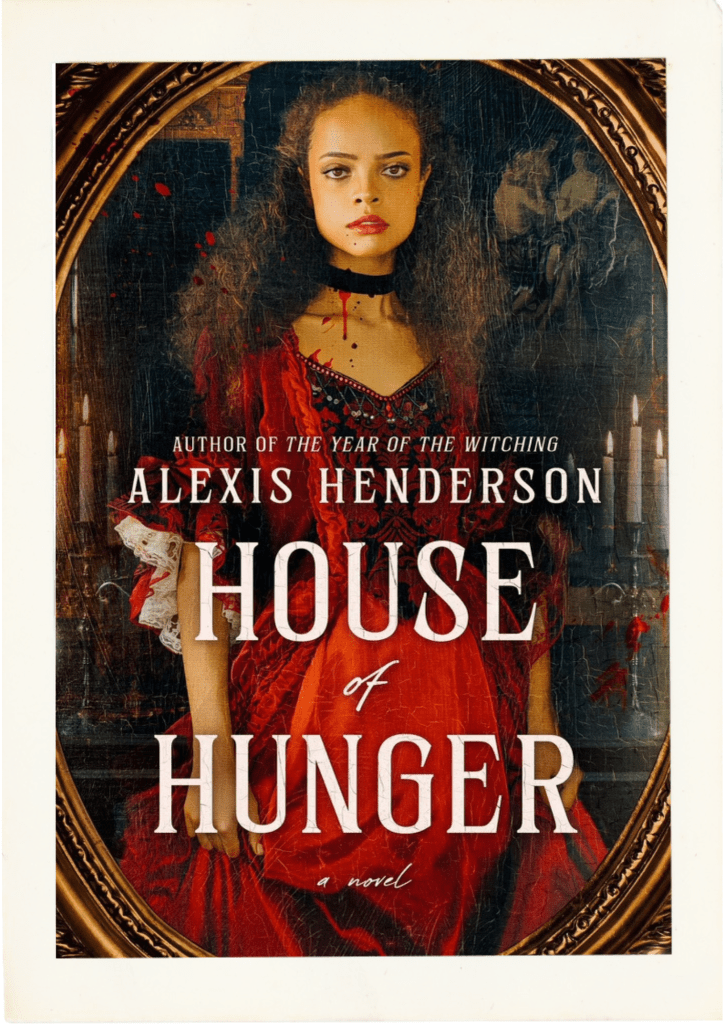
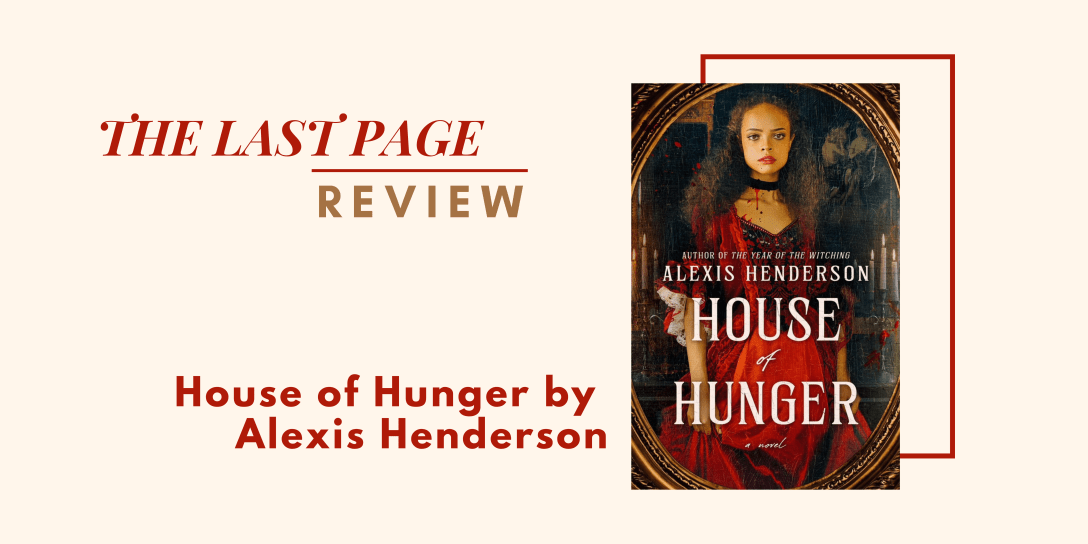
House of Hunger by Alexis Henderson

Queer horror has definitely had a resurgence this year, and House of Hunger is one of my favorites of them all. There’s a sprawling estate with plenty of secrets inside and a vampiric regime that preys on impoverished women. Henderson has perfected the gothic atmosphere, combining the horrific, an analysis of desire, and a sweeping narrative that ensnares the senses. Following heroine Marion, as she applies for the position of bloodmaid, and discovers the truth behind the illustrious houses of the North, this novel delves deep into its corrupted heart. House of Hunger comes packed with a gruesome twist that you won’t want to miss!

Trigger warnings: blood, death, violence, gore, murder, torture

Buy a Copy:

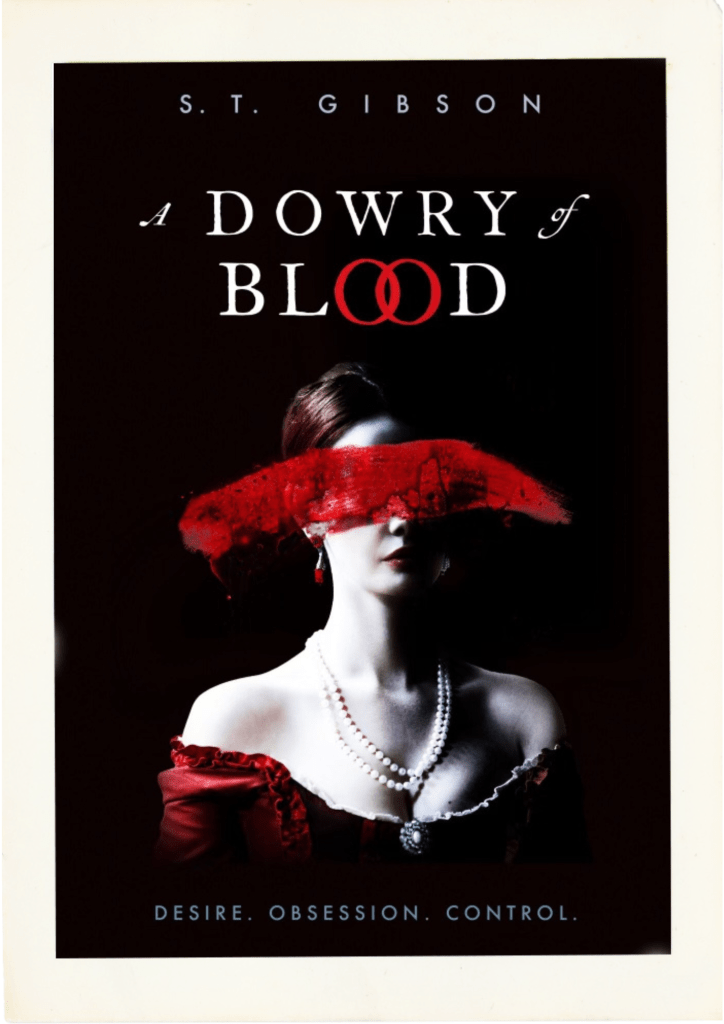
A Dowry of Blood by S.T Gibson

An exquisite reimagining of Dracula’s Brides in the form of an open letter from the first bride Constanta; A Dowry of Blood is an achingly haunting and beautiful novel that spans centuries in the life of its narrator. S.T Gibson devises an evocative narrative, chronicling the quiet descent from love into violence over many years. This queer polyamorous vampire novel has re-debuted this October through Orbit and what better time to read it than the Halloween season. Everything about this is exquisite, a combination of sapphic yearning at the opera, found family, and a moving exploration of relationship abuse.

Trigger warnings: Emotional abuse, blood, death, murder, abuse

Buy a Copy:

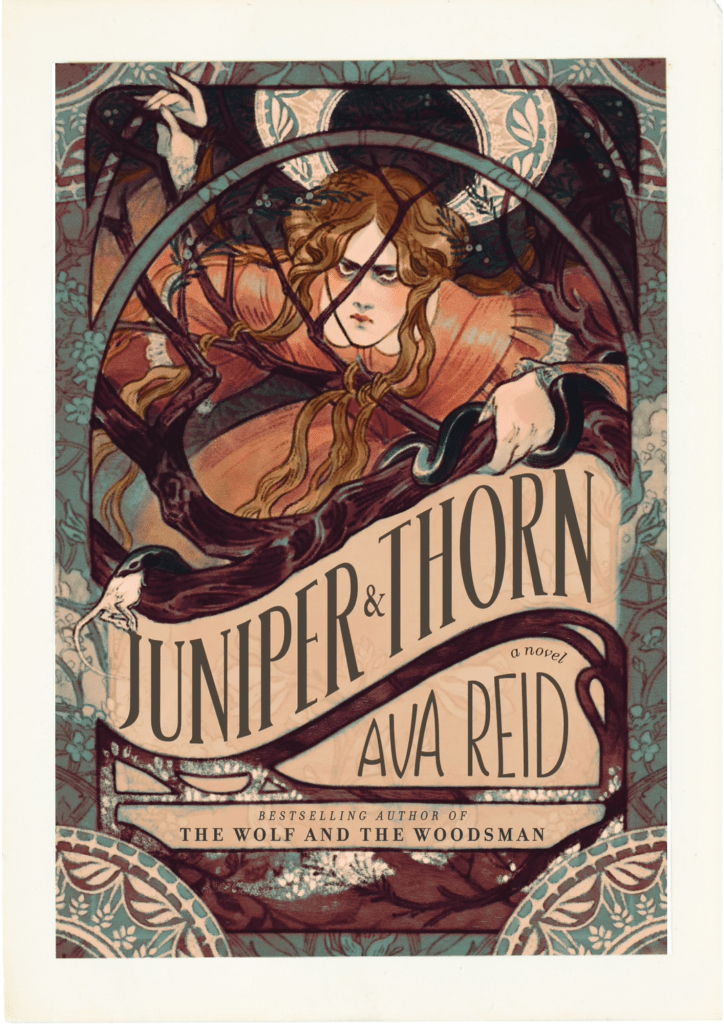
Juniper & Thorn by Ava Reid

Continuing the trend of retellings, Juniper & Thorn is one of my favorites, a gothic horror retelling of The Juniper Tree that just released this year. Honestly, Ava Reid is THE author for fantasy and the gothic, and they always manage to deliver an impeccable story that ticks all the boxes. Juniper & Thorn is a phenomenal story full of monsters that await you down dark hallways and the ones within. Its examination of survivorhood, defiance, and the monstrous is something I will carry with me for a long time. If any gothic horror is going to stick with you, it’s going to be this one.

Trigger warnings: violence, emotional abuse, gore, blood, death, murder, body horror, cannibalism, eating disorder (bulimia), vomiting (graphic), sexual assault, antisemitism, xenophobia, drug use 

Buy a Copy:

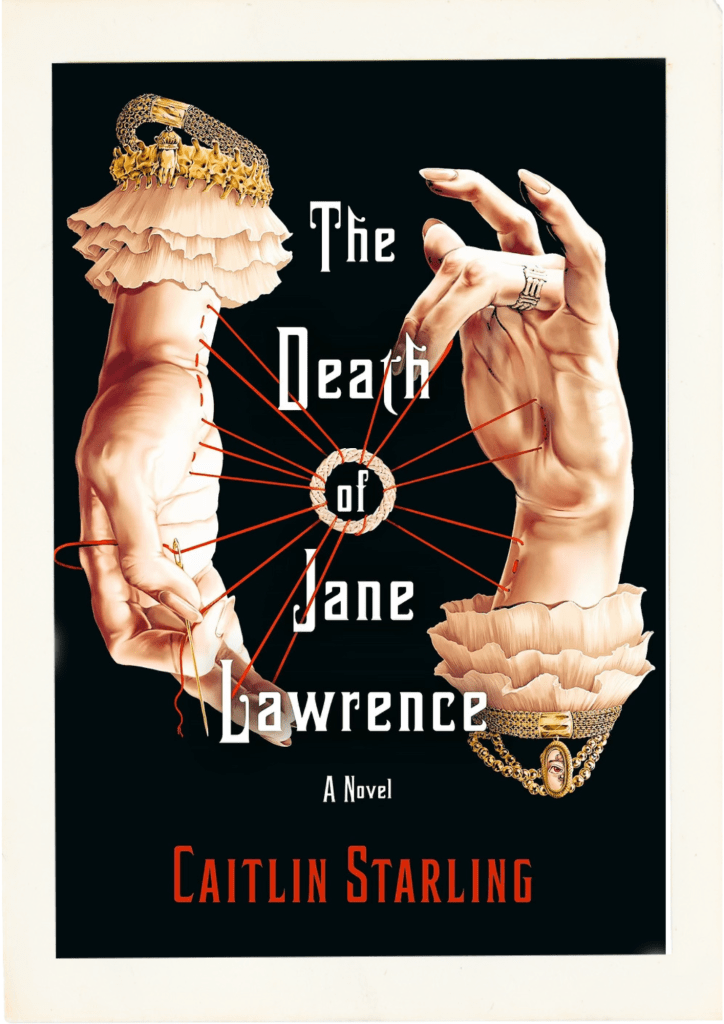
The Death of Jane Lawrence by Caitlin Starling

The Death of Jane Lawrence has been aptly compared to Crimson Peak, with a narrative so mind-boggling it completely threw me over. Set in a dark version of Post-War England, we follow the bright and practical Jane Shoringfield as she makes a marriage of convenience centered around a bargain she won’t be able to uphold. This is one of the most brilliant and unnerving books that I have ever read within the horror genre. Starling weaves a startling story with layers that cannot be fully parsed with just one glance and one that I continue to think about to this day. It’s gothic horror with a historical layer and a side of discontent.

Trigger warnings: Blood, gore, medical procedures, drug use, child death, death, gaslighting

Buy a Copy:

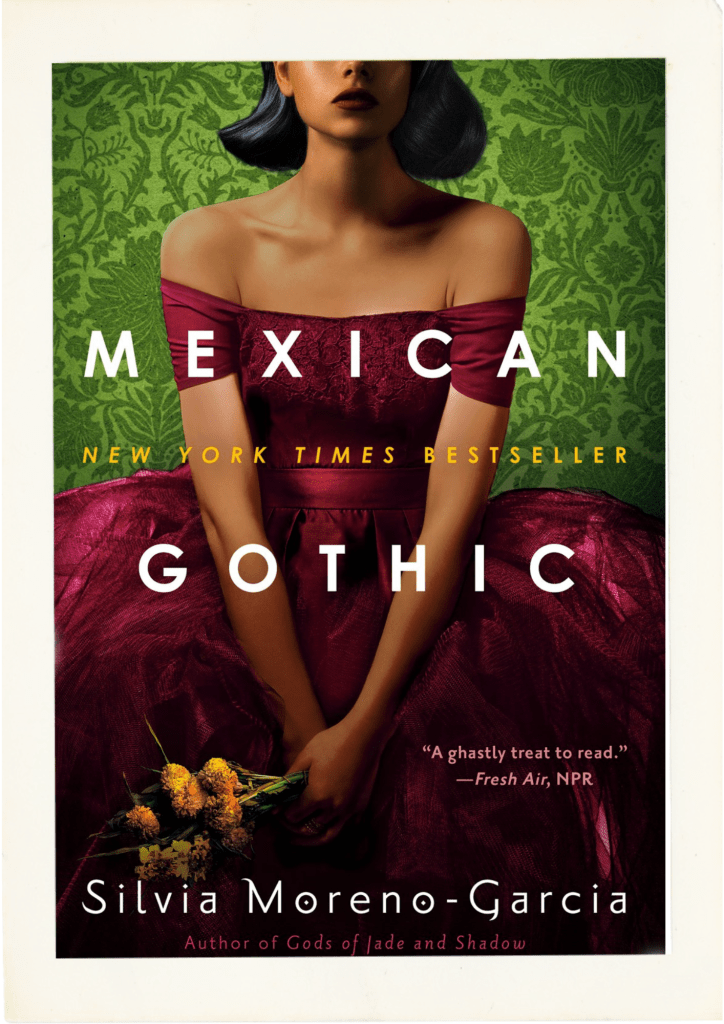
Mexican Gothic by Silvia Moreno-Garcia

An instant recommendation of mine is always going to be Mexican Gothic by Silvia Moreno-Garcia. This is comped as Rebecca meets The Yellow Wallpaper, and honestly, nothing could be a more accurate comparison. A gothic that burns slowly and then doesn’t catch its breath until the very end —complete with a twist that still keeps me up at night, Mexican Gothic is a great venture into gothic horror. Moreno-Garcia is one of my all-time favorite writers, with an insane capacity to genre-shift and spin the stories that stay with you. Mexican Gothic is arguably her most well-known novel, and for good reason. It’s got a creepy family estate, and a horrific family legacy to unpack before its smashing conclusion.

Trigger warnings: Violence, death, body horror, sexual assault, sexism

Buy a Copy:

This is coming a bit late into the season so I’ve already had the chance to revisit a few of these and try some new reads. The books above remain my absolute favorites of what the gothic has to offer, and if you try and like any, be sure to reach out and let me know. Every single one of these authors has other works I have adored, and I cannot recommend delving into their backlist, especially if you liked any of them. Currently, any and all of Jennifer McMahon’s books are on my upcoming reading list, as well as a few of Paul Tremblay’s horror novels. Both authors have provided a fascinating dive into the horror genre and I hope to read more before the season is out!

Review: House of Hunger by Alexis Henderson

Rating: 4.5 out of 5.

The advertisement in the paper seems almost written in blood. It comes on behalf of the illustrious houses of the far north, where wealthy nobles live for the finer pleasures of human blood, relying on young women known as bloodmaids to supply it. Happening upon this strange advert is Marion Shaw, a young woman desperate to leave her current circumstances, yet with no hopes of doing so – until now. When a taster deems her blood an exquisite and rare taste, Marion is taken north to be presented as a potential new bloodmaid, where she finds herself the newest member of the notorious House of Hunger. Drawn into the dark world of which Countess Lisavet rules, Marion is quickly swept up in her allure and a hopeless desire to please her. The walls of the house cannot hide everything, and when an expulsion of the head bloodmaid reveals a pattern of past bloodmaids gone missing, Marion learns that deep within the house, lies something truly wretched.

House of Hunger is the unforgiving gothic horror of my dreams, soaked in blood and depravity. One look at its premise, and I could feel in my soul that this was going to be an instant favorite. With vivid descriptions and luscious prose, Alexis Henderson paints an alluring picture of a desolate house set on a sprawling estate and the noble families for whom the taste of blood still holds sway. Where desperate young women plucked from poverty are traded comfort in exchange for the endless supply of blood they can provide. Right from the get-go, this novel scorched a direct path to my heart, assisted by a devastating gothic atmosphere that slowly captured an essence of disquiet, building like a horrific symphony I could not look away from. Of course, no gothic horror is complete without its resilient leading lady, and Marion Shaw is certainly that, a sensational protagonist to follow as the truth behind the house of hunger is unveiled. Entangled in a hypnotic seduction with Countess Lisavet and set off by an unsettling discovery, Marion’s journey was everything I could have possibly asked for, fraught with disillusion and a descent from unwavering devotion into violence. Henderson did an amazing job balancing why someone in Marion’s position would be willing to enter into a bloodmaid contract, and how the wealthy took advantage of these women, that in their eyes, were easily expendable. Coupled with intensifying house politics, the claustrophobic feel of the narrative, and the revelation to the inner workings of the houses, this story takes a depraved and horrifying final bow. House of Hunger is everything I could possibly want in a horror novel, a fearsomely dark tale with a corrupted center.

Thank you to Edelweiss and the publisher for providing this arc.

Trigger warnings: blood, death, violence, gore, murder

Buy a Copy:

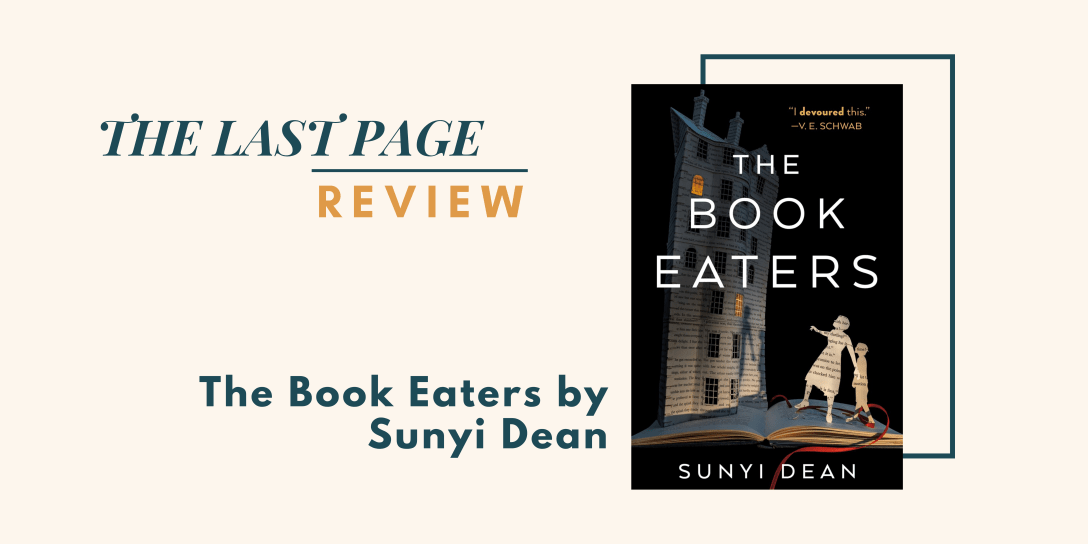
Review: The Book Eaters by Sunyi Dean

Rating: 5 out of 5.

On the outskirts of England lies a secret society, a line of supernatural beings known as book eaters that consume books as food, retaining all of their content and knowledge. Threatened by their ever dwindling numbers, book eater women are raised into a life of marriage contracts and childbearing. In spite of this, Devon Fairweather, the sole daughter of an old clan, has grown up curious, but with the birth and subsequent seizure of her firstborn daughter, Devon realizes the truth of her circumstance. When her second son is born a mind eater, a darker subset of book eaters with a hunger for human minds, Devon vows not to make the same mistake and flees with him. Freedom is not all it is cut out to be, and as Devon and her son Cai attempt to live among humans, she is forced to do horrifying things for them to survive. Against her will, Devon is drawn deeper into the inner workings of her kind, until remaining free becomes a matter of unspeakable sacrifice.

The Book Eaters is a decadent dark fantasy novel alight with imagination and a fierce kind of devotion. Debut author Sunyi Dean draws together a contemporary gothic horror narrative centered around the power of stories and breaking free from a restrictive upbringing. It’s an altogether fitting title for a book that I aptly devoured in just one evening. With a striking atmosphere that evolved with Devon’s recount of her past, I fell in love with the imagery presented and the progressing themes of loss, patriarchy, and control. I wholly admire the emotional journey this book guided me on, quietly leading me through Devon’s descent into disillusion and ferocious fight for her and her son’s freedom. Narrative structure, in turn, is what really set this up for success. The flip between the past and the present was delicately done, slowly revealing Devon’s history and its influences on her current thoughts and actions. Dean’s use of epigraphs at the beginning of each chapter worked in the same fashion, lending themselves to the larger issue of how the stories we are exposed to can shape our capacity for possibility. How love lends itself to sacrifice and restricting imagination becomes control. The topic of motherhood is subtly investigated on behalf of Dean, as Devon comes to accept that love doesn’t have to be another form of control and she becomes more ruthless in the face of her son’s survival. While it was a smaller subplot, Devon’s evolving relationship with Hester and her own sexuality really sealed the deal for me on this one. Book eaters may consume texts to survive, but at the center of this debut is a testament to the role of stories in shaping our minds. Devon’s character arc illustrates beautifully the impact of new experiences on broadening our opportunities and view of ourselves. Beautifully constructed and deeply moving, The Book Eaters is a feast of a novel, interlocked with a quest for agency, transformation, and ultimately identity. 

Thank you to Edelweiss for providing this arc to review

Trigger warnings: Body horror, gore, explicit violence, domestic abuse, violence against children

Buy a Copy: