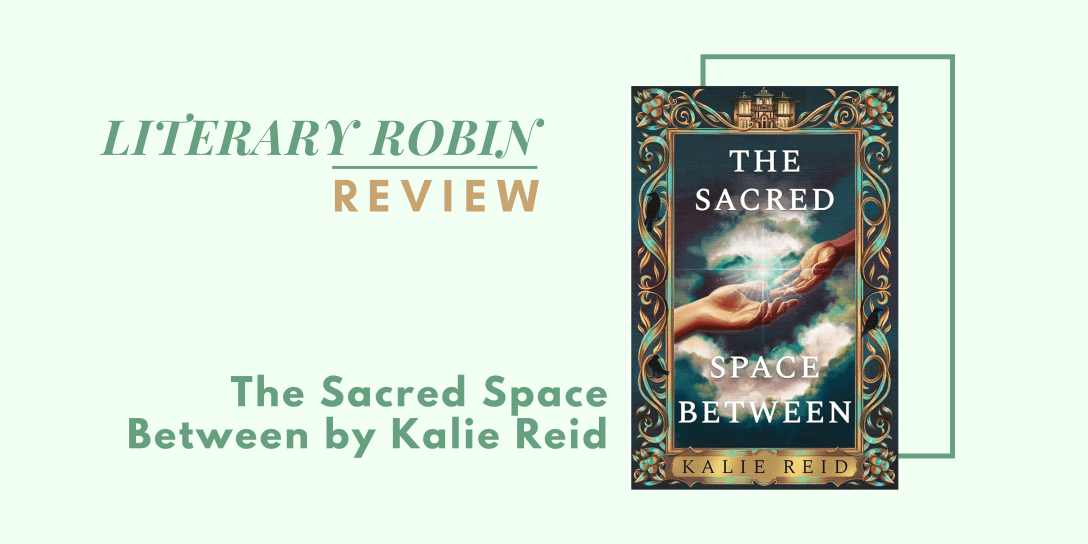
Review: The Sacred Space Between by Kalie Reid

Rating: 5 out of 5.

A devout acolyte trained in iconography, Maeve has dedicated her life to upholding the saints through her artistic talents. Sequestered away at the Abbey, Maeve lives in a constant state of isolation, prayer, and devotion. After a decade in the Abbey and many years honing her craft, the opportunity to replace the lead iconographer, Brigid, is finally within her grasp, until her mentor, Ezra, gives her a daunting task. Far away from the Abbey’s walls a saint lives in exile, defiling the Abbey’s teachings and tainting the miracles of the saints. His name is Jude and he has long lived under the Abbey’s thumb, never far enough to escape its influence. Maeve is tasked twofold: paint an updated likeness of Jude while using her place within his household to acquire information on his wrongdoings. Desperate for a chance to prove herself, Maeve leaves behind the Abbey and travels to Ánhaga, a house on the outskirts of the Goddenwood. There, Maeve meets Jude, and he is nothing a saint should be. For one, he is just a boy dabbling in heretical notions. Second, Jude is intent on driving Maeve away, by any means necessary. When Jude discovers that Maeve possesses the very saintly abilities coveted by the Abbey, he realizes they have more in common than he initially thought. Together they could bring the Abbey to its knees, provided they don’t betray each other and can avoid becoming martyrs themselves.

The Sacred Space Between is a miraculous novel, far exceeding the tainted magic of saints to place an expert brush upon the experiences of loneliness, religious trauma, and the ever constant quest for belonging. With reverent hands Kalie Reid constructs her Abbey, its spires reaching ever upward and its arched cloisters replete with devout acolytes sequestered away to pray and to serve. It is here that Maeve, an iconographer, will be sent out on a mission to spy on a saint in exile and come to uncover the truth of the magic bequeathed to their saintly figures and the rotten center of her faith. Interrogating faith and its power to uplift and to subjugate, Reid’s debut dares to tear away the facade from religion, exposing the lies and the many lives impacted in service to those in power. The Sacred Space Between is about systems of power, yes, but it’s also about the power found in human connection and the moments where we find belonging and kinship with others. It’s a story full of immeasurable yearning—yearning for things to be different, yearning to find your place, for your autonomy, and yearning for the unfriendly exiled saint you are forced to spy upon in an isolated gothic manor house. Kalie Reid’s The Sacred Space Between is exquisitely rendered, drawing readers into the contentious space between a heretical saint and a devout iconographer that is not just reverent but holy.

While The Sacred Space Between is a romantic fantasy, at its heart it is a gothic with all the brooding atmosphere and descriptive imagery to move me unlike any other. The wildswept fog ridden moors on the outskirts of the Ánhaga, its wallpapered walls, and the hidden library of memories all paint a desolate picture of loneliness and melancholy central to Kalie Reid’s larger commentary. The house, Ánhaga, is a physical manifestation of the corruption at the heart of their faith, yet comforting all the same in these small spaces where tainted faith cannot reach. This is felt by Maeve and Jude’s perspectives both, but it is Maeve’s character in particular who presents an aching loneliness and an alienation tied so intrinsically to her beliefs. Her desire to be seen and trusted and remembered is a stark contrast to Jude, whose very faith has been perverted through his sainthood and physical abuse. The greatest desecration of someone’s faith is the abuse through faith itself, from the physical impact of Jude’s torture at the hands of the Abbey figures to the spiritual abuse of Maeve from her mentor, Ezra. Reid’s journey instills the necessity of faith as to question, to be allowed curiosity and have that accepted. But faith, sainthood, and iconography exist in a twisted cycle that exists to satiate the powerful and control those who dare to question the system they are a part of.

In The Sacred Space Between the way to break free lies in the hands of an exiled saint and an iconographer who hate each other (just a little). Trapped together in an isolated house with nothing but their conflicting agendas and personal ghosts for company, Maeve and Jude clash and retreat immediately and boy is the tension magnificent. Reid instills all of my favorite things into this romance, divisive views as a source of greater tension, overwhelming pining, and everyone’s favorite component: romantic yearning. As a lover of conflict in my romances, Maeve and Jude were constructed to drive me insane. Everything is held captive by their differing views as they interact and desire to know more about each other and that in turn only furthers the tension driving them apart. Yet Reid unites Jude and Maeve in a profound loneliness centered around their beliefs, initiating a quest to destroy the Abbey and return the magic siphoned from their saints. With Jude and Maeve’s bond cementing, so does our understanding of this faith and how saintly magic is controlled. Reid ties this all to religious iconography and it’s nothing short of marvelous. Religious iconography already harnesses its own kind of power, but adding in the layer of memory magic, and Reid’s stance is forever ingrained in the very paint used to bind the saints—and their magic, to the church.

The Sacred Space Between is its own artistic masterpiece. One that grabs you with two hands and forces you to look upon all that it has to reveal. For Kalie Reid that is the lasting impacts of religious trauma and abuse and the personal power found in taking something back for yourself. This novel presents many essential ideas around organized religion—how martyrs further religious fanaticism, the danger of blind faith, and the control gained in building someone up from nothing. This connects perfectly into the concept of memory magic harnessed through the iconography of their various saints. Art has power too, and here it acts as a gateway between saint and elder, magic and the believers. Memory in turn, allows these elders to abuse and control with impunity, as there is no one alive with the memory of what was truly done. If memory can be controlled so can these elders shape their acolytes and in effect own them and their faith. I love reading books that cause me to question, the ones that linger for days after I finish reading. This is essential to Kalie Reid’s debut. Even with all the romantic yearning, the kneeling, and the groveling, there is so much to sift through not just on the surface of the narrative, but far beneath. Limned a dark gothic atmosphere, this thought provoking romantic fantasy novel delves far into religious subjugation, iconography, and the weight of sainthood. Fleeting as mist, but made permanent through memory and saintly magic, The Sacred Space Between is one story to remember and find your way back to time and time again (just like Maeve and Jude).

Thank you to Netgalley and the publisher for providing the advance review copy.

Trigger warnings (provided by author): blood, death, religious trauma, gaslighting, emotional abuse, child abuse, scars, discussions of past self-harm, fire injury, panic attacks, suicidal thoughts
Preorder a copy – Out 4th November

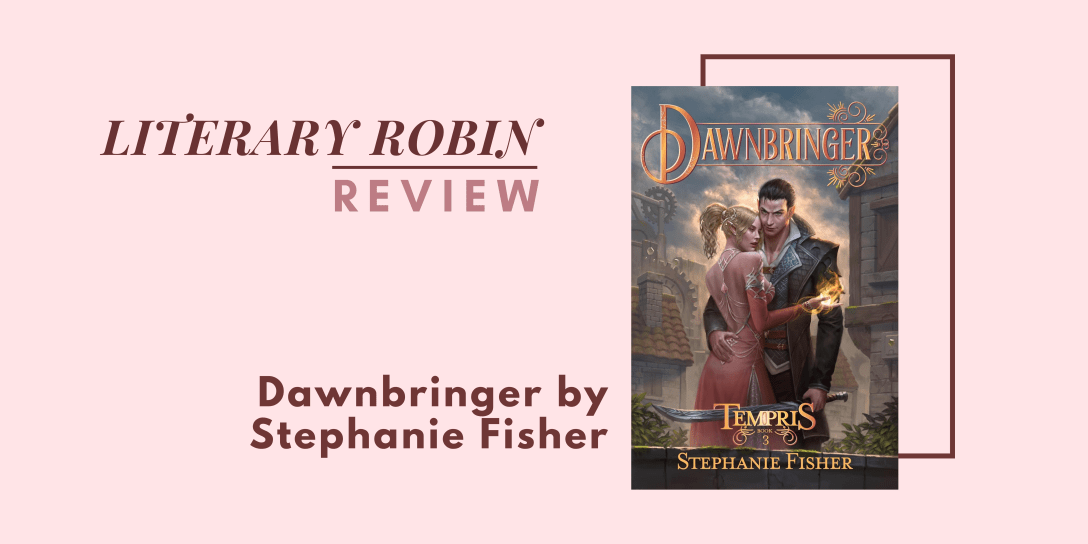
Review: Dawnbringer by Stephanie Fisher

Please note this review contains spoilers for the former books in this series, Shardless & Acolyte, and contains references to some of the events in this sequel. Read with caution. 

Rating: 5 out of 5.

Talya Caro survived an entire year within Queen Azura’s time loop, honing her magic for the threat to come, of which she knows precious little. Now reunited with Skylen and his wounded and demanding brother Kato, the three have begun the long trek back to Ryme through the wilderness. As Taly, Skye, and Kato return it becomes imperative they maintain the narrative that Taly is human and not the last of the time mages once hunted to extinction. Still reeling from the Shade attacks, Ryme has refortified but now a plague is sweeping through the human populace threatening so much more than just the shardless. In spite of the unrest, Taly is finally back with Skye, her friend and great love, and her family, which would be enough if not for her magic placing a target on her back. For Skye the knowledge that Taly will always be hunted draws him down a dark path where he risks harnessing a bloodcraft power that could destroy him from the inside out, if he is not first caught and imprisoned. Something stalks the shadows biding its time, and with the Aion Gate close to alignment Taly knows time is the one thing she doesn’t have—before lines are drawn and she is forced to decide what side she’s truly on.

Just me and my emotional support thousand page fantasy novel I’ve waited five years to read against the world. Dawnbringer is the long awaited third installment in Stephanie Fisher’s Tempris Pentalogy, a fantasy series set within an island sundered by magic where time mages are hunted and citizens are left bereft of the magic needed to travel between realms. A hodgepodge of fae realms—modern and fantastical, time mages gone rogue, zombie-like threats, and mages of all kinds mark this rare romantic fantasy series. Encompassed in a steampunk-esque world with regency social strata, it’s safe to say Tempris is atypical of anything else within this genre. Five years since the book that started it all, Shardless, and the cliffhanger of its successor, and this third installment is unquestionably worth every wait. Simultaneously the most romantic and traumatizing thing ever, Dawnbringer raises the stakes with a deadly plot spanning worlds and our spunky hero Taly at the center, trapped between her old life and a predetermined fate. Stephanie Fisher reunites her lovers Skye and Taly on the brink, with dark bloodcraft magic taking hold and timelines colliding. With time magic in the mix, the tension and angst are dialed up to the max and nothing is more devastating than being left in its wake.

After five years and six rereads of the first two books in this series, who is to say I don’t have a soul bond with the entire Tempris series? From discovering it during the depths of the pandemic to now, every time I reread Tempris I’m reminded of how excellent it truly is. Stephanie Fisher has a firm hold on her world building, character arcs, and romance—a virtuoso painstakingly taking apart her narrative and layering in lore, timelines, and differing streams of magic. Dawnbringer takes everything from the first two books and elevates it in an overwhelming mix of romance and emotional devastation. And I expected nothing less from Stephanie Fisher. We have timelines colliding, interdimensional beasts, a big bad threat: Aneirin or “Bill” (a nickname only Taly could have come up with), and just general tomfoolery ensuing. In the time since the first two books were published we were left with many questions. Mainly: what is the great threat closing in on the island of Tempris. At long last we have an answer, and the threat is indeed cataclysmic. With Taly facing down her fate and attempting to have it all, Dawnbringer acts as a stepping stone for the next stage of this series where its titular character is the deciding force in a timeline set before her birth. The secret recipe in this novel is tension, tension, tension, and it can be felt in every facet of the narrative.

Dawnbringer proves that families that destroy together stay together—for the most part. Where the first two books dealt primarily with Taly coming into her identity as a time mage and reconciling a violent past that led to the death of her biological mother and her uncle, Dawnbringer is altogether different. Back in Ryme, Taly reunites with her adoptive parents, Ivain and Sarina, and her cousins, Aiden and Aimee, friend and general nuisance respectively. There are plenty of difficult conversations and the reorienting of previous dynamics now that Taly’s heritage has been made known, but we finally get to see this family unit be just that—a team. How else are you supposed to trick an entire population of fae into believing a time mage is not walking amongst them? Two characters stole most of my attention in this sequel: Aimee and Kato, the brash brother of Skylen. Kato has been an unequivocal favorite of mine even before this novel but I can now confidently say I am begging for a romance between him and Aimee. Something about arrogant men and the mean women who hold them in check is a dynamic I crave deeply. As Dawnbringer progresses, timelines layer and future versions of our characters flit in and out of the present. In an action packed final act, Fisher tests her found family in a violent stand against the Sanctifiers as the opening of the Aion Gate looms ever closer and Taly is caught between her past and the choice hinted at so long ago. It’s as painful as I anticipated and yet somehow that did not prepare me for the weight of it, nor the aftermath.

Five years separate the publication of Dawnbringer from the beginning foundations of the Tempris series, but you wouldn’t be able to tell from the seamless way Fisher integrates her three novels and dawns a new era. Everything in this novel is heightened: the fate of multiple worlds, the precarious balance of the central timeline, and of course our star crossed lovers, Taly and Skye. While her family faces down a plague and an organization dedicated to eradicating those that can manipulate time, a darker threat emerges intent on harnessing Taly’s magic. With a thousand pages (at least in the ebook), no amount of page time is wasted as Fisher dives into the inner workings of Tempris and begins to uplift her previously called upon events—like the reveal of what Taly was asked to say no to by Queen Azura all those months ago. The interjections from Cori, the lil homage to Orphan Black, and the cute moments with Calcifer brought on some necessary humor to outweigh the darker parts of this novel. Speaking of which, Skylen’s descent into bloodcraft magic tied as an extent of his love for Taly. That he would willingly twist himself from the inside out just to have a chance at protecting her was not just thoughtfully developed, it was romantic as hell. In Dawnbringer, the last of the time mages takes a stand and Stephanie Fisher proves she has the power to not only take this series to new heights but to new levels of pain inflicted upon her readers. This series continues to be far too underrated for my liking. I lament both the ending and the fact that I cannot commiserate with others on that incredible cliffhanger.

Trigger warnings: death, blood, murder, violence

Buy a Copy:

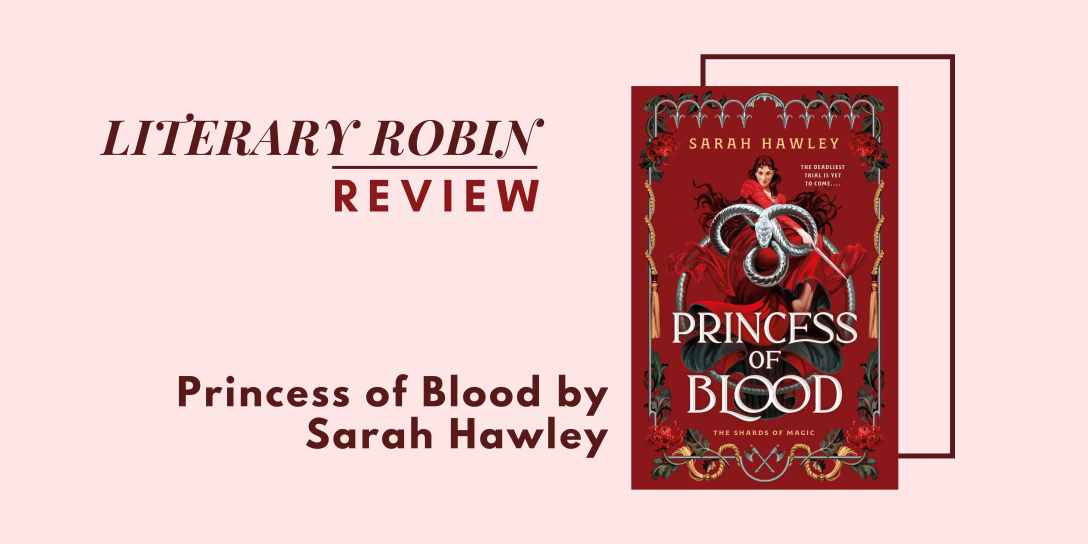
Review: Princess of Blood by Sarah Hawley

Please note this review contains spoilers for the former book in this series, Servant of Earth, and contains references to some of the events in this sequel. Read with caution.

Rating: 5 out of 5.

Put forth to be executed, betrayed by the man she thought she trusted, Kenna Heron expected to die by the magical shards that grant the fae their immortality. Instead a balance was righted for the destruction of Mistei’s Sixth House half a millenia ago, and Kenna, formerly human, is granted the mantle of princess to the once decimated Blood House reborn. Awakening to her new circumstances in the middle of a violent takeover, Kenna manages to kill Mistei’s corrupt ruler, King Osric, yet the power vacuum in the aftermath of his death only threatens further unrest. With her former lover and Void House’s heir aiming for the throne, Kenna knows not who to trust—except Lara, her exiled mistress and Kallen, the former King’s Vengeance. Kenna holds the deciding vote in who should rule Mistei but has reached a stalemate, while the six houses are fracturing against divided loyalties, and a distant cousin of King Osric is vying for the throne. All she ever wanted was to survive the cruel land of the fae, but in the footsteps of her death and rebirth, it’s no longer just about her own survival. With a deadly assassin haunting her steps, and Mistei teetering on the edge of civil war, Kenna will prove once and for all if she can bring balance to Mistei, or fall into darkness like those of a long forgotten house.

Sarah Hawley’s, Shards of Magic entraps six opposing fae houses beneath the earth to grasp at power and immortality while prey to the machinations of a merciless king. This series put down precarious roots in Servant of Earth, when Kenna Heron, a young woman, braved the treacherous bogs to cross into the fae lands, becoming servant and spy to the ignoble Earth House. Princess of Blood returns us to a world reeling in the aftermath of a bloody uprising and hinging on a civil war as loyalties sunder and forbidden love takes root within the cavernous underearth. With few weapons in her arsenal Kenna, newly turned fae, stands alone as princess of the broken Blood House. Armed with Caedo, a shapeshifting talking dagger with a thirst for blood, and two unlikely allies—an excommunicated Earth Fae rendered powerless, and a murderous Void Fae and executioner, Kenna will confront her new charge in a world seeking her destruction. I already knew the Shards of Magic series was doing something special back in book one, delicately connecting tropes and story cornerstones to deliver a unique fae touched tale of rebellion and survival. Princess of Blood is where my heart latched onto this series for good. Sarah Hawley brings a sequel into being that is bloody and unapologetic, equal parts brutal as it is a hopeful beacon for change.

Princess of Blood opens on the edge of Mistei’s uprising, as Kenna, formerly a servant of Earth House is irrevocably changed into a fae and must lead a once annihilated house out of the shadows. Where book one was entirely concerned with her survival, the overarching theme for this sequel is just as transformed—the characters left to fend for themselves within the shadows being thrust into the light, to change for the better or die trying. Sarah Hawley’s character work is at its prime in Princess of Blood as those broken against a cruel crown fight to create a better world. At the center of this is Kenna, whose startling persistence and narrative voice ensorcelled me from this series’ very beginnings, but who takes to newfound heights here in this sequel. Confronting betrayal, death, and now rebirth, Kenna walks the knife’s edge between success or failure for most of this novel, and like the knife itself steels herself against the violence that comes with her position. Kenna’s force of will is impenetrable even as she dodges assassination attempts and hedges her bets to reestablish a broken house. Princess of Blood challenges Kenna’s identity and personal loyalties at every turn, amidst a poignant query into leadership and the personal costs of rebellion.

Princess of Blood is exactly the kind of follow up I love, all about characters who concentrated on surviving for so long confronting a tumultuous future side by side. This sequel concerns all kinds of unconventional alliances, but none is more unexpected than that between Kenna and Kallen, an enigmatic void fae and weapon to a fallen king. Prior to this novel, the interactions between these two were few and far between, yet they were charged with something I couldn’t quite name. Kallen and Kenna have always been predisposed to be something more, and nothing, and I mean nothing, made that more evident than his awe at her coming into her power and murdering Mistei’s king, Osric. Their relationship may have begun with a wee bit of blackmail and cynical chats, but Princess of Blood elevates them to equal standing. Reeling from her new circumstances, cut off from the man who made his life, both Kenna and Kallen are a bit out of their depths with the current state of things. And god do I love how these two are entirely stripped bare of the roles they occupied prior to the events in this novel because that is where the real magic happens.

Now we all love a mysterious fae man with shadow magic, and Hawley provides this with Kallen, a man who has made the shadows his home for so long they are all he knows. More than a bit lonely, wishing for something he can never have, Kallen is the pinnacle of the tortured romance lead. His hidden depths gave this sequel a necessary anchoring, while slightly twisting the archetype of the brooding fae love interest. Despite the blackmail of it all, Kenna and Kallen’s relationship dynamic in Servant of Earth was deeply intriguing to me (maybe because of the blackmail if I’m being honest). Yet, it  wasn’t until Princess of Blood that I unequivocally fell in love with his character. He was the breath of fresh air this book needed, getting oddly excited to spy on people in the catacombs, sparring with Kenna, and just giving her the support she needs as she faces her new situation. Kenna is entirely in control of her choices, but Kallen is someone she can rely on who gives her the space to breathe and say the things she often keeps inside. United in the loneliness of their stations and their call to bring about a better future for Mistei, Kenna and Kallen find solace in one another, and their ensuing romance is just as intimate.

The contrast Hawley draws between Kallen, a man born to be a weapon, and Kenna, a woman who had no choice in wielding the power she was given is a compelling center to the eventual romance. At the mercy of a violent king, Kenna experienced first hand the impacts of Mistei’s tyrannical regime and in Princess of Blood, sets about reckoning centuries of abuse. Kallen has always been hiding. From his father’s brutality, a king’s abuse, and his brother’s secret, all he has ever known is secrets and shadows in a world where to care about anyone is a weakness. This extends into his relationship with Kenna, who in his mind is someone who could be wielded against him if he allows people to see the depth of his feelings for her. Just as Kenna confronts her place as Blood House’s leader, Kallen confronts if he can ever leave his shadows behind to be more than just a weapon to be wielded. Love as its own kind of weapon is the vehicle for most of the conflict between Kenna and Kallen and I was eating up the tension like water in a desert. I am nothing if not predictable, but these two brought a different name to romantic yearning. I was enraptured by the dances, the heavy gazes, and the sexual tension teeming beneath the surface of their interactions. This sequel is for the real yearners because Sarah Hawley knows the hottest thing in the world is a man undone, and that man is Kallen.

Princess of Blood is a calculated dance of moves and countermoves, building to a blood soaked showdown not unlike its predecessor, but singular in its torment. I have this thing where if characters are getting overly optimistic about the future I start to hear alarm bells ringing and that was happening at several points in the final act of this novel. I went into the last few chapters with eyes half closed because I knew Hawley was going to pull something along the lines of the Servant of Earth ending—and I was right to. Currently seeking financial compensation for the emotional damages incurred (Sarah Hawley will pay for her crimes). Even knowing this, Princess of Blood is an all around phenomenal sequel. We get to see these characters challenged by their traumas, surmount difficulties, and ultimately be transformed by its ending. The Shards of Magic series is for the feral woman tearing down a flawed world to build a better one, while being loved for all that they are. In Princess of Blood, Sarah Hawley interrogates the complex morality of immortals and what we owe to those who suffered under the abuses of a crown. With a determined heroine and her bloodthirsty dagger on the scene, Princess of Blood is a chaotic continuation of The Shards of Magic series and will no doubt leave many on the edge as it certainly left me reeling in its wake.

Thank you to Netgalley and the publisher for providing this advance review copy.

Trigger warnings: blood, death, violence, murder, decapitation, torture, alcoholism,

Preorder a Copy – Out 30th September

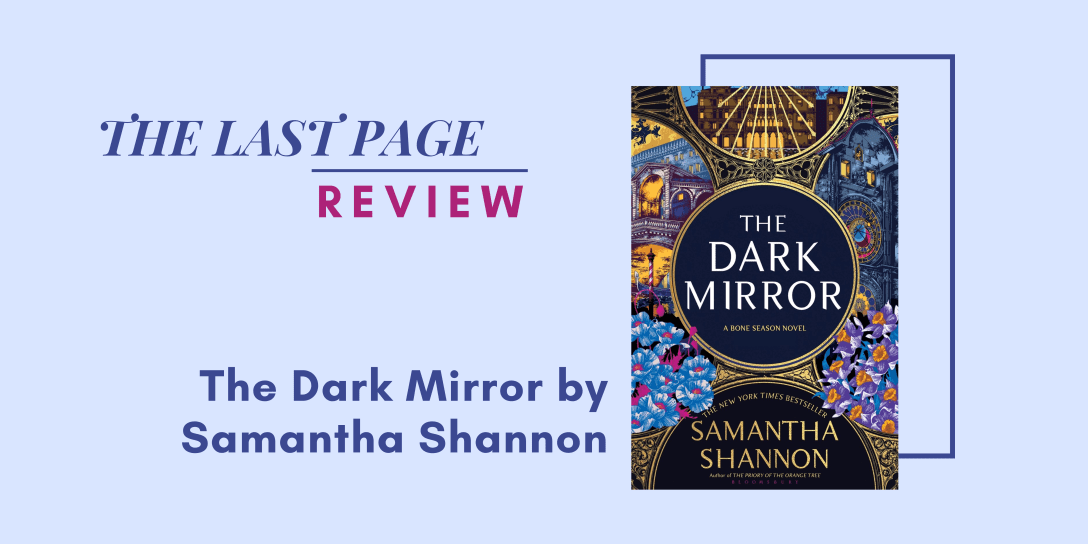
Review: The Dark Mirror by Samantha Shannon

This is book five in a seven-book series. As such, former books and events contained in this installment will be discussed. Read with caution (I’m serious).

Rating: 5 out of 5.

When Paige Mahoney wakes she finds herself captured and outside Scion-controlled territory for the first time since childhood. Six months have passed since the Paris bombings, but Paige has no memory after the night of the masquerade. Dosed heavily with the White Aster plant by her captors to suppress her memory, Paige’s amnesia threatens to drag her under with no chance of returning to her former self. Yet Paige escapes, journeying to Venice to find allies who thought her long dead, and the world transformed in her absence. The memory of Arcturus’ betrayal still cuts fresh, but in coming face to face with the Ranthen and her clairvoyant allies Paige begins to question the truth behind their last conversation. News reaches the Domino Programme of a new Scion plot, Operation Ventriloquist that will tip the scales of control over Europe in Scion’s favor unless they unravel the means behind this new plan. Though Paige was brought out of her stupor with the White Aster it still has roots deep within her dreamscape and there is only one individual who could help her, if he’s even still alive. Traveling to Italy, the team has one chance to bring themselves out of the shadows and play the first hand in the fight over the remainder of the free world. And it all starts with rescuing Arcturus Mesarthim.

What began in Oxford and the clairvoyant underworld of London to the catacombs racing beneath Paris transforms across the winding streets of Italy in this fifth installment to the Bone Season. With The Dark Mirror, Samantha Shannon presents the fifth chapter of her groundbreaking series and it is assuredly her strongest work by far. This fifth book is this series fully realized, in its themes, characters, and deftly constructed plot finally blossoming with astonishing precision. After the agonizing events that concluded The Mask Falling, this sequel is as much a soul-deep reconciliation between Dreamwalker and revolutionary Paige Mahoney and the warden Arcturus Mesarthim, as it is an expansion in the fight to bring the Republic of Scion to its knees. Paige and her allies take the next step outside Scion to unmask a new threat in Italy that will transform the free world. Teeming with angst and decisive action, The Dark Mirror is everything I could have hoped for interwound in one astounding volume. With so many emotional reconciliations, confessed feelings, near misses, and epic confrontations it’s no wonder I spent most of this book being stressed as hell waiting for the other shoe to drop and the rest basking in its brilliance. Samantha Shannon leaves no holds barred in her fifth Bone Season novel which redefines the world order and the next stage for our revolutionaries.

Reading The Dark Mirror was the most stressful reading experience I’ve ever gone through and I can say that with a finality that should by no means assure you that this is not one of my all-time favorite books and I would not venture back into it willingly (as I already have done several times). The Dark Mirror is made all the more stressful by the concluding moments of book four, with Paige racing across Paris as airstrikes commence desperate to free Arcturus whom she realizes did not betray her – to her capture at the hands of Cordier whose intent we don’t fully understand. The Dark Mirror is full of unfamiliar experiences for Paige who suffers further loss of agency with her capture and exposure to the White Aster, a drug that could destroy her dreamscape from the inside out. Her memory loss is coupled with the startling revelation that she has lost six months of her life to the drug, causing her to question everything about herself and the decisions that led to Arcturus’ capture. As she comes back to herself with limited memory Paige rejoins the fight against Scion and must reconcile all that has occurred in the half a year since she was taken.

The Dark Mirror takes a further leap from Paris to the free world in Italy – a world outside Scion that represents immense possibility, for the Sargas expanding their dominion and for the world still free from its control. Book five presents the first time most characters have left Scion in decades and is fraught with the weight of that freedom. The way they react to this newfound freedom and the costs of knowing it for themselves were some of the most intriguing aspects of this novel. Nick and Paige in particular struggle with the free world and it in contrast to the things that have been done to them simply because of who they are and where they were born. As she wrestles with the reality of this free world, Paige continues to experience the lingering ramifications of her torture at Westminster. The continued impacts of Paige’s torture sink in deep, in Venice with its surrounding water, to Capri where her relationship with water is truly put to the test. Being near a constant trigger is challenging for her but beyond that Paige’s loyalty is tremendous when in rescuing Arcturus she puts herself in the path of something that has the power to drag her back to those horrific experiences. Her connection to water and the mastery of her fear is truly awe-inspiring and it reminds me of why she is such a powerful protagonist – her startling tenacity and guiding loyalty that remains unshaken.

The themes of identity and fate come to a head in this fifth chapter, as Paige sets out to rescue Arcturus from Nashira but finds it’s not so simple. Past motifs like the devil and death inverted cards are finally unveiled with devastating effect and unforeseen ramifications. Never would I have guessed the reality of Arcturus’s rescue and it was excruciating to read the chapters dealing with the discovery and the aftermath. This fifth chapter centers heavily on emotional tension and misperception as Arcturus comes back to himself after his latency and Paige continues to provide support – with a degree of distance. In the aftermath of Capri and Arcturus’ return both Paige and Arcturus struggle with guilt and where they stand with one another. Arcturus wants to hide his experiences of being mentally and physically tortured by the Sargas and the dreamwalker Cade Fitzhours, who used his memories with Paige to psychologically and physically torment him. On the other hand, Paige holds herself personally responsible for his capture and believes that he must as well since he is more emotionally reserved. Despite where they believe they stand Samantha flips their dynamic, with Paige looking after Arcturus and relying on her knowledge of him to bring him peaceful moments. The scene where they perform the Gloaming together is probably the standout of this sequence and a wonderful callback to their beginnings at Oxford.

The emotional reconciliation between Paige and Arcturus is a long time coming, but it is agonizing to read, yet made all the more hopeful on the other side. Paige and Arcturus have always shared their truth no matter how painful and excising their truths after six months apart isn’t easy for either of them. Several scenes carved out a hole in my chest, particularly when Arcturus confides in Paige that their time in Paris in that dark room became his shelter during his torture in Carcassonne. I don’t know what hurts more the fact that Arcturus’ dreamscape was in complete shambles and then his spirit shifted it to the Guildhall, the place he first kissed Paige and where he felt the safest, or that when he was being tortured he only had to think of their night in the dark to take himself out of his physical body. I’m still impressed at the depth of intimacy these two share and how that is represented across this fifth installment. At times it almost doesn’t seem real but then Samantha Shannon reminds us of everything they have done for one another throughout the journey they have been on. Their trust and intimacy have held fast against some of the darkest things anyone should ever have to face and that is fully honored by the sexual intimacy they develop in their reconciliation. The whole duet chapter is a testament to the trust and innate love they share. The connection between the dark rooms and physical darkness being outweighed by the firelight at Orvieto is one such instance. Paige and Arcturus have spent so much time within the darkness, in Oxford, and in dark rooms meeting the feelings that burn through them that it’s crucial for this stage — the consummation of their physical relationship and emotional reconciliation— to reflect a stepping into the light.

Across Venice, Capri, Orvieto, and Rome, Samantha Shannon tightens the knot and brings old allies and new enemies into the fight over the freedom of Italy. Nick and Maria are back in full force and are more than ready to assist Paige in this next stage and it is an utterly heartfelt reunion for the Mime Order crew. I loved all the moments with them standing up for Paige and advocating for her against the organizations that intersect the fight outside of Scion. Maria undeniably stands out in this one and is probably my new favorite side character (her channeling Frodo Baggins was terribly funny). She just wants to light things on fire and hang out with her hot girlfriend and I have nothing but respect for that. The Dark Mirror is a real turning point for Paige, as she opens up to those in her life about her experiences and allows them to support her in her recovery. I appreciated how much of that connected to her coping mechanisms in the past and turning aside from them as she embarks on a new chapter. The Dark Mirror is a reminder for our core characters of just how much they can accomplish together as they reunite and make one of the greatest stands against Scion.

As Paige and her clairvoyant allies unveil the truth to Project Ventriloquist, they unmask three new players on the board – Grapevine, Tin Man, and the Council of Kassandra unfurl a world on the brink of war. It all goes down in Rome, in an epic sequence across streets beset by Buzzers allowed entrance through the cold spots awakened by latent Rephaim hidden underneath the city. This final act layers all the known lore about the Rephaim and twists it into a horrific act by Scion to take control of Italy in the next stage of its European invasion. The final fight at the Colosseum with the Ranthen fighting the Sargas Rephs and Paige coming face to face with Cade while the rest of their allies explore beneath for the final body as Buzzers swarm the ruins was utterly masterful. The Dark Mirror highlights Paige’s desperation as a kind of strength, particularly in her fight against the dreamwalker Cade Fitzours who has spent his life coming into his power. Samantha Shannon makes it clear that Paige didn’t have that luxury, she was quite literally thrown in to her power. She has always made unconventional moves, in her time at the side of the White Binder and her reign as Underqueen and she uses that to her advantage. As she fights a dreamwalker with seemingly unlimited powers, her cleverness is again on her side as she uses her own memories to suffocate him in her Dreamscape.  

The Dark Mirror is a resounding ode to dreamers and resisters and is undeniably the best in the Bone Season series. This flawless installment manages to entwine every strength from its former novels, with the mystery, trauma, and heartbreak coalescing across a pivotal fight in Italy. It is also Samantha Shannon at her most diabolical. I already cried my eyes out to chapters twelve and thirteen, and the journey out of chapter twelve was so intense and genuinely made me feel like I was being hunted for sport. The echoes of certain scenes of books past, and long-awaited developments make this such a treat for fans of the series old and new. The Dark Mirror is a wonderful tribute to the journey this series has taken and is further proof that it is just the best of fantasy right now. The Dark Mirror is certainly a long-awaited sequel but it’s heartrending and masterfully plotted and deserves to be read over and over again. 

Thank you to Edelweiss and Bloomsbury for providing me with an advance review copy.

Trigger warnings: forced drug use, death, blood, violence, murder, panic attacks, grief, suicide, emotional abuse, kidnapping

Preorder a Copy:

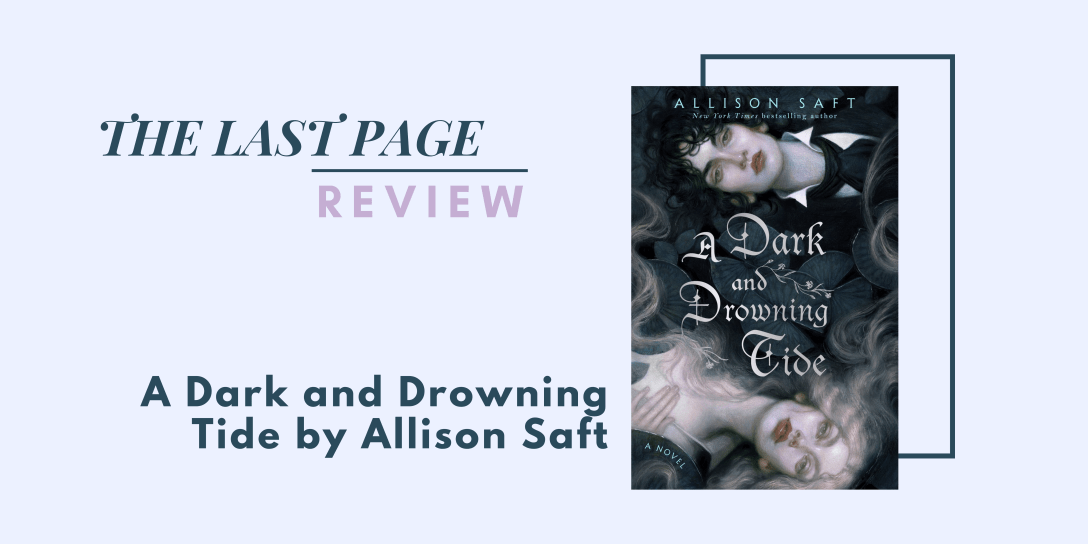
Review: A Dark and Drowning Tide by Allison Saft

Rating: 5 out of 5.

Folklorist Lorelei Kaskel has always been set apart from her peers. None more so than Sylvia von Wolff, her long-time academic adversary, whose scintillating intelligence is matched only by an arresting beauty. All Lorelei dreams of is becoming a naturalist, a profession that will open up the borders to her world and allow her to travel without restriction. But first, she will have to prove her talents on a dangerous expedition to unearth the location of the fabled Ursprung – believed to be the source of all magic and said to harbor untold power. The untested power found within its waters is coveted by Brunnestaad’s king, Wilhelm, who wishes to claim it so that he can forcibly unify his patchwork kingdom. Alongside five nobles and her fearsome mentor, Ingrid Ziegler, Lorelei embarks on an expedition never believing what is in store is the murder of her mentor on their first night on board. Trapped with five other people with competing motivations, one of whom is the murderer, Lorelei faces the likelihood that the violence has not been curbed. Finding their way to the spring has become more pertinent, but Lorelei will have to rely on the only person she knows is innocent, her bitter rival, to make it there. Unburying the truth and discovering a spring known only in myth is enough of a challenge, without bruised hearts and unkindled longing setting them even more adrift.

A Dark and Drowning Tide is an elegantly fashioned fantasy novel that delves deep into the heart of folktales and their origin, as two women in academia fight for their place in the world and what they mean to one another. In her adult debut, Allison Saft serves up a fantasy adventure with a slice of academic rivalry that is both endearing and ardently romantic. Part romantic adventure, but centered strongly around a murder plot, A Dark and Drowning Tide brings a lot into focus but expertly uncovers what lies beneath its mirrored surface. As a longtime reader and admirer of Saft’s writing, there was little doubt in my mind that the yearning in this novel would be excruciating and the prose sublime. Since reading her young adult debut back in the pandemic, Saft has leveled up her craft tremendously and that is no more evident than with her foray into adult romantic fantasy. Exposing the flawed foundations of folklore and their influence, Allison Saft highlights the enduring power of connection in transforming ourselves and finding belonging, with love itself as the catalyst.

Reading A Dark and Drowning Tide was undeniably immersive like the crystalline pools our academics trek towards, holding the key to immeasurable power. As if ensorcelled by a faerie spell, Saft draws you down into dark waters and hits the mark with her mesmerizing prose and snippy back and forth between heated rivals. Stuck on an expedition with five nobles hardened by their shared experiences in childhood and war, Lorelei Kaskel is the odd one out. A Yeva in the kingdom of Brunnestaad, she is granted the status of a second-class citizen, kept inside a gated community with restrictions on travel outside of those walls. Lorelei is haunted, caught up in the grief of the murder of her brother and the feeling of sundering her Yevani identity the further she wades into academia. Trapped with only a narrow way forward, as ghosts from her past and her brother, Aaron, linger on, Lorelei adds another individual to her hauntings – Ingrid Ziegler, her mentor horrifically murdered on the night they depart on their expedition. Hardening her heart and barbed with protective thorns, Lorelei sticks to what she knows to uncover the truth about the murder, yet her rival Sylvia manages to worm her way past those defenses, and all for the better. 

Wishing to be a naturalist, Lorelei was instead handed a pen and told to document folktales. In accepting her fate as a folklorist, folktales have become their own kind of armor – something worn as a shield against the horrors of the world but also protection for her vulnerable heart. Allison Saft attaches the meaning behind every story across this novel, as Lorelei uses folktales to make sense of her world, contextualizing human behavior and her experiences along the Ruhigburg expedition. Opening up to Sylvia is in part removing the barriers that have protected her for so long, and acknowledging how they have pushed away someone who could have been a friend and ally. The romance between Lorelei and Sylvia was the slowest of slow burns for one reason and one reason only: these two are idiots. Lorelei and Sylvia were idiots to lovers first and academic rivals second and I love them all the more for it. There’s tension between their misperception of the state of their relationship that plays out rather comedically as they begrudgingly become allies. Lorelei is head too full of thoughts, none of them the right ones, and Sylvia is just unbridled longing and a desire to be seen. Dissolving these barriers is a journey in itself, as they ride across snowy plains on the back of Mara’s, go deep sea diving with Nixies, and endure only one tent trope one night after the next. Allison Saft takes her time drawing together the story these two can write side by side, but it’s one that is entirely hopeful and leaves them in control of the narrative.

In A Dark and Drowning Tide, Allison Saft harnesses folktales as a reflection of societal wounds, and the hurt and hate they reflect and in turn, spur. Lorelei is intrinsically caught up in this as a folklorist and a young Jewish woman, but she inadvertently becomes trapped by story.  Lorelei deals with having to sunder parts of herself and her faith if she ever wants to survive outside of the Yevanverte and make a name for herself as a naturalist. Caught up in grief and enduring memory, Lorelei finds power in charting her own story and honoring the memory and sacrifices of those who came before her. Her love story with Sylvia is an extension of that as they navigate a course out of an impossible situation discovering exactly how they were wrong about each other and choosing a future that they can write together. A Dark and Drowning Tide has struck a wonderful harmony with a romance between misunderstood rivals and lost souls finding respite. It’s the kind of book I want to stay wrapped up in forever. Wonderfully layered like what lies beneath some hidden well of power, Allison Saft’s talent lies in her capacity to depict intense yearning, the flaws in believing you know your enemy, and the traumas endured but ultimately survived. This is a story that will undoubtedly resonate with many, leaving behind a kernel of hope that will kindle and then spark into an inferno.

Thank you to Edelweiss and the publisher for providing the arc in exchange for an honest review.

Trigger warnings: violence, death, murder, blood, war, panic attacks, colonization, antisemitism

Buy a Copy:

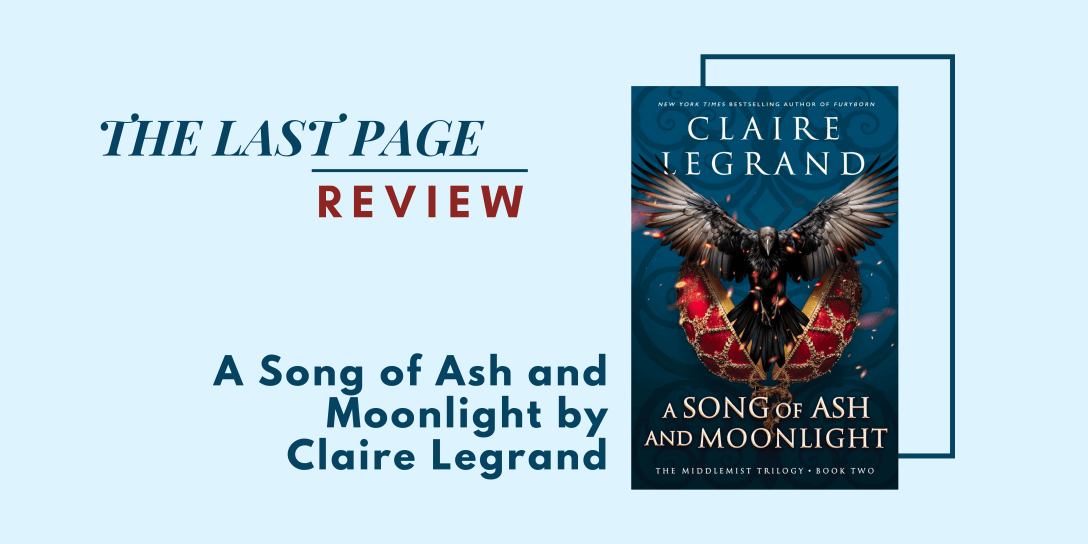
Review: A Song of Ash and Moonlight by Claire Legrand

Rating: 5 out of 5.

Ever since the fire that almost claimed her life, Farrin Ashbourne has guarded her heart and her power over others. The fire that inevitably consumed the Ashbourne estate was set alight by none other than the Bask family, the great enemies of the Ashbourne’s. Long after her mother’s flight and the departure of her younger sister, Farrin has placed herself unflinchingly in the role as head of the family, and even with the curse dividing the Basks and the Ashbournes now broken, she finds no end to her restlessness. Now the Kingdom is on the brink of war with unseen forces and the barrier of the Middlemist is weakening. United, the Ashbourne and Bask families may be the only hope of fighting back. Unfortunately, this means Farrin will come face to face with Ryder Bask, the eldest son and handsome thorn in her side. With new magic blooming and many now missing, their list of allies grows thin. Worse, whispers of a city hidden in moonlight unable to be reached by prying eyes. As they join forces, Farrin finds an ally and friend in Ryder Bask, who carries a burden of his own. Finding the truth may mean finally taking off her well-worn armor and forging something different– for their adversaries bleed the old gods, and the new.

Claire Legrand has long been a legend in the fantasy genre and A Song of Ash and Moonlight is her stretching her skill in a wonderful blend of romance, action, and expansive fantasy. In this brilliant sequel, Claire Legrand elevates her foundations to create a beautiful slow burn enemies to lovers romance between steadfast sister Farrin Ashbourne, and the eldest son of the Bask family, Ryder. Ever since I read A Crown of Ivy and Glass last year and Claire gave us the most delicious crumbs between these two I have been aching to read their story. (The scene where her music causes him to approach her on stage while speaking an old forgotten language sustained me for a whole year if you could believe it). Farrin was easily one of my favorite characters coming out of the first book, and I’m such a fan of the guarded older sister archetype that this couldn’t be anything but the best book ever.

Claire Legrand returns to her Middlemist Trilogy and a world on the brink of change as the Ashbourne siblings set aside old grudges and work to rebuild a relationship with their family’s sworn enemies, the Basks. A Song of Ash and Moonlight weaves a cunning mythos and romantic arc in a sequel that showcases its characters at their height and brings old gods and new smashing together in cataclysmic ways. The stakes are the highest they can be with old barriers breaking down, and new horrors descending on the Ashbourne family and the world entire. Calculating and precise, Farrin Ashbourne is the essential perspective for this secondary chapter. Fighting old wounds and attempting to stave off the dangers while closely guarding her heart, she’s a heroine one can struggle with and heal through. Farrin stands at the front of everything Legrand has built in the series thus far and has earned her status as chief of the Ashbourne sisters. As always, I love the balance of plot and romance Claire has captured in her writing. It’s enough to have you chasing the next interaction with Farrin and Ryder while aching to break through that outer shell to unveil the truth. There are so many clever moments woven in that allow Farrin to confront her traumas and work to build something new for herself. Ryder Bask intersects this journey at exactly the right time, fighting wounds of his own and the perfect outlet for somebody like Farrin. There are fight scenes, quiet conversations, and a deep understanding they find with one another against the chaos. Amidst their developing romantic relationship, the continued focus on consent and sexual compatibility was excellent. It’s not something I see often intertwined in romantic fantasy and I loved how much of that was a core focus. This sequel is undoubtedly taking the crown for best in the series. Legrand expertly layers her character development, plot, and twists, and the final confrontation is one of the finest I have read from a fantasy novel in some time. A Song of Ash and Moonlight is exactly what I wanted from a sequel, revealing hidden ancestry and an unexpected connection to the gods while flawlessly merging high-stakes fantasy and devastating romance. The Middlemist Trilogy is an incomparable fantasy series and this sequel only has me more excited for its conclusion next year.

Thank you to Edelweiss and the publisher for providing the review copy.

Trigger warnings: fire, blood, violence, death

Buy a Copy: