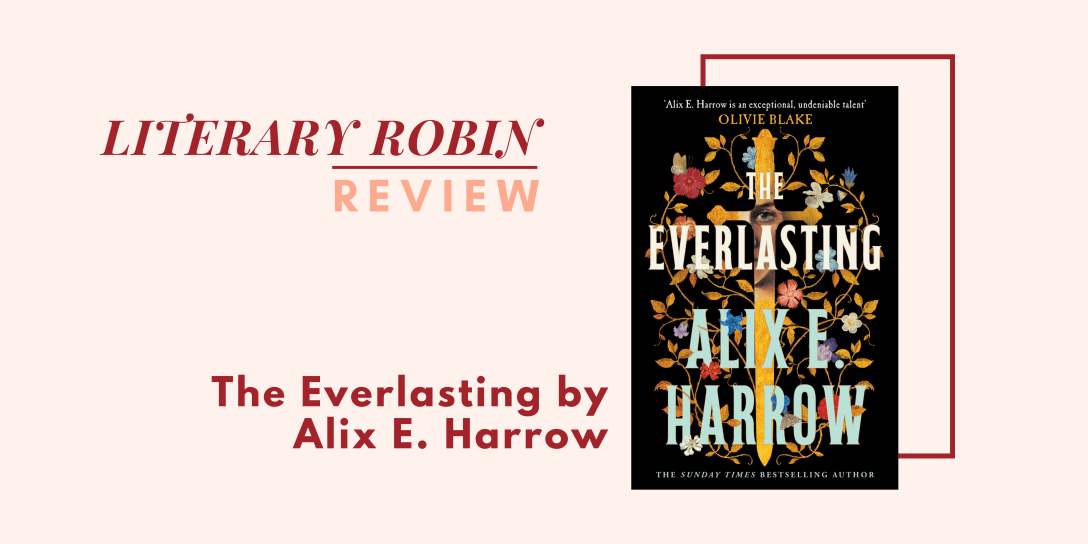
Her tale has been retold countless times, her sword a symbol for a nation unfettered, but where it all began is where it starts to get complicated. Scholar Owen Mallory has long been fascinated by the tale of Una Everlasting, a legendary knight who brought glory to Dominion through her quests and eventual death. One thousand years since and her tale remains entrenched in the minds of every citizen. Since then, wars have been waged, lost and won, to uphold Dominion and further its might. Returned from war scarred and irrevocably changed, Owen pours all of himself into researching the figure of Una Everlasting. In dreams, he finds himself lost in her story where he bears witness to her death countless times as if he was there. One day an unexpected item finds its way to Owen: a book—the book, which details the true events of Una’s life from the perspective of an unnamed but invested observer. Before he can get far into his research, the book is stolen, and Owen comes face to face with the person running Dominion behind the scenes, and her plan hinges on Owen playing a part he has evidently played before. Stabbed with a letter opener, thrust into the story, Owen finds himself beneath a tree with a sword against his neck, and the wielder of the blade is the woman that started it all. Una and Owen are an unlikely pair, but to break the cycle and wrest control of history they’ll have to hold fast to each other and a love that is worth so much more than the tragedy already written for them.
No, don’t be forever doomed to the cycle of violence where you die over and over again in my arms. You’re so sexy aha. Beneath the yew tree a knight and a historian meet, but they have no idea they’ve done this all before, the story is already written, and they’re doomed to follow it to its bitter end. Spanning the course of a thousand years in a never ending time loop, Alix E. Harrow’s, The Everlasting brings a lens on the inner workings of a nation and the bedraggled battle-worn knight as its Atlas, upholding its gilded promises. Like a beating machine with a rotten core, Harrow constructs the kingdom of Dominion and its stronghold obtained through a simple story, The Legend of Una Everlasting. In this tale an orphan becomes a knight, becomes a legend, raised to the side of a queen and struck down to further her reign. Told through various iterations of the deaths of Una Everlasting, Alix E. Harrow unfurls the power of stories, the cost of bearing witness by way of the pen, and the agendas of tyrants written into the very fabric of a nation’s history. The fantastical has its roots buried deep in Dominion and through this labyrinthine tale is the truth of a decaying land made known. The Everlasting is an Ouroboros, a tale with no true end or beginning, but for Harrow the cycle is a reflection of a violent nationalism and the story a sword to be wielded to further its complete and utter domination.
Tis the year of the lady knight and nothing pays testament to that quite like Alix E. Harrow’s, The Everlasting. Trapped in a time loop with a hot knight weary of her duty? A bespectacled scholar doomed to tell her tale and follow her to its bitter end? This is all I needed to hear to know that The Everlasting was going to be another unimaginable feat from Alix E. Harrow and one of the best new fantasy novels of this calendar year. Harrow had previously struck a deadly blow with her mere thirty-one page short story, The Six Deaths of the Saint, so I was already in the afterlife before I even began reading this extraordinary tale. There’s something so devastating about the inevitable, and in The Everlasting inevitability is the blade held to the throats of a knight and a scholar brought out of time to birth a kingdom and its sinister agenda. Contrasting the perspectives of Una, our knight everlasting, and Owen Mallory, a former soldier turned enthusiastic historian, Harrow constructs a story of heroic feats and the power in weaponizing the words upon the page. Fearlessly layered with innumerable stories within a story, The Everlasting holds a mirror to the narratives we cling to and the identities and ideation birthed through their telling. A story is a powerful thing and for the Everlasting the importance lies in its construction and every event continuing on in an endless cycle.
Told almost entirely through second person, The Everlasting allows the reader a chance to feel the catalyst of a story becoming myth. Myth-making is an active task within this novel, and part of that is the writing of the story, where every word is poured over and deliberate in its casting. Battles are embellished and the very essence of Una Everlasting pared down to prop up Dominion and one woman’s hunger. But it is Una Everlasting who truly upholds this nation. Her body bears the physical brunt of the wounds of the land and its assimilated peoples, her scars a reflection of the true violence being inflicted. Reading The Everlasting is to confront the abject pain of the writer addressing this figure, accompanied by a keen sense of loss in knowing that Una will forever be doomed as a martyr. Behind every myth is a person bearing witness and Harrow highlights the narrative as a reflection of the teller—a sum of their fears, wishes, and innate biases. For Owen: the desire to deny Una’s death in some manner, to make it mean something. Minor details within this tale aren’t so minor, and one of the more clever moments is in the character motivations and backstories that shift with every iteration of the cycle—leading to protests in the present day, rampant xenophobia, and calls to reinstate the monarchy. The justification in the othering of entire communities through hateful rhetoric isn’t just an intangible idea in the Everlasting, it’s baked into the story underpinning this nation and its citizens.
The Everlasting is not just an inventive fantasy novel, it is a crucial warning for our time. Lady knights, time loops, and an anxious chain smoking historian whose job it is to bear witness and love her across time is just the pinnacle of this narrative exposing the roots of story and laying bare the flawed parts of a nation. With so many intricate layers entangled in one novel, The Everlasting is as interconnected as the rings within an aging tree, but altogether much more convoluted with the recurring time loop of it all. There’s dragons, a mysterious yew tree, romantic yearning, and of course many occurrences of a tall buff lady knight wielding a sword and ending up on top. I would also be remiss to not mention my king Owen punching a fascist in the face. Thank you, Owen! The Everlasting takes a winding approach in exposing the power of a single story in burgeoning a nation’s fascism. Victims extend far beyond our star crossed duo with professors, battle-scarred citizens, and children bearing the brunt of Dominion’s harm. Owen’s perspective in being part of a country that will always hate some part of him is an agonizing truth to this story where rhetoric is not so easily changed even as history transforms. Concerning stories and their ability to affirm, justify, and embolden our views, The Everlasting returns the sword to the hands of a weary knight shaking off the mantle of a martyr to become something entirely of her choosing. Like most Alix E. Harrow novels, The Everlasting left me sobbing and I can find no desire to pick up the pieces and leave it all behind. I’ll be beneath the yew tree if you need me.
Thank you to Netgalley and Tor Books for providing me with an advance review copy.
Trigger warnings (majority provided by the author): blood, death, violence and injury, war, racism, homophobia, xenophobia, sexism, pregnancy and childbirth, animal death (off-page), dysphoric emotions about gender, imperiled/abandoned children
 Literaryrobin