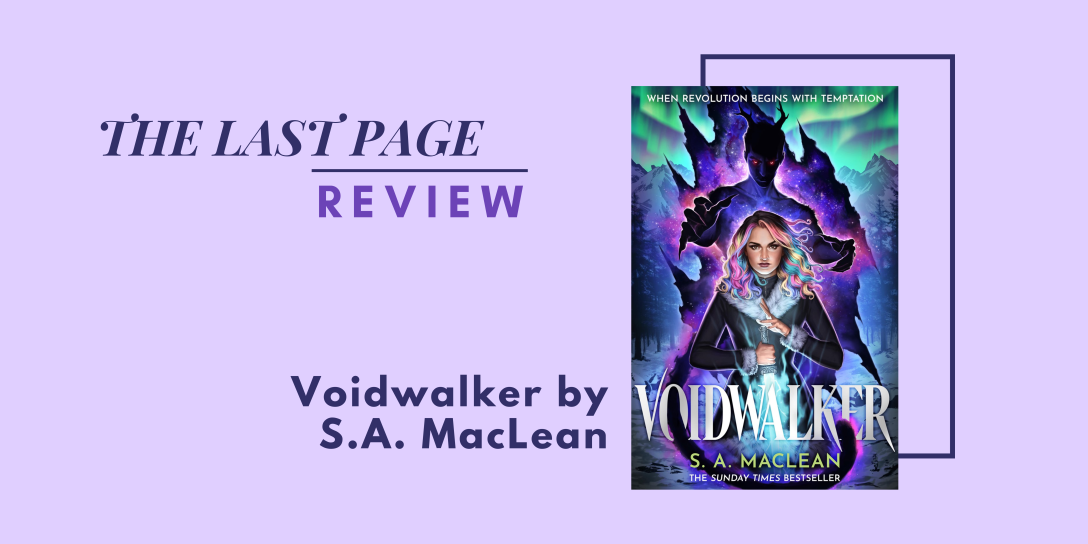
Review: Voidwalker by S.A. MacLean

Rating: 5 out of 5.

Ever since she was brought close to death at eight years old, Fionamara Kolbeck has been able to see the gateways separating worlds, and can traverse the boundaries between them—a rare talent coveted by many. Fi makes her living smuggling goods across the fractured lands. In return, her village continues to thrive without aid from the Daeyari, the forest entities who exist off of tithed sacrifices and hold the coveted energy technology that fuels humanity’s survival. When Fi is given the payment of a lifetime to smuggle unknown goods into the capital of Thomaskweld, she unknowingly becomes embroiled in a coup to oust the ruling Daeyari. In the aftermath, Fi is left vulnerable to Antal, the deposed Daeyari who insists she help make things right. As it turns out, Antal has been staving off his hunger as best he can, and Thomaskweld’s new ruler is not so magnanimous. Neither Antal nor Fi want this to stand, but righting the situation will require them to join forces. Nothing could have prepared Fi for being in close quarters with a monster, yet, she finds that Antal is startlingly balanced to her inner fire and she actually enjoys his company. Being caught within a monster’s clutches may no longer be the worst fate imaginable but giving in to temptation will require a leap greater than the one into the void itself.

Voidwalker asks the age old question, what if you romanced your inner demons and the result is the best fantasy romance I have read all year. S.A. MacLean understood the assignment with this deeply bisexual fantasy novel involving the toils of revolution and the alluring call of the space between worlds. A world walking smuggler equipped with eyeliner as sharp as her energy blade and a cracking dye-job and a forest entity with antlers who is more than a little pathetic team up to take down their enemies, trying and failing to avoid romance in the process. As a fan of idiots to lovers and reluctant allies this book was already primed to be a hit for my reading tastes. But what makes Voidwalker so incredible isn’t just MacLean’s two pathetic main characters and her select use of tropes, but in her soundly layered narrative. Integrating satisfying character arcs, romance, cross dimensional worlds, and an impeccably paced external plot, Voidwalker is fantasy honed to perfection. It’s also really really hot. Like SO hot. This book is for the readers who stare into the dark wishing the dark stared back…and was a hot forest demon equipped with antlers and claws with the disposition of a wet cat. Voidwalker is a dark, messy, romantic story—one that undoubtedly met my cravings but has me begging for more. 

The fractured landscape of Voidwalker is a second home to our protagonist Fionamara who makes a living traversing the shattered plains, smuggling goods between worlds to help her village thrive. MacLean captures a rough beauty within this disunified landscape. The crisp winter which ravages the population, the pine trees, the snow capped mountains, and the intense green of the polar lights envelop the narrative and feels entirely connected to the alluring call of the Daeyari and the void itself. MacLean’s debut, Phoenix Keeper, was a riot of color and magical beasts and she infuses this into her sophomore novel, admittedly with different flavors. Voidwalker is home to a variety of magical creatures—aurora beasts, void horses, and the mysterious void creatures, to name a few. I am very much partial to the void horse myself, with my love of animal sidekicks how could I choose any different. MacLean brings on the details but all help establish these split worlds and construct the initial foundation for this novel with a smuggling job gone wrong and two unlikely allies on the run. 

Two bisexuals in a cabin in the woods with nothing but their failures between them—the byline for this novel, and if I could so boldly claim, the real romance between Fionamara and Antal. These two start out by dragging each other headlong into danger both believing the other capable of fixing things, yet they are immediately confronted with the fact they are way out of their depth. Reaching rock bottom is the perfect way to elevate this romance and start to deconstruct Fi and Antal’s facades. The walls come down as Fionamara drags Antal back to her cabin in the village of Nyskya, where the two hope to prepare an uprising against the ruling Daeyari, Verne. Close proximity is at the forefront of this scheme, as Fi and Antal cohabitate in secret amidst their plans to retaliate. Now S.A. MacLean understands the innate allure of a pathetic freak man and unfortunately neither I nor Fionamara were immune. I really am here for this rabid demon creature who would rather sulk inside a snow bank with his antlers sticking out and hang from the rafters like a feral bat than emote/behave normally. It’s all part of his charm, and trust me, it’s endearing as hell.

Now I would be remiss to not elaborate on how seriously hot this book is. Like SO hot. The tension between Fi and Antal is like a sharp knife through butter and I was standing there in rapt attention as they toed the line between forced allyship and something more. MacLean elevates this tension through her extensive focus on the backgrounds of these two characters, particularly in the first section of this novel. At the start of this book both Fi and Antal have reached rock bottom and can really only rely on each other, albeit begrudgingly. This partnership brings on some wonderfully sharp verbal sparring which of course is the veil over their greater compatibility. Part of what makes Voidwalker so profoundly hot isn’t just the “romancing a hot forest entity with antlers” of it all, but how Antal and Fi open up a space for honesty and look out for each other again and again. They keep each other on their toes while romancing through small gestures—like Antal recovering Fionamara’s favorite coat and blade just because he knew how much they meant to her. Don’t get me wrong, the sex is hot, but the tension between “bite me I dare you” and walking willingly into the embrace of a monster gives just as much besides. 

In Voidwalker, successfully forging a new future means confronting the past for our two protagonists. Though fully established in Fionamara’s point of view, Voidwalker provides deeper insight into Fi’s and Antal both, all to help construct a greater picture of what they are working to overcome. Fionamara’s arc is framed at the center of this narrative, and the true standout for this novel is in her reorienting her perception of the past and standing strong in her choices. Fi’s journey through self-preservation and her perceived cowardice is a hard one, especially as she is torn between competing perceptions—her brother, Boden and childhood friend, Astrid. Astrid and Boden are two facets of this journey in their differing views of the past and reconciling them is a vehicle through which Fionamara gains further agency in her own life. Antal on the opposite side, is entirely alone. He has held people at a distance to save them from the violence of his kind, and he is scared to see the past repeat itself. Both Fi and Antal are excruciatingly aware their feelings run deeper but giving voice to them is easier said than done.

You’d be hard pressed to find a book more tailored to my tastes than S.A. MacLean’s Voidwalker. Every part of this novel is exquisite and I really could go on and on with how much I love it. Reading this, it’s clear S.A. MacLean suffused all of her favorite fantasy elements and character archetypes into one novel and not one of them feels out of place. The disaster bisexual characters trying to prove themselves without admitting they care is my bread and butter and Fi and Antal took that challenge and pushed it to extreme limits. There are not enough books with a pathetic guy who endears himself to the main character with his freakish charm and Antal is that character. Like this is a weird little guy…this is a freak of nature, but I love him so much. And Fionamara is my coffee obsessed hellion ready to fight and so so important to me. Seriously this book has it all, along with the audacity of being hot as all hell. S.A. MacLean’s talents for unique romantic fantasy are seemingly endless and no more is that on display than in her sophomore novel. Voidwalker is fantasy wrapped up in a bisexual little bow and I am so grateful that it exists. The fact that this is a duology just means I can yell about it louder and for far longer than I would typically until the sequel is in my hands. 

Thank you to Netgalley and Gollancz for providing the advance copy to review.

Trigger Warnings: blood, death, gore, murder, drug use, alcoholism
Preorder a Copy – Out 19th August

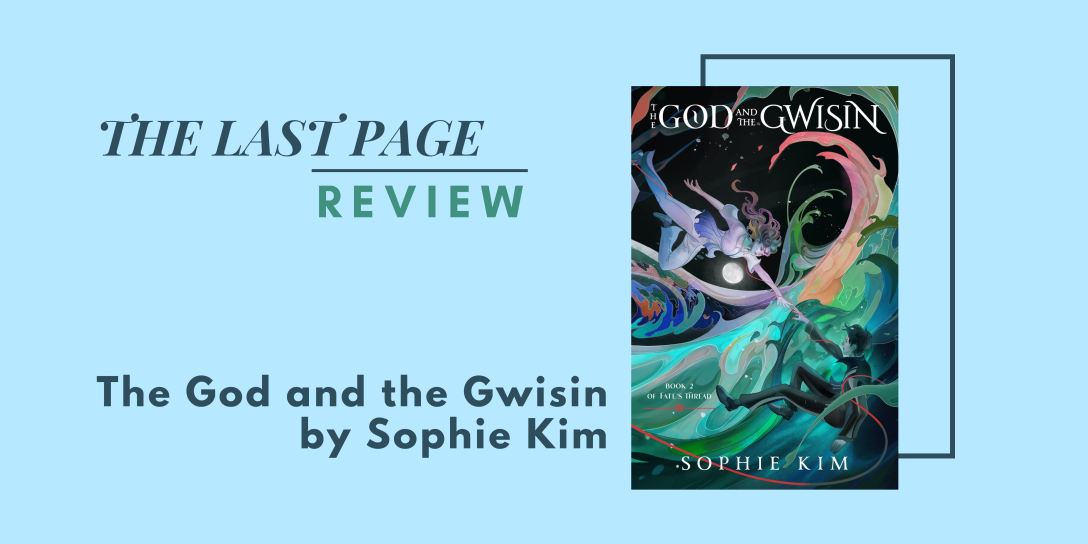
Review: The God and the Gwisin by Sophie Kim

Please note this review contains spoilers for the former book in this series, The God and the Gumiho, and contains references to some of the events in this sequel. Read with caution.

Rating: 5 out of 5.

Seokga, the trickster god sent to earth to atone for his uprising, defeated a demon of darkness and was reinstated to godhood, but lost Hani, the love of his life in the process. Reborn into her next life, Seokga had a chance to find Hani again, but fate intervened before they could reunite. Ever since the red string of fate connecting him to Hani appeared, Seokga has searched in vain for his soulmate and his fellow godly beings are tired. They vote to send him on vacation—to a cruise that traverses the river in the underworld. But as soon as he steps on board, Seokga is pulled by the red string towards Yoo Kisa, a Gwisin working on the ship and Hani reincarnated. Kisa has no memory of her past life, except the karmic debt her past lives amounted that her current self is indebted to pay off on board the SRC Flatliner. The red string has always fascinated her, but Kisa has no desire to be compared to the woman she once was nor romance the grumpy trickster god. When Seokga’s brother is found murdered on board, Kisa and Seokga reluctantly team up to solve the murder. Yet as Kisa and Seokga fall back into their investigative ways, it’s evident that they were brought together in this life for a reason, and not even fate can dictate how they end their story.

What does a fallen mischief god reinstated to godhood, his reincarnated soulmate, his emperor brother turned into a baby, a murderous gumiho, and a deceased K-pop star have in common? A murder none of them ever expected to be involved in solving all while on board a cruise ship in the afterlife. The God and the Gwisin initiates a sequel to The God and the Gumiho, where the murders are unsolved and a grumpy trickster god is once again struck down with unwanted emotions. Second in Fates Thread, this series embeds Korean Mythology with reincarnated lovers, godly threats, and an overly abundant amount of yearning. This sequel reorients our characters in the 21st century with new, modern problems, and some that time cannot constrain—like the inescapable longing for a love lost. Two soulmates battle feelings while on a cruise ship in the underworld, romancing in between a murder investigation and a looming journey’s end, where one faces down imminent reincarnation. Sophie Kim certainly understands how to situate a unique set of circumstances, which could just as easily be disharmonious if not for her deft balance of humor, romance, and angst. The God and the Gwisin extends the Fates Thread series in an epic star-crossed love story not to be constrained by reincarnation nor hell itself.

The God and the Gwisin is all around a delight but it is this sequel that sees Sophie Kim’s elaborate threads truly take shape. I jumped into this sequel blind and I am so glad I did because in no way would I have expected the setup Kim delivers here. The God and the Gumiho ended on a hopeful note, as Seokga follows the red string of fate twenty odd years after the passing of Hani, to whom we assume is Hani reincarnated in the present day. Sophie Kim introduces us to Yoo Kisa, a young doctor working at a hospital in Seoul who unexpectedly falls to her death and winds up in the afterlife working out her karmic debt on a cruise ship in the underworld. The setting for this sequel is a far departure from the 90’s New Sinsi of The God and the Gumiho, but it is the perfect stage for Kim to conduct her mystery and initiate an interrogation into reincarnation and fate. Cruise ships are lawless places after all and there’s truly no better place for a murder, nor falling in love with your soulmate reincarnated.

The grumpy sunshine dynamic has never hit quite as hard as this series and I fell in love with our protagonists all the more the second time around. Seokga is the perfect grumpy protagonist —a god disinclined to like anything but coffee and begrudgingly, the gumiho he fell in love with decades ago. This sequel sees Seokga working through his (self-described) daddy issues with a psychologist, his relationship with his brother, and branching out into new, coffee adjacent snack products. Seokga is down bad in this sequel, as any man who has chased his soulmate all the way to Antarctica and back while yearning to find her for three decades could be. Sophie Kim integrates this longing with some truly detailed insight into the notions of reincarnation. Using the Ship of Theseus as an extended analogy, Kim questions if two souls can be united even as the outer self, or person, has changed. The thread connecting Seokga and Kisa, which has—hilariously—its own sentience, only appeared in Hani’s reincarnation as Kisa. So the question becomes were Seokga and Kisa always destined to find each other in this lifetime? I love a good extended interrogation and the themes of soulmates and reincarnation are expertly addressed in this sequel.

The God and the Gwisin is a story all about reconciliation, not just within the central romance between Kisa and Seokga, but relationships both familial and platonic. Certain characters from the previous novel make a reappearance and Sophie Kim gives them the chance to rectify the past. It is here that Kisa comes face to face with Somi, her best friend who betrayed her in her former life as Hani. While Seokga, working through his relationship with his brother, long strained, has to babysit him as he is reverted to the form of a child. There’s enough tension between Kisa and Seokga, but these relationships on the periphery help orient the central conflict for this novel. I for one really loved that Kim gave space for Somi and Kisa to reconcile in this life and how she developed a new friendship between Kisa and the former K-pop idol, Kim Hajun. Sophie Kim bridges this further with a romance between Somi and Hajun. The murderous character being charmed by the kind one is exactly my kind of pairing and their romance is exactly that—sweet with a side of: she could murder you (but he likes it). Who would have thought romance over boba tea would be a part of this novel, but Kim has always highlighted the cafe setting as a peak spot for romance and shenanigans and I was happy to see that represented again here.

Sophie Kim is an author synonymous with exceptional romance and she takes this to new heights in The God and the Gwisin. This sequel follows Seokga and Kisa as they solve a murder while battling the problems of reincarnation, fate, and what they mean to each other. Because of the reincarnation of it all, Kim focuses heavily on enforcing Seokga and Kisa’s new dynamic and their overall compatibility alongside the murder plot. There is a disconnect between these characters, for Seokga is the same as he was before, albeit the impact of a few decades, whereas Kisa is a wholly new individual for Kim to introduce and flesh out across this novel. And what an introduction. Kisa was over here throwing a heavy paperweight at Seokga’s head upon their meeting and he was still struck dumb for her (blunt object not to blame). Kisa is an exceptional character who was dealt a difficult hand in life, and in death, and still carried it with such grace. Her refusal to be someone else just to appease Seokga chasing the ghost of his former love was commendable, as was her standing firmly in who she was. Even with all of this, Seokga and Kisa find love and choose to look to the future instead of the past. Kisa deciding for herself the answer to the Ship of Theseus question and taking the reins of her story was a deeply satisfying end to her arc in this second novel. That Seokga and Kisa’s higher calling is to love each other is solely responsible for my tears and I will be billing Sophie Kim expeditiously.

The God and the Gwisin is at its heart a story about belonging and forgiveness. With such humor and skill, Sophie Kim integrates her Fates Thread series into a new decade and a fresh hell— literally, a luxury cruise in the afterlife. Bonds are tested, and Kim shows the true power in choosing our destiny as Seokga and Kisa choose each other despite what fate and the higher powers have determined to be their end. Seokga and Kisa find an unconventional happy ending, which is all I could really hope for when I first began reading this novel, but it nevertheless brought on all the emotions by the end. Fates Thread is contemporary fantasy at its best, with distinct characters that manage to find their footing no matter the setting or the decade, and ones that charm no matter their place within the narrative. The God and the Gwisin tests the transcendent nature of love in an adventurous fantasy sequel all about being seen and loved for who we are. It will be long before I forget this phenomenal sequel from Sophie Kim but I find I am more than content with that.

Thank you to Netgalley and the publisher for providing me the advance review copy.

Trigger warnings: murder, blood, death, suicide (off page, but mentioned)

Preorder a Copy – Out 3rd June

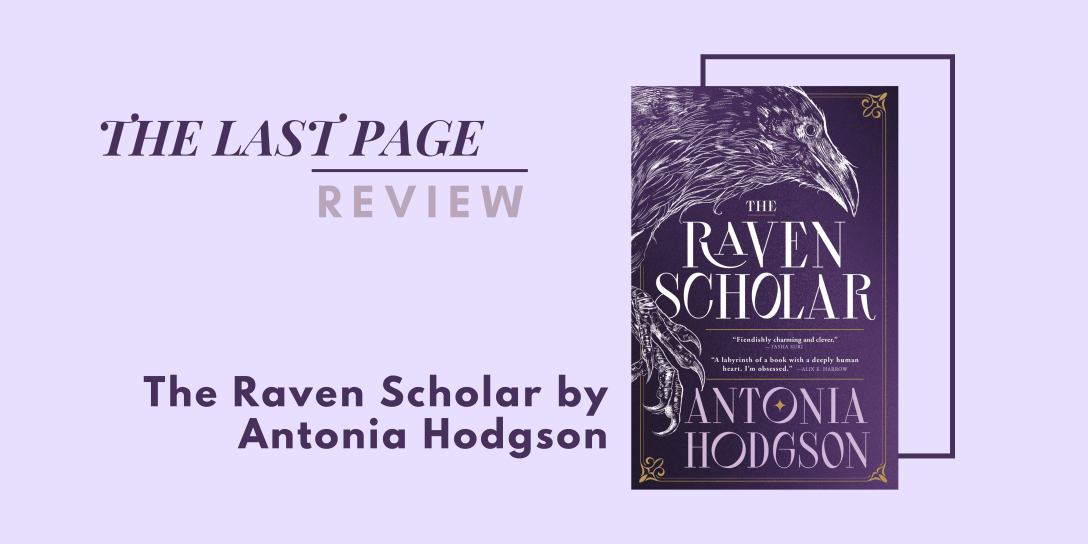
Review: The Raven Scholar by Antonia Hodgson

Rating: 5 out of 5.

For twenty-four years peace has reigned within the Empire of Orrun. But per the laws of the empire this peace will be tested in a brutal competition to determine its next ruler. Neema Kraa is a Raven Scholar and eight years prior —at the emperor’s behest—she carved the exile edict that would seal the fate of an innocent young woman and propel Neema to High Scholar. An event that would echo in the fates of more than just the solitary Raven Scholar. Thousands of people now flock to the Imperial Island, the epicenter of the empire’s power where its fate will soon be determined in the Festival of the Eight. On the night before the festival commences, Gaida Rack, the Raven contender, is found murdered in her apartment. As Gaida’s least favorite scholar, Neema is one who would stand to gain from her death, and thus, in the emperor’s eyes, the perfect candidate to solve her murder. Not only is Neema tasked with uncovering this crime but she is now the Raven contender in the fight for the throne. Dodging fights and avoiding losing to the dangerous trials, Neema soon becomes embroiled in a devious plot decades in the making, one that like the trials themselves, can have only one victor.

With The Raven Scholar, Antonia Hodgson pens the first in an audacious high fantasy trilogy. Epic in scale, bold, and extraordinarily detailed, this book burrowed its way into my heart where it is more than content to remain. As sentient ravens bear witness to events and murder abounds, The Raven Scholar expertly integrates a murder mystery within an immersive fantasy setting as a devious plot comes to fruition within the fraught empire of Orrun. When I set out to read this seven hundred page tome, I had no idea I would venture into one of the most cleverly wrought fantasy debuts I have read in many years. Hodgson hits all the marks for an epic fantasy novel with characters that bite (pun very much intended), and ones that lean into their morally grey natures. The plot takes the lead in this series debut, but it is only elevated through a detailed world history and extended mythos. Truly the pillars of this story are in the details and Hodgson is intentional in their placement as she builds to her grand reveal. The footnotes and folktales scattered across the narrative, the pesky ravens, all of it serves to build up an integral foundation for this new series. The Raven Scholar is everything high fantasy should be and I loved every single page of this intricately layered, clever novel.

Turning inward on the Imperial Island, Hodgson calls witness to the exile of Yana Valit, a decision that led to her brother becoming the Tiger contender and our protagonist Neema Kraa her position as High Scholar. Not quite a prologue, this look into the past soon transitions into Neema’s point of view, our window for the rest of the novel —a jarring shift made all the more so in the eight year jump to the present. The Raven Scholar has a claustrophobic aura, as thousands crowd the Imperial Island for a scheduled transfer in power, soon finding themselves caught up in more than a game. It all feels very locked-room, except the room is an entire island and everyone on it a suspect. Hodgson’s narrative is ever shifting, flitting back to new perspectives and integrating folktales from Orrun’s history. There is so much to sift and parse over here and no part of this story feels out of place, nor the narrative bogged down at any moment. Every single part of The Raven Scholar’s seven hundred pages is perfectly paced and expertly plotted. Through the ravens, the footnotes, and the folktales, what emerges is a vivid fantasy world with characters that leap off the page. 

I would place The Raven Scholar in the category of: what if there was an animal who was just following you around all the time (but the burrowing inside your chest cavity and offering unsolicited opinions-variety). The Raven Scholar dances around perspective and flashes between the implied author and narrator across the narrative. The implied author being the raven guardians circling the island providing their commentary was a fresh way to hone in on key events. I’m very much here for the flock of Raven Guardians having an omnipresence as Hodgson shifts between perspectives to orient her story. Hodgson layers in these perspectives to better serve the story and build to a smashing final act. Where the raven companion comes into the story is another strong suit. The “Solitary Raven” who was banished from the flock pushes forward through ink, page, and cover to become a fragment within Neema’s mind, acting as a guide in the fight for the throne. Sol is that nettlesome presence needed to further the story and its humor. I found the body horror aspect of this extremely hilarious. The imagery of Sol just chilling in Neema’s ribcage ready to burst forth in viscera whenever he needs to come to her aid or remove himself from a situation could only ever be viewed as relatable and painfully funny. 

One thing I appreciate about this novel is its heavily detailed character work. For most of the book we are in Neema’s perspective and her views cloud our opinions of the past and future of Orrun. Neema is the solitary Raven Scholar, brought up from her station as a commoner to take up space within the Emperor’s court. With such a rise comes many enemies and a perspective that reflects inward more often than not. Antonia Hodgson is comfortable exposing the flaws of this character and the blind spots that place Neema in danger as the plot progresses. I love ambitious women but just as much I love that Neema’s ambitions come at a price. The huge reveal at the end would not have come about without the manipulation of several key figures, one of which was the High Scholar herself. Characters grappling with their morality and the justification of past decisions is a central part of this novel. Neema, Cain, and Ruko are three characters who really stood prominently within this —figures who will undoubtedly continue to shape the progression of this series and its core themes.

The Raven Scholar is a true fantasy gem, sharp, gleaming, and rare in its splendour. As prophecies are fulfilled and the Festival of the Eight draws to a close, the Eternal Path series finds a strong footing in an unstable final act that I was in no way prepared to venture into. And wow oh wow what a conclusion. I don’t think I breathed for the entire last third of this book. It was that intense. Antonia Hodgson pulls the rug out in every sense, making you feel like the dominant players are aiming for one thing when in reality it is something else entirely. Integrating unique points of view —the animal guardians staking their claim on the narrative and the future of an empire and a daring scholar courting danger to solve a murder, among others —this is an artfully designed fantasy novel with a host of characters to enjoy. I cannot emphasize enough how this fed my cravings for epic fantasy to the extreme. Much like our Solitary Raven, I want to live inside this book and I’d feel comfortable burrowing into its pages to wait out the eventual sequel. 

Thank you to Netgalley and the publisher for providing this arc to review.

Trigger warnings: death, abuse, murder, blood, violence, imprisonment, drug use, execution

Preorder a Copy – Out 15th April

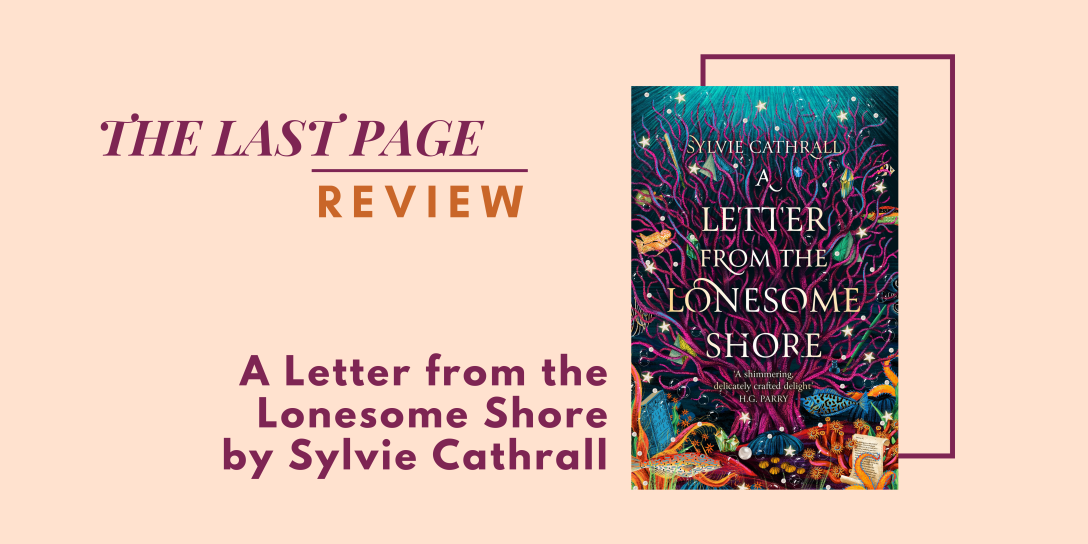
Review: A Letter from the Lonesome Shore by Sylvie Cathrall

Please note this review contains reference to some of the events contained within this novel, and the former installment, A Letter to the Luminous Deep.

Rating: 5 out of 5.

Former correspondents E. Cidnosen and Henerey Clel bonded over an academic mystery, but they never expected that mystery to involve travelling through a mysterious structure in E’s garden. Now, E. and Henerey find themselves in a sunken city that holds the secrets they’ve been searching for —of an archaic floating society that retreated into the sea after some indescribable danger led them to flee the world above. The mystery of the fate of E. and Henerey captivated many following their disappearance, but none more so than their respective siblings, Sophy and Vyerin. Piecing together the truth through the letters E. and Henerey penned across several years, Sophy and Vyerin now find their siblings forever out of reach. Drawn deep into the life of the archaic scholars and their city of secrets, E. and Henerey confront the limitations imposed by this society while desperately yearning for a way home. Meanwhile Sophy and Vyerin relentlessly chase the gateways that could reunite them with their lost siblings. With Sophy and Vyerin on the case and E. and Henerey seeking the truth to their world, neither party understands the true threat stalking the deep which brought a once thriving archaic society low.

A Letter from the Lonesome Shore returns readers to the elusive deep after the revelation that scholars E. and Henerey did not perish in the destruction of the Deep House. Told entirely through letters, this epistolary novel concludes the Sunken Archive duology and unravels the mystery of the gateways and the archaic scholars. Long thought dead, these scholars have remained within an underwater city awaiting those fleeing the mysterious threat that brought them to its sunken waters. Knowledge has a cost in A Letter from the Lonesome Shore, and Sylvie Cathrall tests the bonds of our undaunted scholars, E. and Henerey, while a larger threat closes in on their underwater world. A Letter from the Lonesome shore is flitting in its shades of enchanting light academia and winsome romance. Sylvie Cathrall pushes her frontier, integrating new perspectives and roundabout ways to ensure character points of view remain at the forefront of this novel. These narrative subtleties lend themselves to the greater conversation of academic pursuit and the human connection at the center of academic inquiry. A Letter to the Lonesome Shore is an endlessly fascinating series conclusion and all I want is to continue to chart the immeasurable depths of this extraordinary duology.

In concluding her Sunken Archive duology, Sylvia Cathrall reorients her underwater world with E. and Henerey having gone through the portal by the Deep House, and Sophy and Vyerin initiating a mission to follow them through to the other side. This sequel proves there is so much more lying beneath the surface as we are introduced to the enigmatic scholars of a sunken city who have awaited refugees since they first abandoned their world above, and the scatterings of a future we encroach ever closer upon. Between E. and Henerey’s private diary entries, Cathrall brings new perspectives into the forefront. The back and forth between the Thirtieth Second Scholar maintaining records for the archaic society and the Fifteenth First Scholar providing their interjections was an intriguing addition —while suffusing some necessary humor into the text. The contrast between the eager Thirtieth Second Scholar offering his commentary and the particular Fiftieth First Scholar trying to stick to protocol was not only deeply hilarious, it uplifted the more serious elements within this novel.

Endearingly awkward should be the main descriptor for the romance between E. and Henerey. Two people in love who believe they aren’t worthy of the other person while constantly exhibiting signs of “you remembered” and “of course I did” is the recipe for this academic romance. After book one detailed their charming correspondence over the mystery of the Deep House and the garden structure, E. and Henerey find themselves united at long last within the underwater city of the archaic scholars. Sylvie Cathrall begins to test the bonds between these two as they leave behind their comforts and find themselves within this sunken city. The courtship rituals are thrown into an entire new orbit as they soon learn they may be stuck there unable to return home. In this series, the relationships on the periphery are just as strong. Sophy and her wife and Vyerin and his husband remain some of my favorite romantic subplots within this duology. A Letter from the Lonesome Shore continues to represent queer relationships at the forefront and I appreciated how Sylvie Cathrall brought in new layers to these relationships as she raises the stakes in this sequel.

What I’ve always relished in this series is its focus on academic research. Cathrall makes the reader feel as if they are pouring over the primary and secondary sources to construct theories for how this underwater society came to be and what happened to the archaic world from long ago. Part of what makes this sequel so fascinating is getting to see where the individual pieces from book one slot into place. The mysterious island, the Darbeni poem, and the Fleet are part of a plot that spans back thousands of years. Cathrall expands upon this underwater world that is actually just one drop in a universe that is an entire ocean. The introduction of an interworldly threat was the perfect addition to underpin this revelation and the connections between the individual threads from book one. The predator as a primordial being that feasts on knowledge, swimming between these worlds to consume any that have become overly abundant was an insanely clever reveal. Cathrall’s imagery of this boundless universe ocean is thoroughly evocative and places the entire world stage in a new perspective.

A Letter from the Lonesome Shore maintains the lighthearted atmosphere from book one yet expands upon the boundaries of this world and the mysterious underwater society of the archaic scholars. Just as A Letter to the Luminous Deep was about the pursuit of knowledge and romance set within scholarly inquiry, this sequel demonstrates that knowledge is nothing beyond the connections that make us human. Finding a home after a devastating event brings E. and Henerey to a newfound shore that feels fitting for their individual paths and the partnership they have built side by side. Sylvie Cathrall knows that the real treasure in the deep is the bonds we keep with one another and it is worth any sacrifice. Lush and fathomless, The Sunken Archive duology is one series I will certainly return to to rechart and navigate anew. The real treasure for me is this series from start to finish.

Thank you to Netgalley and the publisher for providing this advance copy to review.

Trigger warning: anxiety

Preorder a Copy – Out 6th May

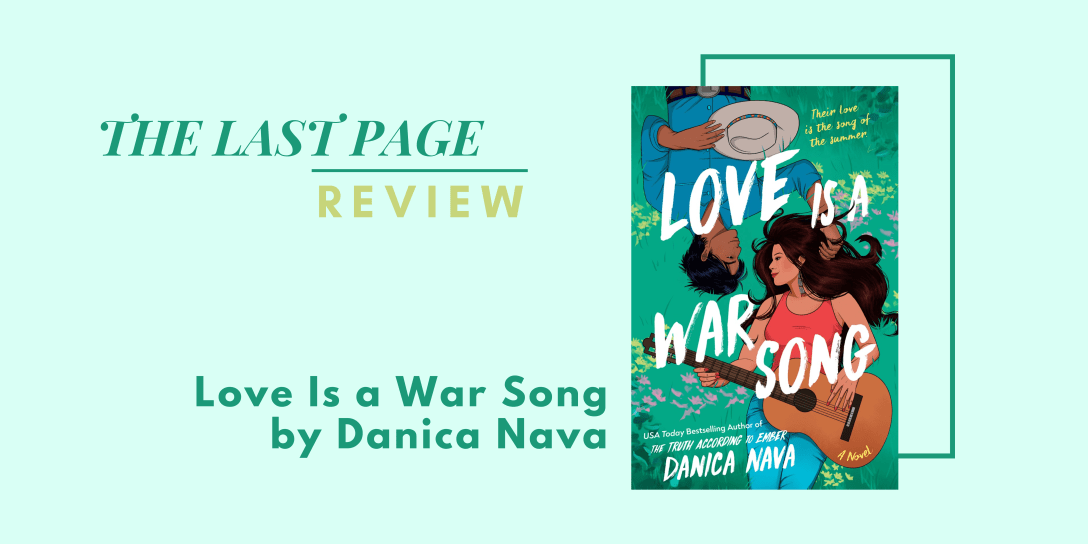
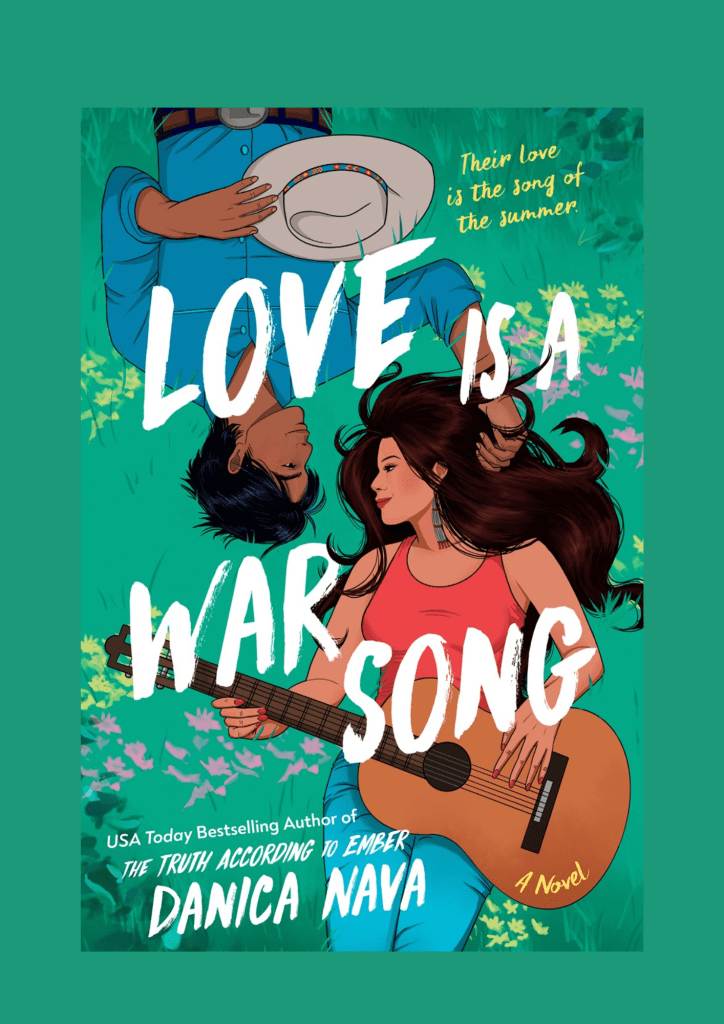
Review: Love Is a War Song by Danica Nava

Rating: 5 out of 5.

Acclaimed pop singer Avery Fox’s career has hit a bit of a rough patch. Her Rolling Stone magazine feature that was supposed to launch her to real success has come under fire after she appeared on the cover wearing a feather war bonnet. The outcome of the magazine cover and her subsequent music video has led Avery’s Native American identity to be called into question and serious threats levied against her. Though Avery is Muscogee, she has been raised outside her community by her mom turned manager and has never met anyone else in her family. But in the aftermath of the national outcry over the magazine, Avery is sent to Oklahoma and to the ranch of a grandmother she has never met. Hoping to charm her grandmother and the ranch staff until things calm down, Avery is soon met with the reality of Lucas Iron Eyes, the man who runs Red Fox Ranch and decidedly not a fan of Avery, her music, or anything she represents. In the face of the ranch’s financial situation, Lucas and Avery begrudgingly team up. He’ll help her experience what it means to be Muscogee and she’ll help him save the ranch. Working side by side, Lucas and Avery push past their initial animosity, decidedly ignoring the real connection attempting to put down roots between them.

Danica Nava brings on the music in Love Is a War Song, her sophomore romance, which explores the power in forming community and finding ourselves in unlikely places. Love Is a War Song is a phenomenal follow up to Nava’s debut, The Truth According to Ember, which I eagerly read just a few days prior to starting this novel. Romance blossoming from the mess of the everyday is Danica Nava’s forte and that is made all the more clear in this play on cowboy and celebrity romance. Nava’s protagonists are flawed, a relatable representation of what it really means to be a person still figuring things out in today’s world. Where Ember had me stressed out by the protagonist’s elaborate web of lies, Love Is a War Song reasserts the power in standing in ones history and community. Featuring Indigenous love at the center of her romances, Nava gives voice to necessary perspectives in this genre and breaks apart an often monolithic view of unique Indigenous cultures. Danica Nava is easily one of the best new writers I’ve read within this genre and Love Is a War Song is a summer romance worth basking in.

Love is a War Song is a story all about first and second chances and the fallible nature of first impressions. It’s about building your community and home even when you’ve never had one to begin with. Avery Fox is uniquely placed within this romance, having been raised outside her Indigenous community to a mother who placed all her hopes in Avery’s success. This loss of her family and a greater connection to the Muscogee community is unmistakable as this story begins and it reverberates throughout the narrative as Avery pulls together the pieces of her lost history. This connection to her culture is echoed in the music Avery workshops while in Broken Arrow with help from Lucas. Music can inform who we are and the real music Avery is desperate to give voice to is nothing like the songs she is currently performing on stage. While there is a discernible sadness in knowing that Avery was denied a community in her upbringing, returning to the music gives Avery a chance to honor the one she’s found.

Hate to love fans rejoice because Love Is a War Song brings on the tension and indescribable chemistry between its two leads, Lucas and Avery. The romance that blossoms between Lucas and Avery is profound—stemming from two people who initially met with judgment actively working to unlearn those predisposed beliefs. I love romance in the details and Lucas Iron Eyes understands that to a T. He knows the extended versions of LOTR are superior, considers Avery the most beautiful woman he’s ever seen, and doesn’t think she’ll choose him. I mean I had to love him after that. Hidden beneath a grumpy facade is a good heart and Lucas is the perfect balance to Avery’s warmth and softheartedness. Additionally, Lucas provides a necessary perspective in having lived life on the reservation alongside her grandmother, Lottie. Avery and Lucas are just so good for each other and I think I teared up a bit at some of these scenes, especially the one where she stands up to his parents. Nava integrates her romance within the larger themes of discovery and forging a new path and I was very moved by where it all ended up.

Danica Nava addresses a host of issues in this romance from the entertainment industry, to cancel culture, and Indigenous stereotypes, and all felt grounded in the story and its place. Alongside the romance, Avery confronts the hurt she caused the greater Indigenous community through her music video and magazine cover while becoming acquainted with her Muscogee community in Broken Arrow. Though she was ignorant of the connections through her music video and never intended harm, Avery acknowledges how her actions had greater consequences. Nava makes sure to draw on a larger critique of the entertainment industry parallel to this— an industry all too happy to capitalize on Avery’s Native American identity while also throwing her to the wolves the second she slipped up. Danica Nava handles this entire situation with nuance and her exploration into these subjects feels both timely and necessary. 

Love Is a War Song hits the mark for life affirming romance with just a dash of tropes and nostalgia. With Native American protagonists reaching for love and figuring out life and its plays on cowboy romance and grumpy/sunshine trope, Nava’s romance hits all the marks for a modern love story with such heart. Through Avery’s discovery of her home and life path, Danica Nava emphasizes the power of community and how it is never too late to return to one or build one for the first time. This is another romance only enriched by the ending authors note where Danica Nava delves a little bit more into her research and why she chose to represent the Muscogee Nation in this romance. There’s something about learning more of an author’s research and overall process that really speaks to me and this one is definitely worth the read. Built around misunderstanding but deepened in intimacy and newfound opportunity, Love Is a War Song is exactly the kind of romance I yearn for. Danica Nava leaves her mark with this outstanding romance and I eagerly await what she writes next.

Thank you to Netgalley and the publisher for providing this advance copy to review.

Trigger warnings: addiction

Preorder a Copy – Out 22nd July

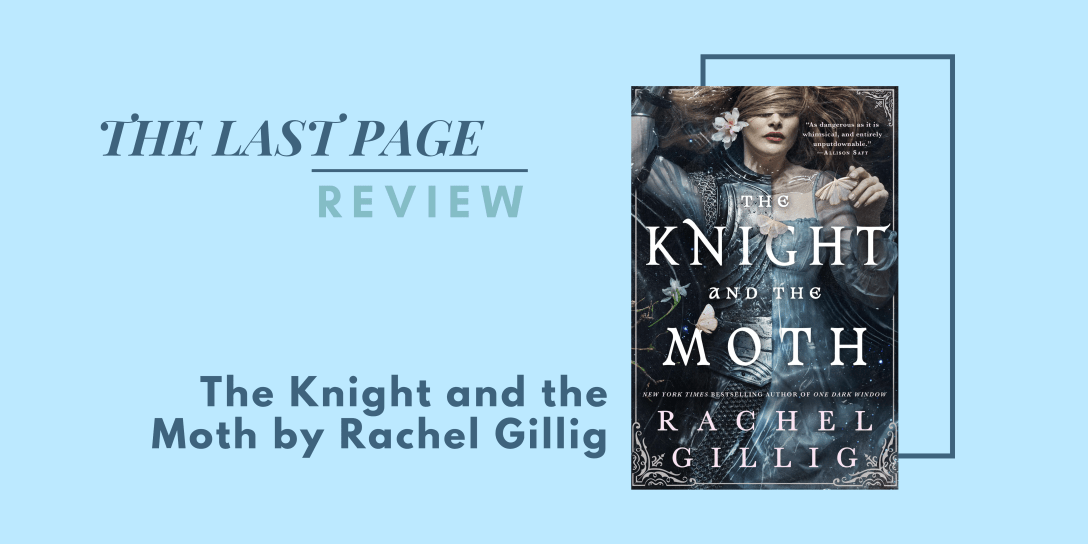
Review: The Knight and the Moth by Rachel Gillig

Please note this review includes references to some events contained within The Knight and the Moth. No overt spoilers but read with caution.

Rating: 5 out of 5.

For ten long years all Sybil Delling has known is dreams and drowning. As a foundling child, Sybil was brought to Aisling Cathedral to take on the mantle of Diviner. In exchange for ten years of service she and six other girls were provided a home, sundering their names to forever be known by a number —gaining the ability to receive and interpret visions from six figures known as Omens. Across Traum, citizens and travelers wander the long roads to the Cathedral upon the tor to have their futures divined. Sybil and her sister Diviners are their guide through the magical waters of Aisling’s spring that drag them down into dreams. Just as Sybil and her fellow diviners close in on the end of their ten years of service, Traum’s king and his retinue of knights appear at the cathedral. Not long after, Sybil’s fellow Diviners begin to disappear one by one until only Sybil remains. Desperate for a way out, Sybil finds an ally in Roderick Myndacious, the foul and brash knight she met upon the tor at the side of the king. Entering a world unknown with a foul knight and a boy king grasping at a fantasy, Sybil will learn the cost of her divine gifts and the truth to the portents and their gods.

The Knight and the Moth is a fortifying dark gothic fairytale in which errant knights, vexing gargoyle companions, and ardent romance unite to bring truth to divination and the powers that sustain a kingdom and its divine figures. Rachel Gillig is back, enlisting her penchant for atmospheric gothic fantasy in her sophomore series, intricately carved in symbolism and unending power. There were few books I was more excited for from this upcoming year than Rachel Gillig’s sophomore novel, The Knight and the Moth. I think I let out an inhuman shriek when this showed up on my doorstep and in a self fulfilling prophecy sort of way it met all of my expectations and is easily my favorite book I’ve read this winter. The gothic is already one of my favorite genres, but add in lady knights, slow burn romance, and symbolism and The Knight and the Moth transforms into its own rare flavor of gothic fantasy. In her second series, Gillig continues to deliver on transportive fantasy that deals a devastating blow, and this is one I have yet to recover from. The Knight and the Moth is a novel altogether intricate in its inquiries into religion, but unflinching in exposing the roots of belief and the pull between religion and entire kingdoms.

Kicking off a classic quest narrative of knightly adventure with a ragtag cast of characters, The Knight and the Moth contests knightly virtues and the costs of service, whether fealty to one’s king or religious piety. Opening with the arrival of a young king and his retinue upon the tor, Gillig drowns readers in divination —from the inner workings of Aisling Cathedral to the kingdom of Traum. Sybil Delling, or “Six” is our veiled window into this enshrouded world as she breaks free from Aisling Cathedral and initiates a journey to unmake the Omens, or their gods. Coin, inkwell, oar, chime, loom stone, and moth connect to a mysterious sixth figure and provide a framing for this quest journey. Rachel Gillig skillfully places her narrative portents at various places to call forth and interpret at key moments across this novel. Almost endless in its symbolism, The Knight and the Moth is veiled in a wretched sort of beauty. The fetid water and rotting flowers around the Cathedral spring portray the violence in having to drown to divine and all of it encircles the haunting atmosphere which Gillig pulls forth.

The physical journey in The Knight and the Moth is made all the more profound through Sybil’s personal arc running alongside the quest narrative. Taken in as a child and transformed into a tool to be wielded in a power struggle she was wholly ignorant to, Sybil’s journey is both heartbreaking and fortifying in its unveiling. Something I love about reading fantasy is the slow process of learning a character’s purpose within the larger context of the story. Integrating into Sybil’s perspective it soon becomes clear just how connected she is to everything from the founding of this kingdom to the continuous cycle of making and unmaking. Sybil’s journey is one of personal enlightenment and agency, two things that were taken away from her the second she was drowned and initiated as a Diviner. Sibyl and her propensity to lose herself for a cause finds knighthood as a way to gain agency and begin to command her tale. Gillig removes the facades as soon as Sybil flees the Abbey upon the tor, but it takes much longer for her to stand in her truth and truly remove her mask.

The romance in The Knight and the Moth falls into the category of bitter banter with a healthy overdose of yearning. Picture me feral in the corner while reading this novel because Rory and Sybil had me drowned in their longing (like the wax scene? I think I died). There are few things I love more than two characters who misunderstand one another finding love. Those differing perspectives which clash and create tension slowly begin to fade away as the quest progresses. The relationship between Sybil and Rory presents an interesting dichotomy that integrates within the larger commentary on religion and fidelity. The tension between these two comes at the reality of their differing belief systems stemming from their upbringings. Rory as a foundling child given a chance and a purpose at the side of a king, and Sybil, a foundling child who was abandoned to serve the purpose of a manipulative and cruel mistress puts them thoroughly in opposition — or so you would think. But Rory plays into the knightly virtue of fealty, not to his king, but to Sybil herself. And that is why this romance had me on the floor: the longing and devotion that comes from seeing someone at their worst and the constancy of that devotion.

If there’s one thing I love in my fantasy novels it’s a funky little guy following the protagonist around. I’m proud to say Rachel Gillig understands this wholeheartedly. The sliver needed to underpin the more serious tones and overarching plot of this novel is the character of Bartholomew —the stone Gargoyle who flees the cathedral and joins the quest at Sybil’s side. Little did I know that this was actually going to lead to the most heartbreaking revelation in the last third of this novel. I should have expected nothing less from Gillig who expertly interweaves these symbols and character arcs together in a masterful final act that left me grasping at the threads and desperate for more signs. The foundations truly fall down in a penultimate scene connecting to the larger deception taking place within Traum and the woman at its center.  

In The Knight and the Moth, Rachel Gillig reveals the truth to divination and the powers underpinning the faith of a kingdom. Everyone from the gods —mere humans fed on shreds of power to retain divinity— to the citizens seeking meaning upon the tor are at the mercy of one woman and the waters running free from the mountain spring. The commentary on religion as a way to keep entire civilizations beholden and subservient runs deep within this story. The disunifying portions finally find cohesion in the return to Aisling Cathedral and the confrontation with the Abbess. This final section was absolutely my favorite part of this novel as Gillig disentangles her designs and provides an encompassment for her larger commentary. It is the Abbess who claims that it is the nature of humanity to seek signs and find meaning which she, or others like her, will always be able to manipulate. The final comment that when you feed people a poison disguised as salvation they will do anything you ask was a particularly apt link within the story. As Sybil’s veil comes down and the group nears the end of their quest, Gillig connects it to the deception held by the Abbess, the portents, and their intemperate gods.

Shrouded in dreams and glimmering prose, Rachel Gillig’s The Knight and the Moth is one fantasy novel I want to stay fully immersed in. Even knowing that many readers may start this having not read Gillig’s former novels, this is a paragon to her craft and may I boldly claim —the best of her work so far. Rachel Gillig has never not brought me to my knees with her enthralling gothic atmosphere and fervent romance and I’m afraid this has unseated the Shepherd King duology as my favorite. The Knight and the Moth frames faith within a greater context of power and an unending cycle of control and rebirth. Ordinary people become gods and are forever starved for the source, but immortality is a mere tool in the hands of a greater player. In the power vacuum left in the aftermath of her concluding act, Gillig drives one last swing at her readers’ sanity. I followed some of these breadcrumbs but even I was floored in its brutality. The Knight and the Moth reveals what truth lies in heresy and the idealistic views which causes the cycle to renew. Diving into dreams, faith, and devotion, Rachel Gillig deconstructs myth in one fantasy novel which will leave you similarly transformed. Forever mourning that I have to wait even longer for the next in this series and very much missing our unconventional knight crew and endearing gargoyle companion.

Thank you to Orbit Books for providing this advance copy to review.

Trigger warnings: blood, violence, murder, death

Preorder a Copy – Out 20th May

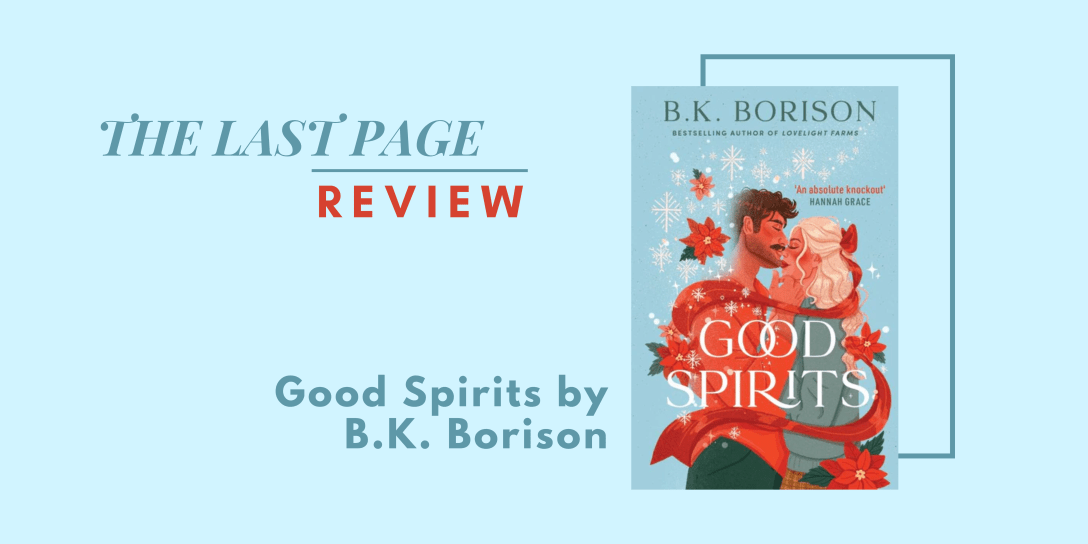
Review: Good Spirits by B.K. Borison

Rating: 5 out of 5.

It’s the first day of December and the last thing Harriet York expects when she returns home from work is for a mysterious ghost to appear from behind the depths of her Christmas tree —or that this mysterious stranger would tell her that her soul is in danger and he has been tasked with repairing her past. Nolan Callahan is everything a Ghost of Christmas Past should be, living his afterlife aimlessly and determined to pull off his latest assignment with time to spare. But his current haunting with Harriet York could not be more atypical. For one, she doesnt appear to be at all similar to his usual assignments, she’s not sending scam emails to friends and family or forgetting her kid’s Christmas concerts. She is shockingly normal. But no matter, the assignment rests and her past must be examined. As Nolan takes Harriet through the key moments of her life, the two find themselves abruptly pulled into Nolan’s past as well. Moving on might not just be a goal for Harriet and as time moves forward and the Christmas deadline looms, Harriet and Nolan will race to uncover what’s tethering them together while fighting the real truth: that the only way they want to move on is side by side.

On the first day of December the universe gave to me a hot Irish ghost who appeared to audit my soul from behind my Christmas tree. B.K. Borison forges a new path in her latest holiday romance, Good Spirits, that not only had me romanticizing the concept of A Christmas Carol (minus Scrooge and with a hot ghost), but more importantly had me wondering where do I sign up for this soul auditing scheme. Blanketed by holiday cheer, snow, and peppermint sticks, Good Spirits is a holiday romance of epic contradictions — much like the holidays themselves. The yuletide carols and wholesome family gatherings are out of the question for Harriet York, a late twenty-something dealing with the passing of an aunt who helped her leave behind the stifling expectations of her family. Working at the antique shop she inherited while shuffling between her everyday paths has left Harriet to become her own kind of ghost. But who doesn’t want an actual ghost to appear and tell them their soul is in mortal peril? Infusing her captivating charm and capacity for unparalleled love stories, B.K. Borison’s Good Spirits is a heartening holiday romance involving loneliness and the power of memory in refortifying our present.

Romancing a ghost wasn’t on my 2025 bingo card for romance novels but I am so glad it delivered. In Good Spirits, B.K. Borison takes readers on an introspective journey through the lives of a regretful Irish fisherman turned ghost and a former lawyer turned antique dealer, Harriet York. Now I’ve never put it past B.K. Borison to introduce a unique concept and completely take it where you never expected. Romancing the mundane is her motto — those everyday tasks and quirks unexpectedly find meaning within this flourishing romance. For Good Spirits everything has its place, and the mundane is made deeper by the overhanging weight of the past and the threads of fate which become more prevalent, not unlike the irksome mistletoe conjured up by our resident ghost. Love truly is in the details for Nolan and Harriet, working to determine the cause of Harriet’s need for redemption while discovering the unexpected ways they are bound together. Borison always leaves these delicious crumbs for her readers to uncover and as a reader who likes to find connections and mull over symbolism I feasted on this novel. Like Harriet working at an antique store called the Crows Nest while her soulmate is an out of practice fisherman? Come on! Good Spirits is a treasure trove of wonder not only in its romance, but the ways in which we can find connection to others and build affirming lives.

Good Spirits in essence challenges what really makes a ghost. It isn’t just someone who has passed away clinging to some unfinished business. In many ways, loneliness and the unfinished business of the present can leave us as little more than ghosts ourselves. Harriet York is the perfect example of someone seeking affirmation while grappling with loss that has left her aimlessly wandering through the motions. The spirit of the holidays are a way for her to find comfort and bask in the beauty of this time of year. Too bad a ruggedly handsome ghost throws a wrench into these plans. Nolan Callahan not only helps Harriet recontextualize her past and present, he is the love interest Harriet deserves. Nolan is someone who can provide insight into her past but also a loyal partner who can stand by her side as she faces her family. The messy sides of these two characters is half the fun and Borison draws this out with her typical witty banter and an abundant side of holiday charm. The draw between Nolan and Harriet is in their shared loneliness and together they make each other better. Harriet who has spent years molding herself to suit her family while just wanting to be loved finds that unconditional love with Nolan who loves her without reservation.

Good Spirits isn’t your typical holiday romance, but Borison is writing in the tradition of so many romance writers both past and present —the flavors of which I felt scattered across this narrative. At the same time there is something about this romance that feels wholly unique. It’s not everyday you read a book about a woman romancing an Irish ghost in a series of ridiculous (his words not mine) patterned pajamas. But Good Spirits is about so much more than what appears on the surface, it’s about the living ghosts that haunt our present and how we can excise them. This coalesces in a satisfying final arc with Harriet and her family as she truly breaks free from their influence, and Nolan chooses a second chance and comes back to himself. And the unifying theme is found as Harriet and Nolan choose one another and endeavor to build their lives together. 

Full of warmth, string lights, hot cocoa, and various peppermint sweets, Good Spirits is the epitome of cozy holiday romance. Surrounded by all the comforts of home and the holidays, Good Spirits brings focus on the paths we walk and the fates we resign ourselves to when we aren’t really living. The real kernel of romance within is in showing up consistently for the people we care about and opening up a dialogue to our past. Letting people see the messy, imperfect parts of ourselves is daunting, but Borison proves that it’s never not worth it in the grand scheme of things. Good Spirits starts out with a bang and never lets up on the romantic tension front. Fate and memory intertwine in a romance that is endlessly heartfelt and far too entertaining to put down. Good Spirits is a continuation of B.K. Borison’s obscene powers for soul crushing romance and I was not at all surprised that this struck an emotional chord with me. I’d like to thank B.K. Borison for this entire book and also the sexy ghost representation. Not only was it desperately needed but it’s incomparable.

Thank you to Avon Books and Netgalley for providing this arc in exchange for an honest review.

Trigger warnings: death of a loved one, grief

Preorder a Copy – Out 21st October

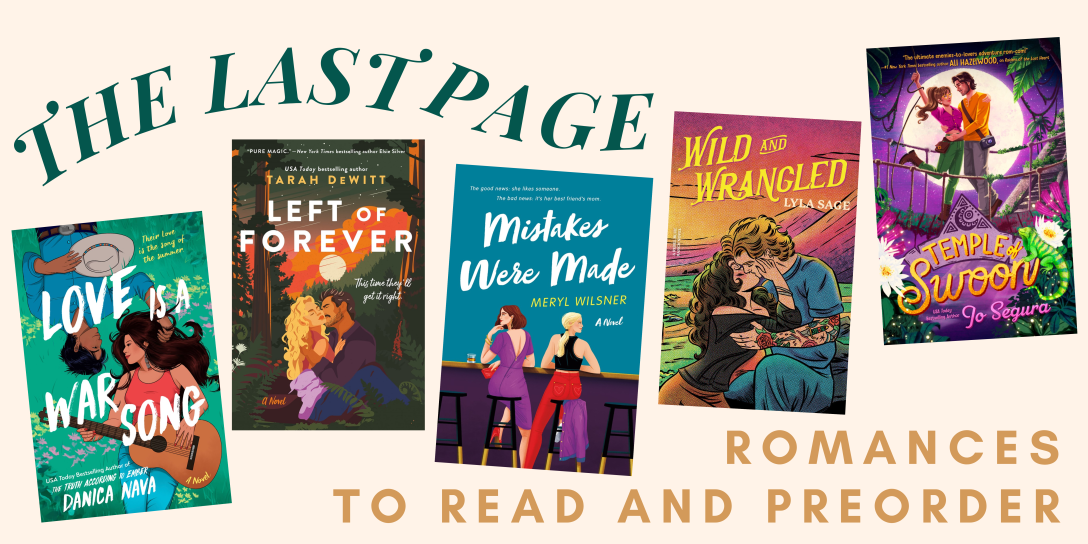
Let’s Talk: Romances to Read and Preorder This Winter

We’re finally out of January (seriously how was this month 84 years long) and because of how long this month was I managed to read 55 books total, twenty of which were romances. The vibes were very much reading away the horrors while trying to curb the chance of an original thought occurring (haha just kidding……unless?) and the result was far too many books and people being concerned for my health and general wellbeing. This is my first roundup of 2025 and I’m refocusing my attentions on delivering my latest favorite romances and speculative fiction at least once a quarter. Seeing as January was a million years long this list was harder than usual to narrow down but without further ado, here are my favorite romances from the beginning of the year. The theme for my January romances was very much second chance so if that’s not your thing I hope to indoctrinate you by the end of this post.

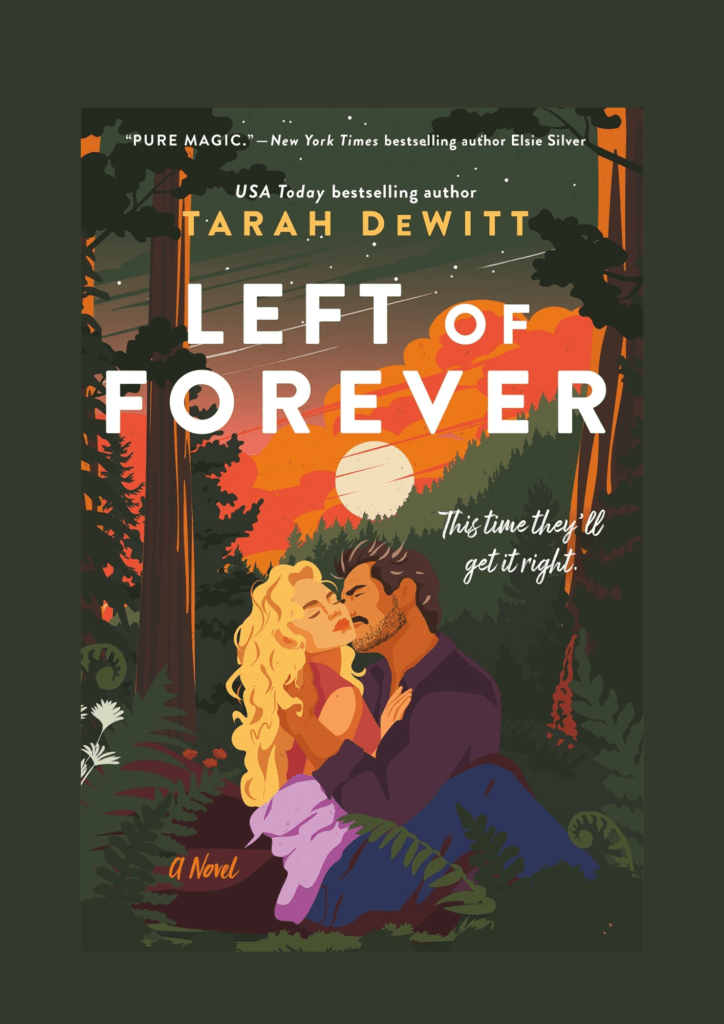
Left of Forever by Tarah Dewitt

Second chance romance is the gift that keeps on giving and Tarah Dewitt’s latest is a sparkling and angst-fueled road trip between a former husband and wife who attempt to reconnect six years after their separation on the way back from dropping their son off at college. This journey follows Ellis and Wren on the road to discovery as they try to find themselves outside of their roles as parents and caregivers and decide if they can give their relationship another chance. Dewitt flawlessly navigates the emotional reconciliation after many years apart with her hilarious situations and exceptional dialogue. Left of Forever is quite the emotional read as Dewitt exposes what went wrong in this relationship and builds to a second chance. Ellis not wanting to become a parent again after having to parent to his siblings so young was extremely compelling and tied in with why their relationship ended the way it did. Dewitt places emphasis on communication and opening a dialogue up to compromise as Ellis and Wren unearth the past. Communication has, and always will be sexy, and Dewitt understands that wholeheartedly in this second novel. Pepper mishaps, letters, picnics, and one trip to grasp a love lost, Left of Forever is about love that grows deeper in absence and love refortified in the face of vulnerability and forgiveness. Though much of this takes place outside of Oregon it was so nice to be back with the Spunes crew and I am undoubtedly awaiting more from Dewitt.

Preorder – Out 20th May

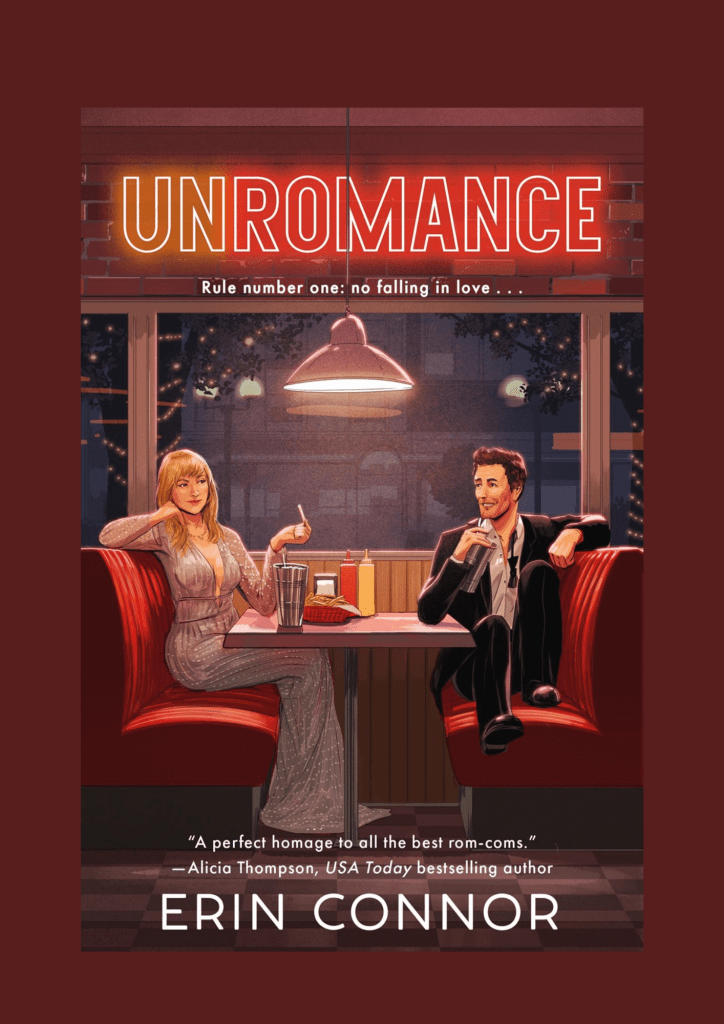
Unromance by Erin Connor

A trope filled journey that pays homage to the romance genre and its readers, Erin Connor’s, Unromance deserves its spot on all the romance TBR’s. A plan to ruin romance for a beloved actor you had a one night stand with while finding inspiration for the massive writers block currently plaguing you? That’s just the chaotic setup I live for. Erin Connor takes all my favorite components about romance into a blender and what emerges is a fascinating study on the genre, its tropes, and a love story for the ages. Connor delivers that classic romance meet cute but flips the script with two leads focused on anything but falling in love. Tale as old as time, as Sawyer and Mason adhere to their pact (rather loosely) while slowly opening up to trust and communication and falling for one another. Unromance is about two people that have made their careers around romance, through writing and acting, rediscovering its power in their own lives. Erin Connor moves through the tropes and genre conventions as fluidly as water, employing them in a beautiful love story intimately connected in friendship and understanding. In a setup seeming to flip the tropes, Connor instead recognizes their force for good within the overarching narrative. Unromance has humor in spades, shaken cynicism, and enough romantic moments —equal parts hot and sweet — to be your next favorite. 

Buy a Copy:

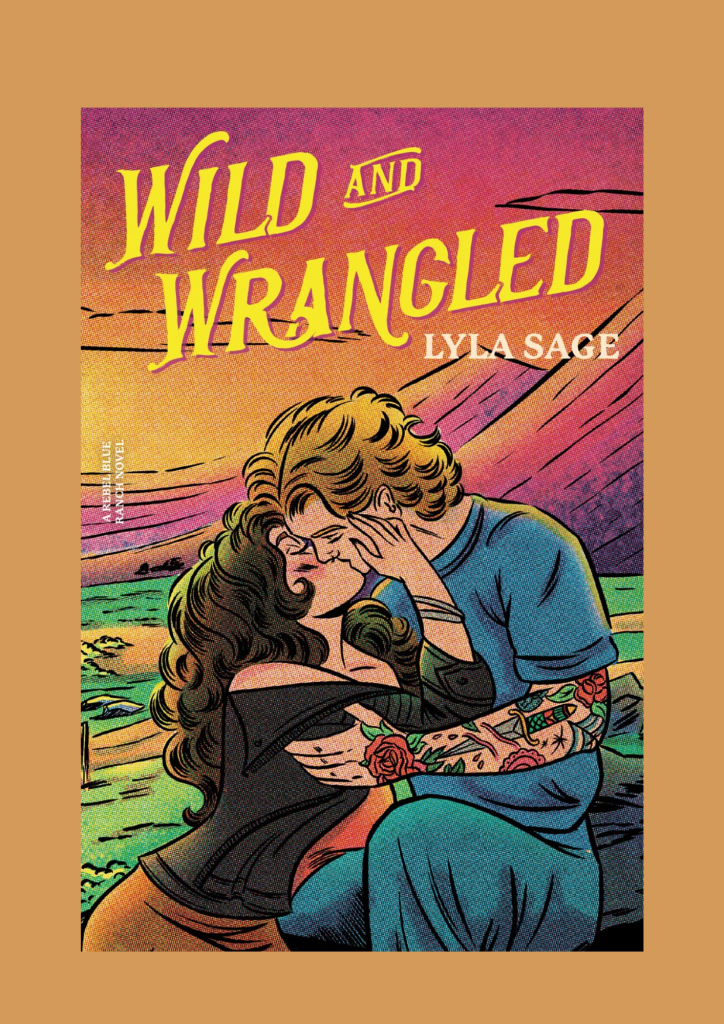
Wild & Wrangled by Lyla Sage

Anyone up on their cowboy romances knows that the Rebel Blue Ranch series is a tried and true staple. Wild and Wrangled brings this romantic saga to a close with the long awaited second chance love story between beloved Camille Ashwood and Dusty Tucker, her neighbor and childhood love. As a reader who eats, sleeps, and breathes second chance romance I can say with confidence that knowing this book was coming made me more than a bit unhinged. Sage has teased this romance in her previous installments and the crumbs were so delicious I knew this had the potential to be my favorite in the series. Integrating moments from their past as Dusty and Cam flirt with a second chance, Lyla Sage proves just how important first love can be and the support gained through vulnerability. Camille’s desire to please others was painfully relatable but her journey towards doing things just for herself was an important component of this romance arc. Now Dusty Tucker is the textbook definition of pathetically in love and I loved it so much. The years apart only intensified his love for Cam and he comes back ready to be whatever she needs. Dusty and Cam were so soft for one another which only enlivened their chemistry and highlighted why they work so well. The tension was tensioning and the chemistry was chemistrying just the way I liked. With Wild and Wrangled the romance is truly in the details and it’s absolutely Sage’s best work to date.

Preorder a copy – Out 15th April

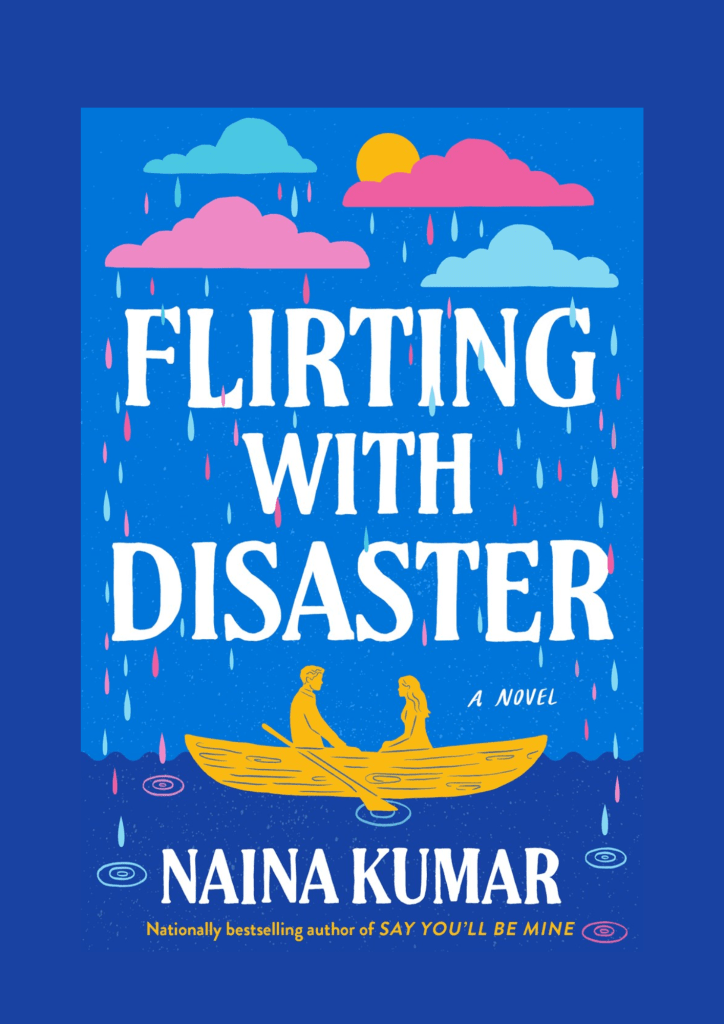
Flirting with Disaster by Naina Kumar

Stuck with your Ex in a hurricane while trying to convince him to sign divorce papers? Yes and yes. Naina Kumar said you can have a bit of angst as a treat and I ate it up like a full course meal. Flirting with Disaster is a ravaging storm contained in one life affirming romance. Married young and separated a year after they first tied the knot, Meena and Nikhil couldn’t get far enough away from each other — or at least Meena couldn’t. Nikhil is still living in their home in Texas ignoring her messages. Seven years later, Meena and Nikhil are brought back together when a hurricane leaves them stuck inside together, but the real storm is everything they have taught themselves to leave behind. Flirting with Disaster is not only an exemplary second chance romance, it’s also retelling the romantic comedy classic, Sweet Home Alabama, with South Asian characters at the helm. The longing and angst jumps out from the start as Nikhil and Meena are forced to cohabitate and confront the past. The conflict at the center of Flirting with Disaster is about wanting better for your partner, but how fraught that can be when you believe wholeheartedly that you aren’t good enough. Life goals changing, especially as one steps outside of parental expectations and reach for new dreams was another compelling theme that Kumar explores as she endeavours to bring Meena and Nikhil back together. If you like your romance heavy on the angst and one that addresses the perils and utterly human reality of miscommunication then give this one a try.

Buy a Copy:

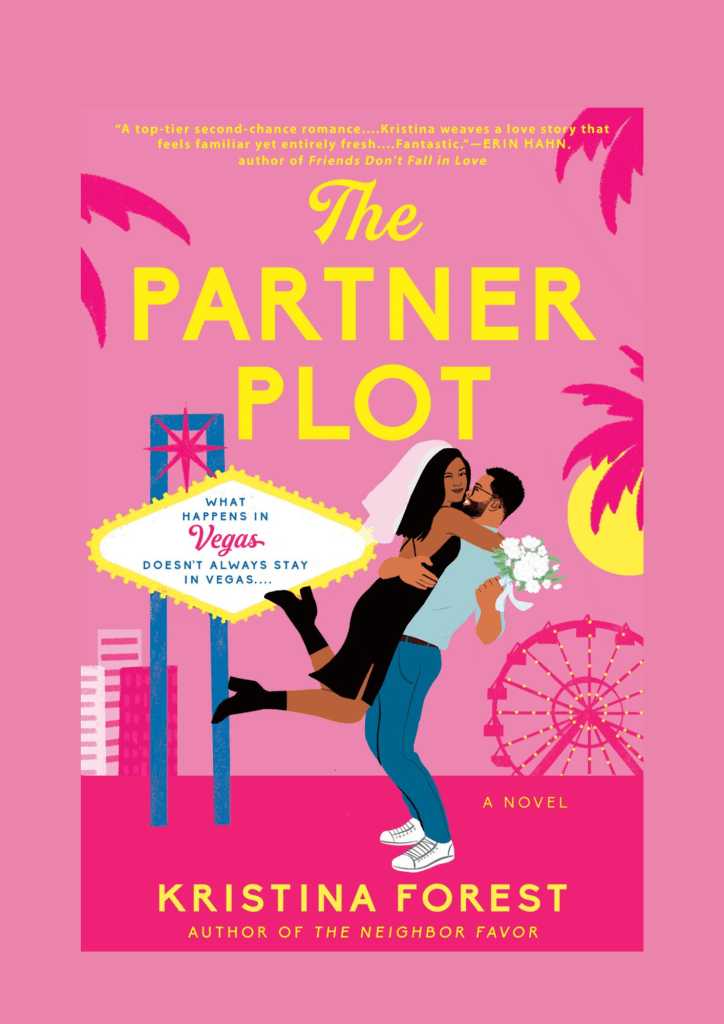
The Partner Plot by Kristina Forest

Second chance romance but it’s the ‘we accidentally got married in Vegas after not speaking for a decade’ variety, The Partner Plot is a perfect romance of reconnection and flawed choices. Kristina Forest returns to her Greene Sister series in a follow up that focuses on Violet, the middle sibling, as she attempts a faux marriage after waking up in bed in Vegas next to Xavier, her childhood love, with a ring on her finger. Both Xavier and Violet quickly realize their marriage could be mutually beneficial, and agree to lie to their friends and the public until they get what they want from their respective careers. Right off the bat, Forest makes you feel the intense history between Xavier and Violet, the connection drawing them back together even as they tell themselves their marriage is a means to an end. The forced proximity on top of this was, in a word, sublime. I love how Forest modernizes romance tropes and uses them as a tool to expose the past between her two leads. Xavier and Forest have to confront how they’ve changed, but also how they have not, if they want to succeed in their second chance. As these two have led such different lives since their breakup, I wondered how Kristina Forest was going to make it all work but every single moment of this book works to build the foundations for a fresh start. I can’t fully describe how obsessed I am with Forest’s vibrant characters and this romance only had me gearing up to dive into the rest of this incredible series.

Buy a Copy:

Mistakes Were Made by Meryl Wilsner

As a self described lover of mess, Meryl Wilsner has always been an author after my own heart. In their sophomore novel, Wilsner takes this notion to the next level. The premise: college senior Cassie Klein hooks up with a beautiful stranger at a bar off campus, never expecting to meet them at breakfast the next day when that stranger is introduced as her friend’s mother. Was the hookup a one off? And if not how will Cassie justify pursuing a relationship with a woman so intimately connected to her personal life. When I first started Mistakes Were Made I had my doubts because the mess was high and I had no idea how Wilsner was going to bring it all together. Luckily, Wilsner knows how to set up the messiest situation ever and expertly work to build upon that initial situation with open communication and intensifying chemistry. Though Cassie and Erin were at vastly different parts of their lives their connection becomes something more and they pursue it as they dodge the one person they have in common. Mistakes Were Made is a hot book and the forbidden romance only heightens this. The tension as Cassie and Erin deny that they have a real relationship was quite funny because they were already so compatible and establishing a life where they could be together. Emboldened by moments of vulnerability that shine through its chaotic start, Mistakes Were Made is everything I love about messy queer romance and my favorite novel from Wilsner so far. More of this immediately.

Buy a Copy:

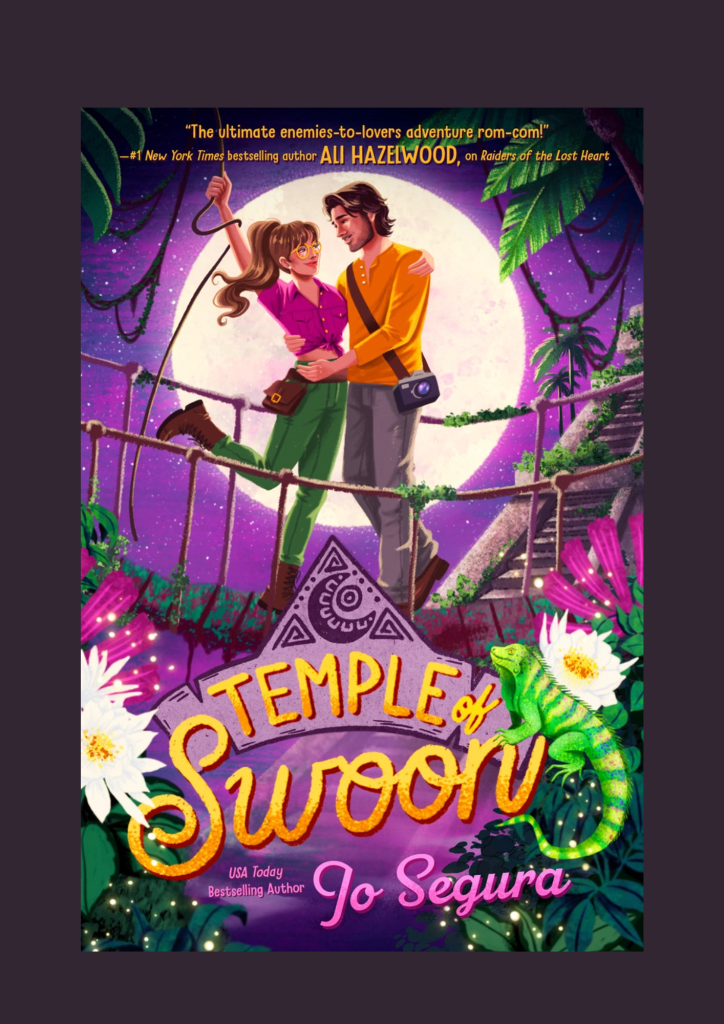
Temple of Swoon by Jo Segura

Jo Segura’s Temple of Swoon is the perfect fix for anyone that likes their romance heavy on the action and adventure. Writing in the shadow of Indiana Jones and The Mummy, Segura follows up her debut, Raiders of the Lost Heart with a brand new romance adventure. Dr. Miriam Jacobs never expected to be leading an expedition to uncover the legendary City of the Moon in the Amazon, especially not without the aid of her mentor, Dr. Corrie Mejía. Add in the handsome and effortlessly charming journalist Rafael Monfils occupying her thoughts and a dash of sabotage and Miriam is unconvinced she will ever succeed in uncovering this city of legend. Now that I have read two novels by Segura it’s evident her talent for humorous, swoony romance that delivers on the action and a satisfying commentary on archeological pursuit. There are so many components raised in this sophomore novel and all were handled with the correct amount of attention and care. Now Rafe and Mariam were giving that classic action adventure couple and their interactions had me laughing one moment and then blushing the next. Miriam working to overcome her insecurities and raise hell was by far my favorite part of this novel. I also really enjoyed the references to Segura’s former novel and seeing how they connected to this one. Sexy times in the rainforest while a dangerous group works to sabotage your mission? What could go wrong.

Buy a Copy:

Love is a War Song by Danica Nava

Danica Nava is a relatively new to me author but I now need every book written by her on my desk immediately. Love is a War Song, her sophomore novel, follows Avery Fox, a Native American pop singer who flees to the ranch of the grandmother she’s never met after coming under fire for an insensitive photoshoot and music video. Avery has never met anyone in her family after being raised alone by her mother, but this vacation from the public eye provides her the chance to learn her family history and Muscogee identity. Unfortunately, there’s Lucas Iron Eyes, the man in charge of her grandmother’s ranch and the one person who cannot stand her or her music. Love is a War Song is a romance all about second chances and the fallible nature of first impressions. It’s about building your community and home even when you’ve never had one to begin with. The romance that blossoms between Lucas and Avery is truly heartfelt —stemming from two people who initially met with judgment actively working to unlearn those predisposed beliefs. Alongside the romance, Avery confronts the hurt she caused the greater indigenous community through her music video and magazine cover while becoming acquainted with the Muscogee community in Broken Arrow. Danica Nava addresses a host of issues in this romance from the entertainment industry, to cancel culture, and indigenous stereotypes, and all felt grounded in the story and its place. Danica Nava leaves her mark with this outstanding romance and and I eagerly await what she writes next.

Preorder a copy – out 22nd July

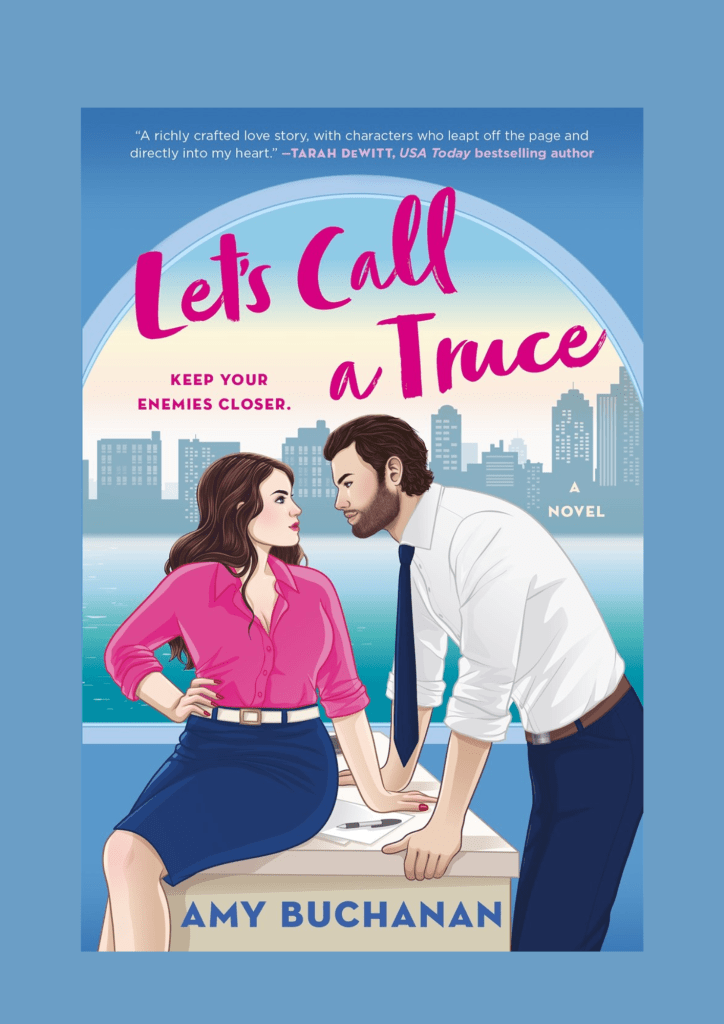
Let’s Call a Truce by Amy Buchanan

Hate to love workplace romances aren’t anything new, but Amy Buchanan proves there are perspectives missing from this type of story in her debut novel, Let’s Call a Truce. When she started a new job after the passing of her husband, Juliana never expected to gain an enemy on her first day of work. Ben, unfairly attractive and rude, decided to complain not so privately about her leaving early due to an emergency with her two young daughters, and it did not go over well. It’s been two years since then and Juliana and Ben still cannot get through a simple conversation, but beneath their feud lies something else – something Juliana doesn’t dare interrogate. Let’s Call a Truce is a workplace romance surrounding horrific first impressions and a feud long gone astray. Exploring grief, single parenting, and returning to work after raising kids at home, Buchanan attempts a lot, but what emerges is a flawless, well rounded romance. Though they got off on the wrong foot, I could clearly feel Juliana’s frustration with Ben and how that spiralled into years of petty interactions and pointed remarks. It also led to a palpable chemistry which Buchanan builds upon over the course of this novel. The revelation of Ben’s background only served to make this feud more well-founded and the tension all the more delicious. Let’s Call a Truce has the perfect balance of hatred and simmering heat to make me entirely obsessed and I am all but begging for more from Amy Buchanan.

Buy a Copy:

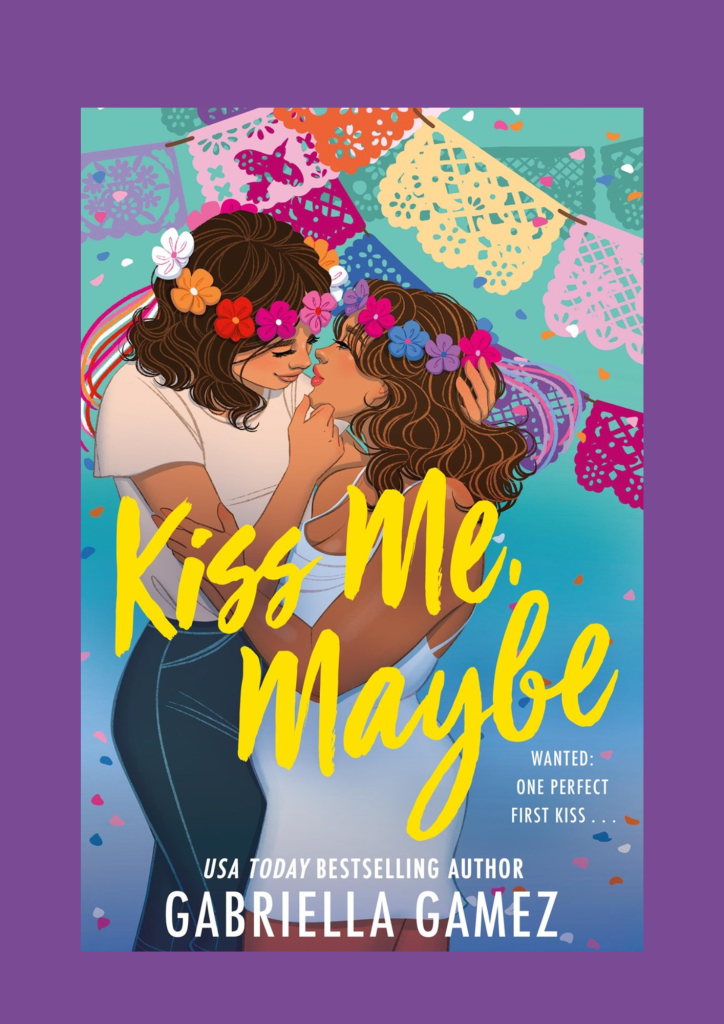
Kiss Me, Maybe by Gabriella Gamez

Librarian Angela Gutierrez has a penchant for going viral, something her superiors are none too happy about. When she openly admits online that she’s never been kissed, while also sharing her asexual identity, the video goes viral and Angela becomes determined to achieve her first kiss at all costs. Her bold idea: a scavenger hunt across the city where the winner gets her first kiss, but she’ll have to enlist the help of Krystal Ramirez, a gorgeous out of her league bartender to pull it off. Now that I have read two romances from Gabriella Gamez the overarching vision for this series is clear, but this second novel could not be more different from her first. Kiss Me, Maybe is a romance intimately intertwined with sexuality, identity, and the societal pressures to perform against an arbitrary list of experiences. Main character Angela, has found comfort in her identity but her lack of romantic experience has led her to feel behind and out of touch in her own life. Gamez calls attention to this desire to know oneself but also the pitfalls in putting too much pressure on these goals. As she develops the romance, Gamez further explores the ace spectrum and Angela’s developing sense of identity. I appreciated the attention paid to the diverse experiences under the ace spectrum through Angela’s desire to find a label that best fits herself. That and the relationship between growing up queer and these “all important” experiences really served to ground the story. Kiss Me, Maybe is a layered romance that achieves much within the friends to lovers narrative, and I loved every second of it.

Preorder a copy – Out 6th May

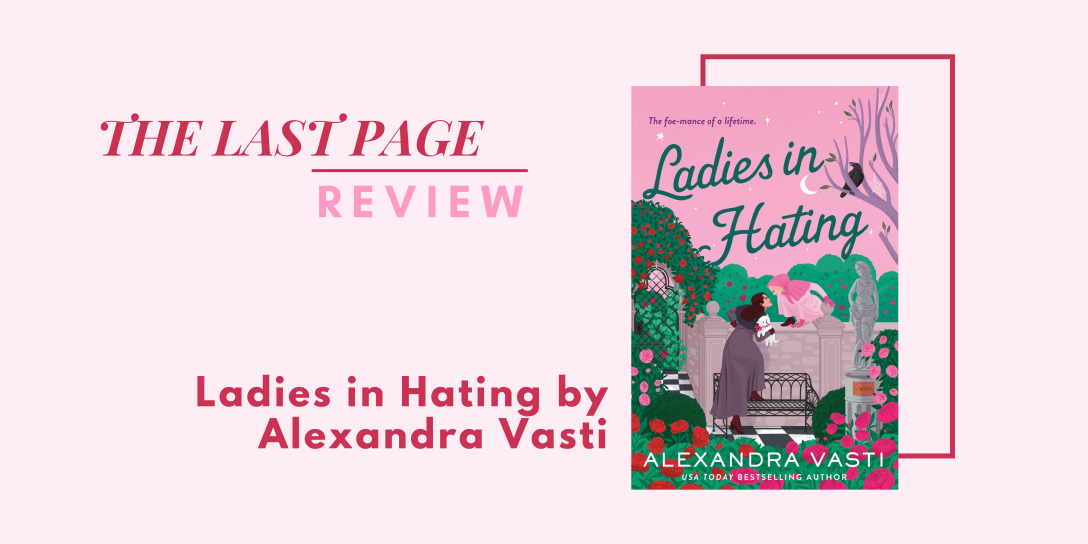
Review: Ladies in Hating by Alexandra Vasti

Rating: 5 out of 5.

When she sat down to pen her first novel all Lady Georgiana Cleeve intended was to support a life for herself and her mother. Now a celebrated writer of the gothic variety, Georgiana has a much bigger problem. Ever since she became a renowned author Georgiana has gone toe to toe with Lady Darling, another beloved writer in the genre. No one knows Lady Darling’s true identity but the similarities between her stories and Geogiana’s are far too close to be a coincidence. Determined to unmask her rival goes awry when Georgiana confronts Catriona Rose Lacey, daughter of their former butler and Lady Darling herself. Georgiana hasn’t seen Cat since her father was dismissed from service, for reasons unknown, but she has harbored the youthful infatuation she felt for her close. When a sojourn to the decaying Renwick House to research their upcoming novels leads to an unexpected confrontation, Cat and Georgiana agree to set down their swords and pen their novels side by side. But when they become trapped in the manor, fiction becomes reality, and as danger ensues Cat and Georgiana must face the desire burning its way through their bitter rivalry.

Oh no we’re two gothic novelists writing stories inspired by our childhoods together as we subconsciously yearn for the past…what happens if we kiss in a decaying manor that may or may not be haunted? If there’s one thing I am, it is a gothic romance lover to my core and Alexandra Vasti’s Ladies in Hating is a delectable feast for anyone who loves the gothic or sapphic historical romance. In the final book in the Belvoir’s Library trilogy, Alexandra Vasti pens a tender love letter to women gothic novelists, the gothic genre, and the queer people who found love and livelihood in the Regency period. Ladies in Hating is a model representation of gothic literature, in its themes and motifs, and a stunning example of what the historical romance genre can afford our greater understanding of love and connection. The persistent Lady Georgiana Cleeves meets her match in Catriona Rose Lacey, her rival and worse, the woman who could change her closely guarded principles and make her believe in love again. A wondrous rivals to lovers story submerged in fervent wanting and agonizing romance, Ladies in Hating made me feel every emotion and left me aching for more historical romance from its ridiculously talented author.

Ladies in Hating is the kind of book that feels almost written for me. This exquisite novel reached into the crumbling caverns of my heart and fortified my belief in love and existence as a radically political act. Now the gothic has long been a genre for exploring societal wounds and the intricacies of our experiences. The decaying manor house that comes to represent the fragility of the psyche or the hurts and traumas of a family is a prominent motif within the genre. Vasti understands this inextricable link as she traps two rival gothic novelists inside the dilapidated Renwick House —with its peeling wallpaper and crumbling facades, to reconcile their past hurts and confront their growing passion. But mystery takes the center stage as authors Georgiana Cleeve and Catriona Rose Lacey are left to uncover the secrets of a family long buried. 

Gothic imagery is a staple in itself and Vasti adheres to this with a cadence that submerses the reader in the intricate conventions of the genre. Renwick House and its medieval structures are transportive, invoking a period long past and ravaged by time. The host of bats that call the manor their home, the decaying trees in the orangery, and the damaged books in the crumbling library recall meaning to this place and its former inhabitants. For Catriona and Georgiana it’s a source of inspiration for their continued livelihood through their gothic novels, but it quickly becomes something far more personal. I love the sense of mystery that shrouds the narrative, wonderfully entwined with the romance between rivals. Love and horror are so often linked together and Vasti gives a dash of that in her mystery — the screams which draw Georgiana out of her bed chamber in the night to wander the hallways in the dark and the dead body unexpectedly uncovered. The moonlight conversations in the library and a conservatory hidden in the recesses of the manor are two phenomenal settings in this novel, connected to the love between these two women and the uncovered sapphic love story of Renwick’s past.

The external plotting to Ladies in Hating is essential in developing the love story at its center. Georgiana and Cat’s respective family backgrounds provide a rich foundation for the discussions surrounding sexuality, class, and sex, which Vasti brings into the fold. The tension this suffuses into the narrative as they find a mutual attraction was exquisite. Georgiana is someone who wholeheartedly believes she is responsible for bringing ruin on her family and that she will hurt everyone around her, a conviction Vasti works to shatter across this novel. It’s quite heartbreaking but an important perspective of Georgiana as a victim of emotional abuse from her father and how that necessitated having to reveal her author identity to the public. Her relationship with Cat opens up a whole world if she can only reach for it with both hands, but giving up her principles is easier said than done. Cat on the other side just wants to be chosen —an extension of their class disparities when first they met. Though brought closer in the years following Georgiana’s life away from her father, it is the basis of their understanding of one another and not easy to shake. The longing and tenderness at the center of Cat and Georgiana’s romance made me quite feral and that my friends is the barometer for an excellent romance.

Drawing her Belvoir’s Library trilogy to a close, Alexandra Vasti honors the fierce women who penned gothic stories and the queer people of the past who reached for their happiness and lived in joy. This is one of those books further enriched by its afterward where Vasti addresses the historical significance and her sources of inspiration for the text. The sheer research present is evident from the start but it was fascinating to read about the property on which Renwick House was based and the sapphic illustrations and Lesbian writers who paved the way forward. Ladies in Hating is radical in all the ways standing firm and building a life in a world that would deny you that can be. Catriona and Georgiana building a life at Renwick House is a powerful full circle moment — made stronger in the discovery of the letters between Luna Renwick and her love, Sarah Sophia Penhollow, forever immortalized in the estate. I’m truly sad to be leaving the ladies of Belvoir’s Library behind but know Vasti is nowhere near done bringing us historical romance excellence. Sapphic, mysterious, and insanely hot (praise be to Alexandra Vasti), Ladies in Hating is my latest —and eternal—historical romance obsession.

Thank you to Edelweiss and the publisher for providing this arc in exchange for an honest review.

Trigger warning: homophobia, physical abuse (mentioned),

Preorder a Copy:

Review: Well, Actually by Mazey Eddings

Rating: 4.5 out of 5.

Eva Kitt isn’t exactly where she’d like to be. As the host of Sausage Talk —a talk show where she interviews B-list celebrities over subpar hotdogs, her dream of a career in journalism is heavily on the back burner. Frustrated and a little drunk, Eva calls out Rylie Cooper, a popular social media talent for ghosting her during college. When the video goes viral, Eva’s superiors attempt to capitalize on that attention by having her interview Rylie live on the show. In confronting the past and her first real relationship, Eva is on edge until Rylie sits down and proposes something truly outlandish. He’ll take her on six dates to attempt to make up for his behavior during college and they’ll debrief together on his show after the fact. It’s unconventional, but Eva isn’t above making Rylie squirm. Bonus, the continued publicity could launch her out of Sausage Talks’ unfortunate shadow. As Rylie kicks off his apology dates, Eva is more than sure he is above redemption. But the dates, while a little contrived, only make her more interested in righting their shared past that is not quite done with them yet.

If you witnessed the insane levels of chemistry on Andrew Garfield’s Chicken Shop Date interview this past fall and found yourself asking “Is there a book like this?” boy does Mazey Eddings come through. With her signature knack for crafting unusual romantic circumstances, Well, Actually is a quintessential modern love story of effortless humor, second-hand embarrassment, and pop culture references served with mediocre hotdogs and a quest for redemption. It’s messy, so bisexual, and the kind of book I was always going to fall for. Well, Actually introduces Eva, a down on her luck journalist with black cat tendencies, and Rylie Cooper social media’s darling and golden retriever to his core. They seemingly have nothing in common besides the five dates they went on in college before Rylie unceremoniously ghosted Eva. Well, Actually brings exactly the kind of romance setup I go for: heavy on the mess with imperfect protagonists finding love and meaning in their lives. Mazey Eddings has a grasp on the finite ledge between the humorous and emotional situations and she employs it deftly in her strongest romance to date.

In Well, Actually, Mazey Eddings proves the past is never truly past as two chaotic individuals reach for love in spite of their tense history. Eddings brings Rylie and Eva together via an unfortunate PR nightmare that initiates a journey of rediscovery and forgiveness around their complicated past. Eva as someone desperately wanting to be chosen —having been pushed to the side in her family, and Rylie whose grief made him unable to participate fully in their relationship in college is a perfect unsteady foundation for this second chance arc to blossom. Eva Kitt, fashionable and opinionated is everything I want in my romance protagonists. She’s determined and mean when she needs to be and I love her so much. The only person who (maybe) loves her more than me is Rylie Cooper who opens up a space for her to be entirely herself. From the start Rylie was giving Nick Miller energy as Eva being mean to him just made him fall even more in love. As a lover of mean women myself I could not find blame in this.

Mazey Eddings hones her dialogue to perfection and Well, Actually is a pinnacle of her talent for witty, sharp banter. There were so many moments where I laughed, screamed, or put my kindle down out of sheer frustration. Eva and Rylie’s antagonistic, snappy interactions evolving into their deeper arguments and romantic moments was the true highlight of this novel. I’m firmly of the opinion that dialogue can make a romance and nowhere is that more on display than in Well, Actually. Rylie and Eva had so much to unpack as they embarked on a new relationship and Eddings grounds that in open and honest communication. Even though it is difficult and our leads shirk from it at points, that communication opens up an avenue for reconciliation and a true second chance. The individual journeys Eva and Rylie are on are personal, yet grounded in their shared history. Loving the idea of someone is something Rylie confronts as he tries to win Eva over despite not really knowing her, and Eva has to decide if she can move past the hurt Rylie caused. The conversations surrounding anxiety, grief, and forgiveness as these two work to surmount obstacles and reach for a relationship together are outstanding and truly some of the best I’ve read within the romance genre.

Mazey Eddings brings humor and hunger (for connection and hotdogs) in her latest romance that has all the wit, heat, and depth to send you spiraling. Well, Actually is perfection captured and bottled in a second chance romance of awkward manners and resolute natures. Through her leads Eva and Rylie, Eddings initiates a discomforting journey of reconciliation and everything caught up in forging through conflict. Haters of the third act breakup can rejoice because as far as Mazey Eddings is concerned it doesn’t exist and I praise her for it. Well, Actually emphasizes change for the right reasons and loving without conditions. This story is hilarious, it’s tender, and everything my bisexual heart needed to stay sane this winter. Mazey Eddings is still the romance author I turn to for hilarious and grounded contemporary love stories and I encourage everyone to do the same. 

Thank you to Edelweiss and the publisher for providing this arc in exchange for an honest review.

Trigger warnings: grief, death of a loved one

Preorder a copy: