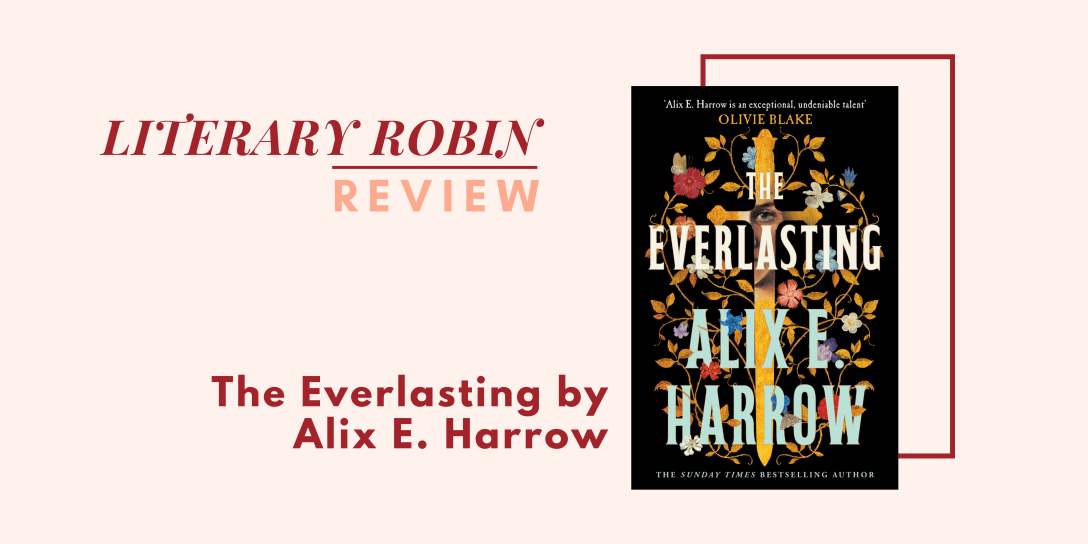
Review: The Everlasting by Alix E. Harrow

Rating: 5 out of 5.

Her tale has been retold countless times, her sword a symbol for a nation unfettered, but where it all began is where it starts to get complicated. Scholar Owen Mallory has long been fascinated by the tale of Una Everlasting, a legendary knight who brought glory to Dominion through her quests and eventual death. One thousand years since and her tale remains entrenched in the minds of every citizen. Since then, wars have been waged, lost and won, to uphold Dominion and further its might. Returned from war scarred and irrevocably changed, Owen pours all of himself into researching the figure of Una Everlasting. In dreams, he finds himself lost in her story where he bears witness to her death countless times as if he was there. One day an unexpected item finds its way to Owen: a book—the book, which details the true events of Una’s life from the perspective of an unnamed but invested observer. Before he can get far into his research, the book is stolen, and Owen comes face to face with the person running Dominion behind the scenes, and her plan hinges on Owen playing a part he has evidently played before. Stabbed with a letter opener, thrust into the story, Owen finds himself beneath a tree with a sword against his neck, and the wielder of the blade is the woman that started it all. Una and Owen are an unlikely pair, but to break the cycle and wrest control of history they’ll have to hold fast to each other and a love that is worth so much more than the tragedy already written for them.

No, don’t be forever doomed to the cycle of violence where you die over and over again in my arms. You’re so sexy aha. Beneath the yew tree a knight and a historian meet, but they have no idea they’ve done this all before, the story is already written, and they’re doomed to follow it to its bitter end. Spanning the course of a thousand years in a never ending time loop, Alix E. Harrow’s, The Everlasting brings a lens on the inner workings of a nation and the bedraggled battle-worn knight as its Atlas, upholding its gilded promises. Like a beating machine with a rotten core, Harrow constructs the kingdom of Dominion and its stronghold obtained through a simple story, The Legend of Una Everlasting. In this tale an orphan becomes a knight, becomes a legend, raised to the side of a queen and struck down to further her reign. Told through various iterations of the deaths of Una Everlasting, Alix E. Harrow unfurls the power of stories, the cost of bearing witness by way of the pen, and the agendas of tyrants written into the very fabric of a nation’s history. The fantastical has its roots buried deep in Dominion and through this labyrinthine tale is the truth of a decaying land made known. The Everlasting is an Ouroboros, a tale with no true end or beginning, but for Harrow the cycle is a reflection of a violent nationalism and the story a sword to be wielded to further its complete and utter domination.

Tis the year of the lady knight and nothing pays testament to that quite like Alix E. Harrow’s, The Everlasting. Trapped in a time loop with a hot knight weary of her duty? A bespectacled scholar doomed to tell her tale and follow her to its bitter end? This is all I needed to hear to know that The Everlasting was going to be another unimaginable feat from Alix E. Harrow and one of the best new fantasy novels of this calendar year. Harrow had previously struck a deadly blow with her mere thirty-one page short story, The Six Deaths of the Saint, so I was already in the afterlife before I even began reading this extraordinary tale. There’s something so devastating about the inevitable, and in The Everlasting inevitability is the blade held to the throats of a knight and a scholar brought out of time to birth a kingdom and its sinister agenda. Contrasting the perspectives of Una, our knight everlasting, and Owen Mallory, a former soldier turned enthusiastic historian, Harrow constructs a story of heroic feats and the power in weaponizing the words upon the page. Fearlessly layered with innumerable stories within a story, The Everlasting holds a mirror to the narratives we cling to and the identities and ideation birthed through their telling. A story is a powerful thing and for the Everlasting the importance lies in its construction and every event continuing on in an endless cycle.

Told almost entirely through second person, The Everlasting allows the reader a chance to feel the catalyst of a story becoming myth. Myth-making is an active task within this novel, and part of that is the writing of the story, where every word is poured over and deliberate in its casting. Battles are embellished and the very essence of Una Everlasting pared down to prop up Dominion and one woman’s hunger. But it is Una Everlasting who truly upholds this nation. Her body bears the physical brunt of the wounds of the land and its assimilated peoples, her scars a reflection of the true violence being inflicted. Reading The Everlasting is to confront the abject pain of the writer addressing this figure, accompanied by a keen sense of loss in knowing that Una will forever be doomed as a martyr. Behind every myth is a person bearing witness and Harrow highlights the narrative as a reflection of the teller—a sum of their fears, wishes, and innate biases. For Owen: the desire to deny Una’s death in some manner, to make it mean something. Minor details within this tale aren’t so minor, and one of the more clever moments is in the character motivations and backstories that shift with every iteration of the cycle—leading to protests in the present day, rampant xenophobia, and calls to reinstate the monarchy. The justification in the othering of entire communities through hateful rhetoric isn’t just an intangible idea in the Everlasting, it’s baked into the story underpinning this nation and its citizens.

The Everlasting is not just an inventive fantasy novel, it is a crucial warning for our time. Lady knights, time loops, and an anxious chain smoking historian whose job it is to bear witness and love her across time is just the pinnacle of this narrative exposing the roots of story and laying bare the flawed parts of a nation. With so many intricate layers entangled in one novel, The Everlasting is as interconnected as the rings within an aging tree, but altogether much more convoluted with the recurring time loop of it all. There’s dragons, a mysterious yew tree, romantic yearning, and of course many occurrences of a tall buff lady knight wielding a sword and ending up on top. I would also be remiss to not mention my king Owen punching a fascist in the face. Thank you, Owen! The Everlasting takes a winding approach in exposing the power of a single story in burgeoning a nation’s fascism. Victims extend far beyond our star crossed duo with professors, battle-scarred citizens, and children bearing the brunt of Dominion’s harm. Owen’s perspective in being part of a country that will always hate some part of him is an agonizing truth to this story where rhetoric is not so easily changed even as history transforms. Concerning stories and their ability to affirm, justify, and embolden our views, The Everlasting returns the sword to the hands of a weary knight shaking off the mantle of a martyr to become something entirely of her choosing. Like most Alix E. Harrow novels, The Everlasting left me sobbing and I can find no desire to pick up the pieces and leave it all behind. I’ll be beneath the yew tree if you need me.

Thank you to Netgalley and Tor Books for providing me with an advance review copy.

Trigger warnings (majority provided by the author): blood, death, violence and injury, war, racism, homophobia, xenophobia, sexism, pregnancy and childbirth, animal death (off-page), dysphoric emotions about gender, imperiled/abandoned children
Preorder a copy – Out 28th October

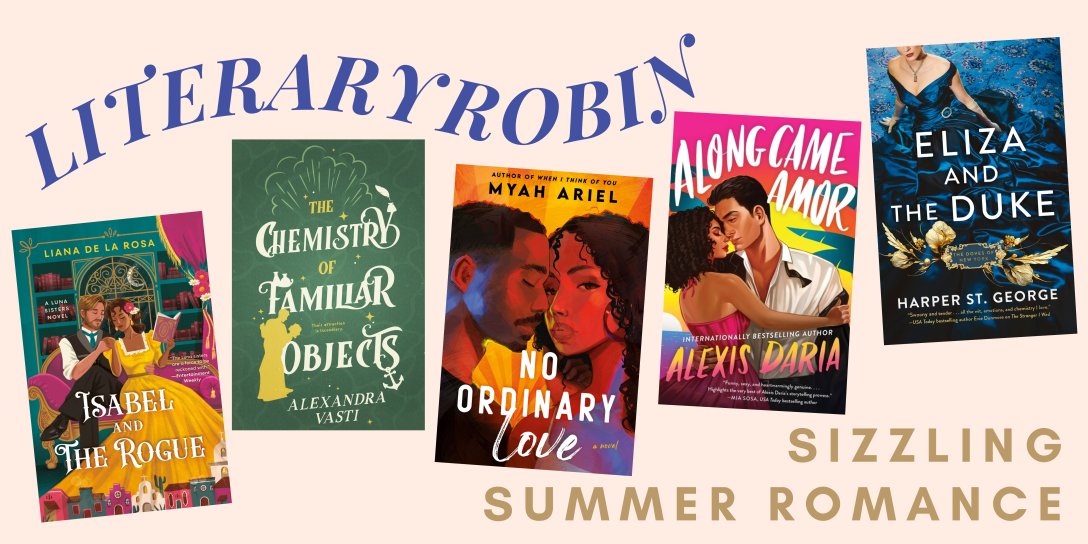
Let’s Talk: Sizzling Summer Romance

Summer, summer, summer, summer (please read in the theme of Disney’s High School Musical 2 hit song “What Time Is It”). Hello and welcome to another installment of my quarterly romance recommendations. It’s insane how many romance novels have published since last quarter so to honor that this is a bit longer than usual. I’m still catching up to many April/May romances since I spent the month getting ready to move back home. Picture the last few weeks being me just reading romance there are that many. Summer is already heating up and the romances are just as hot (hallelujah). We’ve got small town messy sapphics, rival bands, Persuasion inspired historical romance, and plenty of unconventional love stories. Also please ignore that I put an October romance in here. Just preorder it (trust me). Happy reading!

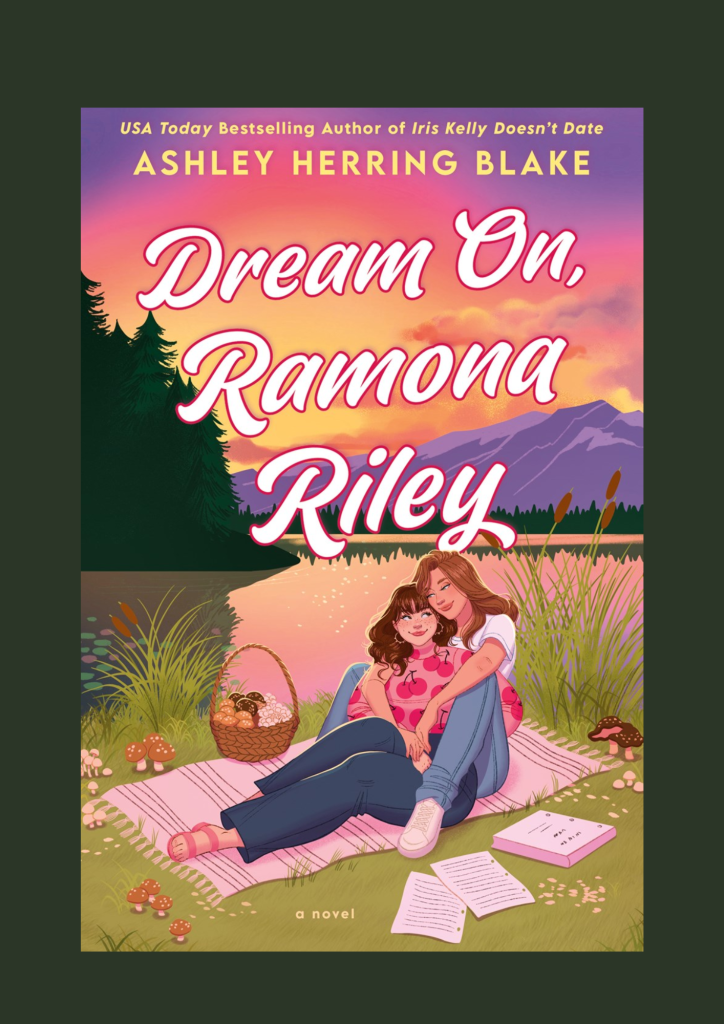
Dream On, Ramona Riley by Ashley Herring Blake

Ever since her mom left their small New Hampshire town, Clover Lake, never to return, Ramona Riley’s dreams of doing costume design became an impossibility. Shortly after, she dropped out of college to assist her recently injured father in raising her younger sister Olive, and for decades that was all she could see. Now Olive is set to graduate and leave for college, and Ramona is still stuck in Clover Lake working at the local cafe. But when she hears that the next big romantic comedy is set to film in Clover Lake, Ramona begrudgingly sees this as an opportunity to forge a way to her dream career. Unfortunately the film’s lead star is her first kiss and once crush, Dylan Monroe, and she does not remember a single thing about Ramona. Luckily Ramona can spend the entire time avoiding her. Right? No one is doing small town romance like the sapphics and Ashley Herring Blake. Dream On, Ramona Riley recaptures the small town atmosphere of her first series, Bright Falls, and proves it’s not just a lucky strike, but an innate talent Blake can bring to any romance. As a lover of all things New England, rom-coms, and messy bisexuals, this had all the shapings of an unforgettable romance, and it delivered from beginning to end. Featuring another delightful extended romance cast—like April Evans the tattoo artist (up next for book two), and some of Ashley Herring Blake’s hottest sex scenes (trust me), Dream On, Ramona Riley really is queer romance perfection. The core of this story sees caretaking as a sacrificing act, but also a hopeful one—a poignant theme which threads through Ramona’s second chance career and eventual love story. Dream On, Ramona Riley is for anyone who’s ever thought the words “it’s too late,” because it never is. I am elated for more messy sapphic love stories from Ashley Herring Blake!

Buy a Copy:

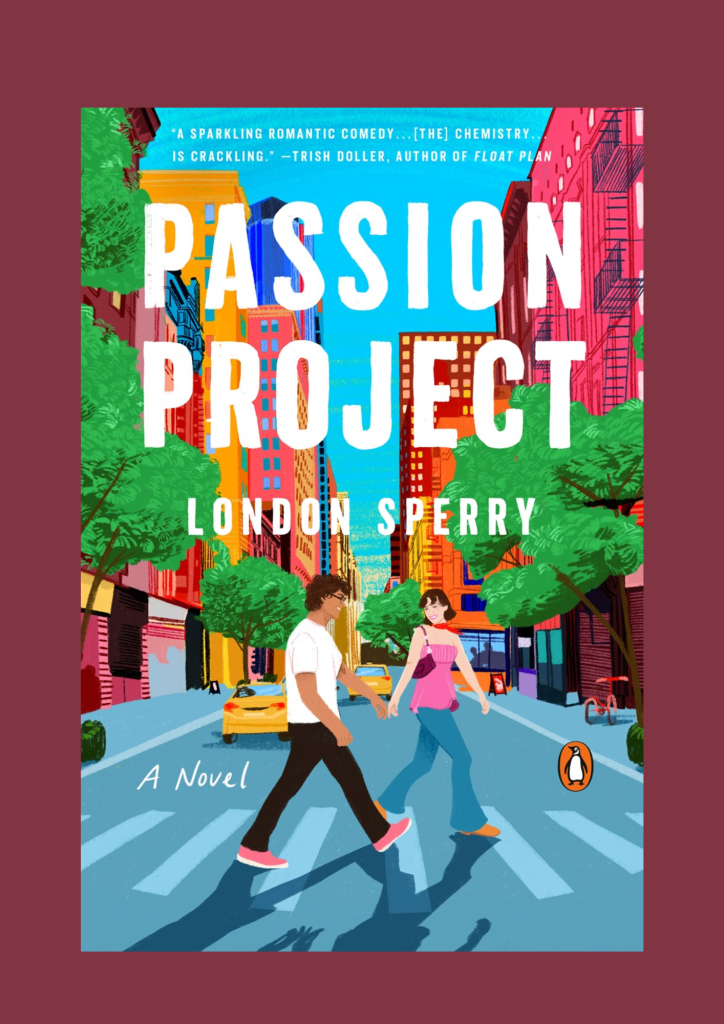
Passion Project by London Sperry

Bennet Taylor has no passion. She’s experiencing a passion deficit as it were. But who else is in their twenties working as a temp while desperately trying to forget the grief of the love of their life who they are pretty sure was the one. Pushed into a first date she didn’t want Bennet flees, only to run into her intended date, Henry, hours later where she confesses the grievous sin that she is not ready. She even admits to her passionless state, and Henry agrees he’ll help her find it. Now they’re having adventures all over the city, and Bennet and Henry realize they’re not just good friends and passion aficionados, they’re each other’s next chance at the love they’ve been waiting for. Disaster over pasta carbonara begins this hopeful romance debut from London Sperry that leans heavily into works in progress finding love not in spite of their circumstances but because of all that they are. New York City is very much a main character as Bennet and Henry traverse the boroughs and the nooks and crannies in search of ever elusive “passion” while avoiding unexpected feelings. Now with a founding father name like Henry Adams you wouldn’t expect a man to be so effortlessly romantic and capable of such yearning, but Sperry has written the romantic love interest of the year with Henry. I mean the spectacles?? Come on! Bennet Taylor had such strength while in the presence of this man I commend her for all of it. The journey of Bennet and Henry out of grief, to friendship, and then love is overwhelmingly gentle. Passion Project has a truly beautiful message baked in—that we don’t really have to have it all together to be worthy of love and happiness. The focus on depression and grief is one we journey on alongside Bennet, and it is as important as the love story. Passion Project doesn’t take the stance that love begets an end to these things, but we love in spite and live to heal day by day. Find your passion with London Sperry. It’s as easy as reading this novel.

Buy a Copy

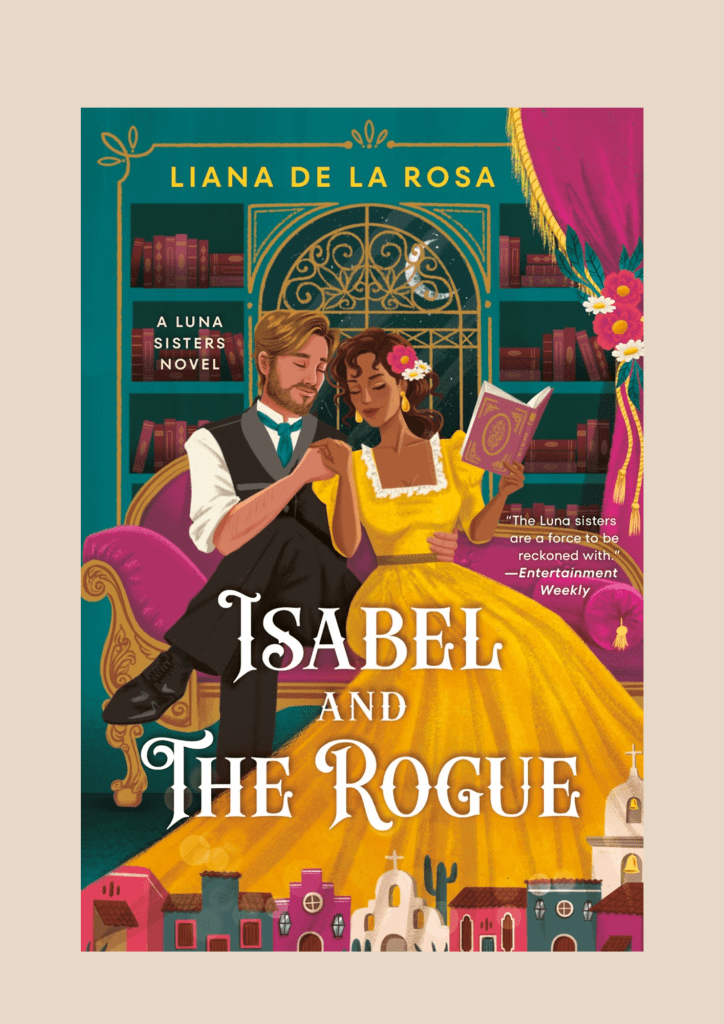
Isabel and the Rogue by Liana De la Rosa

Isabel Luna Valdés has made being overlooked a strength. As the unremembered third  Luna sister she uses her talents to gather intel to aid Mexico in their fight against French occupation. Wallflower bookish Isabel has had no issue sneaking away from the various balls and society gatherings while her sisters entertain, that is until Captain Sirius Dawson starts to take notice of her disappearances. Sirius is a spy himself, for the British Home Office, and in taking concern over Isabel is in danger of losing it all for the chance to aid her. When Isabel unearths something that could transform the entire occupation she has the ability to finally provide something concrete, but what will she risk to help her country if the cost is her heart. Bookish women being loved for who they are is actually something that is so personal to me and that is essential to Liana De la Rosa’s, Isabel and The Rogue. Isabel Luna Valdés, the woman that you are! This follow up to the first Luna sisters novel sees a wallflower use her place in London society to uncover correspondence to aid her country, bringing a flawless addition to the rake and wallflower pairing. Liana De la Rosa has captured the spirit of each of the Luna sisters in their respective novels and Isabel’s feels like a comforting love letter to the spirited, bookish heroines finding inner strength and a place of their own. Sirius and Isabel are a well matched couple and their chemistry is fierce. I’m still thinking about the desk scene and probably will be for all time. The glimpses into London society from the perspective of three Mexican heiresses, the kernels of sisterhood, and the insights into Mexican history is what makes this one of the most unique historical romances out there right now.

Buy a Copy

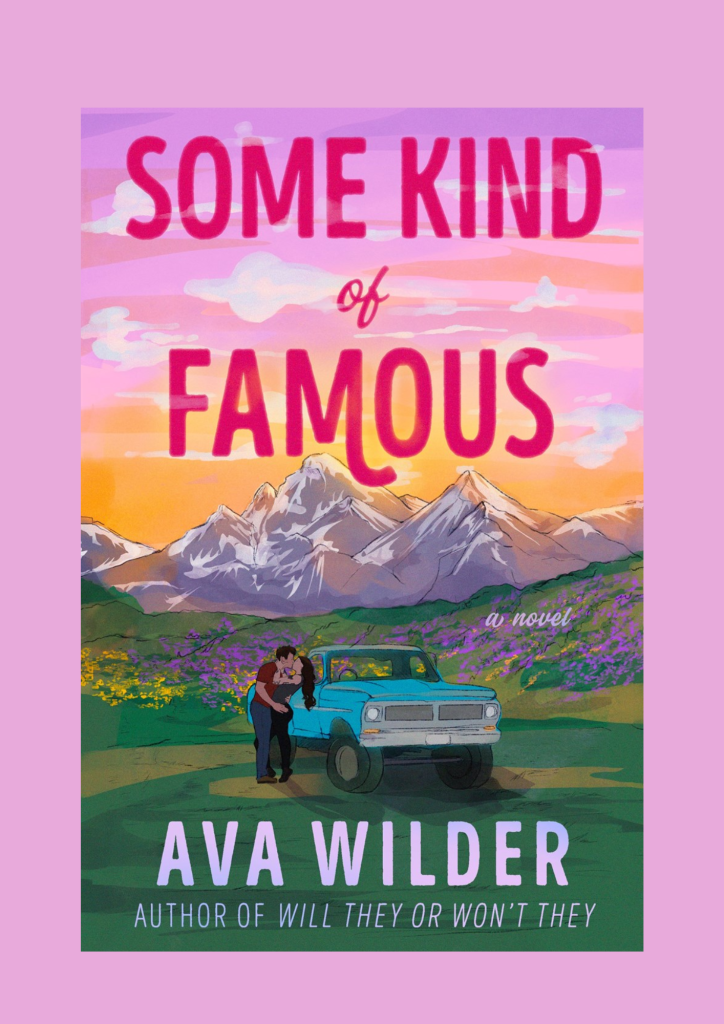
Some Kind of Famous by Ava Wilder

Ten years since her singing career crashed rather spectacularly and two years since leaving behind a failed romantic relationship, Merritt Valentine is still in Crested Peak, the small Colorado town where her twin sister has elected to set down roots. Now with a baby on the way, her sister gives her ample notice that she will need to find another place to live so they can make room. Luckily, Merritt has a property she purchased not long after her arrival in town, however it needs quite a bit of renovating before she will be able to move in on a permanent basis. But getting things up to code will require her to engage the services of one Nikolaos Petrakis, local contractor, jack of all trades, and the man whom Merritt is hopelessly infatuated. I don’t think I’ve fully been captivated by a romance novel as quickly as I did with Some Kind of Famous. Maybe it’s just the setting, and the company of such wonderful characters but I quickly fell in with this on the most extreme level and it’s safe to say the rest of the novel carried it through. What’s so endearing about Some Kind of Famous is the extent it is emphasized that our two main characters are works in progress—two people still figuring life out but scared to reach for love with two hands when things aren’t perfect. Fear of the past is a big theme for Ava Wilder, and it imbues an immense pressure on both Niko and Merritt as they pursue a romance. Some Kind of Famous is about finding ourselves after setbacks and not closing ourselves off to connection just because we’re scared of trying again. The ups and downs are vast, but this is an exquisite addition to the celebrity romance space. Prepare to fall as hopelessly in love with this one as I did.

Preorder a Copy – Out 28th October

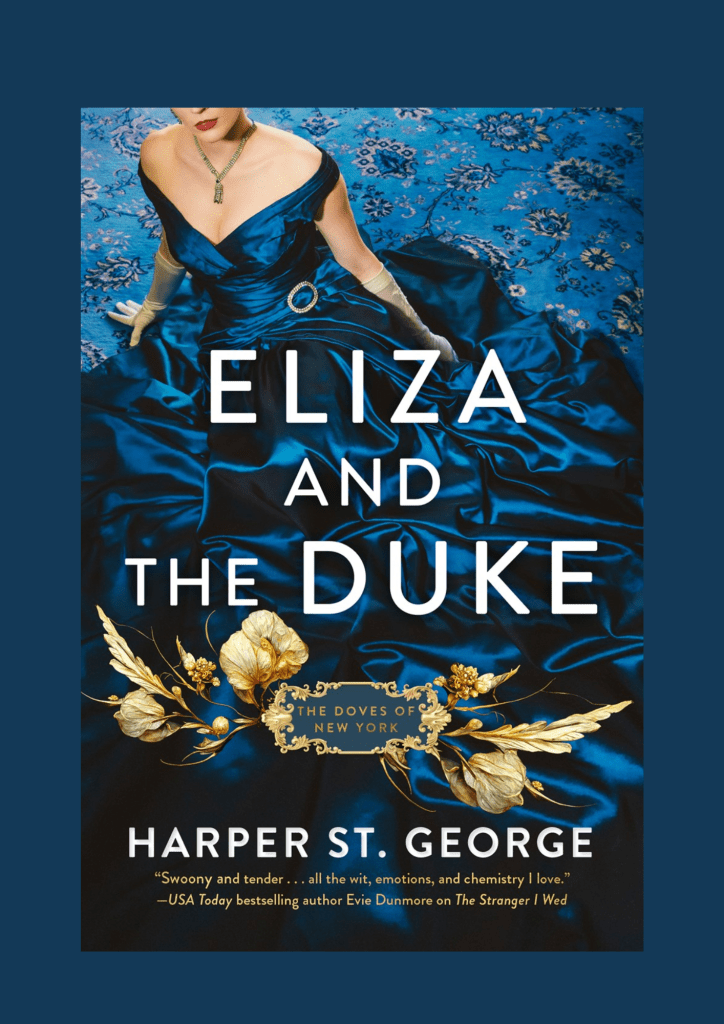
Eliza and the Duke by Harper St. George

Facing down a loveless marriage to a man flaunting his dalliances across Europe, American heiress Eliza Dove wishes for one night to experience the real side of London. Her ticket in is Simon Cavell, Montague Club’s manager and the celebrated boxer of Whitechapel known only as “The Duke,” after a chance meeting leaves her an opportunity to convince him of her plan. All Simon yearns for is securing a life for his niece currently held by the man whom he owes a great debt, but soon all he yearns for is her, Eliza, the impossible heiress. Between the dark streets of London, townhomes, and tension filled carriage rides, soon it is impossible to deny that the only thing Simon and Eliza want is a life side by side, but that is as impossible as the feelings running between them. There is no power on earth strong enough to tear me away from a good historical romance, and Harper St. George is one of the strongest talents in the genre right now. Her Doves of New York series first ensnared me with The Stranger I Wed, but this follow up has outsold everything that came before. Eliza and the Duke concerns two people who never thought they could be loved—Eliza the hopeless romantic, and Simon the strong and silent boxer who made a life through his fists, finding unconditional, lasting love. Eliza and Simon are two individuals you can’t not root for. With Persuasion levels of longing, their connection is not only palpable, but grounded against their pasts leaving space for a beautiful romance to develop and plenty of angst to savor. And what a layered romance this is. Like that carriage scene? *fans self to no avail*. Eliza and the Duke is certainly for the Jane Austen lovers amongst us and it’s a historical romance that left me more than a little unhinged (a glowing commendation if there ever was one).

Buy a Copy:

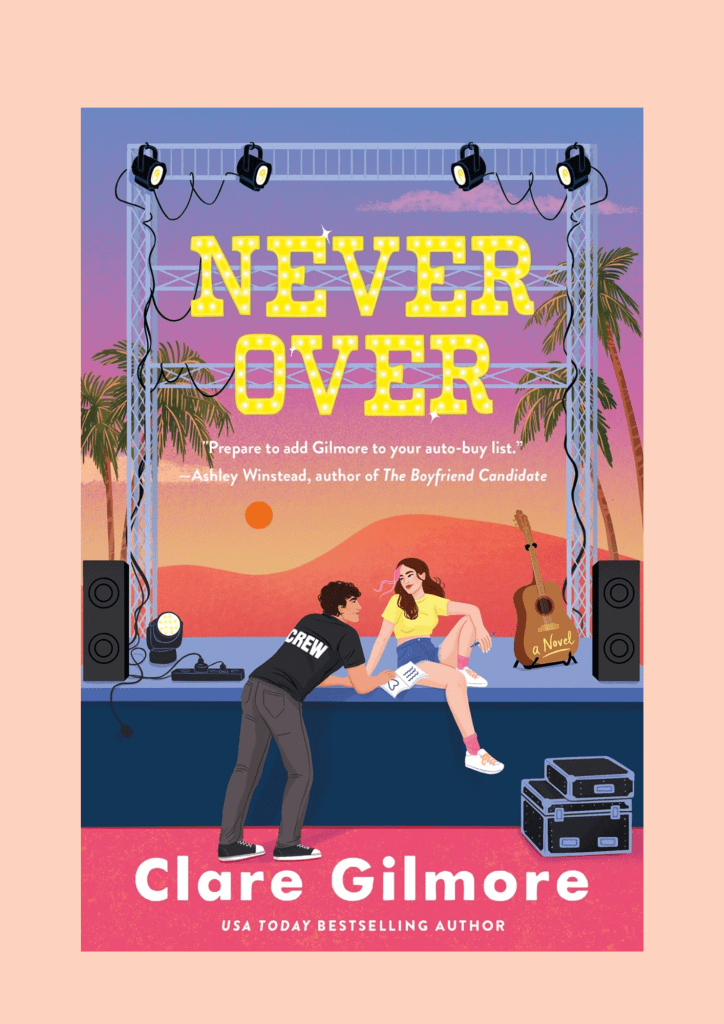
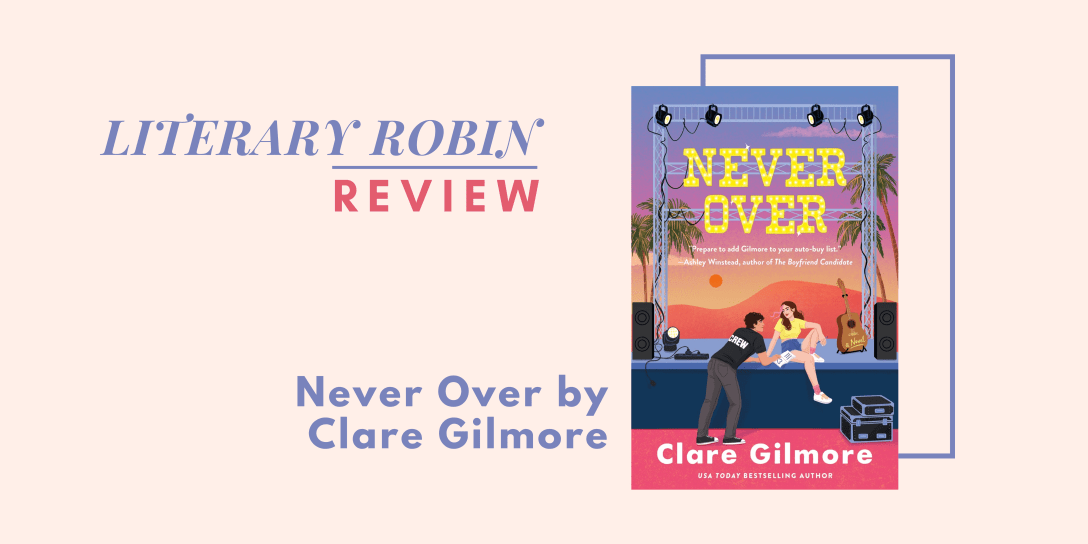
Never Over by Clare Gilmore

When songwriter Paige Lancaster meets with one of Nashville’s premier music publishers for a potential contract, she never expects them to leave her with a tremendous task of writing new songs. Paige takes this songwriting challenge to the extreme and enlists Liam Bishop, her ex, to aid her in the task—they’ll start dating again while she joins him on tour, and then when the romance is at its height, he’ll break her heart. Yet all this re-breakup plan does is force Liam and Paige to address the past, why they broke up, and if they have the courage to try it all over again—for real this time. Never Over is second chance romance goodness, written with aching emotion and lending voice to the weight of grief and how far we will go in pursuit of our dreams. Messy twenty-somethings still figuring out life is Clare Gilmore’s bread and butter, and her third novel is arguably the best of the best and the messiest of the twenty somethings. Dual timelines give rise to a second chance love story between determined songwriter Paige Lancaster, and Liam Bishop, once lauded baseball pitcher now concert manager on the tour circuit. Never Over is a love story centered around life on tour, bookstore meet cutes, baseball training, and a heartwarming love letter to Bristol, Tennessee. Clare Gilmore has completely shifted what constitutes an excellent execution of the second chance romance trope with Never Over and I am in complete awe of her talent. This feels like a book written for the overlooked younger children finding their voice and their place in adulthood after being lost in the background for so long. At the same time, the danger in letting yourself be defined by one thing and what happens when that dream abruptly ends. Like the most addictive sort of love song: Never Over is a romance to pour over, read, and repeat. Healing and cathartic all in one note.

Preorder a Copy – Out 28th October

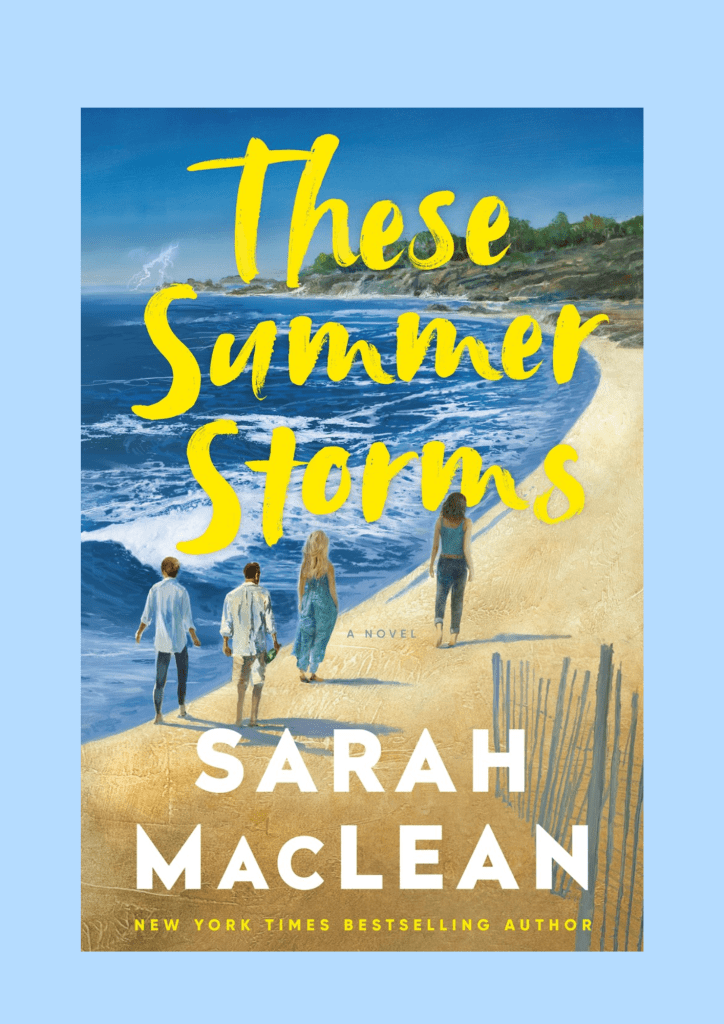
These Summer Storms by Sarah Maclean

Born into a family of obscene wealth and privilege, Alice Storm was never afforded her own path, and was subsequently exiled for choosing one of her own. Upon the death of her father, Franklin Storm, Alice is called back into the fold to mourn his passing and celebrate the legacy of a tech industry titan. Stuck on the family’s private island off the coast of Rhode Island, Alice and her siblings soon face the strings attached to their inheritance and the final game their father constructed from beyond the grave. The catch? They have to play or forfeit the millions they hoped to inherit. With one week to play the game the past is never closer to the present, and family grievances could be the deciding force in who wins the game and who is out before it can even begin. Sarah Maclean never saw a structurally sound building or complicated family dynamics she couldn’t mess with and I, as always, am here for her meddling. These Summer Storms is a far departure from Maclean’s typical historical romance ventures, but nevertheless a clever twist on the corporate family power struggle. Maclean brings together her flawed family—the straight and narrow eldest with a secret life, the arrogant successor convinced he will inherit the crown, the exiled artist, and the crystal & astrology obsessed youngest daughter, all vying for their inheritances. These Summer Storms is Succession on steroids, complete with all the spiteful feuds and particular personalities that clash and make these stories so entertaining while exposing unique experiences of grief and family. It all comes crashing down rather spectacularly (quite standard to Maclean) with reconciliation not so far off and even the fiercest of storms finding harmony.  

Buy a Copy:

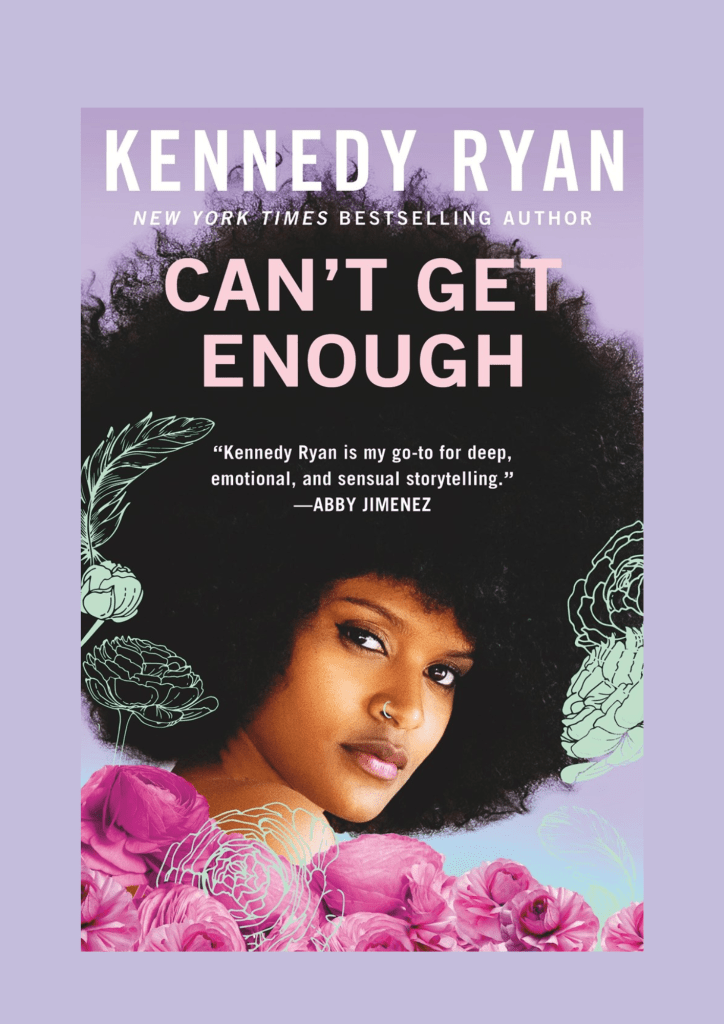
Can’t Get Enough by Kennedy Ryan

Hendrix Barry has it all, a successful business, incredible friends, and a supportive family. Yet as her mom’s dementia worsens, Hendrix knows she’ll need to step up more than she already is, and balancing it all could cause the precarious house of cards that is her life to finally crumble. When she meets Maverick Bell, a charming self made billionaire, Hendrix knows she’s in trouble. Unfortunately as the ex of a current client, dating Maverick breaks every kind of girl code so Hendrix backs off. If only Maverick understood the memo, pursuing Hendrix with the determination of someone who knows what he wants, and is used to getting it. With their undeniable connection and chemistry to consider, giving in may mean finally reaching for the love she’s been denying herself, but of course that’s easier said than done. I’ve been eagerly anticipating the conclusion to Kennedy Ryan’s Skyland trilogy from the moment I finished, This Could Be Us. Hendrix Barry has this larger than life quality that leaps off the page and I knew her book would be divine from the previous books alone. Kennedy Ryan’s familial connections to caregiving deepens a story centered strongly around caring for aging parents. Ryan’s nuances around caring for a parent with dementia are carefully done, how one can feel like a failure for making mistakes and at the same time feel selfish for enjoying things outside of it. Hendrix handles it all with such grace and she deserves to be taken care of—which is where our love interest Maverick comes in. His attentiveness and understanding to Hendrix as she struggles and triumphs is one of the most romantic things. These two really were partners to each other in everything which is peak romance to me. Kennedy Ryan really is an incomparable talent and Can’t Get Enough is irrefutable proof.

Buy a Copy:

Anywhere With You by Ellie Palmer

Charley Beekman thought she could figure it all out, but after her divorce and her stalled legal career, things have undoubtedly changed. Surprisingly, that’s not her biggest problem. When her impulsive younger sister announces her imminent elopement to her ex boyfriend and friend from childhood, Charley only has one course of action: break off the wedding before they hurt each other again. Who should join her in the road to breaking up the wedding, but Ethan, her childhood best friend. Ethan (unsurprisingly) doesn’t really believe in breaking off the wedding, but a road trip to rekindle their friendship after a falling out is worth anything, even if it requires recognizing the feelings they have avoided years on. Anywhere With You is for the childhood friends to lovers fans wrapped up in a road trip gone wrong and a well intentioned but disastrous breakup plan. Former best friends Ethan and Charley have this intense, raw chemistry that sent me spiraling as they are forced into close proximity in the most bizarre ways (like a truck stop shower scene that is unusually heated). Alongside a road trip of reconciliation and feelings revealed, Palmer flits back to the past, uncovering the complicated ties between these two and where they are headed. Coupled with their pasts, Palmer shows why Ethan and Charley work together and the freedom afforded in them finally giving into their feelings. Ethan begging, tortured for Charley and Charley unlearning some of the cynicism stemming from her parents’ relationship, in that regard. Anywhere With You is the epitome of the friends to lovers trope. For every person still figuring out their plan, on a road with all the dips, turns, and returns that life affords. 

Preorder a Copy – Out 5th August

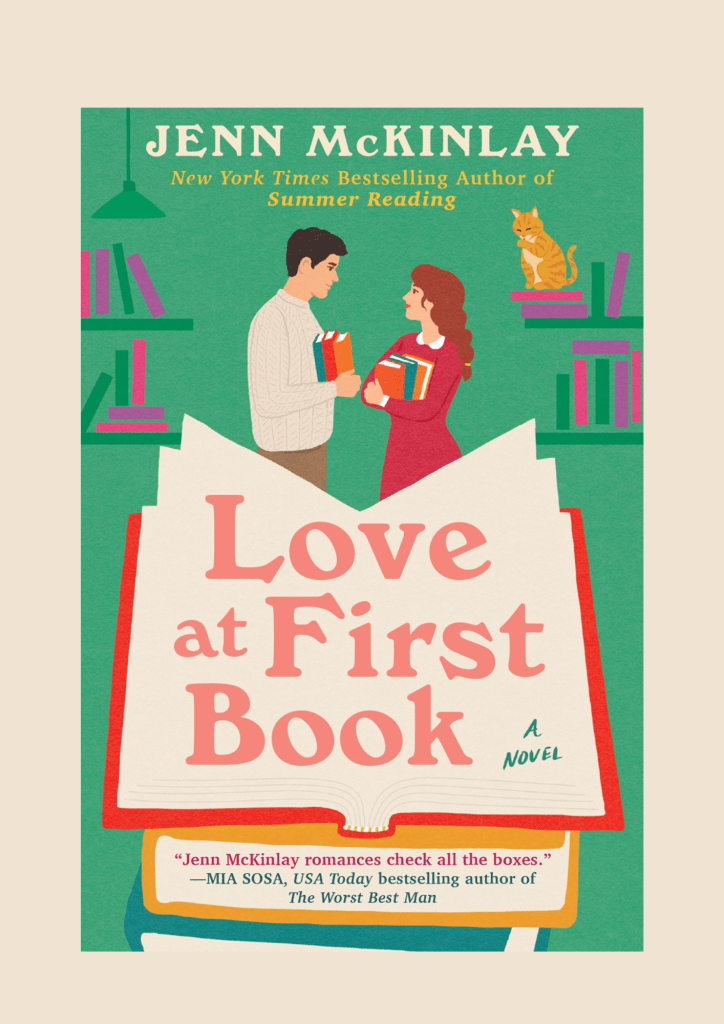
Love at First Book by Jenn McKinlay

Librarian Emily Allen has been stuck for too long on Martha’s Vineyard living under her mother’s thumb that she’s prepared to do something drastic—like moving all the way to Ireland to work for her favorite author from childhood. Siobhan Riordan’s acclaimed children’s fantasy series charmed the masses, but the tenth book has yet to be written due to her debilitating writer’s block. Emily’s job is to help her finish the manuscript while pitching in at the bookstore alongside Kieran the overly protective, grumpy bookstore manager—and Siobhan’s son. As Emily helps Siobhan complete the manuscript she learns Siobhan’s greatest secret, and it could ruin her resolve at her own next chapter. Shelve this under, made me sob uncontrollably (and in the would recommend category). There are few books out there that have the power to make me bawl and Love at First Book is one of them. Now on the surface this appears to be your standard romance novel, with a bit of hate to love around an American transplant living in Ireland and the grouchy bookstore manager who wants her gone (classic), but wow is this anything but. Love At First Book explores the transformative power of literature and how writing offers us the chance to reconcile the past while looking to the future. This book is about old and new beginnings as we follow a young librarian fleeing her narcissistic mother to a new life, a terminally ill writer trying to complete the final book in a series that was a love letter to her son, and a bookstore manager desperate to keep his life intact. Love at First Book showcases the power in the written word in bringing unlikely people together, to better themselves and find community. It’s romantic, tragic, and an aching portrayal of loss. If you’re in need of a good cry look no further. 

Buy a Copy:

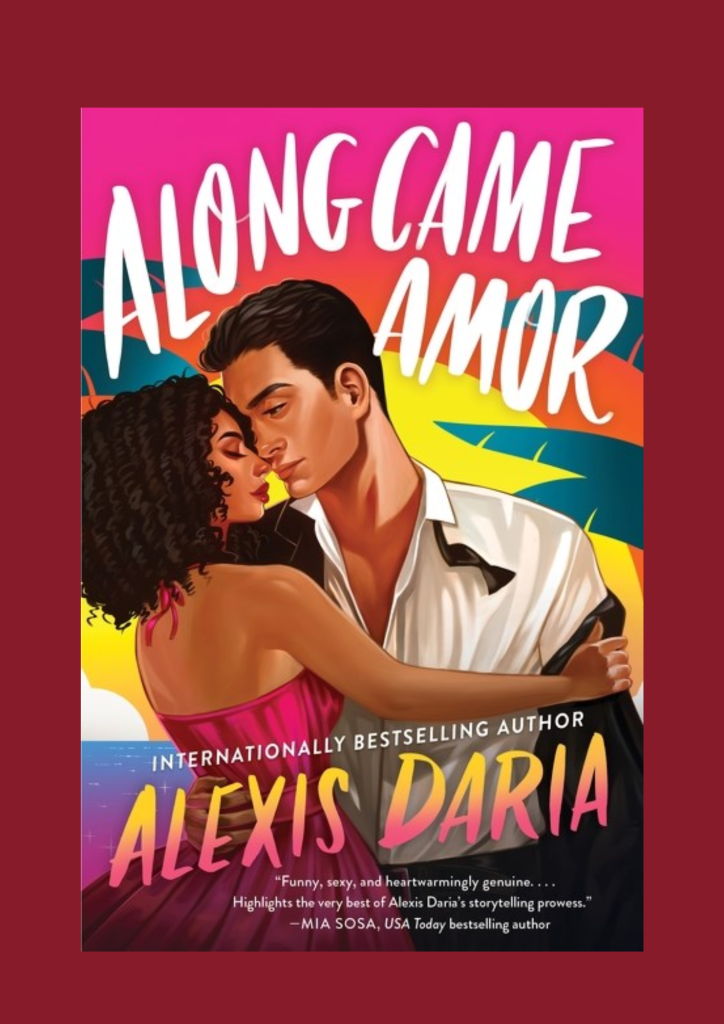
Along Came Amor by Alexis Daria

Now that her divorce has been finalized, Ava Rodriguez is a free woman. Alone at a teaching conference she seizes the chance for a one night stand with the incredibly handsome Roman Vázquez, the self made businessman who owns the hotel, after he flirts with her at the hotel bar. Their scorching chemistry doesn’t just lie in the bedroom, and soon neither of them want to leave it at just one night. The catch: Roman will have to wait until Ava reaches out to make contact, and they won’t tell their friends. Months on and the fling is working perfectly, albeit with a few rule breaks, but when Ava discovers Roman is the best man to her friend’s fiance she’ll have to determine just how much she’s willing to break her rules for the chance at being his. Permanently. Along Came Amor is the long awaited third novel in Alexia Daria’s Primas of Power trilogy. This book is for the people pleasers in every regard and a cautionary tale for anyone precariously balancing every aspect of their life to appear perfect. Our heroine Ava is the victim of these people pleasing tendencies, always striving to be the perfect everything for anyone—lest they see the truth and cast her aside. Her liaison with Roman changes everything as she finds someone who loves and cares for her exactly as she is. Now Roman is the perfect love interest for a people pleaser because he was down bad for Ava from their very first meeting. Literally screaming, crying, throwing up for the chance that she reaches out to him after their one night stand. Roman and Ava are hilariously compatible and it’s very entertaining to watch them dance around each other for almost 500 pages. Along Came Amor is without a doubt the best read for the summer, featuring thirty and forty somethings attempting to have it all, next level sex scenes, and people pleasers leaving perfection behind in favor of authentic connection.

Buy a Copy:

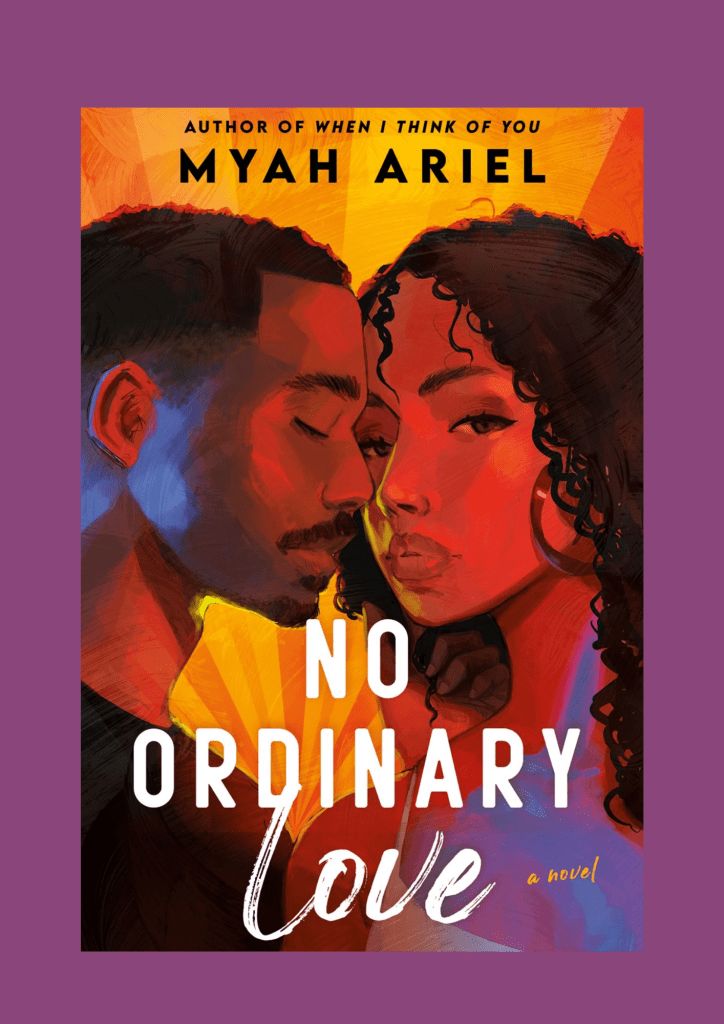
No Ordinary Love by Myah Ariel

Acclaimed popstar Ella Simone built a career around music in small part due to the influence of her husband, Elliot Majors, a bigtime music producer. Now Ella is considering a shift in management after Elliot’s constant cheating leaves her with no choice but to end their marriage. Ella’s voice stands on its own, but to win out against the prenup she signed eight years ago and maintain control of her music, she’ll have to be on her best behavior. Enter stage right Miles Westbrook, a pro baseball player and Ella’s unfortunate downfall. After a wardrobe mishap and their palpable chemistry live on stage at an awards show, the rumor mill is indeed churning. Luckily, Ella and Miles’ PR teams have a plan to capitalize on the attention and it involves spending even more time with a man who has the potential to become a real problem for Ella’s already fragile heart. No Ordinary Love is an unforgettable romance novel drawn forward by an inner music that moved me from the very start. Myah Ariel knows the appeal of the celebrity romance and the slow burn and said you can have this entire book….as a treat. From multiple fronts, No Ordinary Love interrogates the entertainment industry, legacy, and personal beliefs and at the center of this is Ella Simone who embodies it all—control, ambition, and a deep love for her craft. Not just a character to admire deeply, Ella is one to root for as she casts off a toxic partner and works to build the life she wants for herself all while pushing the boulder uphill. Miles is the perfect harmony to Ella and his unconditional love and support was the grounding this story needed to become a true romance classic. Myah Ariel showcases the power in two driven and somewhat single minded individuals letting go just a little to find the music side by side. Where the bonus is falling in love.

Buy a Copy:

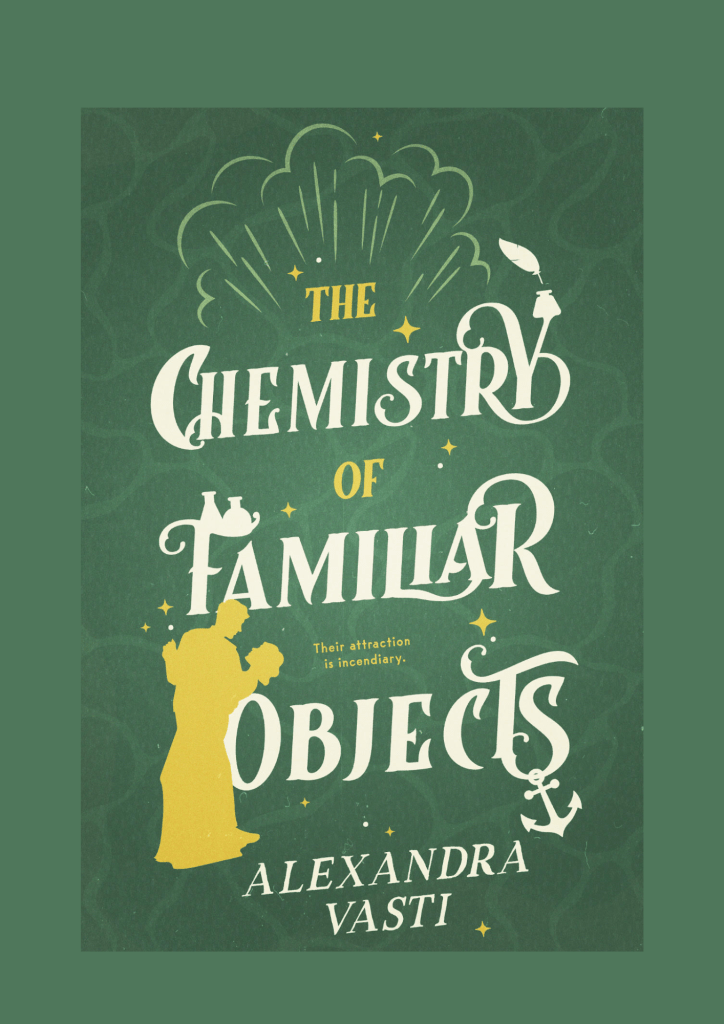
The Chemistry of Familiar Objects by Alexandra Vasti

On 57 Gresham Street the true showdown is occurring. For Emmeline Starling, the building is the perfect space to test her skills in chemistry, but on the ground floor Robert Vane, a children’s book printer is one explosion away from a complete meltdown. Years of towing the line and stewing in their personal hatred for each other all ends when a dangerous concoction of Emmeline’s is stolen. Together, Emmeline and Robert are entangled in a dark conspiracy to weaponize her compound and the only way to uncover it is to work side by side—if they can do so without first burying the hatchet directly in the other’s chest. What would you say if I told you a real love language was blowing stuff up in front of a man who disdains you? What then? The Chemistry of Familiar Objects features all of my favorite things: man who is so sick of a specific woman he could vomit (but really), woman who can’t stop blowing things up/lighting things on fire, and love stemming from schemes and conspiracy. Alexandra Vasti is an undeniable power within the historical romance space, whether that’s writing full length novels or bite size novella adventures, and this novella is her pièce de résistance. How else does one craft something so profoundly moving and romantic all in under two hundred pages without losing any real depth from the page count. Em and Robert were (regretfully) in cahoots until it transformed into in cahoots (affectionate) and the entire journey is so delicious I could scream. Vasti doesn’t lose up on any of that wonderful romantic tension she is known for, nor the jaw dropping sex scenes that will be seared into my brain for all eternity. The Chemistry of Familiar Objects is a masterclass in intimacy, vulnerability, and that kernel of hate to love that moves all of us one way or another. Also chemistry. Lots of chemistry!

Read a Copy:

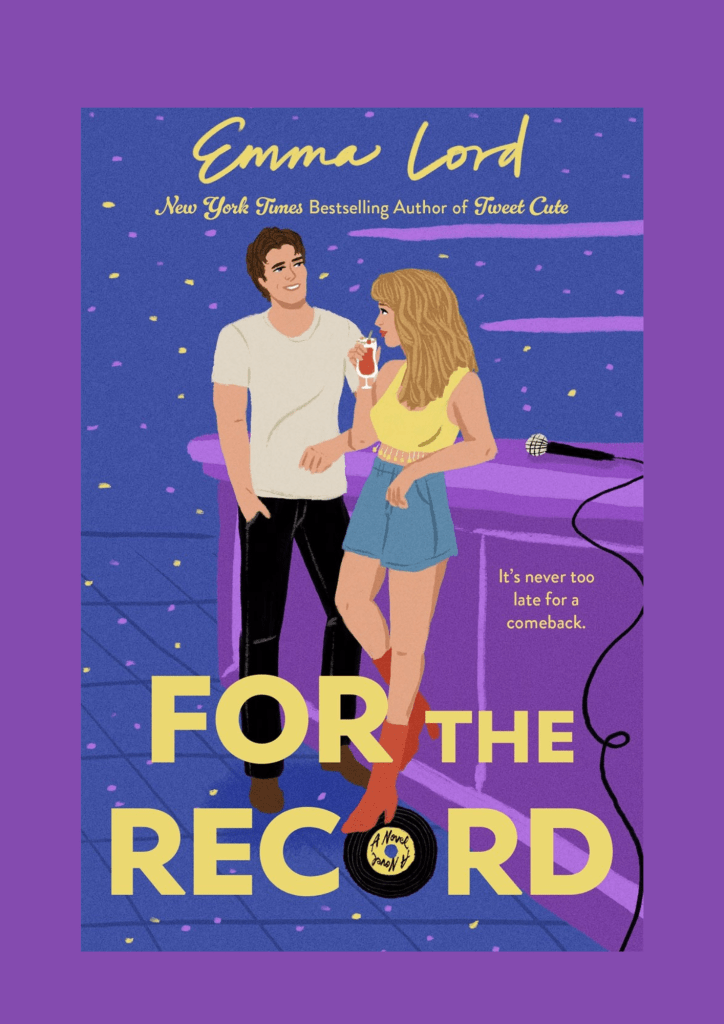
For the Record by Emma Lord

Once music rivals now complete strangers, Sam Blaze and Mackenzie Waters captivated their listeners with their chemistry on stage and their rumored romance. Several years since leaving their respective bands, Sam and Mack are independently striking out on their own, if only they can convince their labels that it’s a good idea. To secure the next stage of their singing careers, Sam and Mack agree to team up on a joint album in a comeback that will drag their past back to the present. Reviving the music and their undeniable chemistry could secure them a future in music if wounded hearts don’t first prevail and they can remain on the good side of the spotlight—no matter the cost. Effortlessly funny, charming, romantic, you name it, Emma Lord excels at it all and her second adult romance is no different. For the Record is a nostalgic rivals to lovers’ romance that made me yearn for the music while reminiscing on the days of bands long past. Emma Lord immediately swept me up in the drama of the bands Candy Shards and Thunder Hearts (think edgy punk rock group versus pop girl trio) and their notorious rivalry. One thing that always gets me with Emma Lord’s writing is the effortless way she brings readers into the lives of her characters and those orbiting our main duo. Even though we see little of them, the bond between Mackenzie and her former band members Hannah and Serena is quite the standout, as was Sam’s bond with his son and family. The romance still takes center stage here and god did Sam and Mackenzie bring on that unbearable romantic tension that made me want to bonk my head against the wall. Emma Lord knows how to write a romance and this one is a soft and hopeful love song you can’t resist being enamored by.

Buy a Copy:

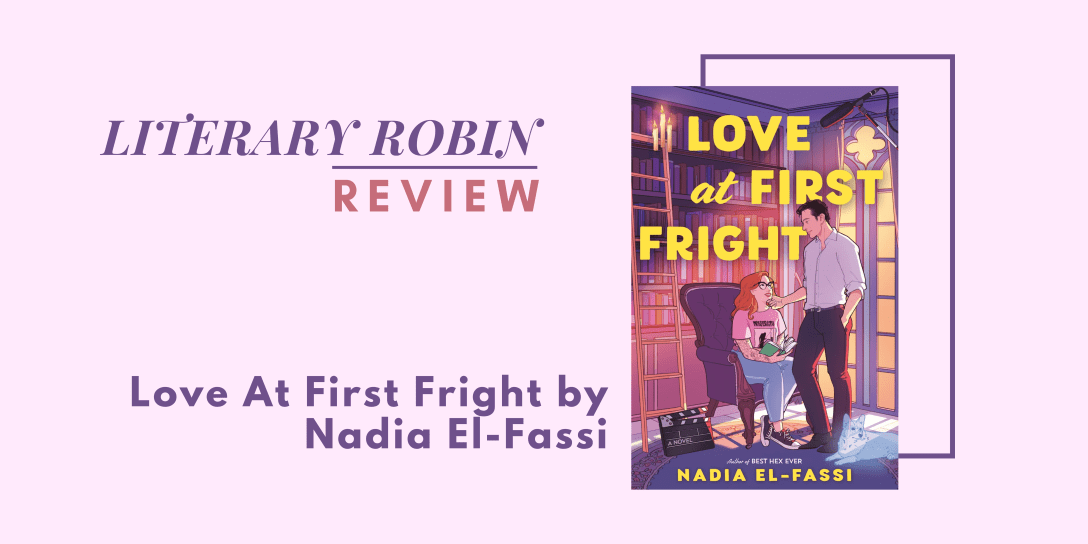
Review: Love At First Fright by Nadia El-Fassi

Rating: 5 out of 5.

Cult horror writer Rosemary Shaw has always been able to see the dead—ever since she was ten years old and her recently deceased grandmother came back for a final lesson in making her signature strawberry jam. Rosemary’s talents led her into a career writing horror novels and now her Victorian gothic horror novel, When The Devil Takes Hold, is slated to be adapted into film. This should be a tremendous accomplishment if not for the glaringly obvious fact that the actor hired for the titular role is just wrong. Ellis Finch is Hollywood’s favorite charmer. Known for his action movies, all Ellis really wants to do is to step away to more meaningful projects, and Rosemary Shaw’s adaptation offers him a chance to pivot. When Ellis learns the author of the source novel wants him out as the leading man he is infuriated, but nothing will stop him from this career making project, not even opinionated Rosemary Shaw. Filming at a picturesque Hallowvale manor in England’s countryside, there are zero opportunities for Rosemary and Ellis to avoid one another. Especially as the manor is so much more than a set draping for a gothic horror movie, it’s literally haunted. Ghosts of all kinds have made the manor their home, bringing mischief down on the film crew, but as Rosemary and Ellis bury the hatchet they discover far greater are the ghosts of feelings lingering between them.

When you’re a horror author who’s movie is being adapted and the primary actor for the part is just wrong but also the set is being haunted by a pair of ghosts from the regency wreaking havoc with their unhinged lesbian-yearning-for-what-can-never-be vibes. Guys Nadia El-Fassi simply never misses and her sophomore novel is written for the chaos demons and bisexuals in mind. As a representation and a purveyor of both, Love At First Fright was inherently a Robin classic and a romance sensation from its very first moments. Love At First Fright is the epitome of what a modern romance should be with a healthy dose of the paranormal and hate to love on a gothic horror movie set where the ghosts are real and so are the feelings. Horror writer Rosemary Shaw hates her adaptation’s film lead, suave action star Ellis Finch, who is just a little burnt out and hoping playing a sickly Victorian man in a gothic horror film is the cure. Spoiler alert it’s that and romancing a talented horror writer. Love At First Fright finds romance in the unlikeliest of places, like telling someone you watched Crimson Peak when they mentioned it one time, debating Jane Austen’s best work, and helping the two regency lesbian ghosts move past their internalized homophobia and find peace. Nadia El-Fassi’s sophomore novel reasserts her immense talent for grounded, meaningful modern love stories. Call me a ghost lover because I want to be haunted by this novel for all eternity.

In Love At First Fright the ghosts are front and center, but Nadia El-Fassi proves it’s not really the ghosts haunting the narrative, but various regrettable circumstances and the vulnerability in laying ourselves bare. This book screams romance to me even as two regency lesbians wreck havoc on the film crew, a ghost dog lingers by his former owner, and its characters grapple with truly delicious levels of tension. It’s also a deep cut for the bisexuals. Like Rosemary came out DAYS after watching The Mummy (1999) in youth. I’m afraid this is not just a stunning romance novel, but also the unadulterated bisexual representation we deserve! Rosemary and Ellis get off to a rough start but from there it’s—well it’s still a bit rough but albeit sexier and a whole lot hornier. These two had me crazy to the point that if I was a member of the When The Devil Takes Hold crew I would have stopped dead in my tracks just to inquire if there was something else going on between them. Because in no way were these two discreet yearning out in the rain (which FYI is the hottest scene in the book and they are fully clothed). Rosemary and Ellis had no reason being so intense about each other but in fairness I’m obsessed with them both so I do get it. The way these two communicate, the honesty they find in between the tense moments, only make this romance that much more profound. 

Love At First Fright is certainly the romance novel to read this fall. Proving spooky can be sexy, and that the best love stories are told alongside the paranormal. Nadia El-Fassi pours so much into just one romance it’s a triumph to witness it all coalesce into this visionary love story. From the regency ghosts, the splendidly gothic manor Harrowvale, Jane Austen hot takes™, and the healthy exploration of kink, Love At First Fright is a romance novel like no other and it has something in it for every kind of reader. Leads Rosemary and Ellis brought on the simmering tension and achingly hot scenes, it’s a wonder I didn’t perish on sight after reading them. This book oscillates between the frightening, yearning, grief, and humor infused moments with such skill—and oftentimes all within one scene. It’s masterful. Also there’s something so hilarious about the regency lesbian ghosts being exposed to Bridgerton (I need a oneshot of this on my desk immediately). I am left with one question and one question only after my reading experience which is: what sapphic books would I give to a Victorian Era lesbian ghost to help her unlearn her internalized homophobia. If you thought Best Hex Ever was extraordinary, you’ll lose it for El-Fassi’s follow up, Love At First Fright. Utterly spooktastic!

Thank you to Netgalley and the publisher for providing the advance review copy.

Trigger warnings: animal death (in the past, but recounted), homophobia, blackmail, grief

Preorder a Copy – Out 16th September

Review: Never Over by Clare Gilmore

Rating: 5 out of 5.

Songwriter Paige Lancaster has found her calling but she still has yet to find a way to make it her living. When she gets an opportunity to meet with Stillwater Music—one of Nashville’s prime music publishing companies, she’s closer than ever to a long-term contract. Despite all her hopes, Paige leaves the meeting with a task: write new songs that tap into the physical emotions she’s experienced, instead of holding back with surface level songs that lack any real depth. It’s either that or she takes less of a cut with the royalties and someone else workshops her music. Paige takes this songwriting challenge to the extreme with the chance to tap into her past and enlists Liam Bishop, former partner and love to aid her in the task. It’s been four years since Liam and Paige had any contact but Paige thinks Liam may be the only real chance of her accessing these “emotions” Stillwater Music and her songs need. Thus Paige ensnares Liam in a breakup redo, they’ll start dating again while she joins him on tour, and then when the romance is at its height, he’ll break her heart. Yet all this re-breakup plan does is force Liam and Paige to address the past, why they broke up, and if they have the courage to try it all over again—for real this time.

Never Over is second chance romance goodness, written with aching emotion and lending voice to the weight of grief and how far we will go in pursuit of our dreams. Messy twenty-somethings still figuring out life is Clare Gilmore’s bread and butter, and her third novel is arguably the best of the best and the messiest of the twenty somethings. Dual timelines give rise to a second chance love story between determined songwriter Paige Lancaster, and Liam Bishop, her ex—once lauded baseball pitcher now concert manager on the tour circuit. Never Over is a love story centered around life on tour, bookstore meet cutes, baseball training, and a heartwarming love letter to Bristol, Tennessee. Clare Gilmore has completely shifted what constitutes an excellent execution of the second chance romance trope with Never Over and I am in complete awe of her talent. This feels like a book written for the overlooked younger children finding their voice and their place in adulthood after being lost in the background for so long. At the same time, the danger in letting yourself be defined by one thing and what happens when that dream abruptly ends. Like the most addictive sort of love song: Never Over is a romance to pour over, read, and repeat. Healing and cathartic all in one note.

Balancing falling back in love and falling in love for the first time is exactly why second chance romance is the superior romance trope (argue with the wall). Especially when it’s so easy to get it wrong. Somehow Clare Gilmore provides a fresh take into her second chance romance with two exes, Paige and Liam agreeing to try again without really realizing it’s for real. This trope is the best because of the mutual effort needed on both sides of the partnership to really pull it off. We have Liam finding a new path after a devastating injury and pivoting to a new dream, and Paige, chasing after one for so long she’s willing to go to extraordinary lengths in order to achieve it. Second chances aren’t just for love, but for the lives these two have led both together and apart. Right away I knew Paige was going to be my kind of romance heroine. She’s someone comfortable leaning into being a work in progress, still finding her voice after being lost behind her five sister’s personalities in childhood. Despite her romance prospects, Paige does know herself and that struck me from the start. In spite of being overshadowed in childhood, Paige doesn’t want the spotlight, content to make a living writing songs rather than performing. That certainty never wavers even as she meets conflicting wishes of her friends, sisters, and partner at different intervals of the novel.

Never Over is the kind of romance I didn’t want to end. Even as I neared the final chapters I caught myself flipping back several times, intent on capturing the emotions before it was all over. Gilmore ties so much together in the last section: Liam’s hopes through Paige, Paige’s conviction, and finally, a true reconciliation between this pairing. I love how much these two are mirrors to each other’s hopes, dreams, and the extent to which Gilmore explores how this could be detrimental within a relationship. Additionally, just how much we want to hide from others when we are struggling. Coming back together means reconciling just why things ended and for Paige and Liam and Gilmore is sure to show just how well off they are by the end having had those difficult discussions. Never Over is just so hopeful about reinvention, grieving, and second chances that it’s hard not to get emotional. The moments of sisterhood lighten the narrative from being solely a romance, it’s a family story too. Focusing on songs bringing people through life’s great moments was a perfect note to end on for a romance all about music. Music, second chance romance, angst, and sisterhood, Never Over is a combining of seemingly conflicting melodies into one beating harmony. A perfect book.

Thank you to Netgalley and the publisher for providing me with an advance review copy.

Trigger warnings: death of a parent, grief, injury, abandonment

Preorder a Copy – Out 28th October

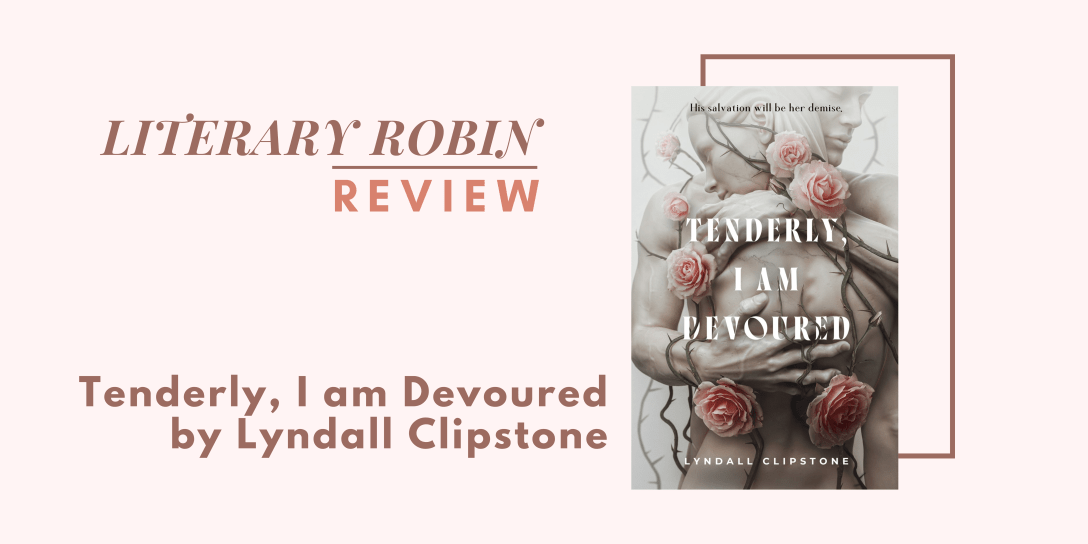
Review: Tenderly, I Am Devoured by Lyndall Clipstone

Please note this review contains reference to some of the events in this novel. Read with caution.

Rating: 4.5 out of 5.

When she left behind her coastal village to attend the illustrious Marchmain Academy, Lacrimosa “Lark” Arriscane never planned to return home. Certainly not before securing the heavily coveted postgraduate curatorship at the city museum. On the cusp of achieving all she’s worked for, Lark is expelled from her boarding school for a violent incident and sent home. In a windswept cottage by the sea, Lark and her family have prayed for generations to Therion, the chthonic god who lords over the tides, the salt, and the woods bordering their lands. Upon her return, Lark learns that the salt mines that have afforded them wealth and security have run dry and her family is on the brink of financial ruin. The only way out is a bargain with Therion, their god, who promises to restore the mines in exchange for Lark’s hand in marriage. Against her family’s wishes, Lark agrees, but when the ritual goes wrong, Lark is left bound to a god and dragged in between the mortal and chthonic realm. Lark can no longer deny she needs help, but her only allies lie in Alastair and Camille Felimath, her former childhood friends and the family to whom the Arriscane’s owe a tremendous debt. Bound to a demon and drawn to her demise, Lark seeks to sever her bindings, but she may not survive the fate she was promised, nor the loves rending her heart in two.

Pulled in and weighted by a heavy tide, Lyndall Clipstone’s Tenderly, I Am Devoured is a reassuring ballad to the broken-hearted and anyone on the cusp of something strange and unknown. Rigged with brambles, salt, and sea foam, this perilous novel embodies a keen and overwhelming longing for that period when everything seems possible and yet somehow still entirely impossible to grasp. Tenderly, I Am Devoured has all the trappings of a story on the edge, what with its main character, Lacrimosa Arriscane, stuck between the mortal and chthonic realms, an old life and a new, and two loves competing for her heart. Ruinous as the very sea that borders the lands of Verse, Tenderly, I Am Devoured is a gothic horror romance that aches to reach a resting place forever out of reach. One I could not help but feel swept up in myself as Clipstone tethers her heroine to demonic gods and the unwise bargains they make with mortals. Tenderly, I Am Devoured is the gothic-horror-academia sibling to Ava Reid’s, A Study in Drowning, but given Clipstone’s unique authorial voice and intent. Transient as the middle place between adolescence and adulthood, the past and present both, Lyndall Clipstone traverses the places between—where myths are made real and where love is our strongest act of defiance.

Lyndall Clipstone’s, Tenderly, I Am Devoured is an evocative work of art. There’s no other way to describe a novel so carefully designed. It’s as if every detail was poured over and sculpted into this sharp gothic and dream fugued lighthouse to those lost and in need of sanctuary. Clipstone plants herself firmly in what she calls “Flower-threaded” horror and I think that is an apt comparison for a novel that so exquisitely bridges the amalgam of beauty and horror. Significant details play the boundary between beauty and grotesque—the chthonic liqueur staining the teeth in some kind of irrevocable marking of the divine, the power of the sea to buoy or to suffocate, and the dark salt mines made for prayer and for dark bargains. Every portion further imparts Clipstone’s unique blend of horror-romance and the contradictions she explores at the center of her work. Tied up in all of this is Lark herself, an Aphrodite-esque figure crafted through the power of the sea, clinging to a life of her own if she can free herself from a chthonic god. Very much here for the soft hearted heroines who don’t have to be perfect to be worthy, the ones who make mistakes and take charge without compromising the core of who they are. There’s power in softness and I know how personal it was for Clipstone to represent this through her main character. Lark wears her heart on her sleeve, and her depth of feeling appears boundless, a trait that echoes in the very fabric of this story and its decisive end.

Bordered by an intriguing mythology, a dash of academia, and disastrous bargains with the divine, Tenderly, I Am Devoured binds together a great deal in just one gothic fantasy novel. Yet, there’s considerable intent behind every single facet of this story and they are as tangible as if one could reach into the page and experience them firsthand. In concluding Tenderly, I am Devoured, bleeding hearts are laid bare as the past is exposed and the future safeguarded for our core trio. Lyndall Clipstone somehow manages to tie everything together in a way that is hopeful without veering too far into the realm of implausibility. There are costs for our characters which is true as life itself where going after anything you value is worth some kind of personal sacrifice. Among the weather-worn cottages and the luring waves, Clipstone reinforces this notion that part of human nature is to be adrift, but certainly we’re not meant to be alone. Chthonic gods, polyamorous romance, cults, and myth make up this gothic romantic fantasy that called to me like some kind of dark offering. From its intense academic setting to the haunting coast of Verse, Clipstone tests what we can weather if only we hold fast to each other against the storms ahead—even if one must at first give in to a god.

Thank you to Book Forward and the author for providing me with a physical advance review copy.

Trigger warnings: death, blood, murder, drowning, physical abuse, child abuse, death of a child, cults

Preorder a Copy – Out 1st July

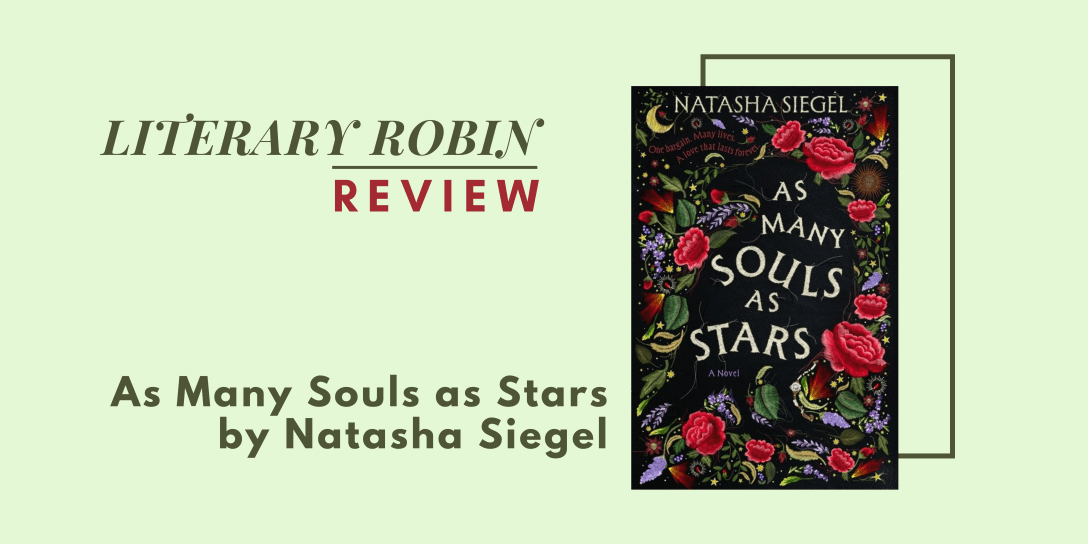
Review: As Many Souls as Stars by Natasha Siegel

Rating: 5 out of 5.

Cybil Harding is cursed. The latest in a string of firstborn daughters fated to bring an end to the Harding family line, Cybil was not meant to live beyond infancy. Against all odds, Cybil survived. Raised in the isolated Harding Hall estate, Cybil is all aware of her strangeness, the various deaths in childhood she feels she orchestrated, the flames and shadows leaning towards her as if in prayer, and the whisperings of the servants within its halls. Miriam Richter is a creature of hunger. A mere shadow in human cloaking created long ago for dark purposes, Miriam must subsist off of human souls, and never has she seen a soul as alluring as Cybil’s. Souls have to be freely given however, and Cybil is not inclined to relinquish her soul—not even for the chance at removing her curse. But when an accusation of witchcraft leaves Cybil dead and Harding Hall in flames, all she wants is another chance at the life cruelly stolen from her. Thus the two bargain. Cybil will get as many years back as she lived and in that time must seek a cure for her curse, or her soul now magnified by her reincarnation will be Miriam’s to collect. Across the lifetimes, Miriam hunts Cybil intent on taking what’s hers, but the centuries have only emboldened Cybil to retain her soul, even if it means she must at first offer up her heart and what little remains of her humanity.

Drawing together Faustian bargains, gothic splendor, and reincarnation across three distinct periods of English history, As Many Souls as Stars is a historical novel for the ages and Natasha Siegel’s masterpiece. A witch desperate for survival bargains away her soul, a demon endlessly hungering for souls discovers the brightest, and both will be ruined in their association by journeys end. The Faustian bargain is not a new concept, not in the slightest, so to stake claim on such a tale is to promise something inventive and unique in the telling. In As Many Souls as Stars, Natasha Siegel ingeniously twists the Faustian bargain into a lesbian game of cat and mouse spanning multiple centuries and incarnations as an immortal and a witch engage in a toxic romance tinged with obsession. Cybil Harding and Miriam Richter, witch and demoness, hunger both—for love, for souls, and for the continuance of their survival. Drawn into a demonic bargain to suit their purposes, neither intends to lose the parts of themselves they believed intrinsic, nor ill-fated love taking flight. Questioning fate and personhood, Natasha Siegel’s As Many Souls as Stars is a tangled dance of violence, hunger, and destructive romance, in everlasting opposition as misguided bargains can ever be.

As Many Souls as Stars is a dark, resplendent jewel immersed in the gothic tradition and draped in midnight hungers. Demonic bargains gone awry, witchcraft, and obsession mark the beginnings of this expansive saga in which Natasha Siegel mercilessly binds a demon to a young witch clawing herself back from the dead at the cost of her soul. Where some novels take time to settle with you, As Many Souls as Stars is decidedly not one of them. A prologue illuminating the origins of our demon, and the opening lines “Cybil Harding was born on Christmas Eve, 1576, under inauspicious stars” immediately signaled to me Natasha Siegel’s storytelling caliber and exactly what was in store with this extraordinary tale. Siegel does not hold off a whit in building up her gothic romance that leans heavy on the enemies to lovers side of things. It’s been ages since I read a true enemies to lovers’ romance, something that threads the needle in between love and hate with a capable hand. As Many Souls as Stars takes that challenge and gives a lesbian relationship overflowing with want and drawn towards destruction, where the star-crossed love of a witch and demon comes second to their other desires.

I love a story traversing multiple genres, and As Many Souls as Stars takes up a bold space between historical fiction, fantasy, and gothic romance. Natasha Siegel has a firm hold on her narrative, depicting the three reincarnations of her character Cybil Harding and glimpsing Miriam’s interludes at key moments of history. Traveling the centuries, Siegel orchestrates the dance between these two fickle beings and their decline. So slow it could even be unnoticeable Natasha Siegel begins to track Harding’s descent into the loss of her humanity—in consequence to what was done to her and the bargain she made, and Miriam’s inexorable transformation towards it, drawing to her unmaking. The love brimming with hatred, the devotion that leads to violence, these are all things that appear entirely contrary, but Siegel proves in essence belongs to Cybil and Miriam’s volatile love. Cybil and Miriam clash and retreat across the years, a battle of wills neither will concede and made all the more precarious by their developing romance. I was immediately struck by their conviction, Cybil’s desire to survive and take back her life and Miriam’s commitment to her demonic ways. Misguided perhaps, but essential for their conflict and the incredible transformation brought about by its end.

In all of Cybil’s reincarnations as she is hunted by Miriam, Siegel explores the dichotomy between love and hate and its natural end—with only one of them holding the knife and the other destroyed. There’s always been hatred seething beneath Cybil and Miriam’s interactions but that is essential to the love they find together. Destructive love can be freeing in a way, and for Cybil it tethers her to a life of her own design, one she will fight for at any cost. Covering three lifetimes of Cybil reincarnating, Siegel questions not just if the cycle can be broken but if it can be accomplished without Cybil and Miriam as each other’s undoing. The natural end to any cat and mouse game is when one is caught, and Natasha Siegel gives us that with her fervent final act upon a ship headed towards New York. The setting of a ship with the salt spray and the incessant rocking was fitting, with Miriam and Cybil completely cut off from their resources and nowhere to escape. Miriam and Cybil were always going to destroy each other, we’re told that from the start, yet witnessing that destruction play out firsthand is something else entirely. I found my screams well matched with that penultimate scene on the crows nest, but just as shocking was Siegel’s life-altering final twist that cleverly flipped the script and sent me reeling.

As dangerous as a bargain and as haunting as any loss, As Many Souls as Stars is about hunger in all shapes and forms, and the risk in losing ourselves as we chase it. Sometimes you read a novel that feels torn from the very fabric of your soul, and how could this not be that. We’ve got sentient shadows, a lesbian demon who can turn into a raven (caw caw), gothic locales, and an enemies to lovers tale with a wonderfully unhinged ending. Basically Robin catnip. Natasha Siegel’s gothic historical fantasy echoes with female rage and a wild and unrestrained magic in the hands of an isolated witch and sardonic demon caught up in a battle of wits. Fashioning such a saga is an immense challenge, and it’s felt in every overwhelming detail of this novel. Immortals being humanized! Hungering for the very thing that can destroy you! Things coming full circle! This novel has all that and more. The singular pieces that come together to form this story are striking all on their own but together they have ruined me for all other books. As Many Souls as Stars is so many things, but it’s largely a story about what we’re willing to give up for our autonomy and where we find the power to take it. All other gothic fiction aspires to be like this and I will continue to be haunted in its absence.

Thank you for Netgalley and the publisher for providing me with an advance review copy.

Trigger warnings: blood, death, death of a child, gore, murder, suicidal ideation, misogyny, homophobia,

Preorder a Copy – Out 25th November

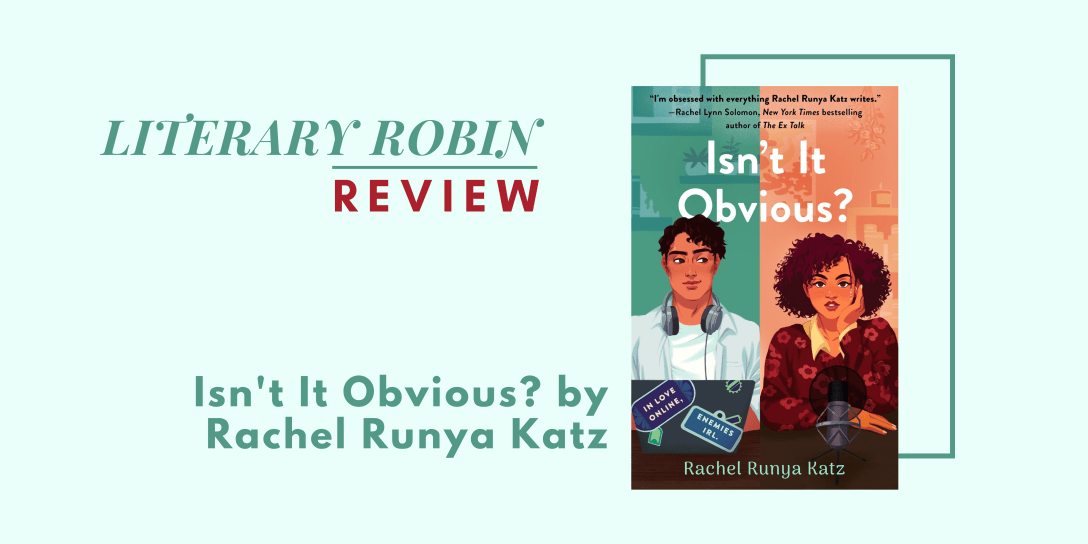
Review: Isn’t It Obvious? by Rachel Runya Katz

Rating: 5 out of 5.

High school librarian and part time podcaster Yael Koenig never expected The Sophomore English Agenda, her podcast exploring the high school reading list, to gain any traction online. But seeing as it’s her side gig and its popularity has skyrocketed, she now needs to hire someone to help in its production. Enter Ravi “Kevin” Kissoon, a freelance editor and producer who recently moved to Portland to help his brother Suresh raise his four year old daughter. Working together on the podcast remotely, Ravi and Yael communicate entirely via email, which soon spirals into non-work related chats as the two strike up a friendship. Unbeknownst to the two of them, Ravi and Yael have met before, when he made a desperate escape out of her second story window after a disastrous one night stand with her roommate, Charlie. When Ravi turns up at her afterschool queer book club as the new library volunteer, Yael is certain nothing could be worse, but her hatred is short-lived as Ravi is surprisingly charming and his presence is good for the students. Just as Yael and Ravi fall hard in person, their online identities are revealed, and reconciling two identities into one may be impossible, even where true love is concerned.

I needed a book that was proudly pro library in these trying times and Isn’t It Obvious answered the call, while asking the question, what if we romanced each other over email while hating each other at queer book club? Yael, a librarian with a secret podcast critiquing the high school reading list, with witty titles such as “A Lack of Reading Comprehension Is a Prerequisite for Serving in Congress,” grates against her new library volunteer. Ravi, a freelance editor precariously balancing a new life, is more than a tad desperate to convince the roommate of his latest hookup that he isn’t an asshole, even continuing to volunteer at her queer book club. With hidden identities and exquisite tension in the library, Isn’t it Obvious puts romance on the books and every single page sings with hate to love goodness. Rachel Runya Katz was a relatively new to me author as of this year, but she has quickly become an unrivaled talent and one of my favorite romance authors in the contemporary romance scene. Isn’t It Obvious, her third novel, is undoubtedly the best romance of this year. Not just the library representation we deserve, but a reminder of the power in these spaces especially for the queer youth of today, and how much we stand to gain from reaching for love in spite of our supposed shortcomings.

Isn’t It Obvious details the love story between a librarian and her new book club volunteer and overall nuisance (who she hates if you didn’t know) while they unexpectedly fall for each other online. Rachel Runya Katz takes the concept of a secret identity and gives it a queer You’ve Got Mail twist, but set primarily within a library that screams out a profound love letter to these spaces. Over the course of just one romance novel, Runya Katz follows two individuals juggling their mental health, familial, and career responsibilities, all while falling hard for the last person they should ever want. Characters Yael and Ravi pretty much immediately charmed me—with their incessant arguing as one of them dangles precariously out of a second floor window while attempting to flee a misguided hookup. Hating each other in person, flirting over email, Yael and Ravi build trust and vulnerability with humor and tremendous feeling. In fact, as we get to know these characters, the correspondence via email gets even funnier. Like Ravi, my sweet summer child, signing off an emotional email with “best wishes,” which is so on point for him I cried laughing. Isn’t It Obvious deftly balances all the best aspects of the romance novel, the humor, the depth, the longing, and it brings new meaning to the word “romance” entirely.

In Isn’t It Obvious even mundane actions somehow manage to be so exquisitely agonizingly hot, and that is for one reason and one reason only, two people that hate each other so very much. Ravi and Yael wanted absolutely nothing to do with each other and god if that wasn’t a palpable feeling from the start. Rachel Runya Katz takes every opportunity to make these two confront each other, with exquisite interactions that straddle the line between love and hate. With a background like theirs it’s no wonder every interaction hinges on something more. Even helping each other shelve library books was terribly sexy and had my jaw on the floor. And wrist touches may be the new hand flex because Ravi made that into a whole art. So much of what I love about the hate to love trope is someone seeing you at your worst and still deciding you are worth the effort and that is the crux of the story Rachel Runya Katz designs. Yael, a young woman living with Bipolar disorder has always been treated as “too much” and newly minted Portlander Ravi is convinced he has taken on too much to ever have a serious relationship. I love the idea that we don’t have to be perfect to reach for the love we deserve at any time, which is essential to Yael and Ravi’s romance arc. These two really bring the chaos together and I’d expect nothing less from two bisexuals who got off to a rough start.

I could easily wax poetic about Isn’t It Obvious until the end of time. It is that good of a romance. It gladdens me to know that these kinds of books exist—unapologetically queer, neurodiverse, BIPOC, and jewish all at once. So many scenes from this novel will stick with me for all time, like the drag performance scene, Ravi and Yael talking in the car after taking Leo home, and Ravi’s love confession. In hand with her romance, Rachel Runya Katz devotes significant attention to the importance of libraries in creating community for queer youth. Ravi and Yael both get to be elders for the next queer generation which honestly made me tear up a little, particularly during the epilogue. The book club scenes in this made me want to pull up a chair and offer my thoughts on the current queer book and argue on the next one (clearly I just need to join a book club). Rachel Runya Katz has written one of my all time favorite romances and books to ever exist. Period. Isn’t It Obvious rightfully romanticizes the wrist touch, the book club rivalry, lit crit podcasts, and of course, libraries and falling for your nemesis. It is a beacon for anyone out there longing for love but determined to be perfect to have it. Know that your time is now. 

Thank you to Netgalley and the publisher for providing me the advance review copy.

Trigger warnings: homophobia, parental abandonment, mental health disorder

Preorder a copy – Out 21st October

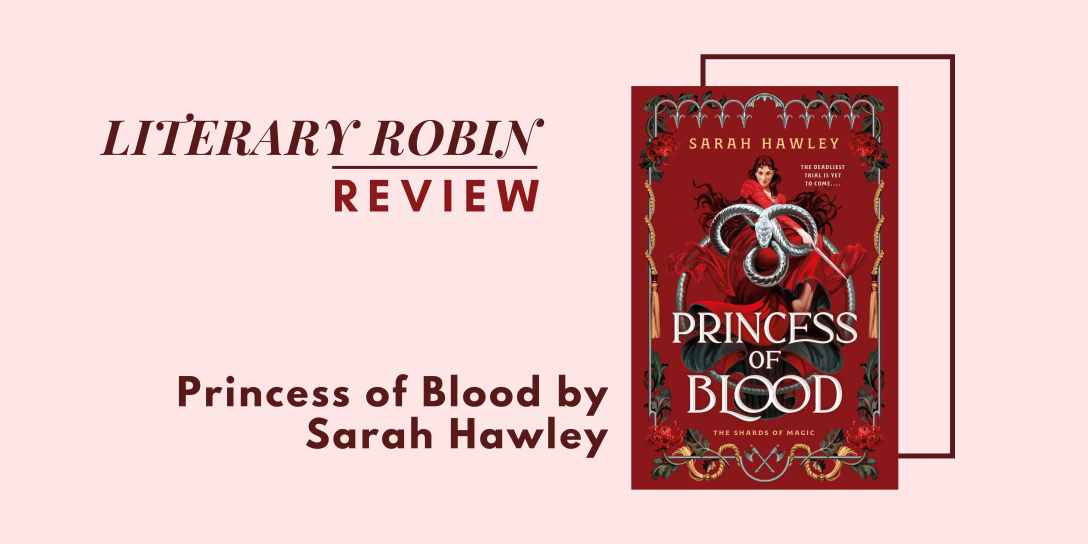
Review: Princess of Blood by Sarah Hawley

Please note this review contains spoilers for the former book in this series, Servant of Earth, and contains references to some of the events in this sequel. Read with caution.

Rating: 5 out of 5.

Put forth to be executed, betrayed by the man she thought she trusted, Kenna Heron expected to die by the magical shards that grant the fae their immortality. Instead a balance was righted for the destruction of Mistei’s Sixth House half a millenia ago, and Kenna, formerly human, is granted the mantle of princess to the once decimated Blood House reborn. Awakening to her new circumstances in the middle of a violent takeover, Kenna manages to kill Mistei’s corrupt ruler, King Osric, yet the power vacuum in the aftermath of his death only threatens further unrest. With her former lover and Void House’s heir aiming for the throne, Kenna knows not who to trust—except Lara, her exiled mistress and Kallen, the former King’s Vengeance. Kenna holds the deciding vote in who should rule Mistei but has reached a stalemate, while the six houses are fracturing against divided loyalties, and a distant cousin of King Osric is vying for the throne. All she ever wanted was to survive the cruel land of the fae, but in the footsteps of her death and rebirth, it’s no longer just about her own survival. With a deadly assassin haunting her steps, and Mistei teetering on the edge of civil war, Kenna will prove once and for all if she can bring balance to Mistei, or fall into darkness like those of a long forgotten house.

Sarah Hawley’s, Shards of Magic entraps six opposing fae houses beneath the earth to grasp at power and immortality while prey to the machinations of a merciless king. This series put down precarious roots in Servant of Earth, when Kenna Heron, a young woman, braved the treacherous bogs to cross into the fae lands, becoming servant and spy to the ignoble Earth House. Princess of Blood returns us to a world reeling in the aftermath of a bloody uprising and hinging on a civil war as loyalties sunder and forbidden love takes root within the cavernous underearth. With few weapons in her arsenal Kenna, newly turned fae, stands alone as princess of the broken Blood House. Armed with Caedo, a shapeshifting talking dagger with a thirst for blood, and two unlikely allies—an excommunicated Earth Fae rendered powerless, and a murderous Void Fae and executioner, Kenna will confront her new charge in a world seeking her destruction. I already knew the Shards of Magic series was doing something special back in book one, delicately connecting tropes and story cornerstones to deliver a unique fae touched tale of rebellion and survival. Princess of Blood is where my heart latched onto this series for good. Sarah Hawley brings a sequel into being that is bloody and unapologetic, equal parts brutal as it is a hopeful beacon for change.

Princess of Blood opens on the edge of Mistei’s uprising, as Kenna, formerly a servant of Earth House is irrevocably changed into a fae and must lead a once annihilated house out of the shadows. Where book one was entirely concerned with her survival, the overarching theme for this sequel is just as transformed—the characters left to fend for themselves within the shadows being thrust into the light, to change for the better or die trying. Sarah Hawley’s character work is at its prime in Princess of Blood as those broken against a cruel crown fight to create a better world. At the center of this is Kenna, whose startling persistence and narrative voice ensorcelled me from this series’ very beginnings, but who takes to newfound heights here in this sequel. Confronting betrayal, death, and now rebirth, Kenna walks the knife’s edge between success or failure for most of this novel, and like the knife itself steels herself against the violence that comes with her position. Kenna’s force of will is impenetrable even as she dodges assassination attempts and hedges her bets to reestablish a broken house. Princess of Blood challenges Kenna’s identity and personal loyalties at every turn, amidst a poignant query into leadership and the personal costs of rebellion.

Princess of Blood is exactly the kind of follow up I love, all about characters who concentrated on surviving for so long confronting a tumultuous future side by side. This sequel concerns all kinds of unconventional alliances, but none is more unexpected than that between Kenna and Kallen, an enigmatic void fae and weapon to a fallen king. Prior to this novel, the interactions between these two were few and far between, yet they were charged with something I couldn’t quite name. Kallen and Kenna have always been predisposed to be something more, and nothing, and I mean nothing, made that more evident than his awe at her coming into her power and murdering Mistei’s king, Osric. Their relationship may have begun with a wee bit of blackmail and cynical chats, but Princess of Blood elevates them to equal standing. Reeling from her new circumstances, cut off from the man who made his life, both Kenna and Kallen are a bit out of their depths with the current state of things. And god do I love how these two are entirely stripped bare of the roles they occupied prior to the events in this novel because that is where the real magic happens.

Now we all love a mysterious fae man with shadow magic, and Hawley provides this with Kallen, a man who has made the shadows his home for so long they are all he knows. More than a bit lonely, wishing for something he can never have, Kallen is the pinnacle of the tortured romance lead. His hidden depths gave this sequel a necessary anchoring, while slightly twisting the archetype of the brooding fae love interest. Despite the blackmail of it all, Kenna and Kallen’s relationship dynamic in Servant of Earth was deeply intriguing to me (maybe because of the blackmail if I’m being honest). Yet, it  wasn’t until Princess of Blood that I unequivocally fell in love with his character. He was the breath of fresh air this book needed, getting oddly excited to spy on people in the catacombs, sparring with Kenna, and just giving her the support she needs as she faces her new situation. Kenna is entirely in control of her choices, but Kallen is someone she can rely on who gives her the space to breathe and say the things she often keeps inside. United in the loneliness of their stations and their call to bring about a better future for Mistei, Kenna and Kallen find solace in one another, and their ensuing romance is just as intimate.

The contrast Hawley draws between Kallen, a man born to be a weapon, and Kenna, a woman who had no choice in wielding the power she was given is a compelling center to the eventual romance. At the mercy of a violent king, Kenna experienced first hand the impacts of Mistei’s tyrannical regime and in Princess of Blood, sets about reckoning centuries of abuse. Kallen has always been hiding. From his father’s brutality, a king’s abuse, and his brother’s secret, all he has ever known is secrets and shadows in a world where to care about anyone is a weakness. This extends into his relationship with Kenna, who in his mind is someone who could be wielded against him if he allows people to see the depth of his feelings for her. Just as Kenna confronts her place as Blood House’s leader, Kallen confronts if he can ever leave his shadows behind to be more than just a weapon to be wielded. Love as its own kind of weapon is the vehicle for most of the conflict between Kenna and Kallen and I was eating up the tension like water in a desert. I am nothing if not predictable, but these two brought a different name to romantic yearning. I was enraptured by the dances, the heavy gazes, and the sexual tension teeming beneath the surface of their interactions. This sequel is for the real yearners because Sarah Hawley knows the hottest thing in the world is a man undone, and that man is Kallen.

Princess of Blood is a calculated dance of moves and countermoves, building to a blood soaked showdown not unlike its predecessor, but singular in its torment. I have this thing where if characters are getting overly optimistic about the future I start to hear alarm bells ringing and that was happening at several points in the final act of this novel. I went into the last few chapters with eyes half closed because I knew Hawley was going to pull something along the lines of the Servant of Earth ending—and I was right to. Currently seeking financial compensation for the emotional damages incurred (Sarah Hawley will pay for her crimes). Even knowing this, Princess of Blood is an all around phenomenal sequel. We get to see these characters challenged by their traumas, surmount difficulties, and ultimately be transformed by its ending. The Shards of Magic series is for the feral woman tearing down a flawed world to build a better one, while being loved for all that they are. In Princess of Blood, Sarah Hawley interrogates the complex morality of immortals and what we owe to those who suffered under the abuses of a crown. With a determined heroine and her bloodthirsty dagger on the scene, Princess of Blood is a chaotic continuation of The Shards of Magic series and will no doubt leave many on the edge as it certainly left me reeling in its wake.

Thank you to Netgalley and the publisher for providing this advance review copy.

Trigger warnings: blood, death, violence, murder, decapitation, torture, alcoholism,

Preorder a Copy – Out 30th September

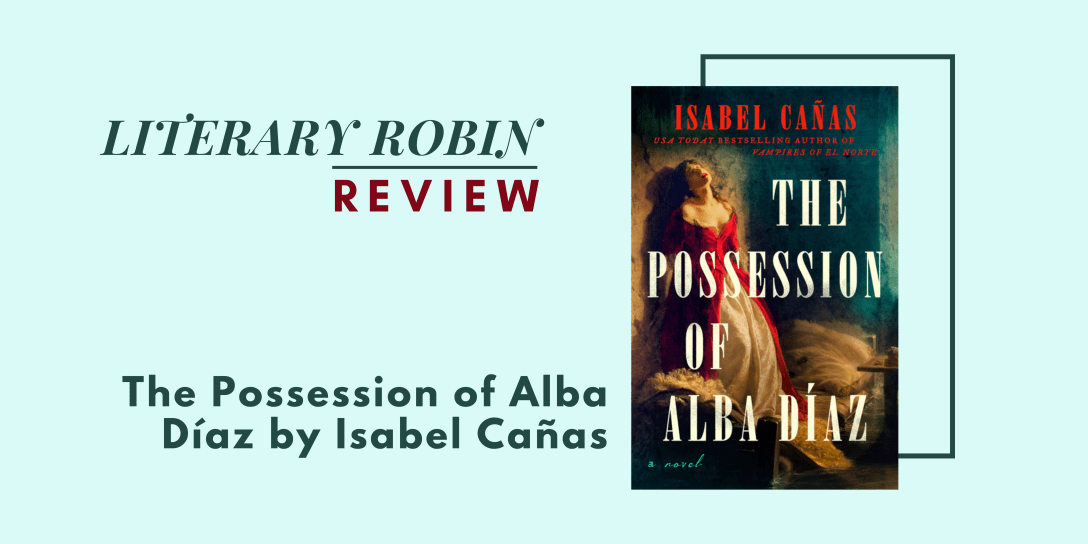
Review: The Possession of Alba Díaz by Isabel Cañas

Rating: 5 out of 5.

When a devastating plague strikes Zacatecas, Alba Díaz flees with her overbearing parents to her fiancé’s isolated home in the mountains, never expecting that there are far greater horrors in store than an unforgiving plague. Alba has had enough time to come to terms with her future as little more than property to her husband. The only choice she has is in the match—resigning herself in marriage to Carlos Monterrubio, an uninspiring young man who can afford her a comfortable life. Elías Monterrubio is running as far away from his past as he can, but his choices continue to haunt him. Cousin to Alba’s fiancé, Elías has no intention to ever interact with Alba, until a chance interaction in a courtyard changes everything and weakens his resolve. Attached to the Monterrubio hacienda is a silver mine, one that calls to Alba’s unknown past. Wandering in the night as if under a spell, Alba is victim to strange trances, hallucinations, and bouts of violence. Knowing she cannot rely on her family, nor the priest who joined the flight to the mine, Elías is her only ally in uncovering the truth. Fighting for her life against a malevolent entity, Alba soon finds her real demons are more man-made than she initially believed, and she could lose herself in excising them.

With the state of things, now more than ever I want to read about blood soaked women, the women who fight tooth and claw (wink wink) for their futures in a world set to dually possess and demonize them. With that resounding desire in mind, The Possession of Alba Díaz found its way into my hands. Isabel Cañas’ latest novel is an atmospheric gothic bloodbath involving the Inquisition, patriarchy, and autonomy, furthering plots far more violent than a mere possession. Alba Díaz, a young woman facing down a loveless marriage, flees various monsters real and mythic in a desperate attempt to seize control of a future that was never hers to own. From the moment I read the lines, “Alba plotted to sin again,” I knew I was in the hands of a master and Cañas spends this entire novel proving that to be true. Where the greatest fear is standing strong in the face of those who seek to demean and control, The Possession of Alba Díaz leads its protagonist down a path where she aligns with the demon within. It’s a haunting tale retold that begs the question if we can ever achieve control of our own narratives or if autonomy can only be gained through giving into our own demonization.

With Isabel Cañas’ novels, the characters are everything and the devil can be found within her unnerving backdrops. Plagues, confessions, and engagements begin this novel of demonic possession, with two perspectives that open up this novel to its tantalizing blend of horror and romance. Like both of her previous works, The Possession of Alba Díaz combines historical fiction, horror, and the gothic—proving these genres can and should contrast. Casa Calavera, a silver mine with a dark past, is a perfectly eerie setting for Cañas to conduct her expose into possession and patriarchy. The inner workings to the mine and the process of silver extraction are revealed, underpinning to the horror and illuminating the more intentional choices of these wealthy landowners. Cañas’ focus on worker exploitation at the heart of the horror, amidst Alba’s possession, and Elías connection to silver and dark magic is the beating center for everything that follows. Amongst these horrific moments of possession, The Possession of Alba Díaz develops familial and romantic relationships that outlast even the most gruesome of confrontations.

As a dark force sinks into Alba’s consciousness, Isabel Cañas brings together an unexpected partnership between Alba and Elías Monterrubio. I’m a sucker for any kind of romance subplot, especially in horror, so this really worked for me. Both Alba and Elías are trapped in their own ways and their appearance at hacienda de minas is a representation of that made real. Elías is the perfect romance hero, a bit tortured at times but resolute in aiding Alba in excising the demon possessing her. His attention to her problem was like a man possessed, which of course is romance representation I can only commend. Elías’ is being driven by the sins of his past, and his skill in amalgamating silver and his stockpile of mercury have led him to Casa Calavera. Cañas uncovers his past in connection to Alba’s and both were an expert source of tension for their developing romance and this novel’s unsettling aura. Cañas serves up her tried and true horror romance and gives Alba and Elías a chance to reach for a future that is theirs, one unencumbered by familial machinations and the intrusion of outside forces.

The Possession of Alba Díaz reaches a blood soaked conclusion with the confrontation promised in its first chapter. That penultimate chapter at a Zacatecan cathedral is the culmination of everything Isabel Cañas has been building to from the beginning of this novel and god was it worth it. The claws come out and it is a violent and bloody mess, but it’s all Alba’s. Cañas’ take that sometimes giving into the demon is okay is exactly what I wanted from this story—a cathartic and visceral choice but as we soon learn, a necessary one. That it is future Alba providing the outer narration bridging us into and out of the story is not entirely surprising, but it’s a missing piece that makes the conversation surrounding autonomy and cautionary tales that much more intense. Alba takes part in her own mythologization, the telling of the tale evident of her part in not just the story itself, but its ending. The Possession of Alba Díaz is my new favorite romantic horror story from Cañas. This unsettling novel creeps in like a demon taking hold, but every part is a tension filled dream of claws, silver, and sorcery.

Thank you to Netgalley and the publisher for providing the advance review copy.

Trigger warnings: death, blood, violence, murder, gore

Preorder a Copy – Out 19th August

Review: The Jasad Crown by Sara Hashem

Please note this review contains spoilers for the former book in this series, The Jasad Heir and contains references to some of the events in this sequel. Read with caution.

Rating: 5 out of 5.

Sylvia, the rightful Queen of Jasad, has taken back her crown. After years in hiding following the assassination of her family and the destruction of her kingdom, Sylvia gives up her anonymity to save her friends from a horrific fate. Before Supreme Rawain and Arin, his heir—a man who should have remained her enemy but became her greatest weakness, Sylvia revealed herself. Sylvia flees in the melee, but not before being struck down and captured by a fringe Jasadi rebel group known as the Urabi. Now, the Urabi have secreted Sylvia away to a mountain fortress where they hope to convince her to take a larger stand against their oppressors and return Jasad to its former glory. Between her alliance to her people and her connection to Arin, Sylvia plays a dangerous game. Her magic no longer suppressed by the silver cuffs flows free and if she’s not careful, threatens to drag her into the legendary Jasadi magic madness. If it’s not her magic destroying her sense of self, it’s the cost that reconstructing Jasad’s fortress will enact: her death. All Sylvia has ever known is her duty to a throne abandoned to fire, and as her duty is torn between her head and her heart, Sylvia could lose herself in being wielded as Jasad’s queen and weapon.

Sara Hashem’s Scorched Throne duology takes its final bow with The Jasad Crown, a finale that prompts a long awaited homecoming and deepens the distinct political landscape of four entangled kingdoms vying for power and one fighting to reemerge from the ashes. This Egyptian inspired high fantasy duology involving decimated kingdoms, ill-placed bargains, trials, and an enemies to lovers romance quickly solidified itself as an unrivaled fantasy series from a true talent. Stories of lost heirs reclaiming their thrones are a niche I have always adored and god if this isn’t one of the best I’ve read in recent years. The byronic heroes who lose themselves in exile before finally coming in from the cold have met their match in Sylvia, a guarded young woman and heir to a broken throne—with a proclivity towards sesame candies, daggers, and telling the Nizahlan heir what is. Sara Hashem picks up her sequel on the outset of Sylvia having revealed her identity, initiating a journey of renewal and fate. The political machinations of Nizahl and the corruption at the heart of these kingdoms are unleashed, fueling the tragedy of Jasad’s past and its uncertain future. The Jasad Crown stomped all over my heart without remorse, yet I would gladly give Sara Hashem the ability to do it all over again.

The Jasad Crown picks up on the wings of betrayal (in the literal sense), with Sylvia now captured and Arin abandoned, left reeling in her departure. This finale orients our characters to their new normal and Hashem gives new perspective to her ensemble cast after the destructive final moments that concluded The Jasad Heir. This world steadily becomes richer as it expands outward to new locales through the narrative pulled against our four characters, Sylvia, Arin, Sefa, and Marek, now on separate paths. Few protagonists are drawn by their loyalty to the extent that Sylvia is and The Jasad Crown frames this entirely in a new context. Hashem expertly contrasts the pain of a people desperately seeking a place, and the ties her characters hold to each other. For Sylvia, her loyalties fray more and more against her duty to the Jasad people and knowing that her loyalty will lead to her death. I loved how entrenched this was in Sylvia’s sense of identity and Hashem’s exploration into allegiance to one’s community. Seeing this push and pull as Sylvia oscillates between her conflicting notions of duty was an intriguing center for this finale, and one that played out in ways I never expected.

When I finished The Jasad Heir two years ago I hoped its sequel would rely on Arin confronting his part in the story and revealing his family’s involvement in orchestrating the fall of the Jasad Kingdom. Hashem gives the necessary space for this in her finale. If book one involved Sylvia uncovering the truth to her family’s crimes—the magic mining that siphoned magic from Jasad’s lower class, The Jasad Crown provides the other half to this puzzle. Even knowing part of the story previously, I was in no way prepared to see the planned attack play out, leaving vulnerable Jasadi citizens to the same fate they had been subjected to by their former rulers. Where Arin connects to this was another purposeful choice by Hashem. The glimpses beneath his seemingly inscrutable exterior in The Jasad Heir had effectively charmed me by its end. A cunning heir seeking to oust a group of rebels and play a political game against kingdoms, Arin is undeniably a fascinating individual, but someone Hashem had yet to interrogate fully. This sequel brings on the background I had been craving for his character, in his parental relationships, the cause of his inverted magic, and his heritage. Arin discovering his connection to Jasad is a painful revelation, but Hashem has built to this from this series’ first breath, giving it a necessary weight to the tragedies revealed within these pages.

There’s something about the way Hashem writes yearning that feels completely unprecedented. Her particular flavor of daggers at throats, intense gazes, and a desire to know someone takes shape through her main pairing and gave me new standards for romantic arcs in fantasy. Maybe it’s that these two characters are true enemies, their places have set them apart from the start and their world views appear impossible to reconcile. Despite the betrayal that put a wrench in Sylvia and Arin’s budding romance, this sequel deepens the romantic tension and determines if that is the case. Arin and Sylvia did not hold back in The Jasad Crown, at the cost of my fragile, fragile heart. If they’re not unexpectedly drawn back together by their magic or their competing abilities, they are yearning for a life together that is impossible to have. The contrast of Arin’s disillusion with his place, and Sylvia resigning herself to her fate is the bedrock for bountiful tension in the Jasad Crown. Arin really threw himself in the path of Sylvia and I expected nothing less from the man that gets to love this incredible woman. This man needed to grovel, and Sara Hashem gave us that in the most extreme way.

The Jasad Crown shredded me emotionally and that is the highest compliment I can bestow upon any book, this series included. Hashem holds most of her weapons until the final section of The Jasad Crown but the blade was sharpened and I was little more than a casualty in the path of her arc. This sequel intensifies Hashem’s inquiry to identity and community—determining if rebuilding a kingdom in its exact image is enough to change the wounds of the past, or will it just begin the cycle anew. Connecting this to the incarnations of Rovial and the magic leaking out of the world was another startling revelation I found only deepened the emotional impact of The Scorched Throne’s final chapters. As a lover of bittersweet endings, or endings that lean into the ambiguity, I was comforted by how Hashem chose to end her duology. After its final chapter I was but a puddle on the floor, but Hashem dragged me back to life with an epilogue that I can say confidently, forever changed me as a person. The Jasad Crown unmakes the fate of entire kingdoms and restores what was lost, but through unforeseen means. This series is for the readers who yearn to see two former enemies hold fast to love despite a world determined to see them at odds, and the headstrong woman shouldering a kingdom of responsibility finding love and liberation. If you need me, I will be on the floor for the foreseeable future, as Sara Hashem intended.

Thank you to Netgalley and the publisher for providing the advance review copy.

Trigger Warnings: blood, violence, death, execution, war, genocide, child sexual assault (off-page, but mentioned),

Preorder a Copy – Out 15th July