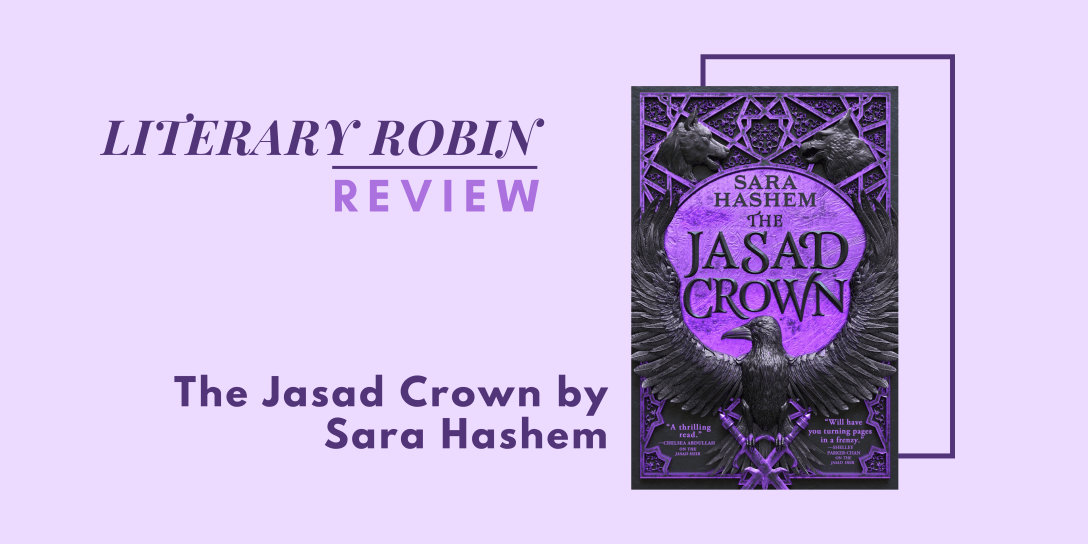
Review: The Jasad Crown by Sara Hashem

Please note this review contains spoilers for the former book in this series, The Jasad Heir and contains references to some of the events in this sequel. Read with caution.

Rating: 5 out of 5.

Sylvia, the rightful Queen of Jasad, has taken back her crown. After years in hiding following the assassination of her family and the destruction of her kingdom, Sylvia gives up her anonymity to save her friends from a horrific fate. Before Supreme Rawain and Arin, his heir—a man who should have remained her enemy but became her greatest weakness, Sylvia revealed herself. Sylvia flees in the melee, but not before being struck down and captured by a fringe Jasadi rebel group known as the Urabi. Now, the Urabi have secreted Sylvia away to a mountain fortress where they hope to convince her to take a larger stand against their oppressors and return Jasad to its former glory. Between her alliance to her people and her connection to Arin, Sylvia plays a dangerous game. Her magic no longer suppressed by the silver cuffs flows free and if she’s not careful, threatens to drag her into the legendary Jasadi magic madness. If it’s not her magic destroying her sense of self, it’s the cost that reconstructing Jasad’s fortress will enact: her death. All Sylvia has ever known is her duty to a throne abandoned to fire, and as her duty is torn between her head and her heart, Sylvia could lose herself in being wielded as Jasad’s queen and weapon.

Sara Hashem’s Scorched Throne duology takes its final bow with The Jasad Crown, a finale that prompts a long awaited homecoming and deepens the distinct political landscape of four entangled kingdoms vying for power and one fighting to reemerge from the ashes. This Egyptian inspired high fantasy duology involving decimated kingdoms, ill-placed bargains, trials, and an enemies to lovers romance quickly solidified itself as an unrivaled fantasy series from a true talent. Stories of lost heirs reclaiming their thrones are a niche I have always adored and god if this isn’t one of the best I’ve read in recent years. The byronic heroes who lose themselves in exile before finally coming in from the cold have met their match in Sylvia, a guarded young woman and heir to a broken throne—with a proclivity towards sesame candies, daggers, and telling the Nizahlan heir what is. Sara Hashem picks up her sequel on the outset of Sylvia having revealed her identity, initiating a journey of renewal and fate. The political machinations of Nizahl and the corruption at the heart of these kingdoms are unleashed, fueling the tragedy of Jasad’s past and its uncertain future. The Jasad Crown stomped all over my heart without remorse, yet I would gladly give Sara Hashem the ability to do it all over again.

The Jasad Crown picks up on the wings of betrayal (in the literal sense), with Sylvia now captured and Arin abandoned, left reeling in her departure. This finale orients our characters to their new normal and Hashem gives new perspective to her ensemble cast after the destructive final moments that concluded The Jasad Heir. This world steadily becomes richer as it expands outward to new locales through the narrative pulled against our four characters, Sylvia, Arin, Sefa, and Marek, now on separate paths. Few protagonists are drawn by their loyalty to the extent that Sylvia is and The Jasad Crown frames this entirely in a new context. Hashem expertly contrasts the pain of a people desperately seeking a place, and the ties her characters hold to each other. For Sylvia, her loyalties fray more and more against her duty to the Jasad people and knowing that her loyalty will lead to her death. I loved how entrenched this was in Sylvia’s sense of identity and Hashem’s exploration into allegiance to one’s community. Seeing this push and pull as Sylvia oscillates between her conflicting notions of duty was an intriguing center for this finale, and one that played out in ways I never expected.

When I finished The Jasad Heir two years ago I hoped its sequel would rely on Arin confronting his part in the story and revealing his family’s involvement in orchestrating the fall of the Jasad Kingdom. Hashem gives the necessary space for this in her finale. If book one involved Sylvia uncovering the truth to her family’s crimes—the magic mining that siphoned magic from Jasad’s lower class, The Jasad Crown provides the other half to this puzzle. Even knowing part of the story previously, I was in no way prepared to see the planned attack play out, leaving vulnerable Jasadi citizens to the same fate they had been subjected to by their former rulers. Where Arin connects to this was another purposeful choice by Hashem. The glimpses beneath his seemingly inscrutable exterior in The Jasad Heir had effectively charmed me by its end. A cunning heir seeking to oust a group of rebels and play a political game against kingdoms, Arin is undeniably a fascinating individual, but someone Hashem had yet to interrogate fully. This sequel brings on the background I had been craving for his character, in his parental relationships, the cause of his inverted magic, and his heritage. Arin discovering his connection to Jasad is a painful revelation, but Hashem has built to this from this series’ first breath, giving it a necessary weight to the tragedies revealed within these pages.

There’s something about the way Hashem writes yearning that feels completely unprecedented. Her particular flavor of daggers at throats, intense gazes, and a desire to know someone takes shape through her main pairing and gave me new standards for romantic arcs in fantasy. Maybe it’s that these two characters are true enemies, their places have set them apart from the start and their world views appear impossible to reconcile. Despite the betrayal that put a wrench in Sylvia and Arin’s budding romance, this sequel deepens the romantic tension and determines if that is the case. Arin and Sylvia did not hold back in The Jasad Crown, at the cost of my fragile, fragile heart. If they’re not unexpectedly drawn back together by their magic or their competing abilities, they are yearning for a life together that is impossible to have. The contrast of Arin’s disillusion with his place, and Sylvia resigning herself to her fate is the bedrock for bountiful tension in the Jasad Crown. Arin really threw himself in the path of Sylvia and I expected nothing less from the man that gets to love this incredible woman. This man needed to grovel, and Sara Hashem gave us that in the most extreme way.

The Jasad Crown shredded me emotionally and that is the highest compliment I can bestow upon any book, this series included. Hashem holds most of her weapons until the final section of The Jasad Crown but the blade was sharpened and I was little more than a casualty in the path of her arc. This sequel intensifies Hashem’s inquiry to identity and community—determining if rebuilding a kingdom in its exact image is enough to change the wounds of the past, or will it just begin the cycle anew. Connecting this to the incarnations of Rovial and the magic leaking out of the world was another startling revelation I found only deepened the emotional impact of The Scorched Throne’s final chapters. As a lover of bittersweet endings, or endings that lean into the ambiguity, I was comforted by how Hashem chose to end her duology. After its final chapter I was but a puddle on the floor, but Hashem dragged me back to life with an epilogue that I can say confidently, forever changed me as a person. The Jasad Crown unmakes the fate of entire kingdoms and restores what was lost, but through unforeseen means. This series is for the readers who yearn to see two former enemies hold fast to love despite a world determined to see them at odds, and the headstrong woman shouldering a kingdom of responsibility finding love and liberation. If you need me, I will be on the floor for the foreseeable future, as Sara Hashem intended.

Thank you to Netgalley and the publisher for providing the advance review copy.

Trigger Warnings: blood, violence, death, execution, war, genocide, child sexual assault (off-page, but mentioned),

Preorder a Copy – Out 15th July

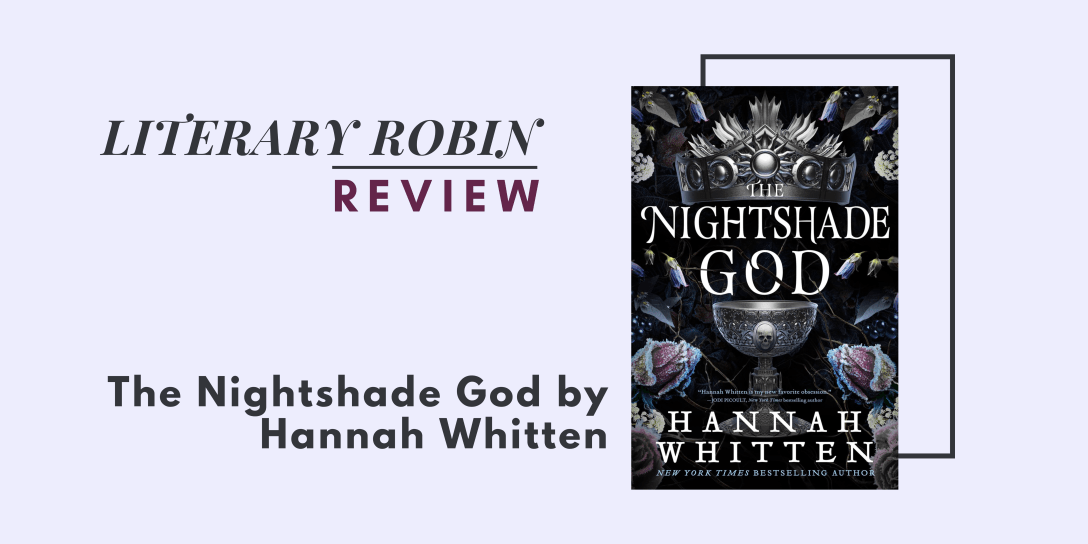
Review: The Nightshade God by Hannah Whitten

Please note this review contains spoilers for the former books in this series, The Foxglove King & The Hemlock Queen, and contains references to some of the events in this sequel. 

Rating: 4.5 out of 5.

Lore is in exile. After failing to cede her power to Apollius, the living god controlling King Bastian, she has been exiled to the Burnt Isles to atone. It is there that she fends for survival with her fellow prisoners and awaits the day she can take back her power and destroy Apollius for good. Gabe, the Priest Exalted, has fled Dellaire altogether. Alongside Lore’s parents and their fellow godly awakened, Gabe hatches a plan that would see Apollius crushed. When Lore meets an unexpected ally from her past, the two discover a way off the Burnt Isles and begin to track their way to the Golden Mount. There they must reunite all of the broken pieces of the Fount—the well of power which granted Apollius and his godly kin their immortality and godly abilities. These broken pieces are scattered across the continent who knows where, but reuniting them is the only way to destroy the divine powers and wrest control away from the gods. The closer Lore gets to the Golden Mount, the more her powers grow until she is forced to confront the role she was born into—a girl with immeasurable power destined to destroy, or one made only to be a martyr.

The Nightshade God concludes Hannah Whitten’s enthralling gothic dark fantasy trilogy, The Nightshade Crown which found its beginnings back with The Foxglove King. Brimming with death magic, fickle gods, and a chaotic bisexual trio—an arrogant prince, a duty bound priest, and a poison runner, embroiled in a sinister plot within the Sainted Kings court—The Nightshade Crown is a trilogy I’ve long considered as one of my favorites, perfectly poised against my more niche reading tastes. Entwining a deep expose into religion, its tendency to subjugate and the unavoidable allure of power, this conclusion sees our trio confronting the powers that have long sought to control them and their personal limitations. Lore, exiled to the Burnt Isles and cut off from her magic, Gabe lost and on the run in Caldien, and Bastian a mere puppet to a higher godly power. After two books of buildup Hannah Whitten lays bare the flawed roots of godhood, from the complexities of Auverraine’s religion to the godly beings who drank from the Fount centuries ago. This finale doesn’t let up on the relentless tension, and whatever you’re imagining for its end, prepare to be unmade in the transformative waters of the Fount upon the mountain.

Hannah Whitten returns to a world divided, as godly beings descend on Auverraine and Gabe, Lore, and Bastian are torn apart by fate and their respective ties. Returning to our trio in the midst of conflict with a god, The Nightshade God sees all three of these characters struck low. Lore fights for survival on the Burnt Isles, Gabe harnesses a fight back in Caldien, and Bastian battles for autonomy against the god taking over his body and mind. The Nightshade God is wholly different from the former two books in this series. After two books solely in Lore’s perspective, this finale pulls back to focus on other necessary perspectives. Given the nature of our characters separated across this world, Whitten bridges new points of view through Gabe, Alie, and Bastian’s fractured consciousness. The Nightshade God is perfectly designed narratively, with these split perspectives and the individual journeys of our trio making their way to the Golden Mount for the final showdown. Once again, Whitten delivers on the characters and it is this finale that draws out their startling persistence and what they are willing to give up to usher in a world free from divinity.

While I have been awaiting Bastian and Gabe’s points of view since the start of this series, The Nightshade God is the perfect moment to integrate them within the narrative. Yet, knowing where we last left these characters, it is a little heartbreaking to witness their perspectives. Gabe taking up fighting in Caldien as a way to finance his fight against Apollius and the Kirythean Empire, but also as a way to be closer to Bastian should not have hurt as much as it did. His journey out of religious subservience, shame, and fealty to Anton which was weaponized to further Anton’s sinister agenda at last reaches a solid landing place in this third and final book. Gabe really comes into his own in this finale and his devotion to Lore and Bastian was giving the longing I have long suspected was brimming beneath his stoic facade. Lore on the other hand is facing something unheard of in the loss of the power she has carried for most of her life. This third book has Lore confronting the destiny she was born into, as she grapples with her autonomy and the cost of holding fast to her power. Lore spent her life fighting for survival on Dellaire’s streets and is now granted a way to change things—a thread which all her choices hinge upon. The final act is the culmination of so many things, the journeys of our three characters together and apart, and Whitten’s examination into godhood and religion.

Hannah Whitten sharpens her themes in this finale as Lore faces down Apollius at the Golden Mount with the rest of our crew. Here Whitten unveils the depths to Auverraine’s religion, and the god who promised to usher in a new world for the faithful, but instead only wished to further his own ends. Some of my favorite portions of The Hemlock Queen were the flashbacks pre Godsfall to Apollius, Nyxara, and Hestraon’s perspectives. Rich in religious commentary and driving context to the situation that led to these individuals becoming gods, these scenes are paramount as Lore, Gabe, and Bastian return to the Golden Mount to reconstruct the Fount and drive out the gods for good. Even with these godly beings seeming so far above the meager desires of humanity, in actuality Apollius and his fellow kin are being driven by human desires. This was the final piece to the puzzle in understanding that these gods were once humans themselves and thus his promises and blessings all fed back to his selfish beginnings. That Apollius’s fear of death was his core drive was a superb reveal on Whitten’s part, fitting into balance between life and death—Spiritum and Mortem both.

Hannah Whitten’s resplendent fantasy trilogy at last finds a bittersweet end. From the final few chapters to that emotional epilogue spanning several centuries, Hannah Whitten delivers on the angst and an unconventional end to the journey initiated long ago at the Sainted Kings Court. Whitten outweighs these moments of sorrow with Lore’s unfettered determination and the tremendous love she feels for Gabe and Bastian that she refuses to let go. The Fount as its own character was an unexpected part to this final act and witnessing it go toe to toe with Lore was the perfect balance to some of the more painful revelations laid bare. I love the full circle moments we get here, as Lore takes ownership of the story and guards against humanity’s nature to take power—becoming a kind of myth herself. In this finale characters are unmade, reborn, and entire belief systems are shaken. The Nightshade God manages to paint a comprehensive picture of religious ideology, queer love, and the roles we play, be it by choice of circumstance, in a final book that is nothing short of world-altering. The Nightshade God is just perfection in my eyes and Hannah Whitten an author I trust to lead me through any kind of tale, no matter how twisted.

Thank you to Netgalley and the publisher for providing the advance review copy.

Trigger warnings: religious abuse, blood, violence, death

Preorder a Copy – Out 15th July

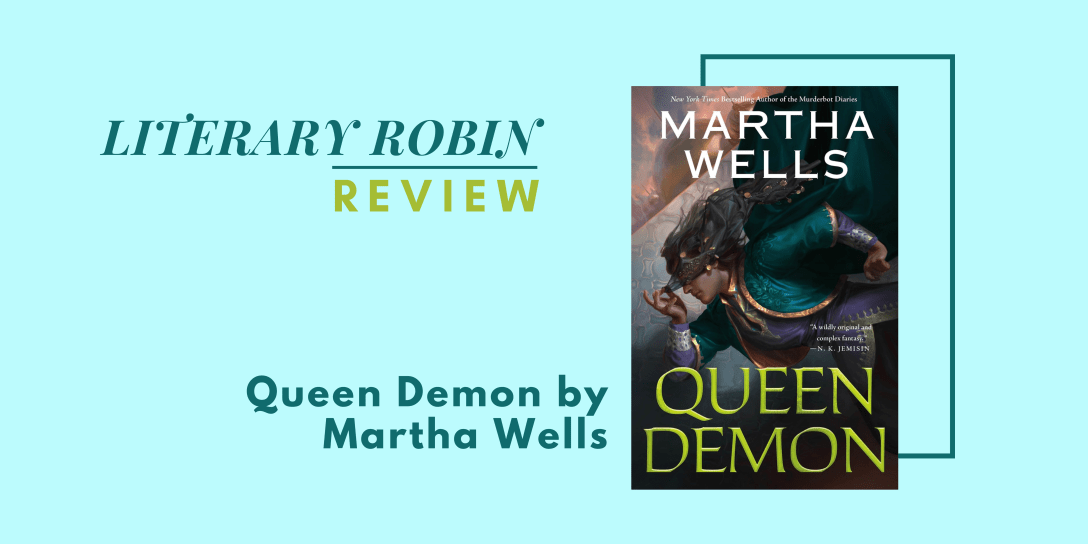
Review: Queen Demon by Martha Wells

Please note this review contains spoilers for the former book in this series, Witch King, and contains references to some of the events in this sequel. 

Rating: 5 out of 5.

Kaiisteron, Demon Prince of the Fourth House and the Witch King, survived a conspiracy that left him close to death and his companions scattered across a continent. If not for Kai’s careful planning many years prior it would have aided in the rise of an empire from within the Rising World Coalition. Now, their companion Dahin believes he has uncovered the precise location of the Hierarchs Well. Kai and his family will do anything to prevent the return of the Hierarchs and the well that grants untold power. Knowing Dahin isn’t telling them everything, but trusting in his judgement, they quickly travel to the University of Ancartre in Belith where a conspiracy is brewing. Meanwhile, in the past, Kai works alongside Bashasa and his allies to continue to wage war against the Hierarchs and wrest control back to the allied territories. The mysterious dustwitches who claim allegiance to no one but their own are causing problems on the road, and it is Kai who is called to fix the problem and bring them into the fold. Past and present contrast and in both timelines Kaiisteron must step into the mantle as leader and Witch King to unite his allies and stop the rise of the hierarchs—before more are corrupted by the allure of their forbidden power.

After the radiant triumph that was Witch King, Martha Wells returns with a sequel decidedly more world spanning that sees Kai and his crew on the road to the Hierarchs’ Well. Kaiisteron, Prince of the Fourth House of the Underearth, the Witch King, initially endeared me with his demonic nature and violent tendencies. From that first chapter of Witch King, as Kai awakes to his murdered body and a mage trying to control his magic to the “I’m the demon” line, I knew he was going to be one of my all time favorite fantasy protagonists. Uncovering a sinister conspiracy and facing a dark power that would see him enslaved, it is Kai’s inner goodness that manages to shine through the various betrayals, deaths, and even the loss of his family. Martha Wells reassembles our unconventional crew and family in the next installment to her Rising World series, this time embarking on a mission of academic research with disastrous consequences. In this sequel, the dynamics shine and the inner workings of the Rising Coalition and Bashasa’s rebellion are finally unveiled. Queen Demon takes a leap back in time and a step forward in the present, confronting the issues of empire and whether or not true power can be willingly destroyed before it is corrupted.

Where Witch King very much throws readers into a bottomless well, Queen Demon steps back to view the creation of long established alliances and relationships we saw present in book one. The mystery of the hierarchs comes to a head as Dahin enlists his family to travel to Sun-Ar where he believes the true fount of the hierarchs’ power to be located. So much of what I love about this sequel is getting to peek behind the curtain—to the hierarchs, the issues present in the Rising World Coalition, and the intricacies to our main character, Kaiisteron himself. An enigmatic figure no matter where we intersect his journey, I eagerly consumed everything Martha Wells elected to reveal about Kai in this sequel. Confounding the expectations of many even as he stays true to his roots, Queen Demon challenges Kai as a leader to his fellow witches and the bonds to his family. As Wells shifts back to the past, detailing the revolution against the hierarchs she furthers Kai’s endless desire to protect, especially in the present where those who once met the call to war have long since passed. 

Stepping back to the conspiracy that involved Bashat, foremost of the Rising World Coalition, kidnapping Kai and his allies so they could not vote in an upcoming council meeting that would have granted him an empire, Kai wishes only to leave the past behind and move forward. Yet, in essence, Queen Demon is about how much he cannot. As long as there exists power to be gained, whether through the Well of the Hierarchs or the creation of an empire, someone will try to take it. Shaped by his experiences of war and genocide, Kai is unwilling to entertain a situation that would usher in an empire—especially after fighting for years to wrest back territories from the hierarchs and establish the coalition. The strength in his character rests entirely in his reservations and his commitment to toil for a better world, of which empire has no part. My favorite moment in this sequel is when Kai comes face to face with Bashat and tells him exactly why he foiled his plans within the coalition. A big part of why I love morally grey characters so much is how throughout their conflicting choices, their desire to protect shines through. Kai has undeniably been shaped by his experiences and his journey hinges entirely around preventing further injustice. If he kills a few people in the middle of that it’s all part of his demonic charm.

Queen Demon continues Martha Wells’ seamless narrative structure of past and present. Witnessing the various successes and pitfalls of the war against the hierarchs alongside Kai and Bashasa is a long time coming after the effort at the Summer Palace in book one. As the center of focus for the past here in its sequel, I loved getting in deep with Bashasa’s plans, especially knowing Kai’s connection to Bashasa whom he mourns in the present. Alongside this, Martha Wells examines the difficulties of mobilizing a fight against an oppressive force, with differing cultures and peoples that have unique costs to fighting back. Kai’s bonds to others are the real star of the show here. His connection to Ziede and Tahren, her brother Dahin, Tenes and the orphan Sanja serve that unconventional found family aspect I crave in fantasy. There is a core of goodness to Kai represented in all of his endeavors, especially in regards to his family. This culminates in an ingenious final act at the Hierarchs Well, where Martha Wells once again demonstrates her proclivity for cliffhangers—and we’ll just have to wait until book three to see how it’s all resolved. 

If you fell in love with Witch King prepare to surrender all the more in this sequel. Queen Demon is everything I wanted after I finished book one, expanding on the world we were initially introduced to, its unique peoples, and struggles. Once a fledgling demon, Kai is now fully instilled in Bashasa’s rebellion against the hierarchs at his right hand and in the present, he faces the dangerous power that fueled their conquest. With all of our characters reunited, Wells is able to further expand upon character dynamics and relationships in an entirely new environment. The found family element is at its height with our characters on the path to destroying the Hierarchs’ Well. Queen Demon is not without its twists, particularly as our crew uncovers a sinister plot amid the hidden well of the Hierarchs. I never put it past Martha Wells to leave you stranded in uncertain territory and Queen Demon frames that in an entirely new light. The Rising World is certainly one of the best new high fantasy series and if nothing else, read it for a demon witch main character on a quest of revenge & academic inquiry with his chaotic found family.

Thank you to Tor Books for providing me with an advance copy to review.

Trigger warnings: death, blood, violence, war, slavery, genocide

Preorder a Copy – Out 7th October

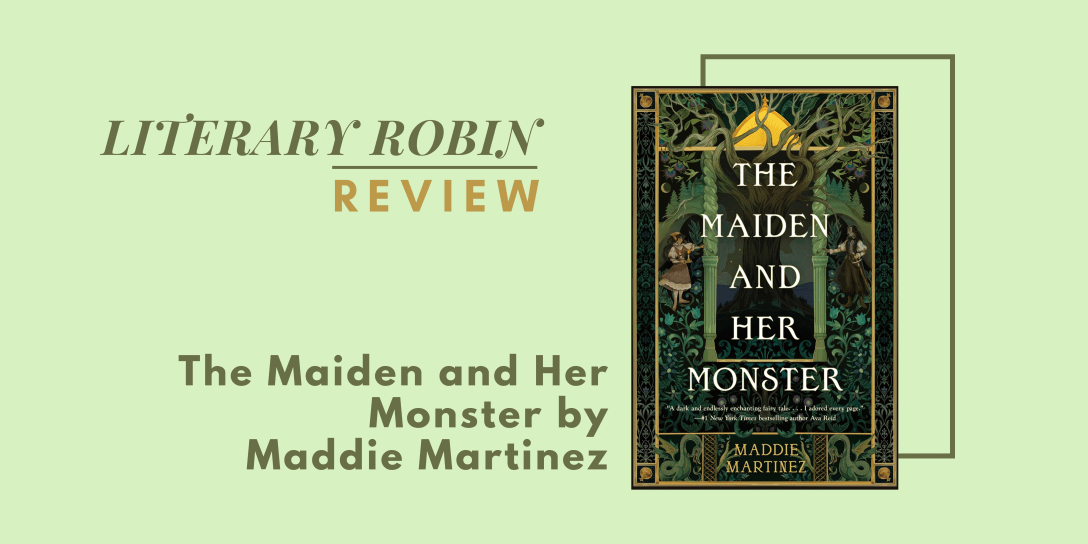
Review: The Maiden and Her Monster by Maddie Martinez

Rating: 4 out of 5.

Once, the forest was good. Before it became known as Mavetéh, Into Death, the forest bordering Malka’s village of Eskravé was a place of beauty. Now five years soured, the forest devours all women who enter it. In the footsteps of these disappearances is a plague that has struck many of the villagers low. Malka is the daughter of a healer. When her mother is falsely accused of murder by a priest, Malka has the chance to prove their stories of the woods are true and save her mother from execution. All she has to do is enter the forest and bring back the Rayga, the monster itself. But when she enters the woods, Malka discovers Nimrah, a golem exiled for her crimes. Nimrah agrees to take the blame for the killings, in exchange for Malka aiding her in freeing her creator, the Maharal, a rabbi known for his teaching and practicing of Kefesh—a type of Yahadi mysticism. The Maharal is currently imprisoned and awaiting trial in the capital city Valón. To get there, Nimrah and Malka will have to engage in a bargain steeped in Kefesh, but when Nimrah and Malka make it to the capital, they find a devious plot at work within the city. Confronting it will mean facing down a world that sees one of them as a monster, and the feelings that have taken root through their flawed bargain.

In The Maiden and Her Monster, Maddie Martinez reimagines the Jewish myth of The Golem of Prague, connecting the power of folklore, memory, and faith in one transformative fantasy debut. Now I know I am not the only one that has been eagerly awaiting this novel ever since Maddie Martinez first announced it. Sapphic romance intimately connected to folklore, a monstrous forest, and romantic yearning is like Cupid’s arrow aimed directly at my heart. Martinez more than delivers with The Maiden and Her Monster, as a Yahadi healer and a monstrous Golem bargain to save their people and uncover a love they will risk everything for. The Maiden and Her Monster intricately lays bare the conflicting facets of storytelling, from those that connect a larger community and its struggles, to those built, in effect, to justify violence and oppression. Scattered across the narrative, these folktales expand upon Martinez’s inquiry into identity and the long-lasting endurance of a people. Enveloped in history and folklore, The Maiden and Her Monster hides much behind the overgrowth of one twisted forest, if one is courageous enough to venture into its gaping maw.

Encompassed in a verdant snarling prose, The Maiden and Her Monster establishes a fable-like setting through the village Eskravé and its surrounding forest Kratzka Šujana twisted into Mavetéh—a dark wood seeming to swallow women whole. The threat of this twisted forest is second only to a plague spreading throughout the village and the increasingly prevalent tithes levied against the villagers by the Ozmini Church. The presence of the church gnaws on the villagers through direct and indirect acts of violence that press one healer’s daughter to brave the forest to confront the monster within. The imagery rendered within The Maiden and Her Monster is confoundingly ineffable, yet nevertheless it remained impressed upon my mind long after the novel’s conclusion. Through these details, Martinez hinges on her novel’s core themes and the journey Malka embarks upon at its start. One such instance was in Malka’s conversation with the Maharal on the edge of the woods near Valón and the crumbling ruins of a Synagogue. This portion of the novel was particularly memorable, as the memory of the shul Amichati is made present through Kefesh and the resilience of the Yahad made all the more tangible. The language, the imagery, the story retold, all illustrate the perseverance of this community and their call to rebuild again and again.

The characters Martinez molds into being were my favorite part of The Maiden and Her Monster. The juxtaposition of Nimrah, a golem assembled from river stones to protect the Yahad in Valón, and Malka, a devout Yahad and daughter to a healer was the perfect center of conflict for this story. Faith is as easy as breathing for Malka, and her connection to Kefesh as an extent to her faith and relationship to Yohev was incredibly profound. Maddie Martinez ties the mysticism of Kefesh to various folktales created to caution and warn against its practice, and conversely the autonomy gained through such knowledge. Nimrah’s arc on the other hand, is a bit more tricky. Faith to her is an essential part of why she exists—as a protector to the Yahad, but it confines and leaves her little room to forge her own path, to have unique desires, or make connections to belief unconstructed. Nimrah confronting these limitations and her core drive to protect is as liberating as the Yahad standing strong against their oppressors in Valón. Martinez bridges this with an intense query into the monstrous—are individuals only the sum of their parts and monstrous by design, or is it more deliberate—an intentional choice. 

The Maiden and Her Monster is a novel entirely concerned with story, from the tales that further nationalistic agenda and rhetoric, to the ones that confine and free all in a single breath. Maddie Martinez unveils unique interpretations within their telling, which can mean the difference between a cautionary tale, the revising of key histories, or the endurance of a community. I love the story within a story style narratives, and the patchwork narratives that connect folktales against the larger backdrop of a quest journey. The Maiden and Her Monster starts by constructing a typical quest narrative that is irrevocably, and necessarily sundered by Martinez as Malka and Nimrah arrive at a city teetering on the edge of something. The stories themselves hold tremendous weight, to empower, warn, or justify, and at the core of Maiden is an interrogation into all of these facets. Adding in the history of the Yahadi people and the political landscape within Ordobav, everything within The Maiden and Her Monster is thoughtfully placed and works in tandem as a living, breathing thing—much like stories themselves.

Trekking through an evil forest responsible for killing dozens of women while falling in love with the monster within is merely the enticing surface to Maddie Martinez’s debut fantasy novel. But like the dense and twisted forest Mavetéh, Martinez’s debut hides much within the background and the only way to uncover it is to brave the forest, and the monsters, within. Through Malka, a young woman desperate to slay the monster and return to a semblance of normalcy, Martinez illustrates a community’s pain as a representation of more deliberate, systemic injustices, than a singular evil that can be defeated with just one blow. A work long endeavored, but no less important in undertaking as this novel draws to a close. The Maiden and Her Monster sees stories take on a life of their own, becoming the extent of a people and the complex tapestry of history reinterpreted and retold. A Jewish fantasy novel abundant in history, politics, and faith, The Maiden and Her Monster is exactly the kind of story that will endure long after its initial telling. Maddie Martinez is the kind of talent that doesn’t come around often, and I am overwhelmingly feral for anything she writes next.

Thank you to Tor Books for providing me an advance review copy.

Trigger warnings: death, violence, blood, murder, gore, torture, xenophobia, antisemitism, sexism, misogyny

Preorder a Copy – Out 9th September

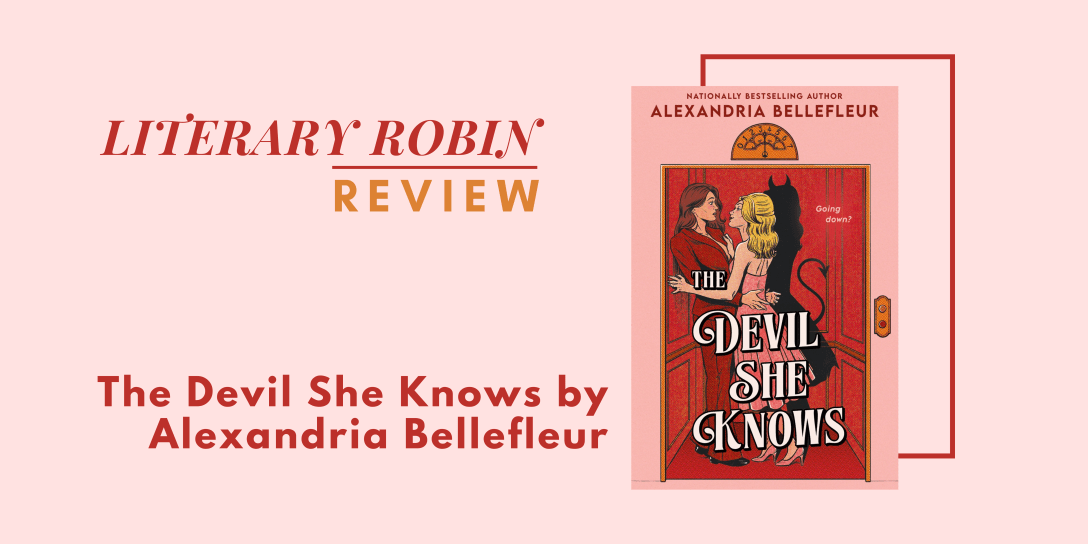
Review: The Devil She Knows by Alexandria Bellefleur

Rating: 4 out of 5.

When her girlfriend rejects her proposal, dumps her, and leaves her a week to move out of their shared New York apartment, Samantha Cooper could not imagine her life getting any worse. Except now she’s stuck in the elevator in her apartment building with a beautiful stranger who somehow knows intimate details from her personal life. Decked out in bubblegum pink, seeming to appear from another era entirely, nobody would expect that this beautiful stranger, Daphne, is in fact a demon and she’s here to grant Samantha a bargain. Daphne claims she can offer Samantha the opportunity to right the failed proposal in exchange for something Samantha will barely miss—her soul. But six wishes means six chances to win back Hannah, and it’s not like Samantha will need to use all of them to accomplish this. What she doesnt know is that Daphne is under contract to collect one thousand souls, only then can she finally be free from her own misplaced bargain. Stuck in an elevator with a demon was never how she imagined her night going, nor experiencing six alternate realities where she made different choices. As Samantha’s wishes dwindle, freedom is in Daphne’s grasp, but the devil is in the details and neither of their bargains ever afforded them a chance at a happy ending.

The Devil She Knows is the latest in a long line of incredible romances from author Alexandria Bellefleur, but her first dabbling in romance of the paranormal variety. A Faustian type bargain between a contracted demon and a down on her luck chef becomes the love story of legend in this devilish contemporary romance that takes place—for the most part—entirely in an elevator. From the moment the premise for The Devil She Knows was first revealed I knew Bellefleur was going to deliver another romance masterpiece. This is truly a story only Alexandria Bellefleur was capable of drumming up. The Devil She Knows is like It’s a Wonderful Life, but instead of an angel saving you from cashing in that life insurance policy it’s a demon showing you six alternate realities and how deeply terrible your ex is. Cloaked in Bellefleurs classic wit, The Devil She Knows details an unlikely love story with a contemplative center. Hot as hell takes on a whole new meaning in this romance where hell is the backdrop affording bargains and stealing souls for dark purposes. Hellish romance is the new standard thanks to Bellefleur and The Devil She Knows has me wanting to bargain for more.

Unlike most of Bellefleur’s previous romances, The Devil She Knows sees the romance taking a bit of a back seat. Instead, Bellefleur explores two women defined by their circumstances finding assurance in their lives and the choices that made them who they are. The six wishes Daphne grants Samantha allow her to glimpse her different selves, albeit with a fantastical twist. Samantha experiences herself as a legendary thief responsible for stealing rare culinary ingredients worth millions, a celebrated chef competing on Daphne’s Inferno, a cooking show in hell, and the combinations just get more and more absurd. These absurd scenarios, while deeply humorous, hinge on the experiences from Samantha’s reality, the personalities that show through regardless of the situation. Bellefleur makes it clear that who we are is a constant, threading through these different realities. It is through this that Samantha learns to see herself as someone worthy of being loved exactly for who she is, not someone that needs to change every aspect of her personality to be chosen.

The Devil She Knows promises a sapphic paranormal romance surrounding a deal with the devil gone astray and it’s safe to say, Alexandria Bellefleur gives that and then some. Like a three-headed dog judging a cooking show in hell, a misguided demoness who was tricked by the devil himself, and the pitfalls of influencer marketing, the details to this one are as bizarre as they are expertly placed in Samantha’s path. A locked room romance was never something I imagined being a thing, but being stuck in an elevator with a demon is quite the enticing synopsis. Unveiling the complexities to her two characters, a demon wrapped in pink and a lovelorn chef, Bellefleur continues to excel at unlikely pairings that are perfectly compatible, and the dynamics that bring on the heat. The Devil She Knows is exactly what I needed going into spring and it is going to be a wonderful read for the upcoming fall season. A call to stay true to our roots and surround ourselves with people who do the same, this novel provides a fresh view on modern romance with just a dash of ill-conceived demonic bargains. I’m all but ready to bargain my own soul for more paranormal romances from Alexandria Bellefleur, but for now, I’ll stay sane with this.

Thank you to Netgalley and the publisher for providing this advance review copy.

Trigger warnings: infidelity, death

Preorder a Copy – Out 21st October

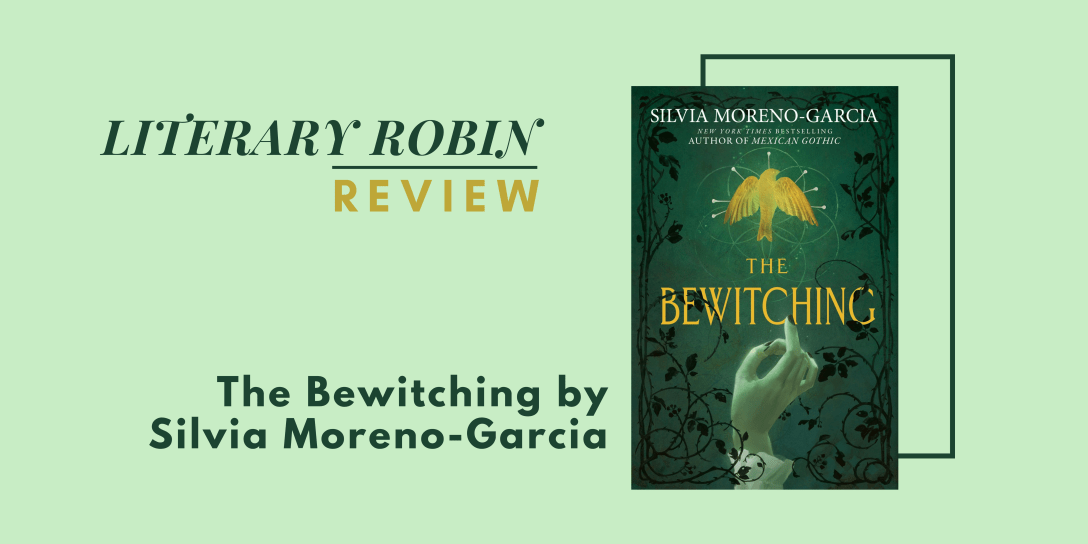
Review: The Bewitching by Silvia Moreno-Garcia

Rating: 5 out of 5.

When Minerva was young, her Nana Alba would begin all her stories with, “When I was a young woman, there were still witches,” but they were just that —stories, tales to entertain her younger self that did not predicate their existence. Now, Minerva is not so sure. A grad student studying all things horror, Minerva became fascinated by the woman horror writer Beatrice Tremblay, whose novel The Vanishing was inspired by Stoneridge College, the institution Minerva currently attends. Remaining at Stoneridge over the winter break, Minerva plans to pour all of her attention into wrapping up her untouched thesis. As she continues her research, Minerva uncovers the extent to which Beatrice was inspired by her own time at Stoneridge through an unpublished manuscript in which Beatrice detailed the events leading up to the disappearance of her college roommate, Virginia Somerset. Eerily, the signs surrounding the disappearance of half a century ago echo in the present, and Minerva swears she feels an evil force watching her steps. Finishing her thesis will require her to plumb deeper into Beatrice’s life, but uncovering the truth may come at the price of Minerva becoming a cautionary tale.

Writing in the tradition of New England horror, Silvia Moreno-Garcia returns with The Bewitching, a tale of witches tethered across generations and one grad student’s descent into the dark magic at work on her college campus. If Silvia Moreno-Garcia writes it, I’m reading it. That has been the case ever since I first read Mexican Gothic back in the early days of the pandemic and fell in love with her craft, and it is still true today. Silvia Moreno-Garcia is a masterful storyteller. Her ability to immerse readers in her richly detailed landscapes and characters, regardless of the time period or the genre has always confounded me, but I am nevertheless grateful for it. The Bewitching is the latest witch struck tale to round out her lengthy backlist. This time, Moreno-Garcia spotlights the eerily quiet winter period on a Massachusetts college campus and an incoming thesis deadline, which is already its own kind of horror. Shifting between multiple timelines and integrating the lost manuscript of Beatrice Tremblay, Silvia Moreno-Garcia presents a different kind of witch, malevolent and intent on destroying others for their own gain. In The Bewitching, the unexpected reigns, and as something stalks the night, the hardest part is not being left forever spellbound.

The Bewitching is everything I have come to expect from Silvia Moreno-Garcia, full of mesmerizing magic, standout characters, and timelines intersecting across the decades. With her latest novel, Moreno-Garcia voices the witch stories of her childhood, where witches were malicious and preyed upon innocent victims. These stories and her own experiences attending college in New England form the bones of this story and the character of Minerva, a resident assistant funding her way through grad school in Massachusetts. This discovery of witches’ and their designs is split between several decades and the experiences of three different women, Beatrice, Minerva, and her grandmother Alba. Though entirely misaligned at its beginning, The Bewitching slowly pulls these individual narratives together into one comprehensive tale of witches and the inherent exploitation of the powerful. I put my fate in Silvia Moreno-Garcia’s talented hands, and as always, she managed to exceed my expectations at every point of this imaginative novel.

The setting in The Bewitching is simply to die for. Opening on Massachusetts in the late 1990’s, The Bewitching introduces us to Minerva as she shunts off the last of the on-campus students for winter break and picks up her incomplete thesis on Beatrice Tremblay. From the unruly peacocks prowling Stoneridge campus to the lore of the Witch Thicket, The Bewitching first finds its footing through this campus setting. Stoneridge College is built up by an expert hand, and these quirks and college legends help better frame the narrative. The unsettling mystery of Beatrice Tremblay’s missing roommate reverberates in Minerva’s research and it is through Moreno-Garcia’s strong sense of place that this first creeps up on the reader. Wandering the woods with Minerva as we accompany her on her RA rounds, to the chilling sounds in the night echo in the disappearances of days past. Yet the past cannot be left behind as an unseen force prowls the campus ready to strike again.

The stories of witches feel grounded in place, Stoneridge Campus for Minerva and Beatrice, and Alba’s family farm in Mexico during the early 1900’s. I have always appreciated the historical connections and deep dives Silvia instills into her novels. The Bewitching is no different in that regard. Much of this novel deals with the dichotomy between the practice of magic and nonbelievers, landowners versus city folk, and the upper and lower class. All of these are connected across timelines and Silvia Moreno-Garcia uses them to initiate the journeys of her three characters. Generational knowledge has a real power here and connection through storytelling tethers Alba and her granddaughter Minerva in the present day. The exploration into the exploitation of the lower class to fuel the lives of the wealthy, spiritualism of the 1930’s, and the folklore of witches are heavily scrutinized across this novel. Moreno-Garcia further challenges this notion of what makes a witch through her stories villains—not only flipping the script on witch folklore but who is truly pulling the strings.

The Bewitching is the latest in a long line of incredible novels from Silvia Moreno-Garcia. Part gothic, part horror, and part historical fiction, the true connection to her past works is that this is a standard Moreno-Garcia genre meld. The Bewitching represents all the horror writers writing on New England, and the horror within these spaces themselves. The way setting informs the horror and the cultural wounds intrinsically tied to a place is central to this novel, and New England horror as a whole. If you’re up on the genre you’ll notice some clever nods to the horror writers of today and I loved dissecting those in line with the actual mystery. The Bewitching is an eerie journey through the folklore surrounding witches across three distinct decades and all of it is extraordinary. Unsettling to the extreme, I never could have expected this novel to end where it did, but I’m afraid that’s yet another Silvia Moreno-Garcia standard. Come for the chaotic grad student desperately trying to finish her thesis, and stay for the real horror underlying a New England college and decapitation unknowingly tethering a family together (no further comment).

Thank you to Netgalley and the publisher for providing this arc to review.

Trigger warnings: blood, death, gore, murder, animal death, incest, sexual assault

Preorder a Copy – Out 15th July

Review: Voidwalker by S.A. MacLean

Rating: 5 out of 5.

Ever since she was brought close to death at eight years old, Fionamara Kolbeck has been able to see the gateways separating worlds, and can traverse the boundaries between them—a rare talent coveted by many. Fi makes her living smuggling goods across the fractured lands. In return, her village continues to thrive without aid from the Daeyari, the forest entities who exist off of tithed sacrifices and hold the coveted energy technology that fuels humanity’s survival. When Fi is given the payment of a lifetime to smuggle unknown goods into the capital of Thomaskweld, she unknowingly becomes embroiled in a coup to oust the ruling Daeyari. In the aftermath, Fi is left vulnerable to Antal, the deposed Daeyari who insists she help make things right. As it turns out, Antal has been staving off his hunger as best he can, and Thomaskweld’s new ruler is not so magnanimous. Neither Antal nor Fi want this to stand, but righting the situation will require them to join forces. Nothing could have prepared Fi for being in close quarters with a monster, yet, she finds that Antal is startlingly balanced to her inner fire and she actually enjoys his company. Being caught within a monster’s clutches may no longer be the worst fate imaginable but giving in to temptation will require a leap greater than the one into the void itself.

Voidwalker asks the age old question, what if you romanced your inner demons and the result is the best fantasy romance I have read all year. S.A. MacLean understood the assignment with this deeply bisexual fantasy novel involving the toils of revolution and the alluring call of the space between worlds. A world walking smuggler equipped with eyeliner as sharp as her energy blade and a cracking dye-job and a forest entity with antlers who is more than a little pathetic team up to take down their enemies, trying and failing to avoid romance in the process. As a fan of idiots to lovers and reluctant allies this book was already primed to be a hit for my reading tastes. But what makes Voidwalker so incredible isn’t just MacLean’s two pathetic main characters and her select use of tropes, but in her soundly layered narrative. Integrating satisfying character arcs, romance, cross dimensional worlds, and an impeccably paced external plot, Voidwalker is fantasy honed to perfection. It’s also really really hot. Like SO hot. This book is for the readers who stare into the dark wishing the dark stared back…and was a hot forest demon equipped with antlers and claws with the disposition of a wet cat. Voidwalker is a dark, messy, romantic story—one that undoubtedly met my cravings but has me begging for more. 

The fractured landscape of Voidwalker is a second home to our protagonist Fionamara who makes a living traversing the shattered plains, smuggling goods between worlds to help her village thrive. MacLean captures a rough beauty within this disunified landscape. The crisp winter which ravages the population, the pine trees, the snow capped mountains, and the intense green of the polar lights envelop the narrative and feels entirely connected to the alluring call of the Daeyari and the void itself. MacLean’s debut, Phoenix Keeper, was a riot of color and magical beasts and she infuses this into her sophomore novel, admittedly with different flavors. Voidwalker is home to a variety of magical creatures—aurora beasts, void horses, and the mysterious void creatures, to name a few. I am very much partial to the void horse myself, with my love of animal sidekicks how could I choose any different. MacLean brings on the details but all help establish these split worlds and construct the initial foundation for this novel with a smuggling job gone wrong and two unlikely allies on the run. 

Two bisexuals in a cabin in the woods with nothing but their failures between them—the byline for this novel, and if I could so boldly claim, the real romance between Fionamara and Antal. These two start out by dragging each other headlong into danger both believing the other capable of fixing things, yet they are immediately confronted with the fact they are way out of their depth. Reaching rock bottom is the perfect way to elevate this romance and start to deconstruct Fi and Antal’s facades. The walls come down as Fionamara drags Antal back to her cabin in the village of Nyskya, where the two hope to prepare an uprising against the ruling Daeyari, Verne. Close proximity is at the forefront of this scheme, as Fi and Antal cohabitate in secret amidst their plans to retaliate. Now S.A. MacLean understands the innate allure of a pathetic freak man and unfortunately neither I nor Fionamara were immune. I really am here for this rabid demon creature who would rather sulk inside a snow bank with his antlers sticking out and hang from the rafters like a feral bat than emote/behave normally. It’s all part of his charm, and trust me, it’s endearing as hell.

Now I would be remiss to not elaborate on how seriously hot this book is. Like SO hot. The tension between Fi and Antal is like a sharp knife through butter and I was standing there in rapt attention as they toed the line between forced allyship and something more. MacLean elevates this tension through her extensive focus on the backgrounds of these two characters, particularly in the first section of this novel. At the start of this book both Fi and Antal have reached rock bottom and can really only rely on each other, albeit begrudgingly. This partnership brings on some wonderfully sharp verbal sparring which of course is the veil over their greater compatibility. Part of what makes Voidwalker so profoundly hot isn’t just the “romancing a hot forest entity with antlers” of it all, but how Antal and Fi open up a space for honesty and look out for each other again and again. They keep each other on their toes while romancing through small gestures—like Antal recovering Fionamara’s favorite coat and blade just because he knew how much they meant to her. Don’t get me wrong, the sex is hot, but the tension between “bite me I dare you” and walking willingly into the embrace of a monster gives just as much besides. 

In Voidwalker, successfully forging a new future means confronting the past for our two protagonists. Though fully established in Fionamara’s point of view, Voidwalker provides deeper insight into Fi’s and Antal both, all to help construct a greater picture of what they are working to overcome. Fionamara’s arc is framed at the center of this narrative, and the true standout for this novel is in her reorienting her perception of the past and standing strong in her choices. Fi’s journey through self-preservation and her perceived cowardice is a hard one, especially as she is torn between competing perceptions—her brother, Boden and childhood friend, Astrid. Astrid and Boden are two facets of this journey in their differing views of the past and reconciling them is a vehicle through which Fionamara gains further agency in her own life. Antal on the opposite side, is entirely alone. He has held people at a distance to save them from the violence of his kind, and he is scared to see the past repeat itself. Both Fi and Antal are excruciatingly aware their feelings run deeper but giving voice to them is easier said than done.

You’d be hard pressed to find a book more tailored to my tastes than S.A. MacLean’s Voidwalker. Every part of this novel is exquisite and I really could go on and on with how much I love it. Reading this, it’s clear S.A. MacLean suffused all of her favorite fantasy elements and character archetypes into one novel and not one of them feels out of place. The disaster bisexual characters trying to prove themselves without admitting they care is my bread and butter and Fi and Antal took that challenge and pushed it to extreme limits. There are not enough books with a pathetic guy who endears himself to the main character with his freakish charm and Antal is that character. Like this is a weird little guy…this is a freak of nature, but I love him so much. And Fionamara is my coffee obsessed hellion ready to fight and so so important to me. Seriously this book has it all, along with the audacity of being hot as all hell. S.A. MacLean’s talents for unique romantic fantasy are seemingly endless and no more is that on display than in her sophomore novel. Voidwalker is fantasy wrapped up in a bisexual little bow and I am so grateful that it exists. The fact that this is a duology just means I can yell about it louder and for far longer than I would typically until the sequel is in my hands. 

Thank you to Netgalley and Gollancz for providing the advance copy to review.

Trigger Warnings: blood, death, gore, murder, drug use, alcoholism

Preorder a Copy – Out 19th August

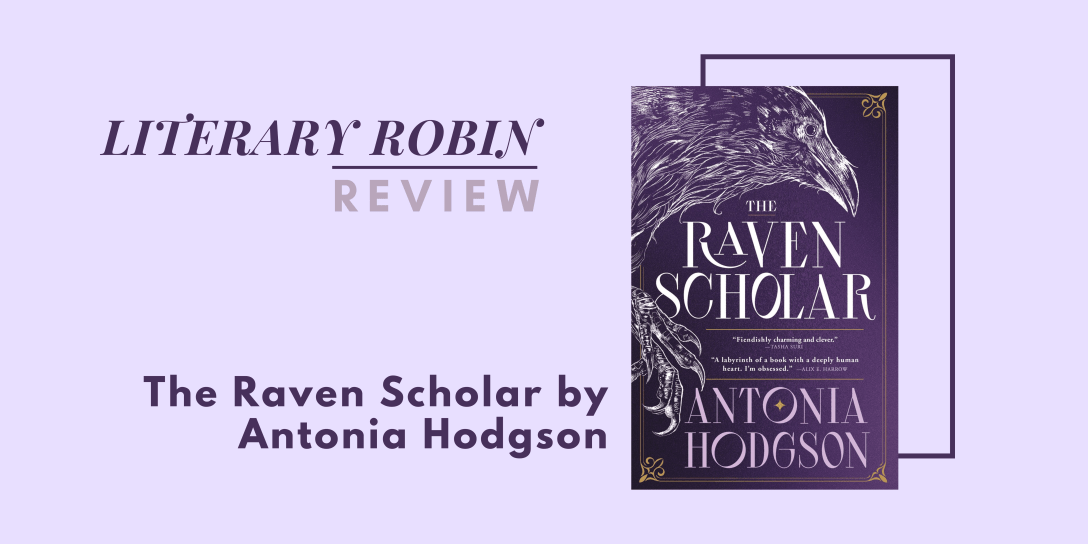
Review: The Raven Scholar by Antonia Hodgson

Rating: 5 out of 5.

For twenty-four years peace has reigned within the Empire of Orrun. But per the laws of the empire this peace will be tested in a brutal competition to determine its next ruler. Neema Kraa is a Raven Scholar and eight years prior —at the emperor’s behest—she carved the exile edict that would seal the fate of an innocent young woman and propel Neema to High Scholar. An event that would echo in the fates of more than just the solitary Raven Scholar. Thousands of people now flock to the Imperial Island, the epicenter of the empire’s power where its fate will soon be determined in the Festival of the Eight. On the night before the festival commences, Gaida Rack, the Raven contender, is found murdered in her apartment. As Gaida’s least favorite scholar, Neema is one who would stand to gain from her death, and thus, in the emperor’s eyes, the perfect candidate to solve her murder. Not only is Neema tasked with uncovering this crime but she is now the Raven contender in the fight for the throne. Dodging fights and avoiding losing to the dangerous trials, Neema soon becomes embroiled in a devious plot decades in the making, one that like the trials themselves, can have only one victor.

With The Raven Scholar, Antonia Hodgson pens the first in an audacious high fantasy trilogy. Epic in scale, bold, and extraordinarily detailed, this book burrowed its way into my heart where it is more than content to remain. As sentient ravens bear witness to events and murder abounds, The Raven Scholar expertly integrates a murder mystery within an immersive fantasy setting as a devious plot comes to fruition within the fraught empire of Orrun. When I set out to read this seven hundred page tome, I had no idea I would venture into one of the most cleverly wrought fantasy debuts I have read in many years. Hodgson hits all the marks for an epic fantasy novel with characters that bite (pun very much intended), and ones that lean into their morally grey natures. The plot takes the lead in this series debut, but it is only elevated through a detailed world history and extended mythos. Truly the pillars of this story are in the details and Hodgson is intentional in their placement as she builds to her grand reveal. The footnotes and folktales scattered across the narrative, the pesky ravens, all of it serves to build up an integral foundation for this new series. The Raven Scholar is everything high fantasy should be and I loved every single page of this intricately layered, clever novel.

Turning inward on the Imperial Island, Hodgson calls witness to the exile of Yana Valit, a decision that led to her brother becoming the Tiger contender and our protagonist Neema Kraa her position as High Scholar. Not quite a prologue, this look into the past soon transitions into Neema’s point of view, our window for the rest of the novel —a jarring shift made all the more so in the eight year jump to the present. The Raven Scholar has a claustrophobic aura, as thousands crowd the Imperial Island for a scheduled transfer in power, soon finding themselves caught up in more than a game. It all feels very locked-room, except the room is an entire island and everyone on it a suspect. Hodgson’s narrative is ever shifting, flitting back to new perspectives and integrating folktales from Orrun’s history. There is so much to sift and parse over here and no part of this story feels out of place, nor the narrative bogged down at any moment. Every single part of The Raven Scholar’s seven hundred pages is perfectly paced and expertly plotted. Through the ravens, the footnotes, and the folktales, what emerges is a vivid fantasy world with characters that leap off the page. 

I would place The Raven Scholar in the category of: what if there was an animal who was just following you around all the time (but the burrowing inside your chest cavity and offering unsolicited opinions-variety). The Raven Scholar dances around perspective and flashes between the implied author and narrator across the narrative. The implied author being the raven guardians circling the island providing their commentary was a fresh way to hone in on key events. I’m very much here for the flock of Raven Guardians having an omnipresence as Hodgson shifts between perspectives to orient her story. Hodgson layers in these perspectives to better serve the story and build to a smashing final act. Where the raven companion comes into the story is another strong suit. The “Solitary Raven” who was banished from the flock pushes forward through ink, page, and cover to become a fragment within Neema’s mind, acting as a guide in the fight for the throne. Sol is that nettlesome presence needed to further the story and its humor. I found the body horror aspect of this extremely hilarious. The imagery of Sol just chilling in Neema’s ribcage ready to burst forth in viscera whenever he needs to come to her aid or remove himself from a situation could only ever be viewed as relatable and painfully funny. 

One thing I appreciate about this novel is its heavily detailed character work. For most of the book we are in Neema’s perspective and her views cloud our opinions of the past and future of Orrun. Neema is the solitary Raven Scholar, brought up from her station as a commoner to take up space within the Emperor’s court. With such a rise comes many enemies and a perspective that reflects inward more often than not. Antonia Hodgson is comfortable exposing the flaws of this character and the blind spots that place Neema in danger as the plot progresses. I love ambitious women but just as much I love that Neema’s ambitions come at a price. The huge reveal at the end would not have come about without the manipulation of several key figures, one of which was the High Scholar herself. Characters grappling with their morality and the justification of past decisions is a central part of this novel. Neema, Cain, and Ruko are three characters who really stood prominently within this —figures who will undoubtedly continue to shape the progression of this series and its core themes.

The Raven Scholar is a true fantasy gem, sharp, gleaming, and rare in its splendour. As prophecies are fulfilled and the Festival of the Eight draws to a close, the Eternal Path series finds a strong footing in an unstable final act that I was in no way prepared to venture into. And wow oh wow what a conclusion. I don’t think I breathed for the entire last third of this book. It was that intense. Antonia Hodgson pulls the rug out in every sense, making you feel like the dominant players are aiming for one thing when in reality it is something else entirely. Integrating unique points of view —the animal guardians staking their claim on the narrative and the future of an empire and a daring scholar courting danger to solve a murder, among others —this is an artfully designed fantasy novel with a host of characters to enjoy. I cannot emphasize enough how this fed my cravings for epic fantasy to the extreme. Much like our Solitary Raven, I want to live inside this book and I’d feel comfortable burrowing into its pages to wait out the eventual sequel. 

Thank you to Netgalley and the publisher for providing this arc to review.

Trigger warnings: death, abuse, murder, blood, violence, imprisonment, drug use, execution

Preorder a Copy – Out 15th April

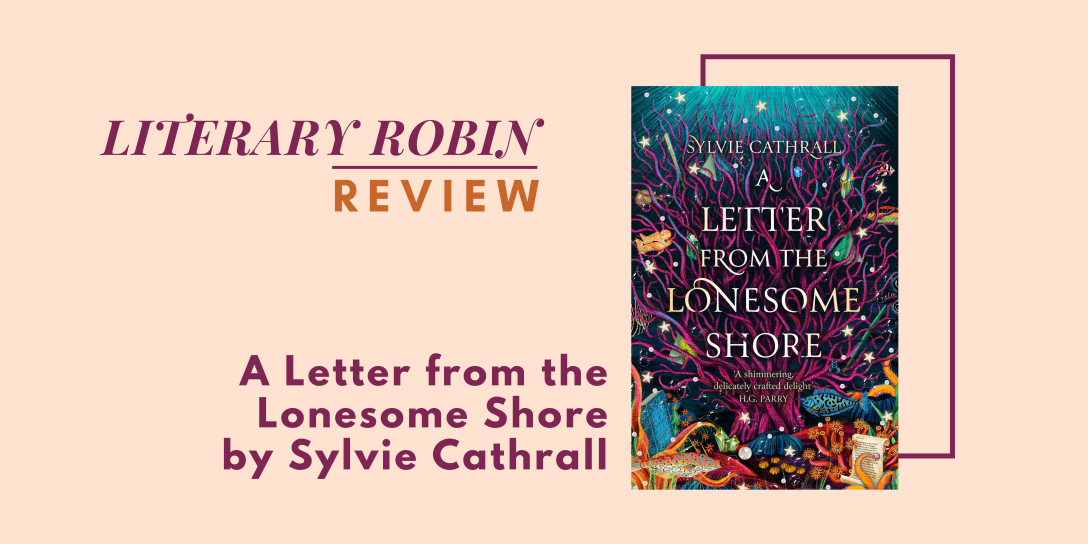
Review: A Letter from the Lonesome Shore by Sylvie Cathrall

Please note this review contains reference to some of the events contained within this novel, and the former installment, A Letter to the Luminous Deep.

Rating: 5 out of 5.

Former correspondents E. Cidnosen and Henerey Clel bonded over an academic mystery, but they never expected that mystery to involve travelling through a mysterious structure in E’s garden. Now, E. and Henerey find themselves in a sunken city that holds the secrets they’ve been searching for —of an archaic floating society that retreated into the sea after some indescribable danger led them to flee the world above. The mystery of the fate of E. and Henerey captivated many following their disappearance, but none more so than their respective siblings, Sophy and Vyerin. Piecing together the truth through the letters E. and Henerey penned across several years, Sophy and Vyerin now find their siblings forever out of reach. Drawn deep into the life of the archaic scholars and their city of secrets, E. and Henerey confront the limitations imposed by this society while desperately yearning for a way home. Meanwhile Sophy and Vyerin relentlessly chase the gateways that could reunite them with their lost siblings. With Sophy and Vyerin on the case and E. and Henerey seeking the truth to their world, neither party understands the true threat stalking the deep which brought a once thriving archaic society low.

A Letter from the Lonesome Shore returns readers to the elusive deep after the revelation that scholars E. and Henerey did not perish in the destruction of the Deep House. Told entirely through letters, this epistolary novel concludes the Sunken Archive duology and unravels the mystery of the gateways and the archaic scholars. Long thought dead, these scholars have remained within an underwater city awaiting those fleeing the mysterious threat that brought them to its sunken waters. Knowledge has a cost in A Letter from the Lonesome Shore, and Sylvie Cathrall tests the bonds of our undaunted scholars, E. and Henerey, while a larger threat closes in on their underwater world. A Letter from the Lonesome shore is flitting in its shades of enchanting light academia and winsome romance. Sylvie Cathrall pushes her frontier, integrating new perspectives and roundabout ways to ensure character points of view remain at the forefront of this novel. These narrative subtleties lend themselves to the greater conversation of academic pursuit and the human connection at the center of academic inquiry. A Letter to the Lonesome Shore is an endlessly fascinating series conclusion and all I want is to continue to chart the immeasurable depths of this extraordinary duology.

In concluding her Sunken Archive duology, Sylvia Cathrall reorients her underwater world with E. and Henerey having gone through the portal by the Deep House, and Sophy and Vyerin initiating a mission to follow them through to the other side. This sequel proves there is so much more lying beneath the surface as we are introduced to the enigmatic scholars of a sunken city who have awaited refugees since they first abandoned their world above, and the scatterings of a future we encroach ever closer upon. Between E. and Henerey’s private diary entries, Cathrall brings new perspectives into the forefront. The back and forth between the Thirtieth Second Scholar maintaining records for the archaic society and the Fifteenth First Scholar providing their interjections was an intriguing addition —while suffusing some necessary humor into the text. The contrast between the eager Thirtieth Second Scholar offering his commentary and the particular Fiftieth First Scholar trying to stick to protocol was not only deeply hilarious, it uplifted the more serious elements within this novel.

Endearingly awkward should be the main descriptor for the romance between E. and Henerey. Two people in love who believe they aren’t worthy of the other person while constantly exhibiting signs of “you remembered” and “of course I did” is the recipe for this academic romance. After book one detailed their charming correspondence over the mystery of the Deep House and the garden structure, E. and Henerey find themselves united at long last within the underwater city of the archaic scholars. Sylvie Cathrall begins to test the bonds between these two as they leave behind their comforts and find themselves within this sunken city. The courtship rituals are thrown into an entire new orbit as they soon learn they may be stuck there unable to return home. In this series, the relationships on the periphery are just as strong. Sophy and her wife and Vyerin and his husband remain some of my favorite romantic subplots within this duology. A Letter from the Lonesome Shore continues to represent queer relationships at the forefront and I appreciated how Sylvie Cathrall brought in new layers to these relationships as she raises the stakes in this sequel.

What I’ve always relished in this series is its focus on academic research. Cathrall makes the reader feel as if they are pouring over the primary and secondary sources to construct theories for how this underwater society came to be and what happened to the archaic world from long ago. Part of what makes this sequel so fascinating is getting to see where the individual pieces from book one slot into place. The mysterious island, the Darbeni poem, and the Fleet are part of a plot that spans back thousands of years. Cathrall expands upon this underwater world that is actually just one drop in a universe that is an entire ocean. The introduction of an interworldly threat was the perfect addition to underpin this revelation and the connections between the individual threads from book one. The predator as a primordial being that feasts on knowledge, swimming between these worlds to consume any that have become overly abundant was an insanely clever reveal. Cathrall’s imagery of this boundless universe ocean is thoroughly evocative and places the entire world stage in a new perspective.

A Letter from the Lonesome Shore maintains the lighthearted atmosphere from book one yet expands upon the boundaries of this world and the mysterious underwater society of the archaic scholars. Just as A Letter to the Luminous Deep was about the pursuit of knowledge and romance set within scholarly inquiry, this sequel demonstrates that knowledge is nothing beyond the connections that make us human. Finding a home after a devastating event brings E. and Henerey to a newfound shore that feels fitting for their individual paths and the partnership they have built side by side. Sylvie Cathrall knows that the real treasure in the deep is the bonds we keep with one another and it is worth any sacrifice. Lush and fathomless, The Sunken Archive duology is one series I will certainly return to to rechart and navigate anew. The real treasure for me is this series from start to finish.

Thank you to Netgalley and the publisher for providing this advance copy to review.

Trigger warning: anxiety

Preorder a Copy – Out 6th May

Review: Good Spirits by B.K. Borison

Rating: 5 out of 5.

It’s the first day of December and the last thing Harriet York expects when she returns home from work is for a mysterious ghost to appear from behind the depths of her Christmas tree —or that this mysterious stranger would tell her that her soul is in danger and he has been tasked with repairing her past. Nolan Callahan is everything a Ghost of Christmas Past should be, living his afterlife aimlessly and determined to pull off his latest assignment with time to spare. But his current haunting with Harriet York could not be more atypical. For one, she doesnt appear to be at all similar to his usual assignments, she’s not sending scam emails to friends and family or forgetting her kid’s Christmas concerts. She is shockingly normal. But no matter, the assignment rests and her past must be examined. As Nolan takes Harriet through the key moments of her life, the two find themselves abruptly pulled into Nolan’s past as well. Moving on might not just be a goal for Harriet and as time moves forward and the Christmas deadline looms, Harriet and Nolan will race to uncover what’s tethering them together while fighting the real truth: that the only way they want to move on is side by side.

On the first day of December the universe gave to me a hot Irish ghost who appeared to audit my soul from behind my Christmas tree. B.K. Borison forges a new path in her latest holiday romance, Good Spirits, that not only had me romanticizing the concept of A Christmas Carol (minus Scrooge and with a hot ghost), but more importantly had me wondering where do I sign up for this soul auditing scheme. Blanketed by holiday cheer, snow, and peppermint sticks, Good Spirits is a holiday romance of epic contradictions — much like the holidays themselves. The yuletide carols and wholesome family gatherings are out of the question for Harriet York, a late twenty-something dealing with the passing of an aunt who helped her leave behind the stifling expectations of her family. Working at the antique shop she inherited while shuffling between her everyday paths has left Harriet to become her own kind of ghost. But who doesn’t want an actual ghost to appear and tell them their soul is in mortal peril? Infusing her captivating charm and capacity for unparalleled love stories, B.K. Borison’s Good Spirits is a heartening holiday romance involving loneliness and the power of memory in refortifying our present.

Romancing a ghost wasn’t on my 2025 bingo card for romance novels but I am so glad it delivered. In Good Spirits, B.K. Borison takes readers on an introspective journey through the lives of a regretful Irish fisherman turned ghost and a former lawyer turned antique dealer, Harriet York. Now I’ve never put it past B.K. Borison to introduce a unique concept and completely take it where you never expected. Romancing the mundane is her motto — those everyday tasks and quirks unexpectedly find meaning within this flourishing romance. For Good Spirits everything has its place, and the mundane is made deeper by the overhanging weight of the past and the threads of fate which become more prevalent, not unlike the irksome mistletoe conjured up by our resident ghost. Love truly is in the details for Nolan and Harriet, working to determine the cause of Harriet’s need for redemption while discovering the unexpected ways they are bound together. Borison always leaves these delicious crumbs for her readers to uncover and as a reader who likes to find connections and mull over symbolism I feasted on this novel. Like Harriet working at an antique store called the Crows Nest while her soulmate is an out of practice fisherman? Come on! Good Spirits is a treasure trove of wonder not only in its romance, but the ways in which we can find connection to others and build affirming lives.

Good Spirits in essence challenges what really makes a ghost. It isn’t just someone who has passed away clinging to some unfinished business. In many ways, loneliness and the unfinished business of the present can leave us as little more than ghosts ourselves. Harriet York is the perfect example of someone seeking affirmation while grappling with loss that has left her aimlessly wandering through the motions. The spirit of the holidays are a way for her to find comfort and bask in the beauty of this time of year. Too bad a ruggedly handsome ghost throws a wrench into these plans. Nolan Callahan not only helps Harriet recontextualize her past and present, he is the love interest Harriet deserves. Nolan is someone who can provide insight into her past but also a loyal partner who can stand by her side as she faces her family. The messy sides of these two characters is half the fun and Borison draws this out with her typical witty banter and an abundant side of holiday charm. The draw between Nolan and Harriet is in their shared loneliness and together they make each other better. Harriet who has spent years molding herself to suit her family while just wanting to be loved finds that unconditional love with Nolan who loves her without reservation.

Good Spirits isn’t your typical holiday romance, but Borison is writing in the tradition of so many romance writers both past and present —the flavors of which I felt scattered across this narrative. At the same time there is something about this romance that feels wholly unique. It’s not everyday you read a book about a woman romancing an Irish ghost in a series of ridiculous (his words not mine) patterned pajamas. But Good Spirits is about so much more than what appears on the surface, it’s about the living ghosts that haunt our present and how we can excise them. This coalesces in a satisfying final arc with Harriet and her family as she truly breaks free from their influence, and Nolan chooses a second chance and comes back to himself. And the unifying theme is found as Harriet and Nolan choose one another and endeavor to build their lives together. 

Full of warmth, string lights, hot cocoa, and various peppermint sweets, Good Spirits is the epitome of cozy holiday romance. Surrounded by all the comforts of home and the holidays, Good Spirits brings focus on the paths we walk and the fates we resign ourselves to when we aren’t really living. The real kernel of romance within is in showing up consistently for the people we care about and opening up a dialogue to our past. Letting people see the messy, imperfect parts of ourselves is daunting, but Borison proves that it’s never not worth it in the grand scheme of things. Good Spirits starts out with a bang and never lets up on the romantic tension front. Fate and memory intertwine in a romance that is endlessly heartfelt and far too entertaining to put down. Good Spirits is a continuation of B.K. Borison’s obscene powers for soul crushing romance and I was not at all surprised that this struck an emotional chord with me. I’d like to thank B.K. Borison for this entire book and also the sexy ghost representation. Not only was it desperately needed but it’s incomparable.

Thank you to Avon Books and Netgalley for providing this arc in exchange for an honest review.

Trigger warnings: death of a loved one, grief

Preorder a Copy – Out 21st October