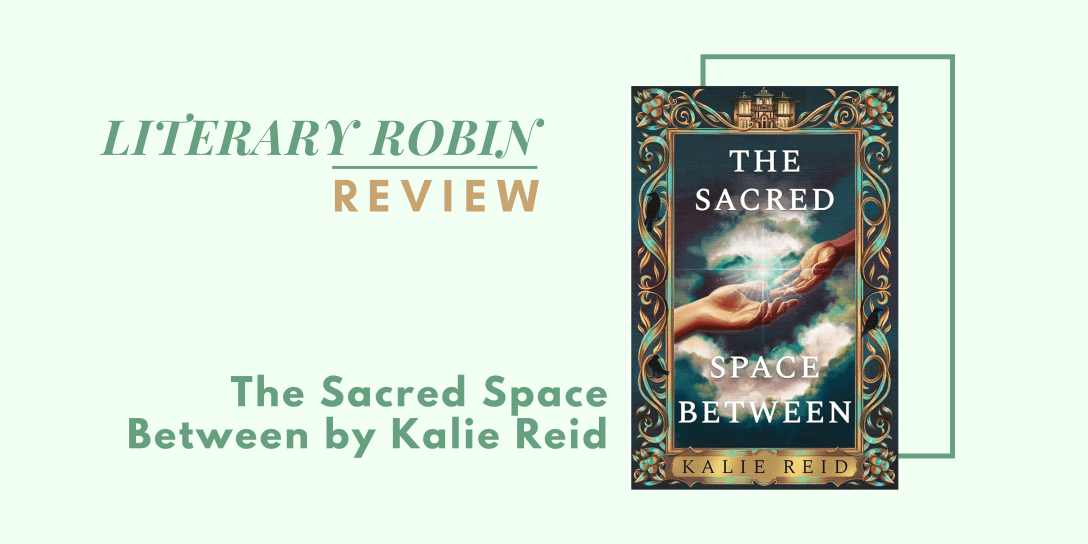
A devout acolyte trained in iconography, Maeve has dedicated her life to upholding the saints through her artistic talents. Sequestered away at the Abbey, Maeve lives in a constant state of isolation, prayer, and devotion. After a decade in the Abbey and many years honing her craft, the opportunity to replace the lead iconographer, Brigid, is finally within her grasp, until her mentor, Ezra, gives her a daunting task. Far away from the Abbey’s walls a saint lives in exile, defiling the Abbey’s teachings and tainting the miracles of the saints. His name is Jude and he has long lived under the Abbey’s thumb, never far enough to escape its influence. Maeve is tasked twofold: paint an updated likeness of Jude while using her place within his household to acquire information on his wrongdoings. Desperate for a chance to prove herself, Maeve leaves behind the Abbey and travels to Ánhaga, a house on the outskirts of the Goddenwood. There, Maeve meets Jude, and he is nothing a saint should be. For one, he is just a boy dabbling in heretical notions. Second, Jude is intent on driving Maeve away, by any means necessary. When Jude discovers that Maeve possesses the very saintly abilities coveted by the Abbey, he realizes they have more in common than he initially thought. Together they could bring the Abbey to its knees, provided they don’t betray each other and can avoid becoming martyrs themselves.
The Sacred Space Between is a miraculous novel, far exceeding the tainted magic of saints to place an expert brush upon the experiences of loneliness, religious trauma, and the ever constant quest for belonging. With reverent hands Kalie Reid constructs her Abbey, its spires reaching ever upward and its arched cloisters replete with devout acolytes sequestered away to pray and to serve. It is here that Maeve, an iconographer, will be sent out on a mission to spy on a saint in exile and come to uncover the truth of the magic bequeathed to their saintly figures and the rotten center of her faith. Interrogating faith and its power to uplift and to subjugate, Reid’s debut dares to tear away the facade from religion, exposing the lies and the many lives impacted in service to those in power. The Sacred Space Between is about systems of power, yes, but it’s also about the power found in human connection and the moments where we find belonging and kinship with others. It’s a story full of immeasurable yearning—yearning for things to be different, yearning to find your place, for your autonomy, and yearning for the unfriendly exiled saint you are forced to spy upon in an isolated gothic manor house. Kalie Reid’s The Sacred Space Between is exquisitely rendered, drawing readers into the contentious space between a heretical saint and a devout iconographer that is not just reverent but holy.
While The Sacred Space Between is a romantic fantasy, at its heart it is a gothic with all the brooding atmosphere and descriptive imagery to move me unlike any other. The wildswept fog ridden moors on the outskirts of the Ánhaga, its wallpapered walls, and the hidden library of memories all paint a desolate picture of loneliness and melancholy central to Kalie Reid’s larger commentary. The house, Ánhaga, is a physical manifestation of the corruption at the heart of their faith, yet comforting all the same in these small spaces where tainted faith cannot reach. This is felt by Maeve and Jude’s perspectives both, but it is Maeve’s character in particular who presents an aching loneliness and an alienation tied so intrinsically to her beliefs. Her desire to be seen and trusted and remembered is a stark contrast to Jude, whose very faith has been perverted through his sainthood and physical abuse. The greatest desecration of someone’s faith is the abuse through faith itself, from the physical impact of Jude’s torture at the hands of the Abbey figures to the spiritual abuse of Maeve from her mentor, Ezra. Reid’s journey instills the necessity of faith as to question, to be allowed curiosity and have that accepted. But faith, sainthood, and iconography exist in a twisted cycle that exists to satiate the powerful and control those who dare to question the system they are a part of.
In The Sacred Space Between the way to break free lies in the hands of an exiled saint and an iconographer who hate each other (just a little). Trapped together in an isolated house with nothing but their conflicting agendas and personal ghosts for company, Maeve and Jude clash and retreat immediately and boy is the tension magnificent. Reid instills all of my favorite things into this romance, divisive views as a source of greater tension, overwhelming pining, and everyone’s favorite component: romantic yearning. As a lover of conflict in my romances, Maeve and Jude were constructed to drive me insane. Everything is held captive by their differing views as they interact and desire to know more about each other and that in turn only furthers the tension driving them apart. Yet Reid unites Jude and Maeve in a profound loneliness centered around their beliefs, initiating a quest to destroy the Abbey and return the magic siphoned from their saints. With Jude and Maeve’s bond cementing, so does our understanding of this faith and how saintly magic is controlled. Reid ties this all to religious iconography and it’s nothing short of marvelous. Religious iconography already harnesses its own kind of power, but adding in the layer of memory magic, and Reid’s stance is forever ingrained in the very paint used to bind the saints—and their magic, to the church.
The Sacred Space Between is its own artistic masterpiece. One that grabs you with two hands and forces you to look upon all that it has to reveal. For Kalie Reid that is the lasting impacts of religious trauma and abuse and the personal power found in taking something back for yourself. This novel presents many essential ideas around organized religion—how martyrs further religious fanaticism, the danger of blind faith, and the control gained in building someone up from nothing. This connects perfectly into the concept of memory magic harnessed through the iconography of their various saints. Art has power too, and here it acts as a gateway between saint and elder, magic and the believers. Memory in turn, allows these elders to abuse and control with impunity, as there is no one alive with the memory of what was truly done. If memory can be controlled so can these elders shape their acolytes and in effect own them and their faith. I love reading books that cause me to question, the ones that linger for days after I finish reading. This is essential to Kalie Reid’s debut. Even with all the romantic yearning, the kneeling, and the groveling, there is so much to sift through not just on the surface of the narrative, but far beneath. Limned a dark gothic atmosphere, this thought provoking romantic fantasy novel delves far into religious subjugation, iconography, and the weight of sainthood. Fleeting as mist, but made permanent through memory and saintly magic, The Sacred Space Between is one story to remember and find your way back to time and time again (just like Maeve and Jude).
Thank you to Netgalley and the publisher for providing the advance review copy.
Trigger warnings (provided by author): blood, death, religious trauma, gaslighting, emotional abuse, child abuse, scars, discussions of past self-harm, fire injury, panic attacks, suicidal thoughts
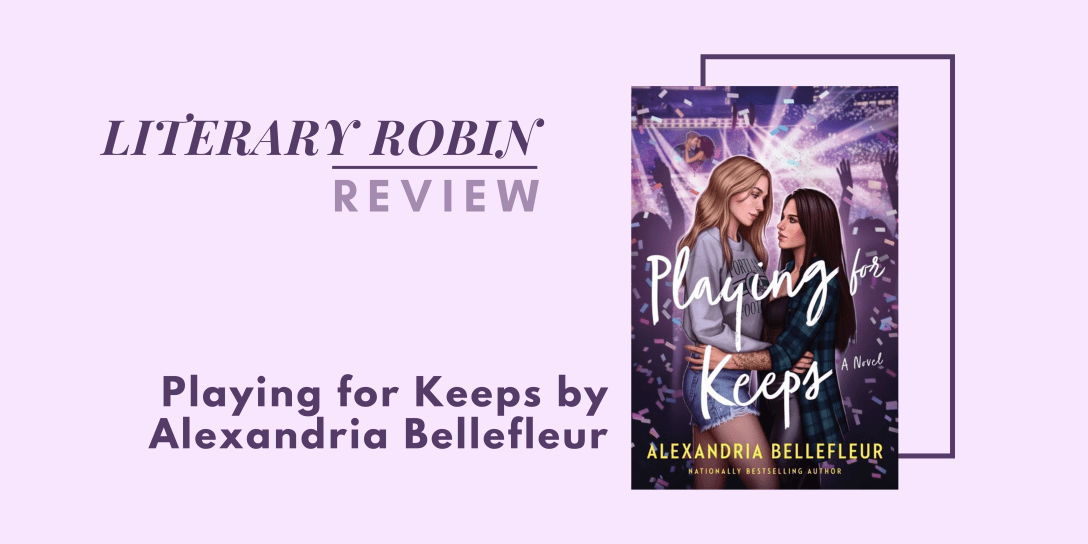
Few people have more at stake than Poppy Peterson, publicist to NFL’s rising star quarterback, Cash Curran. Best friends since childhood, Cash lent a lifeline to Poppy after a setback, giving her a place to stay and handing her the reins in managing his publicity. Now Poppy has made it her sole pursuit to set him up for success, but she didn’t anticipate a Twitter fiasco—more specifically, she never thought Cash would be so stupid as to publicly hit on a popstar to his fifteen million Twitter followers. Lyric Adair is music royalty, past superstardom and in the realm of untouchable, but somehow she finds Cash’s attempts at flirting to be charming. The two initiate a romance, one that comes with a glaring NDA and a sit down with Lyric’s revered publicist, Rosaline Sinclair. Poppy has long admired Rosaline, but being on the receiving end of her attention is unsettling. Worse, Rosaline is convinced the romance will crash and burn. Cash and Lyric’s flourishing romance only forces Rosaline and Poppy into closer quarters where the tension is high and so is the heat. As Cash and Lyric get more serious, Rosaline and Poppy confront their flawed expectations as what they truly are: self preservation, and if they can set them aside to face the real music beating between them.
Only Alexandria Bellefleur could hand me a romance novel during these unprecedented times and leave me feeling hopeful despite it all. Bellefleur’s latest, Playing for Keeps, is a romance novel of epic pop culture references, twitter exchanges, meta curveballs, and of course an unconventional sapphic romance between two clashing publicists. As newbie publicist to an up and coming NFL star, Poppy Peterson attempts to have it all with celebrated publicist Rosaline Sinclair, while a powerful popstar and a football himbo engage in a poorly timed but nevertheless endearing romance. Playing for Keeps does not wait around to kick off this delightfully chaotic narrative, and in Bellefleur’s signature style it’s a witty and highly engaging romp through the trials of PR and modern fame. Bellefleur continues to play it close to home in the Pacific North West, a setting plentiful in queer romance and culture (complete with easter eggs to her former novels). The Alexandria Bellefleur Cinematic Universe—the ABCU as it were—is a dynasty entirely of its own and watching it flourish continues to be a joy for readers everywhere. Playing for Keeps marks a new shift for Bellefleur, unequivocally displaying her power in subverting the space between fiction and reality, with marvelous results.
Playing for Keeps can be enjoyed on the level of chronically online to the cannot tell-a-pop-culture-reference-to-save-their-life individual just here for a good time. Because beneath the premise of two publicists managing their clients in a reverse Set It Up situation—they wish they didn’t have to set it up, we have a deep look into familial boundaries, recovery from alcoholism, and the vulnerable act of putting yourself back together after a life setback. That and of course a complicated sapphic workplace (ish) romance. Bellefleur has always proven her ability to integrate the absurd with the real, showcasing this blend as essential for human existence. This time around her references are on another level with Twitter back and forths, magazine articles, and interviews relating to the popstar x quarterback romance and their two publicists (who are being shipped online). These online exchanges are humorous on the surface, but Bellefleur instills deeper references: like @ Evanbuckleystan98 leaving some deep cut commentary here and there. In Playing for Keeps the social media landscape is an essential component for its development, both on the level of plot and the romance. Bellefleur expertly ties this together with Poppy and Rosaline and the result is a distinctly layered contemporary romance with myriad pop culture moments to sink your teeth into.
It’s safe to say that so long as Alexandria Bellefleur is writing romance, things aren’t looking so bad. Romance as a space where characters can make mistakes and take charge of their lives is very much Bellefleur’s playing field. I loved her attention to boundaries and going no contact with family members who are no longer serving your mental health and life goals. Poppy’s struggles with being an afterthought, parental neglect, and being under scrutiny at all times was definitely the heart of this story. It’s a triumphant moment for her to realize she is not a failure and to surround herself only with people that believe in her competency. Though this romance is from a single point of view, Rosaline and the secondary romance still have a presence. The ins and outs of the PR management of Cash and Lyric’s romance is adjacent to everything going on between Poppy and Rosaline, but it still is a strong contender plot wise. Playing for Keeps does feel strictly oriented to this current moment in time, at least where the beginnings to this story come from and the various allusions to celebrities and general pop culture. Yet still it charmed me and it’s definitely a book I could venture back to again like most, if not all of Bellefleur’s extensive backlist..
Thank you to Netgalley and the publisher for providing the advance review copy.
Trigger warnings: alcoholism (character in sobriety, but discussed), parental neglect
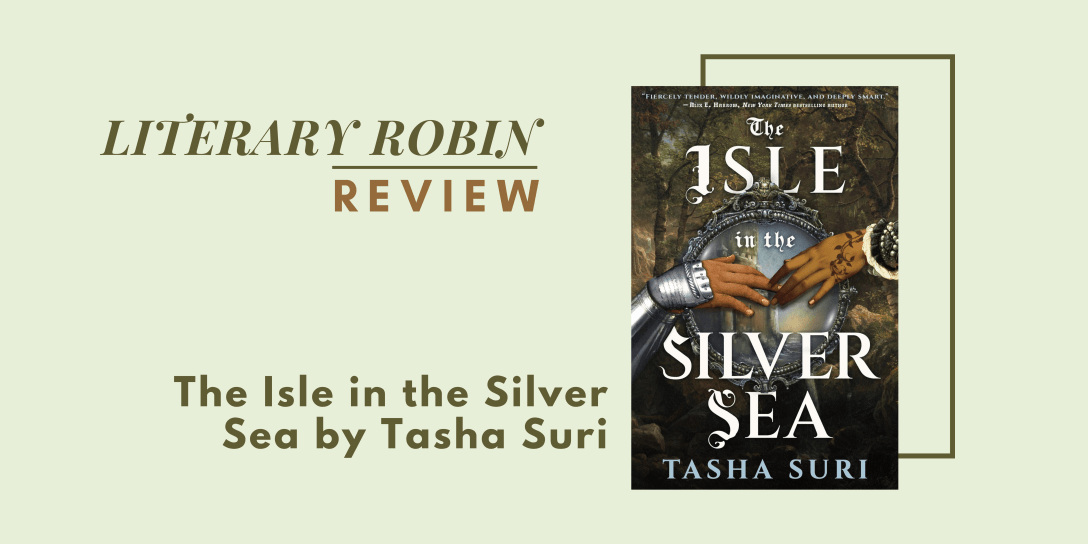
There is an island in the sea that subsists itself entirely on stories retold. Lifetime after lifetime the characters from these tales are reborn to play out the narrative in an endless cycle, else the isle shall fall. For some this means fame or fortune, but for others its life in an enchanted wood as the evil sorceress, or a knight doomed to first kill his great love before killing himself. When she first arrived on the shores of this great Isle, Simran knew she was destined to play out the tale of The Knight and the Witch as the powerful sorceress incarnate. In this tale, a knight and a witch are doomed to love and to die at the other’s hand. Simran will do anything to escape this fate, but a story is a powerful thing and not even a determined witch can outrun it forever. One fateful evening, Simran encounters Vina, a dutiful knight to the Eternal Queen and undeniably the knight set to win her heart and end her life. Escaping Vina’s clutches, Simran travels home where she immediately confronts a murderous assassin intent on ridding the island of the stories that fuel its survival—and her story is next. Stealing away her close friend from childhood, Hari, the assassin gives her a task: find out his name, and discover why he cannot die. Too insurmountable of a task to accomplish alone, Simran must ally with Vina, her knight and intended killer, to discover the true beginnings of the isle and if they can rid themselves of its deadly fate.
Ensnared by a story takes a literal sense in The Isle in the Silver Sea, in which an island endlessly rebirthed through stories is doomed to fall unless a reincarnated supply of characters follow a tale eternal—down to the very letter. Tasha Suri’s newest fantasy standalone brings queerness, sapphic lady knights, witches, and sprawling libraries into the center focus and goddamn if it didn’t leave me wanting to fall into a never ending cycle of story (wherein I fall for a hot butch knight). That and exploring old books in a library hidden away in an ancient forest. Romance and violence are a double edged blade in this novel, as a witch and knight face down a fate that can only lead to one thing: their death. But knowing your fate is to die does not mean you cannot yearn at unprecedented levels, and Tasha Suri takes that challenge at its utmost. A pale assassin stalks the stories that have let the island prosper, but it is a set of archivists serving as the very architects of history that feel the most sinister. Tasha Suri examines the preservation of history, from those determining the fate of certain narratives to the construction of a nation. In a fictitious Britain intrinsically tied to story, Suri swings her sword at myths, monarchy, and a vicious nationalism intent on controlling the narrative by any means necessary. Even riding a nation of its “otherness” and anything antithetical to its agenda.
The Isle in the Silver Sea poses an essential question: who decides what stories are told, how they are designed, and how they are disseminated—and what happens when there are those that threaten this goal. Britain stands as the bedrock for Suri’s inquiry where stories are a fuel, both in the literal sense to ensure the island’s survival, and for the rhetoric that is kindle for an ever burning flame of a nation. Archivists pour over a plethora of the island’s written information, preparing a narrative where nation is everything and the crown triumphs because incarnates do their duty. There is no room for heresy, or outsiders questioning the way forward, and they are dealt with in a quiet violence as they are cut from the narrative. Certainly what unites the lady knight books of this year is the examination of storytelling as a deliberate act of mythmaking, and how stories can serve as a stepping stone for higher powers forcing their sinister agendas. It’s not that stories aren’t beautiful— when they have the space to flourish unrestrained—but that those that are carved out for some higher purpose will in turn be wielded as a weapon. Epigraphs at the start of each chapter mark a process where archivists determine the acceptable tales for mass consumption, and those that are a threat to the narrative they’ve constructed. It’s deliberate, it’s violent, and it leaves no room for new stories to take hold. After all, what is a nation if not a collection of narratives molded together to suit its own image.
Ruled by a queen everlasting, this island constructed by story sees otherness as the true threat. No stories emerge from the outside, and no outsider is able to take up a prominent role within the narrative. Simran Kaur Arora, a witch from elsewhere, is thus a contradiction. A blip in the cycle that should have ensured a blonde and blue eyed witch play out the tale of The Knight and the Witch. But otherness is strength, as we well know. Against her deadly fate, Simran meets Vina, a valiant knight raised in service to the queen everlasting. If you’ve read a Tasha Suri book before you’ll be prepared for the friction between reluctant allies who maybe also want to kiss a little. That’s Vina and Simran in a nutshell, yearning for what cannot be while avoiding their feelings. When one’s fate is tied to their lover, to kill or be killed, you’d think there’d be no room for yearning. Tasha Suri is here to show us just how wrong that is—in fact it makes the yearning that much stronger. Between trekking through a disappearing forest, cutting down trees while exasperatedly saying your lover’s name, being captured by a group of rogue witches, and trying to save the isle, these two imbue romance. Some of my favorite passages with Vina and Simran are where the romance is unexpected and relates back to a crucial part of memory: the act or desire to document. This is essential to all that the Isle in the Silver Sea is trying to impart and just makes these interactions all the more romantic.
Tasha Suri’s legend crafting prowess is a vital part of The Isle in the Silver Sea: a story all about stories themselves. I’m not sure anyone else could have constructed such a glorious tale of reincarnated lovers breaking free from the narratives designed to control them and an island built upon stories. Ink stains, tattoos, old libraries, forests, and legends broken apart and remade are the scattered pieces brought together and unified within this novel. At the heart of this are the stories themselves, and Suri makes it clear: diversity of perspective and experience are what truly keep the island alive. In all parts of my reading experience, I viewed The Isle in the Silver Sea as a love letter to those who not only painstakingly preserve history but make it widely available. Not just the archivists, but the librarians who toil endlessly to help make information accessible (and are very much under fire right now). The Isle in the Silver Sea is another essential reading for the times we are in. Where inaccurate information is widespread and individuals are handed a narrative to suit someone else. In this regard, to question is necessary, and to seek the truth is a key part of resisting. The Isle in the Silver Sea shows just how affirming a story can be when entrusted to the right hands, and how dangerous when in the wrong ones. That otherness does not mean you cannot build a community or a story of your own, if you can at first pick up the pen.
Thank you to Netgalley and the publisher for providing the advance review copy.
Please note this review contains spoilers for the former books in this series, Shardless & Acolyte, and contains references to some of the events in this sequel. Read with caution.
⭐⭐⭐⭐⭐
Rating: 5 out of 5.
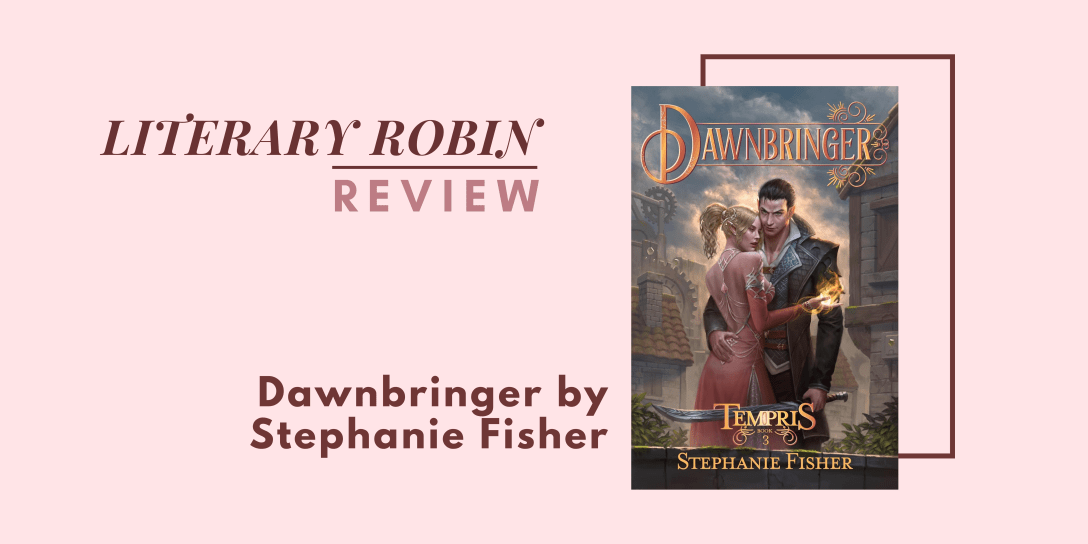
Talya Caro survived an entire year within Queen Azura’s time loop, honing her magic for the threat to come, of which she knows precious little. Now reunited with Skylen and his wounded and demanding brother Kato, the three have begun the long trek back to Ryme through the wilderness. As Taly, Skye, and Kato return it becomes imperative they maintain the narrative that Taly is human and not the last of the time mages once hunted to extinction. Still reeling from the Shade attacks, Ryme has refortified but now a plague is sweeping through the human populace threatening so much more than just the shardless. In spite of the unrest, Taly is finally back with Skye, her friend and great love, and her family, which would be enough if not for her magic placing a target on her back. For Skye the knowledge that Taly will always be hunted draws him down a dark path where he risks harnessing a bloodcraft power that could destroy him from the inside out, if he is not first caught and imprisoned. Something stalks the shadows biding its time, and with the Aion Gate close to alignment Taly knows time is the one thing she doesn’t have—before lines are drawn and she is forced to decide what side she’s truly on.
Just me and my emotional support thousand page fantasy novel I’ve waited five years to read against the world. Dawnbringer is the long awaited third installment in Stephanie Fisher’s Tempris Pentalogy, a fantasy series set within an island sundered by magic where time mages are hunted and citizens are left bereft of the magic needed to travel between realms. A hodgepodge of fae realms—modern and fantastical, time mages gone rogue, zombie-like threats, and mages of all kinds mark this rare romantic fantasy series. Encompassed in a steampunk-esque world with regency social strata, it’s safe to say Tempris is atypical of anything else within this genre. Five years since the book that started it all, Shardless, and the cliffhanger of its successor, and this third installment is unquestionably worth every wait. Simultaneously the most romantic and traumatizing thing ever, Dawnbringer raises the stakes with a deadly plot spanning worlds and our spunky hero Taly at the center, trapped between her old life and a predetermined fate. Stephanie Fisher reunites her lovers Skye and Taly on the brink, with dark bloodcraft magic taking hold and timelines colliding. With time magic in the mix, the tension and angst are dialed up to the max and nothing is more devastating than being left in its wake.
After five years and six rereads of the first two books in this series, who is to say I don’t have a soul bond with the entire Tempris series? From discovering it during the depths of the pandemic to now, every time I reread Tempris I’m reminded of how excellent it truly is. Stephanie Fisher has a firm hold on her world building, character arcs, and romance—a virtuoso painstakingly taking apart her narrative and layering in lore, timelines, and differing streams of magic. Dawnbringer takes everything from the first two books and elevates it in an overwhelming mix of romance and emotional devastation. And I expected nothing less from Stephanie Fisher. We have timelines colliding, interdimensional beasts, a big bad threat: Aneirin or “Bill” (a nickname only Taly could have come up with), and just general tomfoolery ensuing. In the time since the first two books were published we were left with many questions. Mainly: what is the great threat closing in on the island of Tempris. At long last we have an answer, and the threat is indeed cataclysmic. With Taly facing down her fate and attempting to have it all, Dawnbringer acts as a stepping stone for the next stage of this series where its titular character is the deciding force in a timeline set before her birth. The secret recipe in this novel is tension, tension, tension, and it can be felt in every facet of the narrative.
Dawnbringer proves that families that destroy together stay together—for the most part. Where the first two books dealt primarily with Taly coming into her identity as a time mage and reconciling a violent past that led to the death of her biological mother and her uncle, Dawnbringer is altogether different. Back in Ryme, Taly reunites with her adoptive parents, Ivain and Sarina, and her cousins, Aiden and Aimee, friend and general nuisance respectively. There are plenty of difficult conversations and the reorienting of previous dynamics now that Taly’s heritage has been made known, but we finally get to see this family unit be just that—a team. How else are you supposed to trick an entire population of fae into believing a time mage is not walking amongst them? Two characters stole most of my attention in this sequel: Aimee and Kato, the brash brother of Skylen. Kato has been an unequivocal favorite of mine even before this novel but I can now confidently say I am begging for a romance between him and Aimee. Something about arrogant men and the mean women who hold them in check is a dynamic I crave deeply. As Dawnbringer progresses, timelines layer and future versions of our characters flit in and out of the present. In an action packed final act, Fisher tests her found family in a violent stand against the Sanctifiers as the opening of the Aion Gate looms ever closer and Taly is caught between her past and the choice hinted at so long ago. It’s as painful as I anticipated and yet somehow that did not prepare me for the weight of it, nor the aftermath.
Five years separate the publication of Dawnbringer from the beginning foundations of the Tempris series, but you wouldn’t be able to tell from the seamless way Fisher integrates her three novels and dawns a new era. Everything in this novel is heightened: the fate of multiple worlds, the precarious balance of the central timeline, and of course our star crossed lovers, Taly and Skye. While her family faces down a plague and an organization dedicated to eradicating those that can manipulate time, a darker threat emerges intent on harnessing Taly’s magic. With a thousand pages (at least in the ebook), no amount of page time is wasted as Fisher dives into the inner workings of Tempris and begins to uplift her previously called upon events—like the reveal of what Taly was asked to say no to by Queen Azura all those months ago. The interjections from Cori, the lil homage to Orphan Black, and the cute moments with Calcifer brought on some necessary humor to outweigh the darker parts of this novel. Speaking of which, Skylen’s descent into bloodcraft magic tied as an extent of his love for Taly. That he would willingly twist himself from the inside out just to have a chance at protecting her was not just thoughtfully developed, it was romantic as hell. In Dawnbringer, the last of the time mages takes a stand and Stephanie Fisher proves she has the power to not only take this series to new heights but to new levels of pain inflicted upon her readers. This series continues to be far too underrated for my liking. I lament both the ending and the fact that I cannot commiserate with others on that incredible cliffhanger.
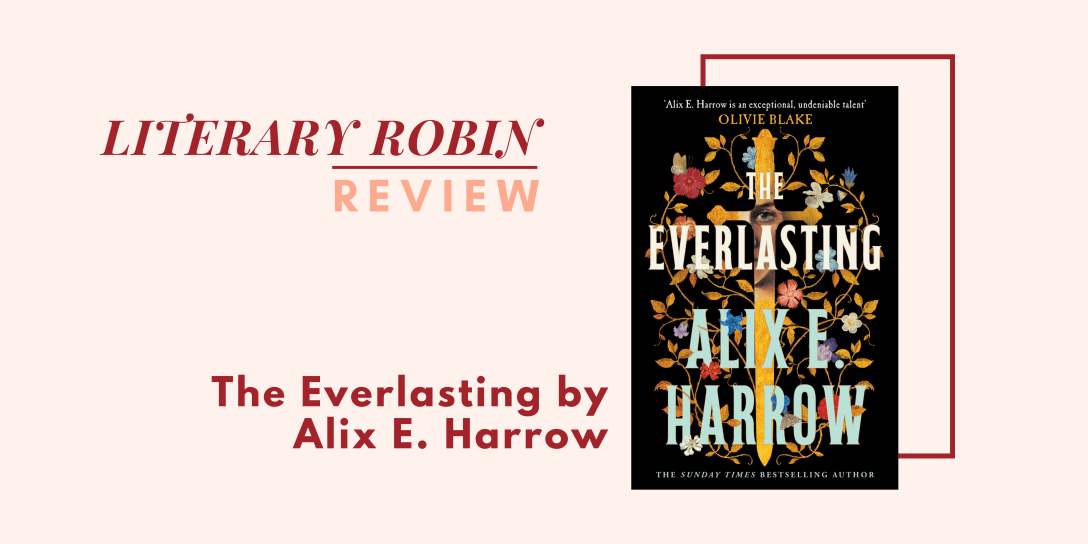
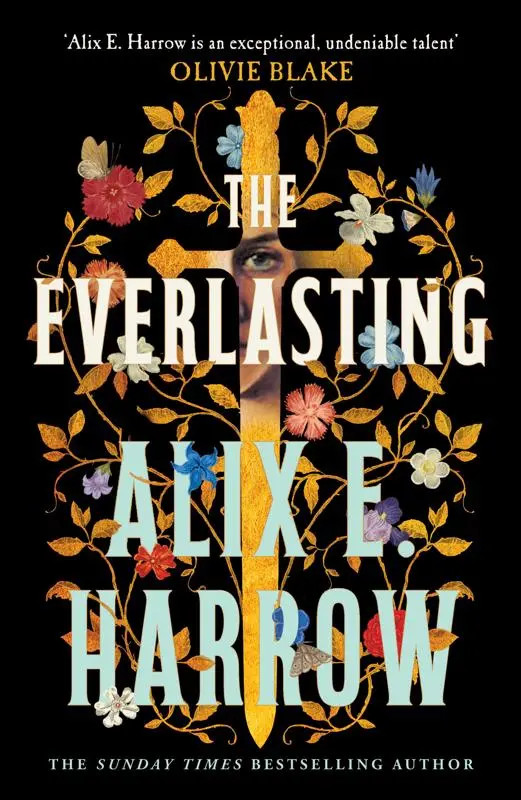
Her tale has been retold countless times, her sword a symbol for a nation unfettered, but where it all began is where it starts to get complicated. Scholar Owen Mallory has long been fascinated by the tale of Una Everlasting, a legendary knight who brought glory to Dominion through her quests and eventual death. One thousand years since and her tale remains entrenched in the minds of every citizen. Since then, wars have been waged, lost and won, to uphold Dominion and further its might. Returned from war scarred and irrevocably changed, Owen pours all of himself into researching the figure of Una Everlasting. In dreams, he finds himself lost in her story where he bears witness to her death countless times as if he was there. One day an unexpected item finds its way to Owen: a book—the book, which details the true events of Una’s life from the perspective of an unnamed but invested observer. Before he can get far into his research, the book is stolen, and Owen comes face to face with the person running Dominion behind the scenes, and her plan hinges on Owen playing a part he has evidently played before. Stabbed with a letter opener, thrust into the story, Owen finds himself beneath a tree with a sword against his neck, and the wielder of the blade is the woman that started it all. Una and Owen are an unlikely pair, but to break the cycle and wrest control of history they’ll have to hold fast to each other and a love that is worth so much more than the tragedy already written for them.
No, don’t be forever doomed to the cycle of violence where you die over and over again in my arms. You’re so sexy aha. Beneath the yew tree a knight and a historian meet, but they have no idea they’ve done this all before, the story is already written, and they’re doomed to follow it to its bitter end. Spanning the course of a thousand years in a never ending time loop, Alix E. Harrow’s, The Everlasting brings a lens on the inner workings of a nation and the bedraggled battle-worn knight as its Atlas, upholding its gilded promises. Like a beating machine with a rotten core, Harrow constructs the kingdom of Dominion and its stronghold obtained through a simple story, The Legend of Una Everlasting. In this tale an orphan becomes a knight, becomes a legend, raised to the side of a queen and struck down to further her reign. Told through various iterations of the deaths of Una Everlasting, Alix E. Harrow unfurls the power of stories, the cost of bearing witness by way of the pen, and the agendas of tyrants written into the very fabric of a nation’s history. The fantastical has its roots buried deep in Dominion and through this labyrinthine tale is the truth of a decaying land made known. The Everlasting is an Ouroboros, a tale with no true end or beginning, but for Harrow the cycle is a reflection of a violent nationalism and the story a sword to be wielded to further its complete and utter domination.
Tis the year of the lady knight and nothing pays testament to that quite like Alix E. Harrow’s, The Everlasting. Trapped in a time loop with a hot knight weary of her duty? A bespectacled scholar doomed to tell her tale and follow her to its bitter end? This is all I needed to hear to know that The Everlasting was going to be another unimaginable feat from Alix E. Harrow and one of the best new fantasy novels of this calendar year. Harrow had previously struck a deadly blow with her mere thirty-one page short story, The Six Deaths of the Saint, so I was already in the afterlife before I even began reading this extraordinary tale. There’s something so devastating about the inevitable, and in The Everlasting inevitability is the blade held to the throats of a knight and a scholar brought out of time to birth a kingdom and its sinister agenda. Contrasting the perspectives of Una, our knight everlasting, and Owen Mallory, a former soldier turned enthusiastic historian, Harrow constructs a story of heroic feats and the power in weaponizing the words upon the page. Fearlessly layered with innumerable stories within a story, The Everlasting holds a mirror to the narratives we cling to and the identities and ideation birthed through their telling. A story is a powerful thing and for the Everlasting the importance lies in its construction and every event continuing on in an endless cycle.
Told almost entirely through second person, The Everlasting allows the reader a chance to feel the catalyst of a story becoming myth. Myth-making is an active task within this novel, and part of that is the writing of the story, where every word is poured over and deliberate in its casting. Battles are embellished and the very essence of Una Everlasting pared down to prop up Dominion and one woman’s hunger. But it is Una Everlasting who truly upholds this nation. Her body bears the physical brunt of the wounds of the land and its assimilated peoples, her scars a reflection of the true violence being inflicted. Reading The Everlasting is to confront the abject pain of the writer addressing this figure, accompanied by a keen sense of loss in knowing that Una will forever be doomed as a martyr. Behind every myth is a person bearing witness and Harrow highlights the narrative as a reflection of the teller—a sum of their fears, wishes, and innate biases. For Owen: the desire to deny Una’s death in some manner, to make it mean something. Minor details within this tale aren’t so minor, and one of the more clever moments is in the character motivations and backstories that shift with every iteration of the cycle—leading to protests in the present day, rampant xenophobia, and calls to reinstate the monarchy. The justification in the othering of entire communities through hateful rhetoric isn’t just an intangible idea in the Everlasting, it’s baked into the story underpinning this nation and its citizens.
The Everlasting is not just an inventive fantasy novel, it is a crucial warning for our time. Lady knights, time loops, and an anxious chain smoking historian whose job it is to bear witness and love her across time is just the pinnacle of this narrative exposing the roots of story and laying bare the flawed parts of a nation. With so many intricate layers entangled in one novel, The Everlasting is as interconnected as the rings within an aging tree, but altogether much more convoluted with the recurring time loop of it all. There’s dragons, a mysterious yew tree, romantic yearning, and of course many occurrences of a tall buff lady knight wielding a sword and ending up on top. I would also be remiss to not mention my king Owen punching a fascist in the face. Thank you, Owen! The Everlasting takes a winding approach in exposing the power of a single story in burgeoning a nation’s fascism. Victims extend far beyond our star crossed duo with professors, battle-scarred citizens, and children bearing the brunt of Dominion’s harm. Owen’s perspective in being part of a country that will always hate some part of him is an agonizing truth to this story where rhetoric is not so easily changed even as history transforms. Concerning stories and their ability to affirm, justify, and embolden our views, The Everlasting returns the sword to the hands of a weary knight shaking off the mantle of a martyr to become something entirely of her choosing. Like most Alix E. Harrow novels, The Everlasting left me sobbing and I can find no desire to pick up the pieces and leave it all behind. I’ll be beneath the yew tree if you need me.
Thank you to Netgalley and Tor Books for providing me with an advance review copy.
Trigger warnings (majority provided by the author): blood, death, violence and injury, war, racism, homophobia, xenophobia, sexism, pregnancy and childbirth, animal death (off-page), dysphoric emotions about gender, imperiled/abandoned children
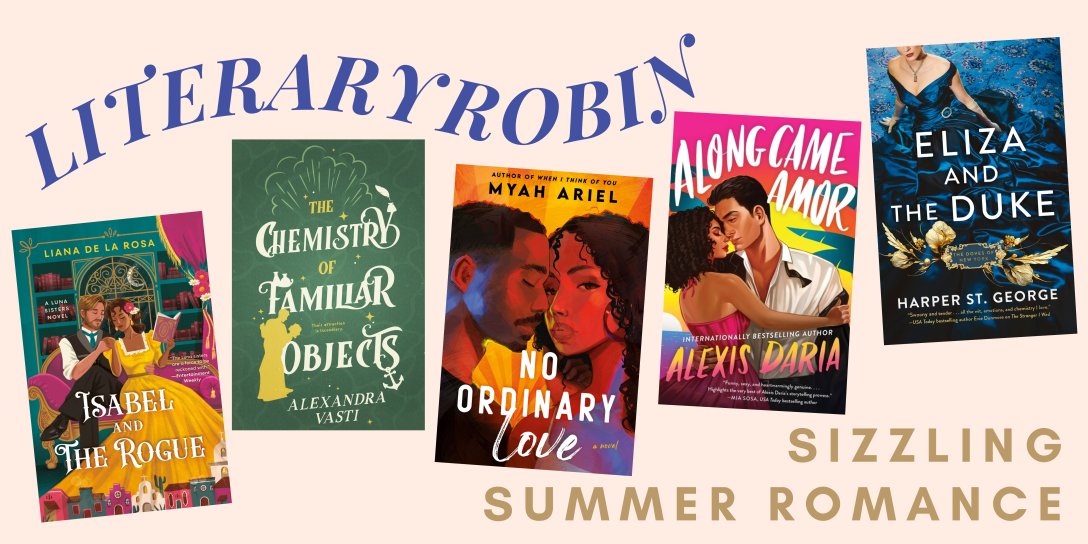
Summer, summer, summer, summer (please read in the theme of Disney’s High School Musical 2 hit song “What Time Is It”). Hello and welcome to another installment of my quarterly romance recommendations. It’s insane how many romance novels have published since last quarter so to honor that this is a bit longer than usual. I’m still catching up to many April/May romances since I spent the month getting ready to move back home. Picture the last few weeks being me just reading romance there are that many. Summer is already heating up and the romances are just as hot (hallelujah). We’ve got small town messy sapphics, rival bands, Persuasion inspired historical romance, and plenty of unconventional love stories. Also please ignore that I put an October romance in here. Just preorder it (trust me). Happy reading!
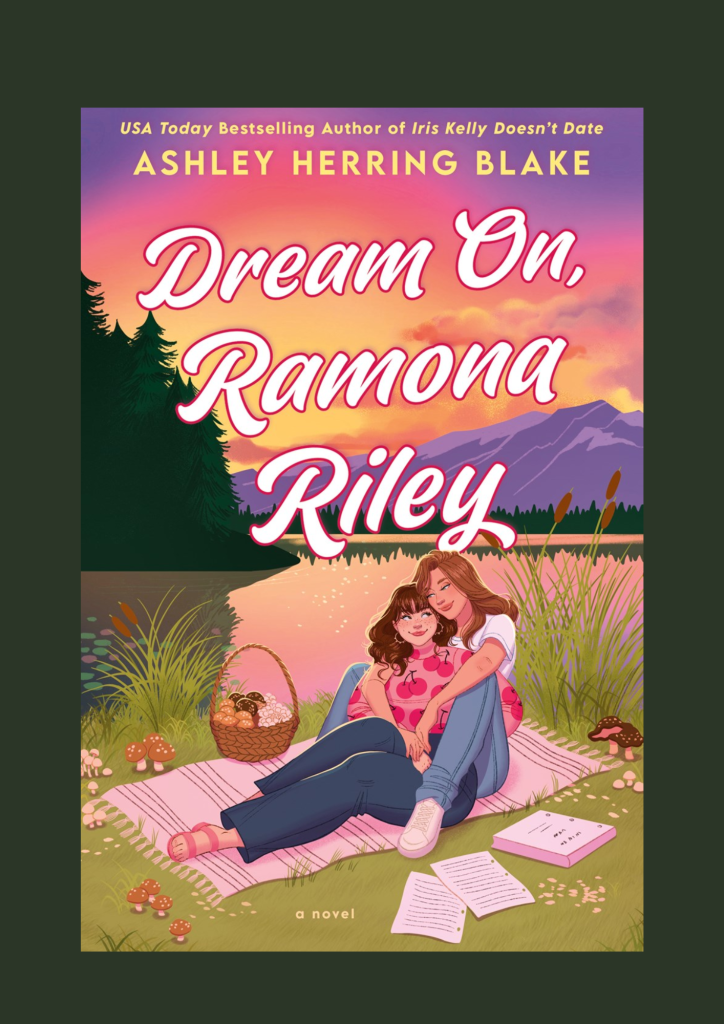
Dream On, Ramona Riley by Ashley Herring Blake
Ever since her mom left their small New Hampshire town, Clover Lake, never to return, Ramona Riley’s dreams of doing costume design became an impossibility. Shortly after, she dropped out of college to assist her recently injured father in raising her younger sister Olive, and for decades that was all she could see. Now Olive is set to graduate and leave for college, and Ramona is still stuck in Clover Lake working at the local cafe. But when she hears that the next big romantic comedy is set to film in Clover Lake, Ramona begrudgingly sees this as an opportunity to forge a way to her dream career. Unfortunately the film’s lead star is her first kiss and once crush, Dylan Monroe, and she does not remember a single thing about Ramona. Luckily Ramona can spend the entire time avoiding her. Right? No one is doing small town romance like the sapphics and Ashley Herring Blake. Dream On, Ramona Riley recaptures the small town atmosphere of her first series, Bright Falls, and proves it’s not just a lucky strike, but an innate talent Blake can bring to any romance. As a lover of all things New England, rom-coms, and messy bisexuals, this had all the shapings of an unforgettable romance, and it delivered from beginning to end. Featuring another delightful extended romance cast—like April Evans the tattoo artist (up next for book two), and some of Ashley Herring Blake’s hottest sex scenes (trust me), Dream On, Ramona Riley really is queer romance perfection. The core of this story sees caretaking as a sacrificing act, but also a hopeful one—a poignant theme which threads through Ramona’s second chance career and eventual love story. Dream On, Ramona Riley is for anyone who’s ever thought the words “it’s too late,” because it never is. I am elated for more messy sapphic love stories from Ashley Herring Blake!
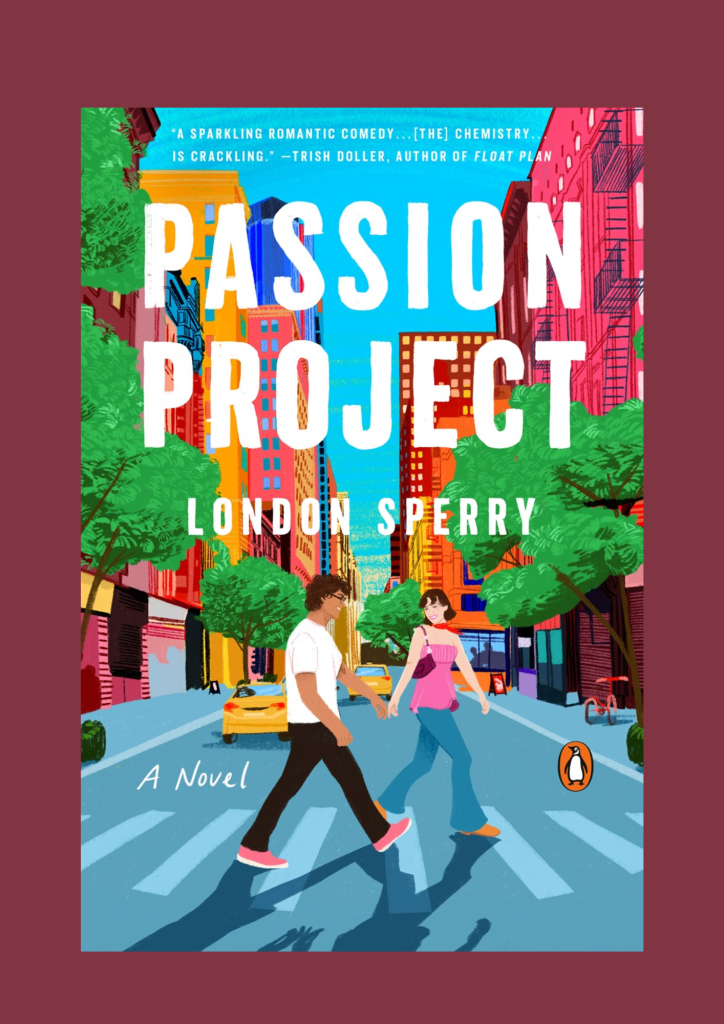
Bennet Taylor has no passion. She’s experiencing a passion deficit as it were. But who else is in their twenties working as a temp while desperately trying to forget the grief of the love of their life who they are pretty sure was the one. Pushed into a first date she didn’t want Bennet flees, only to run into her intended date, Henry, hours later where she confesses the grievous sin that she is not ready. She even admits to her passionless state, and Henry agrees he’ll help her find it. Now they’re having adventures all over the city, and Bennet and Henry realize they’re not just good friends and passion aficionados, they’re each other’s next chance at the love they’ve been waiting for. Disaster over pasta carbonara begins this hopeful romance debut from London Sperry that leans heavily into works in progress finding love not in spite of their circumstances but because of all that they are. New York City is very much a main character as Bennet and Henry traverse the boroughs and the nooks and crannies in search of ever elusive “passion” while avoiding unexpected feelings. Now with a founding father name like Henry Adams you wouldn’t expect a man to be so effortlessly romantic and capable of such yearning, but Sperry has written the romantic love interest of the year with Henry. I mean thespectacles?? Come on! Bennet Taylor had such strength while in the presence of this man I commend her for all of it. The journey of Bennet and Henry out of grief, to friendship, and then love is overwhelmingly gentle. Passion Project has a truly beautiful message baked in—that we don’t really have to have it all together to be worthy of love and happiness. The focus on depression and grief is one we journey on alongside Bennet, and it is as important as the love story. Passion Project doesn’t take the stance that love begets an end to these things, but we love in spite and live to heal day by day. Find your passion with London Sperry. It’s as easy as reading this novel.
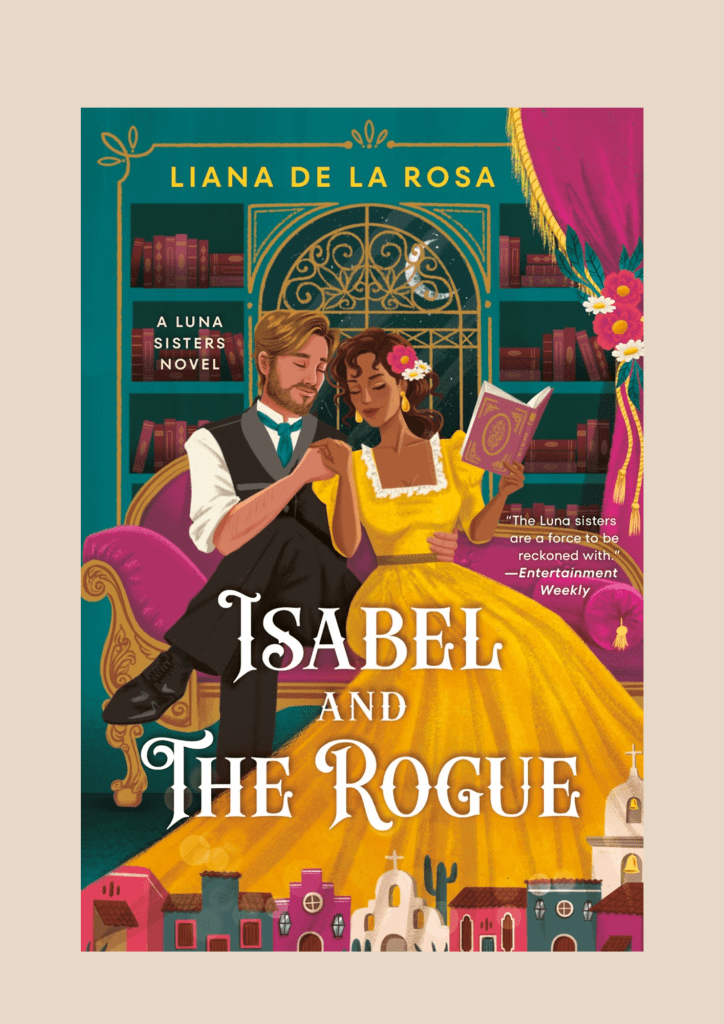
Isabel Luna Valdés has made being overlooked a strength. As the unremembered third Luna sister she uses her talents to gather intel to aid Mexico in their fight against French occupation. Wallflower bookish Isabel has had no issue sneaking away from the various balls and society gatherings while her sisters entertain, that is until Captain Sirius Dawson starts to take notice of her disappearances. Sirius is a spy himself, for the British Home Office, and in taking concern over Isabel is in danger of losing it all for the chance to aid her. When Isabel unearths something that could transform the entire occupation she has the ability to finally provide something concrete, but what will she risk to help her country if the cost is her heart. Bookish women being loved for who they are is actually something that is so personal to me and that is essential to Liana De la Rosa’s, Isabel and The Rogue. Isabel Luna Valdés, the woman that you are! This follow up to the first Luna sisters novel sees a wallflower use her place in London society to uncover correspondence to aid her country, bringing a flawless addition to the rake and wallflower pairing. Liana De la Rosa has captured the spirit of each of the Luna sisters in their respective novels and Isabel’s feels like a comforting love letter to the spirited, bookish heroines finding inner strength and a place of their own. Sirius and Isabel are a well matched couple and their chemistry is fierce. I’m still thinking about the desk scene and probably will be for all time. The glimpses into London society from the perspective of three Mexican heiresses, the kernels of sisterhood, and the insights into Mexican history is what makes this one of the most unique historical romances out there right now.
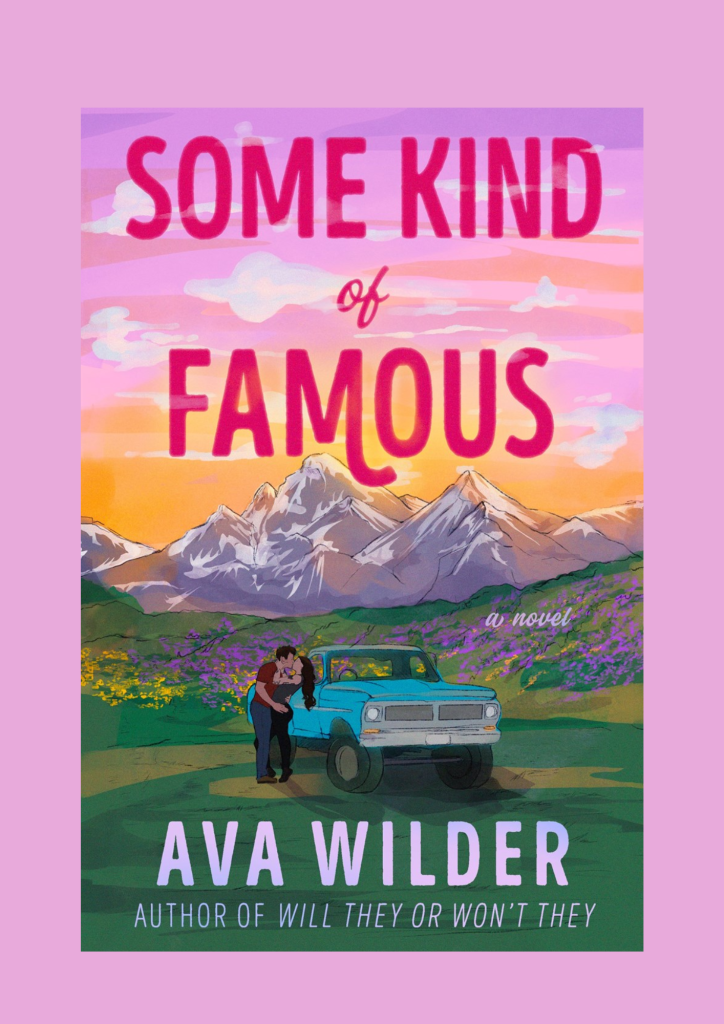
Ten years since her singing career crashed rather spectacularly and two years since leaving behind a failed romantic relationship, Merritt Valentine is still in Crested Peak, the small Colorado town where her twin sister has elected to set down roots. Now with a baby on the way, her sister gives her ample notice that she will need to find another place to live so they can make room. Luckily, Merritt has a property she purchased not long after her arrival in town, however it needs quite a bit of renovating before she will be able to move in on a permanent basis. But getting things up to code will require her to engage the services of one Nikolaos Petrakis, local contractor, jack of all trades, and the man whom Merritt is hopelessly infatuated. I don’t think I’ve fully been captivated by a romance novel as quickly as I did with Some Kind of Famous. Maybe it’s just the setting, and the company of such wonderful characters but I quickly fell in with this on the most extreme level and it’s safe to say the rest of the novel carried it through. What’s so endearing about Some Kind of Famous is the extent it is emphasized that our two main characters are works in progress—two people still figuring life out but scared to reach for love with two hands when things aren’t perfect. Fear of the past is a big theme for Ava Wilder, and it imbues an immense pressure on both Niko and Merritt as they pursue a romance. Some Kind of Famous is about finding ourselves after setbacks and not closing ourselves off to connection just because we’re scared of trying again. The ups and downs are vast, but this is an exquisite addition to the celebrity romance space. Prepare to fall as hopelessly in love with this one as I did.
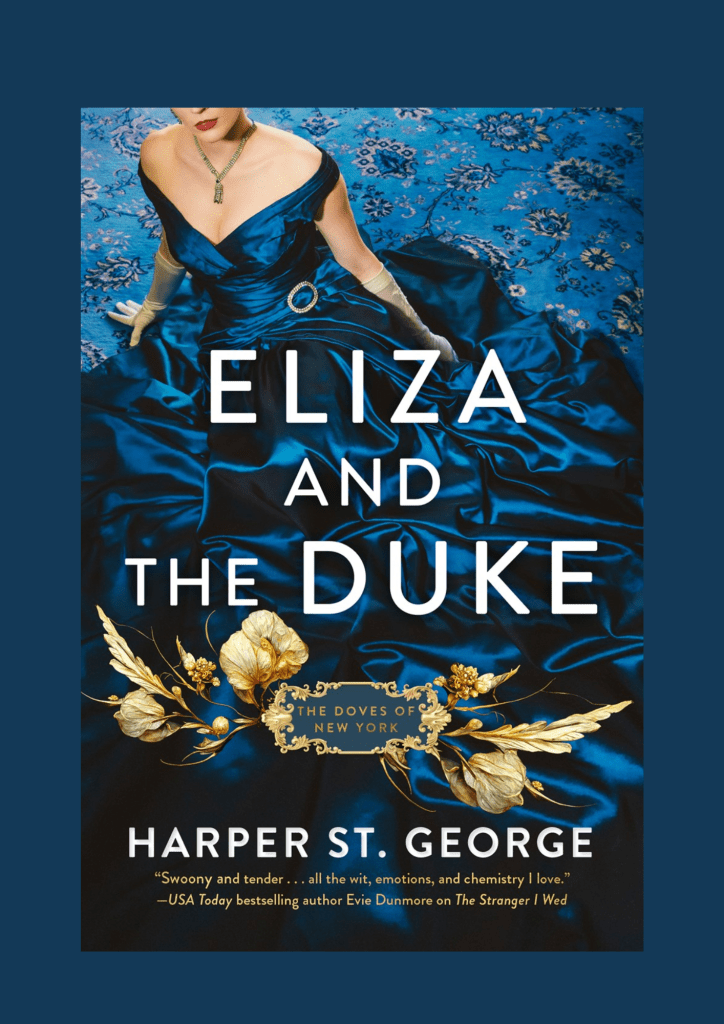
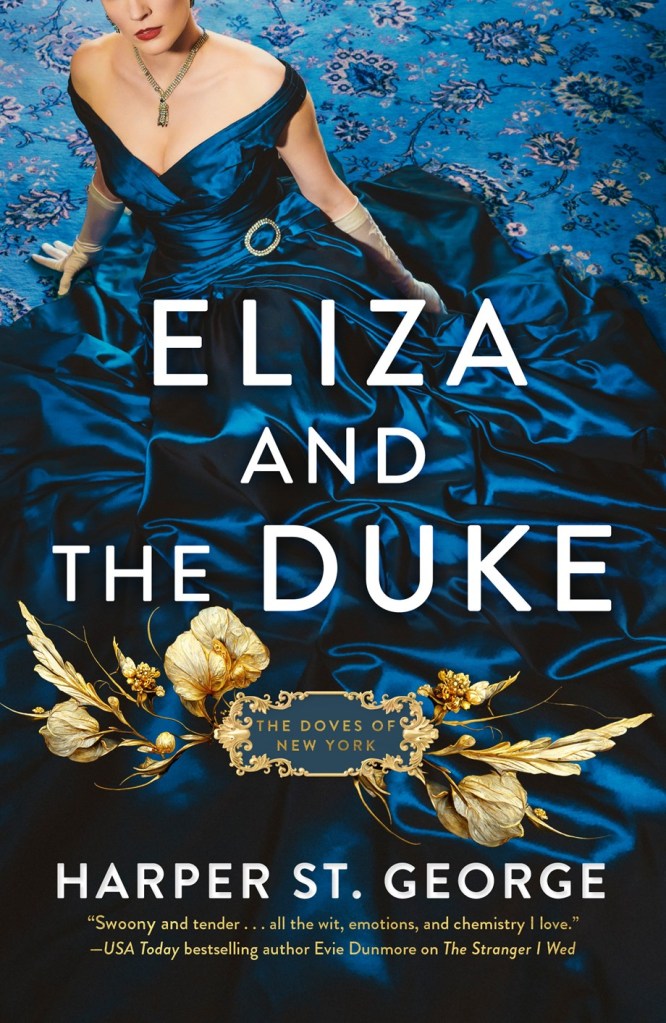
Facing down a loveless marriage to a man flaunting his dalliances across Europe, American heiress Eliza Dove wishes for one night to experience the real side of London. Her ticket in is Simon Cavell, Montague Club’s manager and the celebrated boxer of Whitechapel known only as “The Duke,” after a chance meeting leaves her an opportunity to convince him of her plan. All Simon yearns for is securing a life for his niece currently held by the man whom he owes a great debt, but soon all he yearns for is her, Eliza, the impossible heiress. Between the dark streets of London, townhomes, and tension filled carriage rides, soon it is impossible to deny that the only thing Simon and Eliza want is a life side by side, but that is as impossible as the feelings running between them. There is no power on earth strong enough to tear me away from a good historical romance, and Harper St. George is one of the strongest talents in the genre right now. Her Doves of New York series first ensnared me with The Stranger I Wed, but this follow up has outsold everything that came before. Eliza and the Duke concerns two people who never thought they could be loved—Eliza the hopeless romantic, and Simon the strong and silent boxer who made a life through his fists, finding unconditional, lasting love. Eliza and Simon are two individuals you can’t not root for. With Persuasion levels of longing, their connection is not only palpable, but grounded against their pasts leaving space for a beautiful romance to develop and plenty of angst to savor. And what a layered romance this is. Like that carriage scene? *fans self to no avail*. Eliza and the Duke is certainly for the Jane Austen lovers amongst us and it’s a historical romance that left me more than a little unhinged (a glowing commendation if there ever was one).
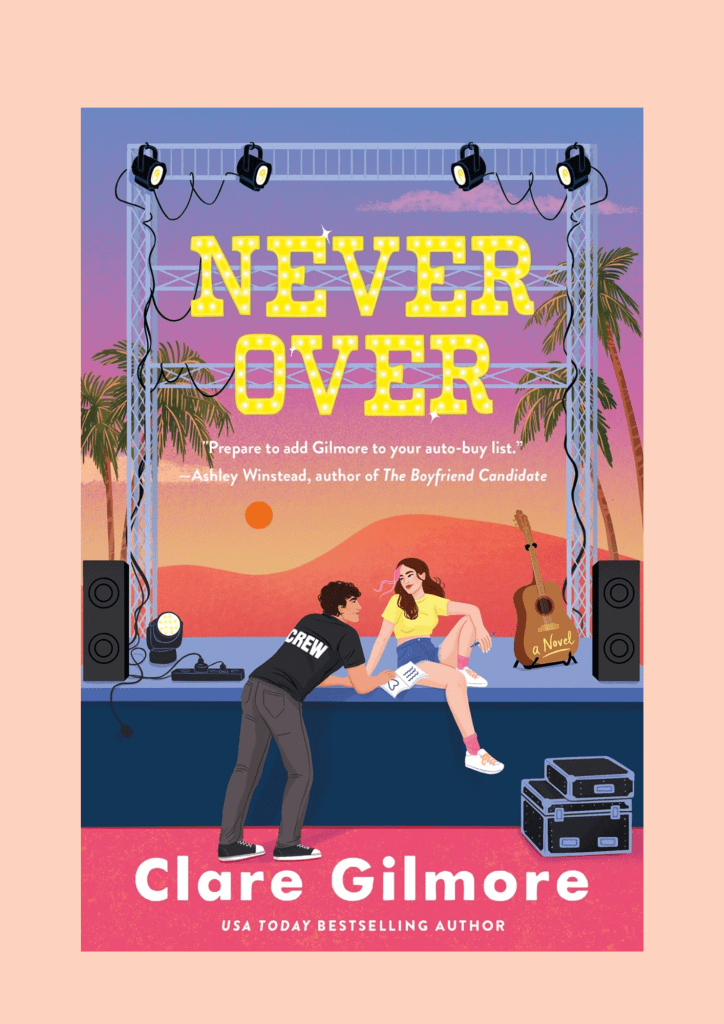
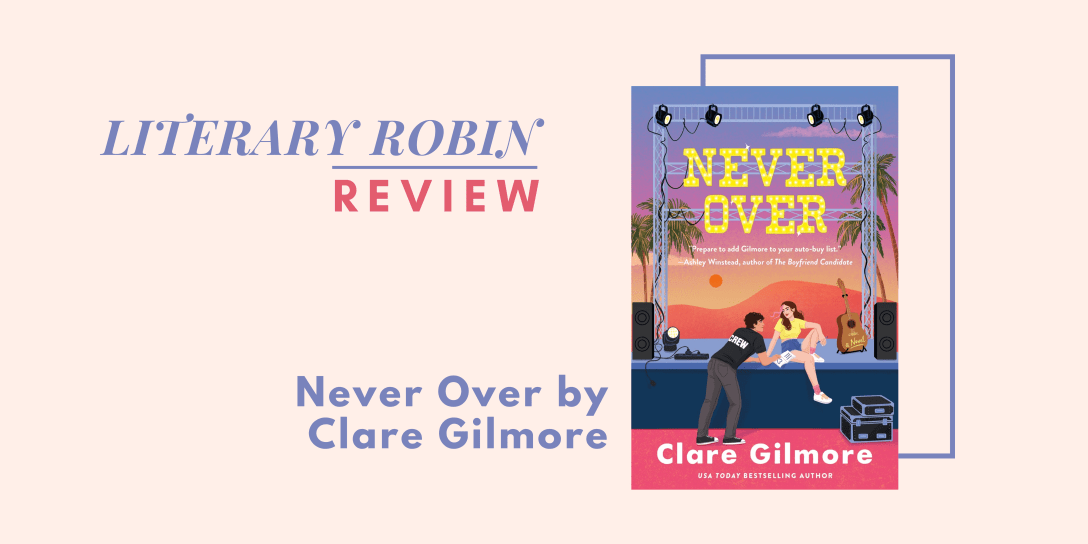
When songwriter Paige Lancaster meets with one of Nashville’s premier music publishers for a potential contract, she never expects them to leave her with a tremendous task of writing new songs. Paige takes this songwriting challenge to the extreme and enlists Liam Bishop, her ex, to aid her in the task—they’ll start dating again while she joins him on tour, and then when the romance is at its height, he’ll break her heart. Yet all this re-breakup plan does is force Liam and Paige to address the past, why they broke up, and if they have the courage to try it all over again—for real this time. Never Over is second chance romance goodness, written with aching emotion and lending voice to the weight of grief and how far we will go in pursuit of our dreams. Messy twenty-somethings still figuring out life is Clare Gilmore’s bread and butter, and her third novel is arguably the best of the best and the messiest of the twenty somethings. Dual timelines give rise to a second chance love story between determined songwriter Paige Lancaster, and Liam Bishop, once lauded baseball pitcher now concert manager on the tour circuit. Never Over is a love story centered around life on tour, bookstore meet cutes, baseball training, and a heartwarming love letter to Bristol, Tennessee. Clare Gilmore has completely shifted what constitutes an excellent execution of the second chance romance trope with Never Over and I am in complete awe of her talent. This feels like a book written for the overlooked younger children finding their voice and their place in adulthood after being lost in the background for so long. At the same time, the danger in letting yourself be defined by one thing and what happens when that dream abruptly ends. Like the most addictive sort of love song: Never Over is a romance to pour over, read, and repeat. Healing and cathartic all in one note.
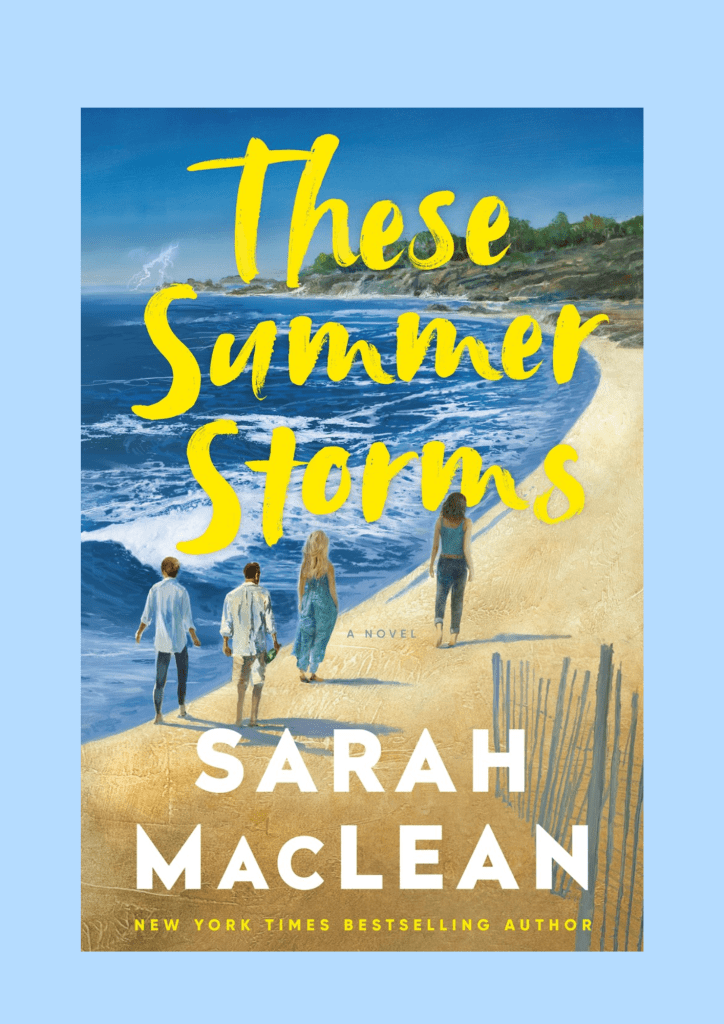
Born into a family of obscene wealth and privilege, Alice Storm was never afforded her own path, and was subsequently exiled for choosing one of her own. Upon the death of her father, Franklin Storm, Alice is called back into the fold to mourn his passing and celebrate the legacy of a tech industry titan. Stuck on the family’s private island off the coast of Rhode Island, Alice and her siblings soon face the strings attached to their inheritance and the final game their father constructed from beyond the grave. The catch? They have to play or forfeit the millions they hoped to inherit. With one week to play the game the past is never closer to the present, and family grievances could be the deciding force in who wins the game and who is out before it can even begin. Sarah Maclean never saw a structurally sound building or complicated family dynamics she couldn’t mess with and I, as always, am here for her meddling. These Summer Storms is a far departure from Maclean’s typical historical romance ventures, but nevertheless a clever twist on the corporate family power struggle. Maclean brings together her flawed family—the straight and narrow eldest with a secret life, the arrogant successor convinced he will inherit the crown, the exiled artist, and the crystal & astrology obsessed youngest daughter, all vying for their inheritances. These Summer Storms is Succession on steroids, complete with all the spiteful feuds and particular personalities that clash and make these stories so entertaining while exposing unique experiences of grief and family. It all comes crashing down rather spectacularly (quite standard to Maclean) with reconciliation not so far off and even the fiercest of storms finding harmony.
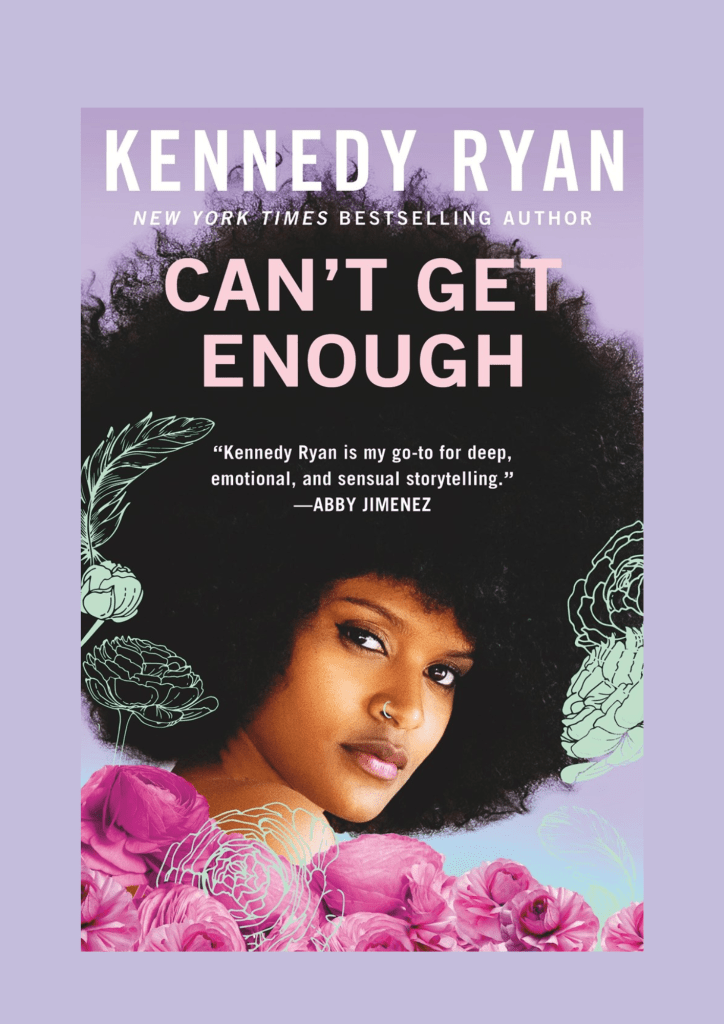
Hendrix Barry has it all, a successful business, incredible friends, and a supportive family. Yet as her mom’s dementia worsens, Hendrix knows she’ll need to step up more than she already is, and balancing it all could cause the precarious house of cards that is her life to finally crumble. When she meets Maverick Bell, a charming self made billionaire, Hendrix knows she’s in trouble. Unfortunately as the ex of a current client, dating Maverick breaks every kind of girl code so Hendrix backs off. If only Maverick understood the memo, pursuing Hendrix with the determination of someone who knows what he wants, and is used to getting it. With their undeniable connection and chemistry to consider, giving in may mean finally reaching for the love she’s been denying herself, but of course that’s easier said than done. I’ve been eagerly anticipating the conclusion to Kennedy Ryan’s Skyland trilogy from the moment I finished, This Could Be Us. Hendrix Barry has this larger than life quality that leaps off the page and I knew her book would be divine from the previous books alone. Kennedy Ryan’s familial connections to caregiving deepens a story centered strongly around caring for aging parents. Ryan’s nuances around caring for a parent with dementia are carefully done, how one can feel like a failure for making mistakes and at the same time feel selfish for enjoying things outside of it. Hendrix handles it all with such grace and she deserves to be taken care of—which is where our love interest Maverick comes in. His attentiveness and understanding to Hendrix as she struggles and triumphs is one of the most romantic things. These two really were partners to each other in everything which is peak romance to me. Kennedy Ryan really is an incomparable talent and Can’t Get Enough is irrefutable proof.
Charley Beekman thought she could figure it all out, but after her divorce and her stalled legal career, things have undoubtedly changed. Surprisingly, that’s not her biggest problem. When her impulsive younger sister announces her imminent elopement to her ex boyfriend and friend from childhood, Charley only has one course of action: break off the wedding before they hurt each other again. Who should join her in the road to breaking up the wedding, but Ethan, her childhood best friend. Ethan (unsurprisingly) doesn’t really believe in breaking off the wedding, but a road trip to rekindle their friendship after a falling out is worth anything, even if it requires recognizing the feelings they have avoided years on. Anywhere With You is for the childhood friends to lovers fans wrapped up in a road trip gone wrong and a well intentioned but disastrous breakup plan. Former best friends Ethan and Charley have this intense, raw chemistry that sent me spiraling as they are forced into close proximity in the most bizarre ways (like a truck stop shower scene that is unusually heated). Alongside a road trip of reconciliation and feelings revealed, Palmer flits back to the past, uncovering the complicated ties between these two and where they are headed. Coupled with their pasts, Palmer shows why Ethan and Charley work together and the freedom afforded in them finally giving into their feelings. Ethan begging, tortured for Charley and Charley unlearning some of the cynicism stemming from her parents’ relationship, in that regard. Anywhere With You is the epitome of the friends to lovers trope. For every person still figuring out their plan, on a road with all the dips, turns, and returns that life affords.
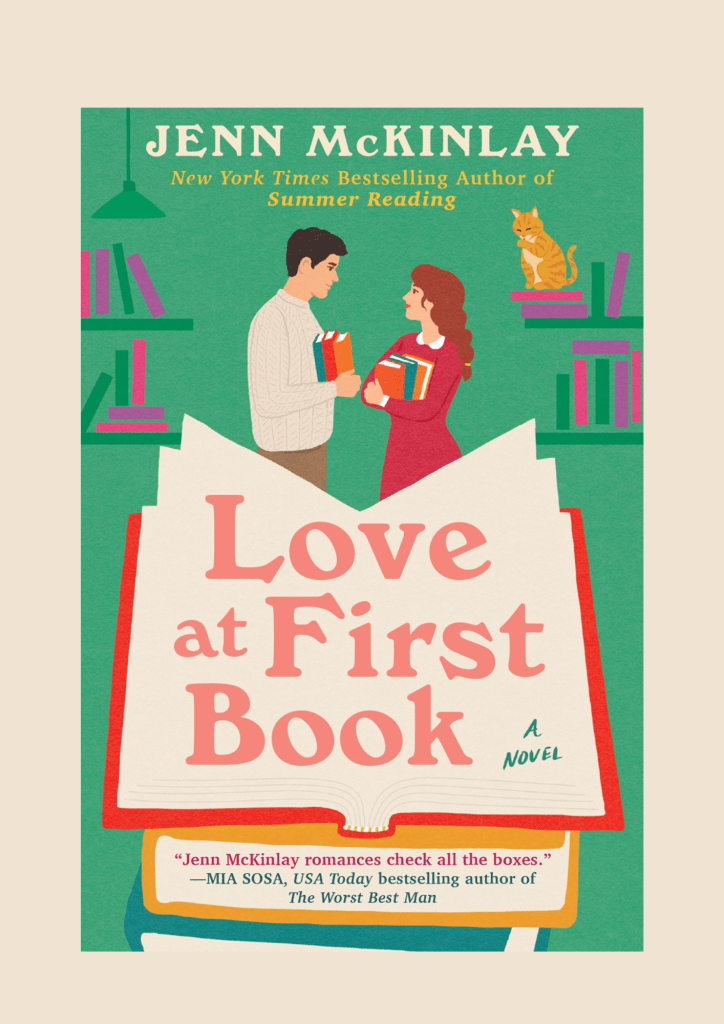
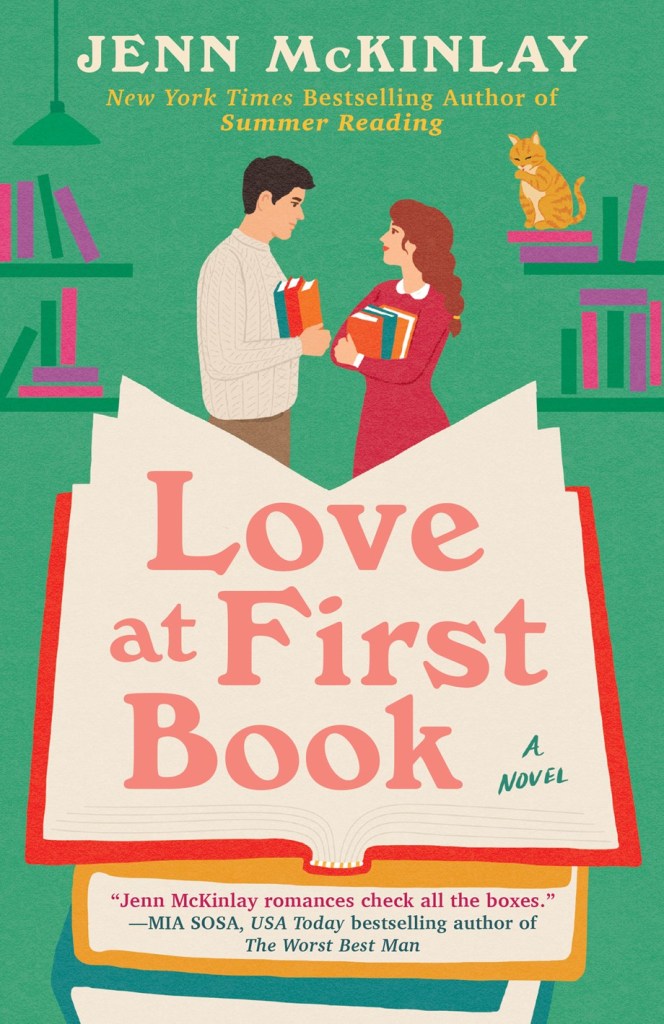
Librarian Emily Allen has been stuck for too long on Martha’s Vineyard living under her mother’s thumb that she’s prepared to do something drastic—like moving all the way to Ireland to work for her favorite author from childhood. Siobhan Riordan’s acclaimed children’s fantasy series charmed the masses, but the tenth book has yet to be written due to her debilitating writer’s block. Emily’s job is to help her finish the manuscript while pitching in at the bookstore alongside Kieran the overly protective, grumpy bookstore manager—and Siobhan’s son. As Emily helps Siobhan complete the manuscript she learns Siobhan’s greatest secret, and it could ruin her resolve at her own next chapter. Shelve this under, made me sob uncontrollably (and in the would recommend category). There are few books out there that have the power to make me bawl and Love at First Book is one of them. Now on the surface this appears to be your standard romance novel, with a bit of hate to love around an American transplant living in Ireland and the grouchy bookstore manager who wants her gone (classic), but wow is this anything but. Love At First Book explores the transformative power of literature and how writing offers us the chance to reconcile the past while looking to the future. This book is about old and new beginnings as we follow a young librarian fleeing her narcissistic mother to a new life, a terminally ill writer trying to complete the final book in a series that was a love letter to her son, and a bookstore manager desperate to keep his life intact. Love at First Book showcases the power in the written word in bringing unlikely people together, to better themselves and find community. It’s romantic, tragic, and an aching portrayal of loss. If you’re in need of a good cry look no further.
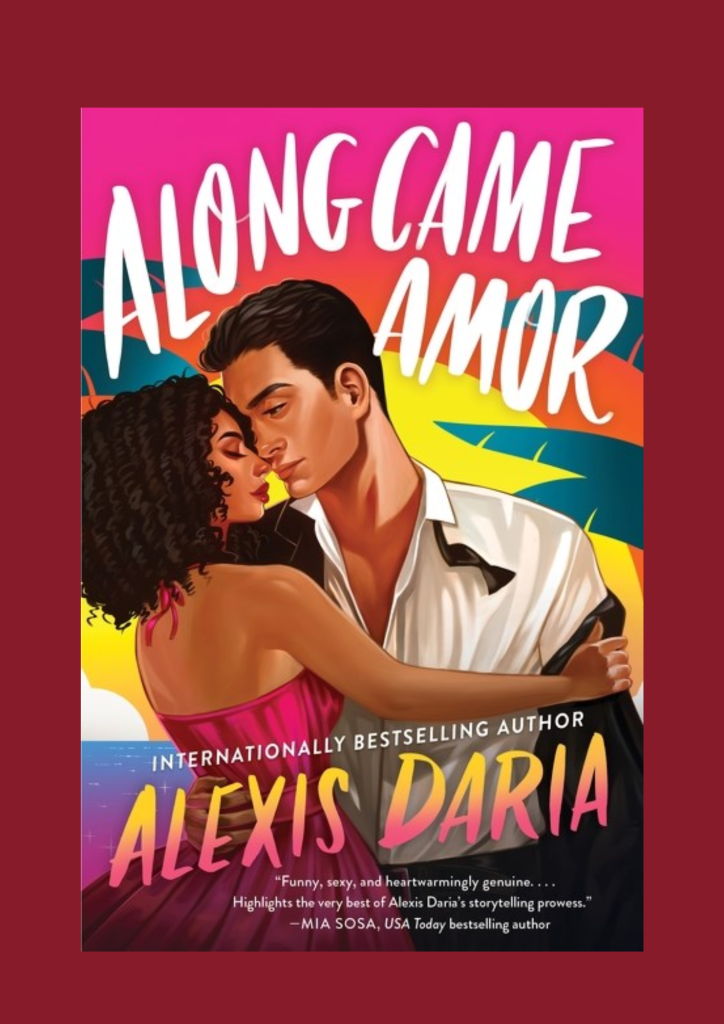
Now that her divorce has been finalized, Ava Rodriguez is a free woman. Alone at a teaching conference she seizes the chance for a one night stand with the incredibly handsome Roman Vázquez, the self made businessman who owns the hotel, after he flirts with her at the hotel bar. Their scorching chemistry doesn’t just lie in the bedroom, and soon neither of them want to leave it at just one night. The catch: Roman will have to wait until Ava reaches out to make contact, and they won’t tell their friends. Months on and the fling is working perfectly, albeit with a few rule breaks, but when Ava discovers Roman is the best man to her friend’s fiance she’ll have to determine just how much she’s willing to break her rules for the chance at being his. Permanently. Along Came Amor is the long awaited third novel in Alexia Daria’s Primas of Power trilogy. This book is for the people pleasers in every regard and a cautionary tale for anyone precariously balancing every aspect of their life to appear perfect. Our heroine Ava is the victim of these people pleasing tendencies, always striving to be the perfect everything for anyone—lest they see the truth and cast her aside. Her liaison with Roman changes everything as she finds someone who loves and cares for her exactly as she is. Now Roman is the perfect love interest for a people pleaser because he was down bad for Ava from their very first meeting. Literally screaming, crying, throwing up for the chance that she reaches out to him after their one night stand. Roman and Ava are hilariously compatible and it’s very entertaining to watch them dance around each other for almost 500 pages. Along Came Amor is without a doubt the best read for the summer, featuring thirty and forty somethings attempting to have it all, next level sex scenes, and people pleasers leaving perfection behind in favor of authentic connection.
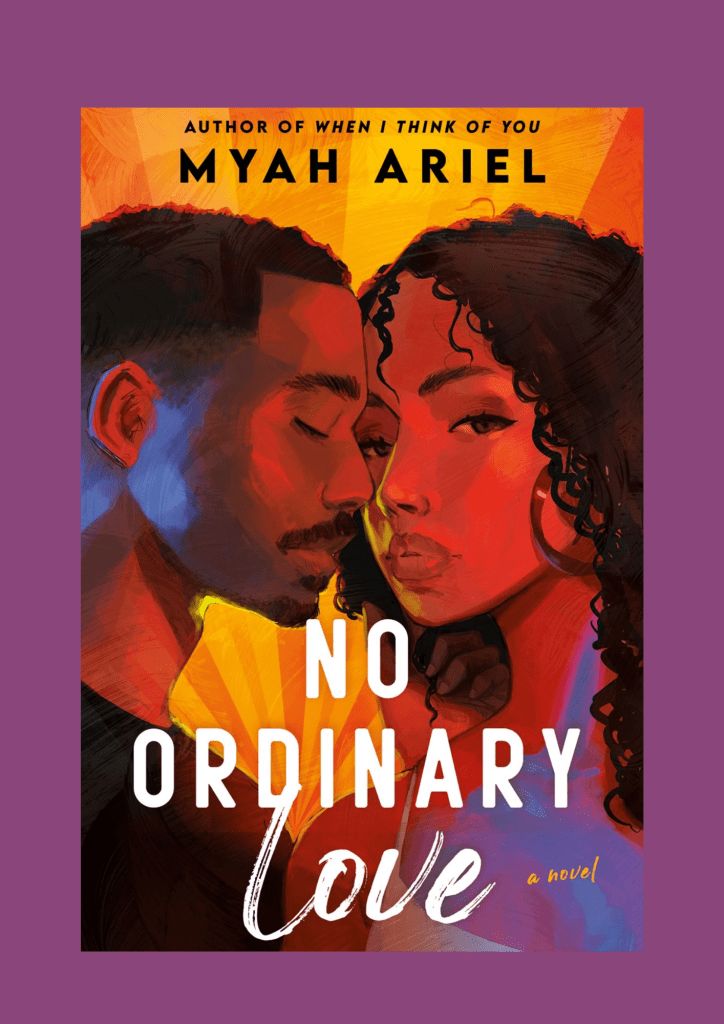
Acclaimed popstar Ella Simone built a career around music in small part due to the influence of her husband, Elliot Majors, a bigtime music producer. Now Ella is considering a shift in management after Elliot’s constant cheating leaves her with no choice but to end their marriage. Ella’s voice stands on its own, but to win out against the prenup she signed eight years ago and maintain control of her music, she’ll have to be on her best behavior. Enter stage right Miles Westbrook, a pro baseball player and Ella’s unfortunate downfall. After a wardrobe mishap and their palpable chemistry live on stage at an awards show, the rumor mill is indeed churning. Luckily, Ella and Miles’ PR teams have a plan to capitalize on the attention and it involves spending even more time with a man who has the potential to become a real problem for Ella’s already fragile heart. No Ordinary Love is an unforgettable romance novel drawn forward by an inner music that moved me from the very start. Myah Ariel knows the appeal of the celebrity romance and the slow burn and said you can have this entire book….as a treat. From multiple fronts, No Ordinary Love interrogates the entertainment industry, legacy, and personal beliefs and at the center of this is Ella Simone who embodies it all—control, ambition, and a deep love for her craft. Not just a character to admire deeply, Ella is one to root for as she casts off a toxic partner and works to build the life she wants for herself all while pushing the boulder uphill. Miles is the perfect harmony to Ella and his unconditional love and support was the grounding this story needed to become a true romance classic. Myah Ariel showcases the power in two driven and somewhat single minded individuals letting go just a little to find the music side by side. Where the bonus is falling in love.
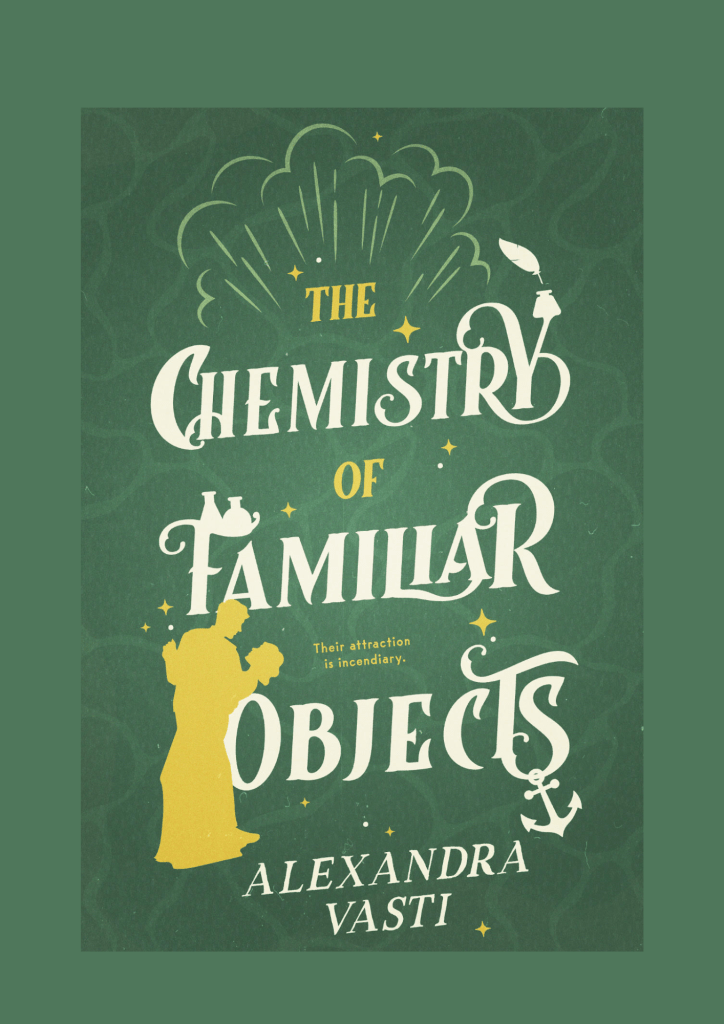
The Chemistry of Familiar Objects by Alexandra Vasti
On 57 Gresham Street the true showdown is occurring. For Emmeline Starling, the building is the perfect space to test her skills in chemistry, but on the ground floor Robert Vane, a children’s book printer is one explosion away from a complete meltdown. Years of towing the line and stewing in their personal hatred for each other all ends when a dangerous concoction of Emmeline’s is stolen. Together, Emmeline and Robert are entangled in a dark conspiracy to weaponize her compound and the only way to uncover it is to work side by side—if they can do so without first burying the hatchet directly in the other’s chest. What would you say if I told you a real love language was blowing stuff up in front of a man who disdains you? What then? The Chemistry of Familiar Objects features all of my favorite things: man who is so sick of a specific woman he could vomit (but really), woman who can’t stop blowing things up/lighting things on fire, and love stemming from schemes and conspiracy. Alexandra Vasti is an undeniable power within the historical romance space, whether that’s writing full length novels or bite size novella adventures, and this novella is her pièce de résistance. How else does one craft something so profoundly moving and romantic all in under two hundred pages without losing any real depth from the page count. Em and Robert were (regretfully) in cahoots until it transformed into in cahoots (affectionate) and the entire journey is so delicious I could scream. Vasti doesn’t lose up on any of that wonderful romantic tension she is known for, nor the jaw dropping sex scenes that will be seared into my brain for all eternity. The Chemistry of Familiar Objects is a masterclass in intimacy, vulnerability, and that kernel of hate to love that moves all of us one way or another. Also chemistry. Lots of chemistry!
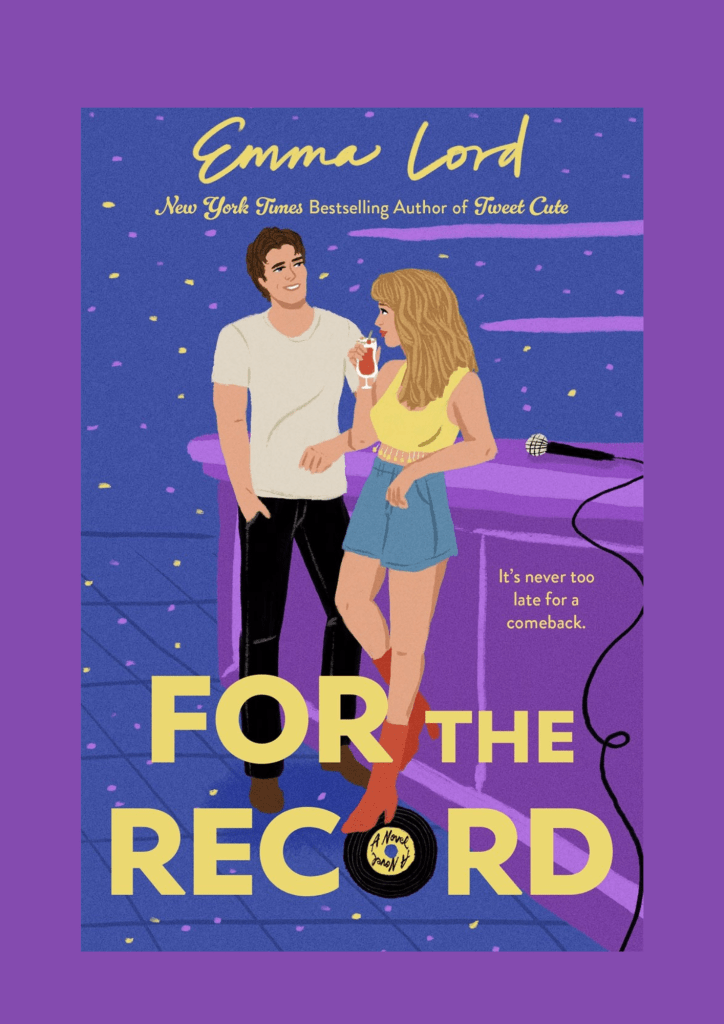
Once music rivals now complete strangers, Sam Blaze and Mackenzie Waters captivated their listeners with their chemistry on stage and their rumored romance. Several years since leaving their respective bands, Sam and Mack are independently striking out on their own, if only they can convince their labels that it’s a good idea. To secure the next stage of their singing careers, Sam and Mack agree to team up on a joint album in a comeback that will drag their past back to the present. Reviving the music and their undeniable chemistry could secure them a future in music if wounded hearts don’t first prevail and they can remain on the good side of the spotlight—no matter the cost. Effortlessly funny, charming, romantic, you name it, Emma Lord excels at it all and her second adult romance is no different. For the Record is a nostalgic rivals to lovers’ romance that made me yearn for the music while reminiscing on the days of bands long past. Emma Lord immediately swept me up in the drama of the bands Candy Shards and Thunder Hearts (think edgy punk rock group versus pop girl trio) and their notorious rivalry. One thing that always gets me with Emma Lord’s writing is the effortless way she brings readers into the lives of her characters and those orbiting our main duo. Even though we see little of them, the bond between Mackenzie and her former band members Hannah and Serena is quite the standout, as was Sam’s bond with his son and family. The romance still takes center stage here and god did Sam and Mackenzie bring on that unbearable romantic tension that made me want to bonk my head against the wall. Emma Lord knows how to write a romance and this one is a soft and hopeful love song you can’t resist being enamored by.
Cult horror writer Rosemary Shaw has always been able to see the dead—ever since she was ten years old and her recently deceased grandmother came back for a final lesson in making her signature strawberry jam. Rosemary’s talents led her into a career writing horror novels and now her Victorian gothic horror novel, When The Devil Takes Hold, is slated to be adapted into film. This should be a tremendous accomplishment if not for the glaringly obvious fact that the actor hired for the titular role is just wrong. Ellis Finch is Hollywood’s favorite charmer. Known for his action movies, all Ellis really wants to do is to step away to more meaningful projects, and Rosemary Shaw’s adaptation offers him a chance to pivot. When Ellis learns the author of the source novel wants him out as the leading man he is infuriated, but nothing will stop him from this career making project, not even opinionated Rosemary Shaw. Filming at a picturesque Hallowvale manor in England’s countryside, there are zero opportunities for Rosemary and Ellis to avoid one another. Especially as the manor is so much more than a set draping for a gothic horror movie, it’s literally haunted. Ghosts of all kinds have made the manor their home, bringing mischief down on the film crew, but as Rosemary and Ellis bury the hatchet they discover far greater are the ghosts of feelings lingering between them.
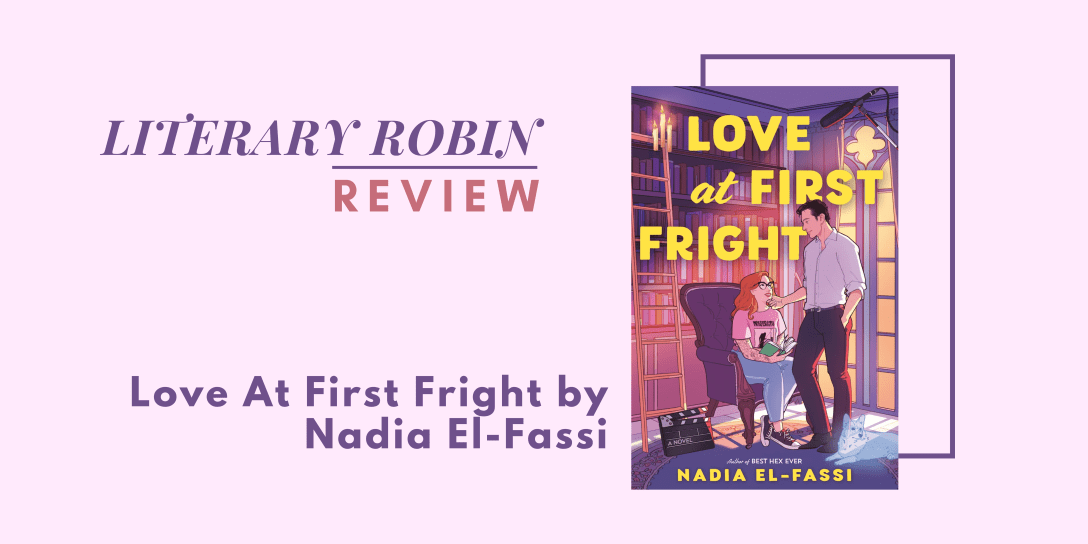
When you’re a horror author who’s novel is being adapted and the primary actor for the part is just wrong but also the set is being haunted by a pair of ghosts from the regency wreaking havoc with their unhinged lesbian-yearning-for-what-can-never-be vibes. Guys Nadia El-Fassi simply never misses and her sophomore novel is written for the chaos demons and bisexuals in mind. As a representation and a purveyor of both, Love At First Fright was inherently a Robin classic and a romance sensation from its very first moments. Love At First Fright is the epitome of what a modern romance should be with a healthy dose of the paranormal and hate to love on a gothic horror movie set where the ghosts are real and so are the feelings. Horror writer Rosemary Shaw hates her adaptation’s film lead, suave action star Ellis Finch, who is just a little burnt out and hoping playing a sickly Victorian man in a gothic horror film is the cure. Spoiler alert it’s that and romancing a talented horror writer. Love At First Fright finds romance in the unlikeliest of places, like telling someone you watched Crimson Peak when they mentioned it one time, debating Jane Austen’s best work, and helping the two regency lesbian ghosts move past their internalized homophobia and find peace. Nadia El-Fassi’s sophomore novel reasserts her immense talent for grounded, meaningful modern love stories. Call me a ghost lover because I want to be haunted by this novel for all eternity.
In Love At First Fright the ghosts are front and center, but Nadia El-Fassi proves it’s not really the ghosts haunting the narrative, but various regrettable circumstances and the vulnerability in laying ourselves bare. This book screams romance to me even as two regency lesbians wreck havoc on the film crew, a ghost dog lingers by his former owner, and its characters grapple with truly delicious levels of tension. It’s also a deep cut for the bisexuals. Like Rosemary came out DAYS after watching The Mummy (1999) in youth. I’m afraid this is not just a stunning romance novel, but also the unadulterated bisexual representation we deserve! Rosemary and Ellis get off to a rough start but from there it’s—well it’s still a bit rough but albeit sexier and a whole lot hornier. These two had me crazy to the point that if I was a member of the When The Devil Takes Hold crew I would have stopped dead in my tracks just to inquire if there was something else going on between them. Because in no way were these two discreet yearning out in the rain (which FYI is the hottest scene in the book and they are fully clothed). Rosemary and Ellis had no reason being so intense about each other but in fairness I’m obsessed with them both so I do get it. The way these two communicate, the honesty they find in between the tense moments, only make this romance that much more profound.
Love At First Fright is certainly the romance novel to read this fall. Proving spooky can be sexy, and that the best love stories are told alongside the paranormal. Nadia El-Fassi pours so much into just one romance it’s a triumph to witness it all coalesce into this visionary love story. From the regency ghosts, the splendidly gothic manor Harrowvale, Jane Austen hot takes™, and the healthy exploration of kink, Love At First Fright is a romance novel like no other and it has something in it for every kind of reader. Leads Rosemary and Ellis brought on the simmering tension and achingly hot scenes, it’s a wonder I didn’t perish on sight after reading them. This book oscillates between the frightening, yearning, grief, and humor infused moments with such skill—and oftentimes all within one scene. It’s masterful. Also there’s something so hilarious about the regency lesbian ghosts being exposed to Bridgerton (I need a oneshot of this on my desk immediately). I am left with one question and one question only after my reading experience which is: what sapphic books would I give to a Victorian Era lesbian ghost to help her unlearn her internalized homophobia. If you thought Best Hex Ever was extraordinary, you’ll lose it for El-Fassi’s follow up, Love At First Fright. Utterly spooktastic!
Thank you to Netgalley and the publisher for providing the advance review copy.
Trigger warnings: animal death (in the past, but recounted), homophobia, blackmail, grief
Songwriter Paige Lancaster has found her calling but she still has yet to find a way to make it her living. When she gets an opportunity to meet with Stillwater Music—one of Nashville’s prime music publishing companies, she’s closer than ever to a long-term contract. Despite all her hopes, Paige leaves the meeting with a task: write new songs that tap into the physical emotions she’s experienced, instead of holding back with surface level songs that lack any real depth. It’s either that or she takes less of a cut with the royalties and someone else workshops her music. Paige takes this songwriting challenge to the extreme with the chance to tap into her past and enlists Liam Bishop, former partner and love to aid her in the task. It’s been four years since Liam and Paige had any contact but Paige thinks Liam may be the only real chance of her accessing these “emotions” Stillwater Music and her songs need. Thus Paige ensnares Liam in a breakup redo, they’ll start dating again while she joins him on tour, and then when the romance is at its height, he’ll break her heart. Yet all this re-breakup plan does is force Liam and Paige to address the past, why they broke up, and if they have the courage to try it all over again—for real this time.
Never Over is second chance romance goodness, written with aching emotion and lending voice to the weight of grief and how far we will go in pursuit of our dreams. Messy twenty-somethings still figuring out life is Clare Gilmore’s bread and butter, and her third novel is arguably the best of the best and the messiest of the twenty somethings. Dual timelines give rise to a second chance love story between determined songwriter Paige Lancaster, and Liam Bishop, her ex—once lauded baseball pitcher now concert manager on the tour circuit. Never Over is a love story centered around life on tour, bookstore meet cutes, baseball training, and a heartwarming love letter to Bristol, Tennessee. Clare Gilmore has completely shifted what constitutes an excellent execution of the second chance romance trope with Never Over and I am in complete awe of her talent. This feels like a book written for the overlooked younger children finding their voice and their place in adulthood after being lost in the background for so long. At the same time, the danger in letting yourself be defined by one thing and what happens when that dream abruptly ends. Like the most addictive sort of love song: Never Over is a romance to pour over, read, and repeat. Healing and cathartic all in one note.
Balancing falling back in love and falling in love for the first time is exactly why second chance romance is the superior romance trope (argue with the wall). Especially when it’s so easy to get it wrong. Somehow Clare Gilmore provides a fresh take into her second chance romance with two exes, Paige and Liam agreeing to try again without really realizing it’s for real. This trope is the best because of the mutual effort needed on both sides of the partnership to really pull it off. We have Liam finding a new path after a devastating injury and pivoting to a new dream, and Paige, chasing after one for so long she’s willing to go to extraordinary lengths in order to achieve it. Second chances aren’t just for love, but for the lives these two have led both together and apart. Right away I knew Paige was going to be my kind of romance heroine. She’s someone comfortable leaning into being a work in progress, still finding her voice after being lost behind her five sister’s personalities in childhood. Despite her romance prospects, Paige does know herself and that struck me from the start. In spite of being overshadowed in childhood, Paige doesn’t want the spotlight, content to make a living writing songs rather than performing. That certainty never wavers even as she meets conflicting wishes of her friends, sisters, and partner at different intervals of the novel.
Never Over is the kind of romance I didn’t want to end. Even as I neared the final chapters I caught myself flipping back several times, intent on capturing the emotions before it was all over. Gilmore ties so much together in the last section: Liam’s hopes through Paige, Paige’s conviction, and finally, a true reconciliation between this pairing. I love how much these two are mirrors to each other’s hopes, dreams, and the extent to which Gilmore explores how this could be detrimental within a relationship. Additionally, just how much we want to hide from others when we are struggling. Coming back together means reconciling just why things ended and for Paige and Liam and Gilmore is sure to show just how well off they are by the end having had those difficult discussions. Never Over is just so hopeful about reinvention, grieving, and second chances that it’s hard not to get emotional. The moments of sisterhood lighten the narrative from being solely a romance, it’s a family story too. Focusing on songs bringing people through life’s great moments was a perfect note to end on for a romance all about music. Music, second chance romance, angst, and sisterhood, Never Over is a combining of seemingly conflicting melodies into one beating harmony. A perfect book.
Thank you to Netgalley and the publisher for providing me with an advance review copy.
Trigger warnings: death of a parent, grief, injury, abandonment
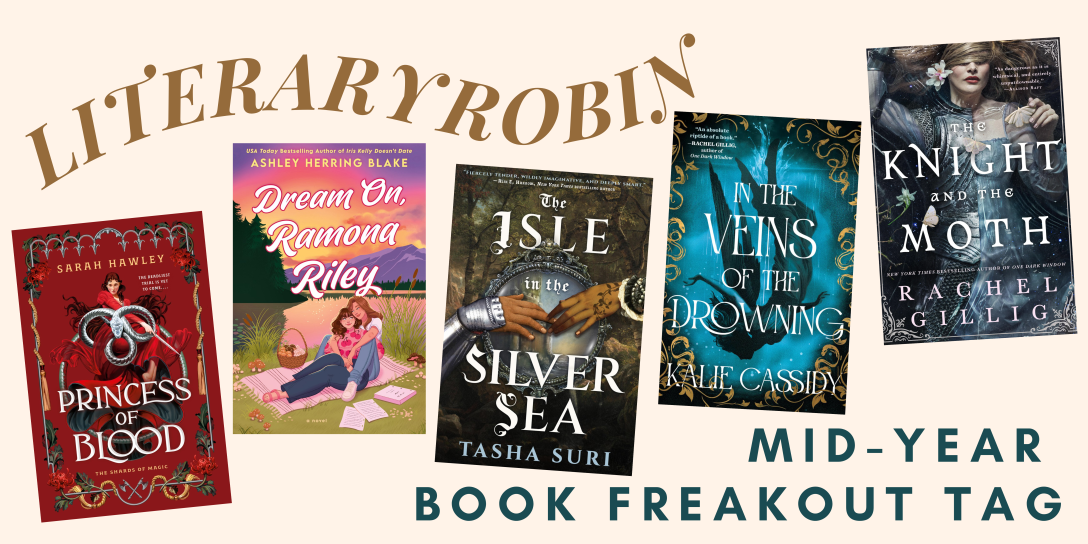
I cannot believe it has been six months of 2025 already, but one more turn around the sun just means I now get to do one of my favorite blog tags: The Mid-Year Book Freakout Tag! For those unfamiliar, this tag is just a fun way for bloggers and book creators alike to reflect back on these six months as we look to the remainder of the year. I had THE best time doing this tag last summer (albeit a bit late), and I eagerly awaited getting to do it again the coming June. To me, this tag is my Oscar’s. I pour over the hundred or so books I’ve read with the audacity of the academy, but with a scathing unrivaled and conversely, many, many tears. I will cut one book off without a second thought, and cry when choosing between two books like I’m choosing between my children, there is no in between. I’m honestly just so excited to share these books with you all because somehow the books this year are even more stacked than the previous one. So let’s dive right in (pun very much intended, particularly with my first choice).
BEST BOOK OF 2025
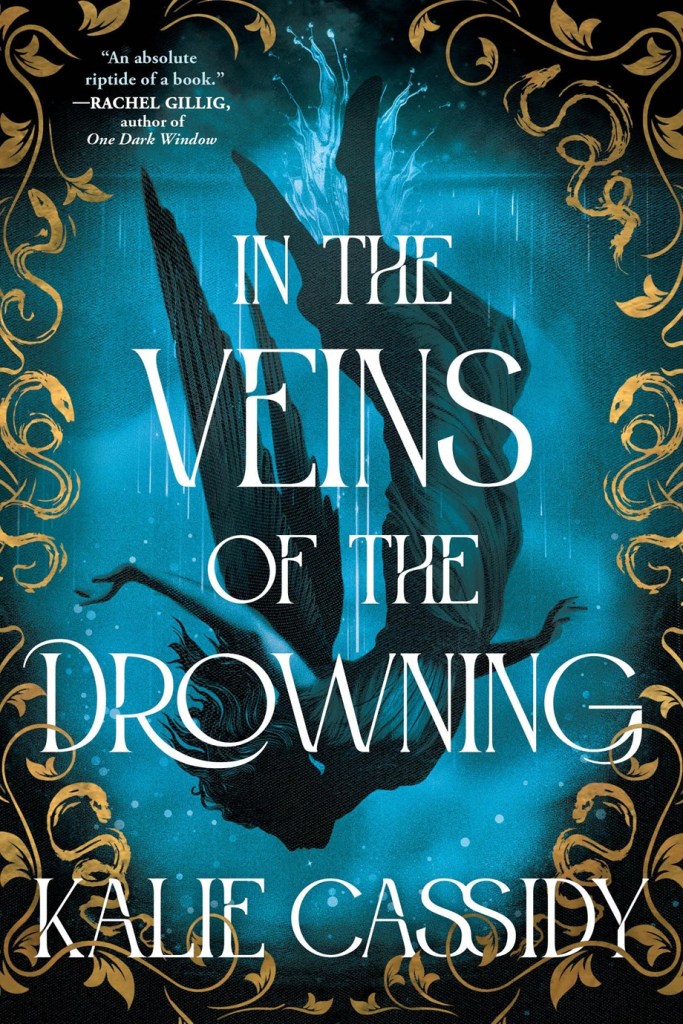
If you’re surprised by this one you’ve either been living under a rock or you have not been privy to me yelling about this book at every opportunity. Kalie Cassidy’s debut is a glorious rageful song concerning one siren’s ambitions for freedom, not to be curtailed by the man she binds herself to to secure it, nor the forbidden feelings running beneath their siren bond. Kalie Cassidy has reenlivened the intersection of romance and fantasy, with an emphasis on romantic yearning, much to my delight. Whether you consider this romantasy, romantic fantasy, you name it, Cassidy excels at it all and yearning is very much the reason why. Imogen and Theo had me struck dumb at times with their arguing, misunderstanding, and achingly romantic interactions. One of the hardest things to do as a romance author is to build and maintain that tension to move the story and the relationship forward. Add in fantasy and it’s a whole other ball game. Kalie Cassidy’s, In the Veins of the Drowning is a masterclass on how to develop romantic tension while integrating that romance with plot within a fantasy world. This should be on your TBR. It should be on everyone’s TBR. The world is not ready! Read my review.
BEST SEQUEL OF 2025
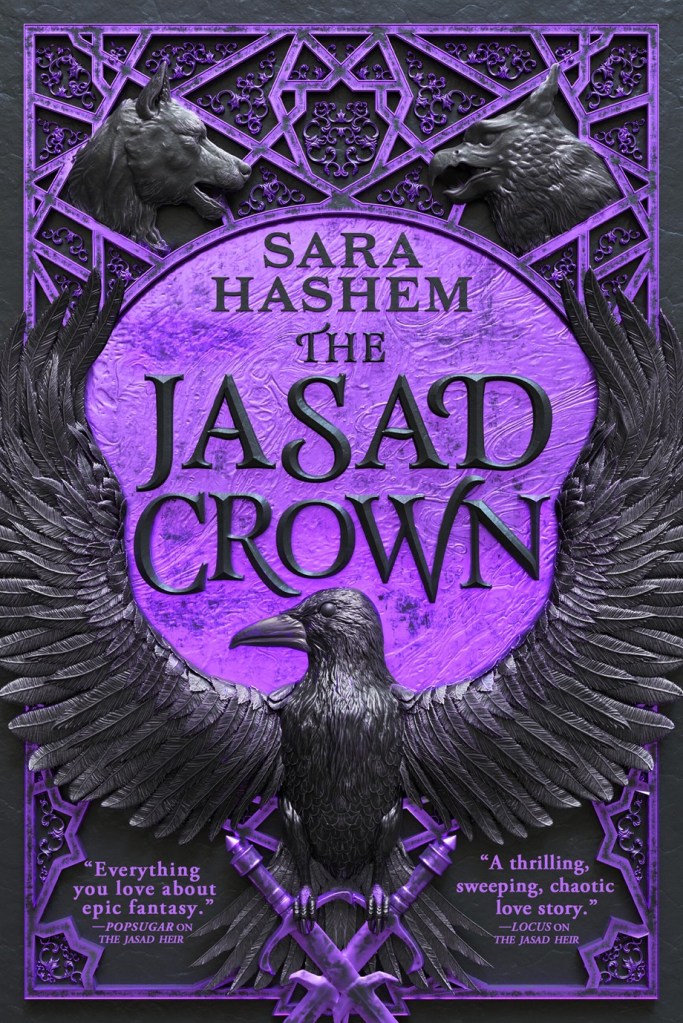
Yeah uhhh we gotta get a book on here that tore the heart from my chest with zero remorse, or it’s just not accurate. Sara Hashem said “Hi that’s me” with the sequel and finale to her Scorched Kingdoms duology, The Jasad Crown. This one picks up right after the events of the first novel with hidden identities revealed, a violent showdown, and Kitmer’s taking flight in the melee of the broken citadel. Few series have embodied true enemies to lovers quite like Sara Hashem, who makes a point to start her characters Sylvia and Arin on completely opposing sides of a war on magic and a scourge against the Jasadi magic wielders—initiating a reluctant alliance and eventually a romance between them. Of course this would not be possible without bringing an end to Arin’s world view, a veil which Hashem gradually brings down into disillusionment and then finally decisive action. This duology does an incredible job depicting the violence of colonization and in growing up in hiding in the land of your oppressors. Identity is a huge theme for this novel—how we are shaped by our surroundings & upbringings and what it takes to truly change. From the magic, the world building, the character arcs, to the romance, The Scorched Kingdoms duology is extraordinary. Prepare yourself for plenty of angst, yearning, and an epilogue that will destroy your emotions. Read my review.
NEW RELEASE I HAVEN’T READ YET
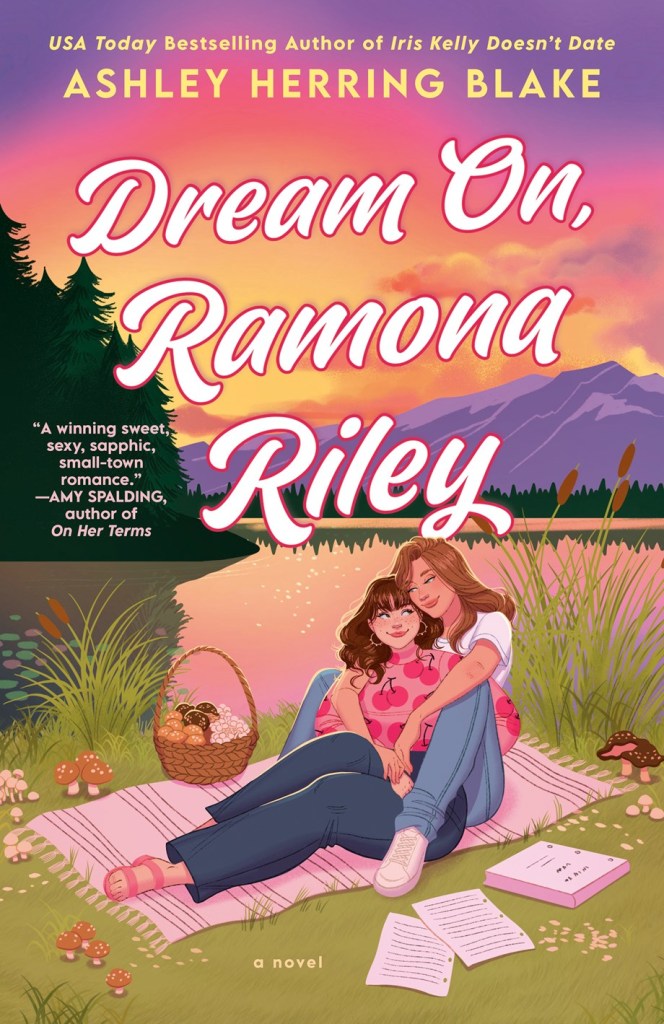
So it’s pride month which means I have a huge TBR right now and no way of actually getting to them all. One of my most anticipated books from 2025 was certainly the new Ashley Herring Blake, Dream On, Ramona Riley. This kicks off her brand new small town romance series, Clover Lake. Following Ramona Riley, an aspiring costume designer stuck in her dead end town and Dylan Monroe, an actress and her first kiss as they reunite and spark a romance. I’ve been excited for this one since it was first announced and it is a crime that I haven’t picked it up yet. You can blame my Libby hold which has yet to make it into my library. All of Ashley Herring Blake’s former romances have been hits for me, so I have high hopes this will deliver. Whether I manage to read this in Pride Month or beyond, tune back in later for my thoughts.
MOST EXCITED FOR IN THE SECOND HALF OF 2025
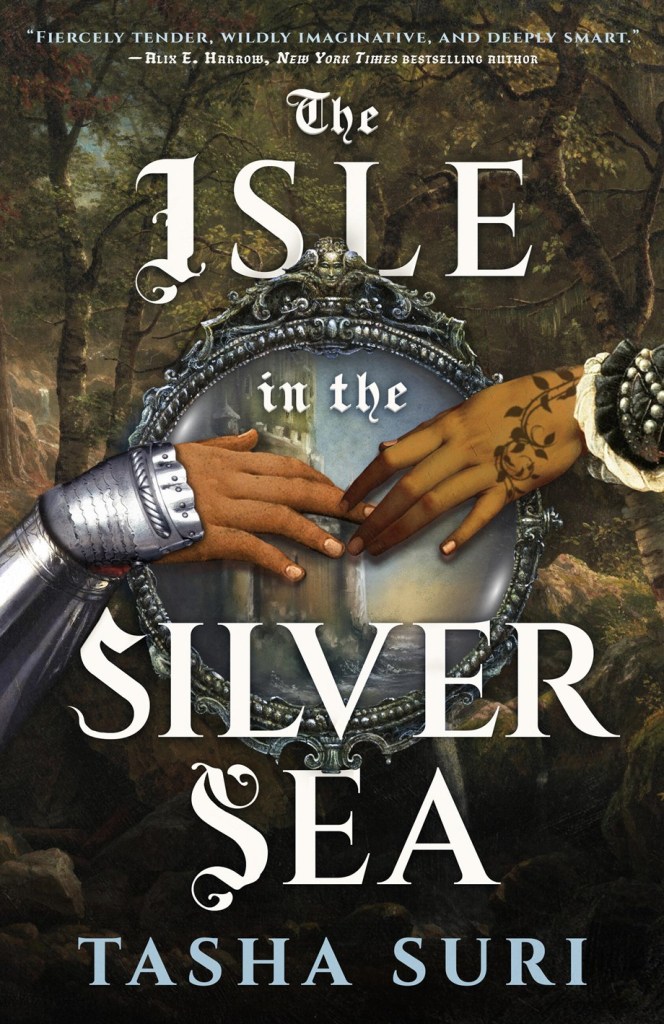
2025 is the year of the lady knight and we have been blessed by the queen of sapphic fantasy herself, Tasha Suri. The Isle in the Silver Sea follows a knight and a witch doomed to destroy each other in every lifetime who try to break the cycle when a deadly assassin begins to target similar tales like theirs. Can they break the cycle, or are they doomed forever to the same fate that haunts them? Suri describes this as her exploration into British folklore, Arthurian legend, monarchy, myths, in one queer reincarnation love story and I can safely say I am obsessed with all of it. If there is one thing I am, it’s a reader obsessed with tales about breaking the cycle, or attempting to do so. Characters standing against the cycles of generations, or even time, is a compelling center of focus for any tale, and I know Tasha Suri will make it a worthwhile if not heartbreaking read. Sapphic knights and reincarnation is a combination I did not know I needed, but now I’m not sure if I can live without it. I already know Suri’s propensity for morally grey sapphics from The Burning Kingdoms trilogy, so it is actually impossible that this will not serve. I will even go as far as to say this is shaping up to be the best of the lady knight books being published in 2025.
BOOK THAT SURPRISED ME
One of the best books of 2025 certainly, but I have a rule about featuring a book more than once, so “a book that surprised me” is what is the most fitting for Antonia Hodgson’s, The Raven Scholar. Heavy on the mystery, intrigue, and fantasy, The Raven Scholar features a deadly series of trials to determine the empire of Orun’s new leader and a central mystery running underneath it all. Neema Kraa, our main character, unexpectedly finds herself as a contestant when a murder leaves the raven house without a contender and she steps in to take their place—all while trying to solve the murder herself. This book is a whopping 700 pages but every single page is so well thought out I never felt I was reading such a large tome. Perfectly paced, plotted, and expertly crafted in all, The Raven Scholar is unlike anything I have ever read before and deserves its spot on the best books of this year. What made this one so surprising is the content, yes, but also the myriad layers Hodgson weaves beneath her narrative that make themselves known at key moments of the text. Just when you think you’re getting the hang of the story or even the overarching whodunit, Antonia Hodgson will appear to show you just how wrong you are. I actually pictured her as a specter at certain points in the novel because some of these reveals were actually so diabolical. With the addition of an unhinged animal companion named Sol and a bunch of omniscient ravens observing the events of the book to round it out there is so much to love about this book. Everything about The Raven Scholar points to it being a fresh new type of fantasy novel, one I hope will take flight in the coming year. Read my review.
NEW FAVORITE AUTHOR
Harper St. George is a new to me author as of the past few months but I can safely say she is an unrivaled talent in the historical romance space. Focusing mostly on the Gilded Age era and following a series of American heiresses who travel to England, Harper St. George carves out a new arena through which she constructs her romances. I sped through her Gilded Age Heiresses and the first in her Doves of New York series after I saw Lydia Lloyd recommend The Stranger I Wed on her Instagram. That one was marriage of convenience excellence and just so so fun. But as a lover of the yearning, the aching for something that can never be, my favorite is decidedly, Eliza and the Duke, coming out next week! From the longing, the tension filled carriage rides (seriously youre not ready), every part of this novel felt written for me specifically. Harper St. George knows how to balance her romance, history, and external plot and the result is an exquisite historical romance. Whether you are a seasoned hist-rom reader or new to the genre, Harper St. George is a great author to try. I’ll be reviewing Eliza and the Duke soon so be sure to keep an eye out for that.
NEWEST FICTIONAL CRUSH
Me, Sybil, Rory, and a gargoyle named Bartholomew (a match made in heaven). In true bisexual form I am here to say my new fictional crushes are both Rory and Sybil from Rachel Gillig’s, The Knight and the Moth. Draped in divination and drowned in the fetid spring upon the tor, this gothic romantic fantasy brings new meaning to the cycle of power and religious subservience through Gillig’s two main characters Sybil Delling and Rory Myndacious. I love to see two characters at odds, especially when they are narrative foils for one another. It’s giving: you hate me because you can see yourself reflected in me, and that is rife for romantic yearning and conflict. Though we only get Sybil’s perspective across this story, I really loved following Rory, her love interest, who is on his own journey alongside hers. The devotion Rory has to Sybil is unparalleled and I promise you won’t leave this book without being completely obsessed with these two and their dynamic. Gillig had me from the moment Sybil tackled Rory (to his complete surprise). Anyway I love both of them deeply and the fact that Rory is based on one of my favorite singers, Tamino, just further proves he is worthy of half of my favorite fictional crush status. I’ll also file this under the lady knight books of 2025 for good measure. Read my review.
FAVORITE FICTIONAL COUPLE
When you have a man fighting a woman, who leaves him completely bloody with a broken nose and all he can do is smile? Oh we had a hit on our hands. The winner of my favorite fictional couple is without a doubt Sarah Hawley’s, Princess of Blood. Specifically her main pairing Kenna, princess of the newly established blood house, and Kallen, a former executioner and spy. This was going head to head with The Knight and the Moth for a good while, but given that Princess of Blood is a sequel it ultimately won out. That’s to say that I have spent more time in this world with these two characters and their dynamic has been able to grow substantially across two books. The character arcs of our duo really have the chance to blossom in this sequel after a coup leaves the throne empty and the fae houses divided. Princess of Blood questions leadership and if we can build a better world without violence, and Kenna and Kallen are at the center of this. As they are given the chance to become something, somebody other than what they were forced to be, the two find solace in their friendship that eventually develops into a romance. Kallen is giving that pathetic (affectionate) brooding love interest and Kenna is a powerful, yet somewhat frightened young woman thrust into a position she never expected. These two fight (verbally and physically), they comfort one another, and they lend each other a hand when they need it. Devotion and longing are always going to be sexy to me and Kenna and Kallen know nothing else than complete and utter devotion for each other. Don’t just trust my word, read The Shards of Magic series for yourself and find out! Read my review.
NEWEST FAVORITE CHARACTER
Do you want dark fantasy romance centered around two feral bisexuals? Well S.A. Maclean’s, Voidwalker is here to answer the call. When I first sat down to run my list for this tag, I immediately knew Fionamara Kolbeck was going to win the title of Newest Favorite Character. A smuggler who traverses a shattered world to make a living, Fionamara becomes embroiled in a coup to oust the ruling daeyari—a monstrous species that must consume human flesh to survive. After a bomb is detonated in the capital, Fi comes face to face with Antal, the overthrown Daeyari who insists she join him to make things right. Even when she is caught between a rock and a hard place, Fionamara still manages to get back up and fight for her survival, and the survival of those around her. Not only that, but she still has time to apply her cracking eyeliner, carry a powerful void blade, and look incredible. I admire her even more for falling in love with a pathetic freak (not a) man who hangs from the rafters in a bathrobe and hides inside a snowbank as not to bother her. Yes she romances a monster but she never compromises her principles and that is what’s important y’all! This book is all that I crave from fantasy and its main character easily the best I have read about this year! Read my review.
BOOK THAT MADE ME CRY
Never in my life have I cried at a book like this. If you want a book that makes you bawl with zero remorse, then may I present Jenn McKinlay’s, Love at First Book. When she is given the opportunity to assist her favorite writer from childhood in finishing her final manuscript, librarian Emily Allen uproots her life from Martha’s Vineyard and travels to Ireland. Once there, she meets Siobhan Riordan, beloved children’s author who has yet to complete the tenth book in her acclaimed fantasy series, and Kieran Murphy, her son and manager of the local bookstore. The last thing Kieran wants is another crazed fan following his mother around and enabling her unending writers block, but that won’t stop Emily from getting the job done, and worming into his heart in the process. On the surface, Love at First Book appears to be your classic small town romance, but it is that and so much more. This book is about old and new beginnings as we follow a young librarian fleeing her narcissistic mother to a new life, a terminally ill writer trying to complete the final book in a series that was a love letter to her son, and a bookstore owner desperate to keep his life intact. Love at First Book showcases the power in the written word in bringing unlikely people together, to better themselves and find community. It’s romantic, tragic, and an aching portrayal of loss. If you’re in need of a good cry look no further.
BOOK THAT MADE ME HAPPY
Sophie Kim’s sequel in her Fates Thread series, The God and the Gwisin, recently published this year and it has the honor of being dubbed, the book that made me happiest. For those of you who have read this series it may be a funny category to give the second book, but after such a tragic end to book one, the only way to go was up. Seokga, a fallen trickster god lost the love of his life, Hani, after she helped him destroy a demon of darkness. Yet, all was not lost as Seokga was promised the chance to reunite with Hani when she reincarnates to her next life. Searching for years in vain, Seokga’s fellow godly beings vote to send him on vacation—a cruise to be more specific, one that traverses the river in the underworld with the spirits of the recently departed. On board, Seokga meets Yoo Kisa, a deceased Gwisin working off a life debt, and Hani reincarnated. Only problem: she doesn’t remember him. Sophie Kim had a lot to live up to in this sequel and somehow she managed to outdo herself entirely. The God and the Gwisin is a phenomenal fantasy romance that manages to pose some intriguing questions alongside it’s overarching murder mystery and reincarnated lovers plot. I spent the entire time worried something terrible was going to happen to our main couple, but by the end I was so so happy. Seokga and Kisa are given the loveliest ending and I really could not ask for more. Read my review
BOOK TO READ BEFORE THE END OF 2025
When I think of a series that has been a complete and utter delight to read, Erica Ridley’s The Wild Wynchester’s comes to mind. In this chaotic historical romance series we follow an unconventional family, the Wynchesters, a set of orphan’s adopted by an eccentric Baron who in adulthood, use their combined powers to fight injustice and aid the working class. Each of these siblings is unique and given their chance to shine in their own romance, but I have been eagerly awaiting Jacob Wynchester’s book since the series began. Jacob charmed me with his beloved, if not inappropriate, animal companions and his proclivity for poetry. What I love about this series is how Ridley makes each novel a reflection of who these siblings are at their core and this one is primed to be a reluctant allies to lovers romance between Jacob Wynchester and the advice columnist who hates him. If this is anything like the other five, it’s sure to be a wild ride.
PRETTIEST BOOK BOUGHT
Am I breaking a rule by featuring a book that is not yet published? Maybe. But I preordered this so I am counting it towards my “Prettiest book bought” category. Alix E. Harrow needs no introduction. After her devastating 31 page short story, The Six Deaths of the Saint, was revealed to be a test for her greater story concept in her upcoming novel, I knew I was in danger. The Everlasting is on the list of lady knight books for 2025, featuring a lady knight doomed to a time loop and the determined historian attempting to change their fates. I don’t know much else about this novel and that’s kind of the way I like it with Alix E. Harrow. I snagged an advance copy of this novel and will be reading it in the next month or so. But in the meantime let’s admire that cover. I mean come on!!
Please note this review contains reference to some of the events in this novel. Read with caution.
⭐⭐⭐⭐⭐
Rating: 4.5 out of 5.
When she left behind her coastal village to attend the illustrious Marchmain Academy, Lacrimosa “Lark” Arriscane never planned to return home. Certainly not before securing the heavily coveted postgraduate curatorship at the city museum. On the cusp of achieving all she’s worked for, Lark is expelled from her boarding school for a violent incident and sent home. In a windswept cottage by the sea, Lark and her family have prayed for generations to Therion, the chthonic god who lords over the tides, the salt, and the woods bordering their lands. Upon her return, Lark learns that the salt mines that have afforded them wealth and security have run dry and her family is on the brink of financial ruin. The only way out is a bargain with Therion, their god, who promises to restore the mines in exchange for Lark’s hand in marriage. Against her family’s wishes, Lark agrees, but when the ritual goes wrong, Lark is left bound to a god and dragged in between the mortal and chthonic realm. Lark can no longer deny she needs help, but her only allies lie in Alastair and Camille Felimath, her former childhood friends and the family to whom the Arriscane’s owe a tremendous debt. Bound to a demon and drawn to her demise, Lark seeks to sever her bindings, but she may not survive the fate she was promised, nor the loves rending her heart in two.
Pulled in and weighted by a heavy tide, Lyndall Clipstone’s Tenderly, I Am Devoured is a reassuring ballad to the broken-hearted and anyone on the cusp of something strange and unknown. Rigged with brambles, salt, and sea foam, this perilous novel embodies a keen and overwhelming longing for that period when everything seems possible and yet somehow still entirely impossible to grasp. Tenderly, I Am Devoured has all the trappings of a story on the edge, what with its main character, Lacrimosa Arriscane, stuck between the mortal and chthonic realms, an old life and a new, and two loves competing for her heart. Ruinous as the very sea that borders the lands of Verse, Tenderly, I Am Devoured is a gothic horror romance that aches to reach a resting place forever out of reach. One I could not help but feel swept up in myself as Clipstone tethers her heroine to demonic gods and the unwise bargains they make with mortals. Tenderly, I Am Devoured is the gothic-horror-academia sibling to Ava Reid’s, A Study in Drowning, but given Clipstone’s unique authorial voice and intent. Transient as the middle place between adolescence and adulthood, the past and present both, Lyndall Clipstone traverses the places between—where myths are made real and where love is our strongest act of defiance.
Lyndall Clipstone’s, Tenderly, I Am Devoured is an evocative work of art. There’s no other way to describe a novel so carefully designed. It’s as if every detail was poured over and sculpted into this sharp gothic and dream fugued lighthouse to those lost and in need of sanctuary. Clipstone plants herself firmly in what she calls “Flower-threaded” horror and I think that is an apt comparison for a novel that so exquisitely bridges the amalgam of beauty and horror. Significant details play the boundary between beauty and grotesque—the chthonic liqueur staining the teeth in some kind of irrevocable marking of the divine, the power of the sea to buoy or to suffocate, and the dark salt mines made for prayer and for dark bargains. Every portion further imparts Clipstone’s unique blend of horror-romance and the contradictions she explores at the center of her work. Tied up in all of this is Lark herself, an Aphrodite-esque figure crafted through the power of the sea, clinging to a life of her own if she can free herself from a chthonic god. Very much here for the soft hearted heroines who don’t have to be perfect to be worthy, the ones who make mistakes and take charge without compromising the core of who they are. There’s power in softness and I know how personal it was for Clipstone to represent this through her main character. Lark wears her heart on her sleeve, and her depth of feeling appears boundless, a trait that echoes in the very fabric of this story and its decisive end.
Bordered by an intriguing mythology, a dash of academia, and disastrous bargains with the divine, Tenderly, I Am Devoured binds together a great deal in just one gothic fantasy novel. Yet, there’s considerable intent behind every single facet of this story and they are as tangible as if one could reach into the page and experience them firsthand. In concluding Tenderly, I am Devoured, bleeding hearts are laid bare as the past is exposed and the future safeguarded for our core trio. Lyndall Clipstone somehow manages to tie everything together in a way that is hopeful without veering too far into the realm of implausibility. There are costs for our characters which is true as life itself where going after anything you value is worth some kind of personal sacrifice. Among the weather-worn cottages and the luring waves, Clipstone reinforces this notion that part of human nature is to be adrift, but certainly we’re not meant to be alone. Chthonic gods, polyamorous romance, cults, and myth make up this gothic romantic fantasy that called to me like some kind of dark offering. From its intense academic setting to the haunting coast of Verse, Clipstone tests what we can weather if only we hold fast to each other against the storms ahead—even if one must at first give in to a god.
Thank you to Book Forward and the author for providing me with a physical advance review copy.
Trigger warnings: death, blood, murder, drowning, physical abuse, child abuse, death of a child, cults