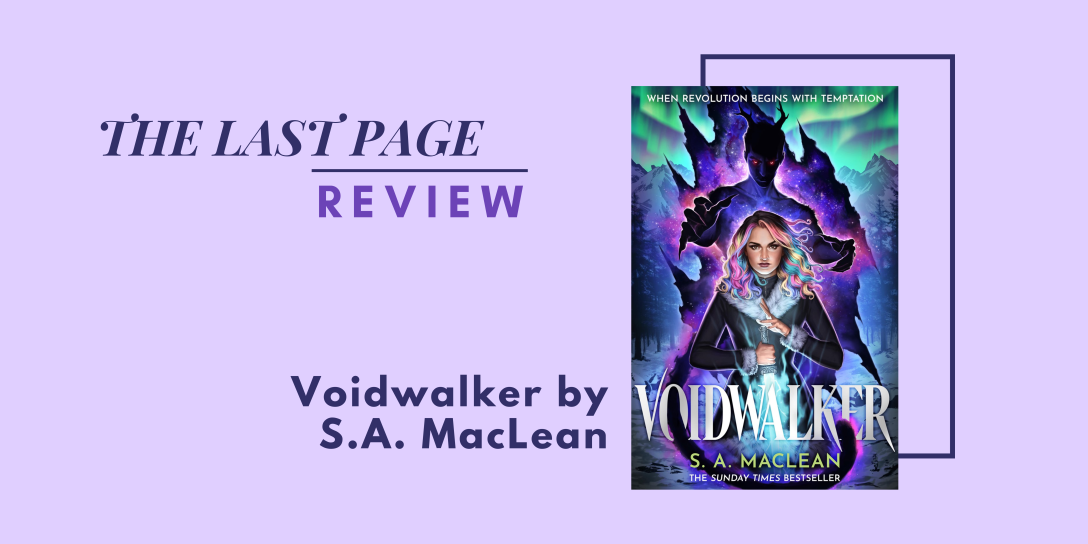
Review: Voidwalker by S.A. MacLean

Rating: 5 out of 5.

Ever since she was brought close to death at eight years old, Fionamara Kolbeck has been able to see the gateways separating worlds, and can traverse the boundaries between them—a rare talent coveted by many. Fi makes her living smuggling goods across the fractured lands. In return, her village continues to thrive without aid from the Daeyari, the forest entities who exist off of tithed sacrifices and hold the coveted energy technology that fuels humanity’s survival. When Fi is given the payment of a lifetime to smuggle unknown goods into the capital of Thomaskweld, she unknowingly becomes embroiled in a coup to oust the ruling Daeyari. In the aftermath, Fi is left vulnerable to Antal, the deposed Daeyari who insists she help make things right. As it turns out, Antal has been staving off his hunger as best he can, and Thomaskweld’s new ruler is not so magnanimous. Neither Antal nor Fi want this to stand, but righting the situation will require them to join forces. Nothing could have prepared Fi for being in close quarters with a monster, yet, she finds that Antal is startlingly balanced to her inner fire and she actually enjoys his company. Being caught within a monster’s clutches may no longer be the worst fate imaginable but giving in to temptation will require a leap greater than the one into the void itself.

Voidwalker asks the age old question, what if you romanced your inner demons and the result is the best fantasy romance I have read all year. S.A. MacLean understood the assignment with this deeply bisexual fantasy novel involving the toils of revolution and the alluring call of the space between worlds. A world walking smuggler equipped with eyeliner as sharp as her energy blade and a cracking dye-job and a forest entity with antlers who is more than a little pathetic team up to take down their enemies, trying and failing to avoid romance in the process. As a fan of idiots to lovers and reluctant allies this book was already primed to be a hit for my reading tastes. But what makes Voidwalker so incredible isn’t just MacLean’s two pathetic main characters and her select use of tropes, but in her soundly layered narrative. Integrating satisfying character arcs, romance, cross dimensional worlds, and an impeccably paced external plot, Voidwalker is fantasy honed to perfection. It’s also really really hot. Like SO hot. This book is for the readers who stare into the dark wishing the dark stared back…and was a hot forest demon equipped with antlers and claws with the disposition of a wet cat. Voidwalker is a dark, messy, romantic story—one that undoubtedly met my cravings but has me begging for more. 

The fractured landscape of Voidwalker is a second home to our protagonist Fionamara who makes a living traversing the shattered plains, smuggling goods between worlds to help her village thrive. MacLean captures a rough beauty within this disunified landscape. The crisp winter which ravages the population, the pine trees, the snow capped mountains, and the intense green of the polar lights envelop the narrative and feels entirely connected to the alluring call of the Daeyari and the void itself. MacLean’s debut, Phoenix Keeper, was a riot of color and magical beasts and she infuses this into her sophomore novel, admittedly with different flavors. Voidwalker is home to a variety of magical creatures—aurora beasts, void horses, and the mysterious void creatures, to name a few. I am very much partial to the void horse myself, with my love of animal sidekicks how could I choose any different. MacLean brings on the details but all help establish these split worlds and construct the initial foundation for this novel with a smuggling job gone wrong and two unlikely allies on the run. 

Two bisexuals in a cabin in the woods with nothing but their failures between them—the byline for this novel, and if I could so boldly claim, the real romance between Fionamara and Antal. These two start out by dragging each other headlong into danger both believing the other capable of fixing things, yet they are immediately confronted with the fact they are way out of their depth. Reaching rock bottom is the perfect way to elevate this romance and start to deconstruct Fi and Antal’s facades. The walls come down as Fionamara drags Antal back to her cabin in the village of Nyskya, where the two hope to prepare an uprising against the ruling Daeyari, Verne. Close proximity is at the forefront of this scheme, as Fi and Antal cohabitate in secret amidst their plans to retaliate. Now S.A. MacLean understands the innate allure of a pathetic freak man and unfortunately neither I nor Fionamara were immune. I really am here for this rabid demon creature who would rather sulk inside a snow bank with his antlers sticking out and hang from the rafters like a feral bat than emote/behave normally. It’s all part of his charm, and trust me, it’s endearing as hell.

Now I would be remiss to not elaborate on how seriously hot this book is. Like SO hot. The tension between Fi and Antal is like a sharp knife through butter and I was standing there in rapt attention as they toed the line between forced allyship and something more. MacLean elevates this tension through her extensive focus on the backgrounds of these two characters, particularly in the first section of this novel. At the start of this book both Fi and Antal have reached rock bottom and can really only rely on each other, albeit begrudgingly. This partnership brings on some wonderfully sharp verbal sparring which of course is the veil over their greater compatibility. Part of what makes Voidwalker so profoundly hot isn’t just the “romancing a hot forest entity with antlers” of it all, but how Antal and Fi open up a space for honesty and look out for each other again and again. They keep each other on their toes while romancing through small gestures—like Antal recovering Fionamara’s favorite coat and blade just because he knew how much they meant to her. Don’t get me wrong, the sex is hot, but the tension between “bite me I dare you” and walking willingly into the embrace of a monster gives just as much besides. 

In Voidwalker, successfully forging a new future means confronting the past for our two protagonists. Though fully established in Fionamara’s point of view, Voidwalker provides deeper insight into Fi’s and Antal both, all to help construct a greater picture of what they are working to overcome. Fionamara’s arc is framed at the center of this narrative, and the true standout for this novel is in her reorienting her perception of the past and standing strong in her choices. Fi’s journey through self-preservation and her perceived cowardice is a hard one, especially as she is torn between competing perceptions—her brother, Boden and childhood friend, Astrid. Astrid and Boden are two facets of this journey in their differing views of the past and reconciling them is a vehicle through which Fionamara gains further agency in her own life. Antal on the opposite side, is entirely alone. He has held people at a distance to save them from the violence of his kind, and he is scared to see the past repeat itself. Both Fi and Antal are excruciatingly aware their feelings run deeper but giving voice to them is easier said than done.

You’d be hard pressed to find a book more tailored to my tastes than S.A. MacLean’s Voidwalker. Every part of this novel is exquisite and I really could go on and on with how much I love it. Reading this, it’s clear S.A. MacLean suffused all of her favorite fantasy elements and character archetypes into one novel and not one of them feels out of place. The disaster bisexual characters trying to prove themselves without admitting they care is my bread and butter and Fi and Antal took that challenge and pushed it to extreme limits. There are not enough books with a pathetic guy who endears himself to the main character with his freakish charm and Antal is that character. Like this is a weird little guy…this is a freak of nature, but I love him so much. And Fionamara is my coffee obsessed hellion ready to fight and so so important to me. Seriously this book has it all, along with the audacity of being hot as all hell. S.A. MacLean’s talents for unique romantic fantasy are seemingly endless and no more is that on display than in her sophomore novel. Voidwalker is fantasy wrapped up in a bisexual little bow and I am so grateful that it exists. The fact that this is a duology just means I can yell about it louder and for far longer than I would typically until the sequel is in my hands. 

Thank you to Netgalley and Gollancz for providing the advance copy to review.

Trigger Warnings: blood, death, gore, murder, drug use, alcoholism

Preorder a Copy – Out 19th August

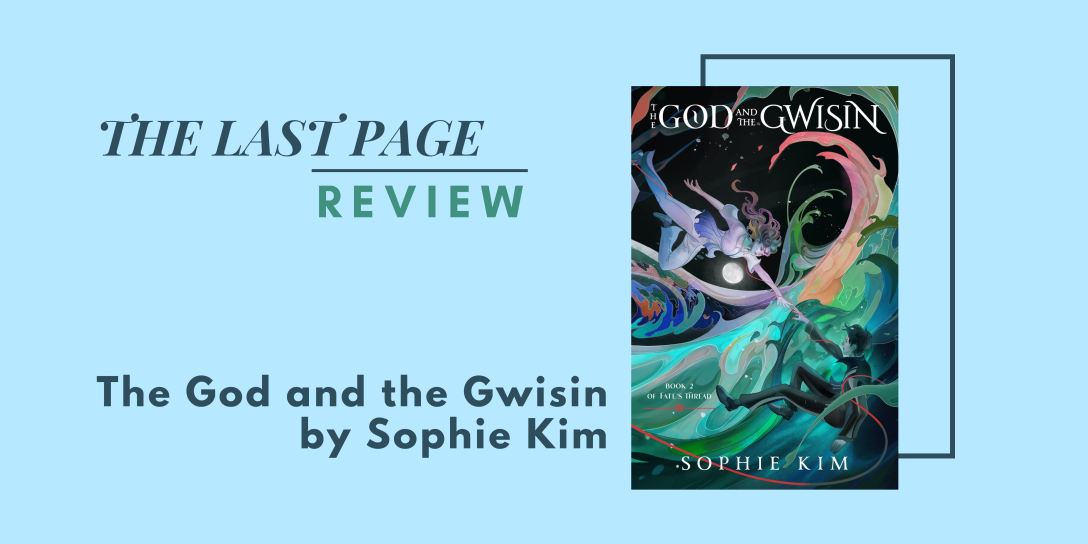
Review: The God and the Gwisin by Sophie Kim

Please note this review contains spoilers for the former book in this series, The God and the Gumiho, and contains references to some of the events in this sequel. Read with caution.

Rating: 5 out of 5.

Seokga, the trickster god sent to earth to atone for his uprising, defeated a demon of darkness and was reinstated to godhood, but lost Hani, the love of his life in the process. Reborn into her next life, Seokga had a chance to find Hani again, but fate intervened before they could reunite. Ever since the red string of fate connecting him to Hani appeared, Seokga has searched in vain for his soulmate and his fellow godly beings are tired. They vote to send him on vacation—to a cruise that traverses the river in the underworld. But as soon as he steps on board, Seokga is pulled by the red string towards Yoo Kisa, a Gwisin working on the ship and Hani reincarnated. Kisa has no memory of her past life, except the karmic debt her past lives amounted that her current self is indebted to pay off on board the SRC Flatliner. The red string has always fascinated her, but Kisa has no desire to be compared to the woman she once was nor romance the grumpy trickster god. When Seokga’s brother is found murdered on board, Kisa and Seokga reluctantly team up to solve the murder. Yet as Kisa and Seokga fall back into their investigative ways, it’s evident that they were brought together in this life for a reason, and not even fate can dictate how they end their story.

What does a fallen mischief god reinstated to godhood, his reincarnated soulmate, his emperor brother turned into a baby, a murderous gumiho, and a deceased K-pop star have in common? A murder none of them ever expected to be involved in solving all while on board a cruise ship in the afterlife. The God and the Gwisin initiates a sequel to The God and the Gumiho, where the murders are unsolved and a grumpy trickster god is once again struck down with unwanted emotions. Second in Fates Thread, this series embeds Korean Mythology with reincarnated lovers, godly threats, and an overly abundant amount of yearning. This sequel reorients our characters in the 21st century with new, modern problems, and some that time cannot constrain—like the inescapable longing for a love lost. Two soulmates battle feelings while on a cruise ship in the underworld, romancing in between a murder investigation and a looming journey’s end, where one faces down imminent reincarnation. Sophie Kim certainly understands how to situate a unique set of circumstances, which could just as easily be disharmonious if not for her deft balance of humor, romance, and angst. The God and the Gwisin extends the Fates Thread series in an epic star-crossed love story not to be constrained by reincarnation nor hell itself.

The God and the Gwisin is all around a delight but it is this sequel that sees Sophie Kim’s elaborate threads truly take shape. I jumped into this sequel blind and I am so glad I did because in no way would I have expected the setup Kim delivers here. The God and the Gumiho ended on a hopeful note, as Seokga follows the red string of fate twenty odd years after the passing of Hani, to whom we assume is Hani reincarnated in the present day. Sophie Kim introduces us to Yoo Kisa, a young doctor working at a hospital in Seoul who unexpectedly falls to her death and winds up in the afterlife working out her karmic debt on a cruise ship in the underworld. The setting for this sequel is a far departure from the 90’s New Sinsi of The God and the Gumiho, but it is the perfect stage for Kim to conduct her mystery and initiate an interrogation into reincarnation and fate. Cruise ships are lawless places after all and there’s truly no better place for a murder, nor falling in love with your soulmate reincarnated.

The grumpy sunshine dynamic has never hit quite as hard as this series and I fell in love with our protagonists all the more the second time around. Seokga is the perfect grumpy protagonist —a god disinclined to like anything but coffee and begrudgingly, the gumiho he fell in love with decades ago. This sequel sees Seokga working through his (self-described) daddy issues with a psychologist, his relationship with his brother, and branching out into new, coffee adjacent snack products. Seokga is down bad in this sequel, as any man who has chased his soulmate all the way to Antarctica and back while yearning to find her for three decades could be. Sophie Kim integrates this longing with some truly detailed insight into the notions of reincarnation. Using the Ship of Theseus as an extended analogy, Kim questions if two souls can be united even as the outer self, or person, has changed. The thread connecting Seokga and Kisa, which has—hilariously—its own sentience, only appeared in Hani’s reincarnation as Kisa. So the question becomes were Seokga and Kisa always destined to find each other in this lifetime? I love a good extended interrogation and the themes of soulmates and reincarnation are expertly addressed in this sequel.

The God and the Gwisin is a story all about reconciliation, not just within the central romance between Kisa and Seokga, but relationships both familial and platonic. Certain characters from the previous novel make a reappearance and Sophie Kim gives them the chance to rectify the past. It is here that Kisa comes face to face with Somi, her best friend who betrayed her in her former life as Hani. While Seokga, working through his relationship with his brother, long strained, has to babysit him as he is reverted to the form of a child. There’s enough tension between Kisa and Seokga, but these relationships on the periphery help orient the central conflict for this novel. I for one really loved that Kim gave space for Somi and Kisa to reconcile in this life and how she developed a new friendship between Kisa and the former K-pop idol, Kim Hajun. Sophie Kim bridges this further with a romance between Somi and Hajun. The murderous character being charmed by the kind one is exactly my kind of pairing and their romance is exactly that—sweet with a side of: she could murder you (but he likes it). Who would have thought romance over boba tea would be a part of this novel, but Kim has always highlighted the cafe setting as a peak spot for romance and shenanigans and I was happy to see that represented again here.

Sophie Kim is an author synonymous with exceptional romance and she takes this to new heights in The God and the Gwisin. This sequel follows Seokga and Kisa as they solve a murder while battling the problems of reincarnation, fate, and what they mean to each other. Because of the reincarnation of it all, Kim focuses heavily on enforcing Seokga and Kisa’s new dynamic and their overall compatibility alongside the murder plot. There is a disconnect between these characters, for Seokga is the same as he was before, albeit the impact of a few decades, whereas Kisa is a wholly new individual for Kim to introduce and flesh out across this novel. And what an introduction. Kisa was over here throwing a heavy paperweight at Seokga’s head upon their meeting and he was still struck dumb for her (blunt object not to blame). Kisa is an exceptional character who was dealt a difficult hand in life, and in death, and still carried it with such grace. Her refusal to be someone else just to appease Seokga chasing the ghost of his former love was commendable, as was her standing firmly in who she was. Even with all of this, Seokga and Kisa find love and choose to look to the future instead of the past. Kisa deciding for herself the answer to the Ship of Theseus question and taking the reins of her story was a deeply satisfying end to her arc in this second novel. That Seokga and Kisa’s higher calling is to love each other is solely responsible for my tears and I will be billing Sophie Kim expeditiously.

The God and the Gwisin is at its heart a story about belonging and forgiveness. With such humor and skill, Sophie Kim integrates her Fates Thread series into a new decade and a fresh hell— literally, a luxury cruise in the afterlife. Bonds are tested, and Kim shows the true power in choosing our destiny as Seokga and Kisa choose each other despite what fate and the higher powers have determined to be their end. Seokga and Kisa find an unconventional happy ending, which is all I could really hope for when I first began reading this novel, but it nevertheless brought on all the emotions by the end. Fates Thread is contemporary fantasy at its best, with distinct characters that manage to find their footing no matter the setting or the decade, and ones that charm no matter their place within the narrative. The God and the Gwisin tests the transcendent nature of love in an adventurous fantasy sequel all about being seen and loved for who we are. It will be long before I forget this phenomenal sequel from Sophie Kim but I find I am more than content with that.

Thank you to Netgalley and the publisher for providing me the advance review copy.

Trigger warnings: murder, blood, death, suicide (off page, but mentioned)

Preorder a Copy – Out 3rd June

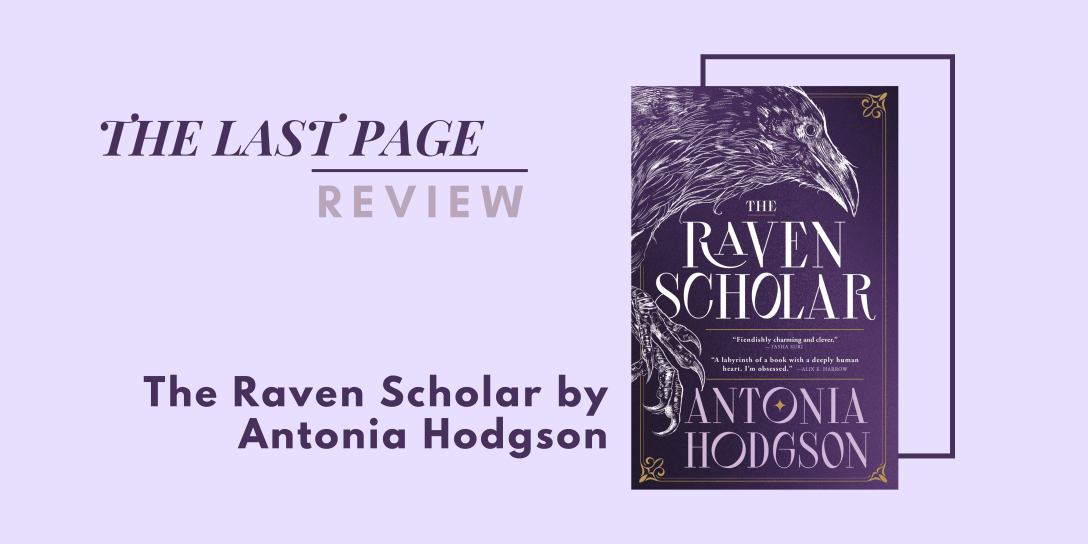
Review: The Raven Scholar by Antonia Hodgson

Rating: 5 out of 5.

For twenty-four years peace has reigned within the Empire of Orrun. But per the laws of the empire this peace will be tested in a brutal competition to determine its next ruler. Neema Kraa is a Raven Scholar and eight years prior —at the emperor’s behest—she carved the exile edict that would seal the fate of an innocent young woman and propel Neema to High Scholar. An event that would echo in the fates of more than just the solitary Raven Scholar. Thousands of people now flock to the Imperial Island, the epicenter of the empire’s power where its fate will soon be determined in the Festival of the Eight. On the night before the festival commences, Gaida Rack, the Raven contender, is found murdered in her apartment. As Gaida’s least favorite scholar, Neema is one who would stand to gain from her death, and thus, in the emperor’s eyes, the perfect candidate to solve her murder. Not only is Neema tasked with uncovering this crime but she is now the Raven contender in the fight for the throne. Dodging fights and avoiding losing to the dangerous trials, Neema soon becomes embroiled in a devious plot decades in the making, one that like the trials themselves, can have only one victor.

With The Raven Scholar, Antonia Hodgson pens the first in an audacious high fantasy trilogy. Epic in scale, bold, and extraordinarily detailed, this book burrowed its way into my heart where it is more than content to remain. As sentient ravens bear witness to events and murder abounds, The Raven Scholar expertly integrates a murder mystery within an immersive fantasy setting as a devious plot comes to fruition within the fraught empire of Orrun. When I set out to read this seven hundred page tome, I had no idea I would venture into one of the most cleverly wrought fantasy debuts I have read in many years. Hodgson hits all the marks for an epic fantasy novel with characters that bite (pun very much intended), and ones that lean into their morally grey natures. The plot takes the lead in this series debut, but it is only elevated through a detailed world history and extended mythos. Truly the pillars of this story are in the details and Hodgson is intentional in their placement as she builds to her grand reveal. The footnotes and folktales scattered across the narrative, the pesky ravens, all of it serves to build up an integral foundation for this new series. The Raven Scholar is everything high fantasy should be and I loved every single page of this intricately layered, clever novel.

Turning inward on the Imperial Island, Hodgson calls witness to the exile of Yana Valit, a decision that led to her brother becoming the Tiger contender and our protagonist Neema Kraa her position as High Scholar. Not quite a prologue, this look into the past soon transitions into Neema’s point of view, our window for the rest of the novel —a jarring shift made all the more so in the eight year jump to the present. The Raven Scholar has a claustrophobic aura, as thousands crowd the Imperial Island for a scheduled transfer in power, soon finding themselves caught up in more than a game. It all feels very locked-room, except the room is an entire island and everyone on it a suspect. Hodgson’s narrative is ever shifting, flitting back to new perspectives and integrating folktales from Orrun’s history. There is so much to sift and parse over here and no part of this story feels out of place, nor the narrative bogged down at any moment. Every single part of The Raven Scholar’s seven hundred pages is perfectly paced and expertly plotted. Through the ravens, the footnotes, and the folktales, what emerges is a vivid fantasy world with characters that leap off the page. 

I would place The Raven Scholar in the category of: what if there was an animal who was just following you around all the time (but the burrowing inside your chest cavity and offering unsolicited opinions-variety). The Raven Scholar dances around perspective and flashes between the implied author and narrator across the narrative. The implied author being the raven guardians circling the island providing their commentary was a fresh way to hone in on key events. I’m very much here for the flock of Raven Guardians having an omnipresence as Hodgson shifts between perspectives to orient her story. Hodgson layers in these perspectives to better serve the story and build to a smashing final act. Where the raven companion comes into the story is another strong suit. The “Solitary Raven” who was banished from the flock pushes forward through ink, page, and cover to become a fragment within Neema’s mind, acting as a guide in the fight for the throne. Sol is that nettlesome presence needed to further the story and its humor. I found the body horror aspect of this extremely hilarious. The imagery of Sol just chilling in Neema’s ribcage ready to burst forth in viscera whenever he needs to come to her aid or remove himself from a situation could only ever be viewed as relatable and painfully funny. 

One thing I appreciate about this novel is its heavily detailed character work. For most of the book we are in Neema’s perspective and her views cloud our opinions of the past and future of Orrun. Neema is the solitary Raven Scholar, brought up from her station as a commoner to take up space within the Emperor’s court. With such a rise comes many enemies and a perspective that reflects inward more often than not. Antonia Hodgson is comfortable exposing the flaws of this character and the blind spots that place Neema in danger as the plot progresses. I love ambitious women but just as much I love that Neema’s ambitions come at a price. The huge reveal at the end would not have come about without the manipulation of several key figures, one of which was the High Scholar herself. Characters grappling with their morality and the justification of past decisions is a central part of this novel. Neema, Cain, and Ruko are three characters who really stood prominently within this —figures who will undoubtedly continue to shape the progression of this series and its core themes.

The Raven Scholar is a true fantasy gem, sharp, gleaming, and rare in its splendour. As prophecies are fulfilled and the Festival of the Eight draws to a close, the Eternal Path series finds a strong footing in an unstable final act that I was in no way prepared to venture into. And wow oh wow what a conclusion. I don’t think I breathed for the entire last third of this book. It was that intense. Antonia Hodgson pulls the rug out in every sense, making you feel like the dominant players are aiming for one thing when in reality it is something else entirely. Integrating unique points of view —the animal guardians staking their claim on the narrative and the future of an empire and a daring scholar courting danger to solve a murder, among others —this is an artfully designed fantasy novel with a host of characters to enjoy. I cannot emphasize enough how this fed my cravings for epic fantasy to the extreme. Much like our Solitary Raven, I want to live inside this book and I’d feel comfortable burrowing into its pages to wait out the eventual sequel. 

Thank you to Netgalley and the publisher for providing this arc to review.

Trigger warnings: death, abuse, murder, blood, violence, imprisonment, drug use, execution

Preorder a Copy – Out 15th April

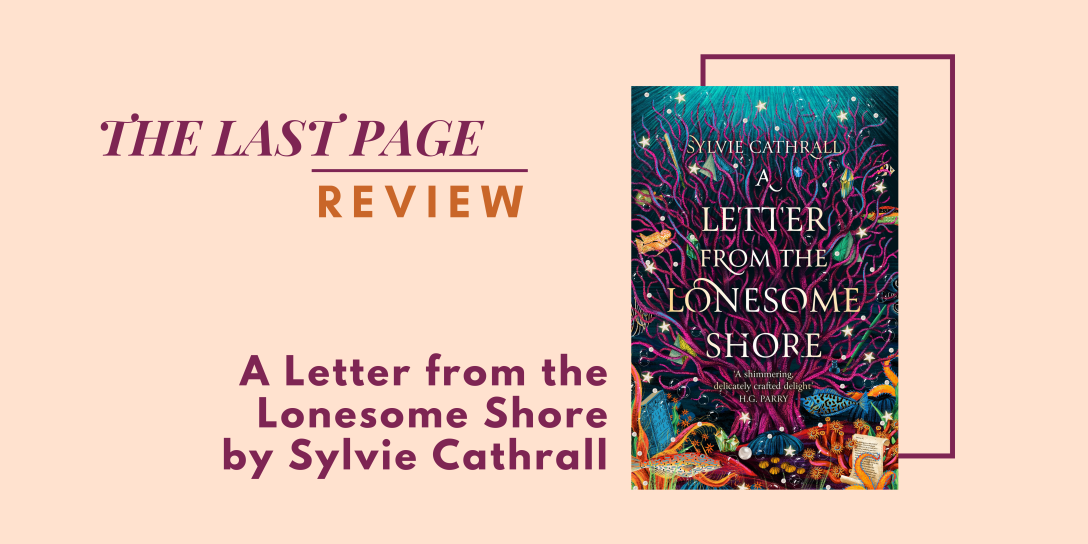
Review: A Letter from the Lonesome Shore by Sylvie Cathrall

Please note this review contains reference to some of the events contained within this novel, and the former installment, A Letter to the Luminous Deep.

Rating: 5 out of 5.

Former correspondents E. Cidnosen and Henerey Clel bonded over an academic mystery, but they never expected that mystery to involve travelling through a mysterious structure in E’s garden. Now, E. and Henerey find themselves in a sunken city that holds the secrets they’ve been searching for —of an archaic floating society that retreated into the sea after some indescribable danger led them to flee the world above. The mystery of the fate of E. and Henerey captivated many following their disappearance, but none more so than their respective siblings, Sophy and Vyerin. Piecing together the truth through the letters E. and Henerey penned across several years, Sophy and Vyerin now find their siblings forever out of reach. Drawn deep into the life of the archaic scholars and their city of secrets, E. and Henerey confront the limitations imposed by this society while desperately yearning for a way home. Meanwhile Sophy and Vyerin relentlessly chase the gateways that could reunite them with their lost siblings. With Sophy and Vyerin on the case and E. and Henerey seeking the truth to their world, neither party understands the true threat stalking the deep which brought a once thriving archaic society low.

A Letter from the Lonesome Shore returns readers to the elusive deep after the revelation that scholars E. and Henerey did not perish in the destruction of the Deep House. Told entirely through letters, this epistolary novel concludes the Sunken Archive duology and unravels the mystery of the gateways and the archaic scholars. Long thought dead, these scholars have remained within an underwater city awaiting those fleeing the mysterious threat that brought them to its sunken waters. Knowledge has a cost in A Letter from the Lonesome Shore, and Sylvie Cathrall tests the bonds of our undaunted scholars, E. and Henerey, while a larger threat closes in on their underwater world. A Letter from the Lonesome shore is flitting in its shades of enchanting light academia and winsome romance. Sylvie Cathrall pushes her frontier, integrating new perspectives and roundabout ways to ensure character points of view remain at the forefront of this novel. These narrative subtleties lend themselves to the greater conversation of academic pursuit and the human connection at the center of academic inquiry. A Letter to the Lonesome Shore is an endlessly fascinating series conclusion and all I want is to continue to chart the immeasurable depths of this extraordinary duology.

In concluding her Sunken Archive duology, Sylvia Cathrall reorients her underwater world with E. and Henerey having gone through the portal by the Deep House, and Sophy and Vyerin initiating a mission to follow them through to the other side. This sequel proves there is so much more lying beneath the surface as we are introduced to the enigmatic scholars of a sunken city who have awaited refugees since they first abandoned their world above, and the scatterings of a future we encroach ever closer upon. Between E. and Henerey’s private diary entries, Cathrall brings new perspectives into the forefront. The back and forth between the Thirtieth Second Scholar maintaining records for the archaic society and the Fifteenth First Scholar providing their interjections was an intriguing addition —while suffusing some necessary humor into the text. The contrast between the eager Thirtieth Second Scholar offering his commentary and the particular Fiftieth First Scholar trying to stick to protocol was not only deeply hilarious, it uplifted the more serious elements within this novel.

Endearingly awkward should be the main descriptor for the romance between E. and Henerey. Two people in love who believe they aren’t worthy of the other person while constantly exhibiting signs of “you remembered” and “of course I did” is the recipe for this academic romance. After book one detailed their charming correspondence over the mystery of the Deep House and the garden structure, E. and Henerey find themselves united at long last within the underwater city of the archaic scholars. Sylvie Cathrall begins to test the bonds between these two as they leave behind their comforts and find themselves within this sunken city. The courtship rituals are thrown into an entire new orbit as they soon learn they may be stuck there unable to return home. In this series, the relationships on the periphery are just as strong. Sophy and her wife and Vyerin and his husband remain some of my favorite romantic subplots within this duology. A Letter from the Lonesome Shore continues to represent queer relationships at the forefront and I appreciated how Sylvie Cathrall brought in new layers to these relationships as she raises the stakes in this sequel.

What I’ve always relished in this series is its focus on academic research. Cathrall makes the reader feel as if they are pouring over the primary and secondary sources to construct theories for how this underwater society came to be and what happened to the archaic world from long ago. Part of what makes this sequel so fascinating is getting to see where the individual pieces from book one slot into place. The mysterious island, the Darbeni poem, and the Fleet are part of a plot that spans back thousands of years. Cathrall expands upon this underwater world that is actually just one drop in a universe that is an entire ocean. The introduction of an interworldly threat was the perfect addition to underpin this revelation and the connections between the individual threads from book one. The predator as a primordial being that feasts on knowledge, swimming between these worlds to consume any that have become overly abundant was an insanely clever reveal. Cathrall’s imagery of this boundless universe ocean is thoroughly evocative and places the entire world stage in a new perspective.

A Letter from the Lonesome Shore maintains the lighthearted atmosphere from book one yet expands upon the boundaries of this world and the mysterious underwater society of the archaic scholars. Just as A Letter to the Luminous Deep was about the pursuit of knowledge and romance set within scholarly inquiry, this sequel demonstrates that knowledge is nothing beyond the connections that make us human. Finding a home after a devastating event brings E. and Henerey to a newfound shore that feels fitting for their individual paths and the partnership they have built side by side. Sylvie Cathrall knows that the real treasure in the deep is the bonds we keep with one another and it is worth any sacrifice. Lush and fathomless, The Sunken Archive duology is one series I will certainly return to to rechart and navigate anew. The real treasure for me is this series from start to finish.

Thank you to Netgalley and the publisher for providing this advance copy to review.

Trigger warning: anxiety

Preorder a Copy – Out 6th May

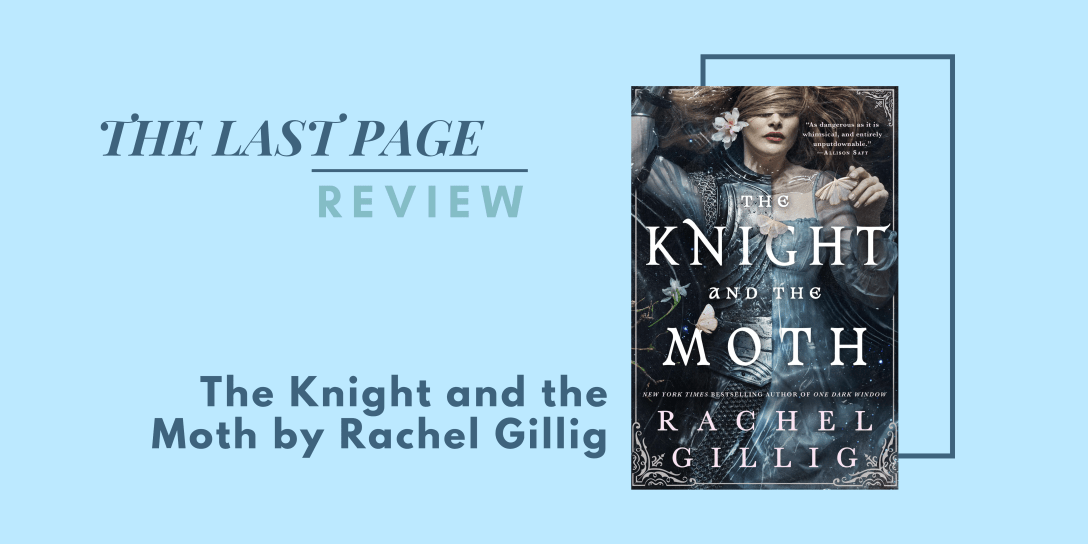
Review: The Knight and the Moth by Rachel Gillig

Please note this review includes references to some events contained within The Knight and the Moth. No overt spoilers but read with caution.

Rating: 5 out of 5.

For ten long years all Sybil Delling has known is dreams and drowning. As a foundling child, Sybil was brought to Aisling Cathedral to take on the mantle of Diviner. In exchange for ten years of service she and six other girls were provided a home, sundering their names to forever be known by a number —gaining the ability to receive and interpret visions from six figures known as Omens. Across Traum, citizens and travelers wander the long roads to the Cathedral upon the tor to have their futures divined. Sybil and her sister Diviners are their guide through the magical waters of Aisling’s spring that drag them down into dreams. Just as Sybil and her fellow diviners close in on the end of their ten years of service, Traum’s king and his retinue of knights appear at the cathedral. Not long after, Sybil’s fellow Diviners begin to disappear one by one until only Sybil remains. Desperate for a way out, Sybil finds an ally in Roderick Myndacious, the foul and brash knight she met upon the tor at the side of the king. Entering a world unknown with a foul knight and a boy king grasping at a fantasy, Sybil will learn the cost of her divine gifts and the truth to the portents and their gods.

The Knight and the Moth is a fortifying dark gothic fairytale in which errant knights, vexing gargoyle companions, and ardent romance unite to bring truth to divination and the powers that sustain a kingdom and its divine figures. Rachel Gillig is back, enlisting her penchant for atmospheric gothic fantasy in her sophomore series, intricately carved in symbolism and unending power. There were few books I was more excited for from this upcoming year than Rachel Gillig’s sophomore novel, The Knight and the Moth. I think I let out an inhuman shriek when this showed up on my doorstep and in a self fulfilling prophecy sort of way it met all of my expectations and is easily my favorite book I’ve read this winter. The gothic is already one of my favorite genres, but add in lady knights, slow burn romance, and symbolism and The Knight and the Moth transforms into its own rare flavor of gothic fantasy. In her second series, Gillig continues to deliver on transportive fantasy that deals a devastating blow, and this is one I have yet to recover from. The Knight and the Moth is a novel altogether intricate in its inquiries into religion, but unflinching in exposing the roots of belief and the pull between religion and entire kingdoms.

Kicking off a classic quest narrative of knightly adventure with a ragtag cast of characters, The Knight and the Moth contests knightly virtues and the costs of service, whether fealty to one’s king or religious piety. Opening with the arrival of a young king and his retinue upon the tor, Gillig drowns readers in divination —from the inner workings of Aisling Cathedral to the kingdom of Traum. Sybil Delling, or “Six” is our veiled window into this enshrouded world as she breaks free from Aisling Cathedral and initiates a journey to unmake the Omens, or their gods. Coin, inkwell, oar, chime, loom stone, and moth connect to a mysterious sixth figure and provide a framing for this quest journey. Rachel Gillig skillfully places her narrative portents at various places to call forth and interpret at key moments across this novel. Almost endless in its symbolism, The Knight and the Moth is veiled in a wretched sort of beauty. The fetid water and rotting flowers around the Cathedral spring portray the violence in having to drown to divine and all of it encircles the haunting atmosphere which Gillig pulls forth.

The physical journey in The Knight and the Moth is made all the more profound through Sybil’s personal arc running alongside the quest narrative. Taken in as a child and transformed into a tool to be wielded in a power struggle she was wholly ignorant to, Sybil’s journey is both heartbreaking and fortifying in its unveiling. Something I love about reading fantasy is the slow process of learning a character’s purpose within the larger context of the story. Integrating into Sybil’s perspective it soon becomes clear just how connected she is to everything from the founding of this kingdom to the continuous cycle of making and unmaking. Sybil’s journey is one of personal enlightenment and agency, two things that were taken away from her the second she was drowned and initiated as a Diviner. Sibyl and her propensity to lose herself for a cause finds knighthood as a way to gain agency and begin to command her tale. Gillig removes the facades as soon as Sybil flees the Abbey upon the tor, but it takes much longer for her to stand in her truth and truly remove her mask.

The romance in The Knight and the Moth falls into the category of bitter banter with a healthy overdose of yearning. Picture me feral in the corner while reading this novel because Rory and Sybil had me drowned in their longing (like the wax scene? I think I died). There are few things I love more than two characters who misunderstand one another finding love. Those differing perspectives which clash and create tension slowly begin to fade away as the quest progresses. The relationship between Sybil and Rory presents an interesting dichotomy that integrates within the larger commentary on religion and fidelity. The tension between these two comes at the reality of their differing belief systems stemming from their upbringings. Rory as a foundling child given a chance and a purpose at the side of a king, and Sybil, a foundling child who was abandoned to serve the purpose of a manipulative and cruel mistress puts them thoroughly in opposition — or so you would think. But Rory plays into the knightly virtue of fealty, not to his king, but to Sybil herself. And that is why this romance had me on the floor: the longing and devotion that comes from seeing someone at their worst and the constancy of that devotion.

If there’s one thing I love in my fantasy novels it’s a funky little guy following the protagonist around. I’m proud to say Rachel Gillig understands this wholeheartedly. The sliver needed to underpin the more serious tones and overarching plot of this novel is the character of Bartholomew —the stone Gargoyle who flees the cathedral and joins the quest at Sybil’s side. Little did I know that this was actually going to lead to the most heartbreaking revelation in the last third of this novel. I should have expected nothing less from Gillig who expertly interweaves these symbols and character arcs together in a masterful final act that left me grasping at the threads and desperate for more signs. The foundations truly fall down in a penultimate scene connecting to the larger deception taking place within Traum and the woman at its center.  

In The Knight and the Moth, Rachel Gillig reveals the truth to divination and the powers underpinning the faith of a kingdom. Everyone from the gods —mere humans fed on shreds of power to retain divinity— to the citizens seeking meaning upon the tor are at the mercy of one woman and the waters running free from the mountain spring. The commentary on religion as a way to keep entire civilizations beholden and subservient runs deep within this story. The disunifying portions finally find cohesion in the return to Aisling Cathedral and the confrontation with the Abbess. This final section was absolutely my favorite part of this novel as Gillig disentangles her designs and provides an encompassment for her larger commentary. It is the Abbess who claims that it is the nature of humanity to seek signs and find meaning which she, or others like her, will always be able to manipulate. The final comment that when you feed people a poison disguised as salvation they will do anything you ask was a particularly apt link within the story. As Sybil’s veil comes down and the group nears the end of their quest, Gillig connects it to the deception held by the Abbess, the portents, and their intemperate gods.

Shrouded in dreams and glimmering prose, Rachel Gillig’s The Knight and the Moth is one fantasy novel I want to stay fully immersed in. Even knowing that many readers may start this having not read Gillig’s former novels, this is a paragon to her craft and may I boldly claim —the best of her work so far. Rachel Gillig has never not brought me to my knees with her enthralling gothic atmosphere and fervent romance and I’m afraid this has unseated the Shepherd King duology as my favorite. The Knight and the Moth frames faith within a greater context of power and an unending cycle of control and rebirth. Ordinary people become gods and are forever starved for the source, but immortality is a mere tool in the hands of a greater player. In the power vacuum left in the aftermath of her concluding act, Gillig drives one last swing at her readers’ sanity. I followed some of these breadcrumbs but even I was floored in its brutality. The Knight and the Moth reveals what truth lies in heresy and the idealistic views which causes the cycle to renew. Diving into dreams, faith, and devotion, Rachel Gillig deconstructs myth in one fantasy novel which will leave you similarly transformed. Forever mourning that I have to wait even longer for the next in this series and very much missing our unconventional knight crew and endearing gargoyle companion.

Thank you to Orbit Books for providing this advance copy to review.

Trigger warnings: blood, violence, murder, death

Preorder a Copy – Out 20th May

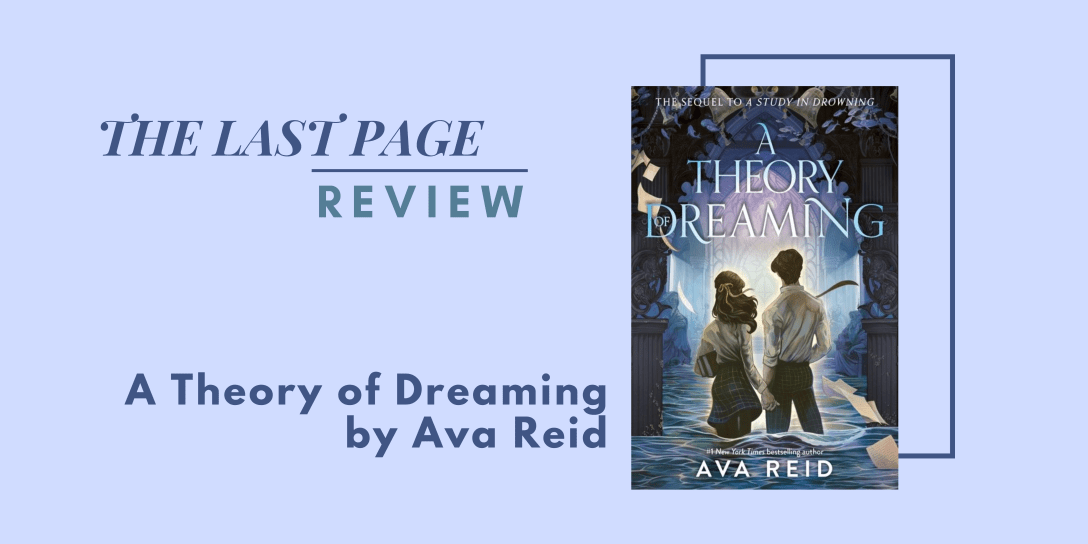
Review: A Theory of Dreaming by Ava Reid

Please note this is a sequel and includes references to former events and partial spoilers for A Study in Drowning.

Rating: 5 out of 5.

Effy and Preston survived Hiraeth, defeating the once powerful fairy king to return to Caer-Isel where neither occupy any power in the halls of its prestigious literature college. Since publishing their thesis contesting the authorship of the Llyrian writer Emrys Meridian’s, Angharad, further doors have darkened. Unmoored by the loss of the Angharad, both the book and its true author, Effy is left unguarded in a world without magic that wants nothing more than her ruination. As Effy navigates her first semester as a literature student, Preston confronts the magic he never believed that calls out in the night in pealing bells only he seems able to hear. These bells real or imagined take him to the Sleeper Museum where Llyr’s prominent scholars rest, said to protect the nation in the war effort against Argant. In dreams, he finds power in a world free from others and completely under his control. Time is running out for Preston and Effy and as the war effort between Argant and Llyr intensifies their connection may be the only thing saving them from a world that would see them lost—to stories and to dreams.

From the moment Ava Reid first drew me into the swirling tempest of her young adult debut, A Study in Drowning, it became a lifeline entirely of its own and one I have returned to whenever I’ve felt remotely adrift. Something akin to its protagonist, Effy Sayre, a tenacious young woman navigating her first year as the only woman in her architecture college who finds comfort in the Llyrian story the Angharad, a tale of the fabled fairy king more real to her than any waking thing. With this first novel, Ava Reid penned a tale of two lost souls finding familiar ground and navigating a way towards the truth. After becoming fully enmeshed in this evocative fantasy novel, it’s no surprise that I wanted more from this world and its fabulous main pairing. With the authorship of the Angharad contested through Preston and Effy’s thesis and its connections to an unstable time between two warring countries there was undoubtedly more to unpack. A Theory of Dreaming brings readers back to Llyr as tensions rise and Preston and Effy are caught in the current of war and their respective dreams which draw them further apart.

A Theory of Dreaming is a sequel that throws our wandering academics back into the turbulent world of their literature college and a nation rife with hatred for difference and dissent. Questing further meaning beyond her extraordinary first novel, Reid plumbs ever deeper into the depths of the workings of Llyr and the connections between academic institutions, story, and growing nationalism. Far from the front Effy and Preston fight their own battles in the classroom and the streets of Caer-Isel. In spite of their love and the teamwork they found back at Hiraeth Manor, Preston and Effy retreat into their former roles and the struggles they feel they must bear alone. Trusting in the facts, magic has never had any place in Preston’s life yet it is in this sequel that he contends with magic and the power it can wield for him. Effy, who came to represent all of magic’s possibilities in book one has lost her direct access to it—the Angharad unveiled and the fairy king forever eradicated. Without her lifeline, Effy is drowning against a roaring current and scared to show the full extent of her struggles.

A Theory of Dreaming slots perfectly into the conversations that began back at Hiraeth in a manor encroaching into the sea. First and foremost is the power of story in weaving a sense of national identity, and how that is exploited. The authors of these stories are Llyr’s greatest figures—who rest forever immortalized in the sleeper museum where it is said they hold power to aid Llyr in its decades-long war against Argant. Is this a truth or fiction? Reid brings this into focus through her characters Effy and Preston fighting for their place in a system that does not want to acknowledge their humanity. Opening up to his point of view, this sequel sees Preston confronting a dream world entirely under his control and Effy losing herself to her bitter reality. Preston and Effy come to represent the conflict between two opposing worlds, the magical and the real, and Argant and Llyr. But how does one find their footing in a world that exists to marginalize them and profit off of that oppression? Preston finds this immensely difficult as the war effort amps up and he confronts further violence for his Argantian identity, and Effy receives further harassment from her peers for daring to take up space as a woman in the college of literature. 

I love when follow-up novels exemplify the work still needed, and how an established love story doesn’t mean the struggles have come to an end. That is exactly the case with Preston and Effy whose journeys diverge upon their return from Hiraeth. Preston gives into his frustration in the waking world and the peace of the past in dreams—conversations with his father and the literal pedestal he has put Effy upon. His fear of losing her causes him to be blind to her struggles while closing her off completely to his. On the opposite side, Effy’s fear of burdening her partner leads her to hide her pain. Reid continues Effy’s journey most naturally in this sequel in her search for further connection. Effy finds solace in the truth of abused and cornered women who managed to write their stories within the margins, much like her own. The power of story in mythologizing these figures and erasing them for the agendas of men and a nation is an important component of this second novel. As Llyrian writings are unveiled to be merely a prop that served to further a needless war, Reid flawlessly exposes the truth and the tragedy behind Llyr’s agenda. 

A Theory of Dreaming is a sequel that throws you back into the onslaught of the storm but does not lose hope in its eventual passing. No amount of this sequel feels overwrought, its dialogue and thematically rich commentary on a nation stand strong in today’s political landscape. Connecting the power of story in building the ideology of a nation utilized as fuel for propaganda and war, Reid highlights its scars and its lasting legacy. Ava Reid balances this with the continued love story between Preston and Effy as they chafe against the constraints of their world and their place within it. A Theory of Dreaming proves that there is still more to surmount but that love is the reason we can continue to navigate this waking world—and that sometimes we must be the ones to save ourselves. For Preston and Effy that is acknowledging just how much they need each other all over again. The undertow to this duology being Effy and Preston finding love and livelihood even as they confront fascism and violence is life-affirming as it is a form of resistance. It’s been a long time since I’ve been surprised by Ava Reid’s brilliance (it is their natural state after all) and this sequel is not only brilliant it is vitally necessary. Consider me in awe of Ava Reid from now until the end of time.

Thank you to Edelweiss and the publisher for providing the advance review copy.

Trigger warnings: misogyny, xenophobia, violence, drug abuse, suicidal ideation, suicide attempt, sexual harassment

Preorder a Copy:

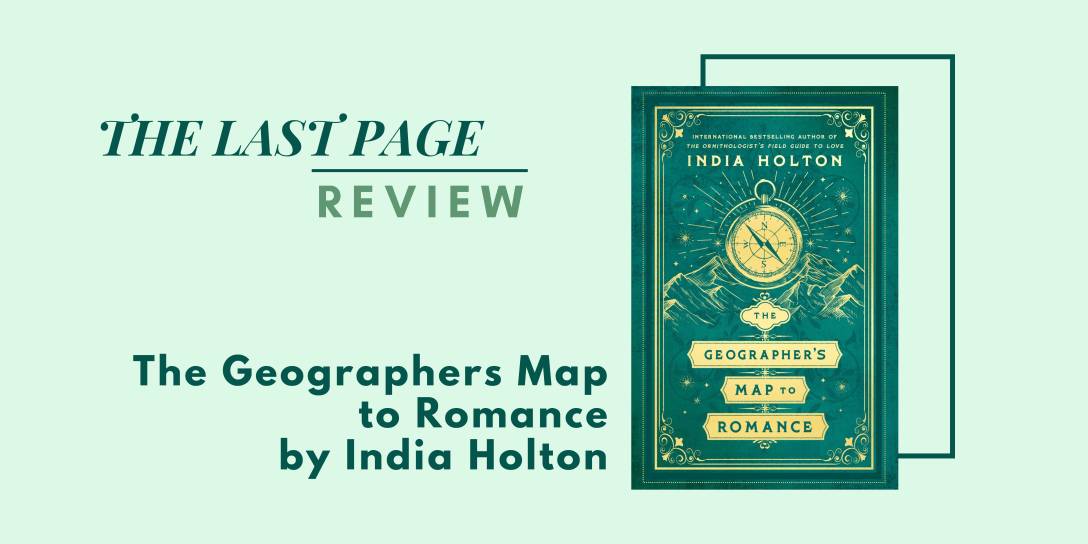
Review: The Geographer’s Map to Romance by India Holton

Rating: 5 out of 5.

Elodie Tarrant, a geography professor with a penchant for chaos is more than ready to solve any problem. But she’s finally been handed a problem that cannot be neatly solved nor entirely avoided. Her problem is Gabriel Tarrant, another professor of geography and the unfeeling man she is unfortunately married to. Since their marriage crashed and burned over a year ago, Elodie has avoided her husband at all costs—in the shrubbery and campus byways—all to keep from confronting her mistake and his general ire. But in the aftermath of a strange magical event in a Welsh village, Elodie and Gabriel are inconveniently assigned to the case, making avoidance altogether impossible. Together, Elodie and Gabriel travel to Wales to confront this magic and determine its cause before disaster spirals back into England. Discovering how to curb the strange magic could prove disastrous, but no more than reaching for the love they have been denying for so long.

India Holton has long been an author I have turned to for strange, fantastical, and wonderfully magical love stories only she seems capable of charting. The Geographer’s Map to Romance is the latest of her Loves Academic historical fantasy series. In this second installment, two estranged geography professors reunite after their failed marriage of convenience to confront a scholarly mystery in the Welsh countryside—battling magical disasters and growing feelings with varying degrees of success. Give me a marriage of convenience between a woman who is sunshine incarnate and the grumpiest man on earth and the speed at which I will come running will be concerning to everyone around me. India Holton puts her spin on this classic pairing with hilarious turns of phrase, unrestrained magic, and twists on classic tropes within the genre. Grounded in magic and academic pursuit, The Geographer’s Map to Romance might be my favorite novel from Holton to date. Holton’s narrative voice is incomparable, bent towards crafting an imaginative, unforgettable romance. 

India Holton endeavors to suffuse her mixture of whimsy and utter absurdity into her latest historical romantic fantasy that left me far too entertained, swept up in the underlying romantic tension between two misunderstood academics avoiding their feelings as danger ensues. Endearing and entirely bemusing, The Geographers Map to Romance charts out a course rigged with chaos—American tourists turning into cows, waltzing to get out of quicksand, and intensifying versions of the “not enough bed” trope (a superior version dare I say). Holton mixes these moments of strange adventure with slow-burning romance that is the real magic weaving beneath the mystery. Gabriel and Elodie were perfectly matched from the start and Holton draws this out with a begrudging team-up that demonstrates just how well-suited these two are. Across the investigation, Elodie and Gabriel take on roles fairly representative of their dynamic as a couple. Elodie is the person who throws herself headlong into danger and Gabriel is the buttoned-up academic whose heart goes with her every single time. A true recipe for success where their romance is concerned.

As Elodie and Gabriel work towards preventing a calamitous magical cascade, Holton brings their perfectly constructed roles to a standstill. None more so than with our hero Gabriel Tarrant. Despite his emphatic aversion to poetry and anything resembling romance, Gabriel is the true romantic of this story hidden beneath a prickly facade. The grumpiness, the monosyllabic answers, and the carefully curated exterior are certainly part of his charm but they allow him to close himself off to real connection. Far away from Oxford and their academic roles, Elodie and Gabriel grapple with their self-worth. Geography is their shared passion and they’ve wielded it as a weapon against any sort of vulnerability and connection they could have together. India Holton takes her time in excising this conflict. Elodie feeling like she is too flighty for someone like Gabriel, who in turn feels like he has to change himself to be worthy of her love was a compelling center for this conflict. The reconciliation of these differing points of view and complicated feelings of self-worth is an explosion of feeling unfettered even as uncontrolled magic builds to a calamity.

The Geographer’s Map to Romance is an exemplary historical fantasy novel about loving without conditions and being loved for who you are. India Holton knows how to bring disastrous circumstances together and still wind up with a tremendously heartwarming romance by the time it’s complete. I just wanted to stay lost with this one—with Gabriel and Elodie proudly soldiering their hurts and their desire to be truly seen by one another – adding or subtracting a few near-death experiences. India Holton has struck an emotional chord of belonging with this beautiful love story about meeting people right where they are. Elodie and Gabriel bring on the yearning and the not-so-quiet grumbling and all I want is to trek off on more adventures by their side.

Thank you to Netgalley and the publisher for providing this arc in exchange for an honest review.

Trigger warnings: misogyny,

Preorder a Copy

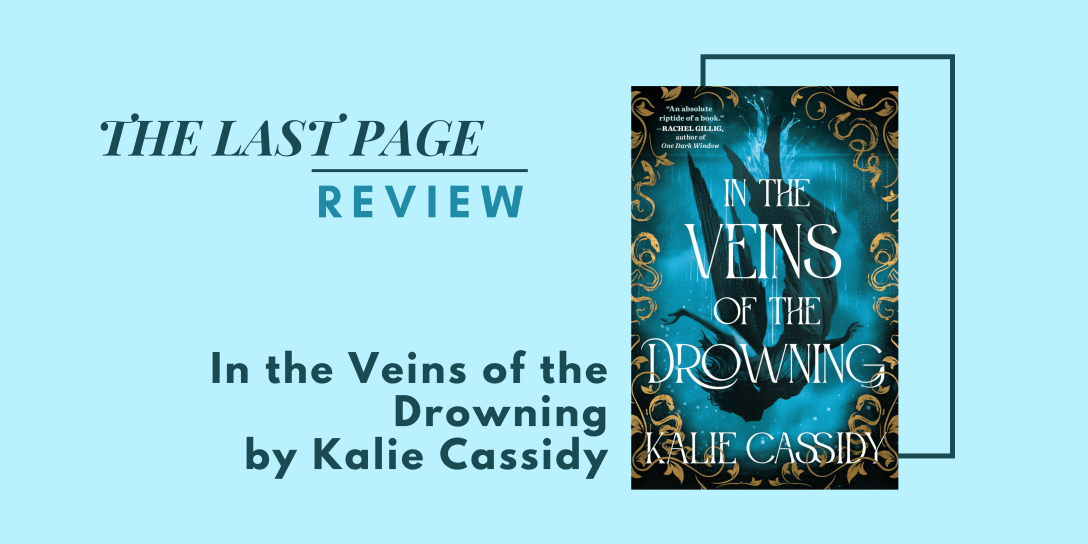
Review: In the Veins of the Drowning by Kalie Cassidy

Rating: 5 out of 5.

High up on the Isle of Seraf in a fortress of stone, the sea cannot find refuge. For Imogen Nel, ward to King Nemea, it has become her prison. Raised at the side of a monstrous king, Imogen hides the truth of her heritage beneath the very wings bolted to the wall in a warning, “The Monster is Always Slain.” Despite the siren simmering beneath her skin and the part of her that yearns for the salt of the sea, Imogen has never wanted anything less than to hide – from the king who began the scourge against her kind and the soldiers who hunt sirens down mercilessly against the shore. On the eve of her marriage to an honorable captain, Imogen encounters Theodore, a young king duty-bound and cold. When Imogen’s safety is threatened, her siren side emerges in a bloodlust that leaves her fiance dead and Theodore her only ally. Siren-bound, the two flee the kingdom with his retinue, hoping to break the bond and destroy the hold of an ancient power over waters filled with the undead. Caught between his duty to his people and her call to the deep, Theo and Imogen will tempt more than their physical ties to draw out an immortal power and hold fast to their growing connection which could serve as their salvation or their ruin

Tempestuous as a rough and stormy sea, In the Veins of the Drowning is a resplendent romantic fantasy novel that dragged me down to its depths in answer to its luring siren’s call. In the years since I first began reading folklore-based fantasy, I have keenly felt the lack of stories surrounding the siren legend. Kalie Cassidy sets out to rectify that in her debut novel with the claws and wings befitting such a tale. It didn’t take long for this to ensnare me – with its richly connected mythos and sharp prose connecting back to siren folklore I was already lost in its waters with no desire to resurface. Concerning monsters, inhuman and not, and the monstrous things we do to survive, Cassidy chronicles the lives of two individuals trapped by unerring duty and the illusive call to the deep. The ardent love story that develops is the still beating heart of this narrative, tested against powers far greater than two unlikely souls unexpectedly bound together. In the Veins of the Drowning is very much for those who support women’s wrongs but also those who prefer their fantasy served with a hefty dose of romance. Kalie Cassidy’s fantasy adventure is a tempting combination of romance, kingdom politics, and daring escapades entangled in a perfect storm of a book.

Sirens may swarm the deep, but In the Veins of the Drowning posits that the real monsters may not be so mythical. Imogen Nel, a siren and ward to a power-hungry king, lives her life in complete secrecy fighting only to retain her survival. A siren who conflictingly reveres and fears inheriting her gifts, Imogen is a puzzling figure through which Cassidy explores the monstrous. The imagery of wings splitting through the skin and claws sharpening to points as Imogen makes her first kill is an odd sort of homecoming. With her siren side unleashed in a moment of duress, Imogen is held in contrast to Theodore, the King of Varya – a man so constrained by duty he cannot break free. Theo and Imogen are opposing forces drawn together in blood, each with their unique conflicts: Imogen inheriting her siren gifts and a dark fate, and Theo, trapped by duty unbroken even by his heart’s desire.

Imogen possesses a rare self-assuredness that remains in place even as she learns the truth of her heritage and her destiny. There are so many moments where Imogen stands adamant in her decisions arming her with a multifaceted edge as she fights her fate and the consequences of giving into her siren abilities. The sequence following the death of Imogen’s fiance as she attempts to siren bond with Theo, is so iconic and I fear that it only made me love her more. Despite the siren bond that draws him closer to Imogen, Theo is caught up in his personal agendas and biases unable to see beyond his limiting perspective. Imogen realizes this almost immediately and the concise way she flays him apart – all with just her words, is by far my favorite of their interactions. Imogen is a product of her situation, trapped for years in a kingdom that restricted her nature and sought only to control her. Theo plays into this initially through his view that power is to be wielded and her heritage has been wasted because of her poor choices. But as the King of Varya, Theo is part of a system that exists to serve him. Ironically, the same kingdom that has provided him freedom is entrapping him, something he does not see until it is too late.

In the Veins of the Drowning features my specific brand of romance: a man held captive by honor falls for a woman who is his entire undoing. Theo of Varya had the perfect amount of awe-struck, begging, crawling, moaning, groveling, on his knees behavior for Imogen who deserves nothing less in the partner who stands at her side. From their first meeting upon the parapets of Fort Linum, Cassidy draws Theo and Imogen together as reluctant allies and spends the rest of the book strengthening this bond. The addition of the siren bond and their differing perspectives creates some wonderful tension as this romance evolves. Both Theo and Imogen have been taught to view relationships as transactional but that is put to the test as they become allies and unexpectedly fall in love. Theo’s profound misunderstanding of Imogen is intertwined with this. For Theo, his initial desire for Imogen is something to be held captive to like the magnetic lures she is capable of using to draw others to her will. Surrounded by people who turn to violence or insinuate that she is to be loved despite her nature, Imogen deserves to be loved without reservation. This is what she eventually finds with Theo, who uncovers the depths of his misconceptions and spends an indeterminable amount of time making up for them.

In the Veins of the Drowning is easily one of the best romantic fantasy novels I have read in recent years. Kalie Cassidy wields a power not unlike a siren in penning her magnetic fantasy debut that strikes the perfect harmony between dark fantasy and sweeping romance. Part of what I love about siren folklore is what it can lend to discussions concerning our humanity. Cassidy unpacks how monsters are often the product of power, and all the ways in which love and hate are not so easily separated. Witnessing Imogen come into her power, for good or for ill, while exposing the roots of her past was a satisfying landing place for this first installment. Very much looking forward to her ‘bringing it all down’ era in book two and everything involved in rectifying the events that concluded this first novel. In the Veins of the Drowning is relentless, both in its pacing and its conclusion that I somehow dreaded and anticipated in equal measure. With that ending it’s safe to say that Kalie Cassidy has me hanging onto her every word and I am (im) patiently awaiting their eventual reckoning.

Thank you to Netgalley and the publisher for providing this book in exchange for an honest review.

Trigger warnings: blood, violence, death, murder, disembowelment

Order a Copy:

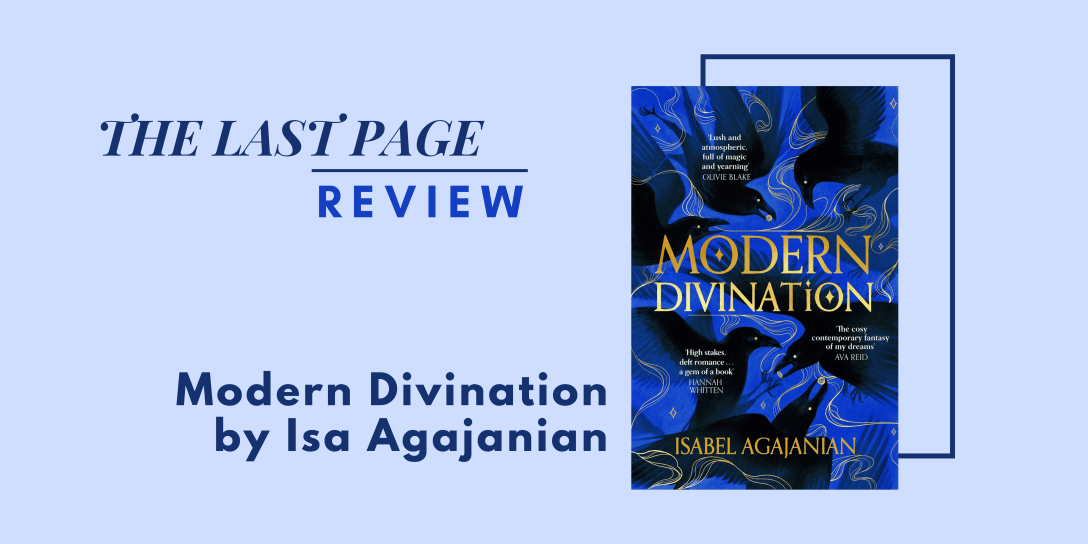
Review: Modern Divination by Isabel Agajanian

Rating: 5 out of 5.

Aurelia Schwartz has a secret. One she has closely guarded for twenty-three years. Aurelia is a witch, a fact she has hidden away from everyone in her life as she attempts to balance two opposing worlds. All it takes to bring this secret life crashing down is the murder of another witch and classmate during a campus soiree. The last thing Aurelia expects is to witness the aftermath of a murder, but the fact that Theodore Ingram, her academic rival should be by her side feels all the more targeted. Ever since she started at Cambridge, Ingram has made it clear Aurelia is beneath him, but now he insists she accompany him home for the holidays, pressing that neither of them is safe – because Teddy apparently has magic. As Teddy and Aurelia sequester themselves away from prying eyes with his magical family, they attempt to unravel the mystery of the murder, the culprit, and their complicated past. It appears the killer is far from finished and to uncover the truth Aurelia will have to undo her carefully constructed boundaries and set aside her animosity with Teddy, which could prove her undoing.

Modern Divination is the perfect example of a book that only settles deeper into your bones the longer it sits with you. This book is an exquisitely crafted blend of tea steeped to perfection, with dark notes of magic and a hint of bitterness rendered sweet through its stimulating academic rivalry. Having read the independently published version of Modern Divination upon its initial release back in 2023, I never expected to read the revised edition and fall even more in love but somehow that is exactly what occurred. This revised edition of Isa Agajanian’s original text is an addictive combination of witchery and fate, complete with enough yearning to make me feel like I was being repeatedly stabbed in the chest. Isa has completely raised the bar with this revised edition — sharpening the atmosphere and the incredible tension between Aurelia and Teddy into something entirely its own. If reading this for the first time left me longing for its sequel, then the updated version left me a shell of my former self and I will not recover until Quiet Spells is in my hands.

Isabel Agajanian’s, Modern Divination is a painfully relatable window into loneliness, grief, and the connections we close ourselves off to by insisting we bear our paths alone. Where the academic atmosphere of Cambridge and the secluded English countryside enthralls, Modern Divination’s true magic lies in its central duo realizing just how wrong they have been about each other. In a book set so firmly around an academic rivalry with a thread of magic weaving throughout the narrative, characters Aurelia and Teddy are an outstanding pairing. What can I say about Aurelia Schwartz besides the fact that I love her and she can do no wrong? An unyielding and ambitious young woman – Aurelia’s academic vivacity is matched only by her rival and arrogant specter, Theodore Ingram. Teddy is seemingly all ego with a past completely hidden from view, but after becoming targets to a witch killer, the carefully constructed walls these two have defended come crashing down. This is my favorite flavor of romance, there’s brooding, yearning, and snappy interactions as these two hold fast to their dynamic not wanting to be the first to concede to honesty.  

Reexperiencing Modern Divination through a revised edition feels like looking at it through an inverted lens, yet the core of the story remains the same: two rivals finally laying down their weapons and opening themselves up to connection. Casting off the protective bonds that academia has afforded her, Aurelia struggles to let people in after building a life set around pushing them away. This innate struggle is intensified by the longing she feels for Teddy in contrast to the way she’s viewed him for so long. Meanwhile, Teddy is down bad. He’s that specific type of love interest that’s just groveling and disgusting longing stuck together in one body with few ways to make those feelings known and I love it so much. Their slow burn is this wonderful give and take centered around falling for each other because of their flaws, as they unpack why they became rivals. Isabel Agajanian understands how to build a true rivals to lovers story and the layers required to deliver that satisfying emotional payoff. Aurelia and Teddy’s romance reveals the risk of love and connection is in the potential to be hurt and changed, but it is worth it no matter the outcome. Modern Divination examines the consequences of magic with an imperfect love story I’m more than a little obsessed with. Book two cannot come soon enough and I’ll be here yearning away in the meantime.

Thank you to Netgalley and the publisher for providing this arc in exchange for an honest review.

Trigger warnings: murder, blood, violence

Buy a Copy:

Review: Cursebound by Saara El-Arifi

Rating: 5 out of 5.

Yeeran has departed the fae lands to return to her home and end a centuries-old war. Leaving behind her love, Furi, and her sister, Lettle, who now stand against a wave of dissent, deadly assassins, and a determined group who seek to end Lettle’s life. Used to being left behind as her sister faces war, Lettle soldiers a war closer to her heart – one of fae politics and history long buried. Trusting that her sister will bring about an end to the elven war, Lettle seeks to find answers to breaking the curse that leaves the fae forever bound to Mosima. Yet the fates who used to offer her guidance are strangely silent and her powers completely closed off to prophecy. To find answers she unites with unlikely allies and a stranger who found his way into Mosima despite a lack of fae heritage. When Yeeran’s former lover courts war against the fae instead of peace, Yeeran and Lettle must reunite and reconcile their two worlds before the lives of the elves and fae are plunged into a permanent darkness.

What I admire most about Saara El-Arifi is her ability to leave you spellbound with her writing and bereft upon finishing her stories. I have been chasing that magic since I first read her debut, The Final Strife, and her romantasy series Faebound took this captivating recipe and soared to new heights. Capturing that classic romantasy feel in a fantasy world burdened by generational cycles and war, El-Arifi infused an underlying depth to fae fantasy I had long been yearning for. Including queer and disabled characters fighting for their futures and finding love, and it’s clear why Faebound was one of my favorite debuts of the past year. As prophecies come to light and the history of two distinct peoples is unburied, Cursebound ushers in a new path for Saara El-Arifi’s Faebound series. Characters and loves are ripped apart as the freedom of the Fae and Elven Lands is contested. Cursebound is a follow-up that forges a new path within the confines of this world and reveals hidden depths that left me confounded and begging for the next book in this dazzling fantasy series.

Cursebound brings us back to Mosima, as Yeeran departs and Lettle remains. Despite the groundbreaking revelations that shook the foundations of the first installment and the tremendous change our characters have undergone, sisters Yeeran and Lettle are confronted by their old roles as they settle firmly into new ones. This second novel is where El-Arifi further hones in on her world-building, established character dynamics, and lore. The introduction of new characters really lets the narrative breathe and integrates further depth into the upheaval of the Fae and Elven worlds. Lettle continues to be my favorite character in this series and she takes on a substantial role in this novel as her partner Rayan is elevated to king and she relies on her abilities to free the fae from their home and prison. Her quiet strength is different than Yeeran’s fire, but no less important. Yeeran faces a struggle of a different nature, her past which is in direct conflict with her present. As she travels back to the Elven Lands and puts her new life on the line to attempt peace that fire is reenlivened by the very life and love she is fighting for.

From Mosima to the Elven Lands, Cursebound triggers an unrelenting pace with moments of romance, immense danger, and groundbreaking revelations. El-Arifi is a master at this balancing act and nothing is out of proportion across this gripping sequel. The continued conversation surrounding the necessity of storytelling and personal history is a powerful one – striking directly at the overarching journey of righting the past and forging a future untethered by its weight. Each of our characters face new relational conflicts in this installment that move in tandem with the external conflict. Furi and Yeeran in particular bear the costs of caring for their people and their relationship suffers as they walk down different paths to secure peace. The rage, determination, and fire these two characters possess have always been a uniting force for their love, but that finally may not be enough for what they desire. Building to yet another shocking twist (seriously how is she so good at these), Cursebound is a superb fantasy sequel. Its unique way of laying the groundwork is sure to reveal something all the more astonishing in the final installment. From her blazing Ending Fire trilogy to Faebound, Saara El-Arifi is an exceptional talent. I’ll gladly wander through any book she writes and Cursebound is just the latest in what will no doubt be regarded as one of her best fantasy series.

Thank you to Netgalley and the publisher for providing this arc in exchange for an honest review.

Trigger warnings: death, blood, murder, death of a parent (mentioned), war, violence.

Preorder a Copy: