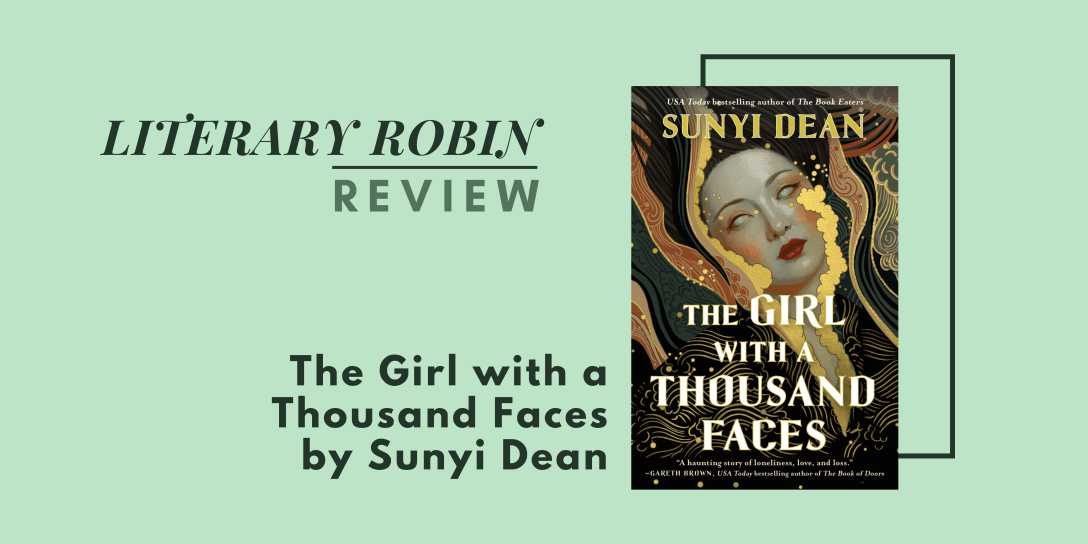
Review: The Girl with a Thousand Faces by Sunyi Dean

Rating: 5 out of 5.

Kowloon is a city of ghosts. For a girl with no memories washed up upon the shore, it presents an opportunity for a rebirth. Mercy Chan has a unique ability: not only can she see ghosts, she can commune with the dead and allow them to move towards the afterlife—a rare talent coveted by those who make Kowloon Walled City their home. For decades Mercy has worked as a ghost talker of sorts in connection with the Kowloon triad. She spends her days communicating with the ghosts who linger, usually the angry and wronged, bringing justice to their afterlife and to the city itself. But something darker lurks in the shadowed spaces, luring citizens to their watery deaths and speaking to Mercy through the bodies of the departed. With a proposal to demolish Kowloon up next on the docket, a serial killing spree could be what allows the legislation to pass. Even more sinister, this killer appears to have a personal connection to Mercy and is intent on drawing her close to their crimes almost as if in retaliation for something. The answer lies deep in the past in memories Mercy is unable to access. As Mercy follows closer and closer to this ghost, the less she can deny that the vicious spirit is on a quest for revenge and the object of its ire: Mercy herself.

A ghost-talker confronts her missing past and the ghosts that linger in Sunyi Dean’s historical gothic feat, The Girl with a Thousand Faces. It feels like eons since I first discovered Sunyi Dean and drifting back into her work feels as languorous as a cat taking a long stretch in the sun—entirely out of sorts with the actual tone of Dean’s sophomore novel: a historical gothic fantasy all about ghosts and the cycles we perpetuate. The Girl with a Thousand Faces is as cutthroat as the ghosts left to steep in sadness, anger, and regret. At the helm, Mercy Chan, a fifty something ghost talker with a mysterious past facing down a ghostly killer intent on forcing her to confront her own forgotten ghosts. The Girl with a Thousand Faces makes the reader into a kind of specter, wandering Kowloon Walled City alongside Mercy as she unravels the past. Dragged down deep into waters ancient and strange, Sunyi Dean weaves a startling narrative that will have you questioning the true villains, be they paranormal or man made. Vindictive ghosts are one thing, but Dean’s true talent lies in her glimpse into the real horror beneath, the devastations of war, grief, and generational traumas—with everything a cost of ignoring that pain. Brave this strange ghostly saga and whatever you do don’t look down.

The Girl with a Thousand Faces is a bit of a genre-bend, equal parts historical, fantasy, and gothic that begins to take shape through the unique setting of Kowloon Walled City. Setting is everything within a gothic novel and Kowloon, a city of ghosts (both human and paranormal), could not be more perfect for the story Dean constructs. Right away you can feel the claustrophobic nature of this densely packed city, a community of humans and ghosts that is home despite efforts to demolish it post-war. Kowloon is very much a city that reflects the pain that cannot be buried, of real people attempting to make a living after enduring the horror of the second World War. It makes sense then that ghosts have congregated within its boundaries and have continued to flourish even in the decades following. In a city rife with ghosts, Sunyi Dean questions what are the real ghosts—are they the literal phantoms and wraiths clinging to life, or do they represent a darker part of our humanity that we refuse to examine and excise. The Girl with a Thousand Faces presents an interesting duality in its perspectives, both ghost and human, to interrogate not just this essential question but how ghosts themselves come to be.

Much of what makes this book so hard hitting is the humanity underlying the horror. That we create our own ghosts which follow us and our descendents is far more horrific than the literal ghosts appearing within the narrative at times. There is a grief that comes alongside knowing this, in understanding that Mercy’s story is the result of pain endured by her family and a suffering that was never addressed generations prior. Relationships between sisters, mothers, aunts, and nieces, are all part of this delicate tapestry and a pain that went unanswered. These relationships are the beating heart of The Girl with a Thousand Faces and the nuance in depicting motherhood, specifically the relationship between mother and daughter were some of my favorite parts of the novel. Siu Yin and her mother, dancing and swimming with ghosts rather than reaching for each other in hard times, cogs in a relentless cycle that initially appears impenetrable. Throughout this complex web, Dean underpins the staggering traumas of war and colonialism which shape us and those who come after. In the aftermath, sometimes the pain caused is too great and by trying to hide it we cause more, leading to further tragedy. The Girl with a Thousand Faces knows the work of grieving and moving forward is a heavy burden, but it is essential work and part of freeing our own inner ghosts.

The Girl with a Thousand faces is the best thing a book can be: clever and horrifying as hell. While it has been some time between Sunyi Dean’s debut, The Book Eaters, and her sophomore novel, I would wait twice as long if it means she can keep delivering books such as this one. The Girl with a Thousand Faces is certainly one of the most interesting historical novels I have ever read. A ghostly jaunt through a post World War Two Hong Kong—specifically Kowloon Walled City—as Dean examines what makes a ghost and what it takes to truly reconcile them. The Girl with a Thousand Faces nails all the bittersweet facets of forgiveness and how essential it is to breaking the cycle of grief and trauma. Not without its heartbreaking moments through others who did not have the language to do the work of grieving, instead languishing in that pain and trauma and never fully surfacing. Though horrific, grief ridden, and painful at times, there is a tremendous joy found in breaking the cycle, in doing the hard work of reconciliation. Certainly not an easy path but one that is worth the work. Sunyi Dean doesn’t deny that we don’t always get the answers we’ve been longing for, craving an understanding from our family members who are long gone, never there to give us greater context. Those can be ghosts too, following us ever long even as the cycle is rented in two. Haunting yes, but fiercely hopeful, The Girl with a Thousand Faces asks us to trust in the haunted and dare to sink knowing we will eventually surface—if we can just make that leap.

Thank you to Edelweiss and the publisher for providing the advance review copy.

Trigger warnings: violence, murder, depression, death of a parent, grief, war, mass death
Preorder a Copy — Out 5th May

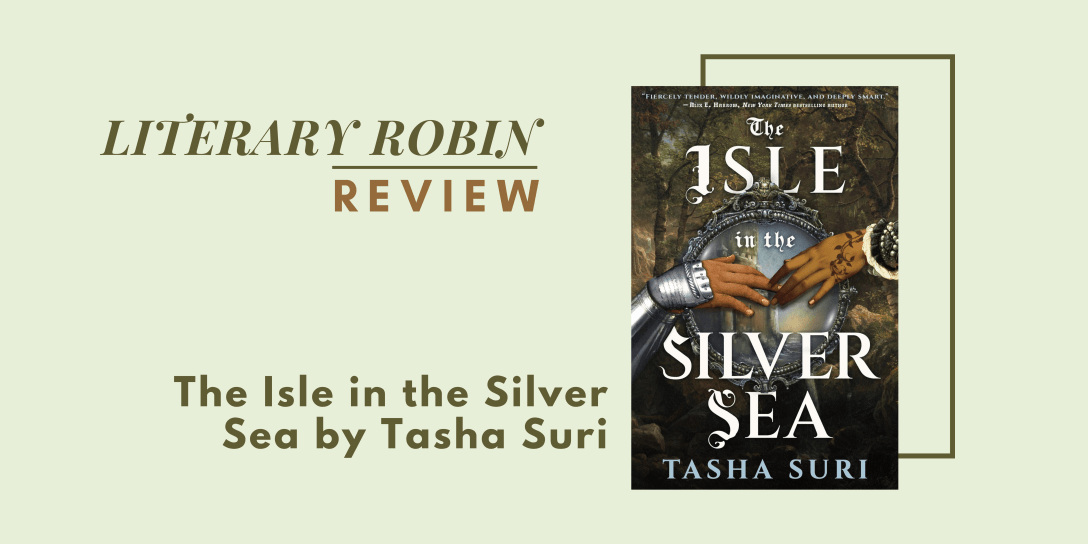
Review: The Isle in the Silver Sea by Tasha Suri

Rating: 4 out of 5.

There is an island in the sea that subsists itself entirely on stories retold. Lifetime after lifetime the characters from these tales are reborn to play out the narrative in an endless cycle, else the isle shall fall. For some this means fame or fortune, but for others its life in an enchanted wood as the evil sorceress, or a knight doomed to first kill his great love before killing himself. When she first arrived on the shores of this great Isle, Simran knew she was destined to play out the tale of The Knight and the Witch as the powerful sorceress incarnate. In this tale, a knight and a witch are doomed to love and to die at the other’s hand. Simran will do anything to escape this fate, but a story is a powerful thing and not even a determined witch can outrun it forever. One fateful evening, Simran encounters Vina, a dutiful knight to the Eternal Queen and undeniably the knight set to win her heart and end her life. Escaping Vina’s clutches, Simran travels home where she immediately confronts a murderous assassin intent on ridding the island of the stories that fuel its survival—and her story is next. Stealing away her close friend from childhood, Hari, the assassin gives her a task: find out his name, and discover why he cannot die. Too insurmountable of a task to accomplish alone, Simran must ally with Vina, her knight and intended killer, to discover the true beginnings of the isle and if they can rid themselves of its deadly fate.

Ensnared by a story takes a literal sense in The Isle in the Silver Sea, in which an island endlessly rebirthed through stories is doomed to fall unless a reincarnated supply of characters follow a tale eternal—down to the very letter. Tasha Suri’s newest fantasy standalone brings queerness, sapphic lady knights, witches, and sprawling libraries into the center focus and goddamn if it didn’t leave me wanting to fall into a never ending cycle of story (wherein I fall for a hot butch knight). That and exploring old books in a library hidden away in an ancient forest. Romance and violence are a double edged blade in this novel, as a witch and knight face down a fate that can only lead to one thing: their death. But knowing your fate is to die does not mean you cannot yearn at unprecedented levels, and Tasha Suri takes that challenge at its utmost. A pale assassin stalks the stories that have let the island prosper, but it is a set of archivists serving as the very architects of history that feel the most sinister. Tasha Suri examines the preservation of history, from those determining the fate of certain narratives to the construction of a nation. In a fictitious Britain intrinsically tied to story, Suri swings her sword at myths, monarchy, and a vicious nationalism intent on controlling the narrative by any means necessary. Even riding a nation of its “otherness” and anything antithetical to its agenda.

The Isle in the Silver Sea poses an essential question: who decides what stories are told, how they are designed, and how they are disseminated—and what happens when there are those that threaten this goal. Britain stands as the bedrock for Suri’s inquiry where stories are a fuel, both in the literal sense to ensure the island’s survival, and for the rhetoric that is kindle for an ever burning flame of a nation. Archivists pour over a plethora of the island’s written information, preparing a narrative where nation is everything and the crown triumphs because incarnates do their duty. There is no room for heresy, or outsiders questioning the way forward, and they are dealt with in a quiet violence as they are cut from the narrative. Certainly what unites the lady knight books of this year is the examination of storytelling as a deliberate act of mythmaking, and how stories can serve as a stepping stone for higher powers forcing their sinister agendas. It’s not that stories aren’t beautiful— when they have the space to flourish unrestrained—but that those that are carved out for some higher purpose will in turn be wielded as a weapon. Epigraphs at the start of each chapter mark a process where archivists determine the acceptable tales for mass consumption, and those that are a threat to the narrative they’ve constructed. It’s deliberate, it’s violent, and it leaves no room for new stories to take hold. After all, what is a nation if not a collection of narratives molded together to suit its own image. 

Ruled by a queen everlasting, this island constructed by story sees otherness as the true threat. No stories emerge from the outside, and no outsider is able to take up a prominent role within the narrative. Simran Kaur Arora, a witch from elsewhere, is thus a contradiction. A blip in the cycle that should have ensured a blonde and blue eyed witch play out the tale of The Knight and the Witch. But otherness is strength, as we well know. Against her deadly fate, Simran meets Vina, a valiant knight raised in service to the queen everlasting. If you’ve read a Tasha Suri book before you’ll be prepared for the friction between reluctant allies who maybe also want to kiss a little. That’s Vina and Simran in a nutshell, yearning for what cannot be while avoiding their feelings. When one’s fate is tied to their lover, to kill or be killed, you’d think there’d be no room for yearning. Tasha Suri is here to show us just how wrong that is—in fact it makes the yearning that much stronger. Between trekking through a disappearing forest, cutting down trees while exasperatedly saying your lover’s name, being captured by a group of rogue witches, and trying to save the isle, these two imbue romance. Some of my favorite passages with Vina and Simran are where the romance is unexpected and relates back to a crucial part of memory: the act or desire to document. This is essential to all that the Isle in the Silver Sea is trying to impart and just makes these interactions all the more romantic.

Tasha Suri’s legend crafting prowess is a vital part of The Isle in the Silver Sea: a story all about stories themselves. I’m not sure anyone else could have constructed such a glorious tale of reincarnated lovers breaking free from the narratives designed to control them and an island built upon stories. Ink stains, tattoos, old libraries, forests, and legends broken apart and remade are the scattered pieces brought together and unified within this novel. At the heart of this are the stories themselves, and Suri makes it clear: diversity of perspective and experience are what truly keep the island alive. In all parts of my reading experience, I viewed The Isle in the Silver Sea as a love letter to those who not only painstakingly preserve history but make it widely available. Not just the archivists, but the librarians who toil endlessly to help make information accessible (and are very much under fire right now). The Isle in the Silver Sea is another essential reading for the times we are in. Where inaccurate information is widespread and individuals are handed a narrative to suit someone else. In this regard, to question is necessary, and to seek the truth is a key part of resisting. The Isle in the Silver Sea shows just how affirming a story can be when entrusted to the right hands, and how dangerous when in the wrong ones. That otherness does not mean you cannot build a community or a story of your own, if you can at first pick up the pen.

Thank you to Netgalley and the publisher for providing the advance review copy.

Trigger warnings: death, violence, murder, xenophobia, racism

Preorder a Copy – Out 21st October

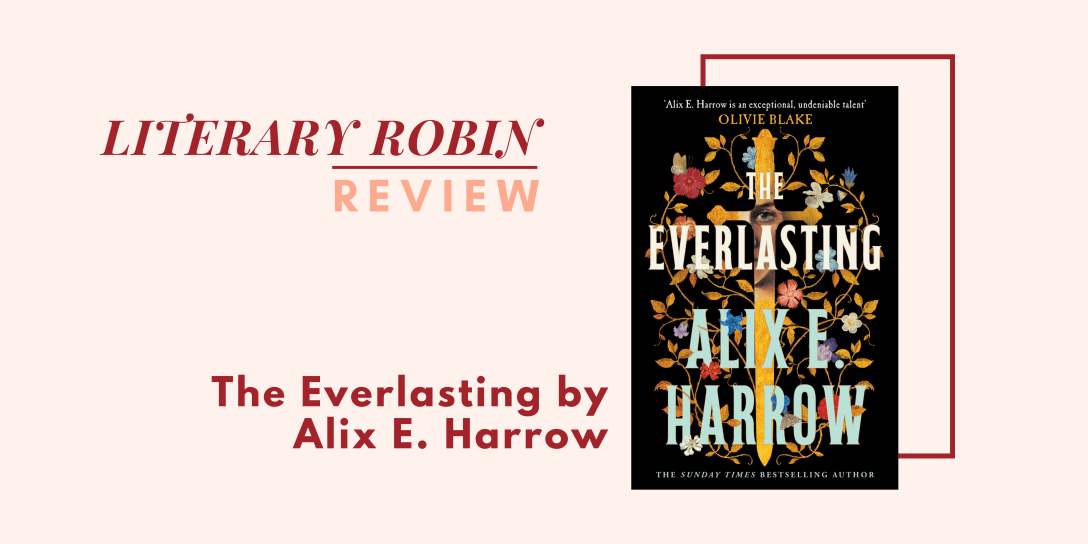
Review: The Everlasting by Alix E. Harrow

Rating: 5 out of 5.

Her tale has been retold countless times, her sword a symbol for a nation unfettered, but where it all began is where it starts to get complicated. Scholar Owen Mallory has long been fascinated by the tale of Una Everlasting, a legendary knight who brought glory to Dominion through her quests and eventual death. One thousand years since and her tale remains entrenched in the minds of every citizen. Since then, wars have been waged, lost and won, to uphold Dominion and further its might. Returned from war scarred and irrevocably changed, Owen pours all of himself into researching the figure of Una Everlasting. In dreams, he finds himself lost in her story where he bears witness to her death countless times as if he was there. One day an unexpected item finds its way to Owen: a book—the book, which details the true events of Una’s life from the perspective of an unnamed but invested observer. Before he can get far into his research, the book is stolen, and Owen comes face to face with the person running Dominion behind the scenes, and her plan hinges on Owen playing a part he has evidently played before. Stabbed with a letter opener, thrust into the story, Owen finds himself beneath a tree with a sword against his neck, and the wielder of the blade is the woman that started it all. Una and Owen are an unlikely pair, but to break the cycle and wrest control of history they’ll have to hold fast to each other and a love that is worth so much more than the tragedy already written for them.

No, don’t be forever doomed to the cycle of violence where you die over and over again in my arms. You’re so sexy aha. Beneath the yew tree a knight and a historian meet, but they have no idea they’ve done this all before, the story is already written, and they’re doomed to follow it to its bitter end. Spanning the course of a thousand years in a never ending time loop, Alix E. Harrow’s, The Everlasting brings a lens on the inner workings of a nation and the bedraggled battle-worn knight as its Atlas, upholding its gilded promises. Like a beating machine with a rotten core, Harrow constructs the kingdom of Dominion and its stronghold obtained through a simple story, The Legend of Una Everlasting. In this tale an orphan becomes a knight, becomes a legend, raised to the side of a queen and struck down to further her reign. Told through various iterations of the deaths of Una Everlasting, Alix E. Harrow unfurls the power of stories, the cost of bearing witness by way of the pen, and the agendas of tyrants written into the very fabric of a nation’s history. The fantastical has its roots buried deep in Dominion and through this labyrinthine tale is the truth of a decaying land made known. The Everlasting is an Ouroboros, a tale with no true end or beginning, but for Harrow the cycle is a reflection of a violent nationalism and the story a sword to be wielded to further its complete and utter domination.

Tis the year of the lady knight and nothing pays testament to that quite like Alix E. Harrow’s, The Everlasting. Trapped in a time loop with a hot knight weary of her duty? A bespectacled scholar doomed to tell her tale and follow her to its bitter end? This is all I needed to hear to know that The Everlasting was going to be another unimaginable feat from Alix E. Harrow and one of the best new fantasy novels of this calendar year. Harrow had previously struck a deadly blow with her mere thirty-one page short story, The Six Deaths of the Saint, so I was already in the afterlife before I even began reading this extraordinary tale. There’s something so devastating about the inevitable, and in The Everlasting inevitability is the blade held to the throats of a knight and a scholar brought out of time to birth a kingdom and its sinister agenda. Contrasting the perspectives of Una, our knight everlasting, and Owen Mallory, a former soldier turned enthusiastic historian, Harrow constructs a story of heroic feats and the power in weaponizing the words upon the page. Fearlessly layered with innumerable stories within a story, The Everlasting holds a mirror to the narratives we cling to and the identities and ideation birthed through their telling. A story is a powerful thing and for the Everlasting the importance lies in its construction and every event continuing on in an endless cycle.

Told almost entirely through second person, The Everlasting allows the reader a chance to feel the catalyst of a story becoming myth. Myth-making is an active task within this novel, and part of that is the writing of the story, where every word is poured over and deliberate in its casting. Battles are embellished and the very essence of Una Everlasting pared down to prop up Dominion and one woman’s hunger. But it is Una Everlasting who truly upholds this nation. Her body bears the physical brunt of the wounds of the land and its assimilated peoples, her scars a reflection of the true violence being inflicted. Reading The Everlasting is to confront the abject pain of the writer addressing this figure, accompanied by a keen sense of loss in knowing that Una will forever be doomed as a martyr. Behind every myth is a person bearing witness and Harrow highlights the narrative as a reflection of the teller—a sum of their fears, wishes, and innate biases. For Owen: the desire to deny Una’s death in some manner, to make it mean something. Minor details within this tale aren’t so minor, and one of the more clever moments is in the character motivations and backstories that shift with every iteration of the cycle—leading to protests in the present day, rampant xenophobia, and calls to reinstate the monarchy. The justification in the othering of entire communities through hateful rhetoric isn’t just an intangible idea in the Everlasting, it’s baked into the story underpinning this nation and its citizens.

The Everlasting is not just an inventive fantasy novel, it is a crucial warning for our time. Lady knights, time loops, and an anxious chain smoking historian whose job it is to bear witness and love her across time is just the pinnacle of this narrative exposing the roots of story and laying bare the flawed parts of a nation. With so many intricate layers entangled in one novel, The Everlasting is as interconnected as the rings within an aging tree, but altogether much more convoluted with the recurring time loop of it all. There’s dragons, a mysterious yew tree, romantic yearning, and of course many occurrences of a tall buff lady knight wielding a sword and ending up on top. I would also be remiss to not mention my king Owen punching a fascist in the face. Thank you, Owen! The Everlasting takes a winding approach in exposing the power of a single story in burgeoning a nation’s fascism. Victims extend far beyond our star crossed duo with professors, battle-scarred citizens, and children bearing the brunt of Dominion’s harm. Owen’s perspective in being part of a country that will always hate some part of him is an agonizing truth to this story where rhetoric is not so easily changed even as history transforms. Concerning stories and their ability to affirm, justify, and embolden our views, The Everlasting returns the sword to the hands of a weary knight shaking off the mantle of a martyr to become something entirely of her choosing. Like most Alix E. Harrow novels, The Everlasting left me sobbing and I can find no desire to pick up the pieces and leave it all behind. I’ll be beneath the yew tree if you need me.

Thank you to Netgalley and Tor Books for providing me with an advance review copy.

Trigger warnings (majority provided by the author): blood, death, violence and injury, war, racism, homophobia, xenophobia, sexism, pregnancy and childbirth, animal death (off-page), dysphoric emotions about gender, imperiled/abandoned children

Preorder a copy – Out 28th October

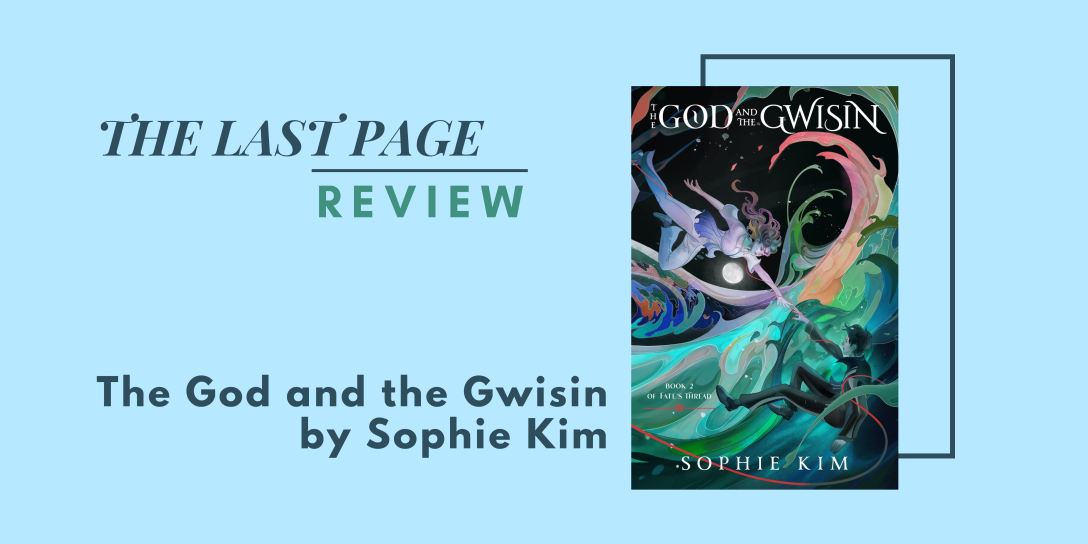
Review: The God and the Gwisin by Sophie Kim

Please note this review contains spoilers for the former book in this series, The God and the Gumiho, and contains references to some of the events in this sequel. Read with caution.

Rating: 5 out of 5.

Seokga, the trickster god sent to earth to atone for his uprising, defeated a demon of darkness and was reinstated to godhood, but lost Hani, the love of his life in the process. Reborn into her next life, Seokga had a chance to find Hani again, but fate intervened before they could reunite. Ever since the red string of fate connecting him to Hani appeared, Seokga has searched in vain for his soulmate and his fellow godly beings are tired. They vote to send him on vacation—to a cruise that traverses the river in the underworld. But as soon as he steps on board, Seokga is pulled by the red string towards Yoo Kisa, a Gwisin working on the ship and Hani reincarnated. Kisa has no memory of her past life, except the karmic debt her past lives amounted that her current self is indebted to pay off on board the SRC Flatliner. The red string has always fascinated her, but Kisa has no desire to be compared to the woman she once was nor romance the grumpy trickster god. When Seokga’s brother is found murdered on board, Kisa and Seokga reluctantly team up to solve the murder. Yet as Kisa and Seokga fall back into their investigative ways, it’s evident that they were brought together in this life for a reason, and not even fate can dictate how they end their story.

What does a fallen mischief god reinstated to godhood, his reincarnated soulmate, his emperor brother turned into a baby, a murderous gumiho, and a deceased K-pop star have in common? A murder none of them ever expected to be involved in solving all while on board a cruise ship in the afterlife. The God and the Gwisin initiates a sequel to The God and the Gumiho, where the murders are unsolved and a grumpy trickster god is once again struck down with unwanted emotions. Second in Fates Thread, this series embeds Korean Mythology with reincarnated lovers, godly threats, and an overly abundant amount of yearning. This sequel reorients our characters in the 21st century with new, modern problems, and some that time cannot constrain—like the inescapable longing for a love lost. Two soulmates battle feelings while on a cruise ship in the underworld, romancing in between a murder investigation and a looming journey’s end, where one faces down imminent reincarnation. Sophie Kim certainly understands how to situate a unique set of circumstances, which could just as easily be disharmonious if not for her deft balance of humor, romance, and angst. The God and the Gwisin extends the Fates Thread series in an epic star-crossed love story not to be constrained by reincarnation nor hell itself.

The God and the Gwisin is all around a delight but it is this sequel that sees Sophie Kim’s elaborate threads truly take shape. I jumped into this sequel blind and I am so glad I did because in no way would I have expected the setup Kim delivers here. The God and the Gumiho ended on a hopeful note, as Seokga follows the red string of fate twenty odd years after the passing of Hani, to whom we assume is Hani reincarnated in the present day. Sophie Kim introduces us to Yoo Kisa, a young doctor working at a hospital in Seoul who unexpectedly falls to her death and winds up in the afterlife working out her karmic debt on a cruise ship in the underworld. The setting for this sequel is a far departure from the 90’s New Sinsi of The God and the Gumiho, but it is the perfect stage for Kim to conduct her mystery and initiate an interrogation into reincarnation and fate. Cruise ships are lawless places after all and there’s truly no better place for a murder, nor falling in love with your soulmate reincarnated.

The grumpy sunshine dynamic has never hit quite as hard as this series and I fell in love with our protagonists all the more the second time around. Seokga is the perfect grumpy protagonist —a god disinclined to like anything but coffee and begrudgingly, the gumiho he fell in love with decades ago. This sequel sees Seokga working through his (self-described) daddy issues with a psychologist, his relationship with his brother, and branching out into new, coffee adjacent snack products. Seokga is down bad in this sequel, as any man who has chased his soulmate all the way to Antarctica and back while yearning to find her for three decades could be. Sophie Kim integrates this longing with some truly detailed insight into the notions of reincarnation. Using the Ship of Theseus as an extended analogy, Kim questions if two souls can be united even as the outer self, or person, has changed. The thread connecting Seokga and Kisa, which has—hilariously—its own sentience, only appeared in Hani’s reincarnation as Kisa. So the question becomes were Seokga and Kisa always destined to find each other in this lifetime? I love a good extended interrogation and the themes of soulmates and reincarnation are expertly addressed in this sequel.

The God and the Gwisin is a story all about reconciliation, not just within the central romance between Kisa and Seokga, but relationships both familial and platonic. Certain characters from the previous novel make a reappearance and Sophie Kim gives them the chance to rectify the past. It is here that Kisa comes face to face with Somi, her best friend who betrayed her in her former life as Hani. While Seokga, working through his relationship with his brother, long strained, has to babysit him as he is reverted to the form of a child. There’s enough tension between Kisa and Seokga, but these relationships on the periphery help orient the central conflict for this novel. I for one really loved that Kim gave space for Somi and Kisa to reconcile in this life and how she developed a new friendship between Kisa and the former K-pop idol, Kim Hajun. Sophie Kim bridges this further with a romance between Somi and Hajun. The murderous character being charmed by the kind one is exactly my kind of pairing and their romance is exactly that—sweet with a side of: she could murder you (but he likes it). Who would have thought romance over boba tea would be a part of this novel, but Kim has always highlighted the cafe setting as a peak spot for romance and shenanigans and I was happy to see that represented again here.

Sophie Kim is an author synonymous with exceptional romance and she takes this to new heights in The God and the Gwisin. This sequel follows Seokga and Kisa as they solve a murder while battling the problems of reincarnation, fate, and what they mean to each other. Because of the reincarnation of it all, Kim focuses heavily on enforcing Seokga and Kisa’s new dynamic and their overall compatibility alongside the murder plot. There is a disconnect between these characters, for Seokga is the same as he was before, albeit the impact of a few decades, whereas Kisa is a wholly new individual for Kim to introduce and flesh out across this novel. And what an introduction. Kisa was over here throwing a heavy paperweight at Seokga’s head upon their meeting and he was still struck dumb for her (blunt object not to blame). Kisa is an exceptional character who was dealt a difficult hand in life, and in death, and still carried it with such grace. Her refusal to be someone else just to appease Seokga chasing the ghost of his former love was commendable, as was her standing firmly in who she was. Even with all of this, Seokga and Kisa find love and choose to look to the future instead of the past. Kisa deciding for herself the answer to the Ship of Theseus question and taking the reins of her story was a deeply satisfying end to her arc in this second novel. That Seokga and Kisa’s higher calling is to love each other is solely responsible for my tears and I will be billing Sophie Kim expeditiously.

The God and the Gwisin is at its heart a story about belonging and forgiveness. With such humor and skill, Sophie Kim integrates her Fates Thread series into a new decade and a fresh hell— literally, a luxury cruise in the afterlife. Bonds are tested, and Kim shows the true power in choosing our destiny as Seokga and Kisa choose each other despite what fate and the higher powers have determined to be their end. Seokga and Kisa find an unconventional happy ending, which is all I could really hope for when I first began reading this novel, but it nevertheless brought on all the emotions by the end. Fates Thread is contemporary fantasy at its best, with distinct characters that manage to find their footing no matter the setting or the decade, and ones that charm no matter their place within the narrative. The God and the Gwisin tests the transcendent nature of love in an adventurous fantasy sequel all about being seen and loved for who we are. It will be long before I forget this phenomenal sequel from Sophie Kim but I find I am more than content with that.

Thank you to Netgalley and the publisher for providing me the advance review copy.

Trigger warnings: murder, blood, death, suicide (off page, but mentioned)

Preorder a Copy – Out 3rd June

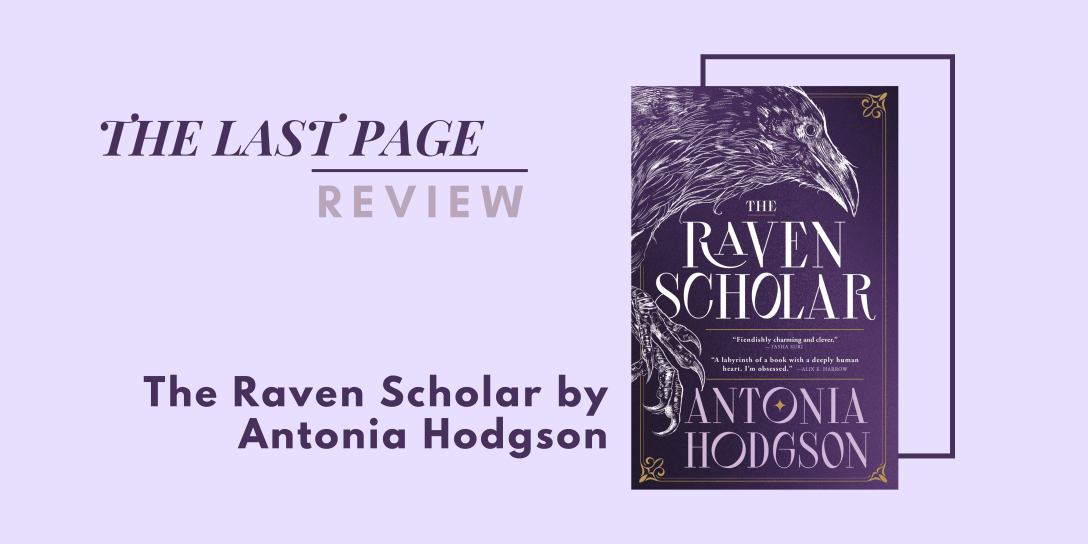
Review: The Raven Scholar by Antonia Hodgson

Rating: 5 out of 5.

For twenty-four years peace has reigned within the Empire of Orrun. But per the laws of the empire this peace will be tested in a brutal competition to determine its next ruler. Neema Kraa is a Raven Scholar and eight years prior —at the emperor’s behest—she carved the exile edict that would seal the fate of an innocent young woman and propel Neema to High Scholar. An event that would echo in the fates of more than just the solitary Raven Scholar. Thousands of people now flock to the Imperial Island, the epicenter of the empire’s power where its fate will soon be determined in the Festival of the Eight. On the night before the festival commences, Gaida Rack, the Raven contender, is found murdered in her apartment. As Gaida’s least favorite scholar, Neema is one who would stand to gain from her death, and thus, in the emperor’s eyes, the perfect candidate to solve her murder. Not only is Neema tasked with uncovering this crime but she is now the Raven contender in the fight for the throne. Dodging fights and avoiding losing to the dangerous trials, Neema soon becomes embroiled in a devious plot decades in the making, one that like the trials themselves, can have only one victor.

With The Raven Scholar, Antonia Hodgson pens the first in an audacious high fantasy trilogy. Epic in scale, bold, and extraordinarily detailed, this book burrowed its way into my heart where it is more than content to remain. As sentient ravens bear witness to events and murder abounds, The Raven Scholar expertly integrates a murder mystery within an immersive fantasy setting as a devious plot comes to fruition within the fraught empire of Orrun. When I set out to read this seven hundred page tome, I had no idea I would venture into one of the most cleverly wrought fantasy debuts I have read in many years. Hodgson hits all the marks for an epic fantasy novel with characters that bite (pun very much intended), and ones that lean into their morally grey natures. The plot takes the lead in this series debut, but it is only elevated through a detailed world history and extended mythos. Truly the pillars of this story are in the details and Hodgson is intentional in their placement as she builds to her grand reveal. The footnotes and folktales scattered across the narrative, the pesky ravens, all of it serves to build up an integral foundation for this new series. The Raven Scholar is everything high fantasy should be and I loved every single page of this intricately layered, clever novel.

Turning inward on the Imperial Island, Hodgson calls witness to the exile of Yana Valit, a decision that led to her brother becoming the Tiger contender and our protagonist Neema Kraa her position as High Scholar. Not quite a prologue, this look into the past soon transitions into Neema’s point of view, our window for the rest of the novel —a jarring shift made all the more so in the eight year jump to the present. The Raven Scholar has a claustrophobic aura, as thousands crowd the Imperial Island for a scheduled transfer in power, soon finding themselves caught up in more than a game. It all feels very locked-room, except the room is an entire island and everyone on it a suspect. Hodgson’s narrative is ever shifting, flitting back to new perspectives and integrating folktales from Orrun’s history. There is so much to sift and parse over here and no part of this story feels out of place, nor the narrative bogged down at any moment. Every single part of The Raven Scholar’s seven hundred pages is perfectly paced and expertly plotted. Through the ravens, the footnotes, and the folktales, what emerges is a vivid fantasy world with characters that leap off the page. 

I would place The Raven Scholar in the category of: what if there was an animal who was just following you around all the time (but the burrowing inside your chest cavity and offering unsolicited opinions-variety). The Raven Scholar dances around perspective and flashes between the implied author and narrator across the narrative. The implied author being the raven guardians circling the island providing their commentary was a fresh way to hone in on key events. I’m very much here for the flock of Raven Guardians having an omnipresence as Hodgson shifts between perspectives to orient her story. Hodgson layers in these perspectives to better serve the story and build to a smashing final act. Where the raven companion comes into the story is another strong suit. The “Solitary Raven” who was banished from the flock pushes forward through ink, page, and cover to become a fragment within Neema’s mind, acting as a guide in the fight for the throne. Sol is that nettlesome presence needed to further the story and its humor. I found the body horror aspect of this extremely hilarious. The imagery of Sol just chilling in Neema’s ribcage ready to burst forth in viscera whenever he needs to come to her aid or remove himself from a situation could only ever be viewed as relatable and painfully funny. 

One thing I appreciate about this novel is its heavily detailed character work. For most of the book we are in Neema’s perspective and her views cloud our opinions of the past and future of Orrun. Neema is the solitary Raven Scholar, brought up from her station as a commoner to take up space within the Emperor’s court. With such a rise comes many enemies and a perspective that reflects inward more often than not. Antonia Hodgson is comfortable exposing the flaws of this character and the blind spots that place Neema in danger as the plot progresses. I love ambitious women but just as much I love that Neema’s ambitions come at a price. The huge reveal at the end would not have come about without the manipulation of several key figures, one of which was the High Scholar herself. Characters grappling with their morality and the justification of past decisions is a central part of this novel. Neema, Cain, and Ruko are three characters who really stood prominently within this —figures who will undoubtedly continue to shape the progression of this series and its core themes.

The Raven Scholar is a true fantasy gem, sharp, gleaming, and rare in its splendour. As prophecies are fulfilled and the Festival of the Eight draws to a close, the Eternal Path series finds a strong footing in an unstable final act that I was in no way prepared to venture into. And wow oh wow what a conclusion. I don’t think I breathed for the entire last third of this book. It was that intense. Antonia Hodgson pulls the rug out in every sense, making you feel like the dominant players are aiming for one thing when in reality it is something else entirely. Integrating unique points of view —the animal guardians staking their claim on the narrative and the future of an empire and a daring scholar courting danger to solve a murder, among others —this is an artfully designed fantasy novel with a host of characters to enjoy. I cannot emphasize enough how this fed my cravings for epic fantasy to the extreme. Much like our Solitary Raven, I want to live inside this book and I’d feel comfortable burrowing into its pages to wait out the eventual sequel. 

Thank you to Netgalley and the publisher for providing this arc to review.

Trigger warnings: death, abuse, murder, blood, violence, imprisonment, drug use, execution

Preorder a Copy – Out 15th April

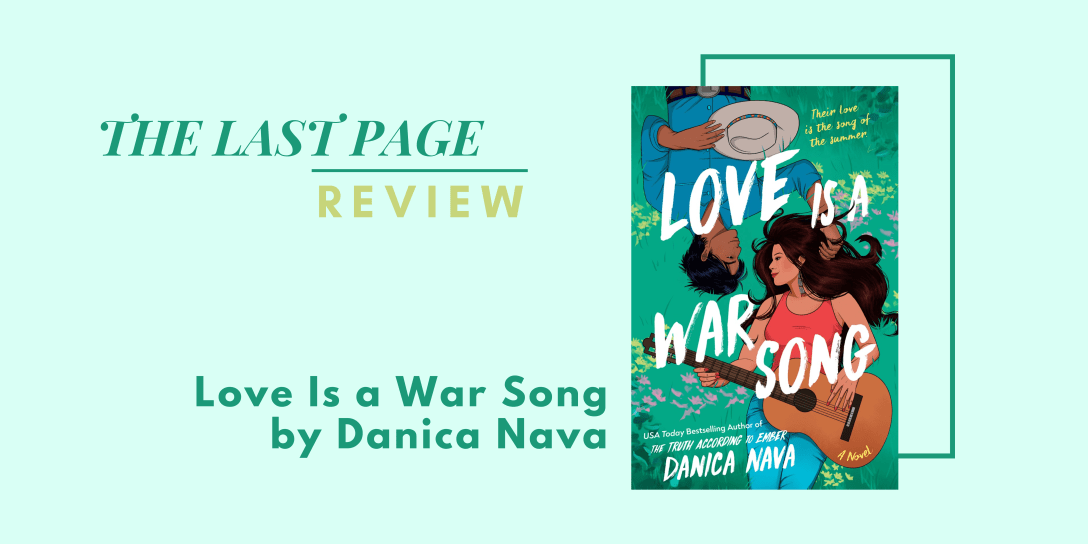
Review: Love Is a War Song by Danica Nava

Rating: 5 out of 5.

Acclaimed pop singer Avery Fox’s career has hit a bit of a rough patch. Her Rolling Stone magazine feature that was supposed to launch her to real success has come under fire after she appeared on the cover wearing a feather war bonnet. The outcome of the magazine cover and her subsequent music video has led Avery’s Native American identity to be called into question and serious threats levied against her. Though Avery is Muscogee, she has been raised outside her community by her mom turned manager and has never met anyone else in her family. But in the aftermath of the national outcry over the magazine, Avery is sent to Oklahoma and to the ranch of a grandmother she has never met. Hoping to charm her grandmother and the ranch staff until things calm down, Avery is soon met with the reality of Lucas Iron Eyes, the man who runs Red Fox Ranch and decidedly not a fan of Avery, her music, or anything she represents. In the face of the ranch’s financial situation, Lucas and Avery begrudgingly team up. He’ll help her experience what it means to be Muscogee and she’ll help him save the ranch. Working side by side, Lucas and Avery push past their initial animosity, decidedly ignoring the real connection attempting to put down roots between them.

Danica Nava brings on the music in Love Is a War Song, her sophomore romance, which explores the power in forming community and finding ourselves in unlikely places. Love Is a War Song is a phenomenal follow up to Nava’s debut, The Truth According to Ember, which I eagerly read just a few days prior to starting this novel. Romance blossoming from the mess of the everyday is Danica Nava’s forte and that is made all the more clear in this play on cowboy and celebrity romance. Nava’s protagonists are flawed, a relatable representation of what it really means to be a person still figuring things out in today’s world. Where Ember had me stressed out by the protagonist’s elaborate web of lies, Love Is a War Song reasserts the power in standing in ones history and community. Featuring Indigenous love at the center of her romances, Nava gives voice to necessary perspectives in this genre and breaks apart an often monolithic view of unique Indigenous cultures. Danica Nava is easily one of the best new writers I’ve read within this genre and Love Is a War Song is a summer romance worth basking in.

Love is a War Song is a story all about first and second chances and the fallible nature of first impressions. It’s about building your community and home even when you’ve never had one to begin with. Avery Fox is uniquely placed within this romance, having been raised outside her Indigenous community to a mother who placed all her hopes in Avery’s success. This loss of her family and a greater connection to the Muscogee community is unmistakable as this story begins and it reverberates throughout the narrative as Avery pulls together the pieces of her lost history. This connection to her culture is echoed in the music Avery workshops while in Broken Arrow with help from Lucas. Music can inform who we are and the real music Avery is desperate to give voice to is nothing like the songs she is currently performing on stage. While there is a discernible sadness in knowing that Avery was denied a community in her upbringing, returning to the music gives Avery a chance to honor the one she’s found.

Hate to love fans rejoice because Love Is a War Song brings on the tension and indescribable chemistry between its two leads, Lucas and Avery. The romance that blossoms between Lucas and Avery is profound—stemming from two people who initially met with judgment actively working to unlearn those predisposed beliefs. I love romance in the details and Lucas Iron Eyes understands that to a T. He knows the extended versions of LOTR are superior, considers Avery the most beautiful woman he’s ever seen, and doesn’t think she’ll choose him. I mean I had to love him after that. Hidden beneath a grumpy facade is a good heart and Lucas is the perfect balance to Avery’s warmth and softheartedness. Additionally, Lucas provides a necessary perspective in having lived life on the reservation alongside her grandmother, Lottie. Avery and Lucas are just so good for each other and I think I teared up a bit at some of these scenes, especially the one where she stands up to his parents. Nava integrates her romance within the larger themes of discovery and forging a new path and I was very moved by where it all ended up.

Danica Nava addresses a host of issues in this romance from the entertainment industry, to cancel culture, and Indigenous stereotypes, and all felt grounded in the story and its place. Alongside the romance, Avery confronts the hurt she caused the greater Indigenous community through her music video and magazine cover while becoming acquainted with her Muscogee community in Broken Arrow. Though she was ignorant of the connections through her music video and never intended harm, Avery acknowledges how her actions had greater consequences. Nava makes sure to draw on a larger critique of the entertainment industry parallel to this— an industry all too happy to capitalize on Avery’s Native American identity while also throwing her to the wolves the second she slipped up. Danica Nava handles this entire situation with nuance and her exploration into these subjects feels both timely and necessary. 

Love Is a War Song hits the mark for life affirming romance with just a dash of tropes and nostalgia. With Native American protagonists reaching for love and figuring out life and its plays on cowboy romance and grumpy/sunshine trope, Nava’s romance hits all the marks for a modern love story with such heart. Through Avery’s discovery of her home and life path, Danica Nava emphasizes the power of community and how it is never too late to return to one or build one for the first time. This is another romance only enriched by the ending authors note where Danica Nava delves a little bit more into her research and why she chose to represent the Muscogee Nation in this romance. There’s something about learning more of an author’s research and overall process that really speaks to me and this one is definitely worth the read. Built around misunderstanding but deepened in intimacy and newfound opportunity, Love Is a War Song is exactly the kind of romance I yearn for. Danica Nava leaves her mark with this outstanding romance and I eagerly await what she writes next.

Thank you to Netgalley and the publisher for providing this advance copy to review.

Trigger warnings: addiction

Preorder a Copy – Out 22nd July

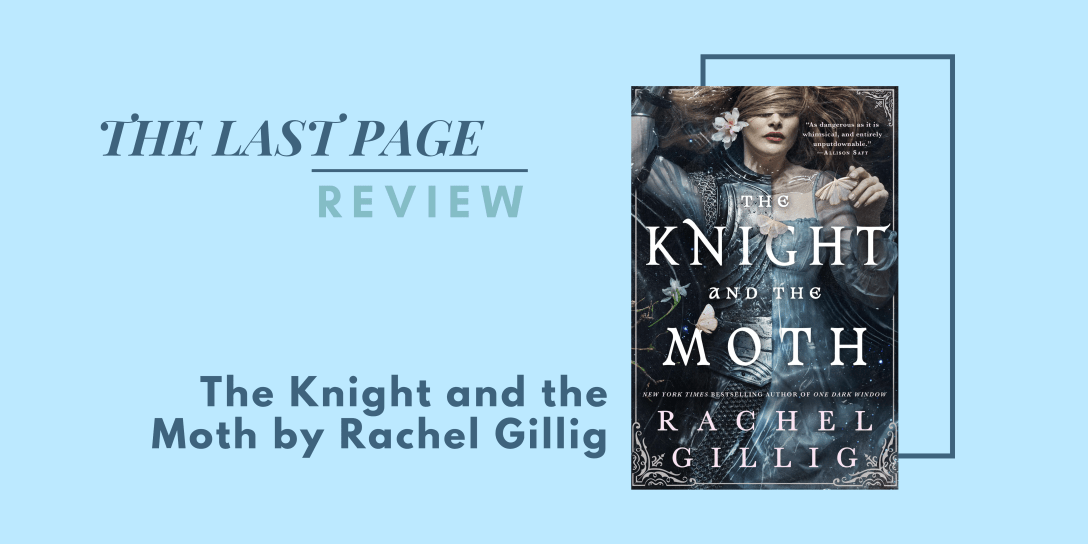
Review: The Knight and the Moth by Rachel Gillig

Please note this review includes references to some events contained within The Knight and the Moth. No overt spoilers but read with caution.

Rating: 5 out of 5.

For ten long years all Sybil Delling has known is dreams and drowning. As a foundling child, Sybil was brought to Aisling Cathedral to take on the mantle of Diviner. In exchange for ten years of service she and six other girls were provided a home, sundering their names to forever be known by a number —gaining the ability to receive and interpret visions from six figures known as Omens. Across Traum, citizens and travelers wander the long roads to the Cathedral upon the tor to have their futures divined. Sybil and her sister Diviners are their guide through the magical waters of Aisling’s spring that drag them down into dreams. Just as Sybil and her fellow diviners close in on the end of their ten years of service, Traum’s king and his retinue of knights appear at the cathedral. Not long after, Sybil’s fellow Diviners begin to disappear one by one until only Sybil remains. Desperate for a way out, Sybil finds an ally in Roderick Myndacious, the foul and brash knight she met upon the tor at the side of the king. Entering a world unknown with a foul knight and a boy king grasping at a fantasy, Sybil will learn the cost of her divine gifts and the truth to the portents and their gods.

The Knight and the Moth is a fortifying dark gothic fairytale in which errant knights, vexing gargoyle companions, and ardent romance unite to bring truth to divination and the powers that sustain a kingdom and its divine figures. Rachel Gillig is back, enlisting her penchant for atmospheric gothic fantasy in her sophomore series, intricately carved in symbolism and unending power. There were few books I was more excited for from this upcoming year than Rachel Gillig’s sophomore novel, The Knight and the Moth. I think I let out an inhuman shriek when this showed up on my doorstep and in a self fulfilling prophecy sort of way it met all of my expectations and is easily my favorite book I’ve read this winter. The gothic is already one of my favorite genres, but add in lady knights, slow burn romance, and symbolism and The Knight and the Moth transforms into its own rare flavor of gothic fantasy. In her second series, Gillig continues to deliver on transportive fantasy that deals a devastating blow, and this is one I have yet to recover from. The Knight and the Moth is a novel altogether intricate in its inquiries into religion, but unflinching in exposing the roots of belief and the pull between religion and entire kingdoms.

Kicking off a classic quest narrative of knightly adventure with a ragtag cast of characters, The Knight and the Moth contests knightly virtues and the costs of service, whether fealty to one’s king or religious piety. Opening with the arrival of a young king and his retinue upon the tor, Gillig drowns readers in divination —from the inner workings of Aisling Cathedral to the kingdom of Traum. Sybil Delling, or “Six” is our veiled window into this enshrouded world as she breaks free from Aisling Cathedral and initiates a journey to unmake the Omens, or their gods. Coin, inkwell, oar, chime, loom stone, and moth connect to a mysterious sixth figure and provide a framing for this quest journey. Rachel Gillig skillfully places her narrative portents at various places to call forth and interpret at key moments across this novel. Almost endless in its symbolism, The Knight and the Moth is veiled in a wretched sort of beauty. The fetid water and rotting flowers around the Cathedral spring portray the violence in having to drown to divine and all of it encircles the haunting atmosphere which Gillig pulls forth.

The physical journey in The Knight and the Moth is made all the more profound through Sybil’s personal arc running alongside the quest narrative. Taken in as a child and transformed into a tool to be wielded in a power struggle she was wholly ignorant to, Sybil’s journey is both heartbreaking and fortifying in its unveiling. Something I love about reading fantasy is the slow process of learning a character’s purpose within the larger context of the story. Integrating into Sybil’s perspective it soon becomes clear just how connected she is to everything from the founding of this kingdom to the continuous cycle of making and unmaking. Sybil’s journey is one of personal enlightenment and agency, two things that were taken away from her the second she was drowned and initiated as a Diviner. Sibyl and her propensity to lose herself for a cause finds knighthood as a way to gain agency and begin to command her tale. Gillig removes the facades as soon as Sybil flees the Abbey upon the tor, but it takes much longer for her to stand in her truth and truly remove her mask.

The romance in The Knight and the Moth falls into the category of bitter banter with a healthy overdose of yearning. Picture me feral in the corner while reading this novel because Rory and Sybil had me drowned in their longing (like the wax scene? I think I died). There are few things I love more than two characters who misunderstand one another finding love. Those differing perspectives which clash and create tension slowly begin to fade away as the quest progresses. The relationship between Sybil and Rory presents an interesting dichotomy that integrates within the larger commentary on religion and fidelity. The tension between these two comes at the reality of their differing belief systems stemming from their upbringings. Rory as a foundling child given a chance and a purpose at the side of a king, and Sybil, a foundling child who was abandoned to serve the purpose of a manipulative and cruel mistress puts them thoroughly in opposition — or so you would think. But Rory plays into the knightly virtue of fealty, not to his king, but to Sybil herself. And that is why this romance had me on the floor: the longing and devotion that comes from seeing someone at their worst and the constancy of that devotion.

If there’s one thing I love in my fantasy novels it’s a funky little guy following the protagonist around. I’m proud to say Rachel Gillig understands this wholeheartedly. The sliver needed to underpin the more serious tones and overarching plot of this novel is the character of Bartholomew —the stone Gargoyle who flees the cathedral and joins the quest at Sybil’s side. Little did I know that this was actually going to lead to the most heartbreaking revelation in the last third of this novel. I should have expected nothing less from Gillig who expertly interweaves these symbols and character arcs together in a masterful final act that left me grasping at the threads and desperate for more signs. The foundations truly fall down in a penultimate scene connecting to the larger deception taking place within Traum and the woman at its center.  

In The Knight and the Moth, Rachel Gillig reveals the truth to divination and the powers underpinning the faith of a kingdom. Everyone from the gods —mere humans fed on shreds of power to retain divinity— to the citizens seeking meaning upon the tor are at the mercy of one woman and the waters running free from the mountain spring. The commentary on religion as a way to keep entire civilizations beholden and subservient runs deep within this story. The disunifying portions finally find cohesion in the return to Aisling Cathedral and the confrontation with the Abbess. This final section was absolutely my favorite part of this novel as Gillig disentangles her designs and provides an encompassment for her larger commentary. It is the Abbess who claims that it is the nature of humanity to seek signs and find meaning which she, or others like her, will always be able to manipulate. The final comment that when you feed people a poison disguised as salvation they will do anything you ask was a particularly apt link within the story. As Sybil’s veil comes down and the group nears the end of their quest, Gillig connects it to the deception held by the Abbess, the portents, and their intemperate gods.

Shrouded in dreams and glimmering prose, Rachel Gillig’s The Knight and the Moth is one fantasy novel I want to stay fully immersed in. Even knowing that many readers may start this having not read Gillig’s former novels, this is a paragon to her craft and may I boldly claim —the best of her work so far. Rachel Gillig has never not brought me to my knees with her enthralling gothic atmosphere and fervent romance and I’m afraid this has unseated the Shepherd King duology as my favorite. The Knight and the Moth frames faith within a greater context of power and an unending cycle of control and rebirth. Ordinary people become gods and are forever starved for the source, but immortality is a mere tool in the hands of a greater player. In the power vacuum left in the aftermath of her concluding act, Gillig drives one last swing at her readers’ sanity. I followed some of these breadcrumbs but even I was floored in its brutality. The Knight and the Moth reveals what truth lies in heresy and the idealistic views which causes the cycle to renew. Diving into dreams, faith, and devotion, Rachel Gillig deconstructs myth in one fantasy novel which will leave you similarly transformed. Forever mourning that I have to wait even longer for the next in this series and very much missing our unconventional knight crew and endearing gargoyle companion.

Thank you to Orbit Books for providing this advance copy to review.

Trigger warnings: blood, violence, murder, death

Preorder a Copy – Out 20th May

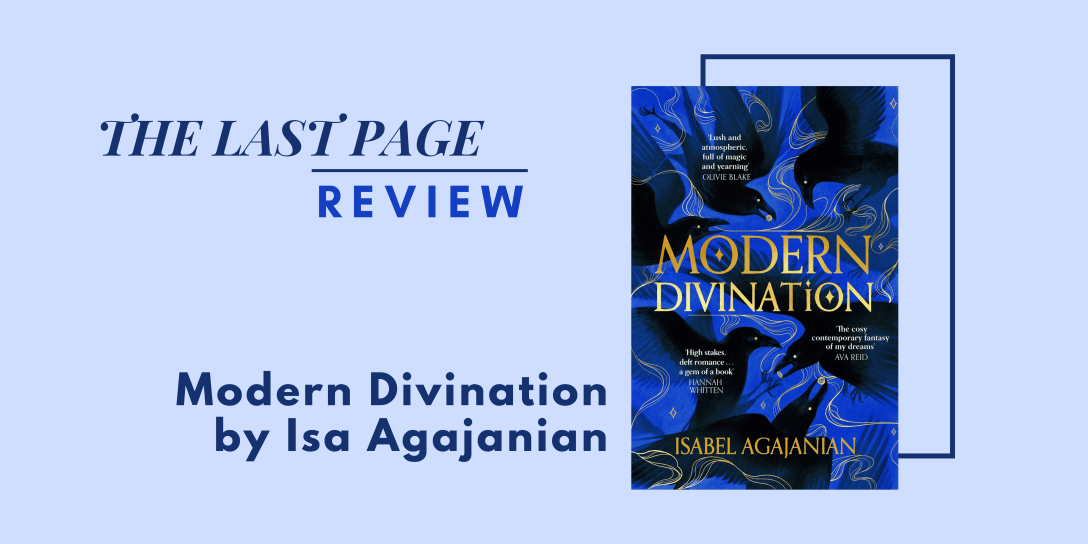
Review: Modern Divination by Isabel Agajanian

Rating: 5 out of 5.

Aurelia Schwartz has a secret. One she has closely guarded for twenty-three years. Aurelia is a witch, a fact she has hidden away from everyone in her life as she attempts to balance two opposing worlds. All it takes to bring this secret life crashing down is the murder of another witch and classmate during a campus soiree. The last thing Aurelia expects is to witness the aftermath of a murder, but the fact that Theodore Ingram, her academic rival should be by her side feels all the more targeted. Ever since she started at Cambridge, Ingram has made it clear Aurelia is beneath him, but now he insists she accompany him home for the holidays, pressing that neither of them is safe – because Teddy apparently has magic. As Teddy and Aurelia sequester themselves away from prying eyes with his magical family, they attempt to unravel the mystery of the murder, the culprit, and their complicated past. It appears the killer is far from finished and to uncover the truth Aurelia will have to undo her carefully constructed boundaries and set aside her animosity with Teddy, which could prove her undoing.

Modern Divination is the perfect example of a book that only settles deeper into your bones the longer it sits with you. This book is an exquisitely crafted blend of tea steeped to perfection, with dark notes of magic and a hint of bitterness rendered sweet through its stimulating academic rivalry. Having read the independently published version of Modern Divination upon its initial release back in 2023, I never expected to read the revised edition and fall even more in love but somehow that is exactly what occurred. This revised edition of Isa Agajanian’s original text is an addictive combination of witchery and fate, complete with enough yearning to make me feel like I was being repeatedly stabbed in the chest. Isa has completely raised the bar with this revised edition — sharpening the atmosphere and the incredible tension between Aurelia and Teddy into something entirely its own. If reading this for the first time left me longing for its sequel, then the updated version left me a shell of my former self and I will not recover until Quiet Spells is in my hands.

Isabel Agajanian’s, Modern Divination is a painfully relatable window into loneliness, grief, and the connections we close ourselves off to by insisting we bear our paths alone. Where the academic atmosphere of Cambridge and the secluded English countryside enthralls, Modern Divination’s true magic lies in its central duo realizing just how wrong they have been about each other. In a book set so firmly around an academic rivalry with a thread of magic weaving throughout the narrative, characters Aurelia and Teddy are an outstanding pairing. What can I say about Aurelia Schwartz besides the fact that I love her and she can do no wrong? An unyielding and ambitious young woman – Aurelia’s academic vivacity is matched only by her rival and arrogant specter, Theodore Ingram. Teddy is seemingly all ego with a past completely hidden from view, but after becoming targets to a witch killer, the carefully constructed walls these two have defended come crashing down. This is my favorite flavor of romance, there’s brooding, yearning, and snappy interactions as these two hold fast to their dynamic not wanting to be the first to concede to honesty.  

Reexperiencing Modern Divination through a revised edition feels like looking at it through an inverted lens, yet the core of the story remains the same: two rivals finally laying down their weapons and opening themselves up to connection. Casting off the protective bonds that academia has afforded her, Aurelia struggles to let people in after building a life set around pushing them away. This innate struggle is intensified by the longing she feels for Teddy in contrast to the way she’s viewed him for so long. Meanwhile, Teddy is down bad. He’s that specific type of love interest that’s just groveling and disgusting longing stuck together in one body with few ways to make those feelings known and I love it so much. Their slow burn is this wonderful give and take centered around falling for each other because of their flaws, as they unpack why they became rivals. Isabel Agajanian understands how to build a true rivals to lovers story and the layers required to deliver that satisfying emotional payoff. Aurelia and Teddy’s romance reveals the risk of love and connection is in the potential to be hurt and changed, but it is worth it no matter the outcome. Modern Divination examines the consequences of magic with an imperfect love story I’m more than a little obsessed with. Book two cannot come soon enough and I’ll be here yearning away in the meantime.

Thank you to Netgalley and the publisher for providing this arc in exchange for an honest review.

Trigger warnings: murder, blood, violence

Buy a Copy:

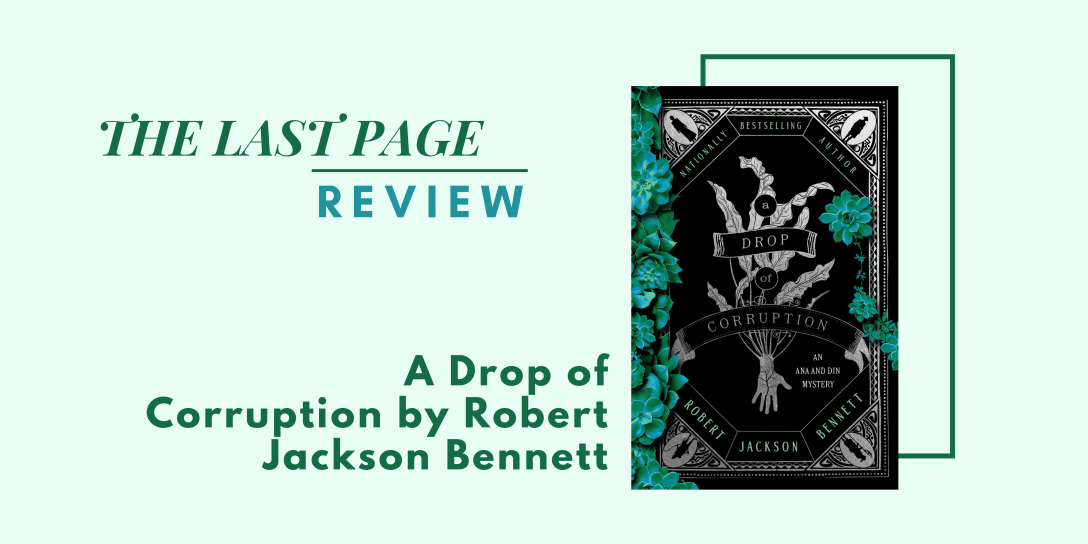
Review: A Drop of Corruption by Robert Jackson Bennett

Rating: 5 out of 5.

On the outskirts of the empire, Dinios Kol and Ana Dolabra confront a shocking mystery. An officer of the treasury has been murdered, after disappearing from a heavily guarded room with exterior locks and windows still intact. The territory of Yarrowdale is the only Canton free from the Empire’s influence – staved off by a hundred-year treaty that is about to draw to a close. With the horrific discovery of parts of the treasury officer’s remains, Ana and Din realize the conspiracy reaches further than just a simple disappearance. The threat comes from an individual who appears to be steps ahead of them, able to predict the moves of their investigation and all its intersecting figures. Far from the threat of the Leviathans, Yarrowdale still plays a vital part in the empire’s tapestry. Here, the dead carcasses of the Leviathans are hauled to an off-shore compound known as The Shroud – where their inner workings are harvested for their magical properties and transported around the rest of the empire. With an omniscient adversary setting his sights on a necessary part of the empire, Din and Ana have their work cut out for them. Yet it is the past that they investigate that could bring the case and Yarrowdale to ruins.

The Tainted Cup was one of my favorite books of the past year, a series debut that ingeniously blended fantasy and mystery in a punchy yet poignant fantasy world featuring an unconventional investigative pairing. Robert Jackson Bennett serves up his follow-up in a novel no less witty nor utterly transformative. Ingeniously plotted, A Drop of Corruption takes our detective duo far away from the influences of their pesky empire, to Yarrowdale, a canton teeming on the edge of change – to be absorbed into the empire or continue to stand on its own. Corruption and the unsettling biology of the Leviathans take root as investigative assistant Din and the ever-brilliant detective Ana Dolabra delve ever deeper into the strange murder and a new conspiracy that could threaten the safety of Yarrowdale and the entire empire. Snaking back upon itself continuously in Bennett’s typical style, A Drop of Corruption nurtures the flawed reality of those who relentlessly pursue progress within an empire and the costs of those who continue to unearth the corruption at its heart.

Robert Jackson Bennett’s Shadow of the Leviathan series is as powerful and reinventive as the leviathans that wreak havoc on the shores of his flawed empire. In A Drop of Corruption, Bennett takes Din and Ana away from the center of this empire to its outskirts in Yarrowdale where a conspiracy bears unexpected fruit and has unforeseen repercussions. As Ana and Din confront a new case with a confounding center, Bennett draws a tighter net around the workings of the empire and the civil servants who work tirelessly in service to its unending goals. The characters continue to delight – Din, sardonic and chronically tired, and Ana the peculiar and brilliant investigator who continues to call people out so precisely, all while blindfolded. Our assistant and local bisexual disaster Din is back and more chaotic than ever, as he copes with greater financial burdens after the passing of his father and a growing sense of helplessness as he is exposed to the reality of the empire. A Drop of Corruption jumps beyond these established dynamics to delve deeper into the psychology of the characters and the makeup of the empire. 


What continues to amaze me about The Shadow of the Leviathan series is the balance it strikes between its cynical humor and the deeper commentary taking place within Bennett’s world. Din’s concerns from book one become more prevalent as his loss, his new financial burdens, and his innate desire to enact change fester a desire to leave his job behind. All of these tempt him away from his work with Ana and this could very well be their final case. Through Din and the other characters intersecting his mystery, Bennett gives voice to the fatigue of unburying corruption that seems unending and only drives dedicated people to corruption or absolute pessimism. The revelation that the people who think they are doing things for the greater good – in service of the empire or Yarrowdale’s independence end up bringing about corruption and causing greater suffering was an interesting link in that chain. A Drop of Corruption continues to emphasize people at the mercy of a system and how this empire only begets further pain and violence. Building a better world is oftentimes a tiring endeavor and drives further cynicism but it is still a necessary one, a tenet at the heart of this mystery. A Drop of Corruption is not just a perfect sequel it is a perfect book. The characters are at their height, the dynamics polished and razor-sharp, and the mystery just as world-altering as its predecessor. Robert Jackson Bennett is a formidable talent and I’ll be needing a million more mysteries with Ana and Din. 

Thank you to Netgalley and Delrey for providing this arc in exchange for an honest review.

Trigger warnings: death, blood, murder, violence

Preorder a Copy:

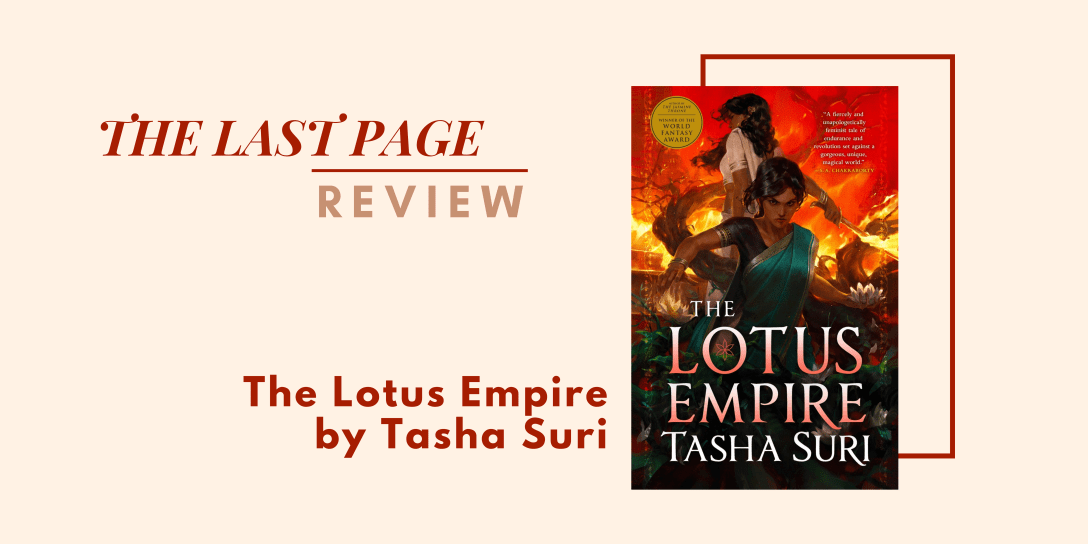
Review: The Lotus Empire by Tasha Suri

Rating: 5 out of 5.

Malini has fulfilled the prophecy of the nameless gods, crowning herself empress of Parijatdvipa. Yet she will not take it further from the throne to the pyre, decrying the unnecessary sacrifice of the women who burned before her. Back in Ahiranya, war looms. After thrice surviving the deathless waters, Priya thought there would be no consequences for the power simmering beneath her skin. Driven to betray her love, Priya walks a dangerous path against the Yaksa who unveil a plot that will further transform her world. Beneath the deathless waters lies the powerful Yaksa, Mani Ara, who instills faith in Priya, but whose support comes with an irreversible consequence, Priya herself. Led far away from her sister and home, Bhumika is without her memories, her connection to her powers and the Yaksa irrevocably severed. On a path to learn how to destroy their subjugators, Bhumika and Jeevan evade their pursuers by hiding out in small towns desperate to learn information that could turn the tide in this war. Set against an enemy ancient and powerful, three women torn apart by fate and their respective roles must reconcile or see the destruction of their kingdoms and the entire world.

The Lotus Empire is the third and final installment in the Burning Kingdoms trilogy, tethering three women across kingdoms against a grave threat that will further transform their already unstable world. Tasha Suri sets Parijatdvipa alight with further consequences as Malini, now empress, stands against the priesthood and taking to the pyre – the ultimate sacrifice, and Priya and Bhumika rage against the control of the Yaksa who have now taken over Ahiranya with sights set beyond its borders. Though old enemies have been ousted, a new fight is on the rise. Drawn outward like a flower in bloom, The Lotus Empire unfolds a deadly approach to the war with the Yaksa and the true cost of defining the future of an empire. Tasha Suri leaves no hold barred in this astounding series finale that tests the depth of our characters’ loyalty and the paths they will walk to reverse the hold of an unknowable enemy on their world. Its breadth of perspective and world scope increasing steadily outward as the stakes only intensify, The Lotus Empire challenges not just its former two books but how one rounds out an epic fantasy trilogy. 

Before I sank into the treacherous waters of The Lotus Empire I decided to double back and read through the Burning Kingdoms trilogy in its entirety – quite possibly the best decision I could have made considering just how much I had forgotten from my initial read-through of this series. Witnessing the seeds of the plot unfurling over books one to three was so rewarding and made this finale all the better. The Lotus Empire brings more to the world stage with our three characters scattered to the winds, but slowly unifying against the fight to come. The character arcs given to Priya, Malini, and Bhumika across this final act are my favorite in the trilogy – Malini, desperate to hold fast to her position as empress and facing an alien enemy, Priya at a crossroads with a power that could save her people that comes at the expense of her autonomy, and Bhumika without her core memories on a path to destroy the Yaksa. The way these three narratives intersect and twine throughout the book is sheer perfection and it’s some of Suri’s best plotting so far. Tasha Suri uncovers the depth of the deception of the Yaksa, promising a better world that can only be accomplished through bloodshed and subjugation. Through Priya’s experiences and those working to find a weapon to use against them, The Lotus Empire elevates the history of the Yaksa and the Age of Flowers. Some of my favorite parts of this series have been the intricate histories and cultures, the past hidden from view, and that being unveiled after two books was just nothing short of spectacular. The revelation that the Yaksa fled their homeworld because of violence, making their way to Parijatdvipa where they place that burden of war and violence upon its peoples was a necessary tie-through for this novel’s exploration into empire and its roots. 

After attempting to excise Malini from her heart in exchange for her safety and the aid of the Yaksa, Priya confronts her decisions and the truth of what the Yaksa truly desire. Going into this finale I had no idea how Suri was going to reconcile Priya and Malini after the events that concluded The Oleander Sword, only that it was going to be extraordinarily painful, and I had the right idea. Within her decision to turn away from the pyre, Malini grasps all the power she can and wields a weapon that could save her former lover and kingdom, and hold back the threat of the Yaksa. But all power comes at a price, one that Malini must weigh against crown politics and her intricate alliances. Though she went to such painful lengths to walk away from Malini at the end of The Oleander Sword, there’s a shift in equilibrium, with Priya walking into Malini’s orbit to save herself, ultimately casting off the protection the Yaksa granted those in Ahiranya. The callbacks to the wedding garlands with the gold necklace Malini uses to tether Priya away from the Yaksa’s influence was exactly the kind of pain I expected from Suri. But Priya accepts this willingly and reconciles how she went about saving Malini from the wrath promised by Mani Ara before her betrayal. That Priya views her betrayal as an extraordinary act of love because she was saving Malini and she would walk that painful path again even knowing where they are now completely shatters my heart. From dream sequences to confrontations, Tasha Suri ramps up the tension between these two, culminating in a send-off that feels fitting to their characters but no less devastating.

The Lotus Empire is a brilliant blossom of wrath and enduring love set ablaze in a final fight over Parijatdvipa’s future. Full of rage and unbridled determination, The Lotus Empire is a testament to Suri’s craft and everything her characters have fought so hard for, clawing their way toward a future of their own design. With her signature chapters jumping between our core three characters and other side perspectives providing necessary contexts, Suri brings an ending to fruition that honors the entire journey across this trilogy. There’s plenty of sapphic yearning, epic fight scenes, and emotional endings to cling to and leave you completely bereft by the end of this final chapter. This finale was everything I was hoping for and The Burning Kingdoms trilogy as a whole is some of the best in fantasy and deserves all of its flowers. Tasha Suri is an absolute legend and I need everyone to bear witness to her talent with this life-changing conclusion.

Thank you to Edelweiss and Orbit Books for providing the advance copy in exchange for an honest review.

Trigger warnings: blood, death, violence

Buy a Copy: